

What does “instantly” really mean? Some listeners may feel calmer within minutes, yet no reliable source shows that music can instantly heal the subconscious. These sounds may support relaxation, but they should not replace medical care or mental health treatment.
The nine commonly recognized tones span 174 Hz to 963 Hz. Each frequency carries a different emotional or wellness association, such as grounding, focus, sleep, or inner calm. Dr. Joseph Puleo’s rediscovery of six measurable tones in the 1970s helped spark modern interest in these practices and their reported uses.
This article separates personal stories from research on stress, sleep, heart rate, and the nervous system. It also offers practical ways to explore sound therapy through YouTube, Spotify, Apple Music, Oura, and BetterSleep. Use these tools as part of a wellness routine, not as a cure.
Key Takeaways
- Quick relaxation is possible, but instant subconscious healing is unproven.
- The nine tones range from 174 Hz to 963 Hz.
- Dr. Joseph Puleo influenced modern interest in these sounds.
- Research focuses on stress, sleep, and nervous system responses.
- Audio apps can support wellness without replacing professional care.
What Are Solfeggio Frequencies and How Do They Work?
Before modern wellness apps, solfeggio described music training through singing and ear exercises. Today, sound therapy uses the term for a group of measured tones. Their proposed effects can feel meaningful, but healing claims still need stronger research.
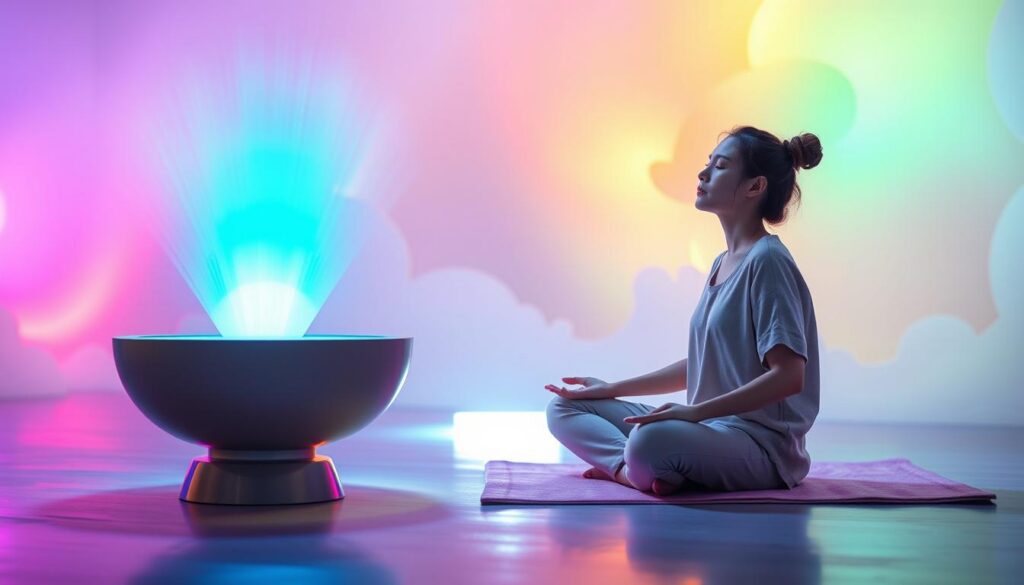
The story behind the musical scale
Professor Willi Apel linked the ancient scale to a medieval hymn honoring John the Baptist. Its first six lines began on consecutive notes. In the 1970s, Dr. Joseph Puleo used mathematical number reduction to identify six tones he believed could rebalance the body.
“Solfeggio” is a music theory term connected with vocal exercises.
How hertz and vibration connect
Hertz shows how many cycles happen each second. For example, 432 Hz music completes 432 cycles per second. Winfried Otto Schumann documented Earth’s electromagnetic resonance in 1952, often placed near 7.86 to 8 Hz. Links between that range, the brain, DNA, and these tones remain debated.
| Term | Simple meaning | Evidence note |
|---|---|---|
| Scale | Ordered musical notes | Used in music education |
| Frequency | Cycles per second | Measured in hertz |
| Resonance | A repeating response | Body effects need study |
Solfeggio Frequencies and Subconscious Healing Claims
Sound can bring hidden feelings into focus, but it does not promise instant healing. Many listeners use these tones as a calm space for reflection, not as a medical cure.
Why listeners connect tones with guilt and release
Wellness traditions often link 396 Hz with guilt, fear, grief, and limiting beliefs. People may choose it while naming painful thoughts or seeking emotional relief. The meaning comes from tradition, not strong clinical proof.
Some listeners connect 417 Hz with trauma recovery, fresh starts, and the power to change old patterns. Focused music may help people notice body tension, anxiety, and repeated thoughts. However, vibration alone cannot repair emotional wounds.
What sound therapy may offer for inner balance
Many wellness sources call 528 Hz the “love frequency” or “miracle tone.” They associate it with transformation, intuition, and positive energy. These reported benefits can inspire a mindful routine, yet results vary from person to person.
Use sound as a support for reflection, not a replacement for care.
Pair listening with journaling, breathing, counseling, or a healthy routine. For broader wellness planning, review healthy lifestyle goals.
| Tone | Common association | Practical use |
|---|---|---|
| 396 Hz | Guilt and fear | Quiet reflection |
| 417 Hz | Change and release | Fresh-start rituals |
| 528 Hz | Love and transformation | Meditation |
The Potential Benefits of Solfeggio Frequency Music
Quiet tone-based music may fit well into a simple wellness routine. Its benefits often come from focused listening, steady breathing, and a calm setting rather than a guaranteed healing effect.

Relaxation, meditation, and anxiety relief
A gentle frequency gives your attention something steady to follow during meditation. Try it during a five-minute breathing break, then notice how your body feels. The goal is calm support, not a promise to remove anxiety.
Sleep support and a calmer heart rate
Many listeners choose 528 Hz after stressful days. Sources connect this tone with cortisol reduction, relaxation, mood support, and improved sleep quality. Oura’s Explore content also offers sleep meditations and stories with adjustable background sounds, which can pair with a regular bedtime routine.
An Italian double-blind study compared 432 Hz music with 440 Hz music. It reported a slower heart rate with the lower tuning, though more research can clarify the effects.
Emotional balance, relationships, and intuition
People often link 639 Hz with communication, tolerance, love, and harmonious relationships. It may encourage reflection and emotional balance, but it cannot fix conflict by itself. Use music as one friendly wellness tool alongside honest conversation and practical support.
The Nine Solfeggio Tones and Their Common Uses
These nine frequencies carry different wellness meanings. Listeners choose them for comfort, reflection, sleep, or meditation. Their reported benefits are personal, while healing claims remain unproven.

174 Hz and 285 Hz for grounding, comfort, and renewal
174 Hz is the lowest listed tone. It is associated with grounding, muscle relaxation, and easing body tension, including lower-back or foot discomfort. The 285 Hz tone is linked with renewal and safety. Tissue repair and immune support remain traditional claims, not established outcomes.
396 Hz and 417 Hz for fear, guilt, and personal change
Choose 396 Hz when guilt, fear, or grief feels central. Listeners connect 417 Hz with trauma recovery, change, negative thoughts, and restful sleep.
528 Hz for stress reduction, sleep, and transformation
Often called the love frequency, 528 Hz may support stress relief, meditation, sleep, and a sense of transformation.
Higher tones for connection, clarity, and intuition
639 Hz relates to relationships and harmony. 741 Hz supports creative thinking. 852 Hz is tied to positive thoughts and intuition, while 963 Hz represents clarity, consciousness, and positive energy.
| Tone | Common association | Gentle use |
|---|---|---|
| 174–285 Hz | Grounding and renewal | Quiet rest |
| 396–417 Hz | Emotional release and change | Journaling |
| 528 Hz | Love and transformation | Sleep routine |
| 639–963 Hz | Harmony, clarity, and intuition | Reflection |
What Research Says About Solfeggio Frequencies
Scientific interest in these tones is growing, but the evidence remains limited. Early findings suggest that music may influence stress and heart rate. They do not confirm instant healing or lasting changes in the body.
Studies on 528 Hz, stress, and the autonomic nervous system
A Juntendo University study in Tokyo examined how 528 Hz music affected endocrine and autonomic nervous systems. Japanese researchers also reported a strong stress reduction after five minutes of listening. These results may point to short-term relaxation, yet larger trials must confirm the effects.
An Italian double-blind study compared 432 Hz music with standard 440 Hz tuning. It reported a slower heart rate with 432 Hz. Still, one study cannot prove that a specific tone works for everyone. Learn more about the science behind sound therapy.
What claims about DNA, energy, and healing still lack proof
In the 1980s, Dr. Glen Rein tested music types on laboratory DNA samples. Gregorian and Sanskrit chants increased ultraviolet light absorption by 5 to 9 percent, while rock music reduced it. However, this test did not show that these tones heal human DNA or disease.
Claims about energy, intuition, brain changes, resonance, or guaranteed sleep benefits need stronger research. For now, use music as supportive therapy, not a substitute for medical care.
Choosing a Solfeggio Frequency for Sleep and Relaxation
The right bedtime sound depends on your mood, routine, and listening preference. Treat it as a gentle wellness aid, not a guaranteed cure for stress or anxiety. A steady tone may help create a peaceful setting for rest.
When to try 528 Hz or 432 Hz music
Try 528 Hz before bed when daily pressure feels high. Many wellness sources associate this tone with relaxation, lower cortisol, and better sleep quality. Keep the volume soft, and pair it with slow breathing or a short meditation.
432 Hz sits outside the nine recognized Solfeggio frequencies, yet many people choose its music for peace and nighttime comfort. An Italian double-blind study found that 432 Hz music slowed heart rate compared with 440 Hz. That result does not mean everyone will respond in the same way, since personal preference and resonance can vary.
Test one frequency for several nights instead of changing tracks each evening. Record sleep, morning energy, and anxiety levels. Oura’s Sleep Score Trends and custom tags can help you compare patterns linked to a specific tone. Focus on the benefits you notice, not promises.
How to Listen to Solfeggio Frequencies Safely
A safe listening habit begins with a calm space, clear limits, and attention to your own response. Use low to moderate volume, especially at bedtime. Choose trusted tracks on YouTube, Spotify, Apple Music, Deezer, Oura, or BetterSleep.
Setting the volume and listening environment
Sit or lie in a comfortable place with fewer distractions. Keep the sound soft enough for easy conversation. Stop if you notice ear strain, dizziness, or discomfort. Relaxing audio should never play while driving, cycling in traffic, or doing safety-sensitive work.
Using tones during quiet breaks
Try a gentle tone during meditation, bedtime, or a quiet break. Begin with five to ten minutes. A 2018 Japanese study reported stress changes after five minutes of 528 Hz listening, but personal effects can vary. Treat music therapy as support, not healing care.
Tracking your response over time
Notice body tension, mood, energy, sleep, and thoughts after each session. Oura’s Daytime Stress feature, sleep records, or a simple journal can reveal patterns. BetterSleep lets users mix some tracks with nature sounds. Track with curiosity, not pressure.
Finding the Frequencies That Bring You More Peace
The nine Solfeggio frequencies, from 174 Hz to 963 Hz, carry traditional meanings—not guaranteed results. A personal response matters more than any promise.
Try 528 Hz for sleep or stress, 432 Hz for calming music, 396 Hz for guilt-focused reflection, or 639 Hz during relationship meditation. Choose the frequency that helps your mind settle.
Then watch for practical benefits. Do you sleep better, feel less tense, or wake with steadier energy? A simple journal can show whether the routine supports your daily life.
Music can become a peaceful ritual, even when claims about subconscious healing, DNA, spiritual awakening, and awakening intuition remain unproven. Listen at a comfortable volume and let your experience guide you. There is no perfect tone; the real power comes from a consistent practice that gives people space for peace, reflection, and care.