

Earthing means connecting your body with the earth. This can happen through bare feet, hands, water, or a product linked to an electrical ground. Grounding is simple, but the science behind it still needs stronger proof.
The idea is that natural electrons on the Earth’s surface may help neutralize free radicals. This theory may help explain why some people feel calmer after time outdoors. Still, “cures stress fast” goes beyond current evidence. One report noted that pain may begin to ease after about 30 minutes of contact.
Modern people often spend less time touching the earth than earlier generations did. This grounding earthing practice may offer a simple way to explore stress, sleep, pain, inflammation, and anxiety. A 2020 report also discussed possible links with heart, breathing, nerve, immune, diabetes, and cancer conditions.
These findings are promising, not proof of a treatment. This guide explains what is known, where safety matters, and why outdoor contact should not replace professional health care.
Key Takeaways
- Earthing involves direct contact with the Earth or a grounded product.
- Walking barefoot may support relaxation for some people.
- Research has not shown that it quickly cures stress.
- Some reports describe changes after about 30 minutes.
- Grounding research covers sleep, pain, inflammation, and safety.
- It should not replace medical advice or prescribed care.
What Are the Earthing Benefits of Direct Contact With the Earth?
The proposed effect starts with the ground beneath your feet. In this view, the earth’s surface may exchange electrons with the body when bare skin makes direct contact. The idea sounds simple, but current research remains limited.
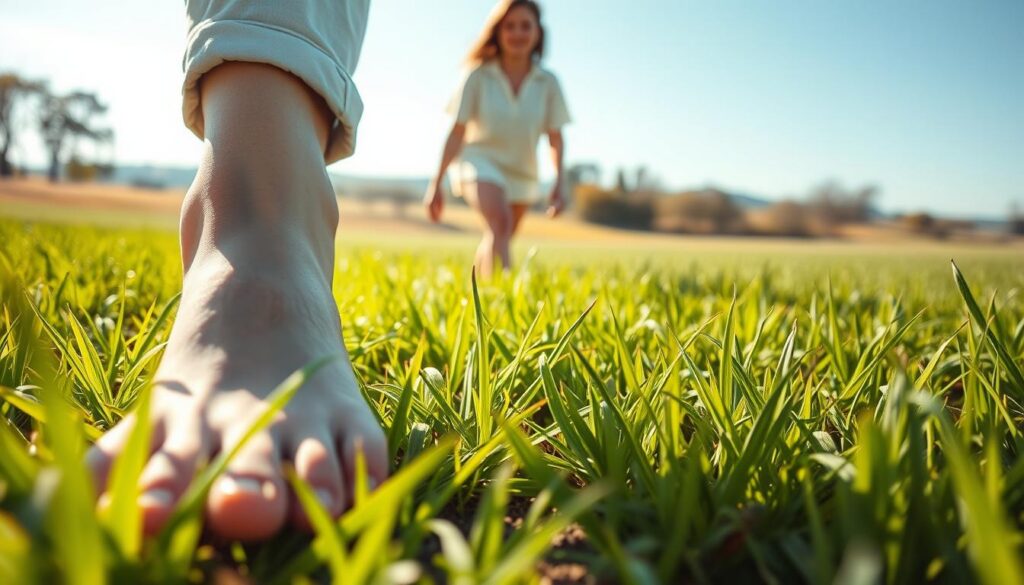
How Walking Barefoot May Help Your Body Absorb Electrons
Walking barefoot on grass, sand, mud, soil, or natural water creates a possible electrical path through the skin. Practitioners say this may let the body absorb electrons. However, scientists need more independent, high-quality studies before linking that exchange to better health.
“A proposed mechanism is not the same as proven medical care.”
Earthing Compared With Everyday Grounding Techniques
Outdoor contact differs from mental grounding techniques used during anxiety. Those exercises focus attention on sights, sounds, breathing, or touch. Conductive options include sheets, socks, shoes, patches, a grounding mat, or a metal rod connected to soil.
- Dry floors and standard shoes may interrupt the pathway.
- Natural water and moist surfaces may conduct more easily.
- These products do not replace professional care.
How Earthing May Ease Stress and Support a Calmer Mood
Calm can come from several sources, including time outdoors, gentle movement, sunlight, and fewer screen alerts. The electrical theory behind earthing remains possible, but research has not shown that it treats stress or anxiety.
Early Findings on Stress, Anxiety, and Heart Rate Variability
A 2018 controlled trial followed 16 massage therapists for four weeks. Researchers noted changes in heart rate, breathing rate, and other body markers, with a general trend toward less stress.
In a 2019 study, 16 massage therapists reported lower stress, depression, pain, and fatigue after one week of earthing and at follow-up. Another small study found better heart rate variability after 20 minutes of grounding, with greater changes after longer exposure.

Why Outdoor Time May Feel Grounding Beyond the Electrical Theory
Walking outside or resting near nature can create a useful break from work. Fresh air, sunlight, slow breathing, and relaxed movement may support calmer stress levels without proving electron-based effects.
Small human trials reported lower stress, while early rat research explored anxiety-related effects. Still, anxiety can involve several causes and disorders. Grounding may help some people as a wellness practice, but it should not replace professional health care.
Earthing Benefits for Sleep, Pain, and Inflammation
Early findings connect contact with the earth to sleep, soreness, and healing, but the evidence remains small. These results show possible effects, not proven health care.

What Small Studies Suggest About Sleep and Cortisol
One study tracked 12 people with pain and sleep problems for eight weeks. Grounding was linked with more aligned nighttime cortisol patterns and reported improvements in sleep, pain, and stress. Because the group was small, expectations may have shaped the results.
Possible Effects on Muscle Pain and Recovery
An eight-person trial split four healthy adults into grounded and control groups. Pain ratings, blood tests, MRI, and spectroscopy were checked during three days. Reported changes in white blood cells, neutrophils, and lymphocytes do not prove that grounding treats inflammation.
Inflammation, Blood Flow, and Wound Healing Research
After one hour on grounding mats, yoga participants had lower blood viscosity, which may matter for heart health. A 21-person diabetes study and one 84-year-old woman’s case report described faster wound healing. A 33-year-old woman also reported nearly 90% less knee pain after 12 weeks. These striking reports need larger controlled trials.
| Finding | Sample | Key limit |
|---|---|---|
| Sleep and cortisol | 12 people, 8 weeks | Subjective reports |
| Muscle soreness | 8 people, 4 per group | Very small trial |
| Wound healing | 21-person study; one case | No proven cause |
Simple Ways to Practice Earthing at Home or Outside
You can try this wellness practice in small, comfortable steps. Start with 10 to 20 minutes of direct contact each day. One report noted changes after 30 minutes, but longer sessions are not always better.

Walking Barefoot on Grass, Sand, Soil, or Near Water
Choose a clean patch of grass, sand, or soil. Check for glass, sharp stones, insects, and extreme heat before walking barefoot. Wading in natural water may create contact with the earth, but stay alert near currents, slippery surfaces, and crowded swimming areas.
Using a Grounding Mat, Sheet, Socks, or Patches
Indoor options include a grounding mat under your feet, hands, arms, or desk. Conductive sheets may use carbon or silver threads. Washing and sweat can reduce silver conductivity over time. Socks and shoes may contain silver or a conductive plug.
- Patches connect to a cord and grounded outlet or system.
- A grounding rod goes into moist soil when no outlet is available.
- Follow product directions, and stop if skin irritation, tingling, pain, or unusual symptoms appear.
Use these techniques as optional self-care, not guaranteed health devices.
What the Research Really Says About Grounding and Health
The strongest conclusion today is simple: grounding remains under-researched. A review of grounding research found few independent, high-quality studies. Current findings suggest possible effects, but they do not prove that earthing prevents disease or replaces medical treatment.
Why Small Studies Cannot Prove Earthing Cures Disease
A 2019 trial followed 16 massage therapists and found changes in stress markers. However, it did not fully address placebo effects, outdoor time, gender, or body composition. Self-reported sleep, pain, and mood may also reflect rest, expectations, or nature exposure rather than electron transfer.
A 2022 Indonesian study tested one hour of grounding each day for 30 days in 20 preterm infants. The infants had shorter acute respiratory infections, but researchers need more evidence before applying those findings to adults.
- Cortisol or blood viscosity changes are not proof of disease healing.
- Diabetes, anxiety, chronic pain, inflammation, and autoimmune disorders need proper diagnosis and care.
- View grounding as optional wellness support, not a substitute for testing or prescribed treatment.
These possible benefits deserve careful research, not exaggerated claims.
Earthing Risks, Safety Tips, and Who Should Ask a Doctor First
Ground contact may seem simple, but safe use matters. Check the setting, equipment, and your health before trying this practice. Good self-care should never add avoidable risks.
Barefoot Injuries, Allergic Reactions, and Open-Water Concerns
Inspect grass, sand, and soil for glass, sharp objects, insects, waste, and uneven areas. Bare feet can suffer cuts, infection, allergic reactions, trips, or falls. Shoes may offer safer contact in rough spaces.
Water adds more concerns, including currents, slippery surfaces, infection, allergies, and drowning. Never use plug-in equipment during a thunderstorm. Lightning can travel through electrical systems and cause electrocution.
How to Check Grounding Mats and Electrical Outlets
Use an outlet checker before connecting a grounding mat. Stop if the outlet feels loose, looks damaged, or shows faulty wiring. Check cords, patches, and mats for wear, then follow the maker’s care instructions.
- Ask a doctor first if you are pregnant or have allergies, immune problems, nerve damage, foot conditions, implants, recent surgery, or chronic illness.
- Stop if you feel unwell, develop flu-like symptoms, or notice lasting skin irritation or unusual sensations.
“Safety comes first, even with a gentle wellness routine.”
A Practical Takeaway on Earthing Benefits
For many people, grounding is a gentle outdoor habit, not a medical cure. Brief contact with grass, sand, soil, or water may feel calming. Some users report better sleep, less pain, or lower stress, yet these effects do not prove disease treatment.
Start with a low-cost, safe way: spend a few minutes outside before buying equipment. Indoor mats, sheets, socks, shoes, and patches can support routine contact, but product quality and outlet safety vary. Check instructions, protect your body, and stop if discomfort appears.
Small trials with only 8 to 21 participants show why more research matters. Keep testing, prescribed medicine, and professional care in place for diabetes, anxiety, chronic pain, or sleep concerns. Use grounding earthing as optional self-care, never as a replacement for trusted health advice. If it feels pleasant and safe, let this practice complement movement and healthy daily habits.
Simple care and realistic expectations make earthing a safer wellness choice.