
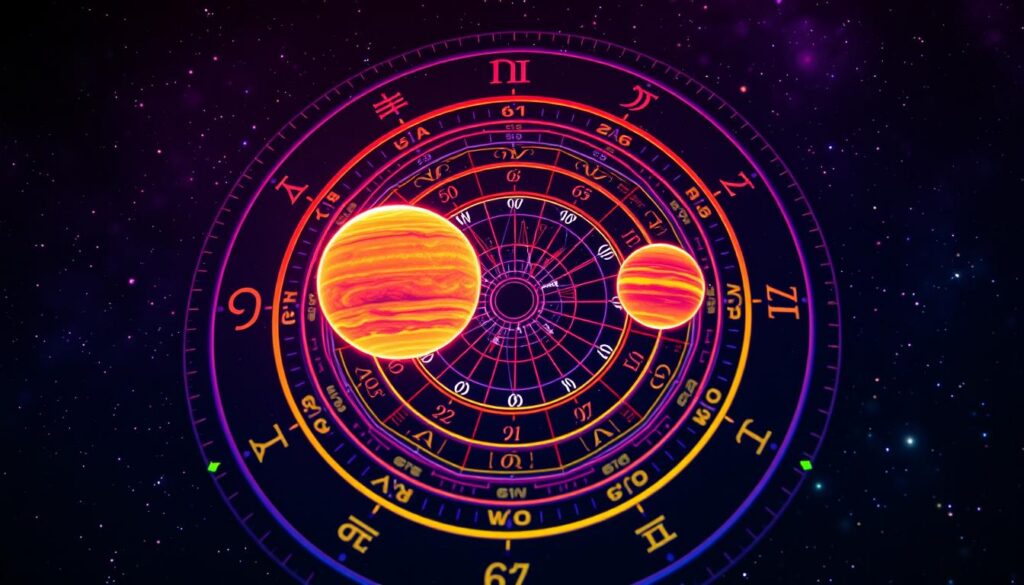
In transits astrology, moving planets connect with a birth chart to help you ask when a major shift in life may arrive. Think of planetary movements as an astrological weather map, not a fixed script.
A live sky tool uses NASA ephemeris calculations and accounts for daylight-saving changes. You can scrub backward or forward to see transits tighten, peak, and loosen. This makes timing easier to explore.
Hard aspects can disrupt a schedule, relationship plan, or work goal. Still, they don’t prove that every event is set in stone. They show pressure, choices, and possible turning points.
For example, Saturn-Pluto in Capricorn during 2019 to 2020 lined up with the COVID-19 pandemic and major disruption around the world. Belinda Matwali describes these patterns as markers of personal, generational, and collective events. Next, we’ll explore how Saturn, Uranus, Neptune, Pluto, and Jupiter may reshape plans in a chart.
Key Takeaways
- Planetary timing highlights patterns, not certainty.
- A birth chart adds personal context.
- NASA data supports accurate sky calculations.
- Some aspects build slowly and fade gradually.
- Major planets can affect personal and collective events.
Astrology Transits Explained for Beginners
A moving sky can offer a useful clock for life’s changing chapters. In transits astrology, a transit occurs when a body moves through the zodiac and forms an aspect with a point in your birth chart.
How Moving Planets Connect With Your Birth Chart
Your natal chart is a snapshot of the sky at birth. A transiting planet shows what is moving through the present moment. When it touches planets or angles in that chart, it may highlight work, love, health, or other areas of life.
Some patterns affect whole groups. For example, Uranus-Pluto activity in the 1960s matched major social change, including the civil rights movement and sexual revolution. Personal patterns work more closely with your own birth details.
Why Transits Show Timing Rather Than Fixed Fate
An aspect suggests energy, not one unavoidable event. You may meet a challenge through circumstances, a choice, or inner growth. Jupiter circles the chart in about 12 years, while Saturn takes about 29. Astrologers compare these cycles with secondary progressions and the natal chart to study important times in life.
The key idea: planetary timing can help you prepare, but your decisions still shape the outcome.
Why Some Astrology Transits Feel Like They Wreck Your Plans
Plans often feel fragile when outside pressure changes your next move. A planetary pattern may not cause an event, but it can reveal stress in a chart. That pressure can affect work, money, relationships, or other areas of life.

The Difference Between Challenging and Helpful Planetary Energy
A square can bring delays, conflict, or a strong need to act. A trine may speed progress, yet good judgment still matters. Helpful energy opens opportunities; it does not promise perfect results.
Saturn-Pluto joined in Capricorn during 2019 and 2020. The conjunction matched a wider period of COVID-19, economic strain, and social unrest. It felt personal because collective events touched daily routines, safety, and income.
Belinda Matwali describes these patterns as initiators of challenges and opportunities. Transit Saturn may feel restrictive at first, but steady effort can build maturity and dependable results. Timing offers clues, while preparation, intuition, and choices shape events.
| Pattern | Common feeling | Useful response |
|---|---|---|
| Square | Pressure or frustration | Adjust the plan |
| Trine | Fast progress | Review choices |
| Saturn influence | Limits and delay | Build lasting structure |
Saturn Transits and the Life Lessons You Can’t Avoid
Saturn brings a serious tone to major life decisions. Its timing can slow plans, add duties, or reveal where a weak structure needs repair. This energy is not a punishment. It can support lasting growth when you meet each task with patience.

Saturn Return, Responsibility, and Hard Work
Most people meet their first Saturn return around ages 28 to 30. A second return often arrives in the late 50s. Saturn takes about 29 years to circle a birth chart and stays about 2.5 years in each sign and house. During this period, work, money, health routines, family duties, or leadership may demand focus. Hard work can lead to stronger skills and greater stability.
When Saturn Squares or Opposes a Natal Planet
For example, a Saturn contact with your natal Sun may feel heavy at first, yet it can build authority and confidence. A square pushes action, while an opposition tests commitments through people or circumstances. The 2019–2020 Saturn-Pluto conjunction showed how themes of structure and accountability can also shape public events.
Uranus Transits That Bring Sudden Changes
Some turning points arrive without a polite warning. Uranus brings surprise, freedom, and a push to try something new. Its energy can upset a schedule, but it may also open a door that routine kept closed.

Unexpected Events, Freedom, and New Directions
Uranus takes about 84 years to travel around a natal chart. For that reason, a contact with a natal planet can mark a rare shift, not an ordinary weekly mood. The transiting planet may encourage bold choices, fresh skills, or a break from stale habits.
Uranus spends about seven years in each sign and house. Changes may build over time, then appear through one surprising event. Its Taurus era, which began in 2018, has highlighted finance, technology, agriculture, and environmental policy across the world.
- Challenge: sudden disruption or uncertainty.
- Opening: more freedom and creative options.
- Best response: stay flexible before choosing a new direction.
The Uranus-Pluto conjunction of the 1960s coincided with civil rights gains and the sexual revolution. In your birth chart, an unexpected transit can still reveal opportunities in important areas of life.
| Uranus theme | Possible effect | Helpful approach |
|---|---|---|
| Freedom | New choices | Explore carefully |
| Experimentation | Fresh methods | Test ideas |
| Sudden change | Plan disruption | Keep a backup |
Neptune Transits, Confusion, and Lost Clarity
Clear answers can feel distant when Neptune softens the line between hope and fact. This slow influence may blur plans, boundaries, expectations, and judgment rather than create one dramatic event. Neptune takes about 165 years to circle the zodiac and spends nearly 14 years in each sign and house.
How a Neptune Transit Can Blur Plans and Boundaries
A Neptune transit often lasts two to three years when it closely contacts a planet in your birth chart. You may feel tired, vulnerable, or unsure of your direction. Neptune has traveled through Pisces since 2011, a period linked with spirituality, empathy, climate concerns, and humanitarian awareness.
Neptune Square Natal Sun and Other Difficult Aspects
Neptune square natal Sun can raise identity questions and misplaced trust. Another Neptune square may bring confusion, despair, or a wish to escape through drugs or alcohol. Slow down, check facts, and seek support. Review finances, use written agreements, follow medical advice, and speak honestly before making major changes.
Pluto Transits and Deep Changes in Your Life
Pluto works slowly, yet its influence can reach the deepest parts of a birth chart. A close contact may expose grief, fear, control issues, or attachments that no longer support your life. These changes can feel intense, but they do not guarantee harmful events.
Why Pluto Can Stir Grief, Power Struggles, and Obsession
Pluto takes about 248 years to circle the zodiac. It remains in one sign and house for 14 to 30 years, so a Pluto transit to a natal planet feels rare and powerful. It may last several years and reshape how you handle trust, power, and emotional healing.
Princess Diana had Pluto square her natal Moon from 1992 to 1994. She and Prince Charles officially separated on December 9, 1992. Their final divorce agreement came in August 1996, showing that one period can describe a long chapter rather than one date.
Since 2008, Pluto in Capricorn has highlighted authority, government, business, institutions, and accountability across the world. If distress rises, seek trusted emotional support. No difficult chart pattern justifies staying in an unsafe situation.
| Pluto theme | Possible focus | Supportive response |
|---|---|---|
| Grief | Emotional release | Talk with someone safe |
| Power struggles | Control and boundaries | Set clear limits |
| Obsession | Fear or attachment | Pause and seek help |
Jupiter Transits Can Disrupt Plans Too
Good news can still stretch a careful plan past its limits. Jupiter often expands opportunities, yet extra confidence may lead to overspending, packed travel, or a bold promise you cannot keep.
Jupiter takes about 12 years to move around a natal chart. Each return may open a fresh phase in education, beliefs, travel, work, or personal growth. These themes can enrich life, but growth works best with clear boundaries.
A Jupiter transit to a chart can last several months. Use that time to notice when optimism becomes exaggeration. Difficult aspects may invite misjudgment, inflated behavior, or what feels like bad luck.
Unlike a Neptune transit, Jupiter tends to make the path look bigger and brighter. In astrology, the 2020 Jupiter-Pluto conjunction in Capricorn amplified power struggles, economic policy, and institutional changes across the world. It shows how major events can magnify existing forces.
- Set a spending limit before accepting new opportunities.
- Leave space in your schedule for delays.
- Check claims and facts before acting on hope.
- Review each opportunity in practical areas of life.
How Aspects, Retrogrades, and Planetary Returns Change the Timing
Timing becomes clearer when you track the angle, speed, and house involved. These details show when a pattern may feel stronger, without turning it into a fixed deadline.
Conjunctions, Squares, Trines, and Oppositions
A conjunction joins points at 0 degrees. A square forms at 90 degrees and may create pressure. A trine reaches 120 degrees and often supports ease. An opposition sits at 180 degrees and can highlight tension between two sides. A sextile, at 60 degrees, may open useful options.
“Timing describes a season of choice, not a promise of one event.”
For example, Saturn near your natal Sun may feel serious. A conjunction can focus duty on identity. A square may test confidence, while an opposition may bring lessons through other people.
Why Retrograde Passes Can Extend a Transit
During retrograde motion, a transiting planet can cross the same natal point three times. The first pass may introduce a theme, the second may prompt review, and the third may bring closure. Learn more about calculating aspects and retrogrades.
What Jupiter and Saturn Returns Signal
Jupiter returns about every 12 years and may renew growth or opportunities. Saturn returns arrive about every 30 years and often mark responsibility. Uranus returns near age 84. The positions of planets in each house help estimate when patterns and events become noticeable.
| Cycle | Approximate timing | Common focus |
|---|---|---|
| Jupiter return | Every 12 years | Growth and opportunities |
| Saturn return | Every 30 years | Duty and structure |
| Uranus return | About age 84 | Freedom and renewal |
Working With Tough Transits Without Fear
Stormy periods do not have to control your choices. Astrology transits describe cycles and pressure points, much like weather. They do not guarantee specific events in your life.
Start with your chart. Note the planet, house, and aspect before assuming a hard period will ruin everything. Leave extra time, check contracts, save money, rest well, and ask trusted people for perspective.
Saturn, Uranus, Neptune, Pluto, and Jupiter can bring lessons or opportunities. Your response to the same planets birth chart pattern may change with age and experience. An astrology reading can help when several events overlap, but it should support judgment, not replace it.
Track your chart for several years. Record events, choices, and results. This simple habit helps you see what truly happens and keeps astrology practical, balanced, and useful in daily life.