
Can three minutes of sound help you feel more centered? This simple practice uses precise frequencies and gentle vibrations that you can hear and feel. It may offer a calm pause during a busy morning or evening.
The phrase “aura restoration” comes from energetic traditions. It is not a guaranteed medical result. Instead, the immediate goal may be calm attention, mindful listening, and body awareness.
In this guide, you will explore how to use tuning forks, choose a beginner-friendly fork, and notice vibration through the handle. You can also learn about sound, frequency, body contact, and when professional support may help.
For a practical starting point, review this overview of tuning fork therapy. Then, try a brief session with an open mind. Think of it as a gentle relaxation practice, not a diagnosis or cure.
Key Takeaways
- A three-minute routine can support mindful breathing and focus.
- Aura language reflects holistic and energetic beliefs.
- Sound and vibration may encourage body awareness.
- Beginners can start with simple equipment and guidance.
- No single practice guarantees a health result.
What Is Tuning Fork Therapy?
Tuning fork therapy uses a struck instrument’s clear tone and gentle vibration during relaxation or body-focused practice. The aim is often calm attention, steady breathing, and greater awareness of physical sensations.

How Sound, Frequency, and Vibration Fit Into the Practice
John Shore invented the tuning fork in 1711 while seeking a reliable way to tune his lute. His original instrument produced A4 at 440 Hz. In 1834, Johann Heinrich Schreiber made 54 tuning forks from 220 Hz to 440 Hz, set in 4 Hz intervals. These details show why pitch matters in sound healing.
Medical professionals also used similar instruments for hearing checks. The Weber test appeared in 1834, while Rinne’s test followed in 1855. Those tests assessed bone conduction and hearing disorders. They differ from energy-based wellness practices and do not prove aura effects.
What Aura Restoration Means in Holistic Traditions
In holistic language, aura restoration may describe feeling centered, settled, or energetically clear. Science has not established an aura as a measurable biological system. Sound may support relaxation and nervous system awareness, but it cannot promise balance or healing.
“Use energetic language as a personal reflection, not a medical claim.”
Can Tuning Fork Therapy Restore Your Aura in Just Three Minutes?
A three-minute session can serve as a simple personal experiment, not a promise of instant aura restoration. A clear tone may help you pause, breathe slowly, and notice how your body feels.
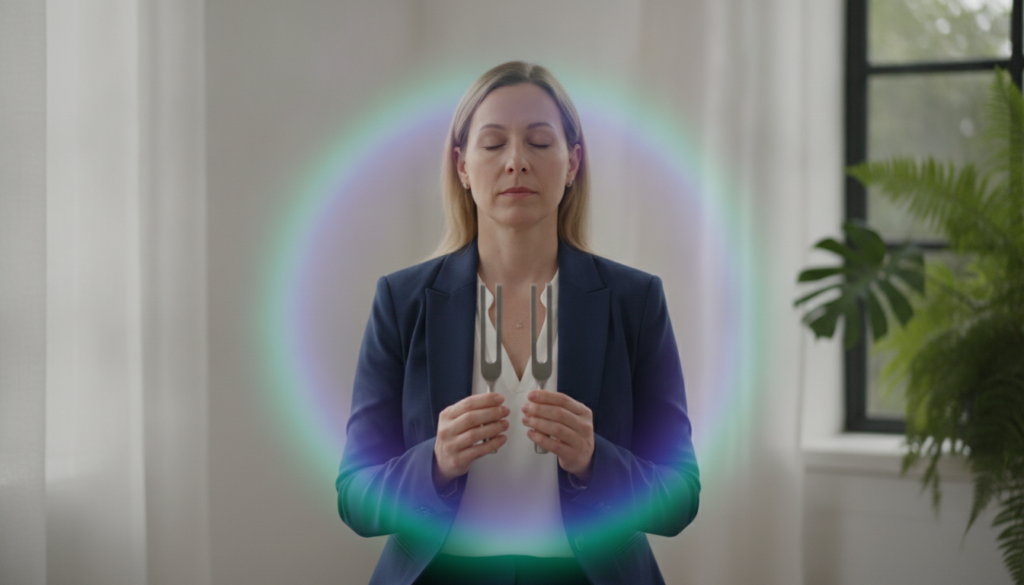
These instruments create an audible tone and gentle vibration. You may hear the frequency through the air or feel it through light contact. Focused listening can also reduce mental noise and bring attention back to the nervous system.
Still, no reliable source proves that one session restores energy or creates lasting balance. Aura language belongs to spiritual and holistic traditions. It should not replace medical treatments, diagnosis, or prescribed care.
Medical history adds useful context. Similar instruments support Weber and Rinne hearing tests, but those tests do not confirm aura effects. Professional practitioners may provide structured sessions with healing tuning forks, yet results can vary.
Judge the experience by comfort, calm, and awareness—not by a dramatic promise.
| Three-minute goal | What to notice | What it cannot prove |
|---|---|---|
| Quiet focus | Steadier breathing | Instant aura repair |
| Gentle sensory awareness | Comfort and calm | A medical cure |
| Personal reflection | Changes in attention | Guaranteed healing |
What Your First Tuning Fork Therapy Session May Feel Like
Your first session may feel simple, quiet, and different from what you expect. Begin in a comfortable seat and hold the instrument by its cork grip. Strike one prong gently against the ball of your thumb, your knee, or a suitable rubber mallet.

Listening to the Tone Before Body Contact
Bring the activated fork near your left ear, then your right ear, without touching either ear. Notice the pitch, volume, and how long the sound remains. Start softly. A larger instrument or firmer strike usually creates a longer tone.
Feeling Vibrations Through the Handle and Body
The handle may carry a gentle vibration into your hand. After the sound fades, activate it again and place the rounded end on a comfortable area, such as the sternum. You might notice buzzing, pulsing, or little sensation at all. Each body responds in its own way.
- Keep contact light and stop if it feels unpleasant.
- Let the tone fade before striking again.
- Focus on comfort rather than a dramatic result.
“Your experience does not need to match anyone else’s.”
How Tuning Fork Sound May Support Relaxation and Body Awareness
A steady tone can give your mind one clear point of focus. During meditation or quiet breathing, listening to a gentle frequency may help you pause and notice your thoughts without judgment.

Light contact with the hand or sternum can make body awareness more concrete. You may sense a soft vibration, warmth, or changing vibrations as the sound fades. Some people find this easier than silent meditation.
Relaxation is possible, not guaranteed. This practice does not treat anxiety, pain, sleep problems, or nervous system disorders. Sound healing may support a personal wellness routine, but it should not replace medical advice or established care.
- Use a short session when starting.
- Stop if the sound or contact feels unpleasant.
- Pair mindful listening with calm breathing.
- Consider it alongside massage therapy or psychotherapy, when appropriate.
Comfort and awareness matter more than a dramatic result.
| Practice focus | Possible experience | Important limit |
|---|---|---|
| Mindful listening | Steadier attention | No guaranteed outcome |
| Hand contact | Clearer body awareness | Stop when uncomfortable |
| Quiet breathing | A calmer moment | Not a medical treatment |
A Simple At-Home Tuning Fork Therapy Practice
Set aside a few quiet minutes for this gentle home routine. Choose a chair, silence nearby alerts, and keep water or warm tea close. A simple intention, such as “I will slow down,” can guide the session without pressure. Short practice works well in a morning or evening routine.
Preparing a Quiet Space and Setting an Intention
Let your shoulders drop and take two easy breaths. You don’t need special points or a perfect setting. Aim for comfort, steady attention, and gentle relaxation.
Activating the Fork Safely
Meinl Sonic Energy recommends holding the instrument by its cork grip. Tap one prong lightly against the ball of your thumb, your knee, or a suitable rubber mallet. Use a soft strike; hard surfaces may cause damage, while loud sound can feel unpleasant.
Placing the Handle on Comfortable Areas
Rest the rounded handle end on a comfortable body area. Feel the vibration fade before repeating. You can compare matching areas on each side, but never force pressure. Stop if the sound or contact feels uncomfortable.
“Let comfort lead the practice, and let the sound remain gentle.”
Choosing the Right Tuning Fork for Beginners
Choosing your first instrument becomes easier when you compare pitch, tone, and comfort. There is no single best option for every listener. Your preferred frequency is personal, so listen before you buy when possible.
Earth-Year and OM for a Calm, Grounding Tone
Earth-Year and OM is tuned to 136.10 Hz. It creates a warm, steady tone that many beginners may find calm and grounding. Traditional wellness systems connect this pitch with stability, but those meanings are not proven medical effects.
Venus for a Bright, Gentle Sound
Venus is tuned to 221.23 Hz. Its brighter, gentle tone may appeal to people who enjoy a lighter listening experience. Traditional associations include harmony, appreciation, and self-care. These ideas can guide reflection, not replace care.
Master Fork for a Clear, Focused Frequency
The Master Fork produces a clear 256 Hz frequency. It suits beginners who want a straightforward, neutral tone. Meinl Sonic Energy makes these products in Germany, while its planetary frequencies follow Hans Cousto’s Cosmic Octave calculations.
Try each option and choose the one that feels most comfortable. Sound preference matters more than a label or promise.
| Option | Frequency | Typical tone |
|---|---|---|
| Earth-Year and OM | 136.10 Hz | Warm and steady |
| Venus | 221.23 Hz | Bright and gentle |
| Master Fork | 256 Hz | Clear and focused |
Exploring Pressure Points and Body Areas With Tuning Forks
Pressure points come from traditional bodywork systems. They are not proven medical targets. Some practitioners use sound near these areas as a mindful way to notice energy and body sensations.
Traditional sources list points 91, 92, and 107 for allergy-related concerns. Point 91 sits along the inner eyebrow. Point 92 rests near the lower nostril, between the nostril and cheek. Point 107 lies below the skull base, between two neck muscles.
For sleep concerns, these sources name points 90, 105, and 28. Point 105 is at the top of the skull. Point 28 sits four finger widths below the kneecap, on the outer leg. These locations do not diagnose or cure a health problem.
- Use light pressure and gentle sound only.
- Avoid the front of the throat and injured areas.
- Stop at once if pain, dizziness, or distress begins.
Use these points for awareness, not as a substitute for medical care.
Persistent allergies, pain, or sleep changes need evaluation by a qualified healthcare professional.
| Traditional area | Suggested location | Safety reminder |
|---|---|---|
| Points 91, 92, 107 | Brows, nostril area, skull base | Use light contact |
| Points 90, 105, 28 | Head and outer lower leg | Do not claim a cure |
| Any sensitive area | Injured or painful tissue | Avoid completely |
Metal Tuning Forks, Crystal Tuning Forks, and Solfeggio Frequencies
Material and pitch shape the listening experience in clear, practical ways. They can change sustain, brightness, weight, and the feel of each vibration. Neither choice proves a healing effect, so select the option that feels comfortable to you.
Why Nickel-Plated Steel Offers Long Sustain
Meinl Sonic Energy instruments are made in Germany from nickel-plated steel. This metal creates a compact, focused tone with longer sustain than softer aluminum. It also stays more stable through temperature changes. The nickel finish helps resist corrosion and surface wear while keeping the instrument balanced in your hand.
What Makes Crystal Tuning Forks Feel Different
Crystal models use pure quartz. They produce an ultra-long sustain, a bright tone, and a distinct tactile feel. Some are set to 440 Hz or 432 Hz, while others use selected Solfeggio frequencies. Quartz may feel more resonant, but that sensation remains personal.
Compare sound, weight, and comfort before buying. The best choice supports mindful listening, not a guaranteed result.
When to Work With a Professional Tuning Fork Therapist
Home practice may suit mild relaxation, but persistent symptoms call for skilled guidance. A qualified provider can offer a structured session and adapt sound, contact, timing, and pressure to your needs.
Consider professional support for ongoing pain, exhaustion, headaches, insomnia, joint concerns, cramps, or digestive symptoms. Extra care also makes sense when exploring pressure points or energy-based work near sensitive areas.
Ask about training, hygiene, costs, session goals, and how the provider works with your medical team. Ask how forks are used and whether the practice includes crystal tuning, metal tuning forks, or products from Meinl Sonic Energy. Crystal tuning forks and healing tuning forks may feel different, but no sound healing method guarantees a cure.
Professional guidance should complement care, not compete with it.
- Discuss severe symptoms, recent injuries, pregnancy concerns, hearing sensitivity, or diagnosed conditions with a clinician first.
- Use this approach alongside physiotherapy, massage, chiropractic care, psychotherapy, or other prescribed treatments.
- Stop if contact causes pain, dizziness, or distress.
| When to seek guidance | What to ask | Safe next step |
|---|---|---|
| Persistent symptoms | Provider qualifications | Contact a clinician |
| Pressure-point work | Contact and hygiene methods | Choose a trained practitioner |
| Existing treatment | Care coordination | Keep prescribed treatments |
Finding Your Own Rhythm With Tuning Fork Therapy
Your wellness routine can begin with a quiet pause, not a perfect method. In three minutes, listen to one tone, breathe slowly, and notice your body. This simple practice may help you create space in a busy day.
Beginners can compare Earth-Year/OM at 136.10 Hz, Venus at 221.23 Hz, or the Master Fork at 256 Hz. Choose the tone that feels most comfortable. Metal and quartz instruments offer different sustain, brightness, and touch. Crystal tuning and Solfeggio frequencies may appeal to curious listeners, but personal comfort matters most.
Energy and aura language can support personal intention, while research does not confirm instant restoration or lasting balance. Keep contact light, protect your hearing, and stop if anything feels wrong. Let comfort guide your practice, and seek medical or professional guidance for ongoing symptoms. Sound healing may complement care, but it should never replace it.