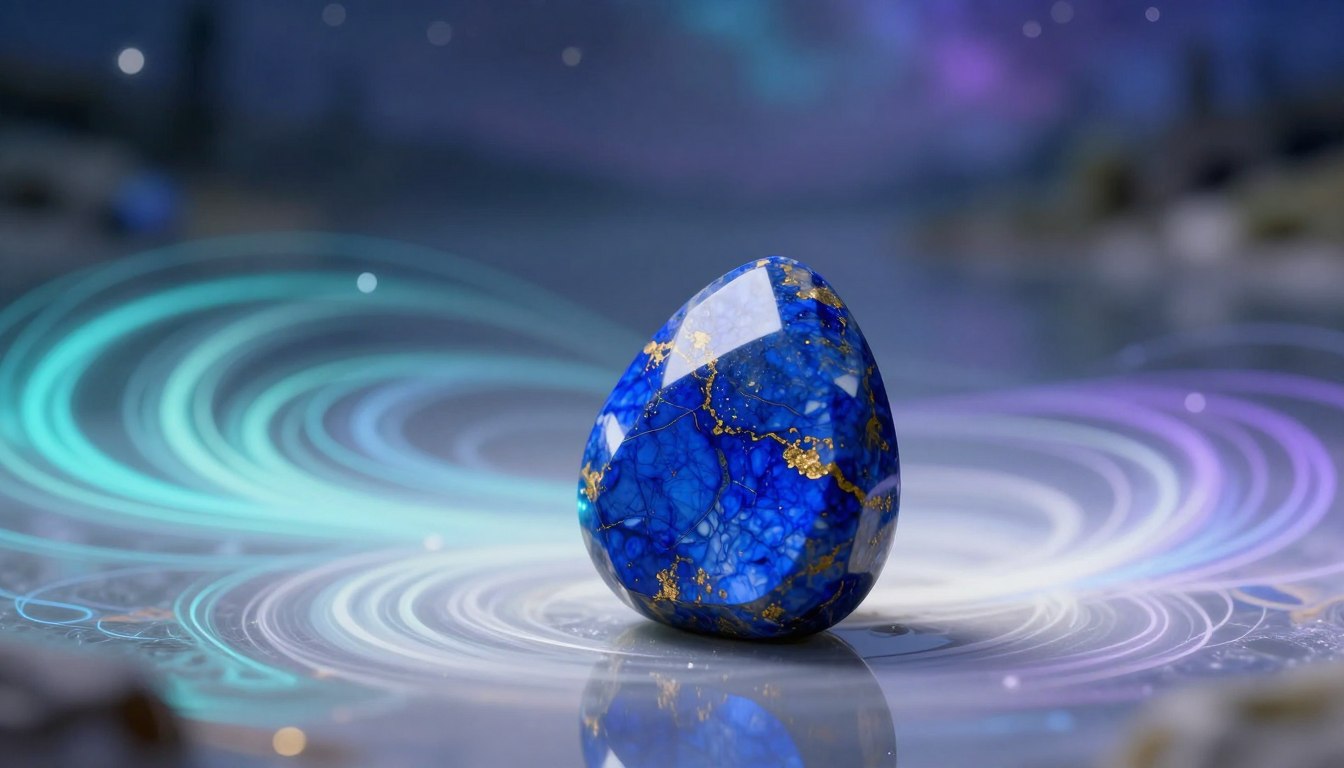
For centuries, this deep-blue stone has inspired questions about memory, wisdom, and inner truth. Its spiritual meaning invites you to look inward and explore the clues that shape your personal story.
Lapis lazuli is a metamorphic rock formed under high pressure, not one single mineral. Its name combines the Latin word for stone or mineral with an Arabic word linked to blue. The oldest major deposits come from Afghanistan, where the gemstone traveled through ancient trade routes and became part of treasured jewelry.
This article explores past-life reflection through meditation, intuition, and honest self-study. It does not present past lives as proven history or replace professional care. Instead, use the stone as a gentle focus for thoughts about the Third Eye Chakra, communication, emotional honesty, and inner wisdom.
Keep an open mind, trust your experience, and let your search for truth remain personal.
Key Takeaways
- The stone has deep ties to wisdom and spiritual reflection.
- Afghanistan is its best-known historic source.
- It formed under intense pressure within the Earth.
- Meditation can support personal insight and self-exploration.
- Past-life work is reflective, not proven evidence.
What Does lapis lazuli meaning Reveal About Your Spiritual Path?
Your spiritual path often becomes clearer when you pause and listen to your own values. In crystal traditions, lapis lazuli serves as a calm focus for that pause. Its rich blue color recalls an open sky, while its golden pyrite and white calcite add a bright, earthy contrast.
Ancient cultures viewed this stone as a symbol of wisdom and truth. Today, many readers use its symbolism to ask better questions rather than seek instant answers. What matters most to you? Which choice feels honest?
The Stone’s Connection to Wisdom, Truth, and Inner Vision
Practitioners often place lapis lazuli near the forehead during meditation. They connect this practice with the third eye and with clearer self-reflection. The traditional properties lapis lazuli carries may include steady energy, stronger intuition, and a calmer view of hard decisions. These ideas remain spiritual beliefs, not scientific claims.
“The quiet mind can notice what the hurried mind misses.”
- Use stone wisdom as a prompt for honest reflection.
- Write down insights after meditation.
- Let stones support focus, not replace judgment.
Why Its Deep Blue Color Feels So Otherworldly
The deep blue surface can resemble a night sky. Its blue hue and celestial blue tones create a sense of distance and wonder. That visual effect is symbolic, not proof of special powers. Still, the image can help you explore spiritual growth with patience and care.
Let the stone’s meaning guide reflection, while your choices guide your path.
The Ancient History and Symbolism of Lapis Lazuli
Across deserts and royal courts, one gemstone carried the drama of night skies into human art. Its intense blue made it a prized symbol of power, protection, and vision.
How Ancient Egyptians Used Lapis for Royalty and Protection
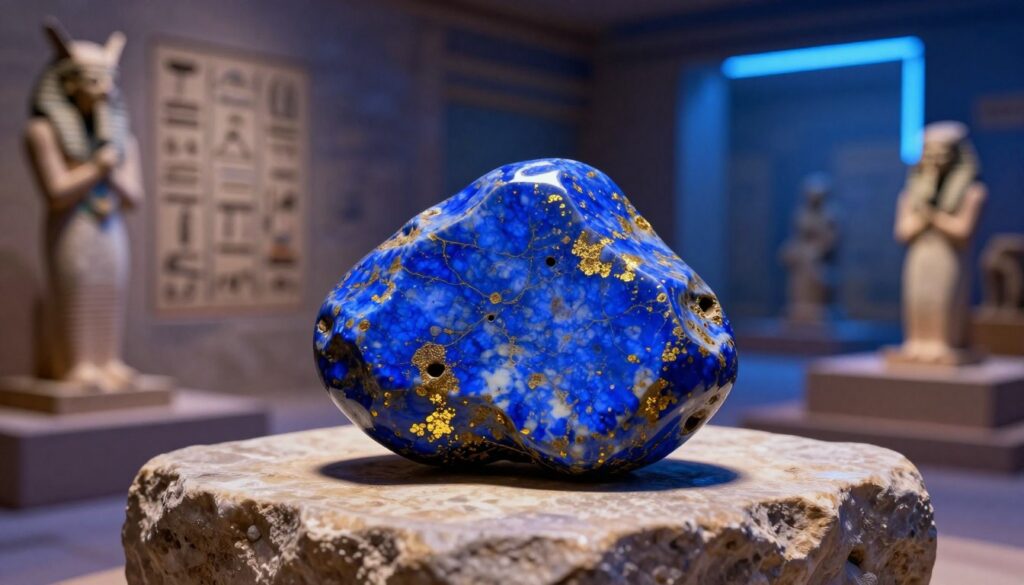
In ancient Egypt, lapis lazuli appeared in jewelry, burial ornaments, eye designs, and beetle charms. Craftspeople shaped the stone into sacred objects for pharaohs and nobles. Its deep blue color suggested the sky, while golden flecks recalled sunlight and gold.
King Tutankhamun’s burial mask offers a vivid example. Blue inlays helped frame the royal face and linked the ruler with divine protection. The gemstone’s rich history also gave it a lasting symbol of wisdom, honor, and truth.
From Pharaohs’ Burial Masks to Renaissance Paintings
Later, European artists ground the blue stone into ultramarine. The pigment often cost more than gold, so painters reserved it for the robes of the Virgin Mary and angels. Michelangelo used ultramarine in the Sistine Chapel, while Johannes Vermeer used its vibrant blue hue in The Girl with a Pearl Earring.
These stones moved from sacred jewelry to celebrated paintings, preserving their cultural meaning across centuries.
| Era | Use | Symbolic Role |
|---|---|---|
| Ancient Egypt | Amulets and jewelry | Royal protection |
| Pharaonic Egypt | Tutankhamun’s mask | Divine power |
| Medieval Europe | Ultramarine pigment | Sacred devotion |
| Renaissance art | Paintings and frescoes | Beauty and status |
What Lapis Lazuli Is Made Of
This blue rock gets its appeal from a blend of minerals, not from one ingredient. Its mix shapes the surface, weight, texture, and overall color. That is why natural pieces can look nearly solid or richly patterned.
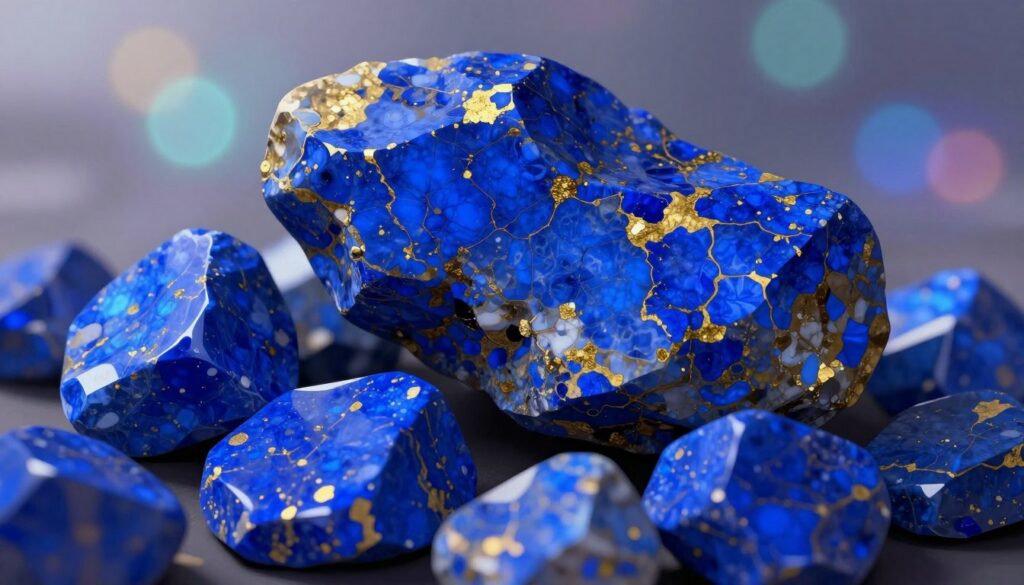
Lazurite, Pyrite, and Calcite Explained
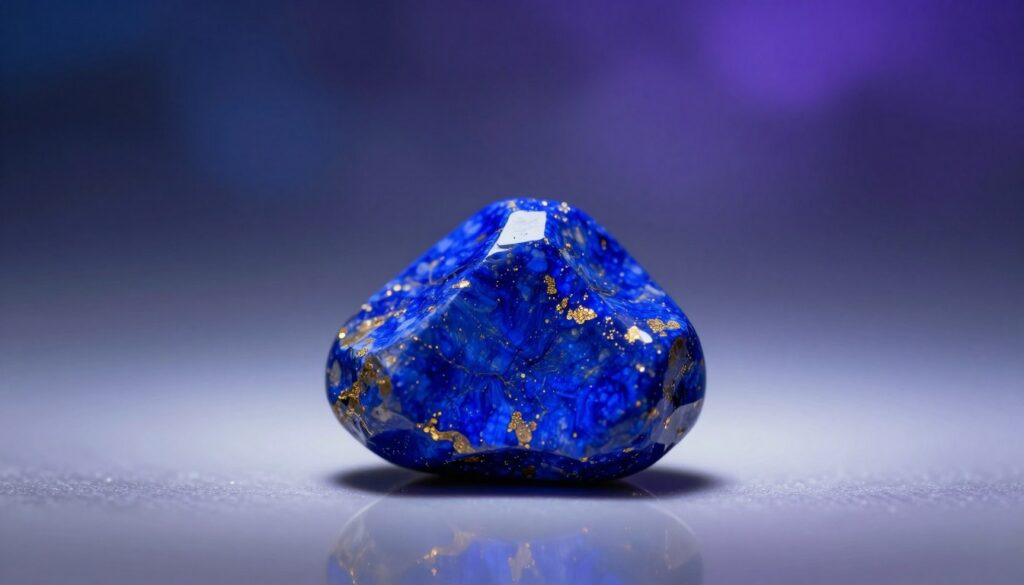
Lazurite creates the deep blue base and gives the material its bold blue hue. Pyrite adds metallic gold details, while calcite forms the white streaks or patches found in some pieces. The balance of these minerals creates each stone’s unique look.
Why Golden Flecks Resemble a Starry Sky
Small flecks of pyrite can shine against the blue color like stars across a night sky. These golden flecks make lazuli-rich material easy to recognize. Some pieces show only a few bright marks, while others display a dramatic pattern.
How Hardness and Texture Affect the Gemstone
With a Mohs hardness of 5 to 6, the stone suits pendants, beads, and careful jewelry use. It can scratch against harder gems, so rough daily wear calls for care. Its density ranges from 2.5 to 3, giving genuine stones a solid feel for their size.
Remember: this is a metamorphic rock, not a single mineral.
Where Lapis Lazuli Comes From Today
Afghanistan remains the leading modern source of lapis lazuli, especially near the remote Sar-e-Sang mines in Badakhshan Province. These mines have operated for more than 7,000 years. Their output helped shape the gemstone’s rich history in trade, art, jewelry, and ceremonial objects.
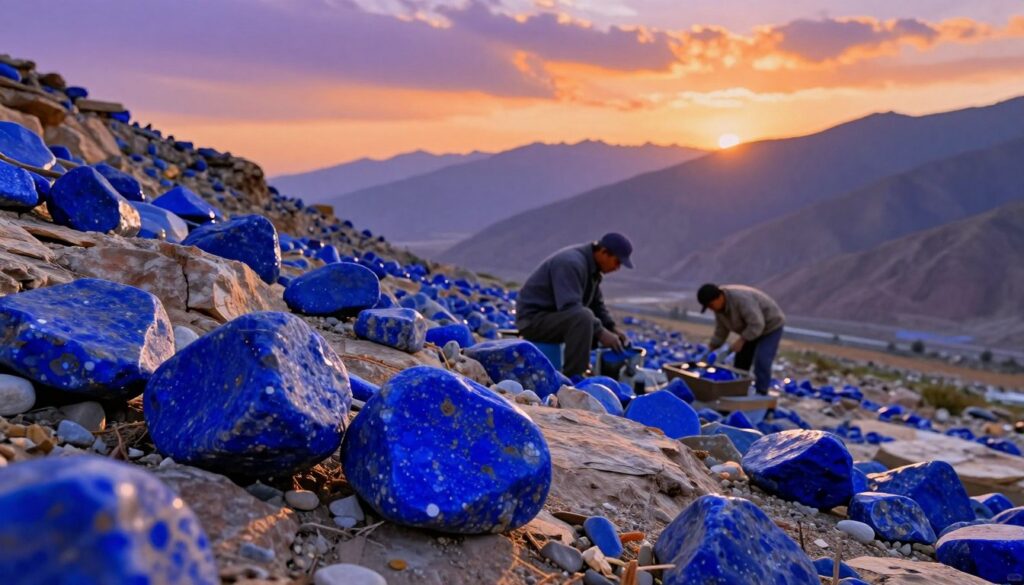
Chile also gives this blue stone a special place. The country recognizes it as its national stone. Other known sources include Russia, Italy, Mongolia, Peru, Angola, Pakistan, Burma, Canada, and the United States.
Origin can affect a piece’s color, texture, and mineral pattern. One region may produce vibrant blue material with few marks. Another may show white calcite or visible pyrite. Bright golden flecks can also vary from one stone to another.
When shopping, ask about mining location and treatment. A clear source record helps you compare stones with greater confidence. Geographic origin adds useful context, but appearance and craftsmanship still matter when choosing a natural gemstone.
Understanding where lapis lazuli comes from connects each piece to both Earth’s geology and human history.
Lapis Lazuli Meaning and the Mystery of Past Lives
Some memories arrive as feelings before they become clear thoughts. In spiritual practice, lapis lazuli can serve as a calm symbol for exploring those impressions. Its traditional meaning connects with intuition, truth, and emotional healing, but past-life ideas remain personal beliefs rather than verified facts.
Using the Blue Stone for Past-Life Reflection
Hold a polished stone, wear lapis jewelry, or sit quietly beside meditation stones. Focus on its celestial blue color, then journal about familiar places, symbols, dreams, or recurring emotions. Ask what these patterns may teach you about your present life.
- Take slow breaths for two minutes.
- Notice images, feelings, and body sensations.
- Write freely without calling each impression proof.
What Intuition May Reveal During Spiritual Work
Crystal traditions link this practice with the third eye chakra and inner vision. Some people also connect it with the third eye or eye chakra. The properties lapis traditions describe may support focused attention and spiritual growth, yet grounded judgment remains essential.
“Let curiosity open the door, but let discernment choose what enters.”
Use this spiritual journey to learn more about yourself, not to make dramatic predictions.
Lapis Lazuli, the Third Eye, and the Throat Chakra
In crystal traditions, lapis lazuli represents quiet focus and inner awareness. Its deep blue color is often linked with the frontal chakra, also called the third eye chakra. Many people connect this center with intuition, foresight, and inner vision.
Opening the Third Eye Chakra Through Meditation
Begin by placing a stone near your forehead. Sit comfortably, breathe slowly, and watch your thoughts come and go. Do not force a vision. Instead, notice colors, feelings, or ideas with gentle curiosity.
- Relax your shoulders and take five steady breaths.
- Focus on the stone’s celestial blue surface.
- Write down any useful thoughts after your session.
This eye chakra practice may support attention and personal reflection. A second eye chakra connection comes from its place near the brow, where many traditions associate inner knowing with calm awareness.
Practitioners also link this stone with the throat chakra. Meditation may encourage honest speech and clearer self-expression. Lapis jewelry can serve as a reminder to pause, listen inwardly, and speak with care.
Use chakra work as reflection, not as medical care or a guaranteed source of energy.
Emotional and Spiritual Healing Properties of Lapis Lazuli
Emotional balance often begins with a pause. The rich blue hue of this stone can create a calm visual focus during reflection. Crystal traditions view its properties as supportive of self-awareness, honest feelings, and steady personal growth.
Calming Stress and Encouraging Self-Expression
The properties lapis lazuli is said to offer include calm energy and emotional honesty. Its traditional link to the throat chakra encourages thoughtful listening and clear communication. Wearing jewelry or carrying small stones can remind you to breathe before reacting and say what you truly mean.
Supporting Confidence, Communication, and Personal Growth
Crystal guides also associate this stone with confidence, creativity, memory, learning, and clearer thinking. These ideas may give reflection a helpful structure, but they do not promise results. Let the color inspire truth, while your actions shape lasting change.
- Use stones as reminders, not cures.
- Pause before difficult conversations.
- Choose professional care for stress, headaches, thyroid concerns, or other health issues.
Gemstones can support a personal ritual, but they never replace qualified medical advice or treatment.
Ways to Use Lapis Lazuli in Everyday Spiritual Practices
Small daily habits can turn a favorite crystal into a useful reminder of your goals. Wear a lapis lazuli necklace, bracelet, or amulet when you want to support calm communication, intuition, and personal focus.
A polished sphere offers a steady point for mindfulness or guided visualization. Hold it during a short third eye chakra meditation, or place it near your journal, desk, altar, or quiet reading corner. The properties lapis traditions describe may encourage reflection, but your choices create real change.
For dream work, place the stone beside your bed or under your pillow. Record your dreams as soon as you wake. This simple habit can help you notice themes without treating every image as fact.
Crystal grids, Reiki practices, and home décor give stones a visible role without complex steps. Choose jewelry that matches your style, such as sterling silver, stainless steel, rose gold, or gold settings. Let the stone’s spiritual meaning support intention, not replace practical judgment.
| Use | Simple Practice | Focus |
|---|---|---|
| Jewelry | Wear a necklace or bracelet | Communication |
| Sphere | Use during quiet breathing | Chakra focus |
| Bedside stone | Record dreams each morning | Self-reflection |
| Home display | Place near a journal or desk | Daily energy |
How to Clean, Charge, and Recognize Genuine Lapis Lazuli
Simple care helps preserve your stone’s deep blue surface and natural texture. Cleansing and charging are spiritual practices, not scientific necessities. Choose a method that feels meaningful and safe for your routine.
Gentle Cleansing Methods for Your Stone
Wipe it with a soft cloth after use. For a brief rinse, use cool water, then dry it at once. Avoid long soaking, harsh soap, and rough salt, since this material has a Mohs hardness of only 5 to 6. Smoke from sage or incense, singing-bowl sound, dry earth, quartz, and selenite offer gentler ritual options.
Recharging Lapis Lazuli Under Moonlight
If moon rituals appeal to you, place the piece under full-moon light overnight. The next morning, hold it and set a simple intention before wearing the jewelry again. This practice may support focus and energy, but it does not change the stone’s physical properties.
Spotting Pyrite, Calcite, and Common Imitations
Authentic material often shows an intense blue color with natural golden flecks of pyrite and white calcite. Pyrite looks gold, while calcite appears white. A dense feel and uneven pattern can help, yet color alone cannot prove truth. Sodalite is often confused with it, so request a reputable seller’s details. Store jewelry away from harder stones and abrasive surfaces.
Let Lapis Lazuli Guide Your Journey Toward Inner Wisdom
The story of lapis lazuli joins Egyptian symbolism, Afghan origins, Renaissance art, and mineral science. Its deep blue color, golden pyrite, and white calcite give each gemstone a distinct character. This history adds depth to its meaning without turning belief into fact.
Use lapis lazuli in meditation, journaling, dream work, or communication practice. A third eye focus may help settle your attention, while personal experience matters more than dramatic promises. Explore these blue stone properties to deepen your practice.
Let stone wisdom support a grounded spiritual journey. This ritual may encourage truth, self-awareness, and spiritual growth. Keep curiosity and skepticism close, and treat energy as a personal idea rather than medical proof. Choose the setting and pace that feel right for you.