

If you’ve been asked to carry the offerings during a service, you might feel a bit nervous. That’s totally normal! This guide will help you feel at ease and enjoy this special moment.
The act of presenting the bread and wine is more than just a task. It symbolizes the entire community coming together, offering a small part of their blessings back to God. Many people hesitate at first because they’re shy or worried about being in the spotlight. But rest assured, it’s a simple and meaningful gesture.
By the end of this guide, you’ll know exactly when to stand, where to go, and how to present the items to the priest. Remember, it’s not about being perfect. What truly matters is approaching this moment with a willing heart and respect.
Key Takeaways
- Feeling nervous is common; this guide will help you gain confidence.
- The offertory is a beautiful tradition that involves everyone.
- It’s about representing the community and offering blessings back to God.
- Understanding the deeper meaning enhances the experience.
- Approach the moment with reverence, not perfection.
What Bringing Up Gifts Means in Catholic Mass
Bringing forth the gifts during a service is a meaningful gesture. It marks a significant moment in the Mass, especially right after the Prayers of the Faithful. This transition signals the shift from the Liturgy of the Word to the Liturgy of the Eucharist. These two parts aren’t separate; they’re two moments of one single mystery.
As the priest leaves his seat and moves to the altar, the focus shifts to the sacrifice. This is when the gift bearers begin to make their way forward. Originally, this rite was quite simple, involving just the silent placement of bread and wine on the altar. Over time, a procession was added, often accompanied by hymns, enriching the experience.
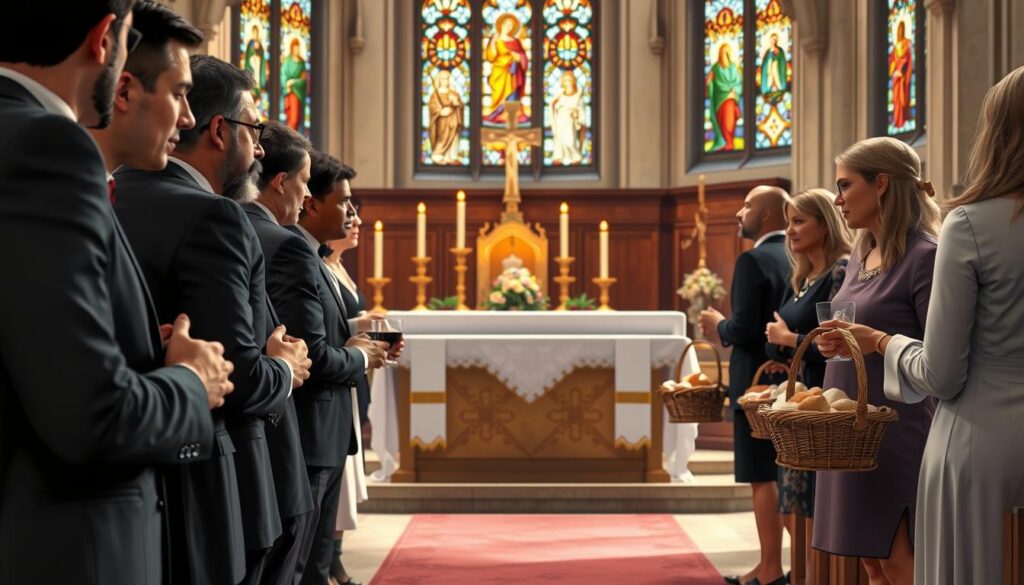
The gifts of bread and wine are not merely practical items for the Eucharistic prayer. They represent all of creation being taken up by Christ to be presented to the Father. When parishioners carry these offerings, they symbolize everyone in the church, bringing forth the prayers, joys, sufferings, and work of the entire community.
Moreover, the bread and wine also reflect each one of us. Just as they are transformed into the Body and Blood of Christ, we too are being transformed as members of that Body. Families often have the honor of bringing the gifts at weddings and funerals, but this beautiful act also occurs during regular Sunday Masses.
Anyone can be a gift bearer; there’s no need for special training or status. All it takes is a willingness to serve the parish in this visible way. Remember, this isn’t just a task to check off. It’s a symbolic act of offering yourself along with the gifts, joining your own story to the sacrifice of Christ.
How to Bring Up Gifts Catholic Mass: A Simple Step-by-Step Process
The moment of presenting the gifts can be both exciting and nerve-wracking. But don’t worry! This guide will walk you through the process, making it easy and meaningful.
Before the offertory begins, there are a few things to keep in mind. Start by letting the hospitality ministers or ushers know you’ve arrived. This way, they’ll be aware that the gift bearers are ready to participate.
Preparing Before the Offertory
Sit near the end of your pew. This makes it easier for you to slip out quietly when it’s time to go to the back of the church. When the priest says, “Let us profess our Faith,” that’s your cue to stand up and head toward the back.
The gifts will be on a table on the left-hand side of the church. Wait there until the monetary collection is finished and everything is ready for the offertory.
The Roles: Bread, Wine, and Collection
There are three Gift Bearers during the Mass:
- Collection Bowl: This role must be filled by an adult.
- Wine: One person carries the wine.
- Bread: The last person carries the bread.
If you’re part of a larger family, other members can walk alongside reverently.
Walking Down the Aisle with Reverence
When the priest stands at the front of the altar, you can begin walking down the center aisle. Remember to take your time. Walk slowly and reverently, standing close enough to the priest so he can easily take the gifts from you.
Offering the Gifts and Returning to Your Seat
As you approach the altar, hold the gifts upwards and forwards to the priest. Here’s how the handoff works:
- The first Gift Bearer presents the collection bowl and then steps aside.
- The second Gift Bearer hands over the wine, holding the cruet in the left hand and supporting it with the right. If there’s a handle, make sure it faces the priest for an easy handoff.
- The third Gift Bearer presents the bread last.
After all gifts are presented, the priest may say a few words of thanks. Then, everyone bows together toward the altar before returning down the aisle.
Finally, walk back to the rear of the church and quietly return to your seat. The whole process takes just a couple of minutes. Stay calm, move with reverence, and enjoy this special moment.
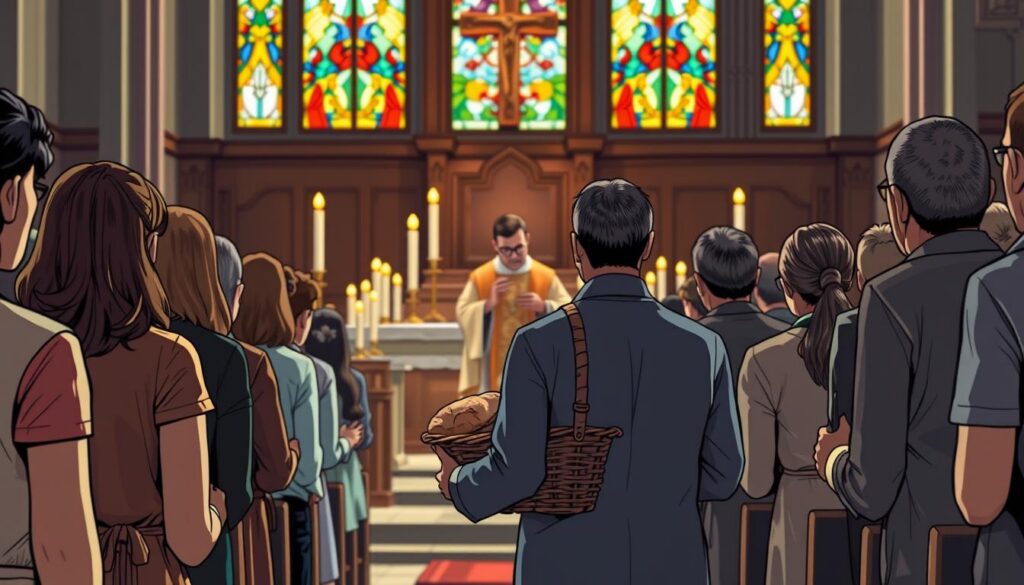
Understanding the Deeper Meaning Behind the Gifts
When you step forward with the bread and wine, you’re taking part in a tradition rich with meaning. This act connects you to a long history of faith and community. It’s not just about transporting objects; it symbolizes a collective offering of ourselves and our lives.
Offering More Than Bread and Wine
The bread represents the earth and human labor coming together. It embodies “what earth has given and human hands have made.” The wine, too, is “fruit of the vine and work of human hands.” This means your daily work and struggles are symbolically carried to the altar.
Joining in the Work and Prayers of the Parish
When you carry the collection basket, it’s not merely about money. This act shows your willingness to share what you’ve been given. It’s a way to support the building of God’s kingdom and assist those in need. This moment is about everyone in the church joining in the offering, not just those at the altar.
What the Gifts Say About Our Faith and Community
The priest’s quiet prayers during this moment ask God to receive us with humble and contrite hearts. The offertory is as much about offering yourself as it is about the bread and wine. When the faithful respond, “Blessed be God for ever,” everyone is part of that act of offering.
The bread and wine will become the Body and Blood of Christ. In a parallel way, we as members of the parish are transformed, shaped more into the Body of Christ through our participation. This simple gesture shows a willingness not to hold back and to follow Christ wholeheartedly.
Pope Benedict XVI noted that this moment doesn’t need extra symbols or complexity. The simplicity of bread and wine carries everything: all human realities, all creation, and all the pain and suffering of the world. Even if you’re not the one physically carrying the gifts, you’re included in that symbolic gesture every single time.
| Element | Symbolism |
|---|---|
| Bread | Earth and human labor combined |
| Wine | Fruit of the vine and human work |
| Collection | Willingness to share and support |
| Priest’s Prayer | Offering of self and gifts |
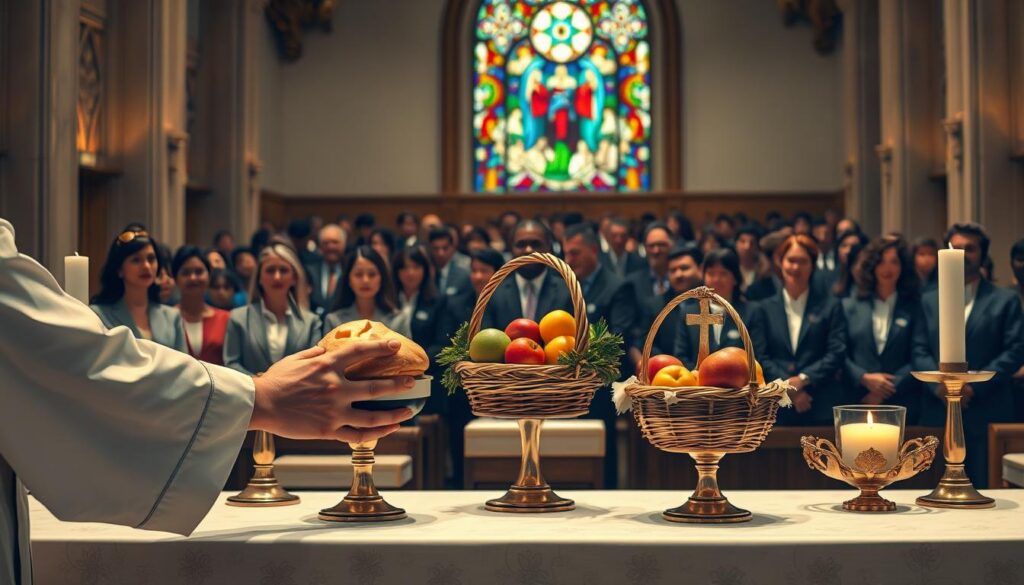
Feeling Ready to Bring the Gifts? Embrace the Moment
Stepping forward to present the offerings can feel a bit daunting. It’s completely normal to feel nervous or shy about being in the spotlight. Many share these feelings, but remember, this invitation is personal. It’s not just a task for anyone; it’s a chance to respond to God’s call.
Take a moment to think about what’s holding you back. Often, we build barriers for ourselves, even for simple acts. The steps are straightforward: let the ushers know you’re there, sit at the end of the pew, and walk slowly to the altar. Hand the bread or wine to the priest, bow, and return to your seat.
No one expects perfection. The priest and the parish appreciate your willingness to serve. If you fumble a little, that’s okay! This small act connects you to the entire community and the prayers of the faithful.
Next time you see someone bringing up the gifts, you’ll feel more connected to the liturgy. If you’ve been asked, say yes, take a deep breath, and let the moment be a quiet, beautiful offering of yourself alongside the gifts.