
When you’re sitting in a pew, perhaps for the first time in years, you might find yourself pondering the significance of the gifts presented during a Catholic funeral. These offerings go beyond mere tradition; they carry deep meaning for those left behind. This article aims to guide you through the essentials without overwhelming you with church jargon.
Funerals serve as a way for family and friends to come together in their grief. It’s not just a quick farewell; it’s a chance to lean into shared emotions. You’ll discover how simple elements like bread and wine can symbolize profound love and respect for a life that mattered.
We’ll explore how these rituals create a sacred space for both tears and laughter, allowing families to process their loss together. By the end, you’ll understand why these offerings are vital, not just for the deceased, but for everyone navigating the path of life after death.
Key Takeaways
- Funerals are a community event, bringing people together in shared grief.
- The gifts presented hold deep significance beyond their physical form.
- These rituals help families process loss and celebrate life.
- Simple elements like bread and wine carry emotional weight during the service.
- Understanding these traditions can enhance your experience and connection.
Understanding the Catholic Funeral Mass: More Than Goodbye
Attending a funeral Mass can feel overwhelming, especially if it’s your first time. But this service is designed to be much more than just a goodbye. It creates a sacred space for those left behind, allowing them to grieve together and find comfort in their faith.
The funeral Mass serves a vital purpose. It’s not merely a ritual for the deceased; it’s a time for family and friends to come together in their shared sorrow. The Church offers a comforting environment where everyone can express their grief openly. This communal aspect reminds us that we’re not alone in our pain.
The Purpose of the Funeral Mass
Many people think of a funeral Mass as just a lengthy service. However, it’s really built for the living as much as for the deceased. The focus is on providing a place where family and friends can bring their grief without needing to pretend everything is okay.
During the Mass, the body of the deceased is present, which makes the reality of death tangible. This moment is crucial as it helps attendees begin to accept their loss. The readings and hymns chosen for the service are not random; they are selected to speak directly to those who are hurting, reminding them that death does not have the final word.
How the Community Comes Together
When the community gathers for a funeral Mass, it’s about more than just filling seats. It’s a powerful statement of support, saying, “You’re not doing this alone.” The service weaves together scripture, music, and prayer, allowing people to cry while feeling embraced by something larger than their sadness.
This rhythm moves from sorrow toward hope, and that’s intentional. The Church has been guiding people through this journey for centuries because it truly helps. As the priest leads the Mass, he honors the life that was lived while also pointing toward what comes next. It’s a beautiful blend of grief and faith, where every element serves a purpose.
In essence, rushing through or skipping the funeral Mass means missing out on a vital opportunity for healing. It’s a time to come together, to pray, and to celebrate the life of a loved one, creating a lasting memory that honors their journey.
The Role of Gifts in Catholic Funerals
Gifts offered during a Catholic funeral serve as heartfelt acknowledgments of love and faith. These offerings are not random items; they play a crucial role in the Mass, allowing families to actively participate in a meaningful way.
Bringing bread and wine to the altar is a physical act of gratitude. It says thank you for the life of the person who has passed and honors the faith that unites everyone present. This moment connects life, death, and the beliefs surrounding eternity.
A Sign of Thanks and Offering
When family members walk those gifts down the aisle, they are engaging in a ritual their loved one likely participated in countless times. This continuity is significant and meaningful. The Church emphasizes that this is not the time for personal items, like golf clubs or knitting needles. Those belong elsewhere in the funeral rites.
- The offerings are not just shown; they are given. They remain at the altar and become part of the Eucharist.
- This act is about giving something to God on behalf of the deceased, rather than displaying personal hobbies.
- Understanding this distinction helps families make informed choices about their involvement in the funeral liturgy.
Linking Life, Death, and Faith
The act of offering these gifts ties the family’s love for the deceased directly into the sacrifice of the Mass, which is central to Catholic faith. It highlights the difference between honoring someone’s personality and the purpose of the offertory.
In essence, these offerings are not merely decorations; they are profound expressions of gratitude and love. Recognizing their role can enhance the experience for everyone involved during this sacred time.
What Are the Gifts at a Catholic Funeral: Bread, Wine, and More
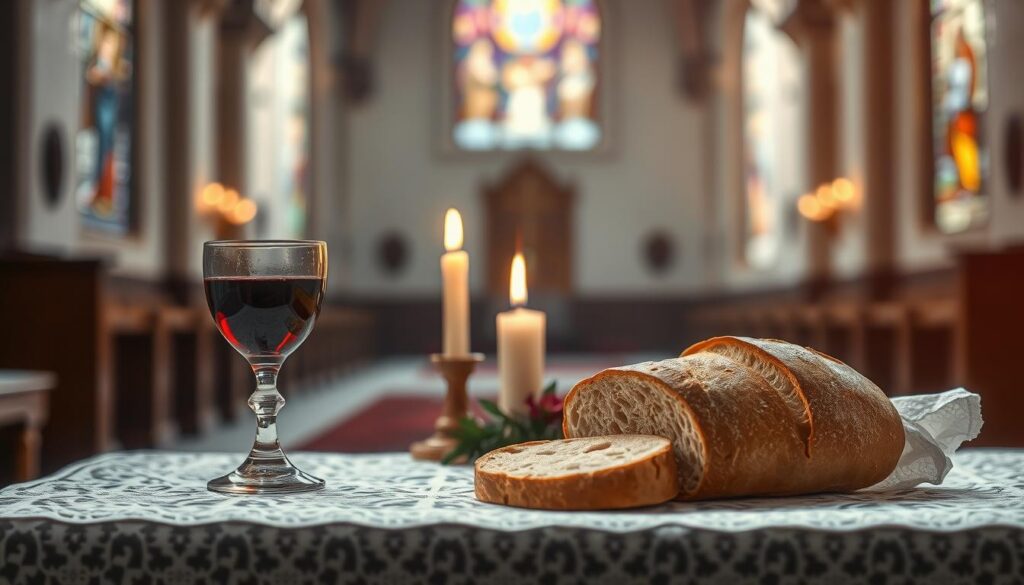
During a Catholic funeral, you’ll notice that certain offerings hold special meaning for everyone involved. The main items presented are the bread and wine, which play a crucial role in the Eucharist during the Mass. These offerings are not just ceremonial; they embody deep faith and connection among attendees.
The Bread and Wine: Preparing the Eucharist
The bread used is unleavened, simple, and humble. It represents the work of human hands and the earth that God has given us. This is a significant choice, as it reflects the community’s unity in faith.
The wine is real wine, not grape juice, and when combined with the bread, it becomes the focal point of the entire liturgy. Catholics believe that these elements truly become the Body and Blood of Christ during the Mass, so they are treated with utmost reverence.
The Collection: Supporting the Church and Family
Alongside the bread and wine, there’s also the collection taken during the offertory. An adult typically carries the collection bowl, which supports the parish and can help the family with funeral costs. This act of giving is another way to express love and community support during this difficult time.
Some parishes use three gift bearers: one for the collection, one for the wine, and one for the bread. The order in which they walk is important, as it reflects the flow of the Mass.
Other Symbolic Items and Their Place
If families wish to include other symbolic items that represent the deceased’s life, those should be carried into the Church at the Reception of the Body, not during the offertory. The Church emphasizes this distinction because the offertory is focused on preparing for the Eucharist, rather than displaying personal mementos.
Understanding this helps families avoid awkward moments and keeps the focus where it belongs during the Mass. The bread and wine aren’t just symbols; they carry profound significance in the Catholic faith, making them essential to the funeral service.
| Offering | Description | Significance |
|---|---|---|
| Bread | Unleavened, simple, and humble | Represents human labor and God’s creation |
| Wine | Real wine, not grape juice | Becomes the Blood of Christ during the Eucharist |
| Collection | Monetary offering taken during the Mass | Supports the parish and assists the family |
How Gifts Are Presented During the Funeral Mass
If you’ve been chosen to present gifts during the Mass, it’s normal to feel a bit anxious about what to do. This role is significant and helps connect the family to their loved one in a special way. Here’s a guide to help you navigate the process with confidence.
Who Brings the Gifts: Gift Bearers Role
Typically, family members or close friends are selected as gift bearers. There are usually three individuals involved: one for the collection bowl, one for the wine, and one for the bread. This group plays a crucial role in the Mass, symbolizing unity and support for the family.
The Order and Procession
As the service progresses, you’ll leave your pew when the priest says, “Let us profess our Faith.” From there, head to the back of the church where the gifts are usually placed. The order of procession is important: first, the usher with the Book of Intentions, followed by the gift bearers in this order: collection bowl, wine, and then bread.
It’s essential to wait until the priest and altar servers are ready before walking down the aisle. This ensures everything flows smoothly and respectfully.
Practical Tips for Gift Bearers
- Walk slowly. There’s no need to rush; this is a solemn moment, and moving too quickly can create discomfort.
- When handing the wine to the priest, hold the cruet in your left hand, using your right hand for support. Make sure the handle faces him for easy grasping.
- Stand close enough to the priest so he doesn’t have to reach far. It’s awkward for everyone if you’re too far away.
- After presenting your gift, step aside to allow the next person to come forward. All gift bearers should bow together toward the altar before returning to their seats.
By following these steps, you can fulfill your role with grace and honor, allowing the family to focus on their time of remembrance without added stress.
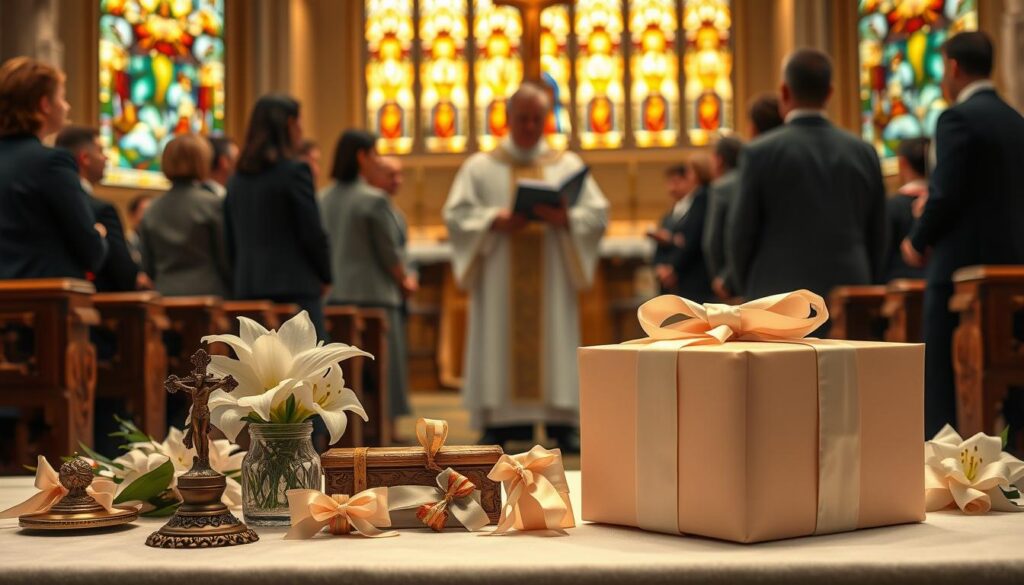
Spiritual Meaning Behind the Gifts
In the sacred space of a funeral, one may reflect on the profound significance of the offerings presented. These elements are not merely symbolic; they embody deep faith and connection among all attendees. The bread and wine hold a transformative power that speaks to the core of Catholic belief.
Becoming the Body and Blood of Jesus Christ
The bread and wine aren’t just snacks for a symbolic meal. Catholics believe that during the consecration, they actually become the Body and Blood of Jesus Christ. This belief is a cornerstone of the faith, and it’s why these offerings are treated with such care. The offertory is not the place for casual add-ons; it is a moment of deep reverence.
When these gifts are placed on the altar, they represent the entire community offering themselves to God along with the deceased. This act is powerful and speaks directly to what Catholics believe about death: it is not the end but a profound change.
What the Gifts Say About Life and Death
Just as simple bread becomes something sacred, the person who died is entrusted to God for transformation into eternal life. The gifts say something about life too. They come from the earth and human work, connecting the everyday aspects of living with the mysteries of faith.
There is a strong connection between the sacrifice of the Mass and the love the family has for the person they lost. Both are about giving something precious. Understanding this meaning can turn the offertory from a confusing ritual into one of the most powerful moments of the funeral.
It’s about recognizing that the gifts carry the family’s love and grief right up to the altar, where they are caught up in something eternal. This moment allows mourners to see their loss through the lens of resurrection, providing comfort and hope.
| Offering | Transformation | Spiritual Significance |
|---|---|---|
| Bread | Becomes the Body of Christ | Represents unity and sacrifice |
| Wine | Becomes the Blood of Christ | Symbolizes life and redemption |
| Community | Collective offering | Embodies shared love and faith |
The Family and Community’s Part in Offering Gifts and Prayers
Gathering for a funeral isn’t just about saying goodbye; it’s about coming together as a community. The entire parish shows up, offering support and love during this challenging time. Even those who may not know the family personally come to honor the deceased, reflecting the unity of the body of Christ.
When family members carry the gifts forward, they symbolize more than just their own grief. They represent everyone in the pews who is praying and grieving alongside them. This collective act reinforces the bond between the family and their community.
Honoring the Deceased Together
The prayers of the faithful during the Mass allow family members to voice specific intentions. The priest collaborates with them beforehand to ensure the words resonate deeply. This partnership creates a personal touch without overshadowing the sacredness of the Mass.
Another important element is the homily. The priest prepares it in consultation with the family, weaving the deceased’s life into the scripture readings. This makes the service feel more intimate and connected to the person being honored.
How Prayers and Gifts Work Hand in Hand
The gifts and prayers work together seamlessly. The physical offerings symbolize love and remembrance, while the prayers articulate the community’s collective grief. Both rise from the congregation as a single act of love, creating a powerful atmosphere during the service.
When the people in the pews respond to the prayers, they actively participate in the moment. This shared voice can be incredibly comforting when someone is drowning in grief. The celebration of the funeral Mass reminds everyone that the deceased was part of a faith community that extends beyond death.
This section illustrates that the family doesn’t have to carry the weight of their loss alone. The community stands with them through the gifts, the prayers, and their mere presence. Honoring the deceased together transforms individual sorrow into something shared, making it a little easier to bear.
When and Where Gifts Appear in the Funeral Rites
Knowing when and where to present offerings can bring comfort to families during a Catholic funeral. There are two key moments in the funeral rites where items are presented, and they serve different purposes.
At the Reception of the Body
The first moment is the Reception of the Body, which usually happens at the church before the Mass begins. This is when the coffin is brought in, sprinkled with holy water, and placed before the Paschal Candle.
During this time, the family can place Christian symbols on the coffin, like a cross or a Book of the Gospels. This is also the right moment for personal emblems that reflect who the deceased was.
Items like a favorite rosary, a wedding photo, or something from their work have a designated place near the coffin or the family. However, they must not replace the baptismal symbols.
During the Offertory at Mass
The second moment is the offertory during the Mass, which is strictly for the bread, wine, and collection. No personal mementos are allowed here.
Timing matters. Gift bearers need to slip out of their pews at the end of the Prayers of the Faithful and wait at the back until the collection is ready.
The order of events at the funeral home or church can vary a little by parish, but the structure is consistent: Reception first, then Mass with the offertory.
The priest leads each part, guiding the service from private grief into public liturgy in a way that feels natural once you understand the rhythm.
This section maps out when and where everything happens so families can plan ahead and not feel lost in the middle of their grief. Knowing the difference between the Reception and the offertory helps everyone avoid that awkward moment of bringing the wrong thing to the wrong place.
Balancing Tradition and Personal Touch in Funeral Gifts
Navigating the emotional landscape of a funeral can be tricky, especially when trying to honor a loved one while respecting cherished traditions. Families often want to make the service feel personal, and that’s completely understandable. The Church makes room for that, but there are boundaries.
The key is knowing where personal touches fit and where they don’t. The offertory is not the place for personal items. Instead, the Reception of the Body is the appropriate moment to share these meaningful tokens.
Respecting Catholic Symbols
If you want to place something meaningful on or near the coffin, like a family photo or a medal, that happens at the start of the service. Flags and secular emblems must be removed before the coffin enters the church. The focus is on the person’s baptismal identity, not their nationality or affiliations.
Adding Family Emblems Without Disrupting the Ritual
Words of remembrance are welcome, but they belong at the Reception, the graveside, or the gathering afterward, not during the Mass itself. The Mass is primarily an act of praise of God, not a time for delivering a eulogy.
Some families worry that following the rules means the funeral will feel cold or impersonal. It won’t. The personal elements just need to find their right place. The priest can guide the family on how to weave personal stories into the homily and the prayers without turning the liturgy into a biography.
This section helps families figure out how to honor their loved one’s unique life while still respecting the sacred structure of the funeral. The balance isn’t hard to strike once you understand the why behind the rules. It’s not about being rigid; it’s about keeping the focus on what the Mass is actually for.
When done well, the funeral feels both deeply personal and deeply sacred, and that’s what most families really want.
Why These Gifts Matter: Remembering Love and Life
During this sacred time, each offering speaks volumes about the bonds we share and the love we carry. The gifts presented aren’t just about bread, wine, or collection bowls; they’re about love made visible. When families walk those offerings to the altar, they’re doing the last thing they can for the person they lost—offering them back to God with gratitude.
The funeral Mass provides a space to say thank you for a life that mattered, even when words feel inadequate. Grief can be exhausting, tempting us to rush through the service. Yet, slowing down and embracing the ritual can be healing in unexpected ways.
These offerings remind us that death isn’t merely an end. For many, it’s a doorway, and the Mass expresses that hope aloud. The community, prayers, and the sacred elements wrap around the family like a comforting blanket, showing that the service is as much for the living as it is for the deceased.
Understanding the meaning behind these offerings transforms the Mass from an obligation into a privilege. The departed leave behind more than memories; they leave a faith that proclaims love is stronger than death. As families walk out of the church, they carry that hope with them, perhaps the most important gift of all.