
Have you ever noticed that moment during Mass when everything shifts? It’s that transition right after the Creed, where we move from readings into something deeper. This is when the gifts come forward, and it’s more significant than it seems at first glance.
The Liturgy of the Eucharist begins with this preparation. The priest rises from his seat and walks to the altar, marking a shift in focus. The altar becomes the center for what’s about to happen—the offering of bread and wine, which symbolizes a profound connection to Jesus’ actions at the Last Supper.
Originally, this act was simple. Bread and wine were placed on the altar quietly. Over time, it evolved into a procession, allowing the faithful to participate actively. This shared moment emphasizes our collective journey and transformation as members of Christ’s Body.
Understanding this timing enriches your experience, turning passive observation into active participation. So, let’s explore when these gifts are brought forward and why it matters.
Key Takeaways
- The gifts are presented right after the Creed, marking a transition in the Mass.
- This act is rooted in Jesus’ Last Supper, connecting us to His sacrifice.
- The priest’s movement to the altar signifies the shift in focus.
- Originally a quiet act, it has evolved into a shared procession.
- This moment prepares us for the Eucharistic prayer and communion.
When Are the Gifts Brought Up in a Catholic Mass?
Have you ever felt that subtle shift during Mass that signals something important is about to happen? This moment occurs right after the congregation finishes professing the Creed. If you blink, you might miss it, but it’s definitely worth paying attention to.
The Moment Right After the Creed
Some parishes have gift bearers leave their pews during the Creed, so they’re ready at the back of the church. This way, there’s no awkward pause while everyone waits. The priest then moves from his chair to the altar, marking the end of the Liturgy of the Word and the beginning of the Liturgy of the Eucharist. It’s all part of one continuous act of worship.
From the Liturgy of the Word to the Liturgy of the Eucharist
As this transition unfolds, you’ll notice altar servers preparing the altar. The missal gets moved, and the corporal is spread out. There’s a quiet sense of preparation in the air. The offertory procession takes place once the priest stands at the altar, ready to receive the gifts.
The Offertory Procession and Its Timing
Music usually begins around this time, often an offertory hymn that sets the tone for the moment. Timing can vary slightly from parish to parish. Some wait until the collection is finished, while others start the procession while ushers are still making their way back. However, the flow remains consistent.
This isn’t just a logistical pause. Pope Benedict XVI emphasized that treating it like an intermission weakens the sense of a single rite. The bread and wine brought forward carry the weight of all creation being taken up by Christ. This humble gesture of bringing gifts forward represents our work, joys, and struggles.
For the faithful in the pews, this moment is crucial. It’s a time to shift internally, preparing to enter into the sacrifice. Watching the procession helps make that shift feel real. The presentation of the gifts flows right into the prayers over the offerings, leading swiftly into the Eucharistic prayer, placing you fully in the heart of the celebration.
| Aspect | Description |
|---|---|
| Timing | Right after the Creed |
| Preparation | Altar servers set up the altar |
| Procession | Begins with the priest at the altar |
| Music | Offertory hymn plays |
| Significance | Represents our offerings to God |
For more details on the Mass and its structure, you can check the General Instruction of the Roman Missal.
Who Brings the Gifts and How Does the Procession Work?
Ever thought about the people involved in the special moment of presenting the offerings? This part of the Mass is filled with meaning and participation. It’s not just about the bread and wine; it’s about community and connection.
Gift Bearers: Who They Are and What They Carry
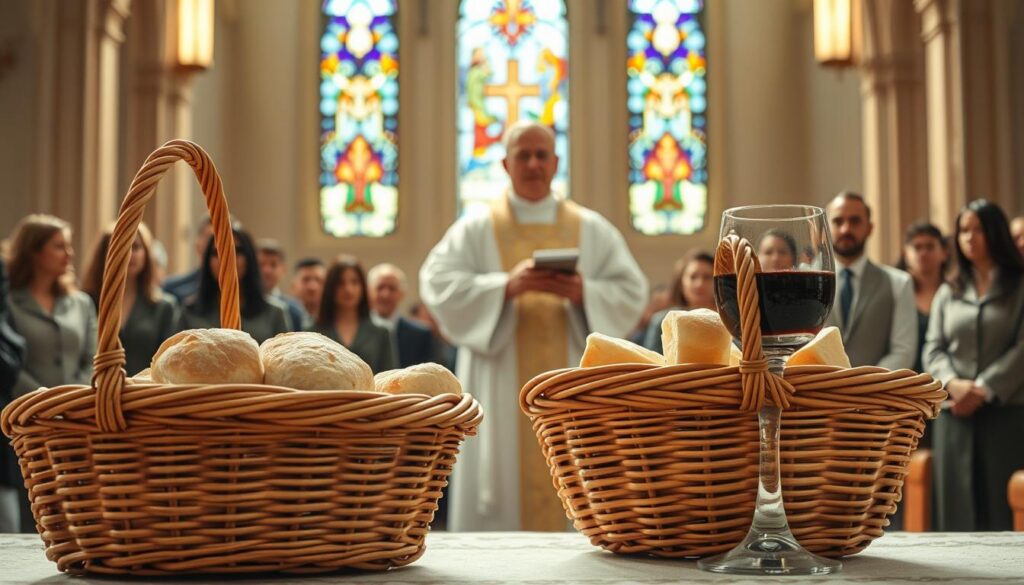
Gift bearers usually come from the parish community. Sometimes they are families, while other times, individuals who signed up take on this role. They represent everyone as they bring forward the bread, wine, and collection.
- Typically, there are three gift bearers: one carries the collection bowl (an adult), another carries the wine, and the third carries the bread, which is the host for consecration.
- If a family serves together and has more than three members, the extra family members can walk along reverently in the procession.
Step-by-Step Guide to the Gift Presentation
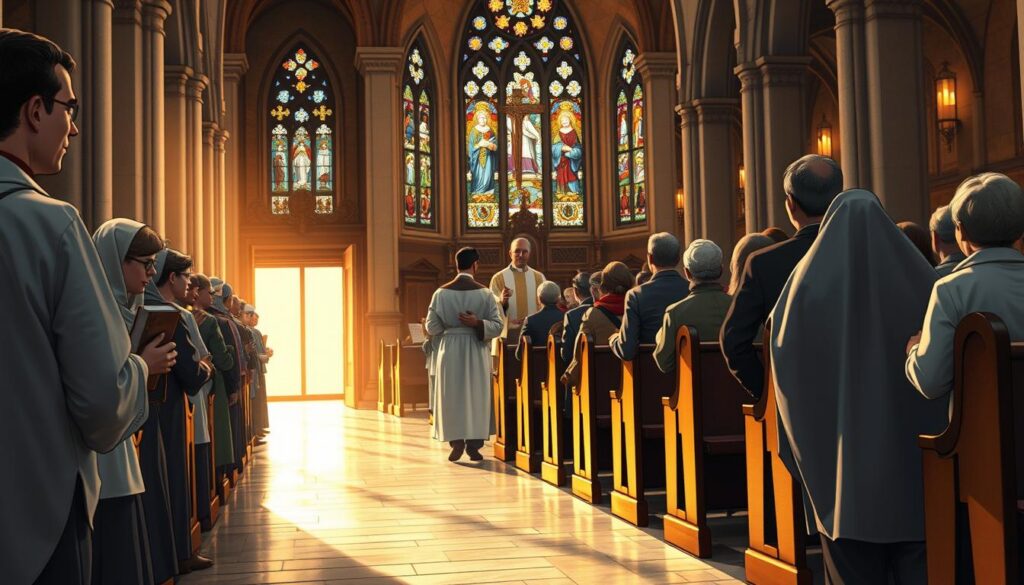
The whole process begins before the procession even starts. Gift bearers leave their pews when the priest says, “Let us profess our Faith,” and head to the back of the church. They recite the Creed from their spot in line.
After the offertory collection wraps up, they line up in order: the usher with the Book of Intentions first, followed by the collection bowl, then the wine, and lastly, the bread.
When the priest and altar servers move in front of the altar, that’s the signal to start walking. Remember, it’s important to move slowly and reverently.
Practical Tips for Gift Bearers
Here are some practical pointers to help you during this special moment:
- Let the hospitality ministers know you’re there when you arrive.
- Sit at the end of the pew for an easy exit.
- After the Prayers of the Faithful, quietly get up and head to the back.
- Wait for the priest to stand and walk to the front of the altar before proceeding.
- Hold the wine cruet with your left hand, using your right hand to support it. Make sure the handle faces the priest for easy grabbing.
- After presenting your gift, step slightly to the side to allow the next person room.
- Finally, walk back down the center aisle to return to your seat, knowing you’ve contributed to the Mass.
Why Does the Church Present Bread, Wine, and Offerings at This Time?
Have you considered the significance of presenting our offerings at this moment? It’s not just about placing items on the altar; it’s a profound act of devotion. This rite embodies our commitment to God and each other.
A Symbolic Offering of Creation and Ourselves
The bread and wine aren’t random items pulled from the sacristy. They represent all of creation. The earth gives us wheat and grapes, while human hands transform them into something usable. This whole process gets lifted up to God during the presentation.
When the offerings are brought forward, they symbolize everything we are. Our work, struggles, and joys all accompany that simple bread and wine to the altar.
The Connection to Christ’s Sacrifice
Pope Benedict XVI beautifully articulated this connection. He stated that in the bread and wine, all creation is taken up by Christ. This act isn’t merely practical; it has cosmic significance. The priest’s prayers over the offerings express this beautifully.
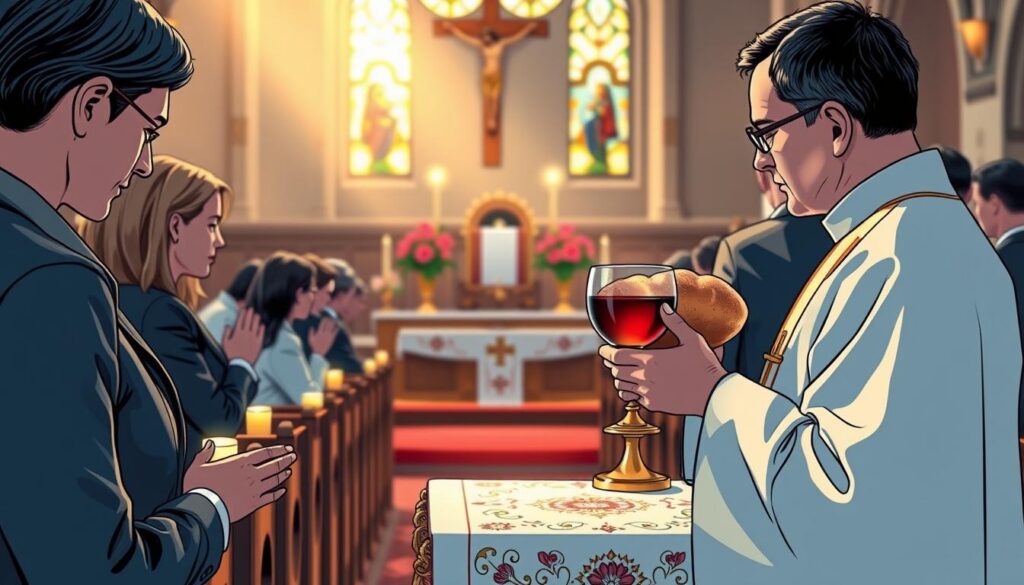
As he lifts the paten with the bread, he says, “Blessed are you, Lord, God of all creation. Through your goodness, we have this bread to offer, which earth has given and human hands have made. It will become for us the bread of life.” The same is said for the wine, emphasizing its importance.
The Role of the Collection and Our Gifts to the Church
This moment also coincides with the collection. From the very beginning, Christians have brought gifts to share with those in need. St. Paul wrote to the Corinthians about this tradition, highlighting its importance.
When you drop your envelope or cash in the basket, you’re part of this sacred movement. Your material assistance for the Church and those in need is intertwined with the spiritual offering. It’s a holistic act of worship.
After presenting the bread and wine, the priest bows and prays quietly. This preparation isn’t just about the gifts; it’s about preparing ourselves to be an acceptable sacrifice too.
| Aspect | Description |
|---|---|
| Symbolism | Represents all of creation |
| Connection | Links to Christ’s sacrifice |
| Collection | Material assistance for those in need |
| Priest’s Prayer | Affirms the gifts’ significance |
| Preparation | Prepares us for spiritual acceptance |
For further insights on the Mass and its structure, you can explore the General Instruction of the Roman Missal.
Making the Gift Presentation Your Personal Act of Worship
Have you ever reflected on how this moment connects us all during Mass? You don’t have to be the one physically carrying the offerings to make this time your own. Even from your pew, you’re part of that symbolic gesture, and the invitation is personal for everyone.
Fr. Thom beautifully notes that the procession with bread and wine symbolizes our journey from this life to eternal life. Just as these elements transform into the Body and Blood of Christ, we too are transformed as members of that Body.
When you contribute to the collection, you’re putting Jesus’s invitation into practice. It shows you’re willing to share what you have for building God’s kingdom. If you feel shy about being a gift bearer, remember that it’s okay. That reluctance can reveal where we hold back from God.
Next time you’re at Mass, use the offertory as a moment to consciously offer something specific. Your prayers and intentions are lifted up, united with Christ’s own offering. The preparation gifts moment isn’t about perfection; it’s about showing up with what you have.