

Have you ever noticed the moment in a service when people bring gifts forward? It’s a beautiful tradition that dates back to the 2nd century. This isn’t just about moving bread and wine to the altar; it’s a sacred exchange that connects the faithful with God.
St. Justin Martyr wrote about this practice long ago, and St. Augustine later reflected on its significance. When the priest receives these offerings in persona Christi, it transforms the moment into something truly special. It’s not merely a task; it’s a privilege for those involved.
The gifts of bread and wine symbolize our hard work and the blessings we receive. When we participate in this act, we’re invited to engage actively in the liturgy. It’s a chance to return something meaningful to God, reinforcing our connection to the community and our faith.
In this article, we’ll explore the practical steps for bringing gifts, the deeper meaning behind this act, and some tips for families and individuals to make the most of this sacred moment.
Key Takeaways
- The act of bringing gifts is a long-standing tradition with deep roots.
- It’s more than a logistical step; it’s a sacred exchange.
- St. Justin Martyr and St. Augustine emphasized its importance.
- The priest’s role enhances the significance of the moment.
- Gifts represent our labor and blessings returned to God.
- Participating in this act invites us to engage in the liturgy.
When and How to Bring Up Gifts During Catholic Mass
Do you remember the occasion in the service when gifts are brought to the altar? This moment is significant, and understanding its timing is essential for everyone involved. Gift bearers should leave their pew when the priest says, “Let us profess our Faith.” As they proceed to the back of the church, they can recite the Creed while waiting in line.
Understanding the Moment: Timing in the Liturgy
The timing is crucial. You’ll leave your pew at the right moment, ensuring a smooth flow during the service. This timing allows for a respectful and organized presentation of the offerings.
The Role of Gift Bearers: Who Carries What
Typically, there are three gift bearers assigned for this sacred task. One person carries the collection bowl, usually an adult. The second person is responsible for the wine, and the third person brings the bread. If a family is serving, extra members can walk reverently alongside them.
The Procession Order: Step-by-Step Walkthrough
The procession follows a specific order:
- The usher leads with the Book of Intentions.
- The first gift bearer presents the collection bowl to the priest.
- The second gift bearer hands over the wine.
- The third gift bearer offers the bread.
After the usher bows and places the book near the Tabernacle, the first gift bearer steps aside after presenting the collection. The second gift bearer presents the wine with their left hand while supporting the cruet with their right hand, ensuring the handle faces the priest. Finally, the third gift bearer offers the host.
Proper Etiquette: Reverence and Movement at the Altar
Proper etiquette is vital during this moment. Hold the gifts upwards and forwards, standing close enough to the priest so he can take them easily. After handing off your gift, move slightly to the side to give the next person room. Once all gifts are presented, the priest may express his gratitude. Then, everyone bows together toward the altar before returning down the center aisle.
Here are some practical pointers:
- Let the Hospitality Ministers know you’ve arrived.
- Sit at the end of the pew for an easy exit.
- Wait for the offertory collection to finish before moving.
- Don’t rush; walk slowly and reverently.
- Wait until the priest and altar servers are in place at the front of the altar before proceeding.
By following these steps, you can ensure a meaningful and respectful experience while participating in this beautiful tradition.
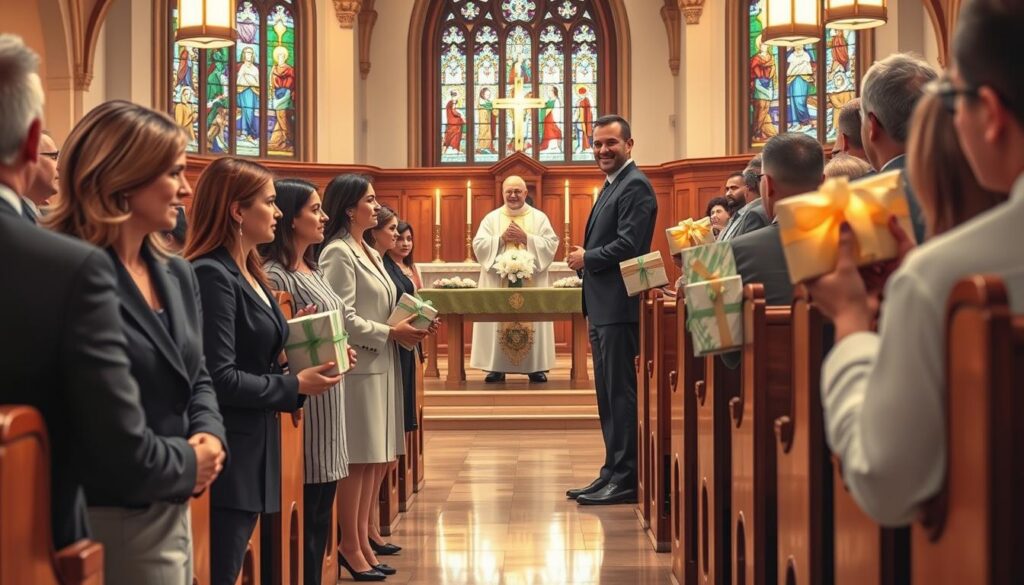
The Importance of Bringing Up Gifts in Catholic Mass
The moment gifts are presented during the service holds profound significance. This act goes beyond mere tradition; it symbolizes a sacred exchange between the faithful and God. Each element brought to the altar—bread, wine, and the collection—carries deep meaning.
Symbolism of Bread, Wine, and the Collection
When we think about the bread and wine, we realize they aren’t just food items. They represent the work of human hands and the earth’s produce. These offerings reflect all of creation being returned to God.
The collection basket is part of this beautiful exchange as well. It symbolizes our willingness to share what we’ve been given. By contributing, we help build God’s kingdom and care for those in need.
A Sacred Exchange: What the Gifts Represent
As we present our gifts, we bring our imperfect offerings—our work and struggles. The priest, acting in persona Christi, receives these gifts and offers them to God. In this holy moment, God transforms them into the Body and Blood of Christ.
“This humble and simple gesture is actually very significant: in the bread and wine that we bring to the altar, all creation is taken up by Christ the Redeemer to be transformed and presented to the Father.”
Connecting Our Work and Lives to the Eucharist
It’s essential to recognize that the bread and wine didn’t just appear on the altar. Someone grew the wheat, harvested it, milled the flour, and baked the bread. Others tended the vines, picked the grapes, and fermented the wine. Each step reflects our connection to the earth and our daily lives.
The term “Liturgy” comes from the Greek word for “public work.” This reminds us that the Eucharist calls for the active participation of all the faithful, not just a passive experience.
When you take part in presenting gifts, you’re representing the entire parish and, in a sense, the whole Church. This act of service is profound and deeply meaningful. The procession itself symbolizes our journey from this life to eternal life, mirroring the transformation we seek in ourselves.

Tips for Families and Individuals Taking Part in the Gift Presentation
The act of presenting gifts offers a unique opportunity for families to engage in a meaningful way. This moment is not just about logistics; it’s a chance to connect with the community and deepen your faith.
How to Prepare Before Walking Up
Preparation is key for a smooth experience. Start by letting the Hospitality Ministers know you’re there when you arrive. Sitting at the end of the pew makes it easier to slip out when it’s time.
During the offertory song, take a moment to clear your mind. This helps you focus on the significance of the moment ahead.
Overcoming Hesitations: Why Your Participation Matters
Many people feel hesitant about taking part in this act. They might be shy, unsure of what to do, or think it’s not important. However, remember that the invitation to participate is personal. Each of us is called to engage in this sacred act.
“This humble and simple gesture is actually very significant: in the bread and wine that we bring to the altar, all creation is taken up by Christ the Redeemer to be transformed and presented to the Father.”
Reflect on times you’ve hesitated to say yes to something. Consider if those fears are holding you back from deeper participation in your faith.
Practical Advice for a Smooth Gift Offering
As you prepare to walk up, wait for the priest to move to the front of the altar. This ensures you start down the aisle at the right moment. Remember, walking slowly and reverently is part of the prayer.
When offering the gifts, stand close to the priest. Hold the gifts upwards and forwards. If you’re handing the wine, keep it in your left hand with your right hand supporting the cruet, ensuring the handle faces the priest.
Families with more than three members can walk together, creating a shared moment. After presenting your gift, move slightly to the side and wait for the bow before returning down the center aisle.
| Preparation Tips | Actions |
|---|---|
| Inform Hospitality Ministers | Let them know you’re present. |
| Sit at the End of the Pew | Allows for easy exit. |
| Clear Your Mind | Focus during the offertory song. |
| Wait for the Priest | Proceed when he reaches the altar. |
| Offer Gifts Properly | Hold them upwards and forwards. |
By following these tips, you can ensure a meaningful experience for yourself and your family while participating in this beautiful tradition.
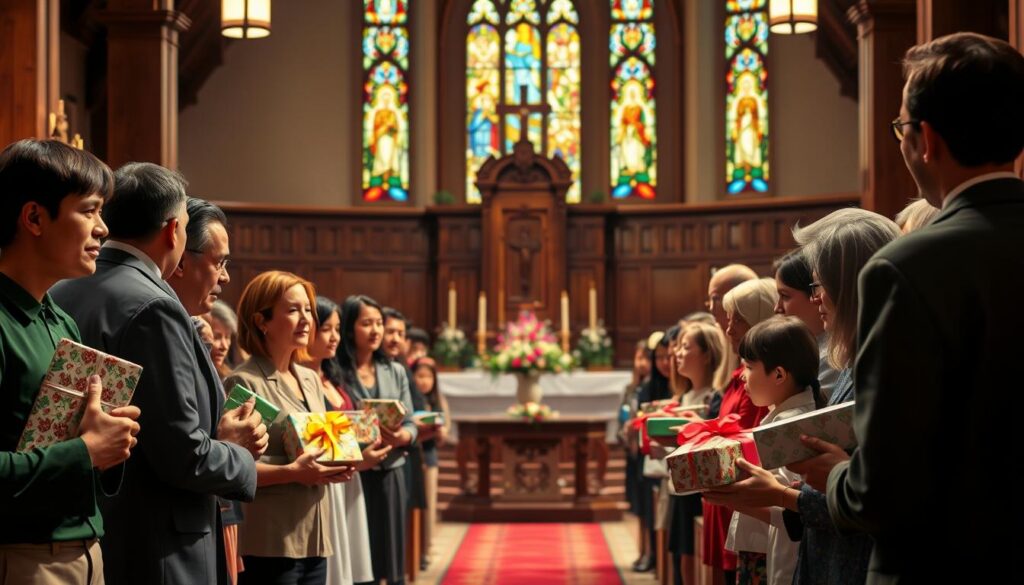
Embracing Your Role in the Gift Presentation at Mass
Have you ever thought about the deeper meaning behind offering something during the service? This act is far more than just a logistical task; it’s a chance to physically offer something of yourself. It connects our daily work, family life, and personal struggles to the altar and Christ’s sacrifice.
If you’ve never participated, consider saying yes the next time you’re invited. For those who have, try to see it with fresh eyes each time. Fr. Paul Olszewski hopes that understanding this tradition will inspire more people to step forward and engage.
Take a moment to reflect on Fr. Thom’s question: what have you been reluctant to do? Are those hesitations keeping you from a deeper relationship with God? Remember, whether you’re carrying the bread, wine, or collection, you represent your whole parish. This beautiful tradition connects us all, echoing the practices of the earliest Christians.