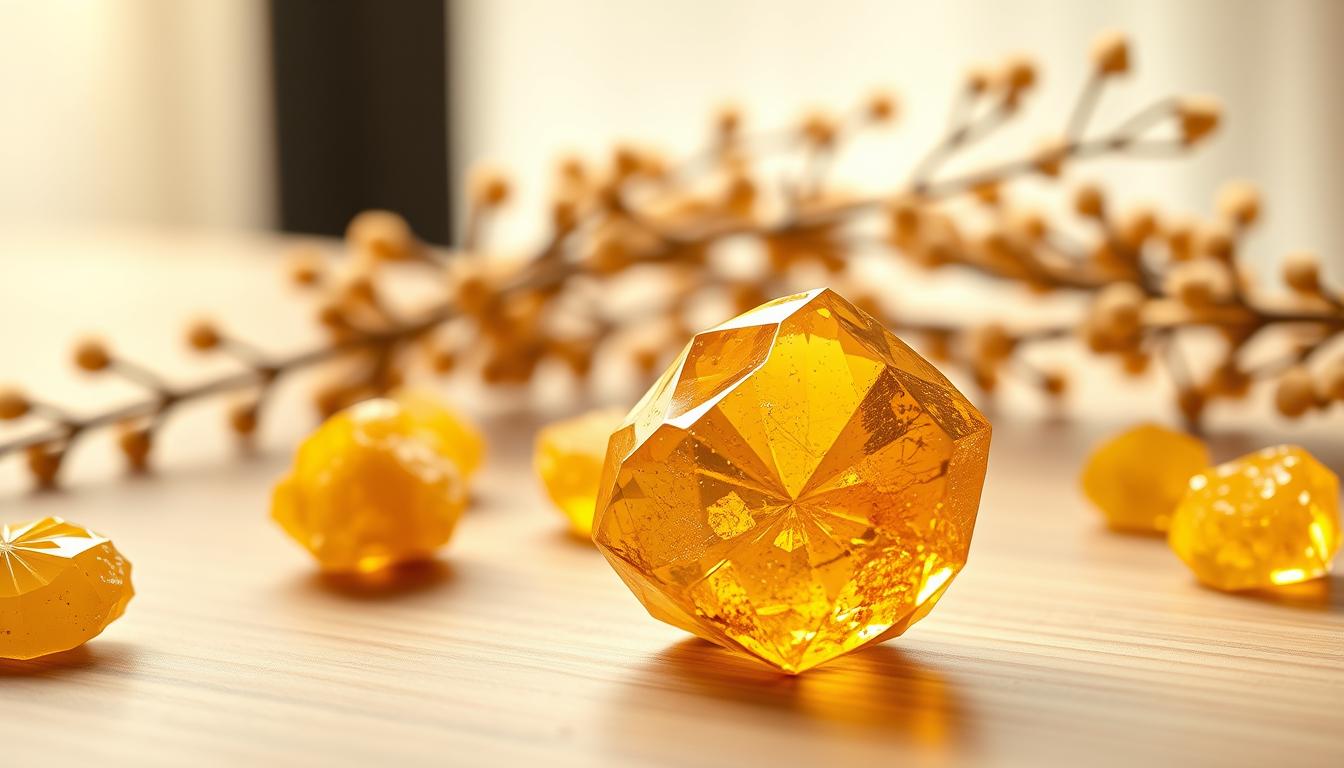
Citrine is a bright yellow form of quartz, colored by tiny traces of iron. Its sunny glow makes it a favorite for jewelry, meditation, and home displays. In crystal traditions, people call it the Merchant’s Stone because it represents prosperity, confidence, abundance, and positive energy.
Natural citrine is rare. Much of the material sold today begins as amethyst or smoky quartz from Brazil, then receives heat treatment to create a golden shade. Rio Grande do Sul supplies nearly all of the world’s naturally formed material.
The name comes from the French word “citron,” meaning lemon, which suits its cheerful color. This guide explores key properties, buying tips, jewelry styles, cleansing methods, storage, and simple ways to use this stone every day. Whether you’re new to crystals or ready to shop for a special piece, you’ll find clear guidance here.
Key Takeaways
- It is yellow quartz colored by trace iron.
- The Merchant’s Stone symbolizes abundance and confidence.
- Natural material is uncommon in today’s market.
- Brazil supplies much of the world’s material.
- Heat-treated amethyst can resemble the natural gem.
- Careful buying and storage help preserve its appeal.
What Are Citrine Properties?
At its core, citrine is a macrocrystalline form of quartz, not a separate mineral family like topaz. Its chemical formula is silicon dioxide, or SiO₂. This clear structure gives the gemstone a clean look and a lasting appeal.
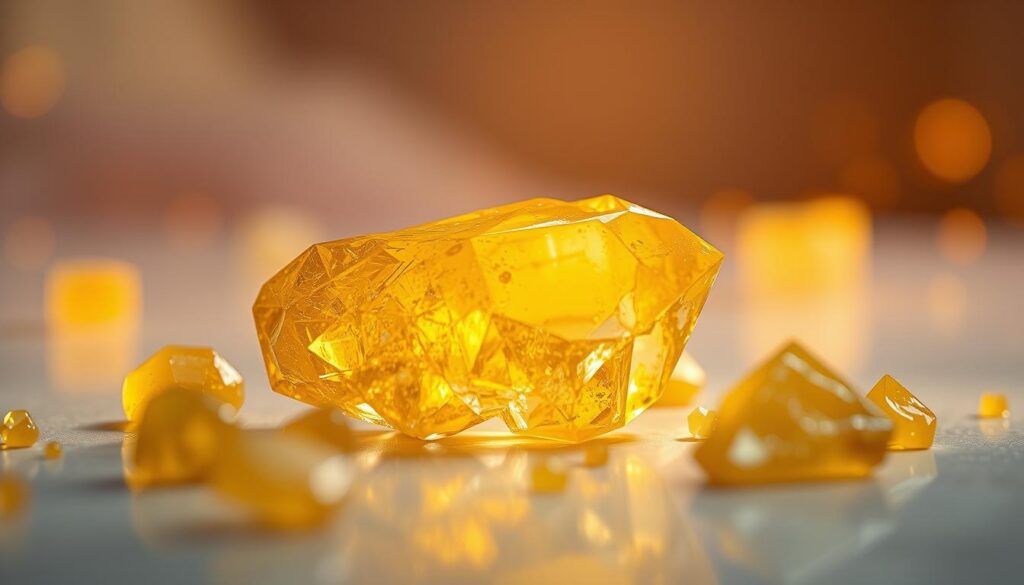
A Mohs hardness of 7 gives this crystal useful scratch resistance. That makes it suitable for rings, earrings, pendants, and other jewelry worn often. It has a specific gravity of 2.65 and a refractive index of 1.544 to 1.553, useful details when comparing yellow gems.
Quartz Composition, Color, and Mohs Hardness
The stone’s clarity can range from transparent to cloudy. Its rhombohedral structure may create prismatic crystals with striated faces. These features help gem specialists separate natural quartz from glass and other imitations. See this citrine guide for additional background.
Why Citrine Glows in Yellow and Golden Hues
Trace iron, especially Fe³⁺, creates the warm color. Shades may range from pale yellow and lemon to golden and yellow-orange. Heat and mineral conditions can change the hue, while balanced light brings out its cheerful glow.
Natural Citrine vs. Heat-Treated Stones
Gold quartz can form naturally or gain its color in a furnace. Knowing the difference helps shoppers judge value, origin, and appearance before buying. Both types are genuine quartz, but their journey from mine to market is not the same.
How Natural Citrine Forms
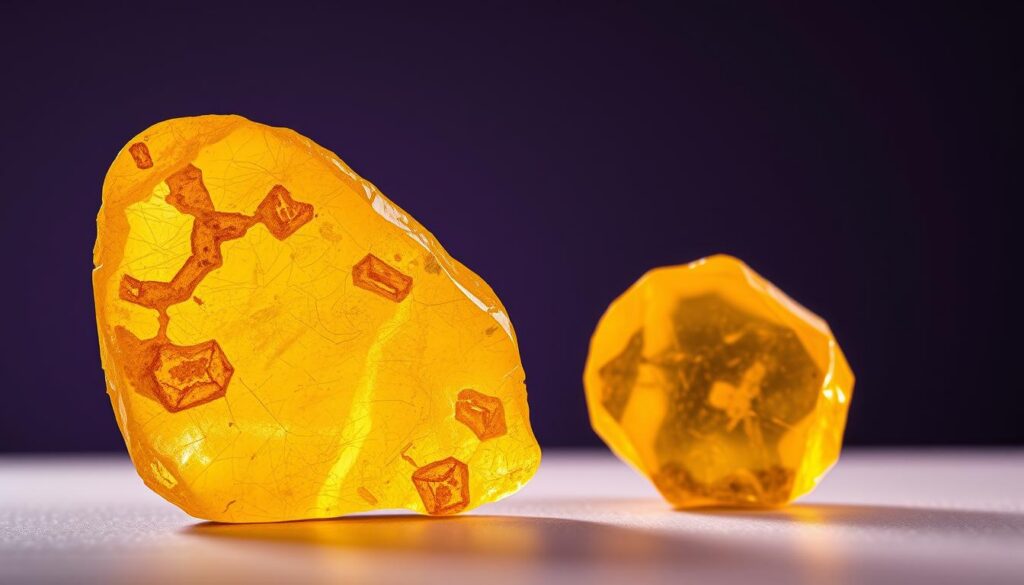
Over long periods, natural citrine grows in veins within igneous and metamorphic rocks. Heat, pressure, and mineral-rich fluids slowly shape each crystal. Rio Grande do Sul, Brazil, remains its best-known source. Other deposits occur in Madagascar, Russia, and the United States.
Natural material often has a soft, lemon-like color. A pale yellow body, gentle clarity, and even hue can offer useful visual clues. Crystal history and mining records also help confirm its origin. Some buyers choose it for display, jewelry, or healing traditions.
Spotting Heat-Treated Amethyst and Smoky Quartz
Much of the commercial supply begins as Brazilian amethyst. Heating it to about 878°F can create deep yellow, amber, orange, or reddish tones. Smoky quartz shifts between roughly 572°F and 752°F. That is why sellers may use terms such as amethyst smoky quartz or amethyst smoky material.
Ask for treatment details and compare photos in natural light. A reputable seller should explain whether the stone is untreated or heated.
The History and Meaning Behind the Merchant’s Stone
Across centuries, its golden color has inspired stories about strength, warmth, and good fortune. The history of citrine reaches from ancient Greece to modern jewelry, where its sunny look still attracts attention. These ideas reflect cultural traditions, not proven medical or financial results.
Ancient Beliefs About Solar Energy
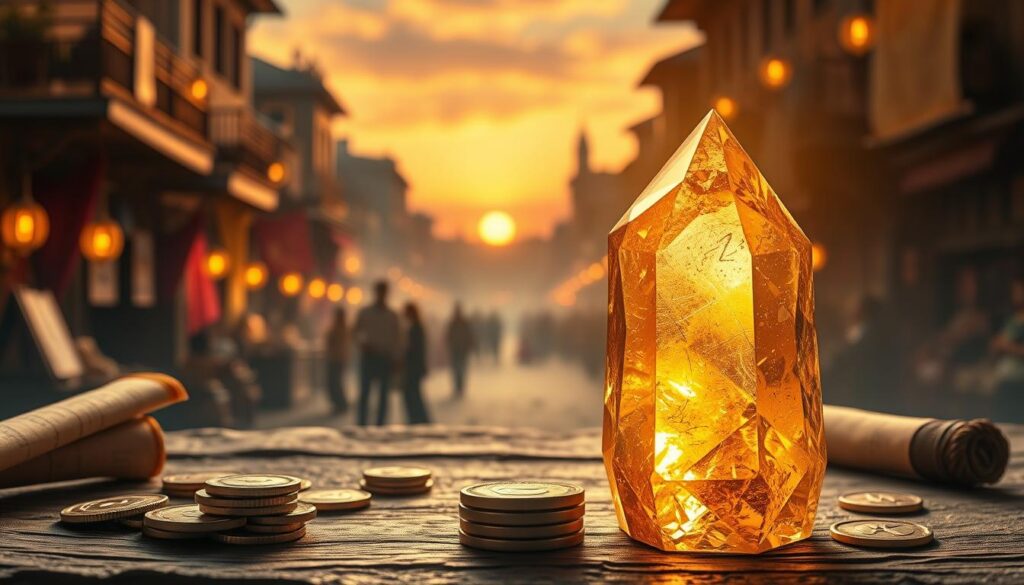
Greeks used this stone in jewelry by about 300 BCE. They linked its glow with Demeter, harvests, fertility, and nature’s generosity. Egyptians also connected its golden light with Sekhmet, the lion-headed goddess of solar strength and protection.
Romans carried it as a protective charm against poison, evil thoughts, and negative energy. Such beliefs gave the gem a powerful meaning over time. People often confused it with topaz during antiquity and the Middle Ages.
How Wealth Shaped Its Meaning
Georg Bauer, also called Georgius Agricola, formalized the name in 1556. Later, the gem gained fresh style appeal when Greta Garbo and Joan Crawford wore it in the 1920s and 1930s.
Today, many shoppers connect it with creativity, joy, balance, success, prosperity, and abundance. When you shop for this November birthstone, choose it for its beauty and personal meaning, not as a guarantee of wealth.
Citrine as a November Birthstone and Anniversary Gem
Autumn light gives this golden gemstone a natural place in November celebrations. Its soft yellow color echoes changing leaves and creates a gentle link to the season. Traditional lists name it alongside topaz as a November birthstone.
It also carries a traditional connection to Scorpio, covering birthdays from October 23 through November 21. For many people, that link adds personal meaning to a birthday gift without making the choice feel too formal.
The stone is also recognized as the anniversary gem for the 13th year of marriage. A piece of citrine jewelry can honor lasting affection, shared goals, and a bright future. Its sunny warmth and symbolism of prosperity make the gift feel both thoughtful and hopeful.
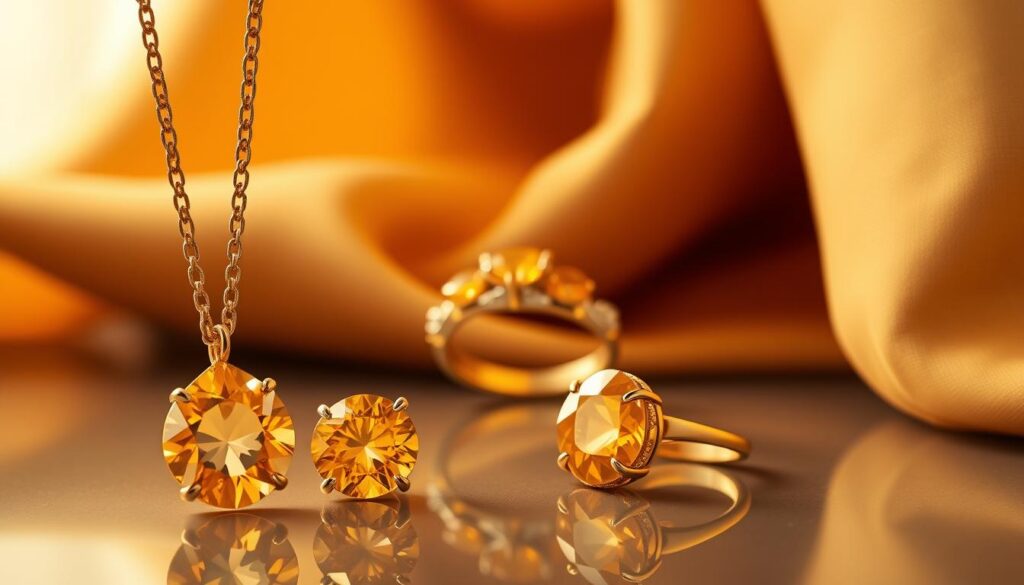
Choose a pendant, ring, bracelet, or earrings for an easy-to-wear present. Simple settings suit daily outfits, while a bold design creates a memorable celebration piece. This flexible jewelry suits a partner, close friend, or family member.
Citrine Healing Properties in Crystal Traditions
Crystal healing traditions view this golden stone as a symbol of warmth, optimism, and renewal. These ideas offer personal meaning, but they do not replace medical care or professional treatment. For cultural background, explore this crystal healing guide.
Joy, Confidence, and Calmer Thoughts
Practitioners often connect its bright energy with joy, self-confidence, and abundance. During meditation, holding the stone may encourage hopeful thinking and help someone reflect on anxiety with greater balance. This symbolic practice can support a calming routine, though it cannot diagnose or treat a health concern.
Creativity, Focus, and Personal Power
Crystal users also associate this stone with concentration, memory, motivation, decision-making, and mental clarity. They may keep it near a desk while studying or planning a personal project. Some traditions connect it with the solar plexus and personal power.
Folk practices link the stone with digestion, metabolism, the liver, pancreas, bladder, and gallbladder. These healing beliefs remain non-medical. Pairing it with grounding smoky quartz may create a steadier emotional experience for people who enjoy working with stones.
Citrine and the Solar Plexus Chakra
A warm golden stone can serve as a simple focus for mindful reflection. In traditional chakra systems, the solar plexus chakra is called Manipura. It sits near the navel and carries the color yellow. Practitioners connect it with self-worth, personal control, digestion, metabolism, and inner power.
Using Citrine for Confidence and Balance
During meditation, some people place citrine near the navel and take slow, steady breaths. They may use this practice to reflect on confidence, decision-making, and inner strength. The stone’s energy can become a reminder to act with calm purpose when anxiety or self-doubt appears.
This spiritual exercise does not treat a medical concern. For a grounded routine, combine it with journaling, gentle movement, or time outdoors. These habits can support balance while helping you explore creativity, personal power, and clear choices.
- Reflect: Ask what choice matches your values.
- Breathe: Take five slow breaths before acting.
- Move: Stretch or walk to settle restless energy.
| Focus | Simple practice | Purpose |
|---|---|---|
| Confidence | Slow breathing | Notice inner strength |
| Clarity | Journaling | Sort thoughts and choices |
| Balance | Gentle movement | Ground your energy |
Ways to Use Citrine for Energy, Success, and Abundance
Small daily rituals can turn a golden display into a clear reminder of your goals. Place a citrine point or cluster on your desk. Its bright color marks focus, confidence, and productive energy without taking up much space.
Simple Uses at Home, Work, or in Meditation
Hold the stone during meditation and focus on its warm color. You can also add it to a crystal grid for fresh beginnings, creativity, and abundance. In a home office, studio, or workspace, this practice gives your energy a steady place to return.
For a calm display, place a citrine tree, fountain, or cluster in the living room. Feng shui traditions favor the south, southeast, or southwest areas of a home or office. These placements symbolize prosperity, wealth, protection, and personal power. They do not promise financial results.
Make the Symbolism Practical
Pair the display with a budget, savings plan, or weekly task list. This approach connects the stone’s meaning with real action and supports long-term success. If you shop for one, choose a piece that catches the light and suits your space. Some traditions also charge the stone in sunlight for four to six hours.
Choosing Citrine Jewelry and Gemstones
A thoughtful purchase starts with more than a bright sparkle. Compare the gemstone’s color, clarity, cut, carat size, origin, and treatment disclosure before you shop. Natural material often shows a soft yellow hue, while heated amethyst may display stronger orange or reddish tones. Sellers should identify treatments clearly. Major sources include Brazil, Bolivia, Spain, Madagascar, Russia, Germany, Austria, and the United States.
What to Look for in Color, Clarity, and Cut
Check clarity for fractures or distracting inclusions. Larger natural stones may contain small marks, while a perfectly clean crystal can be less common. A Mohs hardness of 7 suits many jewelry designs. Oval, round, pear, emerald, cushion, checkerboard, and fantasy cuts each create a different look. Facets can boost brilliance, while broader faces give the stone a smoother personality.
Popular Rings, Necklaces, Bracelets, and Earrings
Rings offer daily color but need protective settings. Necklaces show off larger stones with less impact risk. Bracelets add movement, while earrings provide an easy, balanced choice. The 20,200-carat “Malaga” gem remains a notable example at Programa Royal Collections in Spain. Choose a piece that fits your style, budget, and comfort.
How to Clean, Charge, and Store Citrine
Clean your citrine with warm, soapy water and a soft cloth. Gently remove surface residue, then rinse it with clean water. Dry the stone fully before placing it away. This simple routine helps preserve its clarity and natural color.
Some collectors use bright sunlight for four to six hours as a traditional way to refresh its energy. However, long exposure may fade the color. Charging belongs to spiritual practice, while careful cleaning supports the physical condition of the crystal. Healing claims do not replace medical care.
- Avoid salt water, steam cleaners, sudden heat, and sharp temperature changes.
- Keep it away from hydrofluoric acid, ammonium fluoride, and alkaline solutions.
- Store quartz jewelry in a soft pouch or fabric-lined box.
- Separate it from harder stones that may scratch the surface.
Give the piece time to reach room temperature before cleaning or storing it. Proper protection helps maintain its beauty and keeps your stones ready for everyday wear.
Let Citrine Bring More Warmth and Light Into Your Life
Citrine is quartz with a sunny glow, a Mohs hardness of 7, and a rich history of symbolic meaning. That meaning links the stone with joy, confidence, solar plexus energy, abundance, success, and creative courage.
Natural citrine remains rare, while much of the market features heat-treated quartz. Ask sellers about origin and treatment when you shop, and set fair expectations about color and value.
Use the crystal in meditation, home décor, or jewelry. A quiet healing ritual may add focus, while its healing properties remain a matter of personal belief. This energy works best as a reminder, not a promise.
A November birthstone gift can carry joy, warmth, and personal meaning tied to the sun. Let this stone’s light encourage optimism, creative action, and real wealth built through thoughtful choices.