
Manifestation can feel less steady during an eclipse season. Your plans may shift, emotions may run high, and sudden news can make you question your goals. Still, astronomy explains eclipses as physical alignments between the Sun, Moon, and Earth. It does not prove that every personal change comes from a cosmic force.
That balance matters in 2026. The year brought four major eclipses: an annular event on February 17, a total lunar display from March 2 to 3, a total solar eclipse on August 12, and a partial lunar eclipse from August 27 to 28. A year can include up to seven eclipses, though the last such year was 1982. Seven were not expected again until 2038.
This guide explores scattered intentions, strong reactions, sudden changes, energy protection, and better timing for goals. It separates astrology-based advice from facts about the sky. Before treating the next eclipse as a command, notice your own patterns and choices. The next eclipse may offer a useful pause, not a reason to abandon common sense. You can also share your thoughts in the comments.
Key Takeaways
- Manifestation may feel harder when emotions and plans change quickly.
- Astronomy describes alignment, not guaranteed personal outcomes.
- 2026 included four major eclipses.
- Clear intentions and grounded choices can reduce confusion.
- Reflection may help more than rushed goal setting.
What Eclipse Season Means in Astrology and Astronomy
In astrology, this period often carries symbolic meaning. In astronomy, it describes a predictable window of alignment. A typical window lasts about 35 days and returns every 173 days, slightly less than six months.
The key is the Moon’s tilted path. Its orbit sits about 5 degrees from Earth’s orbital plane, called the ecliptic. The Moon crosses that plane at two lunar nodes. A new moon near a node can create a solar eclipse. A full moon near one can create a lunar eclipse.
How the Sun, Moon, and Earth Align
During a solar eclipse, the order is Sun, Moon, then Earth. The Moon blocks part of the Sun’s light. During a lunar eclipse, Earth moves between the Sun and full moon, casting a shadow across the Moon.
Not every new or full moon creates this event. In 2026, the calendar had 12 new moons and 13 full moons, yet only four major events: two solar and two lunar. One window can include two, or sometimes three, events.
Why Eclipse Seasons Happen About Every Six Months
As orbital cycles repeat, the Sun reaches a lunar node about every 173 days. That timing creates another chance for the needed alignment.
| Event | Moon phase | Object order |
|---|---|---|
| Solar eclipse | New moon | Sun–Moon–Earth |
| Lunar eclipse | Full moon | Sun–Earth–Moon |
| Penumbral lunar event | Full moon | Earth’s outer shadow |
Why You Should Never Manifest During Eclipse Season
When plans feel unusually fluid, a pause can protect your judgment. Astrology often describes this window as unsettled. Science, however, shows changes in light and shadow, not guaranteed personal outcomes.
Unclear Energy Can Make Your Intentions Feel Scattered
Stress, poor sleep, or doubt can make a new goal seem unstable. That reaction may reflect your daily state rather than a cosmic message. Write the goal down, then wait before taking action.
Eclipses Can Bring Sudden Changes and Surprises
The total solar event on August 12, 2026, came about two weeks before the partial lunar event on August 27 to 28. Close dates can make ordinary news feel meaningful. Earlier cycles included an annular solar event on February 17 and a total lunar event on March 2 to 3.
Why Beginners May Misread Strong Emotions as Signs
A full moon or intense feeling is not proof that the universe sent a sign. Observe patterns for several days. The next eclipse window followed roughly 173 days later, so one moment did not need an immediate response. Slow choices leave room for clearer insight.
| Experience | Grounded response | Reason |
|---|---|---|
| Scattered focus | List one priority | Reduces mental noise |
| Strong emotion | Wait and journal | Separates feeling from fact |
| Sudden news | Review options | Prevents rushed choices |
What Can Go Wrong When You Manifest During an Eclipse
Strong feelings can make a wish seem urgent. Yet a rushed ritual or major choice may lock you into an outcome you have not fully considered. A short pause can protect your judgment.

Rushed Decisions May Create Unwanted Results
The total solar eclipse reached its greatest point at about 1:46 P.M. EDT on August 12, 2026. The partial lunar eclipse peaked at 12:12 A.M. EDT on August 28. These fixed times did not decide anyone’s relationships, spending, or career moves.
Visibility also varied by location. A solar event followed a narrow shadow path, while a lunar event could appear across a wide region when the Moon stood above the horizon. Personal experience therefore differed across the United States.
Old Patterns Can Resurface Without Warning
Stress may bring old relationship, money, or confidence habits to the surface. That insight can help, but it does not prove that one action was destined. Write down the result you want, its possible cost, and whether it still feels right after several days.
| Pause step | Question to ask | Helpful outcome |
|---|---|---|
| Write the goal | What do I truly want? | Clearer focus |
| List the cost | What might I risk? | Better judgment |
| Wait several days | Does this still feel right? | More thoughtful action |
Solar Eclipse and Lunar Eclipse Energy Explained
People may describe an eclipse season as a time of release, change, or heightened emotion. Astronomy offers a simpler view: the Sun, Moon, and Earth briefly line up. Spiritual meaning can guide reflection, but it does not prove that an event is lucky or harmful.
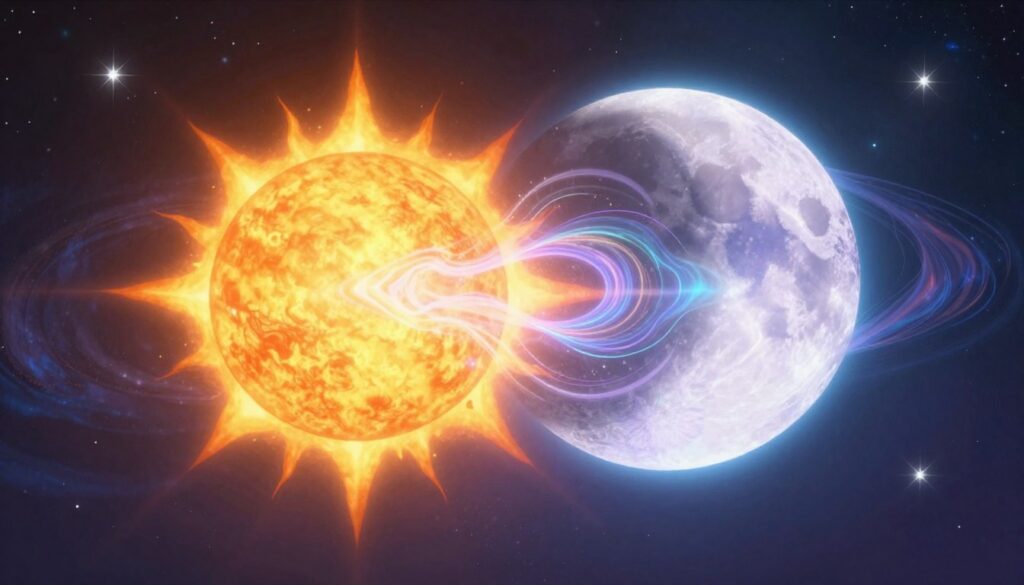
A solar eclipse happens when the Moon moves between the Sun and Earth. A lunar eclipse occurs when Earth’s shadow falls across a full Moon. A total solar eclipse hides the Sun along the path of totality. An annular event leaves a bright ring because the Moon looks too small. A partial event covers only part of the Sun.
On February 17, 2026, the annular solar event created this “ring of fire.” A total lunar event can turn orange or red, while a penumbral lunar event causes only faint dimming. These labels describe what viewers saw, not personal outcomes.
“Symbolic meaning may inspire reflection, but observation explains the sky.”
Solar events appear across limited paths. Lunar events can be seen wherever the Moon stands above the horizon. For a clear guide to this timing, explore the astronomy of eclipse seasons.
How to Protect Your Energy During Eclipse Season
A calmer routine can protect your judgment when plans feel unusually charged. These events do not create supernatural danger, but strong feelings can make choices seem urgent. The roughly 35-day eclipse season offered a useful reason to slow down.
Pause Major Rituals and Big New Beginnings
Consider delaying expensive purchases, dramatic relationship moves, and elaborate rituals. The next eclipse window could pass before you felt ready to act. Waiting several days gave your priorities time to settle.
Journal, Rest, and Watch for Repeating Patterns
During the 2026 windows, a simple journal helped separate facts from one intense reaction. Note your sleep, mood, news, and decisions. Regular meals, quiet time, and steady routines can also improve clear thinking.
The year included two solar and two lunar events. A lunar eclipse, including the August event, was safe to watch without special glasses. Look for patterns that repeat over days or weeks. One moment does not prove that an eclipse changed your path, and the next eclipse may offer another chance to reflect.
| Practice | Simple action | Benefit |
|---|---|---|
| Pause | Delay major commitments | Less pressure |
| Journal | Record events and feelings | Clearer patterns |
| Rest | Keep a steady routine | Better judgment |
When to Set Intentions Instead of Manifesting
A gentle intention gives you direction without demanding one fixed result. You might choose patience, stronger boundaries, or healthier work. This approach supports personal growth while leaving room for new information.
During an eclipse season, writing a flexible goal can feel safer than forcing a major outcome. For example, try, “I am open to healthier work,” instead of naming one employer or deadline. You can reflect now and begin a larger manifestation practice after your emotions settle.
“A clear direction matters more than control over every result.”
A solar eclipse occurs at a new moon when the Sun, Moon, and Earth align. A lunar eclipse occurs at a full moon. These cycles return about every 173 days, so there was usually time to review a goal before the next eclipse arrived.
The next eclipse season was expected in July and August 2027, with three eclipses. Planning ahead helped readers respond with care rather than urgency. The best intention stayed open, practical, and connected to personal values.
What to Know About the Eclipse Season Calendar
The 2026 calendar offered four major sky events. Their dates, viewing areas, and safety needs varied, so a simple guide helped U.S. readers plan ahead.
The Annular Solar Event in February
On February 17, an annular solar eclipse appeared from parts of East Antarctica. A partial solar eclipse reached most of Antarctica, southern Argentina and Chile, and southern Africa. It was not visible from North America.
From March 2 to 3, a total lunar eclipse followed during the first 2026 eclipse season. The Moon passed through Earth’s shadow, and viewers needed no special glasses.
The Total Solar Event and Partial Lunar Event in August
On August 12, a total solar eclipse crossed northern Russia, Greenland, Iceland, Spain, and a small part of Portugal. Totality lasted up to 2 minutes and 19 seconds. The event ran from 11:34 A.M. to 3:57 P.M. EDT, with its peak near 1:46 P.M. NASA+ began live coverage at 1:15 P.M. EDT.
Most of Canada and parts of the northern United States saw a partial view. On August 27–28, a partial lunar eclipse covered about 96% of the Moon at maximum, occurring at 12:12 A.M. EDT. Use ISO 12312-2 glasses for solar viewing; regular sunglasses are unsafe. The 2027 calendar held five events, including three penumbral lunar events.
Move Forward With Clearer Intentions After Eclipse Season
Waiting until this period passed created space to separate a lasting goal from a temporary reaction. After the August 2026 events, review your journal. Compare what you expected with what actually unfolded during the following weeks.
Solar and lunar alignments followed predictable orbital cycles, even when their symbolism felt intense. A total solar eclipse or total lunar eclipse did not remove personal agency or guarantee a fixed future.
When you felt rested, restart your practice with one clear and realistic intention. Add a practical step, a reasonable timeline, and a way to measure progress. This approach keeps hope connected to action.
Future eclipse seasons can offer a helpful pause. Notice patterns, question sudden urges, and choose what still feels right after the sky returns to normal.