
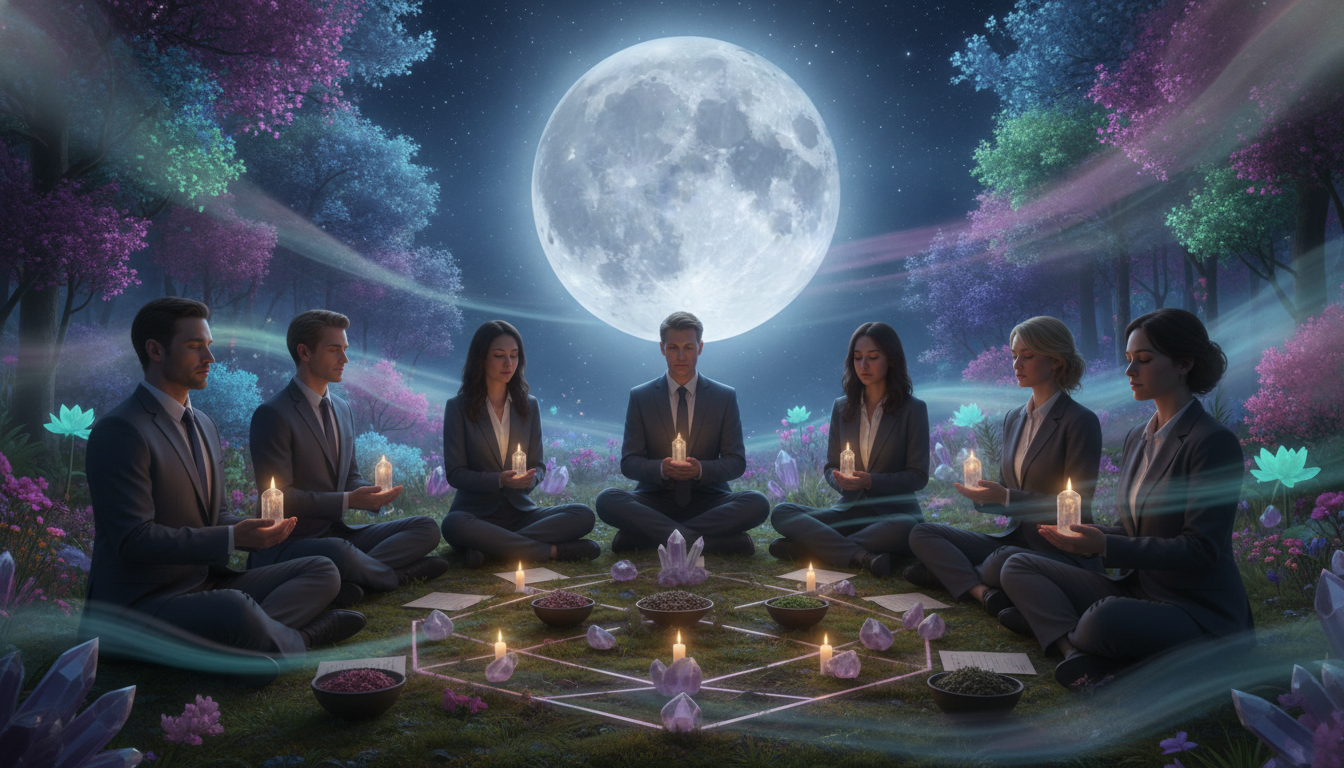
A full moon release offers a calm way to notice the beliefs that hold you back. Instead of trying to change your life overnight, use this pause to name old thoughts, question their truth, and make room for healthier ones.
The moon completes a visible cycle about every 29.5 days. That steady rhythm can remind you to slow down and check your direction. Shannon L. Alder’s words about brightness and darkness create a fitting image: hidden self-doubt can come into view without harsh judgment.
This guide presents a simple full moon ritual for reflection, not a promise of instant results. You’ll gather a few supplies, prepare a sacred space, write in a journal, speak an intention, and close with gratitude. The ritual can happen indoors, outside, or beside a window.
Give yourself enough time to be honest and kind. You don’t need special tools or perfect words. You only need a quiet moment and a willingness to choose thoughts that support the person you’re becoming.
Key Takeaways
- Use reflection to identify limiting beliefs.
- Treat this practice as a personal pause.
- Prepare a space that feels calm and safe.
- Journal honestly without judging yourself.
- End with gratitude and a clear intention.
What a Full Moon Release Can Help You Let Go Of
Some thoughts sound like facts because they have stayed with us for years. A full moon release gives you a quiet setting to question those messages and choose a kinder response. It does not erase pain in one night. Instead, it helps you notice what needs care.
Herman Hesse captured this truth well:
“Some of us think holding on makes us strong, but sometimes it is letting go.”

Limiting beliefs that make you feel small
You may hear, “I’m not good enough,” before a job interview. Fear of criticism can stop you from sharing an idea. Comparison may make another person’s success seem like proof that you are behind. Approval seeking can also shape choices at work, home, and in relationships.
Old emotions, fears, and stories that keep resurfacing
During a full moon, write about grief, shame, money worries, fear of change, or fear of success. Notice when these feelings return in daily life. A ritual cannot resolve anxiety or loss by itself, but it can begin an honest conversation.
Letting go does not mean excusing harm or dropping wise boundaries with people no longer serving you. It means choosing which things deserve space in your life, while allowing support from trusted people when the burden feels too heavy.
| Theme | Common thought | Healthier question |
|---|---|---|
| Comparison | I am behind. | What progress have I made? |
| Money | I will always struggle. | What practical step can I take? |
| Approval | Everyone must agree. | What choice fits my values? |
Why the Full Moon Is Linked With Release and Reflection
Its bright appearance has a clear astronomical cause. Earth sits between the sun and the moon, so sunlight reaches the visible side facing us. The moon completes a lunar cycle in about 29.5 days. This creates 12 to 13 bright phases each year and offers a useful monthly time to review life.
Ideas about moon energy belong to spiritual and cultural practice, not proven cause and effect. Indigenous gratitude ceremonies, Pagan rituals, Eastern moonlight tea traditions, and modern self-care practices all give this phase different meaning. These customs should be approached with respect rather than copied without context.
Many people view the peak of the cycle as a symbol of completion. They may express gratitude, note lessons, or choose one belief to release. Some practitioners observe this energy for about three days before and after the main phase. Treat that idea as a personal prompt, not proof that the moon controls emotions.

| Focus | Symbolic meaning | Practical reflection |
|---|---|---|
| Brightness | Awareness | Notice hidden thoughts |
| Peak phase | Completion | Review recent progress |
| Closing cycle | Gratitude | Choose what to carry forward |
Full Moon vs. New Moon Rituals
Each phase offers a different way to pause and check your direction. Choose the practice that matches your current needs, schedule, and beliefs.
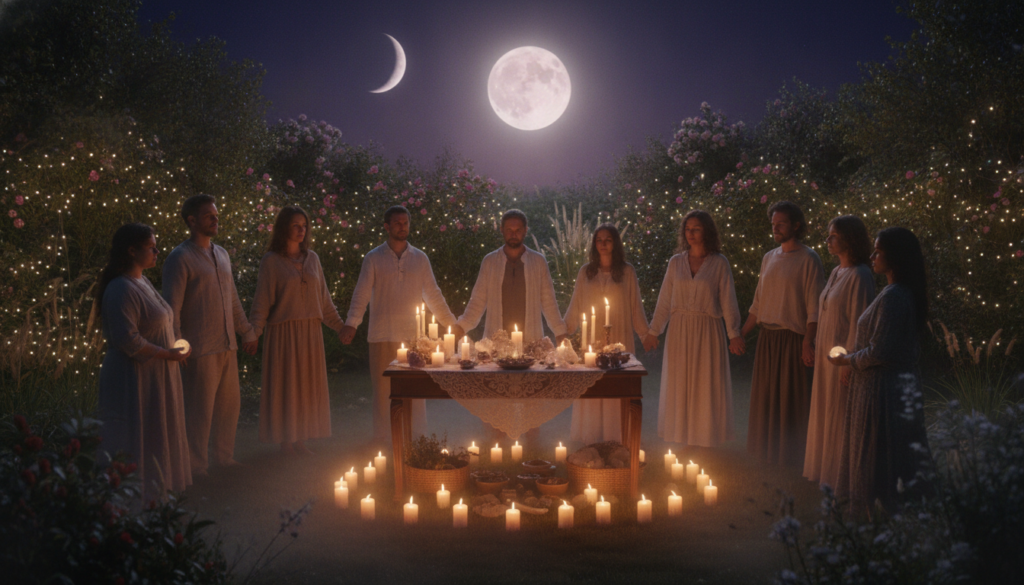
Use the new moon for intentions and fresh beginnings
A new moon occurs when the moon and sun sit side by side, leaving no visible illumination. Many people connect this quiet phase with planting seeds, planning, visualizing, and setting intentions. It can help you choose a clear direction for the next part of your lunar cycle.
Use the full moon for completion and letting go
The full moon marks a great time to review progress, celebrate growth, and notice habits that block your next step. During full moon rituals, you might write one belief to release and name one lesson you want to keep.
For example, choose the intention “I trust my voice” during the new moon. At the next bright phase, revisit that goal and let go of “I can’t do this.” These moon rituals remain flexible. You may practice on the exact date or choose a nearby evening that feels calm.
| Phase | Main focus | Simple action |
|---|---|---|
| New moon | Fresh direction | Set an intention |
| Full moon | Reflection | Review and let go |
When to Practice a Full Moon Release
Choose a calm evening rather than chasing a perfect schedule. The peak phase arrives 12 to 13 times each year, about every 29.5 days. You can practice on the night of the full moon, the evening before, or during a nearby three-day window.
Missing the exact time does not weaken your intention. Sylvia Ng prefers working a few days afterward and considers the period through one week later useful for reflection. The purpose is mindful review, not precise timing. Use the approach that fits your energy and routine.
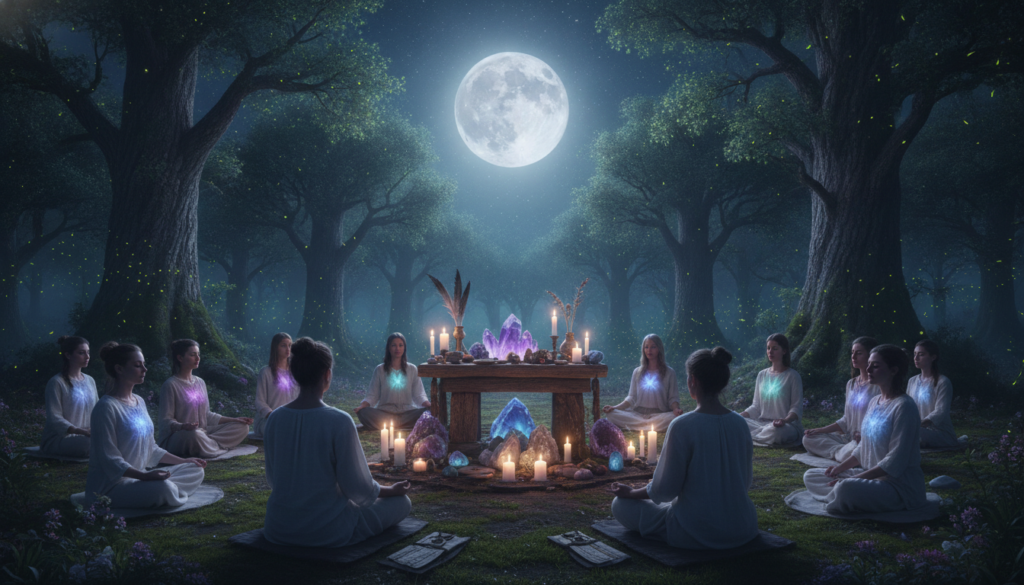
For planning, 2026 dates include January 3, February 1, March 3, April 2, May 1, May 31, June 29, July 29, August 17, September 15, October 15, November 14, and December 24. May has two full moons, which offers an extra check-in.
Outdoor practice can feel special, but it is not required. A quiet spot beside a window works well when weather, safety, accessibility, or city life makes nighttime travel uncomfortable. For more guidance, explore this beginner ritual guide.
What to Gather for Your Moon Ritual
You can begin with a few everyday items and a comfortable seat. A simple setup often feels more personal than a display filled with objects. For a full moon practice, choose what helps you feel calm and focused.
Simple supplies for a meaningful release
Keep a pen, journal, and one piece of paper nearby. Four sheets can support an Earth, Water, Air, and Fire format. Add a heat-safe bowl only if you plan to burn your note. One candle is enough, though four candles may represent the four elements. A quiet corner can become your sacred space.
Optional candles, crystals, music, and journal tools
Special items are not required. Crystals, tarot or oracle cards, relaxing music, essential oils, and a sage wand may support your focus. Choose sustainably sourced cleansing tools, and skip smoke if someone nearby has asthma or scent sensitivity.
A glass jar and filtered water are useful for a later moonlight practice. Gather only the things that feel supportive. Your intention matters more than your supplies.
How to Prepare a Sacred Space
Before you begin, create a setting that helps your attention settle. Silence your phone, clear a small surface, and choose a seat where you can remain undisturbed for at least 15 minutes.
A full moon ritual can happen beside a window, on a balcony, or in a quiet indoor corner. Sylvia Ng notes that outdoor space is not essential. City lights, weather, and safety should never stop you from creating a calm moment.
- Place your journal, candle, crystals, and water within easy reach.
- Use soft lighting to create a gentle change of pace.
- Play calming music or Solfeggio frequencies if they support focus.
- Skip scents or smoke if they cause discomfort.
- Keep the area simple rather than chasing a perfect display.
Let the sacred space act as a calm container for reflection. You do not need expensive tools or special energy. A tidy surface, quiet music, and natural moonlight can help mark the transition from a busy day to a mindful night.
| Setting | Helpful choice | Why it works |
|---|---|---|
| Window | Chair and journal | Offers privacy and gentle light |
| Balcony | Small table | Creates fresh air without travel |
| Indoor corner | Soft lamp | Supports comfort in any season |
Ground Your Body and Mind Before You Begin
Let your attention arrive before you ask it to do deeper work. This pause helps you enter a full moon ritual with care, rather than trying to force a certain feeling. Sit in a comfortable position and notice your natural breath.
Settle into your breath and notice what you feel
Relax your shoulders, jaw, hands, and stomach as much as you can. You do not need to feel calm right away. Simply observe tension, sadness, anger, or nervousness without calling any emotion a failure.
Use meditation to create a calm moment
Sylvia Ng suggests at least 15 minutes for this grounding practice. Guide awareness from the top of your head down to the tips of your toes. Notice each area, then return gently to your breath when thoughts wander.
- Set a timer for 15 minutes if silence feels distracting.
- Let thoughts pass without chasing or judging them.
- Ask what the full moon brings up for you.
- Pause the ritual if intense memories feel unsafe.
Seek support from a trusted person or mental health professional when needed. A quiet moon ritual can support reflection, but it cannot replace care.
Write Down the Beliefs You Are Ready to Release
Put your thoughts where you can see them. During a full moon release, a journal or a simple piece of paper can reveal patterns that stay hidden during a busy day. Review the intentions you set at the last new moon, then notice which beliefs no longer support your life.
Questions to uncover hidden self-doubt
Write quickly and avoid editing each answer. Ask, “What am I afraid people will discover about me?” Then ask, “Where do I keep shrinking myself?” Look for themes such as comparison, fear of criticism, fear of success, or the need to seek answers from others.
- When do I think, “I am not good enough”?
- Whose judgment shapes my choices?
- What habit or belief is no longer serving me?
How to begin each statement with “I release”
Try one honest sentence: “I release the belief that I must earn everyone’s approval before I can rest.” This phrase names a choice to loosen your grip. It does not demand that grief, fear, or anger disappear at once.
For a deeper moon ritual, write 10 statements for each element. If time feels short, choose one belief, sign and date the paper, and keep the commitment specific.
| Focus | Writing prompt | Example belief |
|---|---|---|
| Approval | Whose praise do I chase? | I must please everyone. |
| Comparison | Where do I feel behind? | My progress does not count. |
| Confidence | What am I avoiding? | Success will expose me. |
Explore Your Feelings Through the Four Elements
Use the full moon as a creative cue for journaling. The four elements can organize your thoughts without acting as medical or scientific explanations. Choose one category, or write across all four.
Earth and water prompts for roots, grief, and emotional pain
Earth invites you to examine childhood messages, family patterns, home duties, and things that make life feel heavy. Ask which old belief still shapes your choices.
Water creates space for sadness, grief, romantic hurt, and emotional pain. Write about feelings you have pushed away from yourself or others. Let the water category hold honest, gentle reflection.
Air and fire prompts for anxiety, anger, and fear
Air helps you explore anxiety about projects, money, criticism, responsibilities, and commitments. Notice hesitation and self-limiting beliefs without treating them as facts.
Fire can reveal frustration, anger, impatience, jealousy, hostility, or insecurity. Keep the focus on your response and choices. During a moon practice, write 10 statements for each element on separate sheets of paper, when possible. This simple method can shift your energy toward awareness.
| Element | Journal focus | Prompt |
|---|---|---|
| Earth | Roots and family | What belief feels heavy? |
| Water | Grief and feelings | What emotion needs care? |
| Air | Anxiety and duties | What fear delays action? |
| Fire | Anger and jealousy | What choice is mine? |
Speak Your Release Intention Out Loud
Words can turn a quiet thought into a clear choice. During the full moon, hold your written statement near your heart and take one slow breath. Name the belief, fear, or story you are ready to loosen.
You may use this simple line:
“I now release ________. And so it is.”
Fill the blank with language that feels true to you. Plain words often carry more power than a rigid affirmation. Sylvia Ng also suggests: “I release every heavy energy and dense emotion that is weighing my heart and my mind down.” Treat this as inspiration, not a rule.
- Speak at a steady volume during your evening ritual.
- Practice alone, with friends, or in an online gathering.
- Listen to your voice so the intention feels specific and memorable.
After speaking, sit quietly for a moment. Let the message settle before you return to the rest of your night. You do not need instant change. This pause simply gives your mind time to recognize a new direction.
| Step | Action | Purpose |
|---|---|---|
| Hold | Place the note near your heart | Connects thought with feeling |
| Speak | Use clear, personal words | Strengthens focus |
| Pause | Sit in silence afterward | Allows reflection to settle |
Tear or Burn the Paper Safely
Choose a closing action that feels calm and practical. A full moon ritual does not need fire to feel meaningful. If you decide to burn a piece of paper, treat the flame as a safety task, not proof that you are ready to let go.
Fire safety tips for a paper release ritual
Use a fireproof bowl on a stable, nonflammable surface. Keep water nearby, and never leave the flame alone. Move loose sleeves, curtains, hair, crystals, pets, and children away from candles and burning paper.
- Burn only a small note in a well-ventilated area.
- Keep the bowl away from furniture and other heat sources.
- Snuff every candle completely before leaving the space.
Gentle alternatives to burning your release notes
Tear the paper into small pieces, then place them in the trash or recycle them when appropriate. You can also bury the note, but check local rules and avoid coated or glossy paper. These options work well for a moon ritual at any time, including the days after the bright phase.
Let safety guide your choice. The goal of these rituals is reflection, not spectacle.
Close the Ritual With Forgiveness and Gratitude
When the writing ends, allow a quiet pause before you move on. During this full moon ritual, notice what has shifted in your heart. You may feel lighter, emotional, or unsure. Each response deserves patience.
Offer forgiveness only when it feels honest. You can forgive yourself, another person, or a difficult situation without excusing harmful behavior. Forgiveness may mean choosing peace, setting a boundary, or stopping the blame cycle.
Next, name three specific reasons for gratitude. You might appreciate a safe room, a supportive friend, or the time to care for yourself. These simple details can help steady your energy after an emotional release.
- Sit quietly for a few minutes and notice any new insight.
- Say, “I release,” then take one slow breath.
- Drink water and lower the lights before returning to daily life.
- Try a warm Epsom salt bath or gentle self-massage with essential oils.
Let this closing moment feel gentle, not forced. The effects of reflection may unfold over several days. Carry the calm of the full moon into your evening, while giving complicated feelings room to settle.
Add a Bath, Moon Water, or Crystals to Your Practice
Optional tools can make a full moon ritual feel more personal. They do not create instant results, but they can help mark a thoughtful pause. Choose only what feels safe, useful, and comfortable.
Create moon-charged water with a jar and windowsill
Fill a clean glass jar with filtered water. Cover it when needed, then place it on a windowsill or sheltered outdoor surface overnight. The practice is symbolic; there is no proven change to the water’s chemistry. Refrigerate it afterward and follow normal hygiene before drinking.
Cleanse and charge crystals in moonlight
Set suitable crystals near a window or on a protected balcony during the night of the full moon. Check each stone’s care guide first. Some crystals fade in bright light, dissolve in water, or react poorly to moisture. Keep them safe from rain and theft, then collect them in the morning.
- Try a warm bath to soothe your body after the moon ritual.
- Skip essential oils that irritate skin or conflict with medical advice.
Turn Released Beliefs Into Healthier Mindsets
The clearest proof of inner change appears in what you do next. After a full moon ritual, choose one belief that feels kinder, realistic, and useful in daily life. The goal is not to force positive thinking. It is to build trust through small, repeated choices.
Choose a kinder belief to practice each day
Replace “I’m not good enough” with “I can learn this one step at a time.” Repeat the new statement during ordinary moments. Keep a short note of evidence, such as a brave conversation, a completed task, or progress after a setback.
Take one real-life action after the ritual
Choose one step within 24 hours. Send an email, set a boundary, apply for a role, or ask for support. During the waxing phase, action helps move intentions into daily behavior.
The next new moon is a great time for setting intentions that match the belief you want to practice. The power of this work grows through steady choices, not one perfect night or a burst of energy.
| Old story | Practice belief | Next step |
|---|---|---|
| I always fail. | I can improve with practice. | Try one small task. |
| I must please everyone. | My needs deserve respect. | Set one clear boundary. |
| I cannot ask for help. | Support can strengthen me. | Contact someone trusted. |
Common Full Moon Release Mistakes to Avoid
A meaningful practice does not depend on expensive tools or a perfect setting. An elaborate display cannot make your ritual more effective. Use simple items that support focus, and remember that comfort matters more than appearance.
Fire requires extra care. Never hold paper over an exposed candle. If you burn a note, use a fireproof glass bowl, good ventilation, supervision, and a clear way to extinguish the flame. Tearing the paper offers a safer option.
Do not pressure yourself to let go before you feel ready. Grief, trauma, and difficult relationships need patience. A belief that is no longer serving you may need support before it can change.
- Do not treat moon rituals as substitutes for therapy, medical care, legal advice, or financial planning.
- Keep direct conversations and practical action part of your healing process.
- Adapt the practice if your energy feels low or unsettled.
The sample practice suggests 15 minutes of meditation, but that is not a rule. Choose a shorter grounding exercise if your body feels distressed. A safe, flexible moon ritual gives you time to reflect without shame or pressure.
Carry the Lighter Energy Into the Days Ahead
Carry the insight from your full moon release into the next few days. When an old belief returns, pause and choose a kinder response. Keep your replacement belief where you can see it, then pair reflection with one clear action.
Drink water, rest when needed, and give your body time to recover. Natalie LaVolpe’s focus on healthy living through body and mind offers a useful reminder: inner work grows stronger when daily care supports it.
- Notice old thought patterns without judging yourself.
- Review your progress through the lunar cycle.
- Let future rituals fit your needs, whether you journal, walk beneath the moon, bathe, or sit with a candle.
About 12 to 13 bright phases arrive each year, so you have regular chances to reflect. Return to your intentions at the next planning point. At the next full moon, review what changed, what stayed, and what you are ready to release next. Growth comes through steady cycles, not one perfect night.