
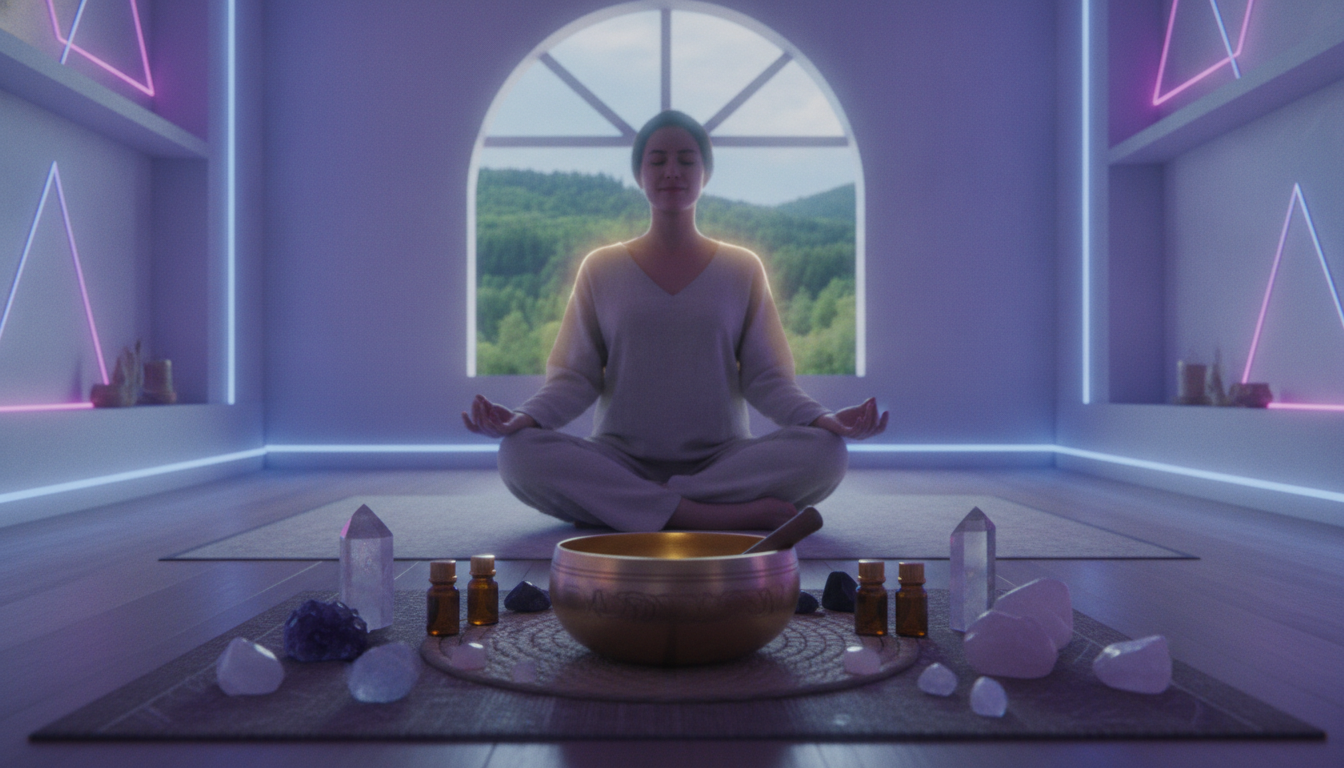
Stress can follow you from work to home, making it hard to slow down. Many people turn to singing bowl healing when they want a calmer mind, a gentler stress response, and a more mindful daily routine. The steady sound may also create a peaceful sense of space.
These metal or crystal instruments produce lasting tones and subtle vibrations when struck or guided with a mallet. Singing bowls now appear in meditation, yoga, and wellness spaces across the United States. Grammy-nominated artist Jhené Aiko has also helped bring their rich sounds into mainstream music.
People often report relaxation, better sleep, emotional ease, and improved focus. These possible benefits can support personal wellness, but individual experience does not equal medical proof. A singing bowl may complement a healthy routine without promising specific results.
UCLA’s music therapy program recognizes sound-based care as a possible support for physical and mental health. It should complement, not replace, treatment from a qualified professional. In this guide, you’ll explore how bowls, sound, and mindful practice may influence your energy levels and overall sense of well-being.
Key Takeaways
- Sound practices may encourage relaxation and mindful focus.
- Metal and crystal bowls create sustained tones and vibrations.
- Jhené Aiko helped bring these sounds to wider audiences.
- Personal results vary and do not replace medical care.
- UCLA frames music therapy as a complement to standard treatment.
What Is Singing Bowl Healing?
Some people use this practice to create a calm pause during a busy day. It combines sustained tones, gentle vibrations, and focused listening. The goal is support for relaxation and meditation, not a guaranteed medical result.
How Tibetan and Crystal Bowls Are Used
Traditional metal bowls are often linked to Tibet and dated to about 560–480 BC. Still, historians question the strength of that origin story. Some also warn that broad healing claims can ignore culture or encourage appropriation. Modern crystal bowls offer a different tone, yet neither material suits every person.
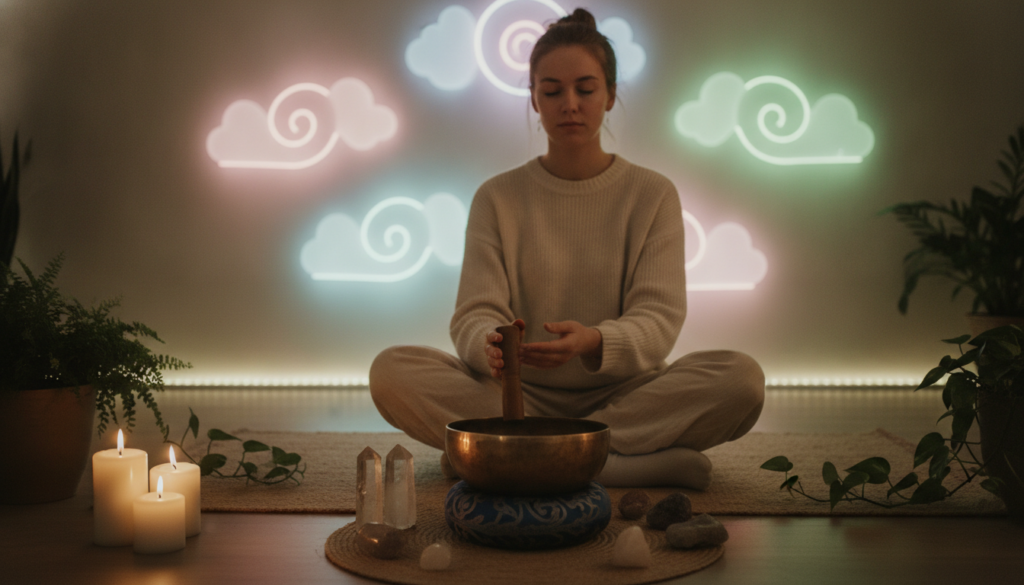
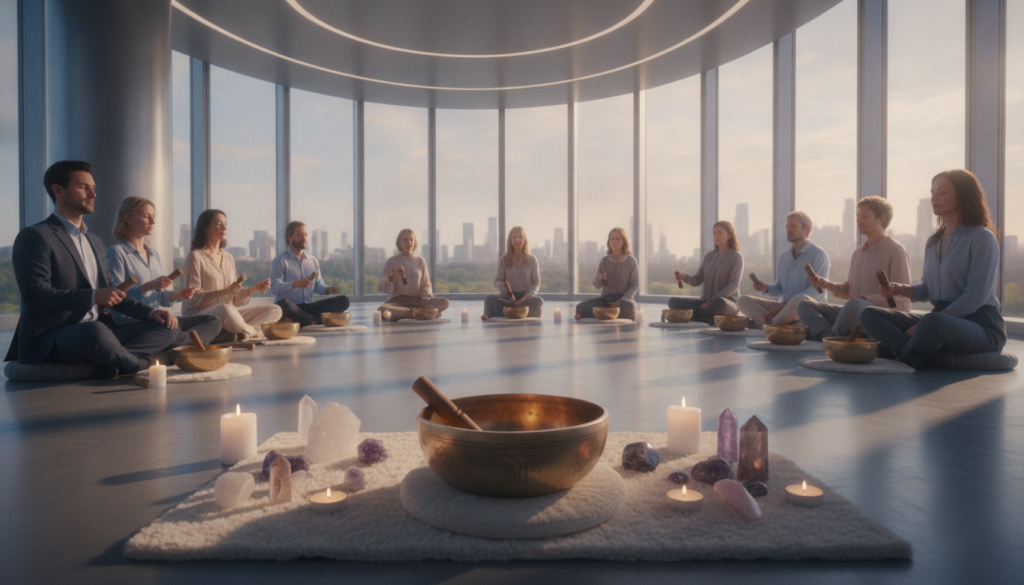
During a session, a practitioner may place bowls around the room, around the body, or on selected points. A mallet sets the rim in motion, creating waves that travel through the air. Placement, pressure, and speed can change the listening experience.
Where Sound Therapy Fits Into Relaxation and Meditation
McGill University studies music’s neurochemistry and its move into clinical settings. Sound therapy may support relaxation, pain management, psychotherapy, or personal growth. It also appears in meditation, yoga, and other wellness settings. Results vary, so use this therapy as a complement to qualified care.
How Singing Bowls Create Sound and Vibration
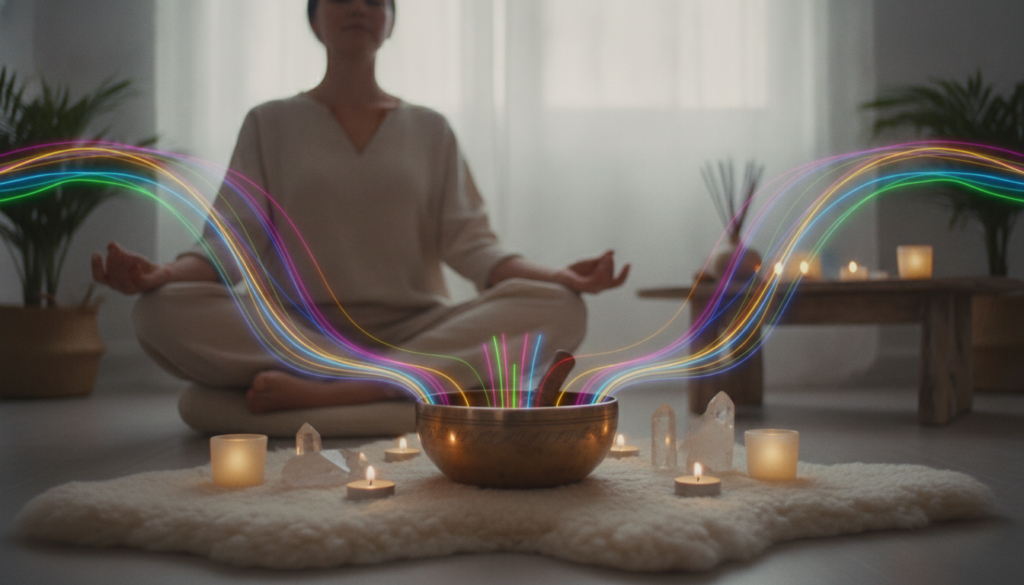
A mallet turns a simple bowl into a lasting acoustic instrument. When it strikes or circles the rim, pressure moves through the metal. That motion creates waves that the ear hears as a sustained tone.
The mallet’s angle, speed, and pressure shape the result. A light touch may create soft sounds, while firmer contact can raise the volume. These changes affect the vibration, tones, and overall sense of the practice.
Sound is commonly measured in Hertz, or Hz. This unit describes frequencies, not a mysterious healing code. Measurable acoustics can explain pitch and volume, while spiritual ideas about energy or resonance remain personal interpretations.
Crystal bowls have a different material story. Quartz crystal forms from silica and water under heat and pressure. Its piezoelectric properties help it amplify, transform, store, and transfer energy. Engineers use quartz in computers, phones, and other electronic devices.
Those established properties do not prove that a crystal bowl matches the body’s energy. Instead, listeners may enjoy the clear tone and focused attention. Careful listening keeps the experience grounded while leaving room for personal meaning.
Potential Benefits of Singing Bowl Healing
Benefits often begin with a simple shift in attention. A quiet session can draw focus from racing thoughts to slower breathing, present-moment listening, and mindful rest. This gentle practice may support relaxation, but it does not promise a cure. For a closer look, explore this sound-bath relaxation guide.
Stress Relief and Mindful Rest
People report less stress after listening to resonant bowls during meditation, yoga, or therapy. Music therapy research suggests that lower cortisol levels may help explain this calmer state. A 2019 study found that Himalayan instruments supported deep relaxation in under 20 minutes, though larger studies still need to confirm the result.
Mood, Anxiety, and Emotional Well-Being
Reported outcomes include improved mood and less anxiety, depression, or anger. These mental and emotional benefits vary by person and setting. Crystal bowls may feel soothing, while metal instruments offer warmer tones.
Sleep, Pain, and Physical Relaxation
Some people describe better sleep, slower respiratory rates, and reduced muscle tension. Others report changes in pain, blood pressure, fibromyalgia symptoms, or Parkinson’s-related stress. These conditions require professional care. Use this practice to complement health treatment, not replace it.
What Research Says About Singing Bowl Therapy
Research offers promising clues, but it does not confirm every claim about this practice. A 2020 review examined four studies and reported improvements in anxiety, depression, fatigue, tension, anger, confusion, and vigor. Participants also showed changes in blood pressure, heart rate, breathing rate, and peripheral capillary oxygen saturation.
The findings support further study of sound therapy for relaxation and stress. However, the review included only a small number of studies. Differences in methods, session length, and participant health make firm conclusions difficult.
A 2016 observational study found similar mental and emotional changes. Still, this design can show patterns without proving cause and effect. People may improve because of quiet time, meditation, group support, or other wellness practices.
An Italian pilot study explored Tibetan instruments with people who had metastatic cancer. It reported less distress and anxiety, yet it did not show that this therapy treats cancer or other serious conditions.
In 2022, German researchers found that a session reduced overall EEG power. That result may reflect a different mental state, but its health meaning remains unclear. Larger, controlled trials are needed before practitioners make strong medical claims.
Metal Bowls and Crystal Bowls: What’s the Difference?
Material changes the feel, weight, and sound of these calming instruments. Metal options often use copper and brass alloys, while crystal versions typically use quartz. Neither choice works for everyone, so let your comfort, budget, and goals guide you.
Choosing Tones, Sizes, and Materials
Metal bowls usually create warm, layered tones with a steady sustain. Crystal models can feel brighter and more focused. Size, thickness, and shape affect volume, frequencies, and vibration. A larger design may fill a room, while a smaller one suits personal meditation or gentle yoga.
- Choose metal for rich sounds and a traditional appearance.
- Choose quartz crystal for a clear tone and modern look.
- Use lighter pressure for soft relaxation and slower practice.
DharmaShop has worked with skilled Kathmandu artisans since 1999. Each handcrafted singing bowl includes a cushion and striker, which can make learning easier. Test the tones at a comfortable level, and remember that energy claims remain personal beliefs. The best choice supports your listening style and sense of ease.
What to Expect During a Singing Bowl Session
Your first session usually begins with a quiet welcome. You may sit or lie down, adjust a blanket, and let your body settle. Then, allow the sound to become your main focus. There is no need to force a special state.
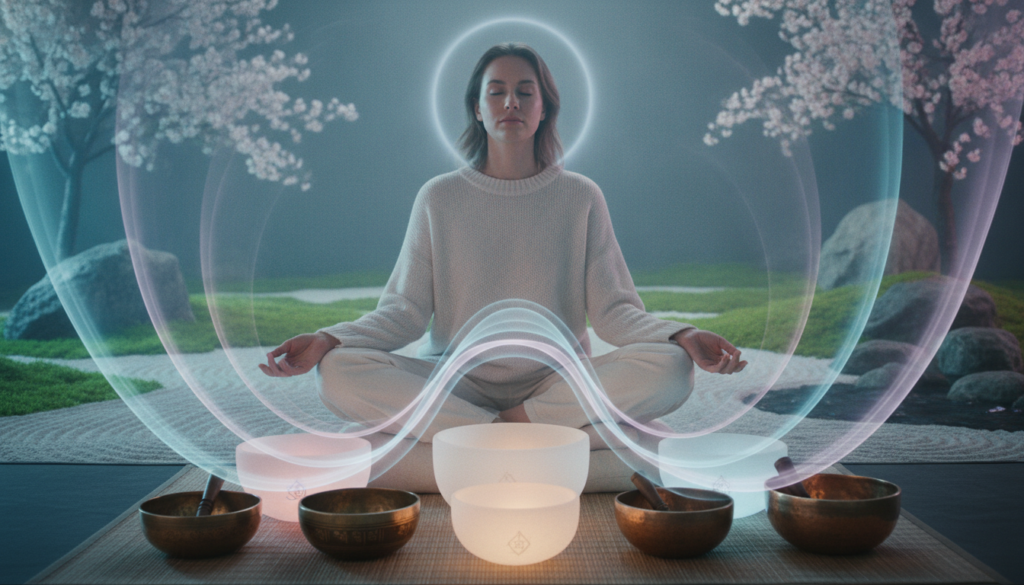
At the Integratron near Joshua Tree, California, a 30-minute sound bath uses 10 to 15 crystal bowls in a circular wooden dome. That setting is one format. Other sessions may blend guided meditation, yoga, gongs, chimes, rattles, or drums.
Comfort comes first. A practitioner may place bowls on selected points, around the body, or around the room. Direct placement does not suit everyone, especially people with certain health conditions, sensory needs, or discomfort with touch. Ask questions before the therapy begins.
Start gently, notice your response, and stop if the experience feels unpleasant.
Sound Baths, Guided Meditation, and Body Placement
Quiet breathing can make the waves and vibrations easier to notice. You can keep your eyes open or closed, and you may change position at any time.
How a Mallet Changes Tone and Vibration
A light tap creates a brief tone. Slow circles with a mallet can produce longer sounds, while changes in pressure and speed affect volume, vibration, and frequencies. Metal instruments may feel warmer than crystal ones.
- Begin with a slow five-minute practice.
- Keep the level comfortable.
- Pause if you feel dizzy, tense, or overwhelmed.
This simple approach supports relaxation without promising medical results.
Simple Ways to Bring Singing Bowl Sounds Into Your Day
A clear five-minute pause can fit into a busy morning without becoming another task. Sit comfortably, place one singing bowl nearby, and listen at an easy volume. Strike it gently, then take three slow breaths as the tone fades. Notice your body, mood, and sense of focus without judging the result.
Before meditation, yoga, journaling, or bed, use the same short routine. One instrument is enough; you do not need a large setup or a long session. Small, steady steps can make mindful rest easier to repeat.
- Begin with a soft morning listen and pause if the volume feels sharp.
- Keep the bowl nearby, or use bowls with a meditation or therapy practitioner.
- Choose privacy at home or community support during a guided session.
- Try sound baths with gongs, chimes, rattles, wind instruments, or drums.
People respond in different ways, so let comfort guide the process. Singing bowls may support relaxation, but their benefits depend on the setting and the listener. A short practice can offer a calm reset without turning healing into a promise.
A Grounded Approach to Singing Bowl Healing
Singing bowl healing works best as a gentle relaxation and meditation practice, not a medical solution. Current evidence points most clearly to lower stress and quiet focus. A 2020 review and later studies offer useful clues, yet larger trials must confirm broader claims.
Safety matters. If you have epilepsy, metal implants, are pregnant, have inflammatory skin conditions, or recently had surgery, ask a qualified healthcare professional before using bowls. Anyone with anxiety, depression, PTSD, or another diagnosed condition should discuss sound therapy with a doctor or therapist.
At home, try one comfortable five-minute session. Sit in a calm space, use a soft volume, and notice your response. A simple Zen house aesthetic can help create a restful setting. Stay curious, listen carefully, and let personal experience guide you without replacing sensible care.