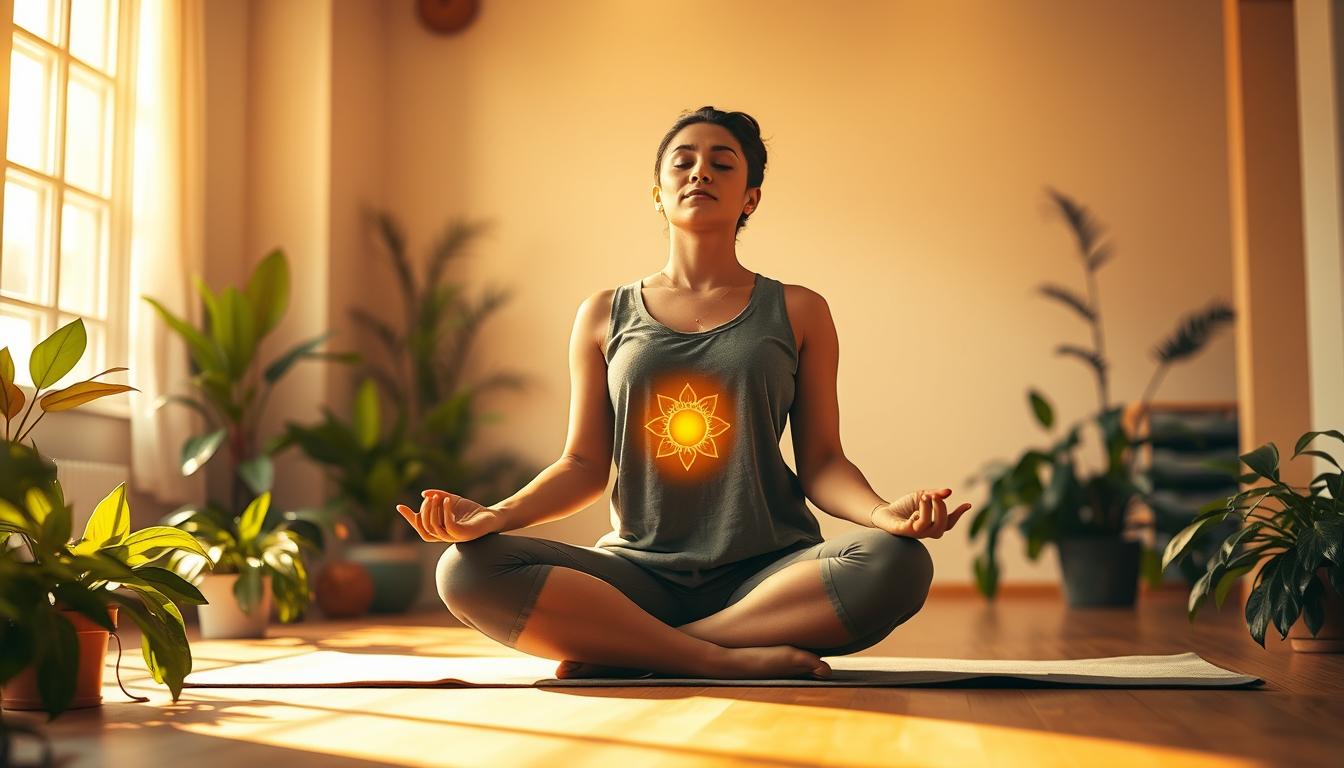
The solar plexus chakra is the third point in a seven-part system from traditional yoga teachings. Known as Manipura, it relates to personal power, motivation, and the courage to act. Many people explore it when they want to feel more sure of themselves in daily life.
Dr. Ram Jain, PhD (Yoga), shared his original guide on September 3, 2020. He began formal yoga training at age eight in a Vedic school in India. His approach connects breathwork, yoga, meditation, and small choices with steady inner strength.
This guide offers a clear look at Manipura, its place in the body, and its traditional symbols. You will also explore imbalance signs, movement, mantra, and affirmations. Real confidence grows over time. It comes from repeated practice, not one dramatic experience or medical promise.
Key Takeaways
- Manipura represents courage and self-belief in traditional teachings.
- Small daily choices can support a stronger sense of identity.
- Breathwork and meditation may encourage calm focus.
- Yoga can make personal growth feel practical and grounded.
- Consistency matters more than quick results.
What Is the Solar Plexus Chakra?
Confidence often starts with a simple question: “Can I trust myself?” In traditional yoga philosophy, Manipura offers a way to explore that question. It is the third chakra in a system of seven energy centers linked with the body, emotions, and inner awareness.
Manipura Meaning and the Third Chakra’s Role
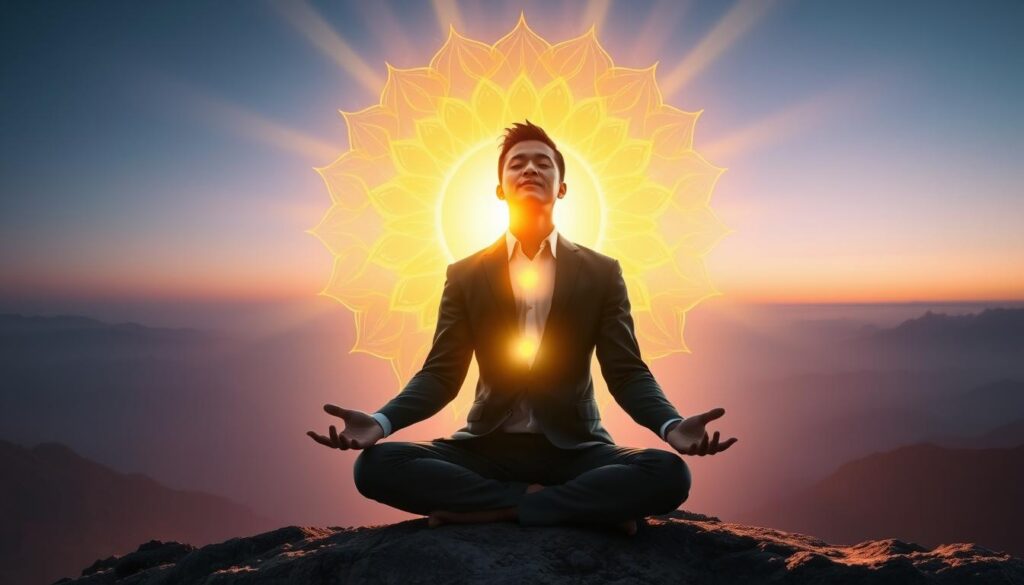
Manipura is the Sanskrit name for this center. “Mani” means jewel, while “pura” means city or place. Together, the name is often translated as “city of jewels.” This image suggests inner worth, energy, and potential.
Traditional teachings connect this area with digestion, motivation, willpower, and personal power. These ideas belong to yoga philosophy, not medical science. They can still give people a thoughtful language for self-reflection.
How Personal Power Shapes Confidence and Action
Healthy power isn’t about controlling others. It helps you make decisions, take action, and follow through. Grounded confidence leaves room for listening, learning, and changing course when needed.
When this plexus chakra feels symbolically steady, people may find it easier to trust their judgment. Small choices build strength over time. That steady practice can support a calmer, more purposeful life.
Where the Solar Plexus Chakra Is Located
Traditional yoga places this center in the upper abdomen, about four finger-widths, or 5 to 7 centimeters, above the navel. It rests below the rib cage and near the body’s solar plexus nerve network. This description is symbolic, so it does not identify a separate organ or proven energy point.

The Upper Abdomen, Navel, and Core Area
Some guides describe the area beneath the sternum, near the diaphragm, or across the upper belly. These differences explain why no single spot fits every tradition. One teaching places it near T12-L1, where the lowest thoracic vertebra meets the first lumbar vertebra.
In the body’s vertical map, this area sits above the sacral center and below the heart center. Tension, anxiety, or discomfort may appear there, yet such feelings do not prove a blocked chakra. Persistent pain, digestive changes, or unusual symptoms need care from a qualified medical professional. Use this location as a gentle focus for breathing, posture, and calm self-awareness—not as a diagnosis.
Solar Plexus Chakra Symbol, Color, and Fire Energy
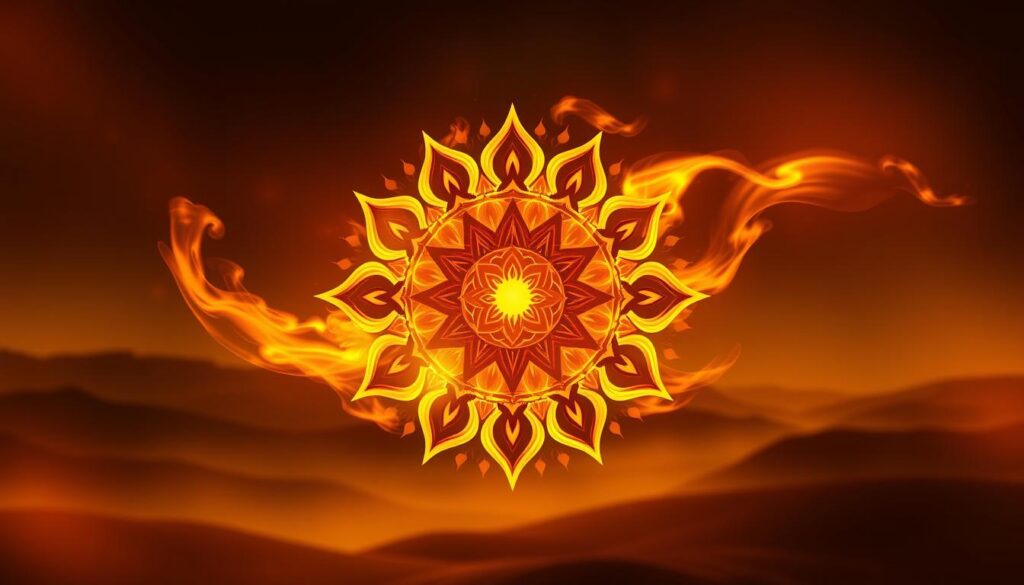
Symbols give this energy center a simple visual language. In yoga tradition, the solar plexus chakra appears as a yellow lotus with ten petals and a downward-pointing triangle. These images can help you reflect on purpose, courage, and steady personal power.
The Yellow Lotus and Downward-Pointing Triangle
Yellow connects with sunlight, intellect, fresh starts, and inner strength. The ten petals traditionally represent ten pranas, or vital forces, within the subtle body. The triangle points downward to fire, focus, and the ability to direct energy toward useful action.
Why Fire Represents Willpower and Transformation
Agni, the traditional fire principle, suggests warmth, digestion, drive, and transformation. A balanced flame may represent confidence without harshness. An uncontrolled flame may point to anger, pressure, or harmful reactions. These meanings belong to yoga symbolism, not medical anatomy. Use them as tools for reflection and balance.
| Symbol | Traditional meaning | Practical reflection |
|---|---|---|
| Yellow lotus | Strength and renewal | Notice one skill you trust |
| Ten petals | Ten vital forces | Check your daily energy |
| Downward triangle | Focused fire and will | Choose one clear action |
What the Solar Plexus Chakra Governs in Body and Mind
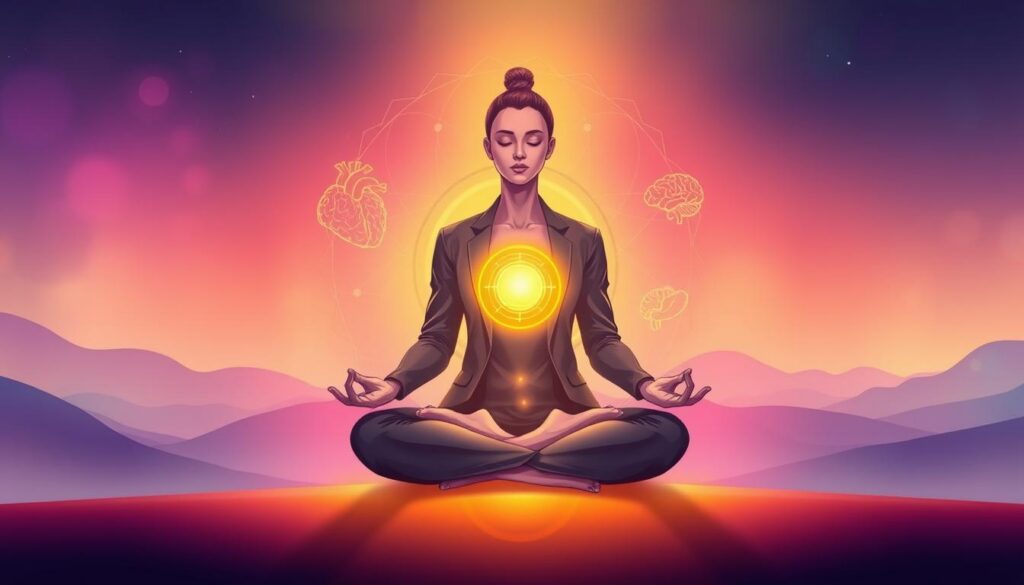
Daily confidence can shift with your energy, digestion, and sense of purpose. In traditional yoga, this third chakra connects the located upper abdomen with inner drive. These ideas offer a reflection tool, not a medical diagnosis.
Digestion, Metabolism, and Energy Levels
Teachings link this area with the stomach, liver, pancreas, gallbladder, intestines, and adrenal glands. The pancreas supports digestion and insulin production. Agni and prana samana symbolize the processes that transform food into usable energy. Seek medical care for ongoing digestive symptoms.
Self-Esteem, Motivation, and Decision-Making
Low self-esteem may lead to second-guessing or stalled goals. A steady inner power can help you make decisions, choose one action, and keep going. A strong core may symbolize stability, but exercise alone does not determine your worth or confidence.
Boundaries, Leadership, and Responsibility
Healthy boundaries protect your time without controlling others. Leadership means accepting responsibility, saying no when needed, and following through with care.
| Focus | Everyday example | Helpful question |
|---|---|---|
| Digestion | Notice meals and comfort | What supports my body? |
| Motivation | Start one small task | What action fits my goal? |
| Boundaries | Decline an unreasonable request | What can I honestly offer? |
Signs of a Blocked Solar Plexus Chakra
Confidence may feel distant when self-trust fades. In traditional yoga, a blocked solar plexus can symbolize low motivation, fear of failure, and uncertainty. These signs are reflective ideas, not proof of an energy problem.
Emotional Signs of Low Confidence and Self-Doubt
You may overanalyze simple decisions or seek approval before taking action. Insecurity can make you hand responsibility to others. A lack of direction may also show up as difficulty setting boundaries or trusting your own judgment.
These feelings deserve patience, not blame. Journaling, supportive conversations, and gentle movement may help you notice patterns in daily life.
Physical Signs Around Digestion and the Stomach
Traditional sources connect this center with the upper abdomen. Reported concerns include bloating, indigestion, stomach discomfort, fatigue, and metabolic issues. Yet these symptoms have many possible causes.
Persistent pain, changing digestion, or ongoing tiredness needs attention from a qualified healthcare professional. A blocked solar plexus is not a medical diagnosis.
| Reported sign | Gentle reflection | When to seek care |
|---|---|---|
| Self-doubt | Notice one strength | When it limits daily life |
| Bloating | Track food and stress | When it continues |
| Fatigue | Review rest and routine | When it feels persistent |
How an Overactive Solar Plexus Chakra Can Show Up
An inner flame can become too forceful when confidence turns into control. Traditional teachings describe this pattern as excess fire energy, which may appear as anger, impatience, or quick reactions. These ideas are symbolic, not a medical diagnosis.
Control Issues, Anger, and Emotional Reactivity
An overactive plexus chakra may show through rigid behavior, frequent arguments, or a need to manage every outcome. Some people interrupt, demand agreement, or feel upset when plans change. Tension in the upper abdomen can serve as a reminder to pause, breathe, and notice the feeling before taking action.
Real power includes restraint. A short pause can prevent harsh words and create room for a wiser response. If anger feels intense or hard to manage, support from a qualified mental health professional can help.
Finding Strength Without Becoming Overbearing
Healthy willpower supports clear goals while respecting other people. It does not require constant winning, loud behavior, or making someone else feel small. Self-mastery means owning mistakes, listening well, and choosing balance over dominance.
| Pattern | Balanced response | Helpful action |
|---|---|---|
| Anger | Pause before speaking | Take three slow breaths |
| Rigid control | Allow shared decisions | Ask for another view |
| Impatience | Respect the process | Choose one calm step |
Solar Plexus Chakra Practices for Balance and Healing
Simple routines can help you notice tension, build focus, and create steadier habits. Explore Manipura practices with patience. They support reflection, but they do not promise instant healing.
Breathwork and Gentle Upper-Abdomen Awareness
Sit comfortably and place one hand below the ribs. Inhale through the nose for four counts. Exhale for six counts. Keep the breath soft and let the body relax. Stop if you feel dizzy or uncomfortable.
This gentle method brings attention to the upper abdomen without forcing an intense experience. Combine breath, mindful movement, meditation, and yoga over time. Dr. Ram Jain founded Arhanta Yoga Ashrams in 2009, where teachers connect these tools with steady learning.
Small Daily Choices That Build Willpower
Choose one clear goal each day. Finish one task, say no to an unfair request, or write down one action for tomorrow. Optional scents such as lemon, peppermint, ginger, or bergamot can set a calm mood.
Enjoy yellow foods like bananas, corn, pumpkin, and turmeric as part of a varied diet. Consistency builds strength more reliably than intensity.
| Practice | Simple step | Purpose |
|---|---|---|
| Breathing | Slow, longer exhale | Calm attention |
| Daily action | Complete one goal | Steady motivation |
| Food choice | Add whole foods | Balanced nourishment |
Yoga Poses to Activate Solar Plexus Energy
Movement can turn inner intention into steady action. These yoga poses build heat, improve posture, and help you notice your center. Work with control, and let each breath guide the practice.
Core-Building Poses for Strength and Confidence
Try Boat Pose, Plank Pose, Chair Pose, Warrior I, or Warrior III. Hold each pose for three to five breaths. Keep the ribs relaxed and the core gently engaged. Steady effort matters more than a deep shape.
Twists and Backbends for the Abdominal Area
Paschimottanasana uses a calm forward bend and may support digestion in traditional practice. Dhanurasana creates a backbend linked with massage around the liver and pancreas. Ardha Matsyendrasana adds a gentle twist associated with the digestive system, liver, and gallbladder.
Bhujangasana, or Cobra Pose, and Purvottanasana, or Upward Plank, open the front body. Use a lower lift if your wrists, shoulders, abdomen, or lower back feel strained. Never push through pain.
Sun Salutations and the Inner Fire of Practice
Sun Salutations, or Surya Namaskar, connect breath with repeated movement. This rhythm reflects the traditional idea of fire and focused energy. Finish slowly, then rest and observe how your body feels.
| Focus | Poses | Safety cue |
|---|---|---|
| Core | Boat, Plank, Chair | Keep the breath smooth |
| Twist | Ardha Matsyendrasana | Move without forcing |
| Backbend | Cobra, Bow, Upward Plank | Lift only to comfort |
| Flow | Sun Salutations | Rest when needed |
Solar Plexus Chakra Meditation, Mantra, and Affirmations
A quiet routine can turn inner focus into practical confidence. Sit in a comfortable position, relax your shoulders, and let your breathing settle. Keep your attention near the navel without forcing focus.
Visualizing a Bright Yellow Light
Imagine a soft yellow light warming your upper abdomen. Let it rise and fade with each breath. This image is a reflection tool, not medical treatment. Try it for 10 to 15 minutes each day, or stop sooner if you feel strain.
Using the RAM Mantra for Focus
Silently or softly repeat “RAM” as you breathe. In yoga tradition, this seed sound helps focus attention on the third chakra. You can also try Agni Mudra, a hand position linked with fire. Keep your hands relaxed and comfortable.
Confidence Affirmations for Everyday Decisions
Choose one statement and repeat it with care:
- “I feel calm, confident, and powerful.”
- “I trust my decisions.”
- “I am courageous.”
Affirmations are prompts, not promises. Let each phrase guide one useful action, such as speaking clearly or honoring your goals.
| Practice | Simple approach | Purpose |
|---|---|---|
| Breathing | Slow, steady breaths | Settle attention |
| RAM | Repeat the sound gently | Support focus |
| Affirmation | Choose one statement | Guide daily action |
Make Your Solar Plexus Chakra a Source of Confidence
Confidence grows through choices you can repeat, not control over other people. A balanced solar plexus chakra can offer a spiritual framework for clearer decisions, firm boundaries, and purposeful action. Let this center support self-trust while staying open to change.
Breathwork, yoga, visualization, meditation, affirmations, and small goals can build motivation over time. Repeat one practice, then notice which actions fit your life. Meditation can calm attention, while affirmations may guide your next step. This steady rhythm helps turn inner fire into useful strength and balanced power.
Dr. Ram Jain started yoga training in India at age eight, following five generations of family practice. He founded Arhanta Yoga Online Academy in 2017, with online, on-site, and hybrid teacher training.
Persistent digestive issues, fatigue, or abdominal discomfort are signs to discuss with a healthcare professional. Real confidence means trusting your ability to choose the next action. Give yourself time, care, and room to grow.