
A sound bath is a guided listening experience, not a medical cure. It draws from centuries of Tibetan and Buddhist traditions, where vibration supports meditation, reflection, and healing rituals. Today, many people use this calming practice to pause and reset.
During a session, you stay fully clothed and usually lie on a mat beneath a blanket. The “bath” means you feel surrounded by vibration from instruments such as bowls, gongs, or chimes. Commonly discussed benefits include deep relaxation, less stress, a better mood, and a stronger connection with your body.
Tamara Goldsby, PhD, a research psychologist at the University of California San Diego, describes these sessions as low-tech and relatively affordable. Still, modern research continues to develop, so personal experience shouldn’t be treated as scientific proof.
This guide explores instruments, sleep, chakras, preparation, practitioner safety, and realistic expectations. You’ll also learn how to choose a session that fits your needs and supports a calmer mind.
Key Takeaways
- A guided listening practice is not a medical treatment.
- Sessions may encourage relaxation and emotional ease.
- You usually remain clothed while lying on a mat.
- Research is promising but still limited.
- Preparation and safety matter.
What Is a Sound Bath and How Does It Work?
A sound bath is a meditation-style practice that uses tones and gentle vibrations instead of water. You rest on a yoga mat in a quiet, dim room with a blanket or pillow. The goal is simple: listen, settle your mind, and notice how your body responds.
Why There’s No Water Involved
The word “bath” describes the feeling of being surrounded by layered tones. Most people lie still while the facilitator guides the session. You do not need to chant, follow complex breathing steps, or perform music. Slow patterns rise, soften, and fade, creating space for meditation and relaxation.
How Singing Bowls, Gongs, and Other Instruments Create Sound
Metal and crystal singing bowls offer clear, ringing tones. Gongs create broad waves, while tuning forks, bells, and chimes add bright details. Didgeridoos bring a low, steady vibration. Each instrument shapes a different listening experience.
Elisa Sobo, PhD, a San Diego State University anthropology professor, notes that formats can vary widely, much like different meal styles. Some sessions focus on music, while others draw from sound healing or sound therapy. These practices may support calm, but they do not replace medical care.
Sound Bath Benefits for Stress, Relaxation, and the Nervous System
Quiet tones may give an overworked mind a gentle pause. A sound bath can support meditation and relaxation, but early research does not prove broad health effects. Your response may depend on comfort, setting, and personal expectations.
How Vibration May Support the Body’s Rest-and-Digest Response
The parasympathetic nervous system helps the body move away from fight-or-flight activity. Slower breathing, stillness, and pleasant sound waves may encourage this rest-and-digest state. Small studies link sessions with lower cortisol and improved heart rate variability, yet they cannot confirm lasting medical results.
Researchers remain interested in this low-tech approach. Tamara Goldsby, PhD, of the University of California San Diego, has studied its effects on stress and mood. Other teams are examining how vibration might influence blood flow, muscles, cells, and bones.
Why Deep Relaxation Can Ease Tension
Brain activity may shift from busy beta waves toward calmer alpha, theta, or delta patterns. This theory may explain why some listeners feel mentally quieter. Still, vibration does not cure pain or physical conditions. It may help ease muscle tension when paired with rest and mindful breathing.
| Early finding | What it may suggest | Important limit |
|---|---|---|
| Lower cortisol | Less short-term stress | Small studies cannot prove lasting change |
| Improved heart rate variability | Greater regulation | Results may vary by person |
| Shifted brain waves | Deeper calm | The theory needs more research |
How Sound Baths May Improve Mood and Emotional Well-Being
Sometimes, stepping away from noise is enough to change the tone of your day. In a calm room, focused listening and gentle music may interrupt repeating thoughts. This pause can create space for meditation, relaxation, and a clearer mind during periods of stress.
A Cosmopolitan UK writer described a 60-minute session at London’s 180 Health Club. Katherine Templar Lewis and Robyn Landau, co-founders of Kinda Studios, led the experience with breathwork, visualization, chimes, gongs, and melodic tones. The writer reported feeling calmer, less physically rigid, and briefly free from work-related thoughts.
That account offers a useful example, not a guarantee. Some people may leave feeling centered, refreshed, peaceful, or emotionally lighter. Others may notice little change beyond enjoying a quiet hour. Both responses are normal.
For some, these sessions may bring up emotion. Paying attention to the body and mind can support self-awareness, but it does not promise lasting changes to personality or mental health. Sound baths might complement personal wellness habits, yet they should not replace therapy or professional health care.
Can Sound Baths Help You Sleep and Fall Asleep Faster?
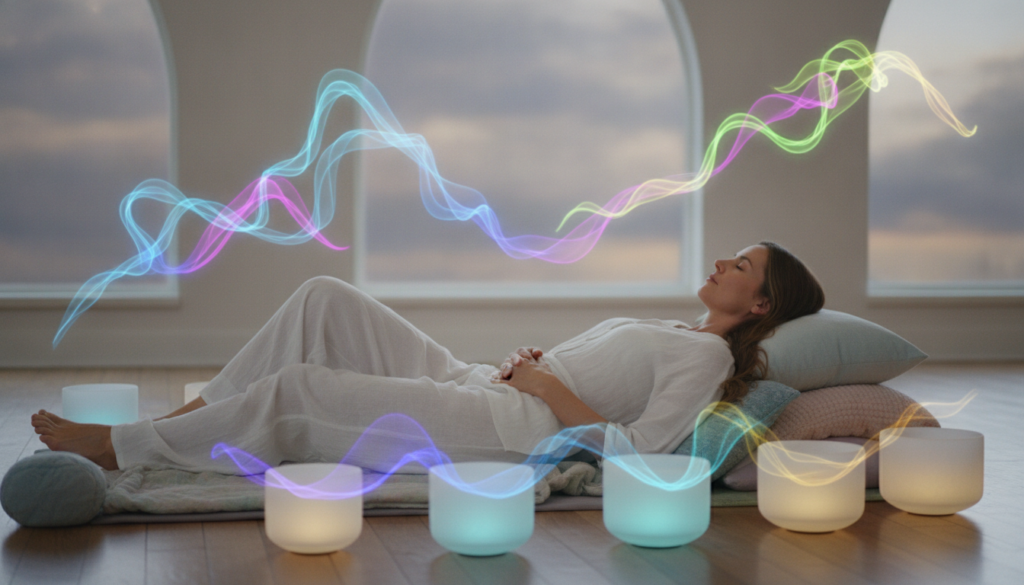
A 60-minute session can feel like a gentle bedtime routine. Dim light, warm blankets, stillness, and soothing tones help reduce outside demands. This setting may ease stress and prepare the body for rest, although it cannot promise faster or longer sleep for everyone.
Brain Waves, Meditation, and Sleepy States
One theory suggests that focused listening may shift brain activity from busy beta waves toward slower alpha, theta, or delta patterns. Delta activity links with dreamless sleep. These effects remain theories, not proof of a sleep cure.
During meditation, mindfulness can help you notice racing thoughts, heavy limbs, or slower breathing. Some people even fall asleep during the experience. That usually shows the body reached a relaxed state. You did not fail or miss the practice.
- May help: create a calmer transition into bed.
- May not help: sleep problems caused by pain, medication, or illness.
- Next step: ask a qualified health professional about ongoing insomnia.
Music and soft sound waves may support relaxation for some listeners. Yet individual effects vary, so treat this practice as a wellness tool, not medical care.
Sound Healing, Chakras, and a Deeper Mind-Body Connection
Chakra language gives some people a simple way to describe inner balance. In this spiritual framework, “clearing” a chakra means feeling more open, grounded, or connected. It does not mean removing a proven physical blockage or treating a health condition.
What People Mean By Clearing Their Chakras
During a sound bath, singing bowls and other instruments may draw attention to breath, emotion, and tension in the body. You might notice warmth, ease, or a stronger sense of presence. These personal effects can feel meaningful, but they do not confirm a medical process.
How Mindfulness and Deep Listening Fit Into the Experience
Nada yoga is a yogic practice centered on deep listening. Elisa Sobo, PhD, describes it as listening for the “unstruck sound,” or “music of the universe.” Tibetan and Buddhist traditions have also used tones in meditation for centuries.
Mindfulness turns passive listening into active attention. You can observe the brain, breath, and body without judging each response. Modern studios such as Kinda Studios, led by Katherine Templar Lewis and Robyn Landau, connect creative neuroscience with human connection. Current research supports curiosity, not certainty, about healing claims.
What Happens During a Sound Bath Session?
Most sessions last about 60 minutes and follow a calm, simple rhythm. You lie on a mat beneath a blanket while a guide helps you settle. Studios often provide mats, pillows, and extra blankets.
How to Prepare Your Body and Mind
Wear soft layers and bring socks, water, an eye mask, or a small journal. A pillow can support your neck. Let your phone stay quiet so your attention can move inward.
What You May Feel While the Sounds Play
The guide may start with breathing, grounding, an intention, or silence. Then gongs, bowls, and chimes rise slowly before fading into quiet. You may feel tingling, warmth, heaviness, or vibration in your chest or back. Tension may soften, or your body may simply feel tired and calm.
Why Falling Asleep or Crying Can Be Normal
Deep relaxation can bring sleep, tears, or no strong reaction at all. These effects do not measure the value of your experience. There is no correct way to respond. If discomfort continues, sit up, leave the room, or tell the guide. This practice can support meditation, but it does not replace health care.
How to Choose a Safe and Supportive Sound Bath Practitioner
Choosing the right facilitator can shape your entire experience. In the United States, no musical training or legal license is required to offer a sound bath. Training levels can vary, so review each provider with care.
Look for education in ethics, trauma sensitivity, and sound theory. The nonprofit International Sound Therapy Association offers a certification route with at least 200 hours of training. However, certification does not equal medical expertise. A provider should respect your limits, privacy, and health needs.
Elisa Sobo, PhD, cautions that a facilitator who centers their own trauma may overlook a client’s needs. Choose someone who welcomes questions and explains the plan clearly. Ask about volume, instruments, room conditions, cancellation rules, and help available if you feel uneasy. Crystal singing bowls, gongs, and other sounds should feel comfortable, not harsh.
Yoga studios and wellness centers often list group sessions from $15 to $65. Private appointments usually cost more. Read online content, but also trust how welcoming the setting feels. Good care puts consent and comfort before healing claims.
| Check first | Why it matters | Helpful question |
|---|---|---|
| Training | Shows preparation | What courses have you completed? |
| Safety | Supports comfort | Can I leave or lower the volume? |
| Price | Sets expectations | What does the session include? |
Possible Side Effects, Health Concerns, and Realistic Expectations
Not every wellness practice suits every person. Most sessions feel gentle, but reactions can differ. Mild side effects may include tiredness, dizziness, or unexpected emotion. Pause or leave if the volume feels painful, frightening, or overwhelming.
Who May Need Medical Guidance Before Trying a Sound Bath
Ask a doctor first if you have sound-triggered seizures, schizophrenia, PTSD, or trauma linked to war, hurricanes, flooding, or other loud events. Crashing waves, drums, and sudden tones may trigger distress. A provider can suggest safer options for your health and nervous system.
- Tell the facilitator about medical conditions and sensory needs.
- Request lower volume, breaks, or a quiet space.
- Keep prescribed care, therapy, and medication in place.
What Research Says About Relaxation and Mood
Early research links these sessions with brief relaxation and lower stress. Small studies also report lower cortisol and improved heart rate variability. However, these findings do not prove treatment for major depression or anxiety disorders.
David Silbersweig, chairman emeritus of psychiatry at Brigham and Women’s Hospital and Stanley Cobb Professor at Harvard Medical School, supports caution around cure-all claims. Sound healing may support a healthy routine, but it cannot replace medical care, psychotherapy, medication, or emergency help.
| Concern | Safer response | What to expect |
|---|---|---|
| Trauma triggers | Ask a clinician first | Choose calm, predictable music |
| Strong reactions | Stop or leave | Comfort comes first |
| Health claims | Review the research | Relaxation is not a cure |
Making Sound Baths Part of Your Personal Relaxation Practice
There is no perfect schedule for sound baths. Try a weekly, monthly, or occasional session based on your needs, time, and comfort. Learn more about what a sound bath is before you book.
You can also practice deep listening for free. Sit near a stream, under a bridge, or in a quiet forest. Natural waves may calm the mind without costly instruments.
Yoga, tai chi, breathwork, guided imagery, massage, mindfulness meditation, and nature walks may help relieve stress. Group sessions often cost $15 to $65, so compare an in-person bath with recordings or free options.
Choose what feels right for you. This gentle practice may support relaxation, body awareness, and personal healing, but it cannot promise lasting health or mood changes.