

Have you ever heard about the seven gifts of the Holy Spirit? You might have come across this phrase in CCD class or during confirmation prep. But let’s be honest, no one really explained what they mean in everyday life. This guide is here to change that!
Think of these gifts as a spiritual toolkit you received at baptism. They’re yours, even if you didn’t realize it. We’ll explore where these gifts come from in the Bible, what St. Thomas Aquinas had to say about them, and how they can help you in your daily life.
By the end, you’ll understand wisdom, understanding, counsel, fortitude, knowledge, piety, and fear of God. These aren’t just fancy terms to memorize; they’re practical tools for navigating tough decisions and even just getting through a rough Tuesday.
So, whether you’re a lifelong Catholic or just curious about the faith, let’s dive in and discover why these gifts matter for your journey!
Key Takeaways
- Understanding the gifts can enrich your spiritual life.
- These gifts are practical tools for daily challenges.
- They connect deeply with virtues and fruits of the Holy Spirit.
- Everyone can benefit from knowing how to use these gifts.
- This guide breaks down complex ideas into simple terms.
Understanding the Seven Gifts of the Holy Spirit Catholic
Ever wondered how these gifts can change your life? They’re not just abstract concepts; they’re real tools meant to guide you. Each gift acts like a special instinct that God plants in your soul. Think of them as a permanent part of your spiritual toolkit.
St. Thomas Aquinas described these gifts as “habits” that help you go beyond what human reason can achieve. They enable you to participate in God’s own life. This means that you’re not just navigating life on your own; you have divine assistance!
These gifts also help you become more receptive to the Holy Spirit’s promptings. You’ll find it easier to notice those gentle nudges from God throughout your day. They’re called sanctifying gifts because their purpose is to help you grow in holiness. It’s not just about ticking off items on your spiritual to-do list.
In your faith journey, these gifts bridge the gap between knowing about God and truly living like you know Him. Without them, it’s like trying to swim across a lake when there’s a perfectly good sailboat waiting for you. Why struggle when you have divine support at your fingertips?
These gifts work together as a team, not as isolated superpowers. They matter because life can throw curveballs your way. Your own smarts and willpower can only take you so far. Supernatural backup is essential!
Every baptized Christian can claim these gifts from an early age. They’re your spiritual inheritance, waiting to be embraced. Understanding what they are is the first step to letting them work in your life instead of lying dormant.

The Biblical Roots: Isaiah 11 and the Seven Gifts
Let’s explore where these remarkable gifts find their roots in Scripture. The only place in the Bible where all these qualities are listed together is in Isaiah 11:1-3. This passage reads:
“There shall come forth a shoot from the stump of Jesse, and a branch shall grow out of his roots. And the Spirit of the Lord shall rest upon him, the spirit of wisdom and understanding, the spirit of counsel and might, the spirit of knowledge and the fear of the Lord.”
This is a beautiful Messianic prophecy that points directly to Jesus Christ, who embodies all these gifts in their fullness. It’s crucial to understand that these gifts emerged from the ancient Israelite Wisdom tradition.
Here’s a quick overview of how these gifts are grounded in sacred scripture:
- If you want to find where these gifts first show up in Scripture, flip to Isaiah chapter 11; that’s the one and only place they’re all listed together.
- Isaiah paints a picture of a shoot coming from the stump of Jesse, a branch growing from his roots, with the Spirit of the Lord resting on him.
- This is straight up Messianic prophecy, pointing to Jesus Christ who possesses all these gifts in their fullness.
- The passage lists the spirit of wisdom and understanding, counsel and might, knowledge and fear of the Lord, forming the biblical foundation for everything the Church teaches about the gifts.
- What most people miss is how these gifts grew out of the ancient Israelite Wisdom tradition, the same soil that gave us Proverbs, Job, and Ecclesiastes.
- This Wisdom tradition was about daily life—handling money, relationships, and raising kids—not some abstract mystical experience.
- The context of Isaiah 11 shows the shoot of Jesse establishing a peaceable kingdom through thought, planning, work, struggle, and getting his hands dirty.
- This earthbound perspective is vital for understanding that the gifts aren’t just for contemplatives in monasteries; they’re for you in your kitchen, at your job, and in traffic.
- Isaiah 11 describes judging the poor with righteousness and deciding with equity for the meek—active, engaged, world-transforming stuff.
- Knowing the biblical roots keeps the gifts grounded in Scripture instead of floating off into vague spiritual sentimentality.

Thomas Aquinas and Catholic Tradition on the Gifts
St. Thomas Aquinas is a pivotal figure in understanding these gifts within the Catholic tradition. His work in the thirteenth century laid the groundwork for how we view them today. In his famous Summa Theologiae, he defined each gift with remarkable clarity.
For Aquinas, wisdom involves knowing divine things and making sound judgments about human affairs. It’s a blend of practical and contemplative understanding. He saw this gift as essential for navigating life’s complexities.
Understanding, according to Aquinas, is a penetrating insight into the heart of truths necessary for salvation. It allows believers to grasp deeper meanings in their faith journey.
Counsel is like having a spiritual GPS. It directs you in matters essential for your salvation, helping you make wise decisions. This gift ensures that you’re not wandering aimlessly.
Fortitude, another key gift, is described as firmness of mind in doing good, especially in challenging situations. It empowers you to stand strong against adversity.
Knowledge helps you judge correctly about faith and actions, ensuring you stay on the right path. This gift acts as a safeguard against missteps in your spiritual life.
Piety is about revering God with a loving, filial affection. It fosters a deep relationship with the Divine, encouraging a sense of belonging in the family of God.
Lastly, Aquinas distinguishes fear of the Lord as a filial fear. This is not about being scared of punishment but about respecting God and avoiding separation from Him.
Importantly, Aquinas emphasized that the virtue of charity unlocks the potential of all these gifts. Without love, they remain dormant in your soul. Charity breathes life into the gifts, allowing them to flourish in your daily life.

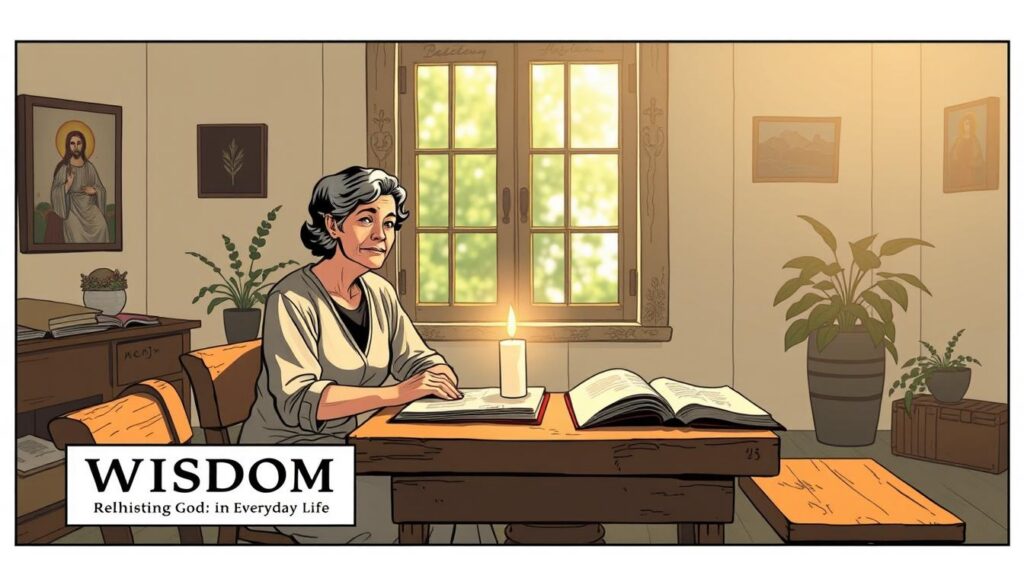
Wisdom: Relishing God in Everyday Life
Imagine savoring every moment with God in your daily life. This is the essence of wisdom, a precious gift from the Holy Spirit. It’s not merely about having knowledge; it’s about truly relishing all the things that pertain to God. St. Thomas Aquinas beautifully articulates that this gift perfects the theological virtue of charity. When wisdom is at work, love and understanding unite to enrich your spiritual journey.
Wisdom isn’t about being the smartest person in the room or having all the answers. Instead, it’s about genuinely enjoying the things of God in your everyday life. When this gift operates within you, reading the Bible transforms from a chore into a joy. You may find yourself looking forward to diving into Scripture, hungry for the insights it offers.
Longing for the Eucharist becomes a natural desire rather than an obligation. When you attend Mass, it feels less like a routine and more like a heartfelt reunion with God the Father. Prayer evolves too; it shifts from a duty to a cherished conversation with someone you deeply want to connect with.
The opposite of wisdom is illustrated in the Parable of the Rich Fool. This man stored up treasures for himself but missed the true essence of life. He focused on worldly things and overlooked the divine connection. Wisdom shapes your prayer and worship, making them less about going through the motions and more about a genuine connection with God.
You might find yourself yearning for retreats, seeking moments just to be with God. This desire springs from having tasted something real and fulfilling. Psalm 34 encapsulates this beautifully:
“Taste and see the goodness of the Lord.”
That’s wisdom in action.
In practice, wisdom looks like navigating tough situations with calm clarity. You begin to see things through God’s perspective, not just your limited view. This gift helps you understand life’s challenges and embrace them with grace.
Understanding: Seeing the Heart of God’s Truths
Seeing the heart of God’s truths can transform your understanding of faith. This gift of understanding provides a penetrating insight into the very essence of divine realities. It allows you to grasp higher truths essential for your eternal salvation. More than just knowledge, this gift lets you “see” God in a way that transcends surface-level comprehension.
When you read Sacred Scripture, this gift can illuminate passages that suddenly resonate deeply within you. Think of it like the difference between reading about someone and actually meeting them. Understanding opens your heart and mind to experience God’s presence fully.
Breaking Open Scripture with New Eyes
Consider the disciples on the road to Emmaus. They had heard the Scriptures their entire lives, yet it was only when Jesus opened their minds that their hearts burned with understanding. This is the essence of the Holy Spirit at work, transforming ordinary reading into profound revelation.
- Understanding isn’t just about comprehending facts; it’s about getting to the heart of things.
- When a passage jumps off the page, that’s the gift of understanding in action.
- This gift equips your intellect with divine light, allowing you to penetrate truths beyond your own reasoning.
Why Understanding Leads to Action
Importantly, understanding doesn’t merely sit idle; it compels you to act. Just like young St. Anthony of the Desert, who, upon hearing the Word, immediately gave everything to the poor, this gift pushes you toward meaningful action.
- The Word becomes a lantern for your steps and a light for your path (Psalm 119:105).
- Someone with this gift can read Scripture and know precisely how to apply it in life.
- Understanding helps you discern the lies and values of the world that might lead you astray.
- Once you truly see the heart of God’s truth, you can’t simply return to business as usual.
In conclusion, embracing this gift of understanding can lead to a life enriched by divine truths. It empowers you to navigate your faith journey with clarity and purpose, transforming how you engage with God and the world around you.
Knowledge: Recognizing God’s Hand Everywhere
Knowledge is a profound gift that opens our eyes to God’s presence in every moment. This special gift allows us to judge correctly about matters of faith and right action. It penetrates our intellect, enabling us to perceive God’s handiwork in both Creation and the ordinary circumstances of life.
St. Paul reminds us, “In Him we live and move and have our being” (Acts 17:28). This gift invites us to recognize that nothing happens by chance; all circumstances are directed by God’s loving hand.
Finding God in Creation and Life’s Details
When we embrace the gift of knowledge, we begin to see God in everything around us. It’s not just about acing a theology exam or memorizing facts; it’s about recognizing His hand in the world.
Consider St. Francis of Assisi, who beautifully expressed this in his Canticle of Brother Sun and Sister Moon. He found the Author of beauty in every beautiful thing, seeing God’s fingerprints in nature and everyday life.
Trusting Divine Providence in Our Journey
This gift helps us spot God in the ordinary details of our lives, not just in dramatic moments. It gives us a keen awareness of Divine Providence—the truth that nothing happens by chance.
When we operate with this gift, we can look at apparent failures and contradictions and trust that God allows them for a reason. St. Augustine noted that God permits apparent evil to bring about greater good. Knowledge helps us believe this, especially when life gets messy.
| Aspect | Description |
|---|---|
| Gift of Knowledge | Recognizing God’s presence in every moment and situation. |
| Spiritual Insight | Living with constant awareness of God’s presence. |
| Divine Providence | Understanding that nothing happens by chance. |
| Judgment | Ability to judge correctly about faith and right action. |
People motivated by this gift live with real trust and peace because they’ve let God take the steering wheel. As St. Paul put it, “In Him we live and move and have our being.” This isn’t just a nice quote; it’s the daily reality that knowledge opens our eyes to.
Counsel: Making Right Decisions with Confidence
Making decisions can be challenging, but with the right guidance, it becomes easier. The gift of counsel allows individuals to be directed by God in matters necessary for their salvation. This gift serves as a bridge between the intellect and the will, helping you turn knowledge into action.
St. Thomas Aquinas emphasized that counsel perfects the cardinal virtue of prudence. Prudence is essentially the art of decision-making, crucial for anyone facing significant choices in life.
Bridging Thought and Action
This gift is especially important for parents, teachers, priests, and anyone making weighty choices. Counsel helps you navigate life’s complexities with divine insight. It transforms what you know into the ability to act wisely.
Practical Steps for Good Choices
Aquinas outlined three practical steps for making good decisions:
- Deliberation: This is the serious thinking stage. The bigger the decision, the more time you should spend here.
- Decision: Here, humility plays a role. Sometimes, you need to seek advice from a spiritual director instead of just trusting your gut.
- Execution: This is where you carry out the decision. The danger here is procrastination; once you’ve decided, act swiftly.
Counsel is particularly vital for major life decisions like choosing a college, selecting a career, or discerning your vocation—whether that’s marriage, priesthood, or religious life.
When you embrace this gift, you find that you’re being directed by God in matters necessary for your salvation. This takes a lot of pressure off your shoulders. With counsel at work in your life, you make decisions with a confidence that isn’t arrogance, knowing you’re not alone in your journey.
Fortitude: Finding Courage to Follow Christ
Finding courage in our faith journey is essential, especially when faced with life’s challenges. The gift of fortitude empowers us to stand firm in our beliefs and act according to God’s will, even when it’s tough. This gift is about having the strength to do good and avoid evil, particularly in difficult or dangerous situations.
Fortitude isn’t about being fearless. Instead, it’s about having the courage to follow Christ when everything inside you wants to take the easy way out. Suffering is part of being human, and this gift determines whether suffering makes you better or bitter.
Facing Suffering with Strength
When fortitude is at work, you can unite your sufferings to Jesus on the cross. Those three words your mom taught you, “offer it up,” start to mean something real. This gift allows you to face daily challenges, whether dealing with difficult people or enduring chronic pain.
The Daily Cross and the Gift of Patience
Fortitude is closely connected to patience. It teaches you to be patient with others, with your own limitations, and with God’s timing. Instead of demanding everything on your schedule, you learn to trust in His plan. This strength helps you keep going when you’re tired, discouraged, or just plain over it.
Fortitude’s Ultimate Test: Martyrdom
The ultimate test of fortitude is martyrdom. However, as St. Ignatius pointed out, God only gives the grace for martyrdom when He calls you to it. Most of us won’t face literal martyrdom, but we encounter daily opportunities to die to ourselves, our pride, and our comfort.
When your sufferings are placed on the altar at Mass, they gain infinite value because they are united with Christ’s sacrifice. Embracing fortitude means accepting that life is full of challenges, but with the Holy Spirit’s help, you can face them with grace and strength.
Piety: Loving God as Our Heavenly Father
Piety might seem like a formal term, but it embodies the warm, confident love you have for God as your Father. This gift nurtures a trust similar to that of a child with a loving dad. It’s all about relationship and belonging.
The Latin word pietas originally referred to the reverence given to one’s father and country. This connection highlights the importance of family in our understanding of God. When the gift of piety is alive in you, the prayer “Our Father” transforms from mere words into a heartfelt conversation with someone who genuinely loves you.
Recognizing God as a loving Father changes everything. He isn’t just a distant cosmic force; He is a Father who gave you life and sustains you. Even in suffering, piety encourages you to trust that your Father knows what He is doing, even when you don’t understand.
Here’s where it gets practical: if God is your Father, then everyone else is His child too. This realization shapes how you love others. You can’t look down on people when you see them as part of the same family, all loved by the same Father.
Any form of prejudice—whether based on race, culture, or any other factor—blocks the flow of this gift in your soul. Instead, piety leads you to honor the saints, respect Scripture, and treat every person with dignity as someone cherished by God.
Ultimately, the gift of piety makes your relationship with God feel less like a religious obligation and more like coming home. It transforms your understanding of love, leading to a universal love for humanity. You recognize that we are all brothers and sisters, brought into existence by the same loving Father.
Filial Trust and Our Relationship to God
When you embrace this gift, you start to realize that God truly cares for you. The Our Father prayer becomes a reminder of His loving presence in your life. This connection fosters a deep sense of trust and belonging.
As you grow in piety, you understand that God wants what is best for you. This understanding brings comfort, especially during tough times. You can lean on Him, knowing He is always there to support you.
How Piety Shapes Our Love for Others
Piety also shapes how you interact with others. It encourages you to see everyone as part of the same family. When you recognize that we all share the same Father, it becomes easier to show love and compassion.
This gift urges you to treat others with respect and dignity. You begin to honor the unique value each person holds as a child of God. Piety opens your heart to love universally, transcending any prejudices you may have.
In conclusion, the gift of piety enriches your relationship with God and with others. It helps you understand that love is not just a feeling; it’s a commitment to the good of others. This profound love is what the Holy Spirit instills in us, inviting us to live out our faith in everyday life.
Fear of the Lord: Reverence That Keeps Us Grounded
Understanding the gift of fear of the Lord can profoundly impact your spiritual journey. This gift is often misunderstood. Many think it means being scared of God, but that’s not the case at all.
St. Thomas Aquinas made a crucial distinction between two types of fear. Servile fear is the kind where you’re afraid of punishment, like a child worried about getting grounded. In contrast, filial fear is about not wanting to hurt someone you love. This is the fear that draws you closer to God.
When you truly revere God, the thought of separating yourself from Him genuinely bothers you. Proverbs tells us that fear of the Lord is the beginning of wisdom. This shows that this gift is foundational to everything else in your spiritual life.
Fear of the Lord is closely linked to humility. It gives you a realistic awareness of your own weaknesses. You recognize that without God’s grace, you are capable of serious sin.
Jesus warned His apostles, saying, “Stay awake and pray; for the spirit is willing but the flesh is weak” (Mt 26:41). This gift serves as a reminder of that truth. St. Augustine wisely taught that all the good you do is thanks to God’s grace, while all the evil stems from failing to cooperate with that grace.
This gift keeps you grounded. It prevents the kind of spiritual pride that makes you think you’ve got it all figured out. Fear of the Lord isn’t about cowering; it’s about staying close to God because you know that’s the only safe place to be.
How the Seven Gifts Work with Virtues and Fruits
The relationship between the gifts and virtues is like a well-tended garden. Each element nourishes the others, allowing for spiritual growth. The seven gifts work together to enhance both the cardinal and theological virtues in our lives.
These gifts are not isolated; they form an interconnected ecosystem of spiritual growth. The four cardinal virtues—prudence, justice, fortitude, and temperance—are perfected by the gifts. For instance, the gift of fortitude strengthens the virtue of fortitude, while counsel perfects prudence. This synergy makes it easier to live a life aligned with God’s will.
Additionally, there are three theological virtues: faith, hope, and charity. Among these, charity is the most significant. It unlocks the potential of all seven gifts. Without love, the gifts remain dormant, unable to bear fruit.
Perfecting Our Moral and Theological Virtues
When the gifts are actively at work, they produce the twelve fruits of the Spirit, as outlined by St. Paul in Galatians 5:22-23. These fruits include:
- Love
- Joy
- Peace
- Patience
- Kindness
- Goodness
- Generosity
- Faithfulness
- Gentleness
- Modesty
- Self-control
- Chastity
As you engage with these gifts, you can observe whether these fruits are manifesting in your life. The presence of these fruits is a clear indication that the gifts are functioning effectively within you.
The Spiritual Fruits That Grow from the Gifts
The ultimate goal of this cooperation between gifts, virtues, and fruits is to attain the beatitudes described by Jesus in the Sermon on the Mount (Matthew 5:3-10). This isn’t a complicated system requiring a theology degree; rather, it’s a simple and beautiful way of life. Just like a garden, where everything grows together, the gifts emerge gradually as the result of virtuous living. They don’t just appear fully formed.
As you cultivate your relationship with God, these gifts will flourish, leading to a life enriched by the fruits of the Spirit. Remember, these gifts are permanent endowments given at baptism and are nourished through practice and sealed in the sacrament of confirmation. They are designed to be used in the world to transform it for Christ.
| Aspect | Description |
|---|---|
| Cardinal Virtues | Prudence, Justice, Fortitude, Temperance |
| Theological Virtues | Faith, Hope, Charity |
| Key Unlocking Virtue | Charity |
| Twelve Fruits of the Spirit | Love, Joy, Peace, Patience, Kindness, Goodness, Generosity, Faithfulness, Gentleness, Modesty, Self-control, Chastity |
| Ultimate Goal | Attainment of the Beatitudes |
The Role of Baptism and Confirmation in Receiving the Gifts
Many people are surprised to learn that the gifts are given during baptism. This is a crucial moment in every Christian’s life, where these gifts are infused into the soul as a permanent endowment. It’s essential to clarify this common misunderstanding: many believe that confirmation is when the Holy Spirit bestows these gifts, but that’s not the case.
At baptism, you are transformed into a son or daughter of God, a brother or sister of Jesus, and an intimate friend of the Holy Spirit. You become a temple of the Blessed Trinity. This transformation is significant and marks the beginning of your spiritual journey.
Gifts Are Given at Baptism, Not Just Confirmation
So, what does confirmation actually do? It strengthens and enlivens the gifts you already received. Think of it like this: baptism plants the seeds, and confirmation waters them and gives them sunlight. This nurturing is vital because the gifts can lie dormant after baptism if they’re not acted upon.
- Confirmation seals the gifts and gives you the grace to use them in the spiritual warfare of everyday life.
- This is why the Church has always seen confirmation as completing baptismal grace, not starting something brand new.
- Understanding this changes how you think about both sacraments. Baptism isn’t just about washing away original sin, and confirmation isn’t merely a gift-giving ceremony.
- You’ve had these gifts since you were baptized, whether that was as a baby or as an adult; they’re already yours.
Confirmation: Strengthening and Enlivening the Gifts
In summary, baptism infuses the gifts into your soul, while confirmation acts as a catalyst, activating and strengthening them. This duality is essential for living out your faith effectively. When you recognize this, you can embrace both sacraments with a renewed understanding of their importance in your spiritual life.
| Aspect | Description |
|---|---|
| Baptism | Infuses the gifts into the soul as a permanent endowment. |
| Confirmation | Strengthens and enlivens the gifts already received. |
| Transformation | Transforms you into a child of God and a temple of the Holy Spirit. |
| Common Misunderstanding | Many believe gifts are given only at confirmation. |
| Purpose of Confirmation | Seals the gifts and provides grace for spiritual warfare. |
Living as ‘Soldiers of Christ’ with the Seven Gifts
In the journey of faith, we are called to actively engage in the spiritual battle. The phrase “soldiers of Christ” might sound a little intense or old school, but the idea behind it is actually really practical for your daily life. You’re in a spiritual battle whether you realize it or not, and the gifts are your equipment for fighting the good fight.
Think of the gifts like armor you put on every morning. They offer spiritual protection against the world, the flesh, and the devil. Isaiah 11 shows the shoot of Jesse establishing God’s kingdom through real work, struggle, courage, endurance, and getting his hands dirty. The gifts aren’t for sitting around feeling spiritual; they’re for actively engaging in the struggle to advance the kingdom of God in your corner of the world.
If you never take up arms, you shouldn’t be surprised when you feel defenseless against temptation, discouragement, or the seductions of the culture. Spiritual warfare in everyday life looks like choosing patience when you want to snap, choosing honesty when a lie would be easier, and choosing hope when despair is knocking.
The gifts emerge as a byproduct of actually engaging in the battle, not from sitting on the sidelines. This isn’t about being aggressive or confrontational with other people; it’s about the interior struggle to follow Christ in a world that constantly pulls you away. John Paul II’s nonviolent militancy in toppling the Soviet Union is a perfect example of what this looks like—courage and perseverance without hatred.
Practical Ways to Nourish and Exercise the Gifts
To fully embrace the gifts bestowed upon us, we must actively nourish and exercise them. Just like your physical muscles get flabby if you never use them, these spiritual gifts need regular exercise to stay strong. The saying “if you don’t use it, you lose it” applies here too.
Prayer is the most basic and essential way to nourish the gifts. It doesn’t have to be complicated; just maintain a consistent conversation with God. Regular prayer helps keep your soul connected to the Holy Spirit.
Prayer, Scripture, and Retreats
Reading Scripture regularly puts you in direct contact with the Word. The gifts of understanding and knowledge especially thrive on that interaction. Retreats are like spiritual tune-ups, allowing you to recharge your batteries and let God work on you without distractions.
Consider the beautiful sailboat analogy: your soul is the sailboat, the seven gifts are the sails, and the Holy Spirit is the wind. You need to raise the sails to catch the wind. Your will acts as the captain, directed toward God, while your spiritual friends on earth and the saints in heaven make up the crew.
Seeking Spiritual Guidance and Community Support
Seeking spiritual guidance from a qualified director isn’t a sign of weakness; it’s both humble and wise. We all have blind spots that can hinder our growth. Community support is equally important. Surrounding yourself with people who take their faith seriously helps keep the gifts active.
Additionally, spiritual reading beyond just Scripture—like lives of the saints or solid Catholic books—fills in gaps in your knowledge and keeps you growing. The key is consistency; little efforts every day add up more than occasional bursts of spiritual intensity.
Common Misunderstandings About the Seven Gifts and What Really Matters
Many people overlook the significance of the gifts when they only memorize their names. If you grew up Catholic, you might have memorized the seven gifts for confirmation and then promptly forgot about them. You’re definitely not alone in that.
Knowing the names—wisdom, understanding, counsel, fortitude, knowledge, piety, and fear of the Lord—is not the same as actually living them. A lot of catechesis over the years, both before and after Vatican II, dropped the ball on helping Catholics understand what these gifts actually do in real life.
The gifts don’t magically appear fully formed the moment you’re confirmed. Instead, they emerge gradually as you practice the virtues and actually use them. You discover the gifts through experience, not through memorization. It’s like learning to ride a bike by actually riding it.
One big misunderstanding is relegating the gifts to some mystical realm reserved for priests and religious. In reality, they’re meant for everyone in the nitty-gritty of daily life. Another mistake is treating the gifts as separate from the virtues and the fruits of the Spirit. They all work together as a package deal.
The specific details of what God is calling you to do only come into focus as you start exercising the gifts. Fear of the Lord helps you realize your place, while piety helps you accept your role in God’s family. Knowledge guides you in following directions, and it builds from there.
What really matters isn’t being able to list the gifts on a test, but actually letting them shape how you live. Embracing these gifts means engaging with them actively, allowing them to transform your life and deepen your relationship with God.
| Misunderstanding | Reality |
|---|---|
| Memorizing names | Living them out in daily life |
| Gifts for the few | Meant for everyone |
| Instantaneous gifts | Gradual emergence through practice |
| Separate from virtues | Interconnected with virtues and fruits |
| Test knowledge | Letting gifts shape your life |
Embracing the Gifts: Your Personal Invitation
The journey of faith is enriched by recognizing the gifts bestowed upon you. These gifts are already yours, given at baptism, and they are here to stay. This isn’t about reaching a certain level of holiness; it’s about waking up to what you already possess.
These gifts represent your spiritual inheritance, a precious patrimony from a loving God who desires your success. They grow gradually as you practice virtues in your daily life. Remember, God doesn’t take them back when you stumble or feel distant.
For as long as you’re fighting the good fight, you will need these gifts. Start right where you are—don’t wait for the perfect moment. Choose one gift that resonates with you and ask the Holy Spirit to help it flourish.
Your heavenly Father has given you these gifts because He loves you and wants you to find your way home. The invitation is simple: pay attention, cooperate, and witness the transformation in your life.