
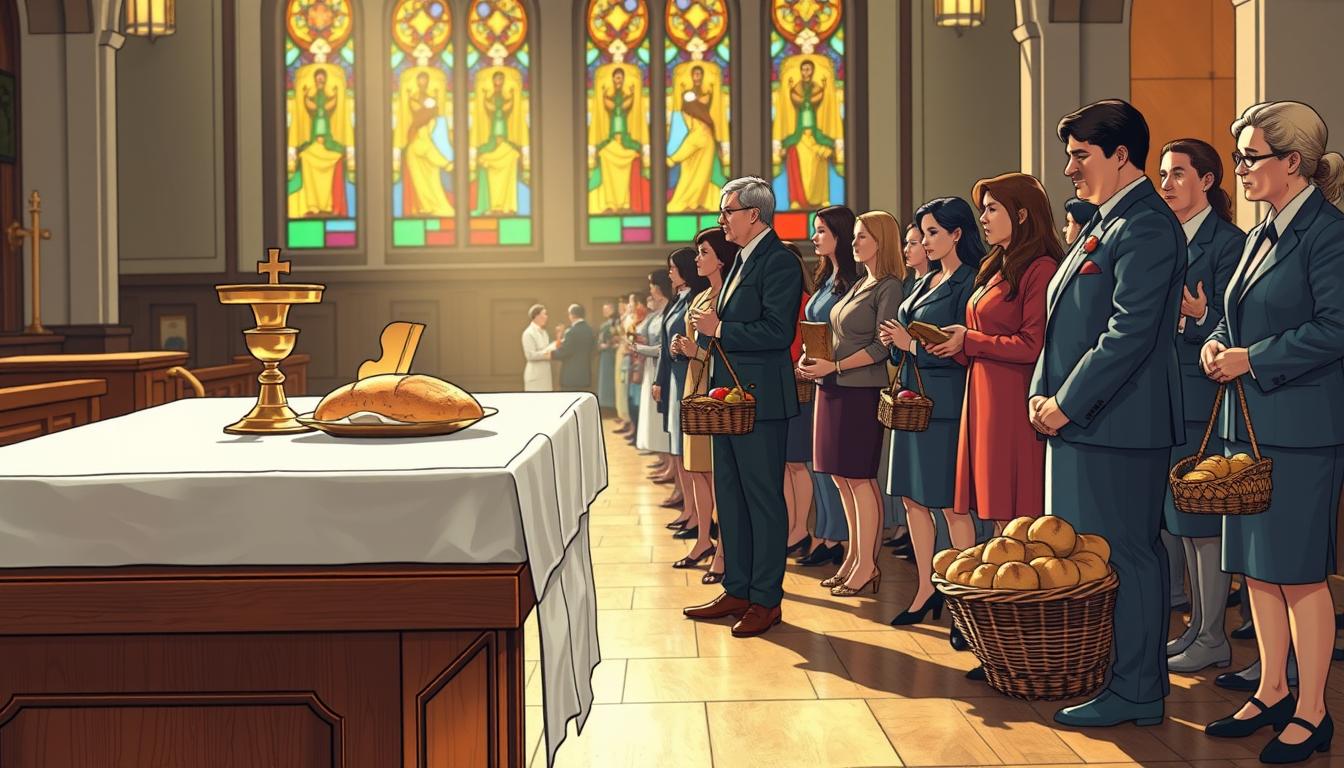
Have you ever watched people walk down the aisle during Mass, carrying bread and wine? That moment is known as the offertory, and it’s a beautiful tradition that connects us to centuries of Catholic practice. It happens right after the Prayers of the Faithful and just before the Liturgy of the Eucharist begins.
This isn’t just a practical act; it holds deep meaning. Those who bring the offerings represent the entire congregation. It’s a way of showing that the celebration of the Mass belongs to all the faithful, not just the priest. This practice dates back to early Christianity when people would bring their own bread and wine for the service.
Today, it’s a reminder that we all play a part in the Mass. This article will explore the significance of this ritual, who participates, and what it means for your faith life.
Key Takeaways
- The offertory occurs after the Prayers of the Faithful.
- It symbolizes the participation of the entire congregation.
- This tradition connects us to early Christian practices.
- Bringing offerings is a meaningful gesture of community.
- The Mass is a celebration for all, not just the priest.
Understanding the Offertory: When Are Gifts Brought to Altar in Catholic Mass?
Do you recall that poignant moment in Mass when members of the congregation bring forward their offerings? This moment, known as the offertory, marks the beginning of the Liturgy of the Eucharist. It’s a special time that brings everyone together in a shared act of faith.
So here’s exactly when it goes down: the gifts come up during the offertory, which kicks off the Liturgy of the Eucharist. The gift bearers actually leave their pews when the priest says, “Let us profess our Faith,” and they head to the back of the church. From there, they recite the Creed from their spot in line, waiting for the Prayers of the Faithful to wrap up.
Once the collection is finished and everything’s ready, they wait for the priest to walk to the front of the altar before they start moving. The offertory song is playing during all this, creating a moment for everyone to clear their minds and focus on the significance of what’s happening.
As for who brings the gifts up, it’s usually regular folks from the parish, often a family or a couple, sometimes a group of individuals. An usher will typically approach people before Mass and invite them to serve as gift bearers that day. If a family is serving and there are more than three members, the extra family members can walk reverently alongside the gift bearers.
These folks represent the entire parish, not just themselves, as they return to God a small part of the blessings He’s given. It’s a form of active participation that makes visible what the whole church is doing together in that celebration.
How Gifts Are Presented: The Steps and Roles in the Procession
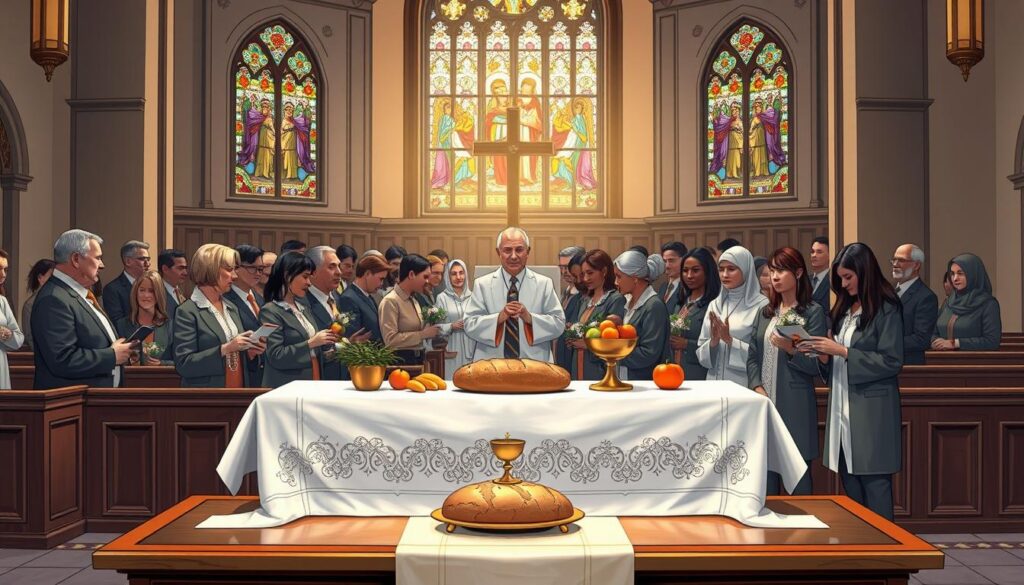
Picture this: the moment in Mass when the community comes together to present their offerings. It’s not just a simple act; there’s a beautiful order to how everything unfolds. Understanding this process can deepen your appreciation for the ritual.
First up is the usher, who carries the Book of Intentions. They bow and place it beside the Tabernacle. This is a gesture that sets the tone for the offerings to follow.
Next, we have the first Gift Bearer, typically an adult with the collection bowl. They present it to the priest and then step aside, making way for the next person. Following them is the second Gift Bearer, who brings the wine. They hold the cruet in their left hand, using their right hand for support. If the cruet has a handle, it should face the priest, making it easier for him to take it.
Finally, the third Gift Bearer presents the bread, the host that will become the Body of Christ. After all the gifts are handed over, the priest often expresses gratitude to the bearers. Then, everyone bows toward the altar, turns, and walks back down the center aisle together.
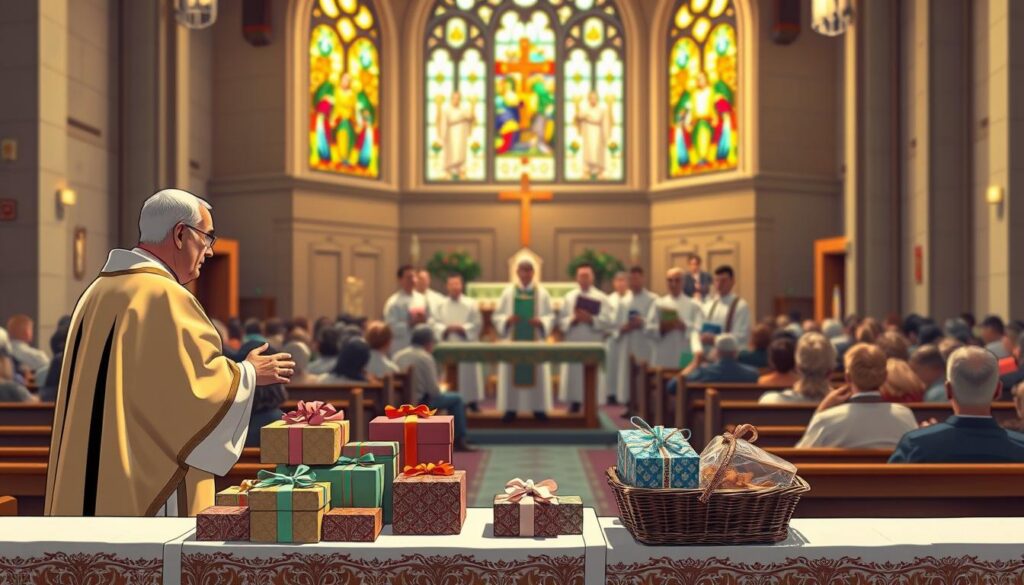
The Order of Presentation: Bread, Wine, and Collection
There’s a specific order for presenting these offerings, and it’s essential to follow it. This ensures that the Mass flows smoothly and that each element is honored appropriately. Here’s how it goes:
- The usher with the Book of Intentions comes first.
- The adult with the collection bowl follows.
- Next is the bearer of the wine.
- Finally, the bearer of the bread completes the procession.
Guidelines for Gift Bearers
If you’re chosen to bring gifts, here are some helpful tips:
- Walk slowly and reverently down the aisle.
- Stand close enough to the priest for easy transfer of the gifts.
- Hold the gifts up and forward toward him.
- After presenting your gift, step slightly to the side for the next person.
- Return to your seat after walking back down the center aisle.
Where Does the Collection Go?
Now, about that collection: it’s important to note that it doesn’t go on the altar. According to GIRM No. 73, money and other gifts for the Church should be placed in a suitable spot away from the Eucharistic table. This practice helps maintain the focus on the bread and wine, which will become Christ’s Body and Blood.
The exact location for the collection can vary based on the church’s layout. This decision is often made with pastoral considerations in mind. For more detailed guidelines, you can check out the Gift Bearer Guidelines.
The Meaning Behind Presenting Gifts at Mass
Have you ever thought about what those offerings really mean during the Mass? This act goes beyond simply bringing items to the altar. It symbolizes a heartfelt gesture of life and labor being offered up to God.
A Symbol of Offering Life and Labor
When those offerings come forward, they represent your life, your work, your struggles, and your joys. It’s a way of saying, “Here’s a part of me.” Pope Benedict XVI beautifully captured this idea, stating that in the bread and wine we bring, all creation is taken up by Christ and transformed for the Father.
Think about it: all the pain and suffering of the world gets brought to the altar in that simple gesture. It’s a powerful reminder that our everyday lives, with all their ups and downs, have value in God’s eyes.
Why Money Isn’t Placed on the Altar
Now, you might wonder why money doesn’t sit on the altar. GIRM No. 306 clarifies that only what’s needed for the Mass goes on the altar table itself. This includes the corporal, purificator, Missal, chalice, paten, and ciborium. That’s it!
Fr. McNamara explains that if GIRM No. 73 simply meant “don’t put money on the altar,” it would be redundant with GIRM No. 306. Instead, it emphasizes keeping the focus on the Eucharistic sacrifice as the source and summit of everything else the Church does.
History of the Practice and Its Revival
Historically, this practice goes back to the first few centuries when Christians literally brought bread and wine from their own kitchens. Those homemade offerings supported the liturgy, helped the clergy, fed the poor, and symbolized offering your whole life to God.
During the Middle Ages, as parishes became more established, the church started providing the bread and wine, and the procession faded away. However, Vatican II revived this tradition in the twentieth century. The Council wanted everyone to understand that the Mass is an action of the whole church, not just something the priest does alone.
So, when you see those folks walking down the aisle today, remember: you’re witnessing a beautiful revival that connects us all the way back to the early Church.
Joining in the Tradition: What Bringing Gifts to the Altar Means for You
Have you ever considered what it truly means to participate in the offering during Mass? When an usher invites you to bring the gifts, it’s more than just a task. You’re representing the entire parish, standing in for everyone who’s gathered to worship.
The bread and wine you carry will be transformed into the Body and Blood of Christ, so treat them with the reverence they deserve. This practice, which was paused during the pandemic, is now returning to many parishes, and it’s a beautiful way to connect with your faith community.
As you walk down the aisle, remember that you’re not just moving items; you’re making a heartfelt gesture of gratitude. Each step is a reminder of your life, work, and struggles, offered up alongside the bread and wine. So, the next time you see someone bringing gifts, think about how it might be your turn to join this sacred tradition.
For more on the significance of this practice, check out the Presentation of the Gifts.