
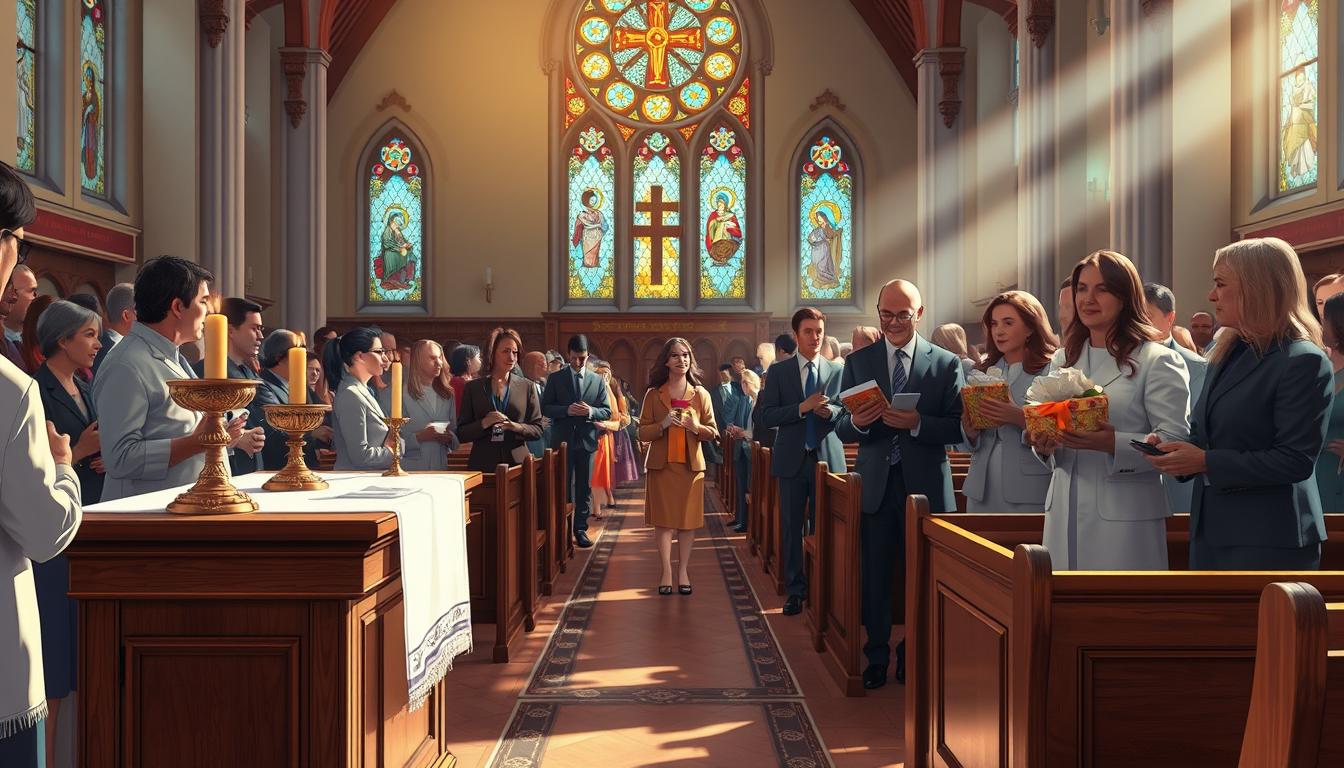
If you’re new to Mass or have been asked to carry the gifts, you might be wondering about the timing and significance of this moment. Don’t worry! This guide will help you understand exactly when the gifts are presented, so you never feel lost.
Understanding the timing of this presentation helps you participate more fully, whether you’re seated in the pews or actively involved. It’s not just a logistical detail; it’s a deeply symbolic act rooted in centuries of tradition. This moment marks the transition from the Liturgy of the Word to the Liturgy of the Eucharist, two essential parts of our worship.
The custom of presenting gifts goes back to the early Church, with St. Justin Martyr mentioning it in the 2nd century. The simple bread and wine we bring forward are about to become something extraordinary through the Eucharistic prayer. By the end of this article, you’ll know when to expect the offertory, why it matters, and how to participate if asked.
Remember, even lifelong Catholics sometimes need a refresher on these details. There’s no shame in wanting to get it right!
Key Takeaways
- Learn the timing of the gifts presentation during Mass.
- Understand the significance of this symbolic act.
- Participate more fully, whether you’re in the pew or carrying the gifts.
- Recognize the historical roots of this tradition.
- Feel confident and prepared if you’re asked to bring the gifts.
At What Point in the Mass Are Gifts Brought Up?
Ever wondered how the presentation of offerings fits into the flow of the service? Understanding this moment can enhance your experience during Mass. The gifts aren’t just brought forward at random; there’s a clear rhythm to it once you know what to listen for.
The Transition from the Liturgy of the Word to the Liturgy of the Eucharist
The transition between the Liturgy of the Word and the Liturgy of the Eucharist is significant. This change is marked by the priest leaving his chair and moving to the altar, which is reserved for the sacrifice. This movement serves as your visual cue that the moment for the offerings is approaching.
The Role of the Prayers of the Faithful
The Prayers of the Faithful play a crucial role in this sequence. Once these prayers conclude, the offertory is right around the corner. In many parishes, gift bearers quietly leave their pews immediately after these prayers and head to the back of the church to prepare.
Timing of the Offertory Procession
While the Creed is often recited, gift bearers wait in line at the back. They stay there until the collection of monetary offerings is complete. Only then do they line up to proceed down the center aisle.
As the priest and altar servers stand in front of the altar, this signals that it’s time to walk down the aisle. Remember, this moment is designed to be reverent but not rushed. There’s no need to sprint or panic. If you sit near the end of the pew, it makes it easier to slip out without disturbing others.
To summarize the sequence: Profession of Faith, Prayers of the Faithful, collection, priest moves to altar, and then the procession begins. Simple as that!
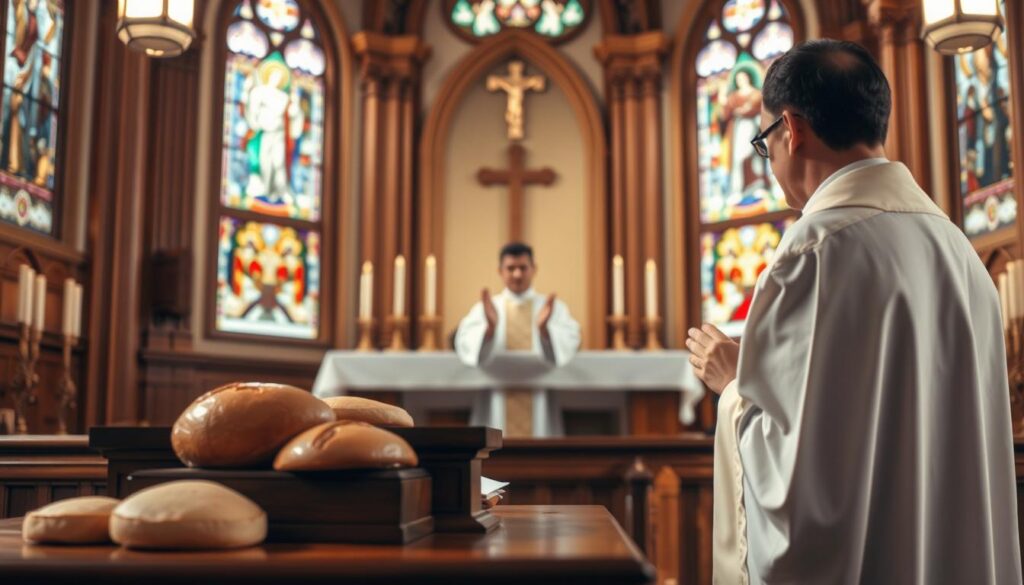
Understanding Why Gifts Are Presented in Catholic Mass
The act of presenting bread and wine is much more than a routine; it is a heartfelt gesture. If you think this moment is just a simple handoff, you might be missing the deeper layers that make it one of the most beautiful moments in the service.
The bread and wine are not random items. They represent the work of human hands, the essence of everyday life, transformed and offered back to God. We do not bring raw wheat and grapes to the altar. Instead, we present bread and wine—things that took effort, skill, and time to create. This matters greatly.
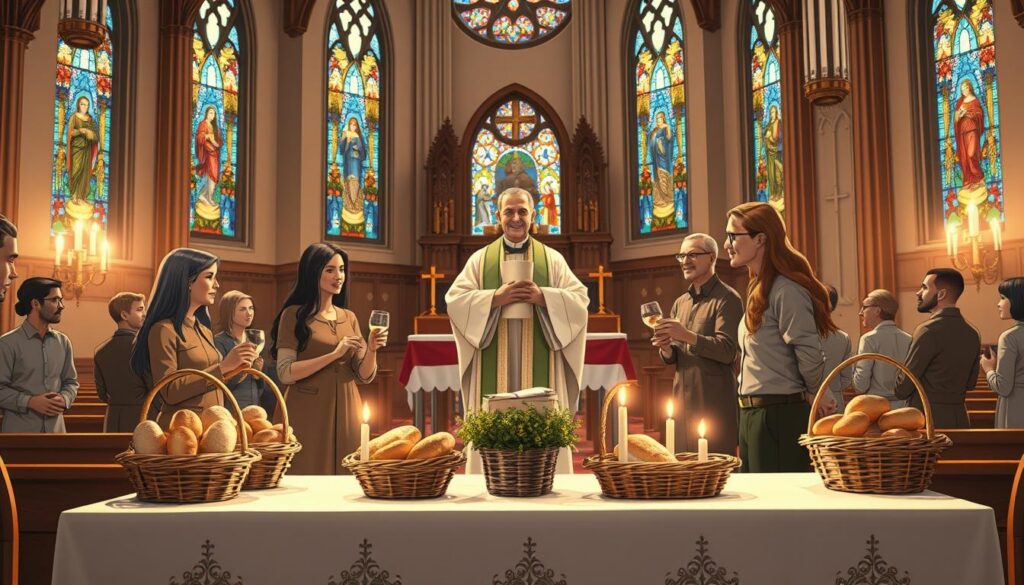
During the presentation, the priest quietly prays over the gifts, saying,
“Blessed are you, Lord, God of all creation. Through your goodness we have this bread to offer, which earth has given and human hands have made. It will become for us the bread of life.”
This connects the earth’s produce and human labor directly to the sacrifice about to happen.
The collection basket plays a significant role too. It is not merely about money; it serves as a tangible way to share with those in need, a practice that dates back to St. Paul’s letters. Pope Benedict XVI highlighted that this simple gesture encompasses all creation, including our pain, suffering, and joys.
When the offerings are brought forward, we are symbolically placing ourselves on the altar as well. Our whole lives, both the good and the challenging, are included in this act. Think about the work you did all week—your labor, patience, and struggles—all get caught up in this offering.
This gesture does not require any extra props or complexity. The simplicity of bread and wine already carries the weight of everything human. Understanding this transforms the offertory from a logistical pause into a moment of real personal participation in the sacrifice of Christ.
How the Gifts Are Brought Up in Catholic Mass: A Step-by-Step Look
If you’ve been asked to take part in the presentation of offerings, take a deep breath. It’s a meaningful honor, not a test. The steps to follow are straightforward once you know them.
Typically, three people are involved in this process: one carries the collection bowl, another the wine, and the last one the bread. If a family is serving together, additional members can walk reverently alongside the main gift bearers.
Who Brings the Gifts and What They Carry
The first person is the usher, who carries the Book of Intentions. Next, an adult presents the collection bowl, followed by the wine bearer, and finally, the bread bearer. Knowing your position in this lineup helps ease any nerves.
The Order and Movements During the Procession
Timing is essential. You typically leave your pew when the priest says, “Let us profess our Faith,” or right after the Prayers of the Faithful, depending on your parish. Head to the back of the church, where the gifts await on the left side.
Wait for the right moment to walk forward. Don’t start until the priest and altar servers are in place at the front of the altar. This is your green light.
The Priest’s Reception and Blessing of the Gifts
When it’s time to present the offerings, hold the wine cruet with the handle facing the priest. Lift the gifts upward and forward, standing close enough so he can take them easily without reaching awkwardly.
After handing over your gift, step slightly to the side for the next person. Everyone bows together toward the altar before turning to walk back down the center aisle.
Practical Tips for Gift Bearers
Here are some practical pointers to make the experience smoother:
- Let the hospitality ministers know you’re there when you arrive.
- Sit at the end of the pew for an easy exit.
- Walk slowly and reverently; there’s no need to rush.
- After presenting, return to your seat quietly.
After the presentation, the priest may say a quiet thank you. The whole parish appreciates your service, even if it feels like a small thing.
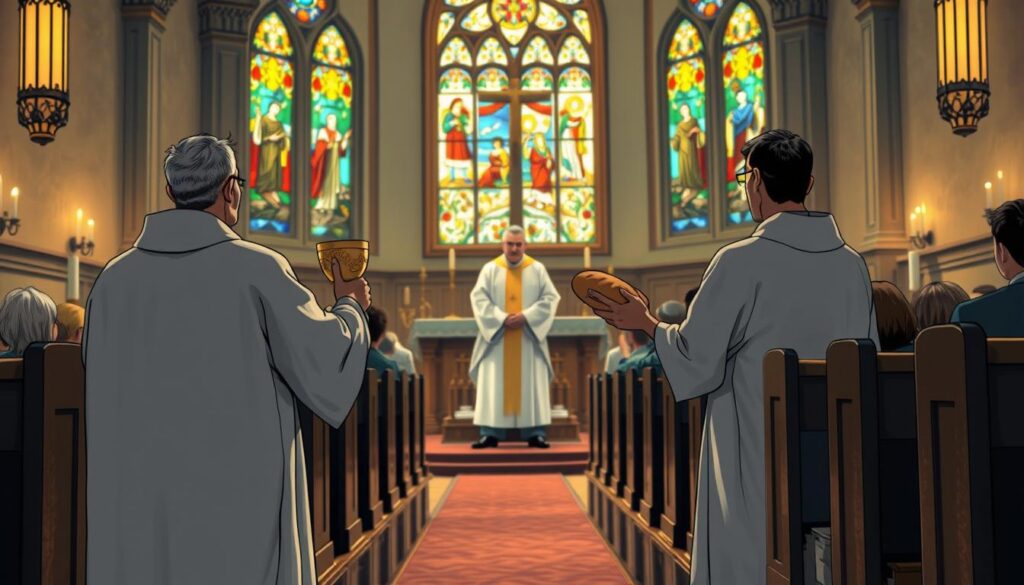
| Order of Procession | Role |
|---|---|
| 1 | Usher with Book of Intentions |
| 2 | Adult with Collection Bowl |
| 3 | Wine Bearer |
| 4 | Bread Bearer |
For more detailed guidelines, you can refer to the Order of Mass.
Why Taking Part in the Presentation of Gifts Matters to Everyone
Whether you’re in the pew or at the altar, your role in the presentation of offerings is significant. This moment is not just for those chosen to carry the items; it represents everyone in the parish. As you watch the offerings move up the aisle, think of it as a reflection of your own life, your work, and your family being carried to the altar.
The people chosen to present these items stand in for the entire community. This act is a powerful gesture, showcasing the exchange of our humble offerings for the profound gift of the Eucharist. Remember, participation in this celebration calls for full, conscious involvement. You don’t need to be at the front to engage actively.
Families often find joy in sharing this experience together, yet even those who present alone are part of something greater. If you’re ever invited to take part, consider saying yes. This simple act can deepen your connection to the celebration. Ultimately, whether in the aisle or seated, your participation matters. The offerings go up, and so do you, embodying the essence of communal worship.