
Feeling a bit nervous about being asked to bring up the gifts? You’re not alone! Many people share that same worry. It’s a simple act, yet it carries a lot of meaning. You’ll be picking up the bread and wine from a table near your seat and walking them to the priest at the altar. But this gesture is more than just a task; it represents everyone in your parish and the Church as a whole.
This guide is here to help you feel comfortable and prepared. We’ll explore why this tradition exists and what it symbolizes. You’ll learn about the cues during Mass that signal it’s your turn to walk up. Plus, we’ll break down the steps involved in the procession so you know exactly what to do.
By the end, you’ll feel confident and maybe even excited to participate in this beautiful tradition. So take a breath, grab your coffee, and let’s dive in. You’re going to do great!
Key Takeaways
- It’s common to feel nervous about bringing up the gifts.
- This guide simplifies what you need to know.
- Understanding the tradition enhances your experience.
- Listen for specific cues during Mass.
- We’ll detail the steps of the procession.
- Your participation connects you to the community.
Why Do We Bring Up the Gifts at Mass?
Have you ever wondered why we present the bread and wine during Mass? This act is not just about logistics; it holds deep meaning. It’s a tradition that connects us to centuries of faith and community.
The Meaning Behind the Bread and Wine
The bread and wine symbolize much more than mere food and drink. They represent the work of human hands. Think about it: someone planted the wheat, harvested it, milled the flour, and baked that bread. Similarly, grapes were grown, picked, crushed, and fermented to create the wine. All that effort is brought forward and offered to God.
A Historic Tradition of Offering
This practice dates back to the second century. St. Justin Martyr and St. Augustine both recognized it as a beautiful exchange between the faithful and God. They saw it as a way for people to return their gifts to God. The priest, acting in persona Christi, receives these contributions and offers them to God, who transforms them into the Body and Blood of Christ.
Symbolizing Our Own Journey and Work
When you carry those gifts up the aisle, you’re representing your entire parish. You’re bringing the work, prayers, and struggles of everyone sitting in those pews right to the altar. Pope Benedict beautifully stated that in this humble gesture, all creation is taken up by Christ to be transformed and presented to the Father.
The procession is a powerful symbol of your own journey. As you walk toward the altar, you’re moving from this life toward eternal life. Just as the bread and wine are transformed, so too are you transformed as a member of Christ’s Body.
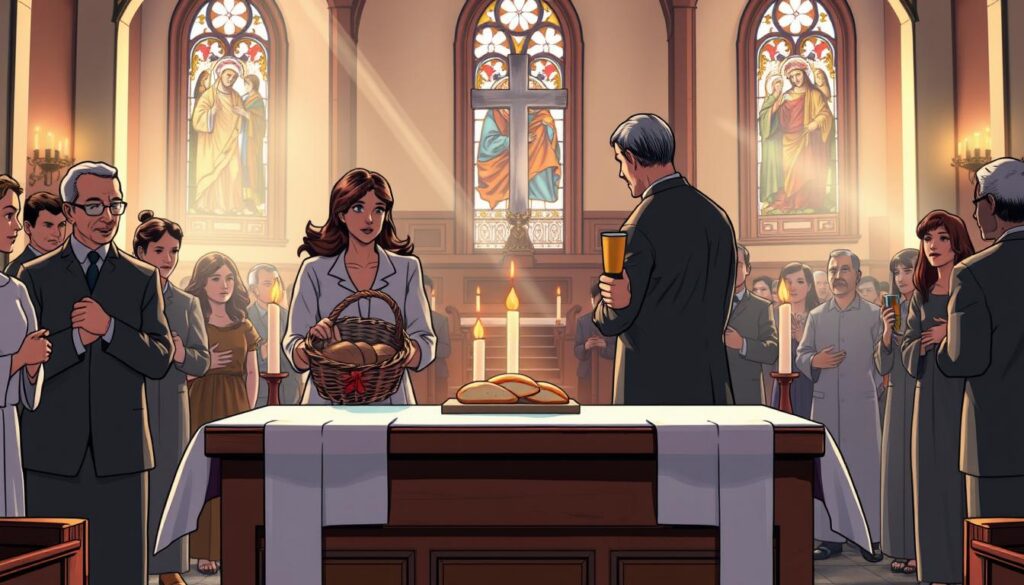
So, when you walk down that aisle with a cruet of wine or a plate of hosts, remember: you’re part of something ancient and deeply meaningful. It’s far more than just carrying items from one place to another.
When to Bring Up the Gifts at Catholic Mass: Timing and Cues
Getting ready for your role in this beautiful tradition can feel a bit daunting. But don’t worry! Knowing the right timing and cues will help you feel confident and calm.
Let’s break it down step by step so you know exactly what to listen for and when to move.
Listening for the Right Moment
Alright, here’s the part you’ve been waiting for. The first big cue happens when the priest says, “Let us profess our Faith.” That’s your signal to quietly leave your pew and head to the back of the church. You won’t miss out on the Creed; you’ll recite it while standing in line.
Once you’re at the back, you’ll find the gifts waiting for you on the left-hand side. Take your spot and get ready, but hold off on heading down the aisle just yet.
What the Priest Says and Does
Here’s what you need to wait for: the Prayers of the Faithful must finish, and the offertory collection has to wrap up too. The ushers need time to gather the monetary offering and prepare it. That collection bowl is part of what gets brought up.
Now, keep an eye on the priest. He’ll stand and walk to the front of the altar, with the altar servers moving into position as well. When they’re all in place and facing you, that’s your green light.
Movement From Your Pew to the Altar
Take a breath. Don’t rush! Walk slowly and reverently down that center aisle. There’s no prize for speed walking to the altar. The people in the pews are watching and praying, and your steady pace helps set the tone for this part of the Mass.
If you’re sitting with family or friends, make sure you’re at the end of the pew before Mass starts. This way, you can slip out easily without making everyone else stand up and shuffle around.
One more thing: let the hospitality ministers know you’re there when you arrive at church. They’ll be looking for you, and it helps everything run smoothly when they know the gift bearers are present and ready.
The timing really comes down to three things: the Creed cue, waiting for the collection to finish, and watching for the priest to take his place at the altar. Master those three, and you’re golden!
| Timing Cue | Action |
|---|---|
| Creed Cue | Leave your pew and head to the back. |
| Prayers of the Faithful End | Quietly prepare to collect the gifts. |
| Priest’s Movement | Walk reverently down the aisle to the altar. |
How to Bring Up the Gifts: A Step-by-Step Guide
So, you’re ready to participate in this meaningful tradition. Let’s walk through the process together. It’s all about feeling confident and prepared as you carry those special items to the altar.
Who Usually Carries What
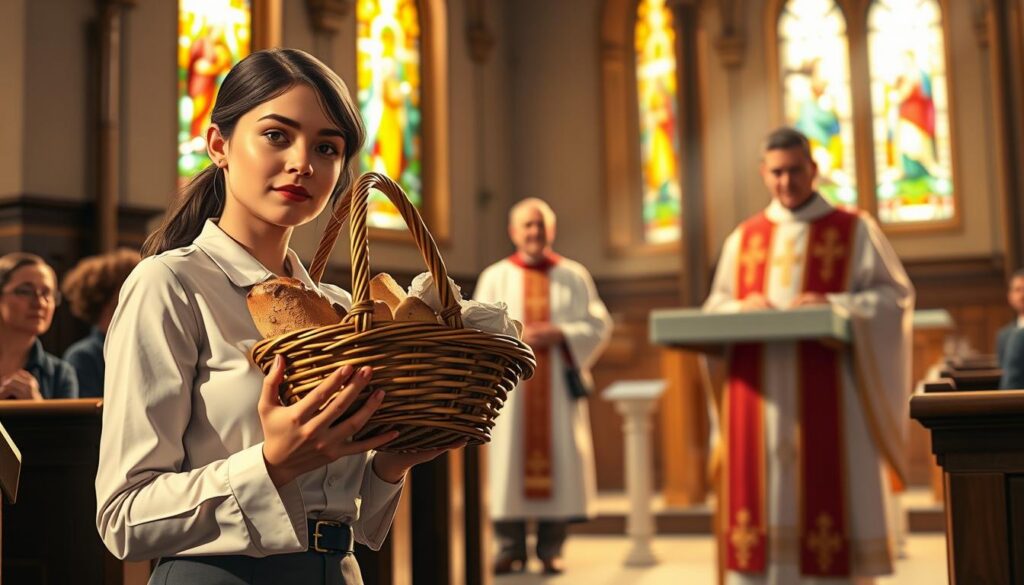
Typically, three individuals are designated as Gift Bearers during each Mass. One person, who must be an adult, takes care of the collection bowl. The other two carry the bread and the wine. If your family is involved and there are more than three members, those extra family members can walk alongside you reverently. It’s a lovely way to include everyone in this sacred moment.
The Order of the Procession
The order of the procession is important. It unfolds like this:
- Usher with the Book of Intentions
- First Gift Bearer: Adult with the collection bowl
- Second Gift Bearer: Wine
- Third Gift Bearer: Bread
Make sure you line up in this order at the back of the church. This helps maintain the flow of the procession.
Practical Tips to Make It Smooth
When you reach the altar, here’s what you need to do:
- The usher bows and places the Book of Intentions beside the Tabernacle.
- Next, the First Gift Bearer presents the collection bowl to the priest and then steps aside.
- If you’re carrying the wine, hold the cruet in your left hand and support it with your right. If the cruet has a handle, make sure it faces the priest for easy access.
- Finally, the Third Gift Bearer hands the bread to the priest.
Once all gifts have been presented, the priest may express his gratitude. It’s a nice moment to share a smile in return.
What to Do After Presenting the Gifts
After the gifts are presented, the priest, deacons, and altar servers will bow. You and the other Gift Bearers will also bow together toward the altar. Then, turn and walk back down the center aisle to the back of the church before returning to your pew.
Here are a few practical pointers:
- Let the hospitality ministers know you’re there when you arrive.
- Sit at the end of the pew for easy access when it’s time to move.
- After the Prayers of the Faithful, quietly head to the back of the church where the gifts will be waiting.
- Wait for the offertory collection to finish before proceeding.
- Walk slowly and reverently down the aisle; there’s no rush.
- Stand close enough to the priest so he can take the gifts easily.
- Hold the gifts up and forward toward him.
- After handing off your gift, step aside slightly to allow the next person to present theirs.
- Once done, walk back down the center aisle and return to your seat.
After completing this process, you’ll have played a vital role in bringing the bread and wine that will become the Body and Blood of Christ to the altar. That’s truly a significant contribution!
| Order of Procession | Role |
|---|---|
| 1 | Usher with Book of Intentions |
| 2 | Adult with the collection bowl |
| 3 | Person carrying the wine |
| 4 | Person carrying the bread |
Feeling Part of Something Bigger: Your Role in the Mass
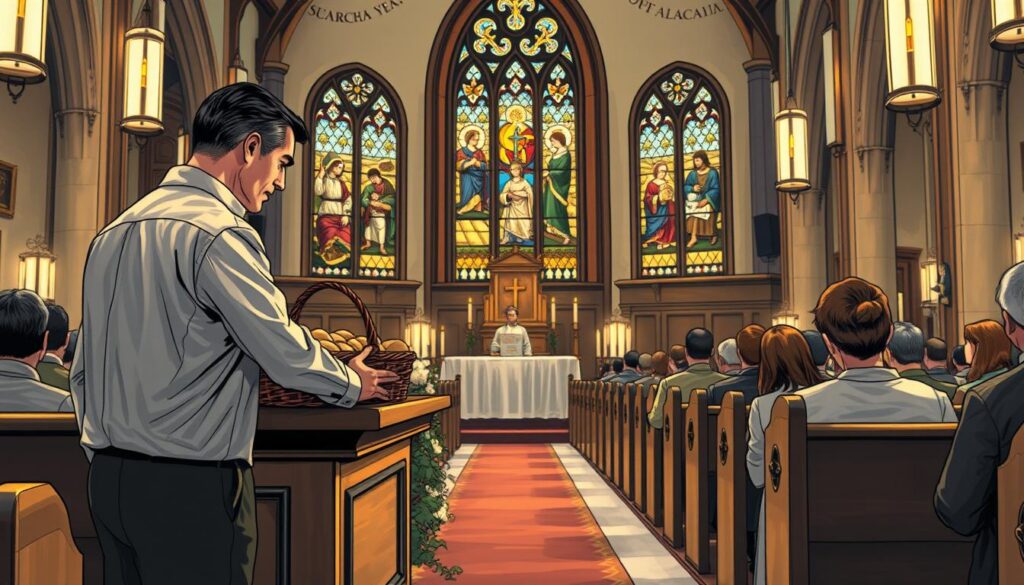
It’s natural to feel a bit hesitant about stepping into this role. You just walked up that aisle, handed over the gifts, and returned to your pew. Your heart might have raced, but you did it! That’s a big deal.
Many folks feel shy or unsure when asked to take gifts. But remember, your participation matters. You’re not just carrying bread and wine; you’re representing your entire parish community. That collection bowl you held symbolizes the work and hopes of many families.
Think about it: soon, those simple gifts will become the Body and Blood of Christ. In that moment, your life and struggles are included in this offering. By saying yes, you’re putting Jesus’s invitation into action, showing you’re part of something much bigger.
So, whether this was your first time or you’ve done it before, know that your willingness to serve is deeply valued. Thanks for saying yes!