
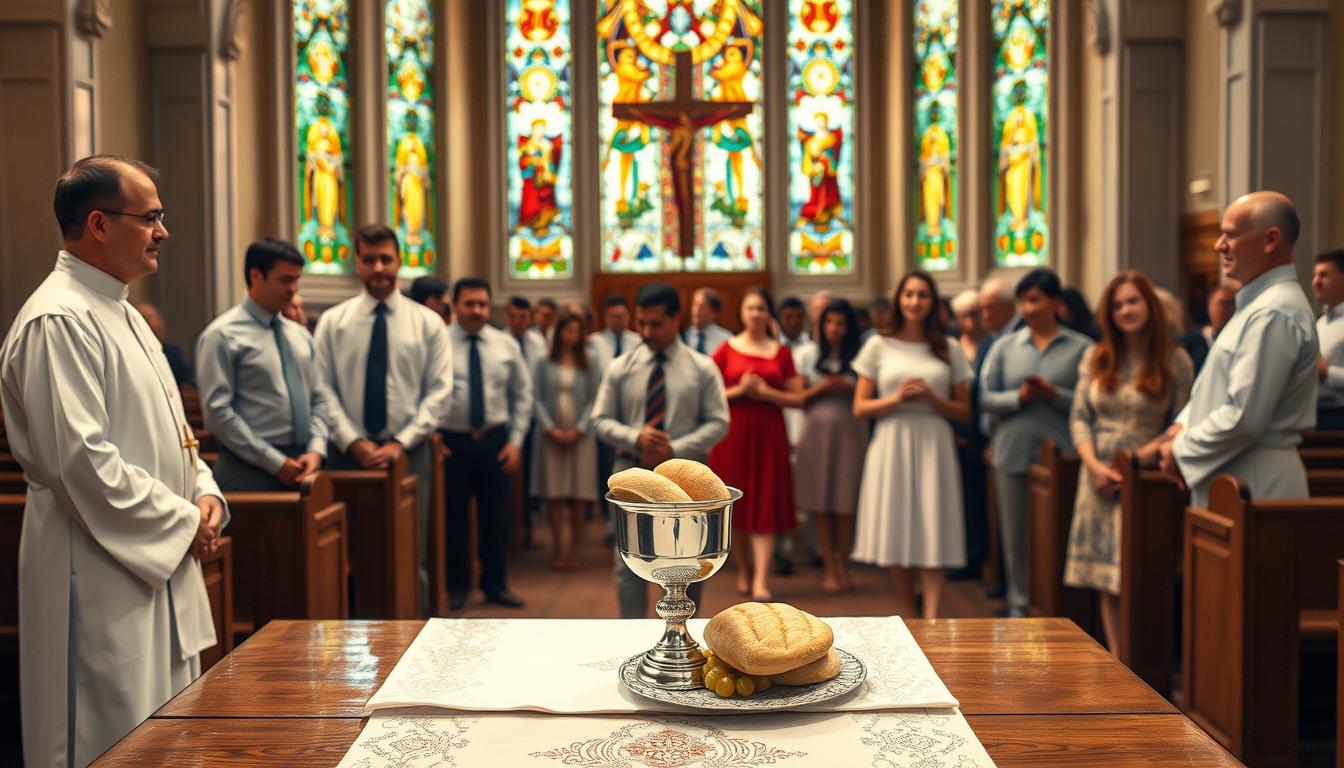
Have you ever noticed people walking down the aisle with bread and wine during Mass? It’s a beautiful tradition that dates back to the 2nd century. St. Justin Martyr and St. Augustine both spoke about this practice, emphasizing its importance. The act of presenting gifts is a way for the faithful to return a piece of what God has given them.
If you’ve been asked to take part in this, you might feel a bit nervous. But don’t worry! It’s simpler than it seems. This guide will walk you through everything you need to know, from when to stand up to how to hand the gifts to the priest. Knowing the reasons behind this tradition makes it all the more meaningful.
You’ll learn about the little etiquette tips that everyone notices but may not tell you. By the end, you’ll feel confident and ready to serve your parish community. Remember, this isn’t just about following rules; it’s about bringing the work of human hands to the altar and representing your entire community.
Key Takeaways
- The presentation of gifts is a longstanding tradition in Catholic Mass.
- Gift Bearers should leave their pews during the Creed.
- Each Gift Bearer has a specific role: one for the collection, one for wine, and one for bread.
- Gifts should be presented reverently to the priest at the altar.
- Etiquette matters; approach the altar with care and respect.
Why Bringing Up the Gifts Matters in Catholic Mass
The act of presenting bread and wine at Mass carries profound historical and spiritual significance. This ritual has roots that stretch back to the early days of the Church. St. Justin Martyr, in the 2nd century, first highlighted this custom. He saw it as a meaningful exchange between the faithful and God. Later, St. Augustine echoed this sentiment in the 5th century, reinforcing its importance in our worship.
When you think about it, this presentation is not just a formality. It symbolizes the gifts that we return to God. The priest, acting in persona Christi, receives these offerings and presents them to God. In doing so, these gifts are transformed into something divine—the Body and Blood of Christ.
“This humble and simple gesture is actually very significant: in the bread and wine that we bring to the altar, all creation is taken up by Christ the Redeemer to be transformed and presented to the Father.” – Pope Benedict XVI, Sacramentum caritatis
The bread and wine aren’t just wheat and grapes; they represent the work of human hands. Someone grew that wheat, milled it into flour, baked the bread, and tended the vines to produce the wine. This connection highlights the beauty of our participation in the Mass. When you carry those gifts forward, you’re bringing all of that human effort to God.
Here’s the beautiful part: we offer our imperfect gifts, and in return, God gives us something perfect—the Eucharist. This transformation reminds us of the deep connection we have with Christ’s sacrifice. Furthermore, the collection you bring is a way for the parish to support those in need, following Christ’s example of generosity.
So, when you walk down that aisle, remember that you’re part of something much larger than yourself. You’re participating in a sacred tradition that connects the entire community of faithful to God.
| Aspect | Significance |
|---|---|
| Historical Roots | Established by early Church Fathers like St. Justin Martyr and St. Augustine. |
| Symbolism | Represents the work of human hands and our offerings to God. |
| Theological Importance | Transformed into the Body and Blood of Christ during Mass. |
| Community Aspect | Involves the entire parish in a shared act of worship and support. |
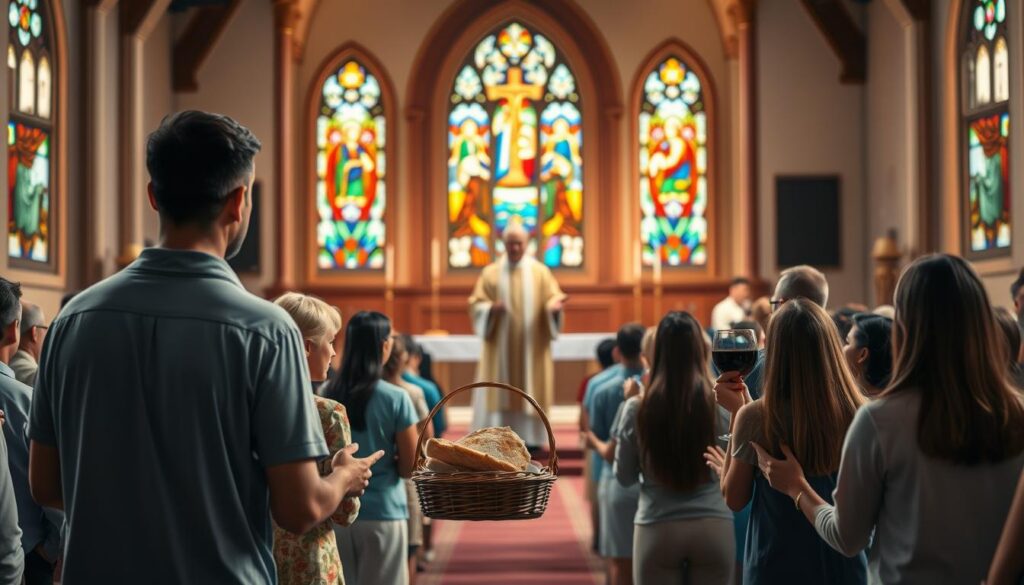
How to Bring Up the Gifts at Catholic Mass: A Simple Step-by-Step Guide
Participating in the offertory is a special moment during Mass, filled with meaning and community spirit. Knowing what to expect can ease any nerves you might have. Let’s break down the process into simple steps so you can feel confident when it’s your turn.
Who Usually Takes Part in the Offertory
Typically, there are three gift bearers involved in this sacred act. One person carries the collection bowl, another brings the wine, and the last one presents the bread. It’s important that the person with the collection bowl is an adult. If your family is serving together and has more than three members, others can walk up too. Just remember to stay reverent and follow along.
When to Leave Your Seat and Process Forward
Timing is key in this ritual. You won’t just jump up whenever you feel like it. Most parishes ask you to leave your pew when the priest says, “Let us profess our Faith.” You’ll head to the back of the church and recite the Creed from your position in line. Some parishes might have you wait until the end of the Prayers of the Faithful, so it’s wise to check with your parish beforehand.
The Order of Presentation: Collection, Wine, and Bread
Once the priest stands and moves in front of the altar, it’s your cue to process forward. The order is important: the usher with the Book of Intentions goes first, followed by the person with the collection bowl, then the wine bearer, and finally the bread bearer. This orderly procession helps maintain a sense of reverence and respect.
How to Offer Each Gift Reverently
When it’s your turn to hand your gift to the priest, stand close enough for him to take it easily. If you’re carrying the wine, hold the cruet in your left hand and use your right hand to support it. If the cruet has a handle, make sure it faces the priest so he can grasp it easily. After handing off your gift, step aside gently for the next person.
What Happens After You Present the Gifts
Once all gifts are presented, the priest may say a few words of thanks. Then, he, along with the deacons and altar servers, will bow. As gift bearers, you’ll bow together toward the altar, turn, and walk back down the center aisle. That’s it! You’ve just participated in a beautiful part of the Mass.
| Aspect | Details |
|---|---|
| Number of Gift Bearers | Three: collection, wine, and bread. |
| Timing | Leave pew when the priest says, “Let us profess our Faith.” |
| Order of Presentation | Usher, collection bowl, wine, bread. |
| Post-Presentation | Bow together, return to pew. |
Helpful Tips and Etiquette for Gift Bearers
Offering bread and wine is more than a ritual; it’s a heartfelt expression of gratitude. Being prepared can make your experience smooth and meaningful. Here are some friendly tips to help you navigate this sacred moment with confidence.
Preparing Yourself Before Mass
A little preparation goes a long way toward making this whole experience smooth and prayerful. When you arrive at church, find one of the Hospitality Ministers and let them know you’re there. They’ll appreciate it and it helps keep things organized.
Make sure to sit at the end of the pew. Trust me on this one—you don’t want to be climbing over people when it’s time to go. Take a moment before Mass starts to clear your mind and remember what you’re about to do. You’re representing the whole parish, returning a small part of the blessings God has given us.
Walking Reverently and Standing Properly
When it’s time to move, quietly get up and head to the back of the church. The gifts will be waiting on the left side. Don’t start down the aisle until the offertory collection is completely finished and the priest is standing at the altar ready for you.
Now, when you walk, walk slowly. This isn’t a race. Keep your pace reverent and steady. When you reach the priest, don’t hang back five feet away. Get close enough that he can take the gifts from you without stretching.
How to Handle the Bread and Wine Respectfully
Hold the gifts up and forward toward him, making it easy for him to receive them. After you’ve handed over your gift, step aside a bit so the next person has room. This simple gesture shows respect and reverence for the moment.
Returning to Your Seat Gracefully
Once all gifts are presented, bow together with the other gift bearers. Then, walk back down the center aisle to the rear of the church. After presenting, quietly slip back into your seat. The whole thing takes just a few minutes, but those minutes are filled with meaning.
| Aspect | Details |
|---|---|
| Preparation | Inform Hospitality Ministers upon arrival and sit at the end of the pew. |
| Timing | Wait until the offertory collection is finished before moving. |
| Walking | Walk slowly and reverently down the aisle. |
| Offering | Hold gifts upwards and forwards for the priest. |
| Post-Presentation | Bow together and return to your seat gracefully. |
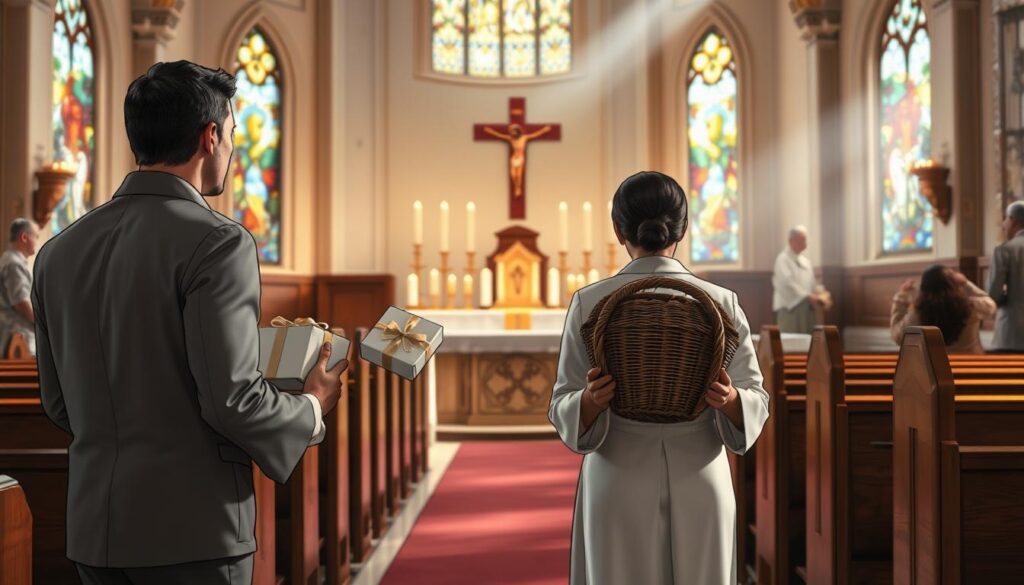
Taking Part in the Offertory: What It Means for You and Your Parish
Taking part in the presentation of gifts is a beautiful way to embody the spirit of your parish. When you walk forward with that bread and wine, you’re not just participating in a ritual; you’re connecting every person in your community to God. This moment is a celebration of love, unity, and shared faith.
The priest’s prayers over the offerings transform those simple gifts into something divine. It’s a powerful gesture that brings your everyday work into the heart of the Eucharist. Each time you take part, you’re reminded that you’re part of something much larger than yourself.
So, the next time you see someone carrying those gifts, remember the significance of that act. They’re not just walking; they’re bringing the hopes and prayers of everyone in the parish right to the altar. That’s a beautiful reason to participate.