
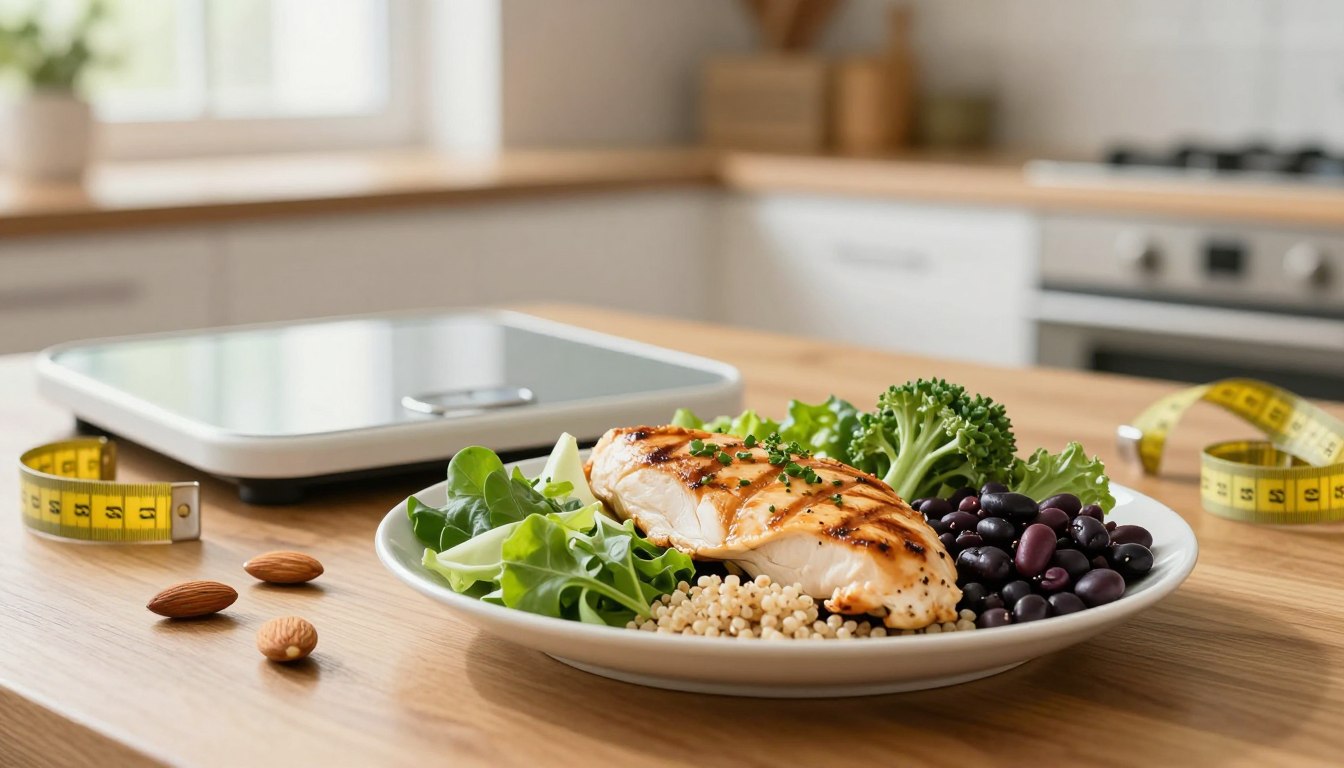
This guide explains a clear, food-first path for protein targets that support energy and steady progress.
Protein helps you feel full and protects muscle during a calorie deficit. Experts say pairing targets with regular exercise gives the best outcomes.
Targets vary by body, activity, and health history. This article shows practical ways to personalize intake and set a daily grams goal.
We preview two common methods: percentage of calories and grams per body mass, so people can pick the fit that suits their routine.
Effective means steady progress while guarding muscle and long-term health, not crash dieting. You will walk away with a simple meal plan and grocery list.
Meta title and description match the main search intent for readers who arrive via search, keeping this page useful and relevant. For related basics, visit beginner homesteading.
Key Takeaways
- Protein supports fullness and muscle preservation during a calorie deficit.
- Set targets by calories or grams per body mass for personalization.
- Plans should pair protein goals with exercise for best results.
- Effective means steady, healthy progress — not quick fixes.
- You’ll get a daily grams target, easy meal strategy, and grocery list.
Why protein matters for weight loss and body composition
Eating a higher share of protein can change how hungry you feel across the day.
Fullness and fewer calories: Protein boosts satiety more than many carbs or fats. That often cuts back on grazing and helps you eat less overall without feeling deprived.
Preserving muscle: During a calorie deficit, adequate protein helps protect lean muscle. That support leads to a firmer body composition and better strength retention during a diet.

Thermic effect and extra burn
Protein has a higher thermic effect of food (TEF). This means digestion uses more calories versus carbs. TEF gives a small bump in daily calorie burn, but it is not a magic fix; total calories still matter.
Health perks beyond the scale
Data suggest extra benefits: improved blood sugar control, stronger bones, and a steadier metabolism. These wins matter for long-term health and recovery, not just short-term fat change.
| Benefit | Practical effect | Notes |
|---|---|---|
| Satiety | Fewer snacks, smaller meals | Reduces overall calorie intake |
| Muscle preservation | Better tone during a deficit | Pairs with resistance exercise |
| TEF | Slightly higher calorie burn | Supports but doesn’t replace calorie control |
| Long-term health | Blood sugar, bone support | Seen in balanced diets and activity |
For simple snack ideas that fit a higher-protein plan, try options from this comfort snack guide.
How much protein to lose weight: evidence-based daily targets
Two simple methods give clear daily protein targets: one uses calorie share and the other uses body mass.
Protein as a percentage of calories: the 10%-35% guideline
The National Academy of Medicine sets a broad range: 10%–35% of daily calories from protein. For a 2,000-calorie day, that equals about 200–700 protein calories.
Convert to grams: protein provides 4 calories per gram, so 200 calories ≈ 50 grams and 700 calories ≈ 175 grams.
A weight-loss-friendly range: aiming closer to 20%-30% protein calories
Experts often recommend 20%–30% for those reducing energy intake. This range supports fullness and helps protect lean mass during a deficit.
Grams per kilogram body weight: RDA vs. higher intakes for satiety and muscle
The RDA is 0.80 g/kg as a baseline. For dieting phases, many sources advise 1.0–1.2 g/kg to boost satiety and preserve muscle.
“Move toward the higher end if hunger or strength loss becomes a problem.”
Example math for a 175-pound adult
175 lb ≈ 79.5 kg. At 0.80 g/kg → ~64 g/day.
At 1.0–1.2 g/kg → ~79.5–95.5 g/day. Those numbers show practical amounts that fit daily calories.
- Use percent-of-calories when you track intake by energy.
- Use grams per kilogram when you want a body-size target.
If appetite or strength falters during a plan, try the higher range and check meal timing and quality. For budget-friendly meal ideas that fit higher-protein plans, see ways to save money on food.

How to calculate your personal protein intake in grams per day
Convert your current body weight into kilograms and use an easy multiplier to set a daily grams goal. This gives a clear, personalized number you can use when planning meals.
Use body weight (kg) to estimate grams per day
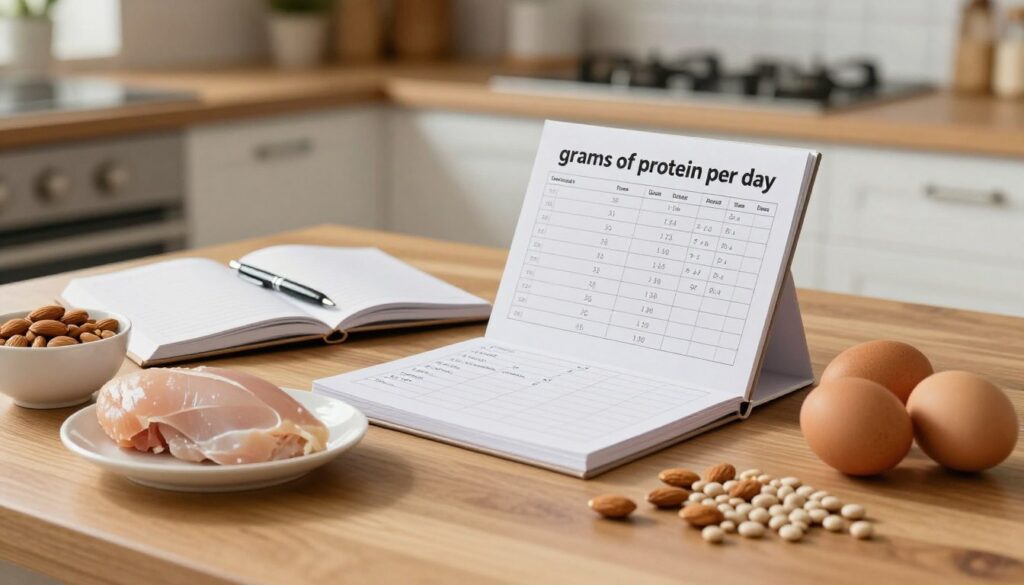
Step 1: divide pounds by 2.2 to get kilograms. Step 2: multiply kilograms by 0.8, 1.0, or 1.2 depending on your aim.
- Maintenance: 0.8 g/kg
- Dieting with muscle protection: 1.0–1.2 g/kg
Example: 160 lb ÷ 2.2 ≈ 73 kg. At 1.0 g/kg → ~73 grams per day. Round to a simple target like ~75 g/day for easier tracking.
Adjust for age, lean muscle, activity level, and health
Older adults may benefit from a higher intake within the range to preserve muscle. People with more lean mass or higher training volumes often need the upper end.
If appetite drops during a calorie deficit, move toward 1.2 g/kg. Always fit the grams goal into your daily calorie target.
Athletes and heavy exercisers
Highly active people and athletes may require significantly more intake. Needs depend on sport, intensity, and frequency.
Safety first: anyone with kidney disease or a medical condition should consult a clinician or registered dietitian before raising their amount.
| Scenario | Multiplier (g/kg) | When to use |
|---|---|---|
| Maintenance | 0.8 | Stable body and low activity |
| Fat loss with muscle protection | 1.0–1.2 | Reduced calories + resistance training |
| Athletes / heavy training | 1.4–2.0* | High volume or strength sports; personalize with a dietitian |
How to spread protein across the day for better results
Spreading protein across the day makes meals more filling and supports steady muscle repair. Small, even servings are easier on digestion and help control appetite.
Why smaller servings work
Aim for about 25–35 grams protein per meal. Research suggests the body uses that range efficiently, so spreading intake beats one large serving.
Simple meal-building strategy
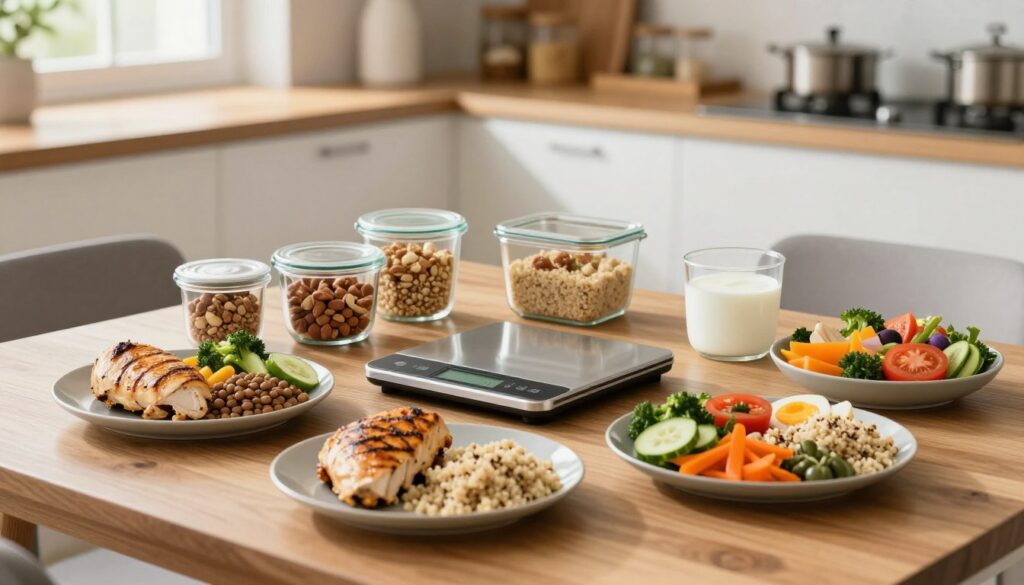
Use a three-meal framework: roughly 30 g each gets many people near 90 grams per day, with room for a snack. Start meals with a clear protein anchor—chicken, Greek yogurt, tofu, or beans.
- Add high-fiber plants for fullness and volume.
- Pick carbs and fats to match your calorie goal and taste.
- Follow a “protein first” habit: choose the protein portion before sides to keep calories controlled.
Quick examples: a high-protein breakfast (Greek yogurt + nuts), a lunch salad with a known serving of grilled chicken, and dinner with fish or lentils plus vegetables. If you miss protein earlier, a small snack can close the gap without breaking the diet.
Consistency matters most; spreading intake each day supports adherence and long-term results. For budget ideas that fit this pattern, see simple cost-saving tips.
Best high-protein foods for weight loss (and how to choose wisely)
Smart food choices make hitting daily protein targets easier and more satisfying. Choose items that give steady fullness and low added saturated fat. Small swaps and variety keep meals enjoyable and nutrient-dense.
Lean animal sources that limit saturated fats
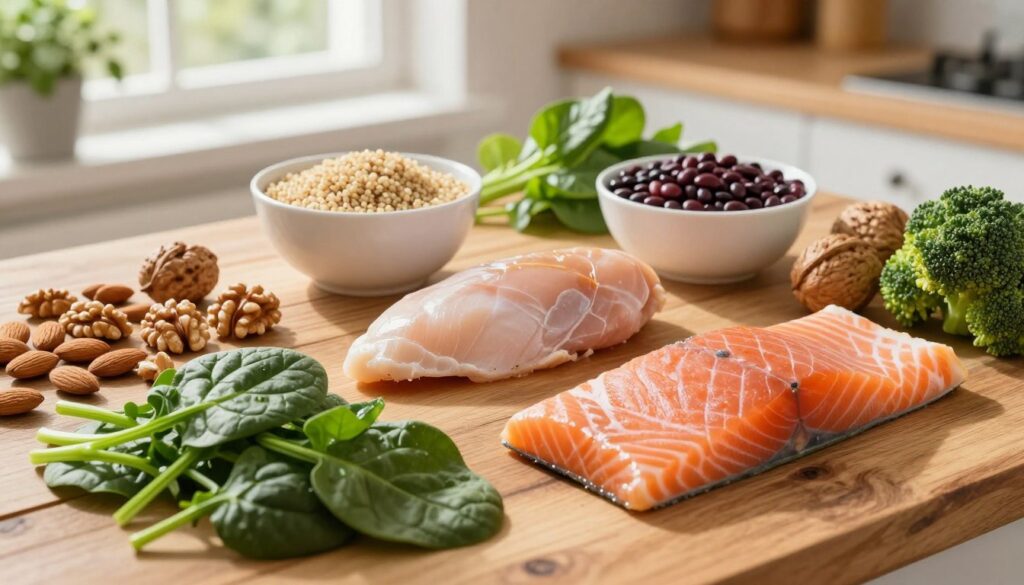
Pick poultry, lean beef or pork cuts, seafood, eggs, cottage cheese, and Greek yogurt. These foods deliver quality protein while keeping fats and cholesterol lower when you choose trimmed or low-fat options.
Plant-based options with fiber for fullness
Beans, lentils, peas, edamame, and tofu add both protein and fiber. That combo slows digestion and helps control appetite between meals.
Fatty fish: protein plus heart-friendly fats
Salmon and tuna supply protein and omega-3s. These fats support heart health and inflammation control, and salmon generally has less saturated fat than many red meats.
Keep variety so you don’t burn out
Try hemp, chia, or pumpkin seeds, kefir, mung beans, teff, brussels sprouts, or guava as creative add-ins. Small changes refresh meals and improve nutrient mix.
| Category | Examples | Why pick them |
|---|---|---|
| Lean animal | Chicken breast, turkey, lean pork, low-fat cottage cheese | High protein, lower saturated fat; supports muscle preservation |
| Plant proteins | Black beans, lentils, peas, tofu | Protein + fiber for fullness and steady energy |
| Fatty fish | Salmon, tuna | Protein plus omega-3s for heart and recovery benefits |
| Variety builders | Hemp seeds, chia, kefir, mung beans | Add texture, micronutrients, and new flavors to meals |
Simple swaps: trade refined carbs for Greek yogurt, cottage cheese, eggs, or tofu at a meal. Pair a clear protein with high-fiber produce and a measured portion of healthy fats or whole grains to keep the plan sustainable.
For cozy recipes that fit these choices, check this comfort food that is healthy.
Common mistakes, safety considerations, and when to consider supplements
Many people trip up on simple habits that make a high-protein plan less effective.
Common mistakes: adding extra servings on top of usual calories instead of swapping, ignoring fiber, and relying on ultra-processed bars for most meals. These choices can raise total calories and hurt satiety.
Signs you may not be getting enough
Watch for physical and mood changes. Swelling in hands, feet, or belly may signal low intake and fluid imbalance. Mood shifts like depression or irritability can link to altered neurotransmitter production.
Persistent weakness, tiredness, or gradual loss of strength often points to muscle breakdown or anemia risk.
Who should avoid higher intakes
People with kidney disease or reduced kidney function should consult a clinician or dietitian before raising their amount. Diabetes and long-term high blood pressure can affect kidney health, so check labs first.
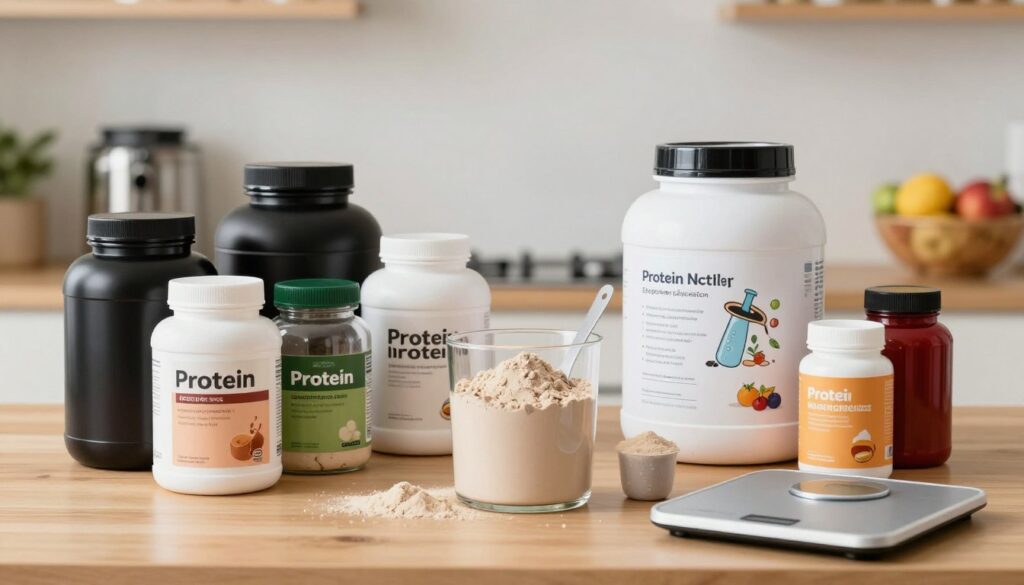
Protein powders and bars: practical use
Supplements are handy for a quick pre-exercise boost or an on-the-go breakfast. Pair a shake with an apple or a fiber-rich side to aid fullness.
Look for clear labels: good protein per serving, modest calories, low added sugar, and ingredients you recognize. Remember the FDA treats supplements differently than foods.
Balancing macros for sustainable results
Keep protein high but balance total calories, carbs, and fats so exercise performance and adherence stay strong. Swap rather than add: replace a refined carb with a whole-food protein source when possible.
Repeatability matters most: choose a plan you can follow per day for the long term, not a short-term extreme.
“Small, consistent changes beat dramatic shifts that are hard to sustain.”
SEO/site note: ensure the page uses a responsive meta viewport (width=device-width) and avoid fixed layout widths so images and layout stay usable on mobile devices.
Conclusion
Finish by choosing a method that fits your routine and tracking a single grams goal each day.
Pick either a percent-of-calories approach (10%–35%, often 20%–30% for successful lose weight phases) or the grams-per-kg method (0.8 g/kg baseline; aim 1.0–1.2 g/kg if hunger or muscle loss appears).
Turn that number into meals: spread intake across the day with roughly 25–35 grams per meal. This habit supports fullness and steady muscle mass retention.
Remember the big picture: total calories still drive weight change. Pair targets with resistance exercise for best body composition results.
Simple food strategy: rotate fish, poultry, beans, eggs, Greek yogurt, tofu, and nuts so meals stay easy and varied. For budget-friendly planning, see save on food.
Safety note: if you have kidney disease, diabetes, high blood pressure, or other concerns, confirm your protein need with a registered dietitian or clinician before raising your amount.