
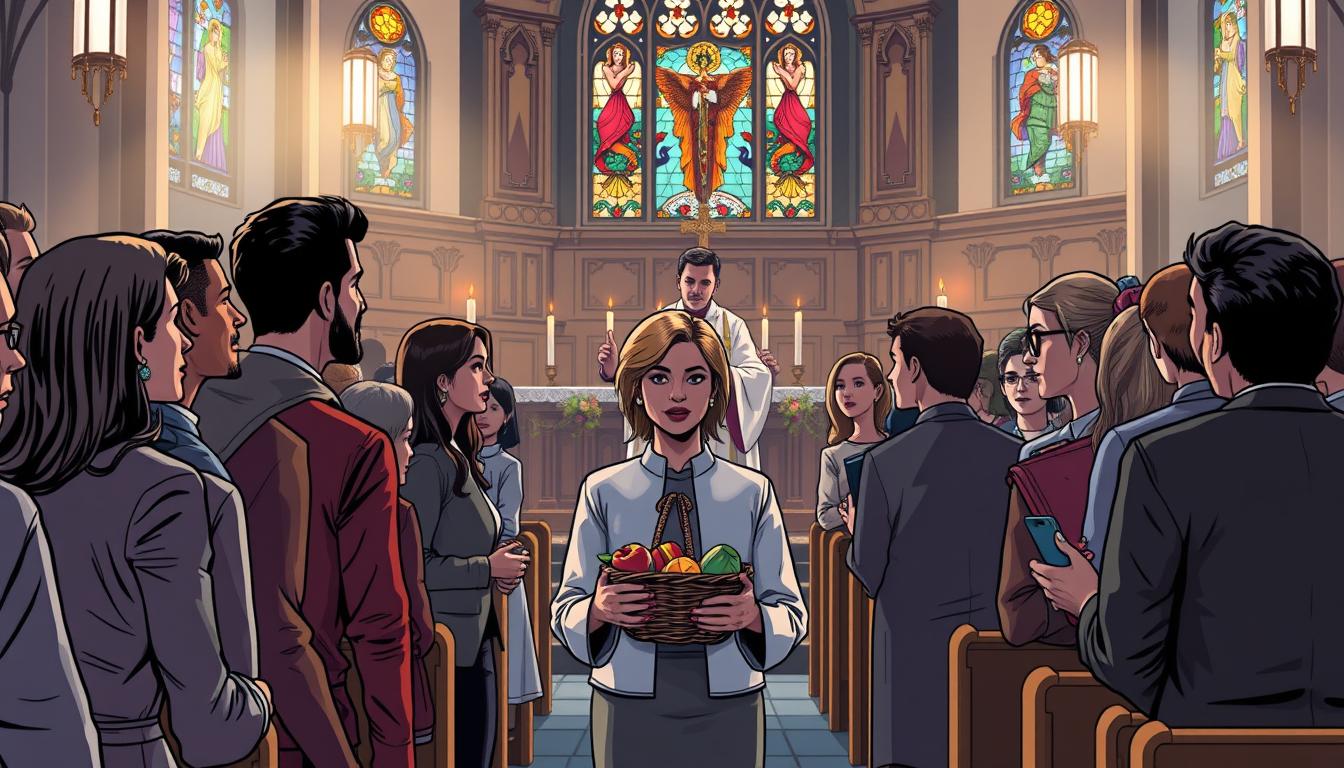
You’ve probably wondered about this if you’re not Catholic but have been invited to a Mass. Maybe it’s for a wedding, a funeral, or just because a friend asked you to come along. It’s totally normal to feel a bit unsure about what’s okay and what’s not when you’re a guest in a Catholic church.
The short answer isn’t just a simple yes or no. It really depends on the parish and the situation. There’s a lot more to understand about what carrying the gifts actually means. Many people confuse this act with receiving holy communion, but those are two different things with different rules.
This guide will walk you through what the gifts are, who usually carries them, and what the church says about participation for those outside the faith. If you’re asked to take part, you’ll learn how to handle it gracefully. By the end, you’ll feel confident about what to do, whether you’re just observing or actually joining in the procession.
Key Takeaways
- Understanding the role of gifts in Mass is important.
- Participation varies by parish and situation.
- Bringing gifts is different from receiving communion.
- Many guests share similar questions about church customs.
- This guide aims to clarify participation for everyone.
What People Are Really Asking About Bringing Up Gifts
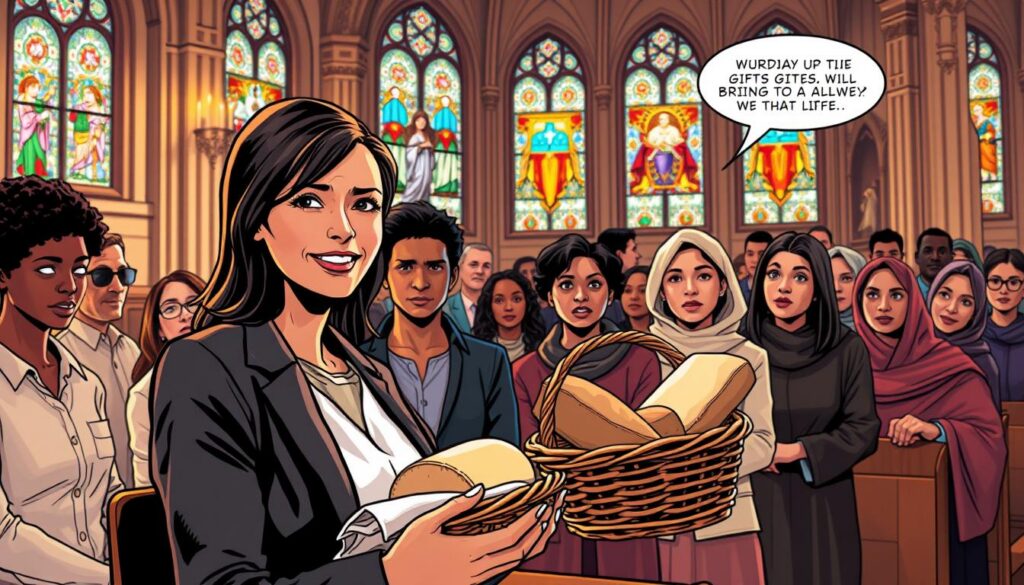
If you’re curious about what it means to participate in Mass, you’re not alone. Many people have questions about the roles and customs involved, especially when it comes to the offertory. This part of the Mass is significant, as it’s when members of the parish bring the bread, wine, and sometimes the collection basket to the priest at the altar.
Gift bearers represent the entire congregation, symbolically offering back to God a small part of what He has given them. Typically, this role is filled by parishioners who are scheduled ahead of time. If you’re a guest at a Catholic church, watching the procession might spark curiosity about whether you could join in, especially if someone nudges you and asks.
It’s natural for non-Catholics to have many questions about participation boundaries. Catholic liturgy includes numerous moving parts, and it’s not always clear what gestures are universal and which are reserved for practicing Catholics. Father Richard C. Wilson noted that Mass can be confusing for those unfamiliar with it, making it understandable that people inquire about bringing up the gifts, receiving communion, and everything in between.
While non-Catholics can kneel, stand, and make the sign of the cross, the question of carrying the bread and wine is more nuanced. It’s essential to look at this closely. Asking these questions doesn’t mean someone is being disrespectful; rather, it shows they care about doing the right thing in a space that is sacred to their Catholic friends or family.
| Participation Type | Description |
|---|---|
| Gift Bearers | Individuals scheduled to bring bread and wine to the altar, representing the congregation. |
| General Participation | Non-Catholics can kneel, stand, and make the sign of the cross. |
| Observing | Guests can sit quietly and stand when the congregation does. |
| Communion | Non-Catholics are not permitted to receive Holy Communion. |
The Rules and Traditions Behind Taking Up the Gifts
Many guests find themselves curious about the traditions of bringing gifts during Mass. Understanding the process can make participation feel more comfortable. Typically, parishes assign three gift bearers for each service. These roles include one person for the collection bowl, another for the bread, and a third for the wine. If a family is serving, additional members can walk along respectfully, even if they aren’t carrying an item.
Who Usually Brings the Bread, Wine, and Collection
Most parishes have a system where gift bearers are often parish members who sign up in advance. This role is usually filled by families or couples for specific Masses. The items being carried—the bread and wine—hold significant meaning as they will become the Body and Blood of Christ. Thus, the church encourages everyone to treat this role with genuine reverence.
Step-by-Step: The Gift Bearer Procession at Mass
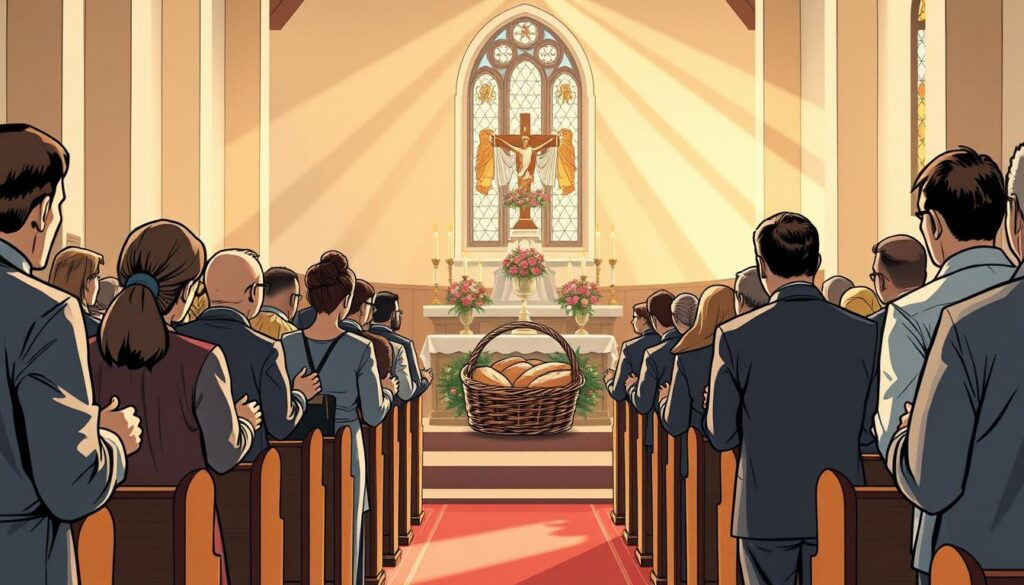
When it’s time for the offering, gift bearers leave their pews as the priest says, “Let us profess our Faith.” They move to the back of the church and recite the Creed from their position in line. The procession begins with the usher carrying the Book of Intentions, followed by the adult with the collection bowl. Next comes the wine bearer, who holds the cruet in their left hand, supporting it with the right, ensuring the handle faces the priest for easy access. The bread bearer goes last, handing the host to the priest.
After presenting the gifts, the priest may express gratitude. All gift bearers then bow toward the altar together before turning to walk back down the center aisle. It’s important to walk slowly and reverently, showing respect for the moment. This isn’t just about carrying items; it’s about being part of something larger.
Showing Respect and Reverence During the Offering
To make the experience smoother, consider a few practical tips. Sit at the end of the pew to get up easily. Let the hospitality ministers know you’re present. Don’t rush down the aisle; take your time to walk reverently. Hold the gifts upward and forward, and after handing them over, step to the side to allow others to pass. If a family is serving together, additional members can accompany them in a respectful manner, enhancing the sense of community.
Can a Non Catholic Bring Up the Gifts? What You Should Know
If you’re attending a Mass and wondering about your role, you’re not alone. Many guests feel a bit anxious about how to participate, especially when it comes to taking gifts to the altar. So, what can you do during Mass?
What Non-Catholics Can Do During Mass
While there’s no strict rule preventing anyone from taking gifts, most parishes prefer gift bearers to be registered members. This practice helps represent the faith community during the offering. If you’re at a wedding or funeral, and a family member invites you to carry the bread or wine, it’s usually okay. Just check with the priest or parish coordinator first to avoid any surprises.
During Mass, non-Catholics can participate in many ways. You can kneel, stand, and even make the sign of the cross. If you feel comfortable, you can approach the priest with your arms crossed during communion for a special blessing. It’s all about feeling included while respecting the traditions of the church.
Why Receiving Communion Is Different
It’s essential to understand the difference between taking gifts and receiving holy communion. The Eucharist is viewed as the actual Body and Blood of Christ, not merely a symbol. This belief means that receiving communion requires a full commitment to the teachings of the Catholic Church. Non-Catholics are asked not to partake in communion because it signifies a deeper union with those beliefs.
Father Richard C. Wilson emphasized that while everyone can participate in the Mass, only those fully aligned with Catholic teachings should receive communion. This distinction is crucial for understanding your role during the service.
How to Approach Taking up Gifts as a Guest
If you’re invited to take gifts up, it’s perfectly fine to say yes if the parish allows it. However, if you feel uneasy or prefer to observe, that’s completely okay too. The priest and parish staff want everyone to feel welcome, so don’t hesitate to ask questions beforehand. They’d much rather have you clarify your role than feel anxious about it.
Bringing gifts as a guest isn’t about breaking rules; it’s about appreciating the meaning behind the gesture. Respecting the traditions of the community enhances the experience for everyone involved.

Being Part of the Celebration Without Overstepping
Attending Mass can feel like visiting a friend’s home, where respect and understanding are key. Just like in any gathering, you want to follow their lead and enjoy the moment. Father Wilson encourages everyone to invite friends to Mass, sharing the beauty of the liturgy without pressure.
Even if you never carry the bread or wine, your presence matters. You can still pray in your own way and share this experience with loved ones. Remember, the offering is a time for everyone to express their intentions—worries, gratitude, and hopes—whether or not they walk down the aisle.
If you’re a Catholic inviting a friend, giving them a heads-up about what to expect helps ease any anxiety. After Mass, sharing a meal is a great way to answer questions without it feeling like a lesson. The Mass is truly a treasure, welcoming everyone to let the experience touch their life in its own special way.