
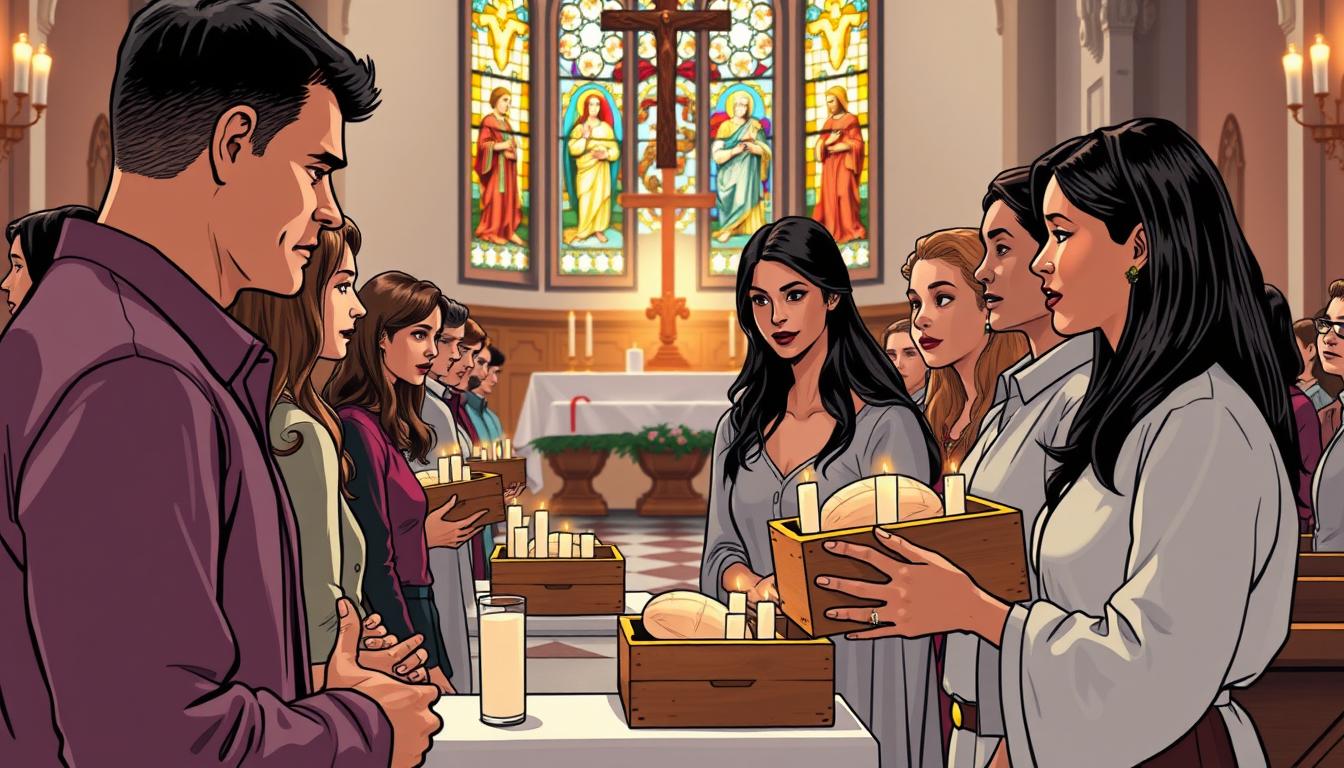
Feeling a bit unsure about the right moment for presenting offerings during Mass? You’re not alone! Many folks wonder about the timing and significance of this beautiful tradition. The act of presenting gifts has roots that trace back to the 2nd century, where it was seen as a way for the faithful to return their blessings to God.
During the offertory, the priest receives these offerings, which are transformed into the Body and Blood of Christ. This guide will help you navigate the process smoothly, so you can feel confident and comfortable.
We’ll explore the meaning behind this gesture, the precise moment to stand up, and how to hand the bread and wine to the priest without any awkwardness. By the end, you’ll know exactly what to do, making this meaningful act feel like a natural part of your worship.
Key Takeaways
- Understanding the significance of the offertory can ease your nerves.
- You’ll learn the exact timing for presenting offerings.
- Discover the deeper meaning behind the bread and wine.
- Get practical tips for a smooth handoff to the priest.
- Feel confident moving reverently down the aisle.
- This act represents your community and faith beautifully.
Why We Bring Gifts at Mass: Meaning Behind the Gesture
There’s a rich history behind why we share our offerings during worship. This practice isn’t just a recent trend; it dates back to the 2nd century. St. Justin Martyr wrote about it, and St. Augustine also recognized its importance in the 5th century. They saw it as a beautiful way for the faithful to return a small part of what God has given them.
The act of presenting offerings is a symbolic exchange between us and God. The priest receives these contributions, acting in persona Christi, meaning “in the person of Christ.” He offers them to God, who then transforms them into the Body and Blood of Christ. Think about that for a moment: our imperfect gifts become something perfect. That’s a pretty amazing exchange!
The bread and wine are not just simple items; they represent the work of human hands. Someone grew the wheat, ground it into flour, and baked it. Others cultivated the grapes and turned them into wine. This labor is acknowledged when the priest prays, saying,
“Blessed are you, Lord, God of all creation. Through Your goodness we have this bread to offer, which earth has given and human hands have made. It will become for us the bread of life.”
He continues with the wine, stating,
“fruit of the vine and work of human hands. It will become our spiritual drink.”
This prayer highlights the effort and care that goes into creating these offerings.
Pope Benedict pointed out that this humble gesture takes up all creation and presents it to the Father, including all the pain and suffering of the world. When you carry those offerings, you’re representing the entire parish community. You’re not just a person walking down the aisle; you’re standing in for everyone present.
Moreover, the bread and wine symbolize each one of us. Just as they are transformed into the Body and Blood of Christ, we too are meant to be transformed as members of that Body. This is why the Mass is called a Liturgy, derived from the Greek word for “public work.” It’s something we all do together, not just something we observe.
Full, conscious, and active participation is what the Eucharist is all about. Offering up these items is one meaningful way the faithful give of themselves during the service. Understanding this significance can help ease any nerves you might have. Remember, you’re not performing; you’re participating in something ancient and beautiful that connects you to the Body of Christ and your parish family.
When to Bring Gifts Up at Catholic Mass: Step-by-Step Timing and Process
Have you ever wondered about the right moment for stepping forward with your offerings during the service? It’s essential to know when to act, so let’s break it down step by step.
Knowing the right moment during the Mass
The cue you’re looking for is when Father says, “Let us profess our Faith.” This is your signal to quietly leave your pew and head to the back of the church.
Don’t worry about missing the Creed; you’ll recite it from your position in line at the back. You’re not skipping anything important!
At the back, the gifts will be waiting for you on the left-hand side. There’s usually a small table set up with everything you need.
Who usually brings the gifts and what they bring
Most parishes assign three gift bearers: one adult carries the collection bowl, another carries the wine, and the last one brings the bread. If a family is serving, extra members can walk reverently alongside them. It’s a lovely way to include everyone!
The order of procession matters. First, the usher with the Book of Intentions goes, followed by the adult with the collection bowl, then the wine bearer, and finally, the bread bearer.
How to move reverently and present the gifts
Wait for Father to stand and walk to the front of the altar before you start moving down the aisle. That’s your green light!
As you walk, take your time. This isn’t a race. Move slowly and reverently, letting the moment sink in.
When you reach Father, hold the gifts upwards and forwards towards him. This simple gesture signifies your offering.
After presenting your gift, step slightly to the side so the next person can hand theirs over easily.
What to do after presenting the gifts
Once all the gifts have been presented, Father may say a few words of thanks. Then, he, the deacons, and altar servers will bow. You and the other gift bearers will bow together toward the altar, turn, and walk back down the center aisle to the back of the church.
From there, you can quietly return to your seat. That’s it! You did it! The bread and wine you just carried will become the Body and Blood of Christ. That’s the work happening at the altar, and you got to be part of bringing it there.
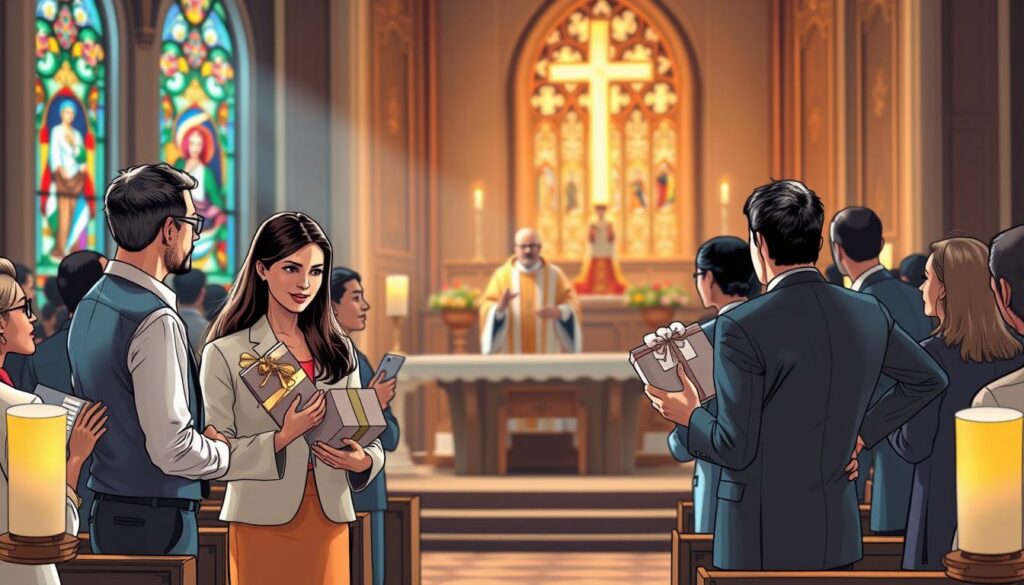
Tips to Feel Comfortable and Prepared as a Gift Bearer
Wondering how to feel more comfortable as a gift bearer? Let’s talk about it! Many folks get a little nervous about this role. It’s totally normal, and you’re not alone!
First things first: when you arrive at church, let a hospitality minister know you’re there. They’re usually the friendly faces greeting people at the doors. This quick check-in helps them know you’re ready to take part. A simple, “Hey, I’m one of the gift bearers today,” will do the trick.
Where you sit really matters too. Try to grab a spot at the end of the pew, close to the center aisle. This way, you won’t have to climb over a bunch of people when it’s time to take the gifts forward.
As the Prayers of the Faithful wrap up, that’s your moment! Quietly stand up and make your way to the back of the church. No need to rush or make a big production of it. The gifts will be waiting on the left-hand side. Just hang out there until the collection is finished and everything’s ready.
Here’s a tip for staying calm: remember, you’re not the center of attention. I know it feels like every eye is on you, but most people are focused on their prayers or the altar. They’re not judging how you walk or hold the cruet. They’re participating in the Mass just like you.
If you’re part of a family bringing gifts, lean into that support. Having familiar faces walking with you can make the whole experience feel less intimidating. While the offertory song plays, take a moment to clear your mind. Remember, you’re representing the entire parish and returning a small part of the blessings God has given.
The bread and wine you’re carrying are about to become something sacred. Treat them with respect, and let that thought ground you. If you mess up a little, don’t sweat it! Father has seen it all. What sticks with people is the gesture itself, not whether you executed it flawlessly.
Focus on the meaning instead of the performance. You’re participating in something ancient and holy. After you’ve presented your gift and stepped aside, take a quiet breath. You did what you came to do. Bow with the others, walk back calmly, and return to your pew.
The more you remember that this is about offering and transformation, not about being perfect, the easier it gets.
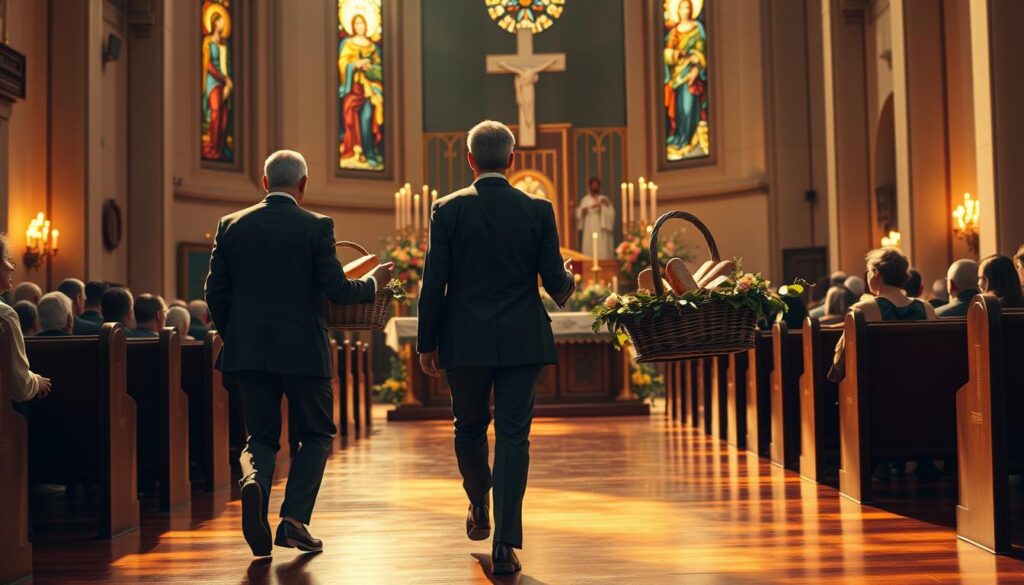
Embracing Your Role: Being Part of the Parish Through the Offertory
Have you ever thought about what it truly means to participate in the offertory? You’re not just completing a task; you’re representing your entire parish. Every person in those pews is with you in that moment.
The bread and wine you carry symbolize all the gifts God has given us. The collection basket holds the monetary offerings that support the work of the Church and help those in need.
This act reflects full, conscious, and active participation in the Eucharist. It’s about giving of ourselves, not just observing.
As you walk with the gifts, remember that this procession represents our journey toward eternal life. You’re taking part in something sacred and ancient.
So, whether you’re doing this for the first time or the tenth, know that your participation strengthens the parish community. Your willingness to serve, even in this small way, blesses everyone around you.
Next time you’re asked to carry the gifts, remember: you’re part of a beautiful tradition. You’re carrying the work of human hands and the offerings of a community. That’s a gift in itself, and you get to be part of it.
For more insights on the presentation of the gifts, check out this resource.