
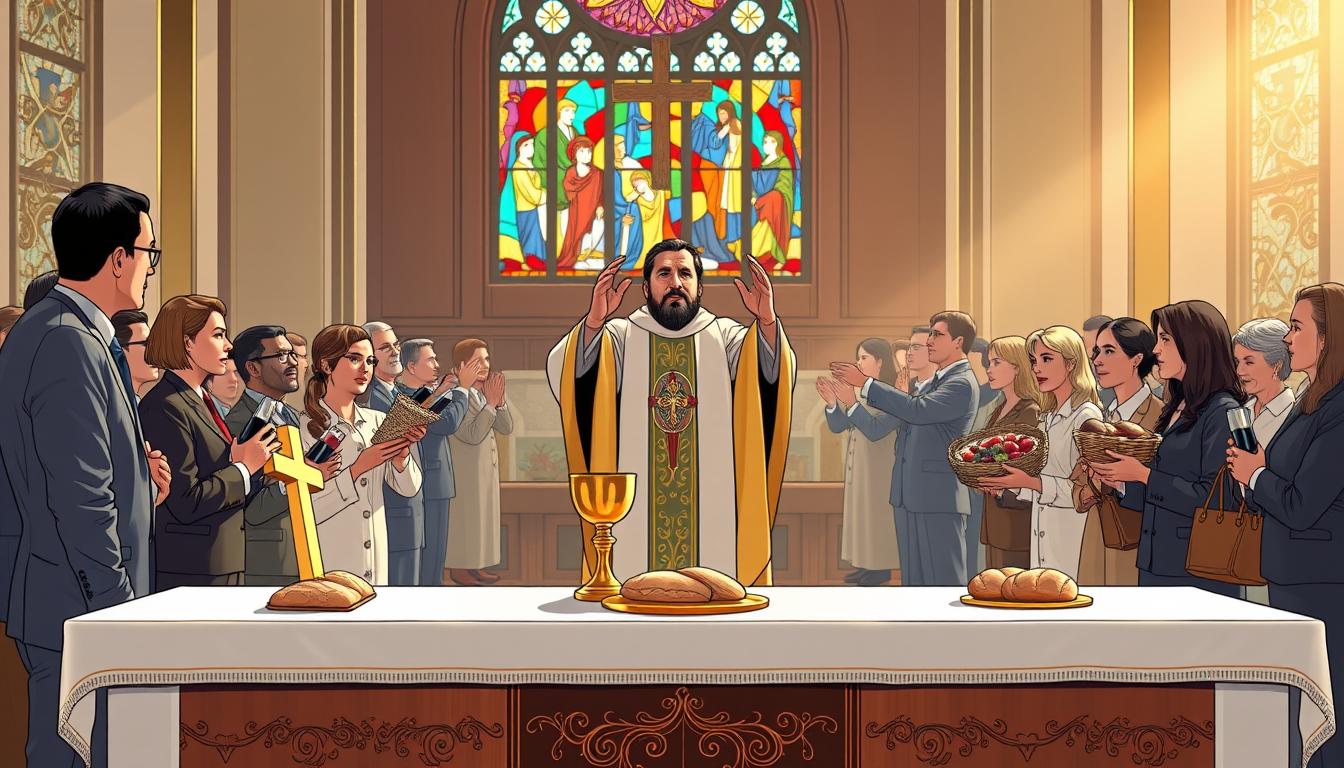
So, you’ve been asked to carry the gifts during Mass, and you’re probably wondering about the timing and significance of this moment. It’s a common question! This happens during the Offertory, right after the Prayers of the Faithful. But there’s so much more to it than just a simple task.
This ancient custom dates back to the 2nd century, with St. Justin Martyr and St. Augustine highlighting its beauty. When you walk down the aisle with the bread and wine, you’re representing everyone in the parish. It’s not just about moving items; it’s about offering the work of human hands to God.
The bread and wine symbolize the blessings we’ve received, and they’re about to be transformed into the Body and Blood of Christ. This humble act connects us to something much larger, as noted by Pope Benedict. He emphasized that in this moment, all creation is taken up by Christ.
This guide will help you understand the how and why of this important ritual. By the end, you’ll feel confident about your role and the meaning behind it.
Key Takeaways
- The gifts are presented during the Offertory, after the Prayers of the Faithful.
- This act is a representation of the community’s offerings.
- It connects us to centuries of tradition dating back to early Church fathers.
- The bread and wine symbolize our blessings and are transformed during Mass.
- Pope Benedict highlighted the significance of this humble gesture.
- This guide will clarify your role and its importance in the Mass.
Getting Ready: Who Brings the Gifts and When
If you’re stepping into the role of Gift Bearer, knowing who carries what and when is essential. This task isn’t just about logistics; it’s about representing your parish community.
The role of Gift Bearers in the parish
Gift Bearers aren’t just random volunteers. You’re representing the whole parish when you step up. Think of it as the community sending you forward on their behalf to return a small part of what God has given all of you.
Most parishes assign three Gift Bearers per Mass. One handles the collection bowl, and that person needs to be an adult. The other two carry the bread and the wine. If your whole family is serving and there’s more than three of you, the extra family members can walk up with you reverently. That’s a nice touch, especially for kids who want to be part of it.
Timing during Mass—when to stand and walk up
Timing is everything, and here’s the key moment: you leave your pew when the priest says “Let us profess our Faith.” That’s your cue. Don’t wait around. Quietly get up and head to the back of the church.
You’ll recite the Creed from where you’re standing in line at the back. So you’re not missing out on that part of Mass. You’re just doing it from a different spot.
The actual walk up the aisle doesn’t happen right away. You need to wait until the offertory collection is finished and the monetary offering is all gathered up. Then, when the priest and altar servers move in front of the altar and stand there waiting, that’s your signal to start walking.
What gifts are carried: bread, wine, and the collection
What are you carrying? The bread, the wine, and the collection. The bread is unleavened, the kind that’ll become the Host. The wine is in a cruet. And the collection bowl holds the monetary offerings from everyone in the pews. All three are signs of the gifts God has given us, and you’re bringing them forward to be offered back to Him.
One practical tip from the parish guidelines: let the Hospitality Ministers know you’re there when you arrive. That way they know the Gift Bearers are present and ready. And sit at the end of the pew so you can slip out easily when it’s time. No climbing over people.
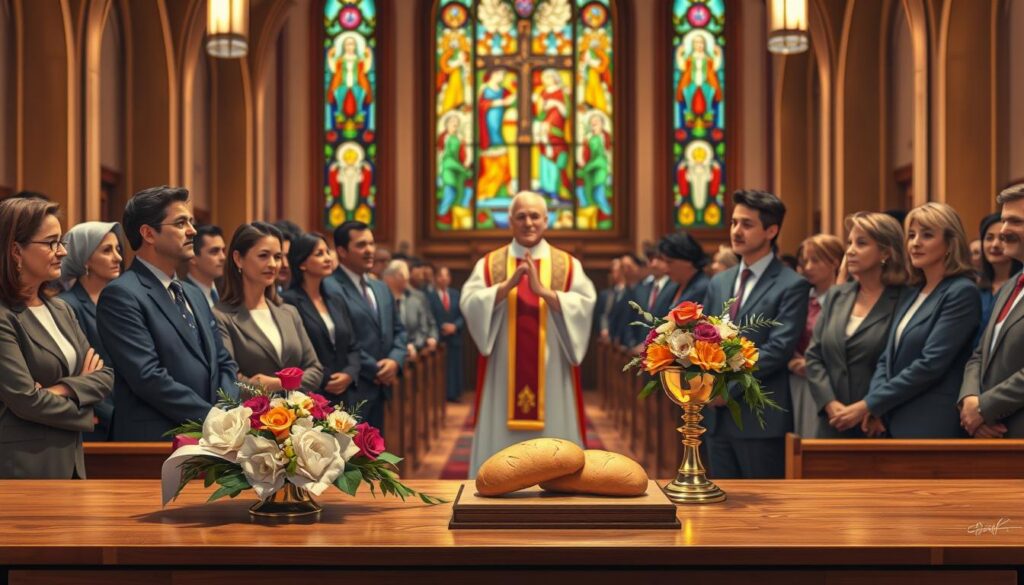
How to Bring Up the Gifts in a Catholic Mass: A Practical Walkthrough
Stepping into the role of Gift Bearer is an honor, and knowing what to expect can make it less intimidating. Here’s a step-by-step guide to help you feel confident on the day.
Where to sit and when to move to the back of the church
First things first: grab a spot at the end of the pew. This makes it easy to slip out without disturbing anyone. At the end of the Prayers of the Faithful, quietly stand up and head to the back of the church. Remember, there’s no need to rush—just move with grace.
The order of procession and what to do at the altar
The gifts will be waiting for you on the left-hand side of the church. You’ll see the bread, the wine cruet, and the collection bowl. However, wait until the offertory collection is completely finished before moving to the center aisle.
Once it’s time, line up in the correct order. The usher with the Book of Intentions goes first, followed by the adult carrying the collection bowl. Next comes the person with the wine, and finally, the one with the bread. This order is important, so pay attention!
Proper way to present the gifts to the priest
Now, don’t start walking until the priest stands and moves to the front of the altar. That’s your signal. Walk slowly and reverently down the center aisle. When you reach the altar, don’t hang back too far. Stand close enough for the priest to take the gifts easily.
Present the collection bowl first. Hand it to the priest, then step aside for the next person. For the wine, hold the cruet in your left hand and support it with your right. Make sure the handle faces the priest for easy access. Lastly, hand the bread to the priest.
How to return to your seat without fuss
After all gifts are presented, the priest may express thanks. Then, he, the deacons, and the altar servers will bow. As Gift Bearers, you should bow together toward the altar, then turn and walk back down the center aisle. From there, quietly return to your seat. That’s it! You did it—no fuss, no drama, just a beautiful act of service.
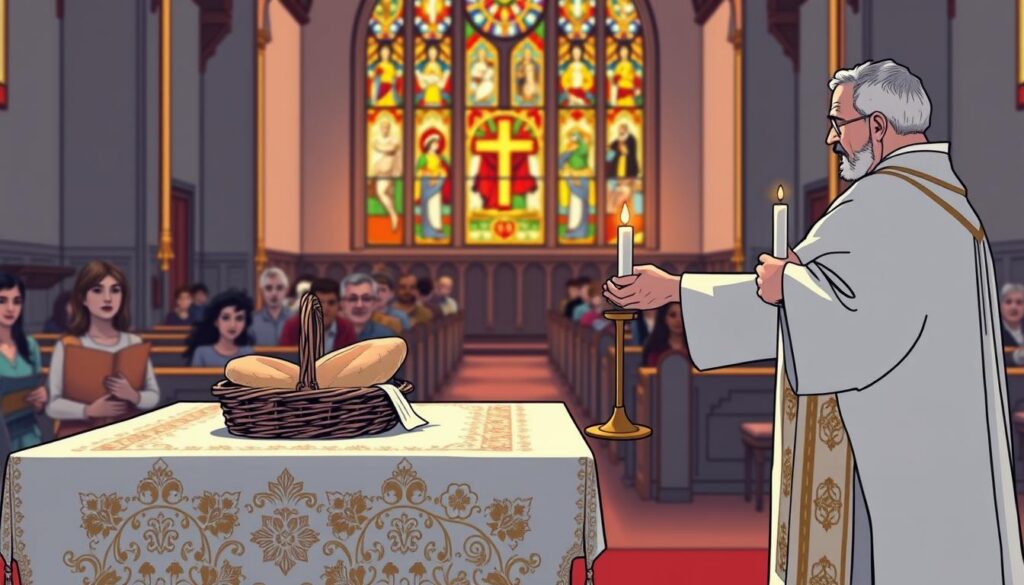
Why Do You Bring Up the Gifts in a Catholic Mass? Understanding the Meaning
Understanding the deeper meaning behind the gifts presented during Mass can enrich your experience. This practice has roots that trace back to the 2nd century, with early Church figures like St. Justin Martyr and St. Augustine recognizing its significance. They viewed it as a beautiful exchange, where the faithful return their gifts to God, who transforms them into something infinitely greater.
Participating in a gesture that goes way back
This isn’t just a modern ritual. The act of presenting gifts during Mass has been part of the tradition for centuries. It serves as a reminder of our connection to the community and to God. The priest, acting in persona Christi, receives what is brought forward. He offers it to God, who perfects and transforms it into the Body and Blood of Christ.
More than bread and wine—what it symbolizes for us all
The bread and wine aren’t just ordinary items. They represent much more. Consider the journey they take to the altar. Someone grows the wheat, another harvests it, and others grind it into flour and bake it. The same goes for the wine: grapes are grown, picked, crushed, and fermented. This process embodies human work, labor, and the daily grind of life.
When the priest prays, “Blessed are you, Lord, God of all creation. Through Your goodness we have this bread to offer, which earth has given and human hands have made,” he highlights the importance of this work. It emphasizes that these gifts are not merely food and drink; they are the fruits of human labor united with Christ’s sacrifice.
How our work and offerings connect to Christ’s sacrifice
Pope Benedict beautifully articulated this when he stated that in this humble gesture, all creation is taken up by Christ to be transformed. The act of bringing forward gifts isn’t just about bread and wine. It encompasses all the joys, hopes, pains, and sufferings of the world. Everything has value in God’s eyes.
Fr. Thom explained that the procession with the bread and wine symbolizes our journey from this life to eternal life. Just as the bread and wine are transformed into the Body and Blood of Christ, we, too, are transformed as members of that Body. This is the essence of the Eucharist: a full, conscious, and active participation where we give of ourselves and allow ourselves to be changed by these sacred mysteries.
The term Liturgy comes from the Greek word meaning “public work.” This is not merely a private devotion. It represents the work of the people, all of us together. When gifts are presented, it is a collective act on behalf of everyone in the pews, reinforcing our shared faith and commitment.
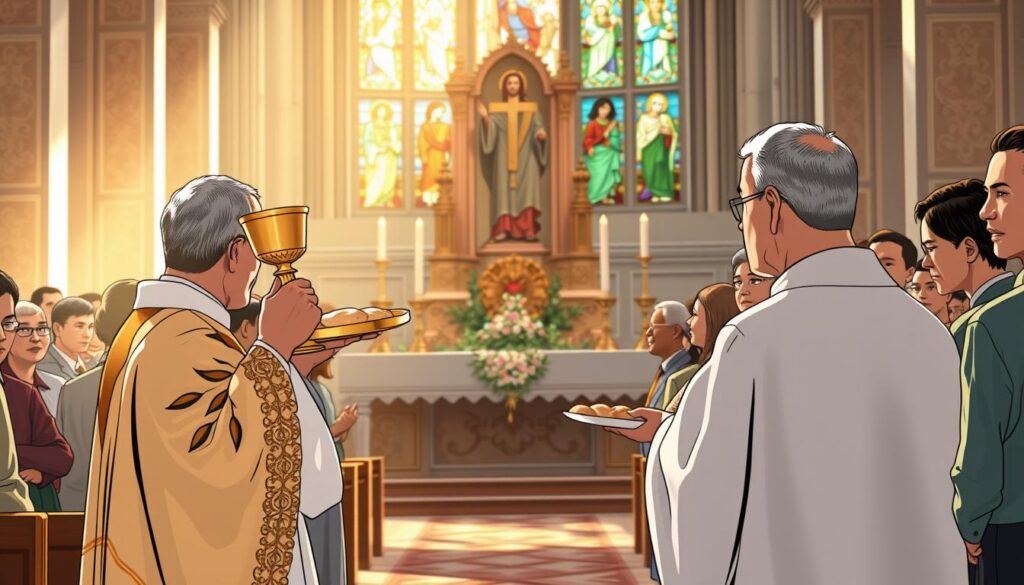
Joining In: Why Taking Part in Bringing the Gifts Matters
Taking part in the Offertory is more than just a task; it’s a meaningful connection to the community. Many hesitate when asked to serve. It’s common to feel shy or unsure about the process. But remember, the invitation to participate is personal and meant for everyone.
Even if someone else carries the gifts, their actions represent all of us. The collection, along with the bread and wine, symbolizes our willingness to share what we’ve received. This act embodies our commitment to God’s work.
Families can serve together, creating a beautiful tradition. Kids learn the value of participation by watching their parents. So, next time you’re asked to take part, consider saying yes. You’re not just bringing items; you’re sharing the hopes and struggles of your community.
Fr. Paul Olszewski hopes this encourages you to embrace the Offertory. You’ve got the steps down, and now it’s time to let God work through you.