

Lesson 34, “I Could See Peace Instead of This,” changed how I notice stress. During tense moments, I began spotting familiar reactions before they took over. That pause gave me room to question what my mind seemed to show.
The experiment feels simple: stop, breathe, and become willing to see peace instead of the upsetting world before me. This small shift can change perception, even when circumstances stay the same.
First published in 1976 by the Foundation for Inner Peace, the book offers more than ordinary self-help. Its Text, Workbook, and Manual for Teachers form a spiritual teaching focused on forgiveness, love, and daily practice. It has reached readers through translations into 27 languages.
Some students describe this change as course miracles, while strong critics question its claims. This beginner’s study won’t ask you to accept everything at once. Instead, it explores how one change of thought may alter the way the world feels.
Key Takeaways
- Lesson 34 invites peaceful reinterpretation.
- Stress can reveal familiar thought patterns.
- The book includes three main sections.
- Forgiveness and love guide its practice.
- Curiosity matters more than instant belief.
What Is A Course in Miracles?
A Course in Miracles presents spiritual ideas through an organized learning curriculum. Its goal is to help readers question fearful habits and choose a kinder way to view the world. The 1976 hardcover edition came from the Foundation for Inner Peace.
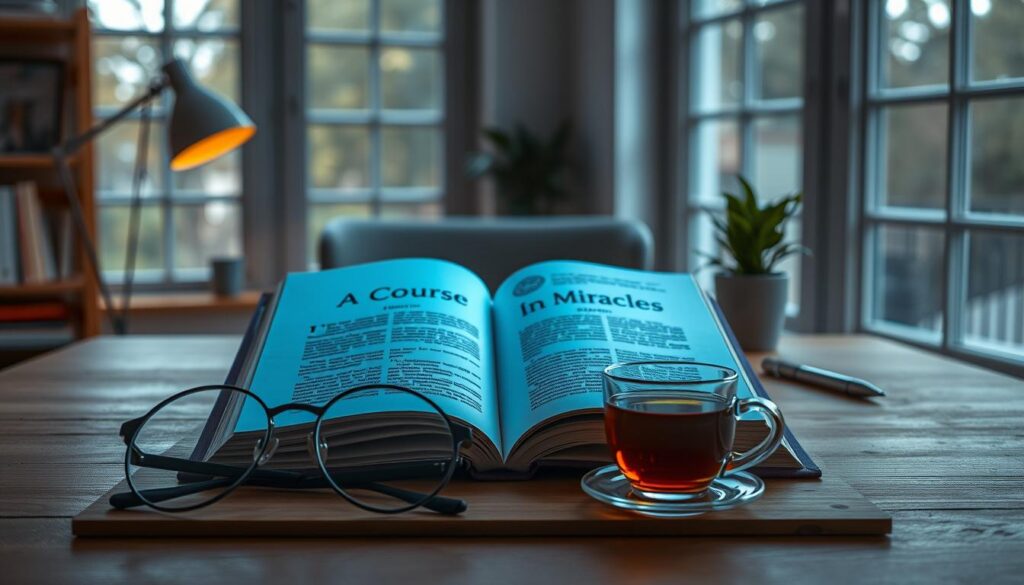
The Text, Workbook, and Manual for Teachers
The book has three connected parts:
- Text: explains the thought system and its core themes.
- Workbook for Students: offers 365 daily exercises for steady practice.
- Manual for Teachers: answers practical questions for mature students and teachers.
The 2007 third edition runs 1,333 pages and carries ISBN 978-1-883360-24-5. Kenneth Wapnick helped edit the text and founded the Foundation for A Course in Miracles.
Why the Course Feels Different From a Typical Spiritual Book
Its scripture-like language blends with meditation practice, psychology, philosophy, and Eastern spirituality. That mix makes the curriculum difficult to place under one religious label. A study group can help beginners compare interpretations, ask questions, and hear answers from others without pressure.
Readers may call its ideas course miracles, yet the system mainly invites careful study and personal reflection.
How Helen Schucman and Bill Thetford Began the Course
Helen Schucman began her professional career at Columbia-Presbyterian Medical Center in New York City during 1958. William “Bill” Thetford worked beside her as research associate. They were professional colleagues, not seekers who met during spiritual retreat. Their work centered on psychology, patient care, and academic study.

During 1965, their meetings became highly contentious. Thetford wanted another way for people to work together. His concern soon became central to the origin story.
“must be another way”
On October 21, 1965, Schucman reported hearing an inner voice say:
“This is a Course in Miracles, please take notes.”
That account reflects Schucman’s interpretation of her inner experience. Others may understand the authorship differently. The documented process shows that Thetford encouraged her to continue and helped type the material, turning private notes into collaborative teaching.
Schucman continued the writing over time, while Thetford supported the work. The three main sections reached completion by 1972. The Foundation for Inner Peace published the Course’s origin and teaching in 1976, giving its ideas a wider place in people’s lives and study.
The Mind-Shifting Lesson I Started With
My first real test came during an ordinary disagreement, not during meditation. I wanted to prove someone wrong, yet Lesson 34 offered another choice: pause before defending my story.

“I Could See Peace Instead of This”
This title comes from the 365 daily workbook lessons. It does not ask me to call an argument, loss, or frightening event pleasant. Instead, it invites new perception without waiting for the outside world to change.
“I could see peace instead of this.”
I silently repeated the line, then noticed fear, blame, and personal stories moving through my mind. The thought system shifted attention away from winning and toward understanding.
How the Lesson Changes Your View of Conflict
My friend’s words stayed the same, but my response softened. That small change showed me how forgiveness can begin before another person acts differently. The Course calls this shift one of its miracles: not magic, but freedom from an old reaction.
This simple study gave course miracles practical meaning. Each pause became one way to test the lessons, rather than accept the system through belief alone. Over time, peace felt less like escape and more like choice.
Why Forgiveness Sits at the Heart of the Course
Workbook Lesson 121, “Forgiveness Is the Key to Happiness,” offers a clear doorway into the Course’s central message. Its practice asks readers to release blame and guilt, not deny pain or excuse harmful acts.

Moving Beyond Blame and Guilt
Forgiveness does not mean ignoring abuse, dropping firm boundaries, or giving unsafe people continued access. It means loosening the mental grip of anger while still choosing wise action. Accountability and inner peace can stand together.
Seeing Offense as a Call for Help
The system views offense as a sign that fear and separation have shaped perception. This thought does not label others as permanently bad. Instead, it invites compassion for wounded minds while protecting those who need safety.
Choosing Love Instead of Fear
Course miracles frames forgiveness as recognition of shared innocence and spiritual worth. Love becomes a new way to meet others, guided by the Holy Spirit rather than fear. Course miracles does not promise that harm could never happen; it offers unity beyond blame.
The Course’s Thought System in Plain English
Rather than offering scattered inspiration, the Text presents one connected system of ideas. Its thought system maps movement from fear and separation toward forgiveness, peace, and kinder views of others. This course miracles approach is meant for daily study, not abstract debate.
Its language borrows from psychology: projection, dissociation, denial, defenses, guilt, ego, fantasy, and perception. Projection means placing inner anger or fear onto the outside world, then reacting as if that threat came from someone else.
The system-based map becomes useful during ordinary talks, family tension, or hard decisions. The Text supplies the thought; practice helps create another mental state. Each pause offers one way to question an old reaction.
According to Course teaching, the Holy Spirit represents wiser guidance within the mind. It is not merely an outside rulebook. Its answers support inner change and offer a spiritual path rooted in forgiveness. The system is not philosophy pursued for intellectual sport; it is teaching designed to change how life feels.
Separation, the Ego, and the Stories the Mind Creates
One tense moment can make the world feel divided. Separation names belief that people stand as isolated competitors, rather than connected people with shared worth. Yet this split may reflect an old story, not proven fact.
Course miracles teaching presents the ego as an illusion that seems to hide oneness with God and creation. Its story-making pattern turns one delayed text, tense meeting, or remembered insult into evidence about the whole world. When readers release that illusion, separation disappears, according to the teaching.
How Perception Shapes the World You Experience
The teaching treats time, space, form, and change as parts of perception, not ultimate reality. Old guilt can color present talk, so someone may react to today’s listener as though that person caused yesterday’s pain. This view offers one way to notice fear before it directs behavior.
Two coworkers may leave the same meeting with entirely different accounts. One recalls support; the other recalls criticism. Each perception selects details, shaping the world that person reports to others.
Readers can study this thought system based on daily experience without accepting every metaphysical claim. The journey becomes an invitation to question stories the mind creates. That practice offers another way to meet the world and others, with curiosity rather than fear. The original harm could never be erased, yet its meaning may change.
The Holy Spirit and a New Way of Thinking
When judgment rises, I can treat the pause as an open door rather than a verdict. This course calls that gentle inner guide the Holy Spirit. It helps people view conflict, memories, and fear with less blame.
Religious readers may see the Holy Spirit as divine guidance. Others may view it as the wiser part of the mind that interrupts quick judgment. Either view can support inner peace without denying grief, conflict, or practical problems across the world.
The Workbook points toward inspiration by the Holy Spirit. Its central question feels simple: “Could there be another interpretation of what I’m seeing?” This new way invites love, patience, and unity rather than automatic defense. It does not excuse harmful behavior or remove healthy boundaries.
Try this short spiritual practice:
- Pause before speaking.
- Name the fear within your mind.
- Ask the Holy Spirit for help.
- Choose words that respect other people.
This system gives busy minds room to respond with care. With practice, the Holy Spirit can help others notice perception before reaction. That is the practical heart of course miracles.
| Moment | Helpful question | Possible shift |
|---|---|---|
| Conflict | Could another view exist? | Less blame |
| Fear | What needs calm attention? | More choice |
| Memory | Can compassion guide me? | Greater connection |
How to Practice the Workbook Lessons Each Day
The 365-day Workbook offers steady mind training, not quick results. Read each day’s idea slowly, then carry it through normal tasks. This repeated process turns study into lived learning.
Making Practice Part of Your Daily Routine
Link the lesson with morning coffee, lunch, or an evening pause. Set one phone reminder, then return to the thought during calm moments. These simple cues give the workbook lessons real space within daily life.
- Read the day’s lesson twice.
- Notice one reaction within your mind.
- Practice forgiveness during one exchange.
- Record one shift within perception.
Lesson 121 focuses on forgiveness. Lesson 195, “Love Is the Way I Walk in Gratitude,” adds warmth to this practice. Let these lessons guide your study without demanding instant spiritual change.
What to Do When Practice Feels Difficult
Missing one day does not erase progress. Mind training works through repetition, not flawless discipline. Resistance may signal confusion, strong emotion, or unfamiliar language.
One study group can clarify the system. Another study group may offer support when feelings rise. Teachers and one more study group can help others stay grounded. The goal remains gentle learning, not performance. This course supports steady study over time.
| Challenge | Helpful response | Simple goal |
|---|---|---|
| Forgotten lesson | Resume next day | Keep the process moving |
| Strong emotion | Pause and seek support | Choose less blame |
| Unclear wording | Ask teachers or peers | Deepen study |
What “Miracles” Mean in A Course in Miracles
Here, miracles do not mean magic tricks or unusual events. They describe shifts in perception that move the mind from fear, judgment, and separation toward love and forgiveness. The greatest miracle, according to the Course, is awareness that love remains present.
That idea connects with Lesson 34. The difficult person may act the same, yet your response can change. You pause, question your first story, and choose peace. Nothing outside may look different, but your inner state has changed. This thought system, based on interpretation, reshapes the world you experience.
This spiritual practice reached readers beyond study groups. Gerald G. Jampolsky’s 1979 book, Love Is Letting Go of Fear, drew from Course principles and sold more than three million copies by 1990. His work helped translate its message into accessible self-help language.
Public attention grew after Marianne Williamson discussed the Course on The Oprah Winfrey Show during 1992. More than two million volumes sold afterward, bringing this teaching to wider audiences. For many readers, course miracles now name one practical way to meet the world with less fear.
Is the Course Christian, Buddhist, or Something Else?
Its labels can confuse new readers. The work uses Christian language, yet it also draws interest from Buddhist, New Age, and neo-Gnostic viewpoints. No single label satisfies every reader.
Its Biblical Language and Broader Spiritual Ideas
More than 800 biblical allusions place the Text in conversation with Christianity. God, Jesus, sin, salvation, resurrection, and the Holy Spirit appear often. Still, the teaching gives these terms meanings that differ from many traditional churches.
Jesus remains the major biblical figure throughout the Text. Its views on crucifixion and guilt have drawn strong criticism from Christian writers. Supporters see those ideas as symbolic rather than standard church doctrine.
Why Other Traditions Enter the Discussion
Some readers notice Buddhist echoes through its focus on illusion, mind training, detachment from appearances, and release from suffering. Olav Hammer and Simon J. Joseph discuss New Age and neo-Gnostic links. The book’s global reach, with translations into 27 languages, adds to these questions.
For beginners, the clearest answer is simple: this is a modern spiritual path with Christian terms and wider influences. It invites personal study, not one required verdict. People may call it course miracles, while others follow its ideas without joining any religion.
| Viewpoint | Main connection | Important caution |
|---|---|---|
| Christianity | Biblical language and Jesus | Meanings often differ from church doctrine |
| Buddhism | Illusion and mind training | The traditions remain distinct |
| New Age | Inner transformation | Scholars debate the category |
| Neo-Gnostic thought | Hidden knowledge and perception | Critics reject this comparison |
Let the Lesson Change the Way You Meet Your Life
Try Lesson 34 during one real disagreement. Repeat “I Could See Peace Instead of This” with curiosity, not pressure. Notice the story your mind adds before you answer.
This teaching presents forgiveness as changed interpretation, not denial. Keep clear boundaries, speak honestly, and take wise action when needed. Its goal is practical peace, not perfect performance. The deeper goal is steady growth.
The Workbook supports gradual learning through repeated practice. This process brings core themes into daily choices. Ask the Holy Spirit for guidance, or use that phrase as a reminder to pause. Let love and inner peace grow through small steps. This new way of seeing may touch daily lives without dramatic change.
For beginners, course miracles offers an open journey. Better questions can loosen old stories and reduce fear. Let course miracles remain an invitation: practice gently, stay grounded, and notice what changes within you.