

Many people connect ego death with spiritual freedom because it can loosen a fixed sense of self. In this state, a person may feel less separate from other people, nature, or the wider world. Still, this powerful experience does not guarantee wisdom, healing, or lasting change.
The modern conversation has deep roots. Aldous Huxley’s The Doors of Perception, published in 1954, helped bring psychedelic ideas to American readers. Timothy Leary’s first encounter with psychedelic drugs in 1960 later shaped public discussions about consciousness and personal transformation.
Today, people may describe ego death as a temporary loss of personal identity, not a literal physical event. The meaning can vary from one person to another. A psychedelic experience may open new questions, but patience and reflection help turn insight into growth.
Sara Ouimette, LMFT, offers psychedelic integration therapy in Oakland and throughout California. Her work reflects a grounded truth: intense experiences can need support, care, and time before they make sense.
True freedom is a process, not a promise.
Key Takeaways
- This concept often relates to a softened sense of personal identity.
- Huxley and Leary helped shape American psychedelic culture.
- One intense experience cannot ensure lasting growth.
- Reflection can help people understand unusual inner experiences.
- Professional integration support may offer safety and perspective.
What Is Ego Death?
The phrase describes a temporary break from the usual personal identity. During this state, a person may not feel separate from others or daily existence. The moment can seem meaningful, confusing, or frightening, depending on the setting and the person’s support.

The Meaning of Losing Subjective Self-Identity
Mystical studies scholar Daniel Merkur defined it as an imageless experience with no awareness of personal identity. William James used self-surrender for a similar act of deep psychological and spiritual letting go. Both ideas show that this topic existed before modern psychedelic culture.
Related Terms and Their Differences
Loss often means a short-term break from the normal self during a psychedelic experience. Dissolution points to softened boundaries between identity, thoughts, and the world. In Jungian psychology, psychic death suggests a major change in the psyche, not literal destruction.
Timothy Leary, Ralph Metzner, and Richard Alpert used “ego loss” in drug research. These terms overlap, but they are not identical. One person may find the shift freeing, while another may need care and grounding afterward.
| Term | Basic meaning | Common context |
|---|---|---|
| Self-surrender | Letting go of control | Psychology and spirituality |
| Ego loss | Temporary identity change | Psychedelic research |
| Psychic death | Deep inner transformation | Jungian psychology |
How the Sense of Self Is Built
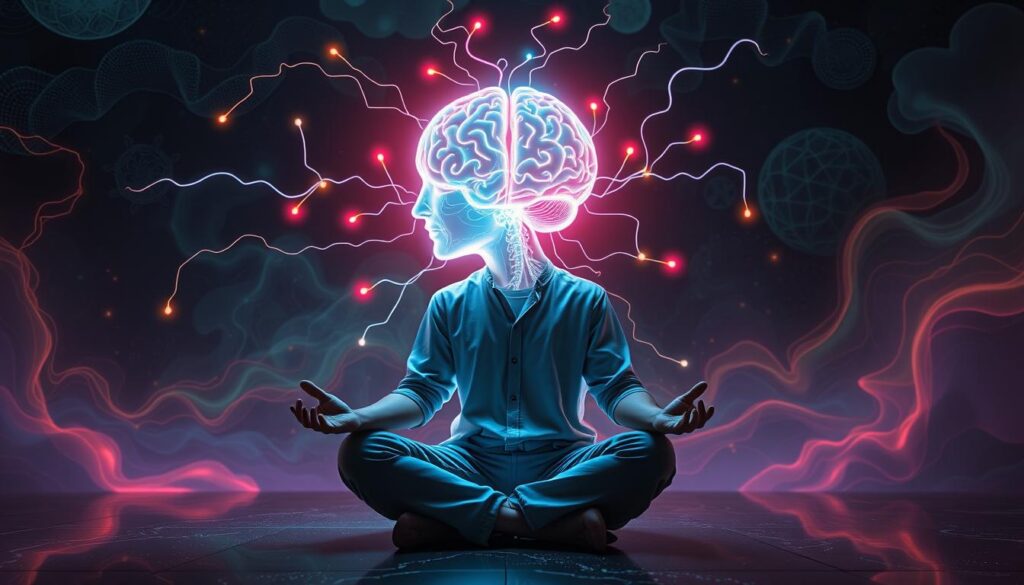
Your experience of being “you” develops through many signals working together. The brain tracks the body, emotions, memories, goals, and surroundings. It then builds a useful model that helps you act with a steady point of view.
The Self-Model and Everyday Identity
Predictive processing explains this as an ongoing process. The mind uses past learning to predict what may happen next, then updates those predictions when new information arrives. Autobiographical memory also links today’s choices with earlier events, creating a feeling of continuity as life changes.
For example, seeing a familiar person may bring a warm body response, a remembered place, and thoughts about your relationship. These details arrive as one meaningful experience. The salience network helps the system focus on what matters, such as danger, reward, goals, or physical needs.
How the Brain Binds Thoughts, Feelings, and Memories
Binding research shows how separate neural groups combine color, sound, sensation, and emotion into one scene. This unity supports consciousness and identity, rather than a jumble of disconnected signals.
“My experience is what I agree to attend to.”
Meditation practice can create space around each thought or feeling. You may notice mental events without treating every one as the whole self.
What Ego Death Can Feel Like
An intense shift in awareness can change how a person relates to the self, body, and world. In 1964, Randolf Alnaes described an LSD-related crisis that moved from losing ego feeling to sensing the body from a distance, followed by a return to ordinary consciousness.
“The same inner opening may feel like freedom, fear, or both.”
Common Emotional and Physical Effects
Some people report relief, wonder, grief, panic, or deep vulnerability. Physical effects may include nausea, shaking, pressure, fatigue, or changes in breathing. These reactions can make the experience feel sacred for one person and overwhelming for another.
Perceptual Changes, Timelessness, and Oneness
Ego dissolution may bring vivid patterns, stronger colors, unusual sounds, or a feeling of oneness with the surrounding world. Time can seem to stop or stretch. Yet consciousness does not always disappear; some people describe clear awareness without their familiar identity.

Why Every Experience Feels Different
Ego dissolution can occur during a mystical experience, acute psychosis, temporal lobe epilepsy auras, or a psychedelic experience. Personal history, expectations, setting, mental health, substance, and support all shape the state. For this reason, no single account defines every form of identity loss.
Why Psychedelic Experiences Can Dissolve Identity
Not every unusual state of consciousness signals a spiritual breakthrough. During some psychedelic experiences, the mind may loosen the links that join memories, feelings, body signals, and thoughts into one steady self. This shift can create ego dissolution, where personal boundaries feel less fixed.

Timothy Leary, Ralph Metzner, and Richard Alpert explored this idea in The Psychedelic Experience, published in 1964. Drawing loosely on Walter Evans-Wentz’s translation of the Tibetan Book of the Dead, the book framed identity loss as a symbolic death and rebirth.
“Complete transcendence beyond words, space-time, and the ordinary self.”
Psilocybin and LSD may make awareness feel wider than usual. Still, that feeling does not prove a supernatural event. Research remains careful and developing. Psychedelic drugs also carry risks, especially for people with certain mental health conditions.
- Insight is not the same as lasting change.
- Safe use requires legal, medical, and personal care.
- Support can help make sense of a confusing experience.
The Brain Behind Ego Dissolution
Brain imaging offers useful clues about why identity can feel less fixed during an altered state. It does not, however, provide a complete explanation for one person’s experience. Correlation is not proof of a spiritual meaning.
The Default Mode Network and Self-Referential Thinking
The default mode network includes brain regions linked with autobiographical memory, inner thought, and self-focused attention. This network also helps the mind switch between internal reflection and information from the outside world.
Research connects ego death with changes in the default mode network and nearby medial temporal areas. Studies have found more activity in some medial temporal regions, along with weaker communication between those regions and the default mode network. LSD research has also reported broader functional connectivity across the brain.
Predictive Processing and the Experience of Self
Predictive processing views the self as a working model. The brain uses memories, body signals, and expectations to organize changing information. Psychedelics may loosen these predictions, allowing thoughts and sensations to feel less personal.
Most classic psychedelics act mainly on serotonin 5-HT2A receptors. Ketamine works differently as an NMDA receptor antagonist. Psilocybin studies link this state with higher prefrontal glutamate and lower relative hippocampal glutamate. These findings describe brain processes, but they cannot define what the experience means for every individual.
Psilocybin, LSD, Ayahuasca, and Other Substances
Different substances can produce a powerful shift in identity, but no experience guarantees spiritual growth. Setting, dose, health history, and support all shape the outcome. Unsupervised use may lead to panic, injury, harmful interactions, or lasting confusion.
How Psychedelic Drugs May Affect the Sense of Self
Psilocybin, LSD, ayahuasca, DMT, and salvia divinorum have each been linked with reports of ego dissolution. Classic psychedelics mainly affect serotonin 5-HT2A receptors. Ayahuasca also carries cultural and spiritual meaning, yet expectations can shape the experience as much as the substance.
Timothy Leary began psilocybin research in 1961. Harvard dismissed him in 1962, and its program closed soon after. That history shows why modern research needs careful ethics and clear safeguards.
Why Ketamine and Other Substances Can Feel Different
Ketamine is not a classic serotonergic psychedelic. It acts mainly as an NMDA receptor antagonist, which can create detachment from the body and ordinary self-awareness. Some people call this ego death, but the state differs from many psychedelic experiences. Preparation, legal medical guidance, and trusted integration support remain essential.
| Substance | Reported self-related effect | Key caution |
|---|---|---|
| Psilocybin or LSD | Changed identity boundaries | Unpredictable mental effects |
| Ayahuasca or DMT | Intense spiritual interpretations | Cultural and health risks |
| Ketamine | Detachment or altered body awareness | Different receptor system |
Ego Death in Meditation and Mystical Practice
Meditation offers a gradual way to loosen self-identification without trying to erase the personality. Unlike an intense altered-state experience, this path relies on attention, patience, and choice. Its aim is not to force a dramatic breakthrough.
Letting Go Through Mindfulness and Deep Meditation
William James used self-surrender to describe profound letting go. In mindfulness, you can watch thoughts, feelings, and body sensations as passing events. They may shape your experience, but they do not define your whole self.
Jin Y. Park describes Buddhist meditation as learning to release the sense of self. Zen teachings call this inner shift the “great death,” which differs from physical small death. The language points to change in identity, not bodily harm.
Deep meditation may bring quiet, spaciousness, or unusual states of consciousness. These experiences can resemble ego dissolution in description, yet the processes differ from a psychedelic experience. The brain and its attention network may respond in complex ways, while regular practice builds insight over time.
Slow progress can support lasting freedom more reliably than chasing one powerful moment.
Ego Death Across Spiritual Traditions
Across history, spiritual teachers have used different terms for releasing a narrow identity. These ideas share themes, but they are not interchangeable. Each belongs to a distinct culture, text, and form of practice.
Buddhist Ideas About Egolessness and the Great Death
In Buddhism, egolessness points to a changing process, not a permanent inner object. Mindfulness and meditation help people notice thoughts, feelings, and desires without treating them as a fixed self. In Zen, the “great death” describes deep letting go. It refers to inner change, not physical harm.
Sufi Fana, Moksha, and Spiritual Surrender
Islamic Sufism uses fana for the surrender or fading of separate selfhood before God. It is not a simple label for a modern drug experience. In Hindu traditions, moksha means liberation from ordinary bondage. Schools differ on the nature of the self and the path to freedom.
Christian history also includes language of surrender. Teresa of Ávila described mystical union within Roman Catholic devotion. Respect for each tradition means learning its ethics, teachers, and history before borrowing its words.
| Tradition | Key term | Distinct focus |
|---|---|---|
| Buddhism | Egolessness | Seeing identity as changing |
| Sufism | Fana | Surrender before God |
| Hindu traditions | Moksha | Liberation from bondage |
The Death and Rebirth Pattern in Mythology
Myths often portray transformation as a journey through symbolic death and renewal. Joseph Campbell explored this pattern in his 1949 book, The Hero with a Thousand Faces. He described three broad stages: separation, transition, and incorporation.
In Campbell’s model, a hero leaves ordinary life and enters an unfamiliar world. After facing powerful forces and winning a decisive victory, the hero returns with a gift for the community. This return gives the journey a clear purpose beyond private discovery.
This pattern may resemble an ego death experience. An old role or belief can fall away, allowing the self to view existence with fresh insight. Yet mythological death remains a metaphor. It does not show that physical danger, reckless choices, or medical risk leads to spiritual freedom.
- Ask whether new insight supports kindness and service.
- Let personal experiences unfold without forcing a fixed story.
- Measure growth by daily actions, not dramatic feelings alone.
| Stage | Mythic movement | Practical meaning |
|---|---|---|
| Separation | Leaving the familiar world | Questioning an old identity |
| Transition | Facing trials and change | Learning through uncertainty |
| Incorporation | Returning with a gift | Using insight to help others |
Is Ego Death the Same as Enlightenment?
A dramatic inner shift can feel like the answer to every spiritual question. Carter Phipps linked enlightenment with ego death, describing it as release from attachment to a separate, self-centered existence. That view can offer insight, but it does not settle the debate.
Temporary States Versus Lasting Personal Change
Research and clinical writing draw a clear line between brief ego dissolution and long-term psychological growth. A person may enter a state of unity, expanded consciousness, or unusual clarity. When the experience ends, old habits, fears, and emotional patterns may still need attention.
Why a Powerful Experience Does Not Guarantee Wisdom
Feeling connected to everything does not automatically heal trauma or repair relationships. It also cannot replace honest choices, responsibility, or care for other people. Lasting wisdom appears in daily behavior, humility, and consistent compassion.
Joseph Campbell’s Hero’s Journey offers a useful guide: insight must return to ordinary life. Integration turns a meaningful experience into practical change. Chasing repeated experiences may create confusion instead of freedom.
- Notice changes in behavior, not only intense feelings.
- Practice humility when interpreting unusual states.
- Bring insight into work, family, and community life.
When Ego Death Feels Frightening
A powerful inner shift can feel unsafe, especially when it arrives without preparation. Fear does not prove that the experience has spiritual meaning. It may signal that the mind and body need calm, time, and support.
Fear, Panic, and the Feeling of Annihilation
In 1964, Randolf Alnaes described three stages of an LSD-related death crisis: loss of ego feeling, separation of the observing subject from the body, and rebirth into ordinary awareness. Panic can make this process seem permanent, even as many altered states change when a substance wears off.
A frightening state deserves care, not a forced interpretation.
Psilocybin, LSD, and other psychedelic drugs may cause anxiety, paranoia, or intense confusion. A calm setting, trusted support, hydration, and reduced stimulation may help. Avoid driving or taking more drugs.
Depersonalization, Dissociation, and Confusion
Depersonalization may feel like watching the body from outside. Dissociation can disrupt memory, surroundings, or personal identity. These effects can follow an unprepared psychedelic experience and may feel deeply unsettling.
Seek urgent professional help for persistent confusion, mania, paranoia, or thoughts of self-harm. A qualified clinician can assess the effects and protect your safety.
| Warning sign | Helpful response | When to seek help |
|---|---|---|
| Short-term panic | Quiet space and trusted company | If it does not ease |
| Detachment or confusion | Grounding and medical guidance | Persistent symptoms |
| Mania or paranoia | Urgent clinical support | Immediately |
The Risks of Losing Your Sense of Self
A sudden identity shift can uncover pain before a person has tools to process it. Ego dissolution may bring fear, shame, grief, or trauma into awareness all at once. Without preparation, this experience can feel confusing rather than healing.
Unresolved Trauma and Overwhelming Shadow Material
Buried memories may surface faster than an individual can understand or regulate them. Sara Ouimette, LMFT, supports clients with grief, trauma, and major life transitions in Oakland, California. Her depth therapy work shows why careful support matters when painful material appears.
A healthy sense of self helps organize identity, protect boundaries, guide choices, and manage daily duties. The goal should not be to destroy that structure. Instead, thoughtful integration can help someone understand what arose and respond with care.
Spiritual Bypassing, Mania, and False Enlightenment
Spiritual bypassing can hide grief or accountability behind a grand spiritual story. After difficult psychedelic experiences, some people report anxiety, paranoia, dissociation, depersonalization, or mania. False enlightenment may look like superiority, emotional distance, or absolute certainty.
- Choose humility over claims of special wisdom.
- Seek clinical help for severe or lasting symptoms.
- Measure growth through honesty, stability, and connection.
How to Prepare for a Powerful Inner Experience
A thoughtful plan can make a powerful inner experience safer and easier to understand. Start with an honest review of current mental health, trauma history, medications, and physical health. Consider whether trusted support will be available afterward.
Before considering psilocybin or other psychedelic drugs, learn about possible effects and legal risks. Do not treat ego death as a guaranteed spiritual shortcut. A calm setting, clear boundaries, and a sober support person can reduce avoidable panic and protect the body.
- Create an emergency plan before any altered-state experience.
- Avoid mixing drugs or making major decisions during the experience.
- Seek professional guidance with a history of mania, psychosis, severe dissociation, or unresolved trauma.
- Allow enough time for rest, reflection, and follow-up care.
Preparation is an act of care, not a test of courage.
Sara Ouimette’s practice emphasizes preparation, care, and ongoing support. Her approach recognizes that psychedelics may reveal painful material before a person has tools to process it. Choosing not to use them remains a valid spiritual decision. It does not show a lack of courage or commitment.
Making Meaning Through Integration
Meaning often unfolds after ego death, not during the peak of an intense state. Integration is a gradual process of bringing new insight into relationships, work, choices, body awareness, and daily routines.
Grounding Insights in Daily Life
Start with simple habits. Sleep, journaling, movement, time in nature, and meditation can help the nervous system settle. Honest conversations may also show which insights support a healthier relationship with yourself and others.
When Therapy or Integration Support Can Help
Support can help when ego dissolution remains confusing or disrupts ordinary life. Sara Ouimette, LMFT, offers psychedelic integration therapy in Oakland and virtual sessions throughout California. Her Jungian depth approach helps each individual explore a psychedelic experience with care.
Dreamwork, inner child work, and active imagination can reveal useful images and emotions. They do not require treating every vision as a literal command. Therapy offers a steady place to explore fear, dissociation, and difficult inner processes.
Practices That Support Long-Term Growth
- Record dreams and notice repeated themes.
- Use grounding exercises before making major choices.
- Return to values through small, consistent actions.
| Practice | Purpose | Simple starting point |
|---|---|---|
| Journaling | Clarifies insight | Write for ten minutes |
| Movement | Reconnects with the body | Take a gentle walk |
| Therapy | Supports safe integration | Book a qualified consultation |
Can You Find Spiritual Freedom Without Ego Death?
Spiritual freedom can grow through steady choices, not only through a dramatic ego death experience. A calmer path may include meditation, therapy, compassion, creativity, service, and honest self-reflection. These practices help you build a kinder relationship with your sense of self.
Zen practice describes the “great death” as inner letting go, not physical harm. Jungian psychology also points to deep transformation of the psyche rather than destruction. In both views, growth can unfold while a healthy identity continues to support work, relationships, and daily life.
- Use meditation to notice thoughts without obeying every thought.
- Let therapy support healing, insight, and emotional balance.
- Practice empathy, forgiveness, and clear boundaries with others.
- Choose creative work and service as forms of meaningful connection.
Sara Ouimette’s therapy work emphasizes softening and becoming more human, rather than chasing increasingly intense states. Drugs and psychedelics are not required. A grounded way toward freedom honors ordinary existence and turns insight into steady action in the world.
| Path | What it develops | Helpful result |
|---|---|---|
| Meditation | Attention and awareness | More inner space |
| Therapy | Emotional understanding | Healthier choices |
| Relationships | Empathy and responsibility | Stronger connection |
Finding Your Own Path to Spiritual Freedom
A meaningful spiritual life begins with the choices you make after an extraordinary experience. Ego death may feel powerful, but its value comes from what follows in daily life, not from the intensity of the event.
Freedom can grow through meditation, therapy, service, creative work, and honest relationships. Psychedelic dissolution may reveal how identity forms, while also bringing trauma, fear, or unmet needs into view.
Integration gives consciousness time to understand what happened. With patience, striking moments can become practical changes, greater compassion, and healthier choices.
- Stay connected to your body and responsibilities.
- Choose humility over dramatic spiritual claims.
- Seek trusted support when confusion lasts.
- Keep caring people close as you grow.
The safest way forward keeps you engaged with your sense of self, your world, and everyday life. You do not need symbolic death to become wiser, kinder, or more fully alive.