
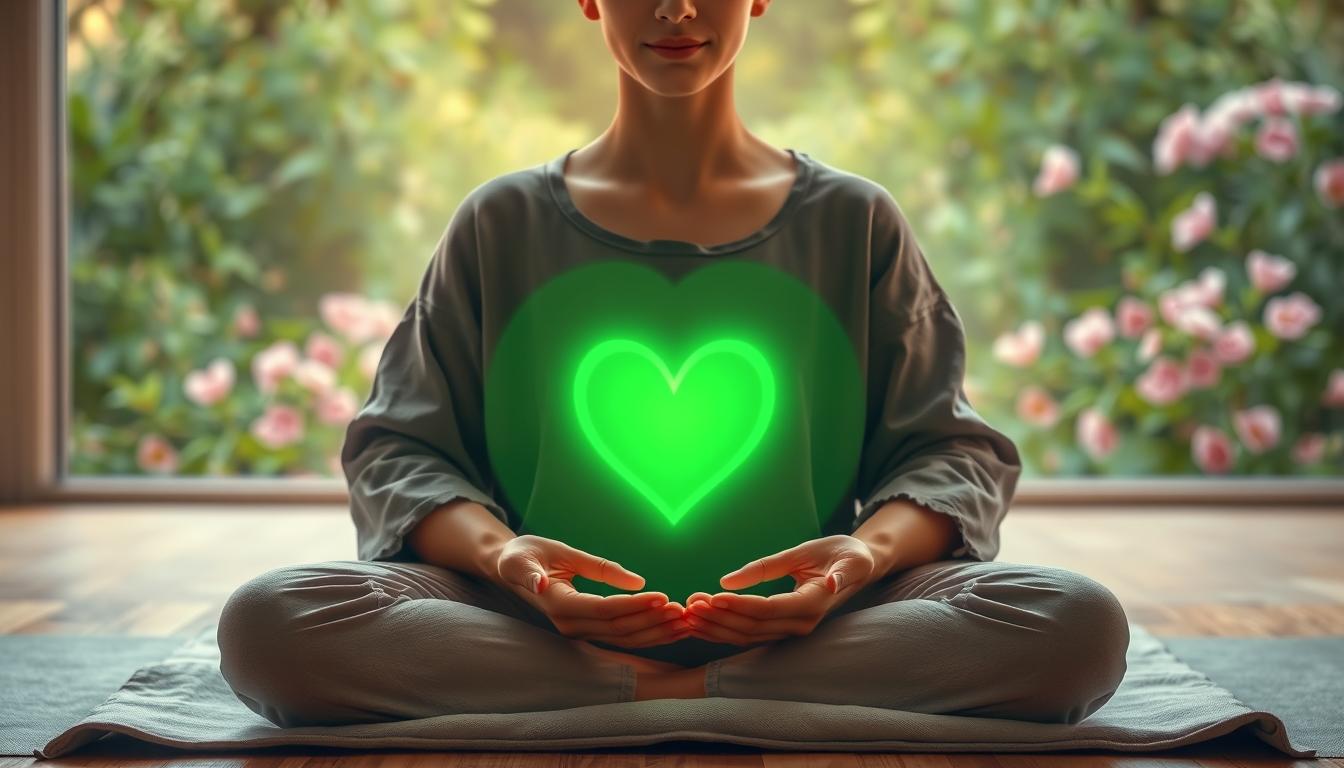
Heart chakra practices may help you feel more open, kinder to yourself, and ready for deeper connection. Still, true love grows through honest choices, clear boundaries, and healthy relationships. No ritual can replace those daily actions.
In traditional yoga, Anahata is the fourth chakra. Its themes include love, compassion, and emotional balance. In daily life, you may notice these themes when you feel guarded, lonely, or ready to trust again.
This guide offers a practical path. You’ll explore breathwork, yoga, chakra meditation, affirmations, crystals, essential oils, and green foods. Insight Timer also provides more than 200,000 free guided meditations from teachers worldwide, including affirmation and visualization sessions for balance.
With steady practice, you may feel calmer, safer, and more connected. However, healing practices aren’t medical care. Seek qualified attention for serious or lasting chest symptoms.
Key Takeaways
- Openness starts with self-awareness.
- Healthy love needs honest communication.
- Breathwork can support calm and balance.
- Insight Timer offers free guided meditation.
- Consistent practice matters more than speed.
- Serious symptoms require medical care.
What the Heart Chakra Means and Where It’s Located
Anahata offers a simple way to explore connection, kindness, and inner balance. In yoga, it names the fourth chakra in the traditional seven-chakra system. Its Sanskrit meaning, “unstruck” or “soundless,” suggests love that does not depend on outside approval.
Anahata, the Fourth Chakra of Love and Compassion
This energy center sits between the lower three and upper three chakras. Ipek Williamson describes it as a bridge between physical needs and spiritual connection. That view can help you link self-care, compassion, and healthier relationships.
The Green Energy Center in the Center Chest
The heart chakra is traditionally located in the center chest, behind the breastbone and near the physical heart. Some people sense energy between the shoulder blades. In body terms, the area aligns roughly with T4 to T6 in the mid-thoracic spine, but this is a spiritual model, not standard anatomy.
Traditions connect Anahata with the lungs, thymus gland, arms, hands, diaphragm, circulation, and breath. Use this guide as a reflective tool for meditation and emotional balance, not as medical care.
Heart Chakra Symbols, Colors, and Core Themes
Symbols can make an inner practice easier to understand. They connect color, breath, sound, and daily choices without promising a guaranteed cure.
What Green, Air, and the YAM Mantra Represent
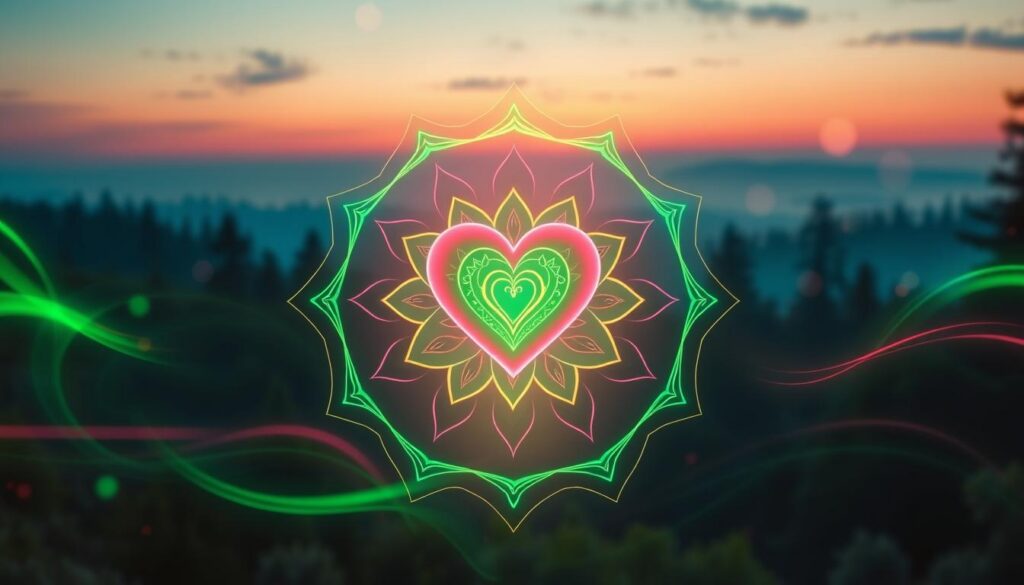
The color green suggests growth, renewal, nature, tenderness, and emotional healing. Air, called Vayu, relates to breathing and movement. Slow breaths may create room to pause, notice feelings, and respond with more compassion in relationships.
Traditional images show a 12-petal lotus, two crossing triangles, and the YAM seed sound. Gentle chanting can give meditation a steady focus. Use it as a calming tool, not a promise of instant change.
How the Heart Center Bridges the Lower and Upper Chakras
Ipek Williamson describes this energy center as a bridge between physical needs and spiritual awareness. The upward and downward triangles reflect that meeting point. They can remind you to balance practical life with love, self-awareness, and care for others.
| Symbol | Common meaning | Simple practice |
|---|---|---|
| Green | Growth and renewal | Spend time in nature |
| Air | Breath and balance | Take slow breaths |
| YAM | Steady sound focus | Chant softly |
Signs Your Heart Chakra Is Open and Balanced
Emotional openness often appears through calm choices, honest communication, and a kinder view of yourself. These signs feel practical, not dramatic. They may grow through reflection, breathwork, and daily care.

Unconditional Love, Self-Acceptance, and Empathy
Unconditional love means accepting yourself and others without expecting perfection. It does not remove sensible boundaries. When the heart feels balanced, empathy can help you understand another person’s pain without carrying it as your own.
Self-acceptance, forgiveness, trust, and comfort with vulnerability are useful signs of healing. A balanced chakra allows compassion to guide your actions while protecting your energy. You can forgive without excusing harm or returning to unsafe relationships.
Inner Peace and Healthier Relationships
Insight Timer teacher Ipek Williamson identifies inner peace and emotional stability as signs of a balanced heart chakra. Meditation and slow breathing may help you pause during hard moments. Over time, this peace can support healthier relationships, deeper listening, respectful affection, and the ability to give and receive love without losing yourself.
| Sign | What It May Look Like | Daily Support |
|---|---|---|
| Self-acceptance | Less self-criticism | Use kind inner language |
| Empathy | Understanding others | Listen without fixing |
| Inner peace | Calmer responses | Practice slow breathing |
Heart Chakra Blockage Symptoms to Watch For
Not every difficult feeling points to an energy issue. Still, certain patterns may invite calm self-reflection. Notice them with curiosity rather than judgment, and let heart chakra healing support practical care.

Emotional Signs of a Blocked Heart Center
Common signs may include loneliness, jealousy, fear of rejection, distrust, numbness, resentment, and trouble forgiving past hurts. You may also avoid closeness, depend too heavily on one person, or struggle to give and receive affection. A tough exterior can hide a real need for safety, love, and compassion.
Chest Tension and Other Physical Concerns
Some sources associate imbalance with chest tightness, palpitations, breathing concerns, asthma, poor circulation, or high blood pressure. These symptoms do not prove a blocked chakra. Chest pain, breathing trouble, or heart symptoms require prompt medical advice. Do not rely on spiritual healing alone.
How Grief, Betrayal, and Fear Can Close the Heart
Grief, betrayal, past trauma, and fear can make distance feel protective. Over time, that defense may limit relationships and emotional balance. Meditation, therapy, and honest boundaries can help you process emotions at a safe pace.
| Pattern | Possible experience | Supportive step |
|---|---|---|
| Emotional distance | Numbness or distrust | Name the feeling |
| Fear of intimacy | Avoiding affection | Move slowly |
| Physical concern | Chest or breathing symptoms | Seek medical care |
How to Clear and Open Your Heart Chakra Fast
A few calm minutes can create a quick sense of openness. This isn’t a promise that love will appear at once. Instead, use the practice to notice feelings, soften tension, and choose your next step with care.
Start With Breath, Gratitude, and Emotional Honesty
Take three slow breaths. Name three things you appreciate, then write one honest sentence about your mood. You don’t need to act cheerful. Anulom Vilom, or alternate-nostril breathing, may also calm the body and mind. Ipek Williamson recommends building a root foundation with daily meditation for one month.
A Simple Heart Chakra Meditation With Green Light
Sit comfortably and bring attention to the center of your chest. Imagine a soft green light spreading with each natural breath. Repeat the YAM mantra, pronounced roughly “Yan-gm,” or try loving-kindness meditation. Offer forgiveness affirmations without hiding pain.
Insight Timer has more than 200,000 free guided meditations, including sessions for chakra healing. Repeat this practice often. Fast progress means finding an immediate moment of peace, while lasting healing grows through consistency.
| Step | Time | Purpose |
|---|---|---|
| Breathing | 2 minutes | Settle the body |
| Green light | 3 minutes | Focus attention |
| Affirmation | 1 minute | Invite compassion |
Heart Chakra Yoga Poses for More Openness
Gentle backbends can support an open heart by improving posture, steady breathing, and body awareness. Move slowly, keep your neck relaxed, and stop if you feel sharp pain, dizziness, or strain. These yoga poses support reflection, but they do not replace medical care or emotional therapy.
Camel Pose and Bridge Pose
Camel Pose, or Ustrasana, expands the chest and may help release held emotions. Keep your hands on your lower back or place them on blocks. Do not force your heels. Dr. Ram Jain recommends five to 10 deep breaths when the posture feels stable.
Bridge Pose, or Setu Bandhasana, lifts the hips and draws the chest toward the chin. This gentle lift creates space across the front body. Keep your feet grounded and let your breath guide the movement.
“Choose a steady range, not the deepest shape.”
Cobra Pose, Fish Pose, and Gentle Chest Openers
Cobra Pose strengthens the back, shoulders, and arms. Fish Pose, Bow Pose, Wheel Pose, and Easy Cow Face offer other options. Select only poses that feel comfortable. Pair yoga with slow breathing or meditation, since physical release alone does not complete emotional healing.
- Relax your jaw and shoulders.
- Breathe evenly through each pose.
- Choose comfort over intensity.
Crystals, Essential Oils, and Green Foods for Healing
Simple sensory tools can make a calming self-care routine feel more personal. They do not cure illness, but they may support reflection, kindness, and mindful choices. For more color symbolism, explore this green energy guide.
Rose Quartz, Jade, and Green Aventurine
Rose quartz is linked with unconditional love and self-compassion. Jade and green aventurine can serve as physical reminders to pause, breathe, and choose a kinder response. Hold a stone near your chest during meditation, or keep one beside your desk.
Emerald, rhodonite, green calcite, amazonite, and malachite also appear in chakra traditions. Treat them as symbolic supports, not medical treatments.
Rose, Lavender, and Bergamot for a Calming Practice
Rose, lavender, and bergamot offer gentle scent options for meditation. Diffuse them, or apply a properly diluted blend to your wrists. Geranium and ylang ylang provide additional choices.
Check allergies, pregnancy guidance, pets, and medication concerns first. For daily nourishment, add spinach, kale, broccoli, cucumbers, green apples, green tea, matcha, avocados, pears, leafy greens, and nuts to a balanced diet inspired by this healing color.
Heart Chakra Affirmations for Love and Emotional Balance
Words can guide attention toward kindness, safety, and honest connection. Choose one phrase that feels believable today. You don’t need to deny pain to create an open heart chakra or support healing.
Affirmations for Self-Love and Forgiveness
Try saying, “I am open to love,” “I forgive myself and others,” or “I am worthy of love.” Another option is, “I deeply and completely love and accept myself.” This phrase supports self-respect while leaving room for difficult emotions.
Forgiveness may release emotional weight, but it doesn’t erase boundaries. You can practice compassion without returning to an unsafe relationship. Ipek Williamson shares that affirmations helped her release pain from past relationships and grow empathy.
How to Build a Daily Open-Heart Practice
Keep your routine simple: breathe for five minutes, repeat one affirmation, write one gratitude note, and choose one kind action. Try it during meditation, after yoga, or on a walk. Loving-kindness meditation can also build peace and support healthy relationships. Consistency matters more than a perfect session.
| Step | Example | Benefit |
|---|---|---|
| Breathing | Five calm minutes | Settles the body |
| Affirmation | “I am worthy of love” | Builds self-trust |
| Kind action | Offer help or rest | Strengthens compassion |
Let Your Open Heart Guide You Toward True Love
The fourth chakra sits at the center of the traditional seven-chakra system. It links grounded needs with spiritual connection, giving your energy practice a clear frame. An open heart can support self-respect, compassion, forgiveness, empathy, and safe closeness without asking you to drop personal boundaries.
Breathing, meditation, green-light visualization, yoga, crystals, essential oils, green foods, and affirmations offer flexible ways to build healing into daily life. Use what feels steady, not what feels forced.
A balanced center may support healthier relationships, yet true love still grows through trust, clear communication, mutual effort, and emotional safety. These choices can bring peace without promising instant romance.
Insight Timer offers more than 200,000 free guided meditations and over 25,000 community groups for continued support. Clearing the chakra is not about becoming endlessly available. It means giving and receiving love with greater honesty, compassion, and peace while honoring your ability to choose what fits your life.