
This guide answers the most common planning question: readers want clear costs and realistic expectations. It explains what ticket prices mean, what each tier covers, and why there is no single flat fee.
Plan beyond entry: Black Rock City sits in a remote desert and needs serious self-reliance. Factor in travel, camp dues, food, water, shelter, and parking when you budget.
We outline ticket tiers, typical sale windows, and how registration and access work through official channels. The goal is practical, budget-friendly information without promising exact sale dates that change each year.
Practical examples will show realistic spending categories so you can estimate your own total. For related policies and privacy details, see our privacy page.
Key Takeaways
- The guide explains ticket tiers and what each price generally includes.
- Expect varied costs beyond entry: transport, camp fees, food, and gear.
- Sales follow scaled approaches that aim to broaden participation.
- Official registration and access steps will be covered later in the article.
- This intro gives practical budgeting tips without fixed sale date promises.
How much are tickets to burning man for the next event?
Plan your budget now: Black Rock City uses a scaled “Pay What You Can” model for 2026. That means multiple official price points run at the same time so buyers pick the level that fits their budget and values.
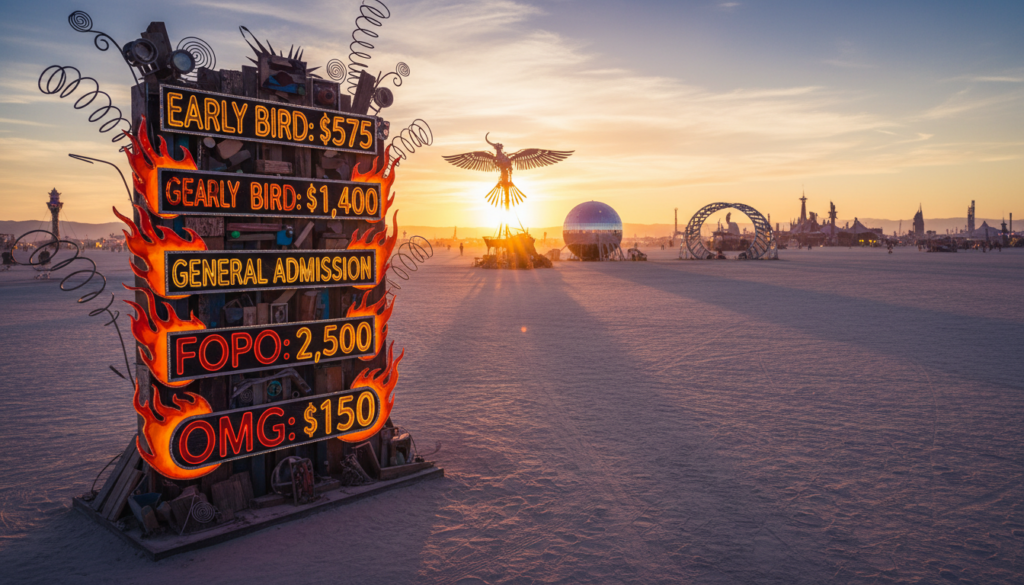
- $675
- $775
- $975
- $1,500
- $3,000
Each listed ticket is a full-valid entry. The higher tiers act as built-in support for art grants, broader access programs, and operations.
For participants planning ahead, choose a tier that matches your finances and values, then separately budget for travel, shelter, supplies, and camp dues. Treat the scaled model as one practical way to fund the wider community while covering your entry.
Deciding early helps anchor totals and reduces stress during sale windows. Each price tier has a stated purpose, and the next section breaks down those purposes so you can choose confidently. For related travel budgeting tips, see saving on gas.
Burning Man ticket prices and tiers
Below is a clear guide to the tiered pricing, who each level suits, and what your payment supports.

$675 — Communal Effort
Who it fits: Budget-conscious participants who value hands-on contribution.
This tier prioritizes participation and creative contribution inside Black Rock City.
$775 — Covers operational costs
Who it fits: People who can cover basic run-and-build expenses for one person.
This level funds the city’s core logistics, not perks or VIP access.
$975 — Full cost
Who it fits: Attendees who want to support large-scale art and stable operations.
Funds here help honoraria grants and the logistics that keep art installations safe.
$1,500 — Full cost + access support
Who it fits: Those who can give a community gift that enables Ticket Aid and Resilience program spots.
$3,000 — Generosity
Who it fits: Donors seeking to expand inclusion and long-term sustainability of the city.
| Price | Label | Who it helps | Primary funding purpose |
|---|---|---|---|
| $675 | Communal Effort | Cost-aware participants | Entry and basic city role |
| $775 | Operational | Covering one person’s city costs | Build and run expenses |
| $975 | Full Cost | Supporters of art | Art grants and logistics |
| $1,500 | Access Support | Enablers of Ticket Aid | Ticket Aid program, Resilience |
| $3,000 | Generosity | Philanthropic participants | Wider inclusion and future access |
Decision tip: If two tiers both fit, pick the higher one when possible. That choice helps expand access while keeping your trip budget safe.
What you’re paying for at Black Rock City beyond entry
Buying entry funds the systems and services that let tens of thousands live in Black Rock for a week.
Funding operations and city infrastructure
This is not a standard festival pass: fees help build roads, emergency services, sanitation, and staff that run the temporary city.
Think practical costs: traffic control, toilets, medical tents, and logistics crews who set up and break down the site.
Supporting Honoraria art grants and the broader mission
Large-scale art is central to the experience. Higher-priced options directly fund Honoraria grants and projects backed by the Burning Man Project.
Those grants underwrite installations, safety engineering for sculptures, and artist support that make the world inside Rock City unique.
Access, participation, and the communal effort model
When some people pay more, the community can offer Ticket Aid, Resilience, and Renaissance spots that improve access for others.
Your purchase acts as a gift: it helps keep the city diverse and welcoming while supporting a culture of contribution rather than VIP consumption.
| Funding Area | What it covers | Community impact |
|---|---|---|
| Operations | Staff, safety, sanitation, traffic | Keeps the city functioning and safe |
| Infrastructure | Roads, utilities, campsite layout | Enables large-scale gatherings in the desert |
| Honoraria & art | Grants, fabrication, engineering | Funds public art that defines the experience |
| Access programs | Ticket Aid, Resilience, Renaissance | Expands participation and inclusion |
For budgeting tips beyond entry, see this short guide on saving while planning your trip: money-saving strategies.
Ticket sales and timing
Ticket windows open at set moments each season, and planning around those start times improves your odds.
Common sale windows and noon starts
Organizers often launch sales at a fixed time, frequently noon local time.
Expect defined sale windows rather than continuous availability. Mark announced dates on a calendar and treat the moment like a busy online checkout.
Why sales shift year to year
Dates and procedures can change as organizers adapt operations, demand, and safety plans. That means a sale one year may use a different format the next.
Practical actions when dates move
- Watch official channels and email for ticketing updates.
- Build travel plans with flexible bookings until you confirm entry.
- Avoid third-party speculation and focus on verified announcements.
- Be ready early: noon starts create traffic spikes, so log in before the start time.
Plan tip: Multiple sales exist for different groups, and each sale has its own rules and limits. For budgeting and broader planning, see this guide on solar savings that links practical cost planning.
Registration, Burner Profile, and getting access to ticketing
Registration connects you with ticketing and helps manage demand. It proves identity, reduces scalping, and gives organizers a fair way to run sales.
A Burner Profile is a short personal record used during registration. Finish your profile early so you can move quickly when a sale period opens.

Creating a profile and completing steps
Create an account, confirm your email, and add basic contact details. Follow any sale-specific prompts the organizer lists.
How access varies by sales and groups
Access depends on eligibility. Some groups get early windows while others join general sales. Being eligible for one sale does not guarantee entry into another.
What to prepare before the sale period starts
- Test login and saved payment methods.
- Note the start time, often noon local, and the exact dates for your window.
- Have a backup device and a stable connection ready.
- Plan a distraction-free checkout and keep browser tabs minimal.
Pro tip: If you need campsite inspiration or gear tips, check this bell tent sleepover guide for related planning ideas: bell tent sleepover.
Ticket Aid Program and other access options
If standard purchase routes feel out of reach, dedicated aid and access programs provide alternatives.
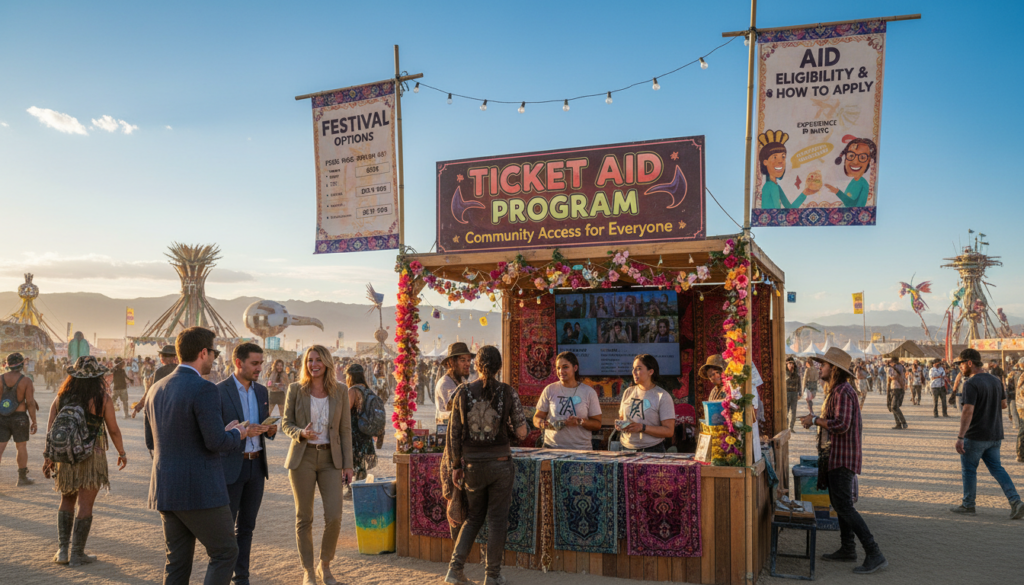
Ticket Aid basics and purpose
The ticket aid program helps people for whom a regular ticket would be a real barrier. It awards reduced-price entry through an application process rather than the general sale.
Ticket aid is not guaranteed entry; it is an aid program that aims for fair access and needs planning and documentation in many cases.
Resilience program tickets
The resilience program offers another route for participants who need support after emergencies or hardship. It complements other access efforts and keeps the city diverse.
Renaissance access and the scaled model
Renaissance access works with the pay-what-you-can approach. Higher-tier purchases act as a community gift that funds these programs without turning entry into a luxury experience.
- Track official announcements for application dates and rules.
- Prepare documentation if asked and plan for non-ticket costs.
- Consider higher tiers as one practical way to expand access.
Real-world total cost: what people actually spend to attend
Most people find that logistics and camp costs drive their final budget far more than the face price of entry. Think of the ticket as the starting line, not the finish.
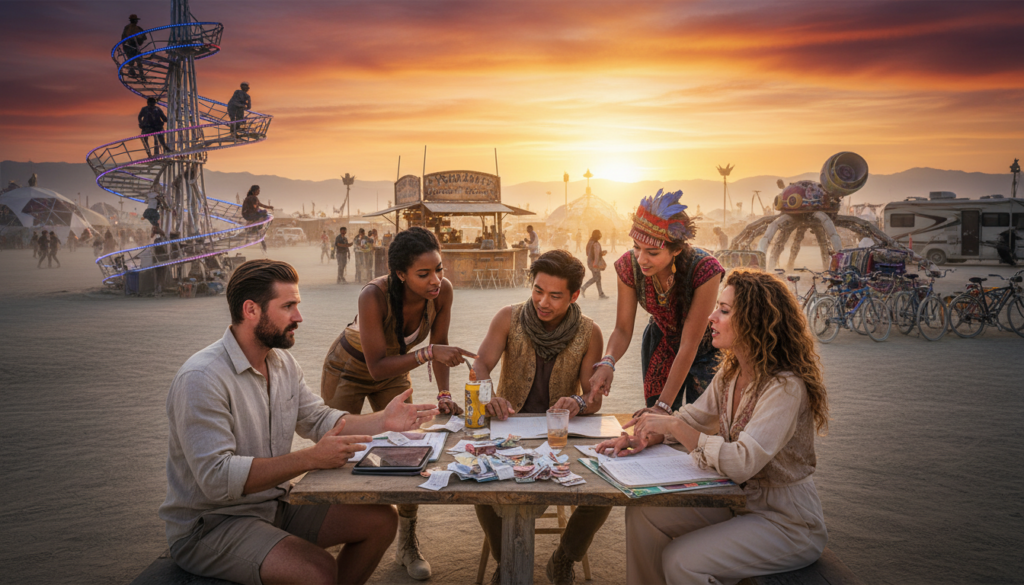
Example budget breakdown: tickets, parking pass, and camp dues
A practical example from Kumta (Agave Lounge): a couple budgets about $8,000 for a week-plus. That includes roughly $1,500 for two tickets and a parking pass and about $500 in camp dues per person.
Transportation and shelter costs, including RV ranges
RVs change the price picture fast. Small rentals or older rigs lean toward $4,000; larger, newer units can reach $9,000. Timing and availability shift those numbers year by year.
Supplies, food, water, and outfits for radical self-expression
Plan about $1,500 for food, water, and basic supplies for two. Creative outfits tied to the event theme can add another $1,500. Many people view outfits as an investment in the experience and theme-driven presence.
How camp infrastructure and fundraising can drive costs up
Large camps may spend tens of thousands on domes, sound, generators, showers, trucks, and storage. That scale can approach six-figure totals and is funded by dues and fundraisers.
Simple budgeting way: pick your shelter path, add travel, then include supplies, camp dues, and a 10–20% buffer for surprises. This gives a clearer picture than focusing on the ticket alone.
| Item | Typical cost (couple) | Notes |
|---|---|---|
| Tickets + parking | $1,500 | Starting line for entry |
| Camp dues | $1,000 | $500 per person example |
| RVs / shelter | $4,000–$9,000 | Varies by size and time |
| Food, water, supplies | $1,500 | Practical essentials for two |
How to choose the right ticket price for your budget and values
Pick a ticket level that fits your budget and your values. That first choice sets expectations and shapes every later decision about travel, shelter, and supplies.
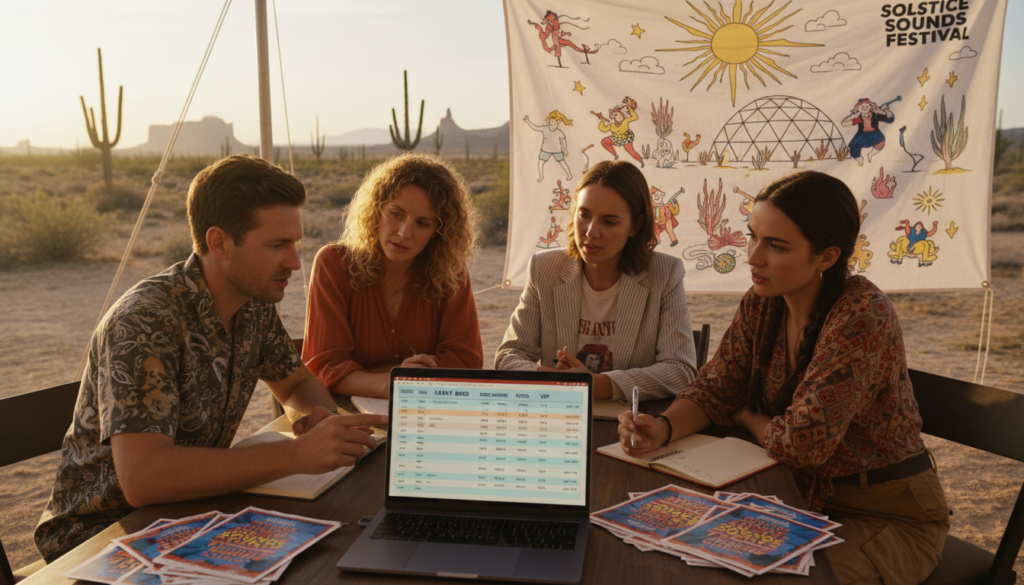
Deciding between full cost and a higher tier
If full cost is comfortable, it covers core funding for art and operations. Choosing a higher option acts as a community gift that expands access for other people.
If money is tight, the lower valid ticket still grants full participation. Both options let you join Black Rock and contribute in meaningful ways.
Budgeting and timing tips that keep the trip manageable
Decide an all-in maximum first. Then reverse budget across ticket, travel, shelter, and supplies so each category fits the total.
- Buy the ticket you can afford during your eligible sale period, then lock travel only after entry is confirmed.
- Share rides, choose simpler shelter, borrow gear, and pool food costs with campmates to save money without reducing participation.
- Revisit your plan as time passes; availability and prices for rentals and transport can shift.
| Choice | Practical effect | Community impact |
|---|---|---|
| Lower price | Preserves personal budget | Allows participation without extra funding |
| Full cost | Covers standard operations and art | Supports city stability |
| Higher tier | Costs more up front | Acts as a gift that funds Ticket Aid and inclusion |
For extra planning tips and cost-saving tactics, see this short guide on saving while planning. Small choices now can keep your trip affordable and meaningful.
Conclusion
Conclusion: Understanding scaled pricing and total trip costs gives you confidence when planning for Black Rock and the wider burning man event.
Practical steps: follow official ticketing channels, watch for noon sale starts, and track ticket sale announcements so you can act quickly.
Remember that fees support infrastructure and art through the Burning Man Project. Budget beyond the ticket — shelter, water, transport, and camp dues matter for safety and fun.
External issues, like geopolitical conflict and supply-chain conflict, can shift prices and timing, so stay flexible. Pick the tier you can afford, plan early, and arrive ready to contribute your part to Rock City.
FAQ
How much are tickets to Burning Man for the next event?
Quick price snapshot using the current scaled ticket model
What “pay what you can” means for participants planning ahead
What does the 5 ticket tier cover and who is it designed for?
What does the 5 ticket tier mean by “covers operational costs”?
How does the 5 ticket tier support art and Black Rock City operations?
How does the
How much are tickets to Burning Man for the next event?
Prices follow a scaled model. Typical tiers run from an entry-level option up to premium contributions that support operations and access programs. Exact figures and sale dates post on the official Burning Man Project site before each event.Quick price snapshot using the current scaled ticket modelThe usual snapshot shows several tiers: an entry tier, mid-level options, and higher contribution tiers. The model balances affordability with community funding. Check the Burning Man ticketing page for the current year’s breakdown and sale windows.What “pay what you can” means for participants planning ahead“Pay what you can” signals tiered pricing and support options. It lets attendees choose a level that matches budget and values, while higher tiers subsidize Ticket Aid and Resilience programs to widen participation.What does the 5 ticket tier cover and who is it designed for?The 5 tier is aimed at attendees seeking a standard entry price. It covers basic event access and a share of city operations, offering a straightforward option for many participants.What does the 5 ticket tier mean by “covers operational costs”?That tier offsets more of the fixed costs of running Black Rock City — infrastructure, sanitation, safety, and staff. Choosing it helps keep essential systems running smoothly during the event.How does the 5 ticket tier support art and Black Rock City operations?The 5 option contributes a larger share toward Honoraria grants, large-scale art installations, and the logistics needed to host them. Funds aid permitting, transport, and site services that let artists build safely.How does the
FAQ
How much are tickets to Burning Man for the next event?
Prices follow a scaled model. Typical tiers run from an entry-level option up to premium contributions that support operations and access programs. Exact figures and sale dates post on the official Burning Man Project site before each event.
Quick price snapshot using the current scaled ticket model
The usual snapshot shows several tiers: an entry tier, mid-level options, and higher contribution tiers. The model balances affordability with community funding. Check the Burning Man ticketing page for the current year’s breakdown and sale windows.
What “pay what you can” means for participants planning ahead
“Pay what you can” signals tiered pricing and support options. It lets attendees choose a level that matches budget and values, while higher tiers subsidize Ticket Aid and Resilience programs to widen participation.
What does the 5 ticket tier cover and who is it designed for?
The 5 tier is aimed at attendees seeking a standard entry price. It covers basic event access and a share of city operations, offering a straightforward option for many participants.
What does the 5 ticket tier mean by “covers operational costs”?
That tier offsets more of the fixed costs of running Black Rock City — infrastructure, sanitation, safety, and staff. Choosing it helps keep essential systems running smoothly during the event.
How does the 5 ticket tier support art and Black Rock City operations?
The 5 option contributes a larger share toward Honoraria grants, large-scale art installations, and the logistics needed to host them. Funds aid permitting, transport, and site services that let artists build safely.
How does the
FAQ
How much are tickets to Burning Man for the next event?
Prices follow a scaled model. Typical tiers run from an entry-level option up to premium contributions that support operations and access programs. Exact figures and sale dates post on the official Burning Man Project site before each event.
Quick price snapshot using the current scaled ticket model
The usual snapshot shows several tiers: an entry tier, mid-level options, and higher contribution tiers. The model balances affordability with community funding. Check the Burning Man ticketing page for the current year’s breakdown and sale windows.
What “pay what you can” means for participants planning ahead
“Pay what you can” signals tiered pricing and support options. It lets attendees choose a level that matches budget and values, while higher tiers subsidize Ticket Aid and Resilience programs to widen participation.
What does the $675 ticket tier cover and who is it designed for?
The $675 tier is aimed at attendees seeking a standard entry price. It covers basic event access and a share of city operations, offering a straightforward option for many participants.
What does the $775 ticket tier mean by “covers operational costs”?
That tier offsets more of the fixed costs of running Black Rock City — infrastructure, sanitation, safety, and staff. Choosing it helps keep essential systems running smoothly during the event.
How does the $975 ticket tier support art and Black Rock City operations?
The $975 option contributes a larger share toward Honoraria grants, large-scale art installations, and the logistics needed to host them. Funds aid permitting, transport, and site services that let artists build safely.
How does the $1,500 ticket tier help Ticket Aid and Resilience access?
Higher-priced tiers like $1,500 are structured to underwrite programs that lower financial barriers. Revenue supports Ticket Aid, Resilience access, and other inclusion efforts so more people can attend.
What role does the $3,000 ticket tier play in funding broader participation?
The top-tier contribution multiplies the event’s capacity to fund community programs, expand art funding, and stabilize operations. It’s a deliberate choice by some attendees to enable broader access.
What am I paying for at Black Rock City beyond entry?
Ticket revenue supports roads, toilets, medical services, emergency response, and ranger teams. It also funds permits, site prep, and the logistical backbone that keeps the city functioning for tens of thousands.
How do tickets support Honoraria art grants and the Burning Man Project mission?
Part of the budget goes to art honoraria and grants that pay artists and builders. The Burning Man Project uses funds for cultural programming, community initiatives, and stewardship of event values year-round.
What does “communal effort” and participation funding mean?
The model expects everyone to contribute time, skills, or resources. Ticket revenue plus volunteer labor and camp contributions together create the shared environment, from theme camps to public art.
When do ticket sales typically happen and what windows should I watch?
Sales often include a main sale, low-income or Ticket Aid rounds, and last-minute releases. The main public sale frequently opens around midday Pacific time; exact dates post each year on official channels.
Why do sales change year to year and what should I do when dates shift?
Dates shift due to operational planning, permitting, and calendar alignment. Subscribe to official announcements, complete your Burner Profile early, and set reminders for known sale windows.
How do I create a Burner Profile and complete registration?
Visit the Burning Man account portal, register with a valid email, and fill in required personal details. Verify contact methods, add emergency info, and link payment options ahead of sale periods.
How does access work for different sales and groups?
Access depends on sales type: general public, vehicle passes, art crew, and camp-linked allocations vary. Some groups get pre-allocated allotments, while others rely on the public sale or secondary channels.
What should I prepare before the sale period starts?
Have a complete Burner Profile, saved payment method, and a plan for which tier you’ll choose. Coordinate with your camp, confirm vehicle and parking needs, and be ready at the announced start time.
What is the Ticket Aid Program and who does it help?
Ticket Aid offers reduced-price or sponsored admission to people with limited means. It targets community members who would otherwise be unable to attend, promoting equity and participation.
What are Resilience program tickets and why do they exist?
Resilience tickets support people affected by crisis or displacement and aim to keep communities connected. They prioritize folks facing hardship to maintain inclusion during geopolitical conflict or other disruptions.
What is Renaissance access and “pay what you can” inclusion goals?
Renaissance-style access focuses on restoring participation after setbacks, offering flexible pricing or sponsored spots. The goal is to welcome diverse attendees through tiered support and targeted aid.
What does a real-world total cost look like for attendees?
Beyond admission, expect parking or vehicle passes, camp dues, transport, shelter, food, water, and gear. Many attendees budget for shared camp infrastructure and art contributions as well.
Can you give an example budget breakdown?
A simple example: standard ticket, a vehicle pass, campsite dues, shared power or shade rentals, and meals. Costs vary widely: solo minimal setups run lower, while RVs and private camps raise totals significantly.
What should I plan for transportation and shelter costs, including RVs?
Plane tickets, gas, and long-haul drives add up. RV rentals can range broadly depending on size and duration. Book early, compare rental insurers, and factor in fuel and campsite parking fees.
How much do supplies, food, water, and outfits usually cost?
Stocking adequate water, shade, first-aid, and food for the playa can be a few hundred dollars per person. Costumes and art supplies vary by taste; some attendees spend modestly, others invest heavily in expression.
How can camp infrastructure and fundraising affect total costs?
Theme camps often pool resources for shade structures, generators, kitchens, and art. Fundraising and shared budgeting can lower per-person costs but may also require contributions for larger builds.
When should I buy at full cost versus choosing a higher tier to help others attend?
Choose the tier that fits your budget and values. Buying higher helps access programs and art funding. If finances allow, a higher contribution supports inclusion; otherwise, pick the tier you can sustain.
What budgeting tips keep the trip manageable without reducing participation?
Share costs with campmates, prioritize essentials, borrow or barter gear, and use community resources. Plan meals, buy in bulk, and allocate funds for unexpected needs to stay comfortable and engaged.
,500 ticket tier help Ticket Aid and Resilience access?
Higher-priced tiers like
FAQ
How much are tickets to Burning Man for the next event?
Prices follow a scaled model. Typical tiers run from an entry-level option up to premium contributions that support operations and access programs. Exact figures and sale dates post on the official Burning Man Project site before each event.
Quick price snapshot using the current scaled ticket model
The usual snapshot shows several tiers: an entry tier, mid-level options, and higher contribution tiers. The model balances affordability with community funding. Check the Burning Man ticketing page for the current year’s breakdown and sale windows.
What “pay what you can” means for participants planning ahead
“Pay what you can” signals tiered pricing and support options. It lets attendees choose a level that matches budget and values, while higher tiers subsidize Ticket Aid and Resilience programs to widen participation.
What does the $675 ticket tier cover and who is it designed for?
The $675 tier is aimed at attendees seeking a standard entry price. It covers basic event access and a share of city operations, offering a straightforward option for many participants.
What does the $775 ticket tier mean by “covers operational costs”?
That tier offsets more of the fixed costs of running Black Rock City — infrastructure, sanitation, safety, and staff. Choosing it helps keep essential systems running smoothly during the event.
How does the $975 ticket tier support art and Black Rock City operations?
The $975 option contributes a larger share toward Honoraria grants, large-scale art installations, and the logistics needed to host them. Funds aid permitting, transport, and site services that let artists build safely.
How does the $1,500 ticket tier help Ticket Aid and Resilience access?
Higher-priced tiers like $1,500 are structured to underwrite programs that lower financial barriers. Revenue supports Ticket Aid, Resilience access, and other inclusion efforts so more people can attend.
What role does the $3,000 ticket tier play in funding broader participation?
The top-tier contribution multiplies the event’s capacity to fund community programs, expand art funding, and stabilize operations. It’s a deliberate choice by some attendees to enable broader access.
What am I paying for at Black Rock City beyond entry?
Ticket revenue supports roads, toilets, medical services, emergency response, and ranger teams. It also funds permits, site prep, and the logistical backbone that keeps the city functioning for tens of thousands.
How do tickets support Honoraria art grants and the Burning Man Project mission?
Part of the budget goes to art honoraria and grants that pay artists and builders. The Burning Man Project uses funds for cultural programming, community initiatives, and stewardship of event values year-round.
What does “communal effort” and participation funding mean?
The model expects everyone to contribute time, skills, or resources. Ticket revenue plus volunteer labor and camp contributions together create the shared environment, from theme camps to public art.
When do ticket sales typically happen and what windows should I watch?
Sales often include a main sale, low-income or Ticket Aid rounds, and last-minute releases. The main public sale frequently opens around midday Pacific time; exact dates post each year on official channels.
Why do sales change year to year and what should I do when dates shift?
Dates shift due to operational planning, permitting, and calendar alignment. Subscribe to official announcements, complete your Burner Profile early, and set reminders for known sale windows.
How do I create a Burner Profile and complete registration?
Visit the Burning Man account portal, register with a valid email, and fill in required personal details. Verify contact methods, add emergency info, and link payment options ahead of sale periods.
How does access work for different sales and groups?
Access depends on sales type: general public, vehicle passes, art crew, and camp-linked allocations vary. Some groups get pre-allocated allotments, while others rely on the public sale or secondary channels.
What should I prepare before the sale period starts?
Have a complete Burner Profile, saved payment method, and a plan for which tier you’ll choose. Coordinate with your camp, confirm vehicle and parking needs, and be ready at the announced start time.
What is the Ticket Aid Program and who does it help?
Ticket Aid offers reduced-price or sponsored admission to people with limited means. It targets community members who would otherwise be unable to attend, promoting equity and participation.
What are Resilience program tickets and why do they exist?
Resilience tickets support people affected by crisis or displacement and aim to keep communities connected. They prioritize folks facing hardship to maintain inclusion during geopolitical conflict or other disruptions.
What is Renaissance access and “pay what you can” inclusion goals?
Renaissance-style access focuses on restoring participation after setbacks, offering flexible pricing or sponsored spots. The goal is to welcome diverse attendees through tiered support and targeted aid.
What does a real-world total cost look like for attendees?
Beyond admission, expect parking or vehicle passes, camp dues, transport, shelter, food, water, and gear. Many attendees budget for shared camp infrastructure and art contributions as well.
Can you give an example budget breakdown?
A simple example: standard ticket, a vehicle pass, campsite dues, shared power or shade rentals, and meals. Costs vary widely: solo minimal setups run lower, while RVs and private camps raise totals significantly.
What should I plan for transportation and shelter costs, including RVs?
Plane tickets, gas, and long-haul drives add up. RV rentals can range broadly depending on size and duration. Book early, compare rental insurers, and factor in fuel and campsite parking fees.
How much do supplies, food, water, and outfits usually cost?
Stocking adequate water, shade, first-aid, and food for the playa can be a few hundred dollars per person. Costumes and art supplies vary by taste; some attendees spend modestly, others invest heavily in expression.
How can camp infrastructure and fundraising affect total costs?
Theme camps often pool resources for shade structures, generators, kitchens, and art. Fundraising and shared budgeting can lower per-person costs but may also require contributions for larger builds.
When should I buy at full cost versus choosing a higher tier to help others attend?
Choose the tier that fits your budget and values. Buying higher helps access programs and art funding. If finances allow, a higher contribution supports inclusion; otherwise, pick the tier you can sustain.
What budgeting tips keep the trip manageable without reducing participation?
Share costs with campmates, prioritize essentials, borrow or barter gear, and use community resources. Plan meals, buy in bulk, and allocate funds for unexpected needs to stay comfortable and engaged.
,500 are structured to underwrite programs that lower financial barriers. Revenue supports Ticket Aid, Resilience access, and other inclusion efforts so more people can attend.
What role does the ,000 ticket tier play in funding broader participation?
The top-tier contribution multiplies the event’s capacity to fund community programs, expand art funding, and stabilize operations. It’s a deliberate choice by some attendees to enable broader access.
What am I paying for at Black Rock City beyond entry?
Ticket revenue supports roads, toilets, medical services, emergency response, and ranger teams. It also funds permits, site prep, and the logistical backbone that keeps the city functioning for tens of thousands.
How do tickets support Honoraria art grants and the Burning Man Project mission?
Part of the budget goes to art honoraria and grants that pay artists and builders. The Burning Man Project uses funds for cultural programming, community initiatives, and stewardship of event values year-round.
What does “communal effort” and participation funding mean?
The model expects everyone to contribute time, skills, or resources. Ticket revenue plus volunteer labor and camp contributions together create the shared environment, from theme camps to public art.
When do ticket sales typically happen and what windows should I watch?
Sales often include a main sale, low-income or Ticket Aid rounds, and last-minute releases. The main public sale frequently opens around midday Pacific time; exact dates post each year on official channels.
Why do sales change year to year and what should I do when dates shift?
Dates shift due to operational planning, permitting, and calendar alignment. Subscribe to official announcements, complete your Burner Profile early, and set reminders for known sale windows.
How do I create a Burner Profile and complete registration?
Visit the Burning Man account portal, register with a valid email, and fill in required personal details. Verify contact methods, add emergency info, and link payment options ahead of sale periods.
How does access work for different sales and groups?
Access depends on sales type: general public, vehicle passes, art crew, and camp-linked allocations vary. Some groups get pre-allocated allotments, while others rely on the public sale or secondary channels.
What should I prepare before the sale period starts?
Have a complete Burner Profile, saved payment method, and a plan for which tier you’ll choose. Coordinate with your camp, confirm vehicle and parking needs, and be ready at the announced start time.
What is the Ticket Aid Program and who does it help?
Ticket Aid offers reduced-price or sponsored admission to people with limited means. It targets community members who would otherwise be unable to attend, promoting equity and participation.
What are Resilience program tickets and why do they exist?
Resilience tickets support people affected by crisis or displacement and aim to keep communities connected. They prioritize folks facing hardship to maintain inclusion during geopolitical conflict or other disruptions.
What is Renaissance access and “pay what you can” inclusion goals?
Renaissance-style access focuses on restoring participation after setbacks, offering flexible pricing or sponsored spots. The goal is to welcome diverse attendees through tiered support and targeted aid.
What does a real-world total cost look like for attendees?
Beyond admission, expect parking or vehicle passes, camp dues, transport, shelter, food, water, and gear. Many attendees budget for shared camp infrastructure and art contributions as well.
Can you give an example budget breakdown?
A simple example: standard ticket, a vehicle pass, campsite dues, shared power or shade rentals, and meals. Costs vary widely: solo minimal setups run lower, while RVs and private camps raise totals significantly.
What should I plan for transportation and shelter costs, including RVs?
Plane tickets, gas, and long-haul drives add up. RV rentals can range broadly depending on size and duration. Book early, compare rental insurers, and factor in fuel and campsite parking fees.
How much do supplies, food, water, and outfits usually cost?
Stocking adequate water, shade, first-aid, and food for the playa can be a few hundred dollars per person. Costumes and art supplies vary by taste; some attendees spend modestly, others invest heavily in expression.
How can camp infrastructure and fundraising affect total costs?
Theme camps often pool resources for shade structures, generators, kitchens, and art. Fundraising and shared budgeting can lower per-person costs but may also require contributions for larger builds.
When should I buy at full cost versus choosing a higher tier to help others attend?
Choose the tier that fits your budget and values. Buying higher helps access programs and art funding. If finances allow, a higher contribution supports inclusion; otherwise, pick the tier you can sustain.
What budgeting tips keep the trip manageable without reducing participation?
Share costs with campmates, prioritize essentials, borrow or barter gear, and use community resources. Plan meals, buy in bulk, and allocate funds for unexpected needs to stay comfortable and engaged.
,500 ticket tier help Ticket Aid and Resilience access?Higher-priced tiers like
FAQ
How much are tickets to Burning Man for the next event?
Prices follow a scaled model. Typical tiers run from an entry-level option up to premium contributions that support operations and access programs. Exact figures and sale dates post on the official Burning Man Project site before each event.
Quick price snapshot using the current scaled ticket model
The usual snapshot shows several tiers: an entry tier, mid-level options, and higher contribution tiers. The model balances affordability with community funding. Check the Burning Man ticketing page for the current year’s breakdown and sale windows.
What “pay what you can” means for participants planning ahead
“Pay what you can” signals tiered pricing and support options. It lets attendees choose a level that matches budget and values, while higher tiers subsidize Ticket Aid and Resilience programs to widen participation.
What does the 5 ticket tier cover and who is it designed for?
The 5 tier is aimed at attendees seeking a standard entry price. It covers basic event access and a share of city operations, offering a straightforward option for many participants.
What does the 5 ticket tier mean by “covers operational costs”?
That tier offsets more of the fixed costs of running Black Rock City — infrastructure, sanitation, safety, and staff. Choosing it helps keep essential systems running smoothly during the event.
How does the 5 ticket tier support art and Black Rock City operations?
The 5 option contributes a larger share toward Honoraria grants, large-scale art installations, and the logistics needed to host them. Funds aid permitting, transport, and site services that let artists build safely.
How does the
FAQ
How much are tickets to Burning Man for the next event?
Prices follow a scaled model. Typical tiers run from an entry-level option up to premium contributions that support operations and access programs. Exact figures and sale dates post on the official Burning Man Project site before each event.
Quick price snapshot using the current scaled ticket model
The usual snapshot shows several tiers: an entry tier, mid-level options, and higher contribution tiers. The model balances affordability with community funding. Check the Burning Man ticketing page for the current year’s breakdown and sale windows.
What “pay what you can” means for participants planning ahead
“Pay what you can” signals tiered pricing and support options. It lets attendees choose a level that matches budget and values, while higher tiers subsidize Ticket Aid and Resilience programs to widen participation.
What does the $675 ticket tier cover and who is it designed for?
The $675 tier is aimed at attendees seeking a standard entry price. It covers basic event access and a share of city operations, offering a straightforward option for many participants.
What does the $775 ticket tier mean by “covers operational costs”?
That tier offsets more of the fixed costs of running Black Rock City — infrastructure, sanitation, safety, and staff. Choosing it helps keep essential systems running smoothly during the event.
How does the $975 ticket tier support art and Black Rock City operations?
The $975 option contributes a larger share toward Honoraria grants, large-scale art installations, and the logistics needed to host them. Funds aid permitting, transport, and site services that let artists build safely.
How does the $1,500 ticket tier help Ticket Aid and Resilience access?
Higher-priced tiers like $1,500 are structured to underwrite programs that lower financial barriers. Revenue supports Ticket Aid, Resilience access, and other inclusion efforts so more people can attend.
What role does the $3,000 ticket tier play in funding broader participation?
The top-tier contribution multiplies the event’s capacity to fund community programs, expand art funding, and stabilize operations. It’s a deliberate choice by some attendees to enable broader access.
What am I paying for at Black Rock City beyond entry?
Ticket revenue supports roads, toilets, medical services, emergency response, and ranger teams. It also funds permits, site prep, and the logistical backbone that keeps the city functioning for tens of thousands.
How do tickets support Honoraria art grants and the Burning Man Project mission?
Part of the budget goes to art honoraria and grants that pay artists and builders. The Burning Man Project uses funds for cultural programming, community initiatives, and stewardship of event values year-round.
What does “communal effort” and participation funding mean?
The model expects everyone to contribute time, skills, or resources. Ticket revenue plus volunteer labor and camp contributions together create the shared environment, from theme camps to public art.
When do ticket sales typically happen and what windows should I watch?
Sales often include a main sale, low-income or Ticket Aid rounds, and last-minute releases. The main public sale frequently opens around midday Pacific time; exact dates post each year on official channels.
Why do sales change year to year and what should I do when dates shift?
Dates shift due to operational planning, permitting, and calendar alignment. Subscribe to official announcements, complete your Burner Profile early, and set reminders for known sale windows.
How do I create a Burner Profile and complete registration?
Visit the Burning Man account portal, register with a valid email, and fill in required personal details. Verify contact methods, add emergency info, and link payment options ahead of sale periods.
How does access work for different sales and groups?
Access depends on sales type: general public, vehicle passes, art crew, and camp-linked allocations vary. Some groups get pre-allocated allotments, while others rely on the public sale or secondary channels.
What should I prepare before the sale period starts?
Have a complete Burner Profile, saved payment method, and a plan for which tier you’ll choose. Coordinate with your camp, confirm vehicle and parking needs, and be ready at the announced start time.
What is the Ticket Aid Program and who does it help?
Ticket Aid offers reduced-price or sponsored admission to people with limited means. It targets community members who would otherwise be unable to attend, promoting equity and participation.
What are Resilience program tickets and why do they exist?
Resilience tickets support people affected by crisis or displacement and aim to keep communities connected. They prioritize folks facing hardship to maintain inclusion during geopolitical conflict or other disruptions.
What is Renaissance access and “pay what you can” inclusion goals?
Renaissance-style access focuses on restoring participation after setbacks, offering flexible pricing or sponsored spots. The goal is to welcome diverse attendees through tiered support and targeted aid.
What does a real-world total cost look like for attendees?
Beyond admission, expect parking or vehicle passes, camp dues, transport, shelter, food, water, and gear. Many attendees budget for shared camp infrastructure and art contributions as well.
Can you give an example budget breakdown?
A simple example: standard ticket, a vehicle pass, campsite dues, shared power or shade rentals, and meals. Costs vary widely: solo minimal setups run lower, while RVs and private camps raise totals significantly.
What should I plan for transportation and shelter costs, including RVs?
Plane tickets, gas, and long-haul drives add up. RV rentals can range broadly depending on size and duration. Book early, compare rental insurers, and factor in fuel and campsite parking fees.
How much do supplies, food, water, and outfits usually cost?
Stocking adequate water, shade, first-aid, and food for the playa can be a few hundred dollars per person. Costumes and art supplies vary by taste; some attendees spend modestly, others invest heavily in expression.
How can camp infrastructure and fundraising affect total costs?
Theme camps often pool resources for shade structures, generators, kitchens, and art. Fundraising and shared budgeting can lower per-person costs but may also require contributions for larger builds.
When should I buy at full cost versus choosing a higher tier to help others attend?
Choose the tier that fits your budget and values. Buying higher helps access programs and art funding. If finances allow, a higher contribution supports inclusion; otherwise, pick the tier you can sustain.
What budgeting tips keep the trip manageable without reducing participation?
Share costs with campmates, prioritize essentials, borrow or barter gear, and use community resources. Plan meals, buy in bulk, and allocate funds for unexpected needs to stay comfortable and engaged.
,500 ticket tier help Ticket Aid and Resilience access?
Higher-priced tiers like
FAQ
How much are tickets to Burning Man for the next event?
Prices follow a scaled model. Typical tiers run from an entry-level option up to premium contributions that support operations and access programs. Exact figures and sale dates post on the official Burning Man Project site before each event.
Quick price snapshot using the current scaled ticket model
The usual snapshot shows several tiers: an entry tier, mid-level options, and higher contribution tiers. The model balances affordability with community funding. Check the Burning Man ticketing page for the current year’s breakdown and sale windows.
What “pay what you can” means for participants planning ahead
“Pay what you can” signals tiered pricing and support options. It lets attendees choose a level that matches budget and values, while higher tiers subsidize Ticket Aid and Resilience programs to widen participation.
What does the $675 ticket tier cover and who is it designed for?
The $675 tier is aimed at attendees seeking a standard entry price. It covers basic event access and a share of city operations, offering a straightforward option for many participants.
What does the $775 ticket tier mean by “covers operational costs”?
That tier offsets more of the fixed costs of running Black Rock City — infrastructure, sanitation, safety, and staff. Choosing it helps keep essential systems running smoothly during the event.
How does the $975 ticket tier support art and Black Rock City operations?
The $975 option contributes a larger share toward Honoraria grants, large-scale art installations, and the logistics needed to host them. Funds aid permitting, transport, and site services that let artists build safely.
How does the $1,500 ticket tier help Ticket Aid and Resilience access?
Higher-priced tiers like $1,500 are structured to underwrite programs that lower financial barriers. Revenue supports Ticket Aid, Resilience access, and other inclusion efforts so more people can attend.
What role does the $3,000 ticket tier play in funding broader participation?
The top-tier contribution multiplies the event’s capacity to fund community programs, expand art funding, and stabilize operations. It’s a deliberate choice by some attendees to enable broader access.
What am I paying for at Black Rock City beyond entry?
Ticket revenue supports roads, toilets, medical services, emergency response, and ranger teams. It also funds permits, site prep, and the logistical backbone that keeps the city functioning for tens of thousands.
How do tickets support Honoraria art grants and the Burning Man Project mission?
Part of the budget goes to art honoraria and grants that pay artists and builders. The Burning Man Project uses funds for cultural programming, community initiatives, and stewardship of event values year-round.
What does “communal effort” and participation funding mean?
The model expects everyone to contribute time, skills, or resources. Ticket revenue plus volunteer labor and camp contributions together create the shared environment, from theme camps to public art.
When do ticket sales typically happen and what windows should I watch?
Sales often include a main sale, low-income or Ticket Aid rounds, and last-minute releases. The main public sale frequently opens around midday Pacific time; exact dates post each year on official channels.
Why do sales change year to year and what should I do when dates shift?
Dates shift due to operational planning, permitting, and calendar alignment. Subscribe to official announcements, complete your Burner Profile early, and set reminders for known sale windows.
How do I create a Burner Profile and complete registration?
Visit the Burning Man account portal, register with a valid email, and fill in required personal details. Verify contact methods, add emergency info, and link payment options ahead of sale periods.
How does access work for different sales and groups?
Access depends on sales type: general public, vehicle passes, art crew, and camp-linked allocations vary. Some groups get pre-allocated allotments, while others rely on the public sale or secondary channels.
What should I prepare before the sale period starts?
Have a complete Burner Profile, saved payment method, and a plan for which tier you’ll choose. Coordinate with your camp, confirm vehicle and parking needs, and be ready at the announced start time.
What is the Ticket Aid Program and who does it help?
Ticket Aid offers reduced-price or sponsored admission to people with limited means. It targets community members who would otherwise be unable to attend, promoting equity and participation.
What are Resilience program tickets and why do they exist?
Resilience tickets support people affected by crisis or displacement and aim to keep communities connected. They prioritize folks facing hardship to maintain inclusion during geopolitical conflict or other disruptions.
What is Renaissance access and “pay what you can” inclusion goals?
Renaissance-style access focuses on restoring participation after setbacks, offering flexible pricing or sponsored spots. The goal is to welcome diverse attendees through tiered support and targeted aid.
What does a real-world total cost look like for attendees?
Beyond admission, expect parking or vehicle passes, camp dues, transport, shelter, food, water, and gear. Many attendees budget for shared camp infrastructure and art contributions as well.
Can you give an example budget breakdown?
A simple example: standard ticket, a vehicle pass, campsite dues, shared power or shade rentals, and meals. Costs vary widely: solo minimal setups run lower, while RVs and private camps raise totals significantly.
What should I plan for transportation and shelter costs, including RVs?
Plane tickets, gas, and long-haul drives add up. RV rentals can range broadly depending on size and duration. Book early, compare rental insurers, and factor in fuel and campsite parking fees.
How much do supplies, food, water, and outfits usually cost?
Stocking adequate water, shade, first-aid, and food for the playa can be a few hundred dollars per person. Costumes and art supplies vary by taste; some attendees spend modestly, others invest heavily in expression.
How can camp infrastructure and fundraising affect total costs?
Theme camps often pool resources for shade structures, generators, kitchens, and art. Fundraising and shared budgeting can lower per-person costs but may also require contributions for larger builds.
When should I buy at full cost versus choosing a higher tier to help others attend?
Choose the tier that fits your budget and values. Buying higher helps access programs and art funding. If finances allow, a higher contribution supports inclusion; otherwise, pick the tier you can sustain.
What budgeting tips keep the trip manageable without reducing participation?
Share costs with campmates, prioritize essentials, borrow or barter gear, and use community resources. Plan meals, buy in bulk, and allocate funds for unexpected needs to stay comfortable and engaged.
,500 are structured to underwrite programs that lower financial barriers. Revenue supports Ticket Aid, Resilience access, and other inclusion efforts so more people can attend.
What role does the ,000 ticket tier play in funding broader participation?
The top-tier contribution multiplies the event’s capacity to fund community programs, expand art funding, and stabilize operations. It’s a deliberate choice by some attendees to enable broader access.
What am I paying for at Black Rock City beyond entry?
Ticket revenue supports roads, toilets, medical services, emergency response, and ranger teams. It also funds permits, site prep, and the logistical backbone that keeps the city functioning for tens of thousands.
How do tickets support Honoraria art grants and the Burning Man Project mission?
Part of the budget goes to art honoraria and grants that pay artists and builders. The Burning Man Project uses funds for cultural programming, community initiatives, and stewardship of event values year-round.
What does “communal effort” and participation funding mean?
The model expects everyone to contribute time, skills, or resources. Ticket revenue plus volunteer labor and camp contributions together create the shared environment, from theme camps to public art.
When do ticket sales typically happen and what windows should I watch?
Sales often include a main sale, low-income or Ticket Aid rounds, and last-minute releases. The main public sale frequently opens around midday Pacific time; exact dates post each year on official channels.
Why do sales change year to year and what should I do when dates shift?
Dates shift due to operational planning, permitting, and calendar alignment. Subscribe to official announcements, complete your Burner Profile early, and set reminders for known sale windows.
How do I create a Burner Profile and complete registration?
Visit the Burning Man account portal, register with a valid email, and fill in required personal details. Verify contact methods, add emergency info, and link payment options ahead of sale periods.
How does access work for different sales and groups?
Access depends on sales type: general public, vehicle passes, art crew, and camp-linked allocations vary. Some groups get pre-allocated allotments, while others rely on the public sale or secondary channels.
What should I prepare before the sale period starts?
Have a complete Burner Profile, saved payment method, and a plan for which tier you’ll choose. Coordinate with your camp, confirm vehicle and parking needs, and be ready at the announced start time.
What is the Ticket Aid Program and who does it help?
Ticket Aid offers reduced-price or sponsored admission to people with limited means. It targets community members who would otherwise be unable to attend, promoting equity and participation.
What are Resilience program tickets and why do they exist?
Resilience tickets support people affected by crisis or displacement and aim to keep communities connected. They prioritize folks facing hardship to maintain inclusion during geopolitical conflict or other disruptions.
What is Renaissance access and “pay what you can” inclusion goals?
Renaissance-style access focuses on restoring participation after setbacks, offering flexible pricing or sponsored spots. The goal is to welcome diverse attendees through tiered support and targeted aid.
What does a real-world total cost look like for attendees?
Beyond admission, expect parking or vehicle passes, camp dues, transport, shelter, food, water, and gear. Many attendees budget for shared camp infrastructure and art contributions as well.
Can you give an example budget breakdown?
A simple example: standard ticket, a vehicle pass, campsite dues, shared power or shade rentals, and meals. Costs vary widely: solo minimal setups run lower, while RVs and private camps raise totals significantly.
What should I plan for transportation and shelter costs, including RVs?
Plane tickets, gas, and long-haul drives add up. RV rentals can range broadly depending on size and duration. Book early, compare rental insurers, and factor in fuel and campsite parking fees.
How much do supplies, food, water, and outfits usually cost?
Stocking adequate water, shade, first-aid, and food for the playa can be a few hundred dollars per person. Costumes and art supplies vary by taste; some attendees spend modestly, others invest heavily in expression.
How can camp infrastructure and fundraising affect total costs?
Theme camps often pool resources for shade structures, generators, kitchens, and art. Fundraising and shared budgeting can lower per-person costs but may also require contributions for larger builds.
When should I buy at full cost versus choosing a higher tier to help others attend?
Choose the tier that fits your budget and values. Buying higher helps access programs and art funding. If finances allow, a higher contribution supports inclusion; otherwise, pick the tier you can sustain.
What budgeting tips keep the trip manageable without reducing participation?
Share costs with campmates, prioritize essentials, borrow or barter gear, and use community resources. Plan meals, buy in bulk, and allocate funds for unexpected needs to stay comfortable and engaged.
,500 are structured to underwrite programs that lower financial barriers. Revenue supports Ticket Aid, Resilience access, and other inclusion efforts so more people can attend.What role does the ,000 ticket tier play in funding broader participation?The top-tier contribution multiplies the event’s capacity to fund community programs, expand art funding, and stabilize operations. It’s a deliberate choice by some attendees to enable broader access.What am I paying for at Black Rock City beyond entry?Ticket revenue supports roads, toilets, medical services, emergency response, and ranger teams. It also funds permits, site prep, and the logistical backbone that keeps the city functioning for tens of thousands.How do tickets support Honoraria art grants and the Burning Man Project mission?Part of the budget goes to art honoraria and grants that pay artists and builders. The Burning Man Project uses funds for cultural programming, community initiatives, and stewardship of event values year-round.What does “communal effort” and participation funding mean?The model expects everyone to contribute time, skills, or resources. Ticket revenue plus volunteer labor and camp contributions together create the shared environment, from theme camps to public art.When do ticket sales typically happen and what windows should I watch?Sales often include a main sale, low-income or Ticket Aid rounds, and last-minute releases. The main public sale frequently opens around midday Pacific time; exact dates post each year on official channels.Why do sales change year to year and what should I do when dates shift?Dates shift due to operational planning, permitting, and calendar alignment. Subscribe to official announcements, complete your Burner Profile early, and set reminders for known sale windows.How do I create a Burner Profile and complete registration?Visit the Burning Man account portal, register with a valid email, and fill in required personal details. Verify contact methods, add emergency info, and link payment options ahead of sale periods.How does access work for different sales and groups?Access depends on sales type: general public, vehicle passes, art crew, and camp-linked allocations vary. Some groups get pre-allocated allotments, while others rely on the public sale or secondary channels.What should I prepare before the sale period starts?Have a complete Burner Profile, saved payment method, and a plan for which tier you’ll choose. Coordinate with your camp, confirm vehicle and parking needs, and be ready at the announced start time.What is the Ticket Aid Program and who does it help?Ticket Aid offers reduced-price or sponsored admission to people with limited means. It targets community members who would otherwise be unable to attend, promoting equity and participation.What are Resilience program tickets and why do they exist?Resilience tickets support people affected by crisis or displacement and aim to keep communities connected. They prioritize folks facing hardship to maintain inclusion during geopolitical conflict or other disruptions.What is Renaissance access and “pay what you can” inclusion goals?Renaissance-style access focuses on restoring participation after setbacks, offering flexible pricing or sponsored spots. The goal is to welcome diverse attendees through tiered support and targeted aid.What does a real-world total cost look like for attendees?Beyond admission, expect parking or vehicle passes, camp dues, transport, shelter, food, water, and gear. Many attendees budget for shared camp infrastructure and art contributions as well.Can you give an example budget breakdown?A simple example: standard ticket, a vehicle pass, campsite dues, shared power or shade rentals, and meals. Costs vary widely: solo minimal setups run lower, while RVs and private camps raise totals significantly.What should I plan for transportation and shelter costs, including RVs?Plane tickets, gas, and long-haul drives add up. RV rentals can range broadly depending on size and duration. Book early, compare rental insurers, and factor in fuel and campsite parking fees.How much do supplies, food, water, and outfits usually cost?Stocking adequate water, shade, first-aid, and food for the playa can be a few hundred dollars per person. Costumes and art supplies vary by taste; some attendees spend modestly, others invest heavily in expression.How can camp infrastructure and fundraising affect total costs?Theme camps often pool resources for shade structures, generators, kitchens, and art. Fundraising and shared budgeting can lower per-person costs but may also require contributions for larger builds.When should I buy at full cost versus choosing a higher tier to help others attend?Choose the tier that fits your budget and values. Buying higher helps access programs and art funding. If finances allow, a higher contribution supports inclusion; otherwise, pick the tier you can sustain.What budgeting tips keep the trip manageable without reducing participation?Share costs with campmates, prioritize essentials, borrow or barter gear, and use community resources. Plan meals, buy in bulk, and allocate funds for unexpected needs to stay comfortable and engaged.,500 ticket tier help Ticket Aid and Resilience access?Higher-priced tiers like How much are tickets to Burning Man for the next event?Prices follow a scaled model. Typical tiers run from an entry-level option up to premium contributions that support operations and access programs. Exact figures and sale dates post on the official Burning Man Project site before each event.Quick price snapshot using the current scaled ticket modelThe usual snapshot shows several tiers: an entry tier, mid-level options, and higher contribution tiers. The model balances affordability with community funding. Check the Burning Man ticketing page for the current year’s breakdown and sale windows.What “pay what you can” means for participants planning ahead“Pay what you can” signals tiered pricing and support options. It lets attendees choose a level that matches budget and values, while higher tiers subsidize Ticket Aid and Resilience programs to widen participation.What does the 5 ticket tier cover and who is it designed for?The 5 tier is aimed at attendees seeking a standard entry price. It covers basic event access and a share of city operations, offering a straightforward option for many participants.What does the 5 ticket tier mean by “covers operational costs”?That tier offsets more of the fixed costs of running Black Rock City — infrastructure, sanitation, safety, and staff. Choosing it helps keep essential systems running smoothly during the event.How does the 5 ticket tier support art and Black Rock City operations?The 5 option contributes a larger share toward Honoraria grants, large-scale art installations, and the logistics needed to host them. Funds aid permitting, transport, and site services that let artists build safely.How does the
FAQ
How much are tickets to Burning Man for the next event?
Prices follow a scaled model. Typical tiers run from an entry-level option up to premium contributions that support operations and access programs. Exact figures and sale dates post on the official Burning Man Project site before each event.
Quick price snapshot using the current scaled ticket model
The usual snapshot shows several tiers: an entry tier, mid-level options, and higher contribution tiers. The model balances affordability with community funding. Check the Burning Man ticketing page for the current year’s breakdown and sale windows.
What “pay what you can” means for participants planning ahead
“Pay what you can” signals tiered pricing and support options. It lets attendees choose a level that matches budget and values, while higher tiers subsidize Ticket Aid and Resilience programs to widen participation.
What does the 5 ticket tier cover and who is it designed for?
The 5 tier is aimed at attendees seeking a standard entry price. It covers basic event access and a share of city operations, offering a straightforward option for many participants.
What does the 5 ticket tier mean by “covers operational costs”?
That tier offsets more of the fixed costs of running Black Rock City — infrastructure, sanitation, safety, and staff. Choosing it helps keep essential systems running smoothly during the event.
How does the 5 ticket tier support art and Black Rock City operations?
The 5 option contributes a larger share toward Honoraria grants, large-scale art installations, and the logistics needed to host them. Funds aid permitting, transport, and site services that let artists build safely.
How does the
FAQ
How much are tickets to Burning Man for the next event?
Prices follow a scaled model. Typical tiers run from an entry-level option up to premium contributions that support operations and access programs. Exact figures and sale dates post on the official Burning Man Project site before each event.
Quick price snapshot using the current scaled ticket model
The usual snapshot shows several tiers: an entry tier, mid-level options, and higher contribution tiers. The model balances affordability with community funding. Check the Burning Man ticketing page for the current year’s breakdown and sale windows.
What “pay what you can” means for participants planning ahead
“Pay what you can” signals tiered pricing and support options. It lets attendees choose a level that matches budget and values, while higher tiers subsidize Ticket Aid and Resilience programs to widen participation.
What does the $675 ticket tier cover and who is it designed for?
The $675 tier is aimed at attendees seeking a standard entry price. It covers basic event access and a share of city operations, offering a straightforward option for many participants.
What does the $775 ticket tier mean by “covers operational costs”?
That tier offsets more of the fixed costs of running Black Rock City — infrastructure, sanitation, safety, and staff. Choosing it helps keep essential systems running smoothly during the event.
How does the $975 ticket tier support art and Black Rock City operations?
The $975 option contributes a larger share toward Honoraria grants, large-scale art installations, and the logistics needed to host them. Funds aid permitting, transport, and site services that let artists build safely.
How does the $1,500 ticket tier help Ticket Aid and Resilience access?
Higher-priced tiers like $1,500 are structured to underwrite programs that lower financial barriers. Revenue supports Ticket Aid, Resilience access, and other inclusion efforts so more people can attend.
What role does the $3,000 ticket tier play in funding broader participation?
The top-tier contribution multiplies the event’s capacity to fund community programs, expand art funding, and stabilize operations. It’s a deliberate choice by some attendees to enable broader access.
What am I paying for at Black Rock City beyond entry?
Ticket revenue supports roads, toilets, medical services, emergency response, and ranger teams. It also funds permits, site prep, and the logistical backbone that keeps the city functioning for tens of thousands.
How do tickets support Honoraria art grants and the Burning Man Project mission?
Part of the budget goes to art honoraria and grants that pay artists and builders. The Burning Man Project uses funds for cultural programming, community initiatives, and stewardship of event values year-round.
What does “communal effort” and participation funding mean?
The model expects everyone to contribute time, skills, or resources. Ticket revenue plus volunteer labor and camp contributions together create the shared environment, from theme camps to public art.
When do ticket sales typically happen and what windows should I watch?
Sales often include a main sale, low-income or Ticket Aid rounds, and last-minute releases. The main public sale frequently opens around midday Pacific time; exact dates post each year on official channels.
Why do sales change year to year and what should I do when dates shift?
Dates shift due to operational planning, permitting, and calendar alignment. Subscribe to official announcements, complete your Burner Profile early, and set reminders for known sale windows.
How do I create a Burner Profile and complete registration?
Visit the Burning Man account portal, register with a valid email, and fill in required personal details. Verify contact methods, add emergency info, and link payment options ahead of sale periods.
How does access work for different sales and groups?
Access depends on sales type: general public, vehicle passes, art crew, and camp-linked allocations vary. Some groups get pre-allocated allotments, while others rely on the public sale or secondary channels.
What should I prepare before the sale period starts?
Have a complete Burner Profile, saved payment method, and a plan for which tier you’ll choose. Coordinate with your camp, confirm vehicle and parking needs, and be ready at the announced start time.
What is the Ticket Aid Program and who does it help?
Ticket Aid offers reduced-price or sponsored admission to people with limited means. It targets community members who would otherwise be unable to attend, promoting equity and participation.
What are Resilience program tickets and why do they exist?
Resilience tickets support people affected by crisis or displacement and aim to keep communities connected. They prioritize folks facing hardship to maintain inclusion during geopolitical conflict or other disruptions.
What is Renaissance access and “pay what you can” inclusion goals?
Renaissance-style access focuses on restoring participation after setbacks, offering flexible pricing or sponsored spots. The goal is to welcome diverse attendees through tiered support and targeted aid.
What does a real-world total cost look like for attendees?
Beyond admission, expect parking or vehicle passes, camp dues, transport, shelter, food, water, and gear. Many attendees budget for shared camp infrastructure and art contributions as well.
Can you give an example budget breakdown?
A simple example: standard ticket, a vehicle pass, campsite dues, shared power or shade rentals, and meals. Costs vary widely: solo minimal setups run lower, while RVs and private camps raise totals significantly.
What should I plan for transportation and shelter costs, including RVs?
Plane tickets, gas, and long-haul drives add up. RV rentals can range broadly depending on size and duration. Book early, compare rental insurers, and factor in fuel and campsite parking fees.
How much do supplies, food, water, and outfits usually cost?
Stocking adequate water, shade, first-aid, and food for the playa can be a few hundred dollars per person. Costumes and art supplies vary by taste; some attendees spend modestly, others invest heavily in expression.
How can camp infrastructure and fundraising affect total costs?
Theme camps often pool resources for shade structures, generators, kitchens, and art. Fundraising and shared budgeting can lower per-person costs but may also require contributions for larger builds.
When should I buy at full cost versus choosing a higher tier to help others attend?
Choose the tier that fits your budget and values. Buying higher helps access programs and art funding. If finances allow, a higher contribution supports inclusion; otherwise, pick the tier you can sustain.
What budgeting tips keep the trip manageable without reducing participation?
Share costs with campmates, prioritize essentials, borrow or barter gear, and use community resources. Plan meals, buy in bulk, and allocate funds for unexpected needs to stay comfortable and engaged.
,500 ticket tier help Ticket Aid and Resilience access?
Higher-priced tiers like
FAQ
How much are tickets to Burning Man for the next event?
Prices follow a scaled model. Typical tiers run from an entry-level option up to premium contributions that support operations and access programs. Exact figures and sale dates post on the official Burning Man Project site before each event.
Quick price snapshot using the current scaled ticket model
The usual snapshot shows several tiers: an entry tier, mid-level options, and higher contribution tiers. The model balances affordability with community funding. Check the Burning Man ticketing page for the current year’s breakdown and sale windows.
What “pay what you can” means for participants planning ahead
“Pay what you can” signals tiered pricing and support options. It lets attendees choose a level that matches budget and values, while higher tiers subsidize Ticket Aid and Resilience programs to widen participation.
What does the $675 ticket tier cover and who is it designed for?
The $675 tier is aimed at attendees seeking a standard entry price. It covers basic event access and a share of city operations, offering a straightforward option for many participants.
What does the $775 ticket tier mean by “covers operational costs”?
That tier offsets more of the fixed costs of running Black Rock City — infrastructure, sanitation, safety, and staff. Choosing it helps keep essential systems running smoothly during the event.
How does the $975 ticket tier support art and Black Rock City operations?
The $975 option contributes a larger share toward Honoraria grants, large-scale art installations, and the logistics needed to host them. Funds aid permitting, transport, and site services that let artists build safely.
How does the $1,500 ticket tier help Ticket Aid and Resilience access?
Higher-priced tiers like $1,500 are structured to underwrite programs that lower financial barriers. Revenue supports Ticket Aid, Resilience access, and other inclusion efforts so more people can attend.
What role does the $3,000 ticket tier play in funding broader participation?
The top-tier contribution multiplies the event’s capacity to fund community programs, expand art funding, and stabilize operations. It’s a deliberate choice by some attendees to enable broader access.
What am I paying for at Black Rock City beyond entry?
Ticket revenue supports roads, toilets, medical services, emergency response, and ranger teams. It also funds permits, site prep, and the logistical backbone that keeps the city functioning for tens of thousands.
How do tickets support Honoraria art grants and the Burning Man Project mission?
Part of the budget goes to art honoraria and grants that pay artists and builders. The Burning Man Project uses funds for cultural programming, community initiatives, and stewardship of event values year-round.
What does “communal effort” and participation funding mean?
The model expects everyone to contribute time, skills, or resources. Ticket revenue plus volunteer labor and camp contributions together create the shared environment, from theme camps to public art.
When do ticket sales typically happen and what windows should I watch?
Sales often include a main sale, low-income or Ticket Aid rounds, and last-minute releases. The main public sale frequently opens around midday Pacific time; exact dates post each year on official channels.
Why do sales change year to year and what should I do when dates shift?
Dates shift due to operational planning, permitting, and calendar alignment. Subscribe to official announcements, complete your Burner Profile early, and set reminders for known sale windows.
How do I create a Burner Profile and complete registration?
Visit the Burning Man account portal, register with a valid email, and fill in required personal details. Verify contact methods, add emergency info, and link payment options ahead of sale periods.
How does access work for different sales and groups?
Access depends on sales type: general public, vehicle passes, art crew, and camp-linked allocations vary. Some groups get pre-allocated allotments, while others rely on the public sale or secondary channels.
What should I prepare before the sale period starts?
Have a complete Burner Profile, saved payment method, and a plan for which tier you’ll choose. Coordinate with your camp, confirm vehicle and parking needs, and be ready at the announced start time.
What is the Ticket Aid Program and who does it help?
Ticket Aid offers reduced-price or sponsored admission to people with limited means. It targets community members who would otherwise be unable to attend, promoting equity and participation.
What are Resilience program tickets and why do they exist?
Resilience tickets support people affected by crisis or displacement and aim to keep communities connected. They prioritize folks facing hardship to maintain inclusion during geopolitical conflict or other disruptions.
What is Renaissance access and “pay what you can” inclusion goals?
Renaissance-style access focuses on restoring participation after setbacks, offering flexible pricing or sponsored spots. The goal is to welcome diverse attendees through tiered support and targeted aid.
What does a real-world total cost look like for attendees?
Beyond admission, expect parking or vehicle passes, camp dues, transport, shelter, food, water, and gear. Many attendees budget for shared camp infrastructure and art contributions as well.
Can you give an example budget breakdown?
A simple example: standard ticket, a vehicle pass, campsite dues, shared power or shade rentals, and meals. Costs vary widely: solo minimal setups run lower, while RVs and private camps raise totals significantly.
What should I plan for transportation and shelter costs, including RVs?
Plane tickets, gas, and long-haul drives add up. RV rentals can range broadly depending on size and duration. Book early, compare rental insurers, and factor in fuel and campsite parking fees.
How much do supplies, food, water, and outfits usually cost?
Stocking adequate water, shade, first-aid, and food for the playa can be a few hundred dollars per person. Costumes and art supplies vary by taste; some attendees spend modestly, others invest heavily in expression.
How can camp infrastructure and fundraising affect total costs?
Theme camps often pool resources for shade structures, generators, kitchens, and art. Fundraising and shared budgeting can lower per-person costs but may also require contributions for larger builds.
When should I buy at full cost versus choosing a higher tier to help others attend?
Choose the tier that fits your budget and values. Buying higher helps access programs and art funding. If finances allow, a higher contribution supports inclusion; otherwise, pick the tier you can sustain.
What budgeting tips keep the trip manageable without reducing participation?
Share costs with campmates, prioritize essentials, borrow or barter gear, and use community resources. Plan meals, buy in bulk, and allocate funds for unexpected needs to stay comfortable and engaged.
,500 are structured to underwrite programs that lower financial barriers. Revenue supports Ticket Aid, Resilience access, and other inclusion efforts so more people can attend.
What role does the ,000 ticket tier play in funding broader participation?
The top-tier contribution multiplies the event’s capacity to fund community programs, expand art funding, and stabilize operations. It’s a deliberate choice by some attendees to enable broader access.
What am I paying for at Black Rock City beyond entry?
Ticket revenue supports roads, toilets, medical services, emergency response, and ranger teams. It also funds permits, site prep, and the logistical backbone that keeps the city functioning for tens of thousands.
How do tickets support Honoraria art grants and the Burning Man Project mission?
Part of the budget goes to art honoraria and grants that pay artists and builders. The Burning Man Project uses funds for cultural programming, community initiatives, and stewardship of event values year-round.
What does “communal effort” and participation funding mean?
The model expects everyone to contribute time, skills, or resources. Ticket revenue plus volunteer labor and camp contributions together create the shared environment, from theme camps to public art.
When do ticket sales typically happen and what windows should I watch?
Sales often include a main sale, low-income or Ticket Aid rounds, and last-minute releases. The main public sale frequently opens around midday Pacific time; exact dates post each year on official channels.
Why do sales change year to year and what should I do when dates shift?
Dates shift due to operational planning, permitting, and calendar alignment. Subscribe to official announcements, complete your Burner Profile early, and set reminders for known sale windows.
How do I create a Burner Profile and complete registration?
Visit the Burning Man account portal, register with a valid email, and fill in required personal details. Verify contact methods, add emergency info, and link payment options ahead of sale periods.
How does access work for different sales and groups?
Access depends on sales type: general public, vehicle passes, art crew, and camp-linked allocations vary. Some groups get pre-allocated allotments, while others rely on the public sale or secondary channels.
What should I prepare before the sale period starts?
Have a complete Burner Profile, saved payment method, and a plan for which tier you’ll choose. Coordinate with your camp, confirm vehicle and parking needs, and be ready at the announced start time.
What is the Ticket Aid Program and who does it help?
Ticket Aid offers reduced-price or sponsored admission to people with limited means. It targets community members who would otherwise be unable to attend, promoting equity and participation.
What are Resilience program tickets and why do they exist?
Resilience tickets support people affected by crisis or displacement and aim to keep communities connected. They prioritize folks facing hardship to maintain inclusion during geopolitical conflict or other disruptions.
What is Renaissance access and “pay what you can” inclusion goals?
Renaissance-style access focuses on restoring participation after setbacks, offering flexible pricing or sponsored spots. The goal is to welcome diverse attendees through tiered support and targeted aid.
What does a real-world total cost look like for attendees?
Beyond admission, expect parking or vehicle passes, camp dues, transport, shelter, food, water, and gear. Many attendees budget for shared camp infrastructure and art contributions as well.
Can you give an example budget breakdown?
A simple example: standard ticket, a vehicle pass, campsite dues, shared power or shade rentals, and meals. Costs vary widely: solo minimal setups run lower, while RVs and private camps raise totals significantly.
What should I plan for transportation and shelter costs, including RVs?
Plane tickets, gas, and long-haul drives add up. RV rentals can range broadly depending on size and duration. Book early, compare rental insurers, and factor in fuel and campsite parking fees.
How much do supplies, food, water, and outfits usually cost?
Stocking adequate water, shade, first-aid, and food for the playa can be a few hundred dollars per person. Costumes and art supplies vary by taste; some attendees spend modestly, others invest heavily in expression.
How can camp infrastructure and fundraising affect total costs?
Theme camps often pool resources for shade structures, generators, kitchens, and art. Fundraising and shared budgeting can lower per-person costs but may also require contributions for larger builds.
When should I buy at full cost versus choosing a higher tier to help others attend?
Choose the tier that fits your budget and values. Buying higher helps access programs and art funding. If finances allow, a higher contribution supports inclusion; otherwise, pick the tier you can sustain.
What budgeting tips keep the trip manageable without reducing participation?
Share costs with campmates, prioritize essentials, borrow or barter gear, and use community resources. Plan meals, buy in bulk, and allocate funds for unexpected needs to stay comfortable and engaged.
,500 ticket tier help Ticket Aid and Resilience access?Higher-priced tiers like
FAQ
How much are tickets to Burning Man for the next event?
Prices follow a scaled model. Typical tiers run from an entry-level option up to premium contributions that support operations and access programs. Exact figures and sale dates post on the official Burning Man Project site before each event.
Quick price snapshot using the current scaled ticket model
The usual snapshot shows several tiers: an entry tier, mid-level options, and higher contribution tiers. The model balances affordability with community funding. Check the Burning Man ticketing page for the current year’s breakdown and sale windows.
What “pay what you can” means for participants planning ahead
“Pay what you can” signals tiered pricing and support options. It lets attendees choose a level that matches budget and values, while higher tiers subsidize Ticket Aid and Resilience programs to widen participation.
What does the 5 ticket tier cover and who is it designed for?
The 5 tier is aimed at attendees seeking a standard entry price. It covers basic event access and a share of city operations, offering a straightforward option for many participants.
What does the 5 ticket tier mean by “covers operational costs”?
That tier offsets more of the fixed costs of running Black Rock City — infrastructure, sanitation, safety, and staff. Choosing it helps keep essential systems running smoothly during the event.
How does the 5 ticket tier support art and Black Rock City operations?
The 5 option contributes a larger share toward Honoraria grants, large-scale art installations, and the logistics needed to host them. Funds aid permitting, transport, and site services that let artists build safely.
How does the
FAQ
How much are tickets to Burning Man for the next event?
Prices follow a scaled model. Typical tiers run from an entry-level option up to premium contributions that support operations and access programs. Exact figures and sale dates post on the official Burning Man Project site before each event.
Quick price snapshot using the current scaled ticket model
The usual snapshot shows several tiers: an entry tier, mid-level options, and higher contribution tiers. The model balances affordability with community funding. Check the Burning Man ticketing page for the current year’s breakdown and sale windows.
What “pay what you can” means for participants planning ahead
“Pay what you can” signals tiered pricing and support options. It lets attendees choose a level that matches budget and values, while higher tiers subsidize Ticket Aid and Resilience programs to widen participation.
What does the $675 ticket tier cover and who is it designed for?
The $675 tier is aimed at attendees seeking a standard entry price. It covers basic event access and a share of city operations, offering a straightforward option for many participants.
What does the $775 ticket tier mean by “covers operational costs”?
That tier offsets more of the fixed costs of running Black Rock City — infrastructure, sanitation, safety, and staff. Choosing it helps keep essential systems running smoothly during the event.
How does the $975 ticket tier support art and Black Rock City operations?
The $975 option contributes a larger share toward Honoraria grants, large-scale art installations, and the logistics needed to host them. Funds aid permitting, transport, and site services that let artists build safely.
How does the $1,500 ticket tier help Ticket Aid and Resilience access?
Higher-priced tiers like $1,500 are structured to underwrite programs that lower financial barriers. Revenue supports Ticket Aid, Resilience access, and other inclusion efforts so more people can attend.
What role does the $3,000 ticket tier play in funding broader participation?
The top-tier contribution multiplies the event’s capacity to fund community programs, expand art funding, and stabilize operations. It’s a deliberate choice by some attendees to enable broader access.
What am I paying for at Black Rock City beyond entry?
Ticket revenue supports roads, toilets, medical services, emergency response, and ranger teams. It also funds permits, site prep, and the logistical backbone that keeps the city functioning for tens of thousands.
How do tickets support Honoraria art grants and the Burning Man Project mission?
Part of the budget goes to art honoraria and grants that pay artists and builders. The Burning Man Project uses funds for cultural programming, community initiatives, and stewardship of event values year-round.
What does “communal effort” and participation funding mean?
The model expects everyone to contribute time, skills, or resources. Ticket revenue plus volunteer labor and camp contributions together create the shared environment, from theme camps to public art.
When do ticket sales typically happen and what windows should I watch?
Sales often include a main sale, low-income or Ticket Aid rounds, and last-minute releases. The main public sale frequently opens around midday Pacific time; exact dates post each year on official channels.
Why do sales change year to year and what should I do when dates shift?
Dates shift due to operational planning, permitting, and calendar alignment. Subscribe to official announcements, complete your Burner Profile early, and set reminders for known sale windows.
How do I create a Burner Profile and complete registration?
Visit the Burning Man account portal, register with a valid email, and fill in required personal details. Verify contact methods, add emergency info, and link payment options ahead of sale periods.
How does access work for different sales and groups?
Access depends on sales type: general public, vehicle passes, art crew, and camp-linked allocations vary. Some groups get pre-allocated allotments, while others rely on the public sale or secondary channels.
What should I prepare before the sale period starts?
Have a complete Burner Profile, saved payment method, and a plan for which tier you’ll choose. Coordinate with your camp, confirm vehicle and parking needs, and be ready at the announced start time.
What is the Ticket Aid Program and who does it help?
Ticket Aid offers reduced-price or sponsored admission to people with limited means. It targets community members who would otherwise be unable to attend, promoting equity and participation.
What are Resilience program tickets and why do they exist?
Resilience tickets support people affected by crisis or displacement and aim to keep communities connected. They prioritize folks facing hardship to maintain inclusion during geopolitical conflict or other disruptions.
What is Renaissance access and “pay what you can” inclusion goals?
Renaissance-style access focuses on restoring participation after setbacks, offering flexible pricing or sponsored spots. The goal is to welcome diverse attendees through tiered support and targeted aid.
What does a real-world total cost look like for attendees?
Beyond admission, expect parking or vehicle passes, camp dues, transport, shelter, food, water, and gear. Many attendees budget for shared camp infrastructure and art contributions as well.
Can you give an example budget breakdown?
A simple example: standard ticket, a vehicle pass, campsite dues, shared power or shade rentals, and meals. Costs vary widely: solo minimal setups run lower, while RVs and private camps raise totals significantly.
What should I plan for transportation and shelter costs, including RVs?
Plane tickets, gas, and long-haul drives add up. RV rentals can range broadly depending on size and duration. Book early, compare rental insurers, and factor in fuel and campsite parking fees.
How much do supplies, food, water, and outfits usually cost?
Stocking adequate water, shade, first-aid, and food for the playa can be a few hundred dollars per person. Costumes and art supplies vary by taste; some attendees spend modestly, others invest heavily in expression.
How can camp infrastructure and fundraising affect total costs?
Theme camps often pool resources for shade structures, generators, kitchens, and art. Fundraising and shared budgeting can lower per-person costs but may also require contributions for larger builds.
When should I buy at full cost versus choosing a higher tier to help others attend?
Choose the tier that fits your budget and values. Buying higher helps access programs and art funding. If finances allow, a higher contribution supports inclusion; otherwise, pick the tier you can sustain.
What budgeting tips keep the trip manageable without reducing participation?
Share costs with campmates, prioritize essentials, borrow or barter gear, and use community resources. Plan meals, buy in bulk, and allocate funds for unexpected needs to stay comfortable and engaged.
,500 ticket tier help Ticket Aid and Resilience access?
Higher-priced tiers like
FAQ
How much are tickets to Burning Man for the next event?
Prices follow a scaled model. Typical tiers run from an entry-level option up to premium contributions that support operations and access programs. Exact figures and sale dates post on the official Burning Man Project site before each event.
Quick price snapshot using the current scaled ticket model
The usual snapshot shows several tiers: an entry tier, mid-level options, and higher contribution tiers. The model balances affordability with community funding. Check the Burning Man ticketing page for the current year’s breakdown and sale windows.
What “pay what you can” means for participants planning ahead
“Pay what you can” signals tiered pricing and support options. It lets attendees choose a level that matches budget and values, while higher tiers subsidize Ticket Aid and Resilience programs to widen participation.
What does the $675 ticket tier cover and who is it designed for?
The $675 tier is aimed at attendees seeking a standard entry price. It covers basic event access and a share of city operations, offering a straightforward option for many participants.
What does the $775 ticket tier mean by “covers operational costs”?
That tier offsets more of the fixed costs of running Black Rock City — infrastructure, sanitation, safety, and staff. Choosing it helps keep essential systems running smoothly during the event.
How does the $975 ticket tier support art and Black Rock City operations?
The $975 option contributes a larger share toward Honoraria grants, large-scale art installations, and the logistics needed to host them. Funds aid permitting, transport, and site services that let artists build safely.
How does the $1,500 ticket tier help Ticket Aid and Resilience access?
Higher-priced tiers like $1,500 are structured to underwrite programs that lower financial barriers. Revenue supports Ticket Aid, Resilience access, and other inclusion efforts so more people can attend.
What role does the $3,000 ticket tier play in funding broader participation?
The top-tier contribution multiplies the event’s capacity to fund community programs, expand art funding, and stabilize operations. It’s a deliberate choice by some attendees to enable broader access.
What am I paying for at Black Rock City beyond entry?
Ticket revenue supports roads, toilets, medical services, emergency response, and ranger teams. It also funds permits, site prep, and the logistical backbone that keeps the city functioning for tens of thousands.
How do tickets support Honoraria art grants and the Burning Man Project mission?
Part of the budget goes to art honoraria and grants that pay artists and builders. The Burning Man Project uses funds for cultural programming, community initiatives, and stewardship of event values year-round.
What does “communal effort” and participation funding mean?
The model expects everyone to contribute time, skills, or resources. Ticket revenue plus volunteer labor and camp contributions together create the shared environment, from theme camps to public art.
When do ticket sales typically happen and what windows should I watch?
Sales often include a main sale, low-income or Ticket Aid rounds, and last-minute releases. The main public sale frequently opens around midday Pacific time; exact dates post each year on official channels.
Why do sales change year to year and what should I do when dates shift?
Dates shift due to operational planning, permitting, and calendar alignment. Subscribe to official announcements, complete your Burner Profile early, and set reminders for known sale windows.
How do I create a Burner Profile and complete registration?
Visit the Burning Man account portal, register with a valid email, and fill in required personal details. Verify contact methods, add emergency info, and link payment options ahead of sale periods.
How does access work for different sales and groups?
Access depends on sales type: general public, vehicle passes, art crew, and camp-linked allocations vary. Some groups get pre-allocated allotments, while others rely on the public sale or secondary channels.
What should I prepare before the sale period starts?
Have a complete Burner Profile, saved payment method, and a plan for which tier you’ll choose. Coordinate with your camp, confirm vehicle and parking needs, and be ready at the announced start time.
What is the Ticket Aid Program and who does it help?
Ticket Aid offers reduced-price or sponsored admission to people with limited means. It targets community members who would otherwise be unable to attend, promoting equity and participation.
What are Resilience program tickets and why do they exist?
Resilience tickets support people affected by crisis or displacement and aim to keep communities connected. They prioritize folks facing hardship to maintain inclusion during geopolitical conflict or other disruptions.
What is Renaissance access and “pay what you can” inclusion goals?
Renaissance-style access focuses on restoring participation after setbacks, offering flexible pricing or sponsored spots. The goal is to welcome diverse attendees through tiered support and targeted aid.
What does a real-world total cost look like for attendees?
Beyond admission, expect parking or vehicle passes, camp dues, transport, shelter, food, water, and gear. Many attendees budget for shared camp infrastructure and art contributions as well.
Can you give an example budget breakdown?
A simple example: standard ticket, a vehicle pass, campsite dues, shared power or shade rentals, and meals. Costs vary widely: solo minimal setups run lower, while RVs and private camps raise totals significantly.
What should I plan for transportation and shelter costs, including RVs?
Plane tickets, gas, and long-haul drives add up. RV rentals can range broadly depending on size and duration. Book early, compare rental insurers, and factor in fuel and campsite parking fees.
How much do supplies, food, water, and outfits usually cost?
Stocking adequate water, shade, first-aid, and food for the playa can be a few hundred dollars per person. Costumes and art supplies vary by taste; some attendees spend modestly, others invest heavily in expression.
How can camp infrastructure and fundraising affect total costs?
Theme camps often pool resources for shade structures, generators, kitchens, and art. Fundraising and shared budgeting can lower per-person costs but may also require contributions for larger builds.
When should I buy at full cost versus choosing a higher tier to help others attend?
Choose the tier that fits your budget and values. Buying higher helps access programs and art funding. If finances allow, a higher contribution supports inclusion; otherwise, pick the tier you can sustain.
What budgeting tips keep the trip manageable without reducing participation?
Share costs with campmates, prioritize essentials, borrow or barter gear, and use community resources. Plan meals, buy in bulk, and allocate funds for unexpected needs to stay comfortable and engaged.
,500 are structured to underwrite programs that lower financial barriers. Revenue supports Ticket Aid, Resilience access, and other inclusion efforts so more people can attend.
What role does the ,000 ticket tier play in funding broader participation?
The top-tier contribution multiplies the event’s capacity to fund community programs, expand art funding, and stabilize operations. It’s a deliberate choice by some attendees to enable broader access.
What am I paying for at Black Rock City beyond entry?
Ticket revenue supports roads, toilets, medical services, emergency response, and ranger teams. It also funds permits, site prep, and the logistical backbone that keeps the city functioning for tens of thousands.
How do tickets support Honoraria art grants and the Burning Man Project mission?
Part of the budget goes to art honoraria and grants that pay artists and builders. The Burning Man Project uses funds for cultural programming, community initiatives, and stewardship of event values year-round.
What does “communal effort” and participation funding mean?
The model expects everyone to contribute time, skills, or resources. Ticket revenue plus volunteer labor and camp contributions together create the shared environment, from theme camps to public art.
When do ticket sales typically happen and what windows should I watch?
Sales often include a main sale, low-income or Ticket Aid rounds, and last-minute releases. The main public sale frequently opens around midday Pacific time; exact dates post each year on official channels.
Why do sales change year to year and what should I do when dates shift?
Dates shift due to operational planning, permitting, and calendar alignment. Subscribe to official announcements, complete your Burner Profile early, and set reminders for known sale windows.
How do I create a Burner Profile and complete registration?
Visit the Burning Man account portal, register with a valid email, and fill in required personal details. Verify contact methods, add emergency info, and link payment options ahead of sale periods.
How does access work for different sales and groups?
Access depends on sales type: general public, vehicle passes, art crew, and camp-linked allocations vary. Some groups get pre-allocated allotments, while others rely on the public sale or secondary channels.
What should I prepare before the sale period starts?
Have a complete Burner Profile, saved payment method, and a plan for which tier you’ll choose. Coordinate with your camp, confirm vehicle and parking needs, and be ready at the announced start time.
What is the Ticket Aid Program and who does it help?
Ticket Aid offers reduced-price or sponsored admission to people with limited means. It targets community members who would otherwise be unable to attend, promoting equity and participation.
What are Resilience program tickets and why do they exist?
Resilience tickets support people affected by crisis or displacement and aim to keep communities connected. They prioritize folks facing hardship to maintain inclusion during geopolitical conflict or other disruptions.
What is Renaissance access and “pay what you can” inclusion goals?
Renaissance-style access focuses on restoring participation after setbacks, offering flexible pricing or sponsored spots. The goal is to welcome diverse attendees through tiered support and targeted aid.
What does a real-world total cost look like for attendees?
Beyond admission, expect parking or vehicle passes, camp dues, transport, shelter, food, water, and gear. Many attendees budget for shared camp infrastructure and art contributions as well.
Can you give an example budget breakdown?
A simple example: standard ticket, a vehicle pass, campsite dues, shared power or shade rentals, and meals. Costs vary widely: solo minimal setups run lower, while RVs and private camps raise totals significantly.
What should I plan for transportation and shelter costs, including RVs?
Plane tickets, gas, and long-haul drives add up. RV rentals can range broadly depending on size and duration. Book early, compare rental insurers, and factor in fuel and campsite parking fees.
How much do supplies, food, water, and outfits usually cost?
Stocking adequate water, shade, first-aid, and food for the playa can be a few hundred dollars per person. Costumes and art supplies vary by taste; some attendees spend modestly, others invest heavily in expression.
How can camp infrastructure and fundraising affect total costs?
Theme camps often pool resources for shade structures, generators, kitchens, and art. Fundraising and shared budgeting can lower per-person costs but may also require contributions for larger builds.
When should I buy at full cost versus choosing a higher tier to help others attend?
Choose the tier that fits your budget and values. Buying higher helps access programs and art funding. If finances allow, a higher contribution supports inclusion; otherwise, pick the tier you can sustain.
What budgeting tips keep the trip manageable without reducing participation?
Share costs with campmates, prioritize essentials, borrow or barter gear, and use community resources. Plan meals, buy in bulk, and allocate funds for unexpected needs to stay comfortable and engaged.
,500 are structured to underwrite programs that lower financial barriers. Revenue supports Ticket Aid, Resilience access, and other inclusion efforts so more people can attend.What role does the ,000 ticket tier play in funding broader participation?The top-tier contribution multiplies the event’s capacity to fund community programs, expand art funding, and stabilize operations. It’s a deliberate choice by some attendees to enable broader access.What am I paying for at Black Rock City beyond entry?Ticket revenue supports roads, toilets, medical services, emergency response, and ranger teams. It also funds permits, site prep, and the logistical backbone that keeps the city functioning for tens of thousands.How do tickets support Honoraria art grants and the Burning Man Project mission?Part of the budget goes to art honoraria and grants that pay artists and builders. The Burning Man Project uses funds for cultural programming, community initiatives, and stewardship of event values year-round.What does “communal effort” and participation funding mean?The model expects everyone to contribute time, skills, or resources. Ticket revenue plus volunteer labor and camp contributions together create the shared environment, from theme camps to public art.When do ticket sales typically happen and what windows should I watch?Sales often include a main sale, low-income or Ticket Aid rounds, and last-minute releases. The main public sale frequently opens around midday Pacific time; exact dates post each year on official channels.Why do sales change year to year and what should I do when dates shift?Dates shift due to operational planning, permitting, and calendar alignment. Subscribe to official announcements, complete your Burner Profile early, and set reminders for known sale windows.How do I create a Burner Profile and complete registration?Visit the Burning Man account portal, register with a valid email, and fill in required personal details. Verify contact methods, add emergency info, and link payment options ahead of sale periods.How does access work for different sales and groups?Access depends on sales type: general public, vehicle passes, art crew, and camp-linked allocations vary. Some groups get pre-allocated allotments, while others rely on the public sale or secondary channels.What should I prepare before the sale period starts?Have a complete Burner Profile, saved payment method, and a plan for which tier you’ll choose. Coordinate with your camp, confirm vehicle and parking needs, and be ready at the announced start time.What is the Ticket Aid Program and who does it help?Ticket Aid offers reduced-price or sponsored admission to people with limited means. It targets community members who would otherwise be unable to attend, promoting equity and participation.What are Resilience program tickets and why do they exist?Resilience tickets support people affected by crisis or displacement and aim to keep communities connected. They prioritize folks facing hardship to maintain inclusion during geopolitical conflict or other disruptions.What is Renaissance access and “pay what you can” inclusion goals?Renaissance-style access focuses on restoring participation after setbacks, offering flexible pricing or sponsored spots. The goal is to welcome diverse attendees through tiered support and targeted aid.What does a real-world total cost look like for attendees?Beyond admission, expect parking or vehicle passes, camp dues, transport, shelter, food, water, and gear. Many attendees budget for shared camp infrastructure and art contributions as well.Can you give an example budget breakdown?A simple example: standard ticket, a vehicle pass, campsite dues, shared power or shade rentals, and meals. Costs vary widely: solo minimal setups run lower, while RVs and private camps raise totals significantly.What should I plan for transportation and shelter costs, including RVs?Plane tickets, gas, and long-haul drives add up. RV rentals can range broadly depending on size and duration. Book early, compare rental insurers, and factor in fuel and campsite parking fees.How much do supplies, food, water, and outfits usually cost?Stocking adequate water, shade, first-aid, and food for the playa can be a few hundred dollars per person. Costumes and art supplies vary by taste; some attendees spend modestly, others invest heavily in expression.How can camp infrastructure and fundraising affect total costs?Theme camps often pool resources for shade structures, generators, kitchens, and art. Fundraising and shared budgeting can lower per-person costs but may also require contributions for larger builds.When should I buy at full cost versus choosing a higher tier to help others attend?Choose the tier that fits your budget and values. Buying higher helps access programs and art funding. If finances allow, a higher contribution supports inclusion; otherwise, pick the tier you can sustain.What budgeting tips keep the trip manageable without reducing participation?Share costs with campmates, prioritize essentials, borrow or barter gear, and use community resources. Plan meals, buy in bulk, and allocate funds for unexpected needs to stay comfortable and engaged.,500 are structured to underwrite programs that lower financial barriers. Revenue supports Ticket Aid, Resilience access, and other inclusion efforts so more people can attend.
FAQ
How much are tickets to Burning Man for the next event?
Prices follow a scaled model. Typical tiers run from an entry-level option up to premium contributions that support operations and access programs. Exact figures and sale dates post on the official Burning Man Project site before each event.
Quick price snapshot using the current scaled ticket model
The usual snapshot shows several tiers: an entry tier, mid-level options, and higher contribution tiers. The model balances affordability with community funding. Check the Burning Man ticketing page for the current year’s breakdown and sale windows.
What “pay what you can” means for participants planning ahead
“Pay what you can” signals tiered pricing and support options. It lets attendees choose a level that matches budget and values, while higher tiers subsidize Ticket Aid and Resilience programs to widen participation.
What does the 5 ticket tier cover and who is it designed for?
The 5 tier is aimed at attendees seeking a standard entry price. It covers basic event access and a share of city operations, offering a straightforward option for many participants.
What does the 5 ticket tier mean by “covers operational costs”?
That tier offsets more of the fixed costs of running Black Rock City — infrastructure, sanitation, safety, and staff. Choosing it helps keep essential systems running smoothly during the event.
How does the 5 ticket tier support art and Black Rock City operations?
The 5 option contributes a larger share toward Honoraria grants, large-scale art installations, and the logistics needed to host them. Funds aid permitting, transport, and site services that let artists build safely.
How does the
FAQ
How much are tickets to Burning Man for the next event?
Prices follow a scaled model. Typical tiers run from an entry-level option up to premium contributions that support operations and access programs. Exact figures and sale dates post on the official Burning Man Project site before each event.
Quick price snapshot using the current scaled ticket model
The usual snapshot shows several tiers: an entry tier, mid-level options, and higher contribution tiers. The model balances affordability with community funding. Check the Burning Man ticketing page for the current year’s breakdown and sale windows.
What “pay what you can” means for participants planning ahead
“Pay what you can” signals tiered pricing and support options. It lets attendees choose a level that matches budget and values, while higher tiers subsidize Ticket Aid and Resilience programs to widen participation.
What does the $675 ticket tier cover and who is it designed for?
The $675 tier is aimed at attendees seeking a standard entry price. It covers basic event access and a share of city operations, offering a straightforward option for many participants.
What does the $775 ticket tier mean by “covers operational costs”?
That tier offsets more of the fixed costs of running Black Rock City — infrastructure, sanitation, safety, and staff. Choosing it helps keep essential systems running smoothly during the event.
How does the $975 ticket tier support art and Black Rock City operations?
The $975 option contributes a larger share toward Honoraria grants, large-scale art installations, and the logistics needed to host them. Funds aid permitting, transport, and site services that let artists build safely.
How does the $1,500 ticket tier help Ticket Aid and Resilience access?
Higher-priced tiers like $1,500 are structured to underwrite programs that lower financial barriers. Revenue supports Ticket Aid, Resilience access, and other inclusion efforts so more people can attend.
What role does the $3,000 ticket tier play in funding broader participation?
The top-tier contribution multiplies the event’s capacity to fund community programs, expand art funding, and stabilize operations. It’s a deliberate choice by some attendees to enable broader access.
What am I paying for at Black Rock City beyond entry?
Ticket revenue supports roads, toilets, medical services, emergency response, and ranger teams. It also funds permits, site prep, and the logistical backbone that keeps the city functioning for tens of thousands.
How do tickets support Honoraria art grants and the Burning Man Project mission?
Part of the budget goes to art honoraria and grants that pay artists and builders. The Burning Man Project uses funds for cultural programming, community initiatives, and stewardship of event values year-round.
What does “communal effort” and participation funding mean?
The model expects everyone to contribute time, skills, or resources. Ticket revenue plus volunteer labor and camp contributions together create the shared environment, from theme camps to public art.
When do ticket sales typically happen and what windows should I watch?
Sales often include a main sale, low-income or Ticket Aid rounds, and last-minute releases. The main public sale frequently opens around midday Pacific time; exact dates post each year on official channels.
Why do sales change year to year and what should I do when dates shift?
Dates shift due to operational planning, permitting, and calendar alignment. Subscribe to official announcements, complete your Burner Profile early, and set reminders for known sale windows.
How do I create a Burner Profile and complete registration?
Visit the Burning Man account portal, register with a valid email, and fill in required personal details. Verify contact methods, add emergency info, and link payment options ahead of sale periods.
How does access work for different sales and groups?
Access depends on sales type: general public, vehicle passes, art crew, and camp-linked allocations vary. Some groups get pre-allocated allotments, while others rely on the public sale or secondary channels.
What should I prepare before the sale period starts?
Have a complete Burner Profile, saved payment method, and a plan for which tier you’ll choose. Coordinate with your camp, confirm vehicle and parking needs, and be ready at the announced start time.
What is the Ticket Aid Program and who does it help?
Ticket Aid offers reduced-price or sponsored admission to people with limited means. It targets community members who would otherwise be unable to attend, promoting equity and participation.
What are Resilience program tickets and why do they exist?
Resilience tickets support people affected by crisis or displacement and aim to keep communities connected. They prioritize folks facing hardship to maintain inclusion during geopolitical conflict or other disruptions.
What is Renaissance access and “pay what you can” inclusion goals?
Renaissance-style access focuses on restoring participation after setbacks, offering flexible pricing or sponsored spots. The goal is to welcome diverse attendees through tiered support and targeted aid.
What does a real-world total cost look like for attendees?
Beyond admission, expect parking or vehicle passes, camp dues, transport, shelter, food, water, and gear. Many attendees budget for shared camp infrastructure and art contributions as well.
Can you give an example budget breakdown?
A simple example: standard ticket, a vehicle pass, campsite dues, shared power or shade rentals, and meals. Costs vary widely: solo minimal setups run lower, while RVs and private camps raise totals significantly.
What should I plan for transportation and shelter costs, including RVs?
Plane tickets, gas, and long-haul drives add up. RV rentals can range broadly depending on size and duration. Book early, compare rental insurers, and factor in fuel and campsite parking fees.
How much do supplies, food, water, and outfits usually cost?
Stocking adequate water, shade, first-aid, and food for the playa can be a few hundred dollars per person. Costumes and art supplies vary by taste; some attendees spend modestly, others invest heavily in expression.
How can camp infrastructure and fundraising affect total costs?
Theme camps often pool resources for shade structures, generators, kitchens, and art. Fundraising and shared budgeting can lower per-person costs but may also require contributions for larger builds.
When should I buy at full cost versus choosing a higher tier to help others attend?
Choose the tier that fits your budget and values. Buying higher helps access programs and art funding. If finances allow, a higher contribution supports inclusion; otherwise, pick the tier you can sustain.
What budgeting tips keep the trip manageable without reducing participation?
Share costs with campmates, prioritize essentials, borrow or barter gear, and use community resources. Plan meals, buy in bulk, and allocate funds for unexpected needs to stay comfortable and engaged.
How much are tickets to Burning Man for the next event?
Prices follow a scaled model. Typical tiers run from an entry-level option up to premium contributions that support operations and access programs. Exact figures and sale dates post on the official Burning Man Project site before each event.
Quick price snapshot using the current scaled ticket model
The usual snapshot shows several tiers: an entry tier, mid-level options, and higher contribution tiers. The model balances affordability with community funding. Check the Burning Man ticketing page for the current year’s breakdown and sale windows.
What “pay what you can” means for participants planning ahead
“Pay what you can” signals tiered pricing and support options. It lets attendees choose a level that matches budget and values, while higher tiers subsidize Ticket Aid and Resilience programs to widen participation.
What does the $675 ticket tier cover and who is it designed for?
The $675 tier is aimed at attendees seeking a standard entry price. It covers basic event access and a share of city operations, offering a straightforward option for many participants.
What does the $775 ticket tier mean by “covers operational costs”?
That tier offsets more of the fixed costs of running Black Rock City — infrastructure, sanitation, safety, and staff. Choosing it helps keep essential systems running smoothly during the event.
How does the $975 ticket tier support art and Black Rock City operations?
The $975 option contributes a larger share toward Honoraria grants, large-scale art installations, and the logistics needed to host them. Funds aid permitting, transport, and site services that let artists build safely.
How does the $1,500 ticket tier help Ticket Aid and Resilience access?
Higher-priced tiers like $1,500 are structured to underwrite programs that lower financial barriers. Revenue supports Ticket Aid, Resilience access, and other inclusion efforts so more people can attend.
What role does the $3,000 ticket tier play in funding broader participation?
The top-tier contribution multiplies the event’s capacity to fund community programs, expand art funding, and stabilize operations. It’s a deliberate choice by some attendees to enable broader access.
What am I paying for at Black Rock City beyond entry?
Ticket revenue supports roads, toilets, medical services, emergency response, and ranger teams. It also funds permits, site prep, and the logistical backbone that keeps the city functioning for tens of thousands.
How do tickets support Honoraria art grants and the Burning Man Project mission?
Part of the budget goes to art honoraria and grants that pay artists and builders. The Burning Man Project uses funds for cultural programming, community initiatives, and stewardship of event values year-round.
What does “communal effort” and participation funding mean?
The model expects everyone to contribute time, skills, or resources. Ticket revenue plus volunteer labor and camp contributions together create the shared environment, from theme camps to public art.
When do ticket sales typically happen and what windows should I watch?
Sales often include a main sale, low-income or Ticket Aid rounds, and last-minute releases. The main public sale frequently opens around midday Pacific time; exact dates post each year on official channels.
Why do sales change year to year and what should I do when dates shift?
Dates shift due to operational planning, permitting, and calendar alignment. Subscribe to official announcements, complete your Burner Profile early, and set reminders for known sale windows.
How do I create a Burner Profile and complete registration?
Visit the Burning Man account portal, register with a valid email, and fill in required personal details. Verify contact methods, add emergency info, and link payment options ahead of sale periods.
How does access work for different sales and groups?
Access depends on sales type: general public, vehicle passes, art crew, and camp-linked allocations vary. Some groups get pre-allocated allotments, while others rely on the public sale or secondary channels.
What should I prepare before the sale period starts?
Have a complete Burner Profile, saved payment method, and a plan for which tier you’ll choose. Coordinate with your camp, confirm vehicle and parking needs, and be ready at the announced start time.
What is the Ticket Aid Program and who does it help?
Ticket Aid offers reduced-price or sponsored admission to people with limited means. It targets community members who would otherwise be unable to attend, promoting equity and participation.
What are Resilience program tickets and why do they exist?
Resilience tickets support people affected by crisis or displacement and aim to keep communities connected. They prioritize folks facing hardship to maintain inclusion during geopolitical conflict or other disruptions.
What is Renaissance access and “pay what you can” inclusion goals?
Renaissance-style access focuses on restoring participation after setbacks, offering flexible pricing or sponsored spots. The goal is to welcome diverse attendees through tiered support and targeted aid.
What does a real-world total cost look like for attendees?
Beyond admission, expect parking or vehicle passes, camp dues, transport, shelter, food, water, and gear. Many attendees budget for shared camp infrastructure and art contributions as well.
Can you give an example budget breakdown?
A simple example: standard ticket, a vehicle pass, campsite dues, shared power or shade rentals, and meals. Costs vary widely: solo minimal setups run lower, while RVs and private camps raise totals significantly.
What should I plan for transportation and shelter costs, including RVs?
Plane tickets, gas, and long-haul drives add up. RV rentals can range broadly depending on size and duration. Book early, compare rental insurers, and factor in fuel and campsite parking fees.
How much do supplies, food, water, and outfits usually cost?
Stocking adequate water, shade, first-aid, and food for the playa can be a few hundred dollars per person. Costumes and art supplies vary by taste; some attendees spend modestly, others invest heavily in expression.
How can camp infrastructure and fundraising affect total costs?
Theme camps often pool resources for shade structures, generators, kitchens, and art. Fundraising and shared budgeting can lower per-person costs but may also require contributions for larger builds.
When should I buy at full cost versus choosing a higher tier to help others attend?
Choose the tier that fits your budget and values. Buying higher helps access programs and art funding. If finances allow, a higher contribution supports inclusion; otherwise, pick the tier you can sustain.
What budgeting tips keep the trip manageable without reducing participation?
Share costs with campmates, prioritize essentials, borrow or barter gear, and use community resources. Plan meals, buy in bulk, and allocate funds for unexpected needs to stay comfortable and engaged.
,500 ticket tier help Ticket Aid and Resilience access?
Higher-priced tiers like
FAQ
How much are tickets to Burning Man for the next event?
Prices follow a scaled model. Typical tiers run from an entry-level option up to premium contributions that support operations and access programs. Exact figures and sale dates post on the official Burning Man Project site before each event.
Quick price snapshot using the current scaled ticket model
The usual snapshot shows several tiers: an entry tier, mid-level options, and higher contribution tiers. The model balances affordability with community funding. Check the Burning Man ticketing page for the current year’s breakdown and sale windows.
What “pay what you can” means for participants planning ahead
“Pay what you can” signals tiered pricing and support options. It lets attendees choose a level that matches budget and values, while higher tiers subsidize Ticket Aid and Resilience programs to widen participation.
What does the $675 ticket tier cover and who is it designed for?
The $675 tier is aimed at attendees seeking a standard entry price. It covers basic event access and a share of city operations, offering a straightforward option for many participants.
What does the $775 ticket tier mean by “covers operational costs”?
That tier offsets more of the fixed costs of running Black Rock City — infrastructure, sanitation, safety, and staff. Choosing it helps keep essential systems running smoothly during the event.
How does the $975 ticket tier support art and Black Rock City operations?
The $975 option contributes a larger share toward Honoraria grants, large-scale art installations, and the logistics needed to host them. Funds aid permitting, transport, and site services that let artists build safely.
How does the $1,500 ticket tier help Ticket Aid and Resilience access?
Higher-priced tiers like $1,500 are structured to underwrite programs that lower financial barriers. Revenue supports Ticket Aid, Resilience access, and other inclusion efforts so more people can attend.
What role does the $3,000 ticket tier play in funding broader participation?
The top-tier contribution multiplies the event’s capacity to fund community programs, expand art funding, and stabilize operations. It’s a deliberate choice by some attendees to enable broader access.
What am I paying for at Black Rock City beyond entry?
Ticket revenue supports roads, toilets, medical services, emergency response, and ranger teams. It also funds permits, site prep, and the logistical backbone that keeps the city functioning for tens of thousands.
How do tickets support Honoraria art grants and the Burning Man Project mission?
Part of the budget goes to art honoraria and grants that pay artists and builders. The Burning Man Project uses funds for cultural programming, community initiatives, and stewardship of event values year-round.
What does “communal effort” and participation funding mean?
The model expects everyone to contribute time, skills, or resources. Ticket revenue plus volunteer labor and camp contributions together create the shared environment, from theme camps to public art.
When do ticket sales typically happen and what windows should I watch?
Sales often include a main sale, low-income or Ticket Aid rounds, and last-minute releases. The main public sale frequently opens around midday Pacific time; exact dates post each year on official channels.
Why do sales change year to year and what should I do when dates shift?
Dates shift due to operational planning, permitting, and calendar alignment. Subscribe to official announcements, complete your Burner Profile early, and set reminders for known sale windows.
How do I create a Burner Profile and complete registration?
Visit the Burning Man account portal, register with a valid email, and fill in required personal details. Verify contact methods, add emergency info, and link payment options ahead of sale periods.
How does access work for different sales and groups?
Access depends on sales type: general public, vehicle passes, art crew, and camp-linked allocations vary. Some groups get pre-allocated allotments, while others rely on the public sale or secondary channels.
What should I prepare before the sale period starts?
Have a complete Burner Profile, saved payment method, and a plan for which tier you’ll choose. Coordinate with your camp, confirm vehicle and parking needs, and be ready at the announced start time.
What is the Ticket Aid Program and who does it help?
Ticket Aid offers reduced-price or sponsored admission to people with limited means. It targets community members who would otherwise be unable to attend, promoting equity and participation.
What are Resilience program tickets and why do they exist?
Resilience tickets support people affected by crisis or displacement and aim to keep communities connected. They prioritize folks facing hardship to maintain inclusion during geopolitical conflict or other disruptions.
What is Renaissance access and “pay what you can” inclusion goals?
Renaissance-style access focuses on restoring participation after setbacks, offering flexible pricing or sponsored spots. The goal is to welcome diverse attendees through tiered support and targeted aid.
What does a real-world total cost look like for attendees?
Beyond admission, expect parking or vehicle passes, camp dues, transport, shelter, food, water, and gear. Many attendees budget for shared camp infrastructure and art contributions as well.
Can you give an example budget breakdown?
A simple example: standard ticket, a vehicle pass, campsite dues, shared power or shade rentals, and meals. Costs vary widely: solo minimal setups run lower, while RVs and private camps raise totals significantly.
What should I plan for transportation and shelter costs, including RVs?
Plane tickets, gas, and long-haul drives add up. RV rentals can range broadly depending on size and duration. Book early, compare rental insurers, and factor in fuel and campsite parking fees.
How much do supplies, food, water, and outfits usually cost?
Stocking adequate water, shade, first-aid, and food for the playa can be a few hundred dollars per person. Costumes and art supplies vary by taste; some attendees spend modestly, others invest heavily in expression.
How can camp infrastructure and fundraising affect total costs?
Theme camps often pool resources for shade structures, generators, kitchens, and art. Fundraising and shared budgeting can lower per-person costs but may also require contributions for larger builds.
When should I buy at full cost versus choosing a higher tier to help others attend?
Choose the tier that fits your budget and values. Buying higher helps access programs and art funding. If finances allow, a higher contribution supports inclusion; otherwise, pick the tier you can sustain.
What budgeting tips keep the trip manageable without reducing participation?
Share costs with campmates, prioritize essentials, borrow or barter gear, and use community resources. Plan meals, buy in bulk, and allocate funds for unexpected needs to stay comfortable and engaged.
,500 are structured to underwrite programs that lower financial barriers. Revenue supports Ticket Aid, Resilience access, and other inclusion efforts so more people can attend.
What role does the ,000 ticket tier play in funding broader participation?
The top-tier contribution multiplies the event’s capacity to fund community programs, expand art funding, and stabilize operations. It’s a deliberate choice by some attendees to enable broader access.
What am I paying for at Black Rock City beyond entry?
Ticket revenue supports roads, toilets, medical services, emergency response, and ranger teams. It also funds permits, site prep, and the logistical backbone that keeps the city functioning for tens of thousands.
How do tickets support Honoraria art grants and the Burning Man Project mission?
Part of the budget goes to art honoraria and grants that pay artists and builders. The Burning Man Project uses funds for cultural programming, community initiatives, and stewardship of event values year-round.
What does “communal effort” and participation funding mean?
The model expects everyone to contribute time, skills, or resources. Ticket revenue plus volunteer labor and camp contributions together create the shared environment, from theme camps to public art.
When do ticket sales typically happen and what windows should I watch?
Sales often include a main sale, low-income or Ticket Aid rounds, and last-minute releases. The main public sale frequently opens around midday Pacific time; exact dates post each year on official channels.
Why do sales change year to year and what should I do when dates shift?
Dates shift due to operational planning, permitting, and calendar alignment. Subscribe to official announcements, complete your Burner Profile early, and set reminders for known sale windows.
How do I create a Burner Profile and complete registration?
Visit the Burning Man account portal, register with a valid email, and fill in required personal details. Verify contact methods, add emergency info, and link payment options ahead of sale periods.
How does access work for different sales and groups?
Access depends on sales type: general public, vehicle passes, art crew, and camp-linked allocations vary. Some groups get pre-allocated allotments, while others rely on the public sale or secondary channels.
What should I prepare before the sale period starts?
Have a complete Burner Profile, saved payment method, and a plan for which tier you’ll choose. Coordinate with your camp, confirm vehicle and parking needs, and be ready at the announced start time.
What is the Ticket Aid Program and who does it help?
Ticket Aid offers reduced-price or sponsored admission to people with limited means. It targets community members who would otherwise be unable to attend, promoting equity and participation.
What are Resilience program tickets and why do they exist?
Resilience tickets support people affected by crisis or displacement and aim to keep communities connected. They prioritize folks facing hardship to maintain inclusion during geopolitical conflict or other disruptions.
What is Renaissance access and “pay what you can” inclusion goals?
Renaissance-style access focuses on restoring participation after setbacks, offering flexible pricing or sponsored spots. The goal is to welcome diverse attendees through tiered support and targeted aid.
What does a real-world total cost look like for attendees?
Beyond admission, expect parking or vehicle passes, camp dues, transport, shelter, food, water, and gear. Many attendees budget for shared camp infrastructure and art contributions as well.
Can you give an example budget breakdown?
A simple example: standard ticket, a vehicle pass, campsite dues, shared power or shade rentals, and meals. Costs vary widely: solo minimal setups run lower, while RVs and private camps raise totals significantly.
What should I plan for transportation and shelter costs, including RVs?
Plane tickets, gas, and long-haul drives add up. RV rentals can range broadly depending on size and duration. Book early, compare rental insurers, and factor in fuel and campsite parking fees.
How much do supplies, food, water, and outfits usually cost?
Stocking adequate water, shade, first-aid, and food for the playa can be a few hundred dollars per person. Costumes and art supplies vary by taste; some attendees spend modestly, others invest heavily in expression.
How can camp infrastructure and fundraising affect total costs?
Theme camps often pool resources for shade structures, generators, kitchens, and art. Fundraising and shared budgeting can lower per-person costs but may also require contributions for larger builds.
When should I buy at full cost versus choosing a higher tier to help others attend?
Choose the tier that fits your budget and values. Buying higher helps access programs and art funding. If finances allow, a higher contribution supports inclusion; otherwise, pick the tier you can sustain.
What budgeting tips keep the trip manageable without reducing participation?
Share costs with campmates, prioritize essentials, borrow or barter gear, and use community resources. Plan meals, buy in bulk, and allocate funds for unexpected needs to stay comfortable and engaged.
FAQ
How much are tickets to Burning Man for the next event?
Prices follow a scaled model. Typical tiers run from an entry-level option up to premium contributions that support operations and access programs. Exact figures and sale dates post on the official Burning Man Project site before each event.
Quick price snapshot using the current scaled ticket model
The usual snapshot shows several tiers: an entry tier, mid-level options, and higher contribution tiers. The model balances affordability with community funding. Check the Burning Man ticketing page for the current year’s breakdown and sale windows.
What “pay what you can” means for participants planning ahead
“Pay what you can” signals tiered pricing and support options. It lets attendees choose a level that matches budget and values, while higher tiers subsidize Ticket Aid and Resilience programs to widen participation.
What does the 5 ticket tier cover and who is it designed for?
The 5 tier is aimed at attendees seeking a standard entry price. It covers basic event access and a share of city operations, offering a straightforward option for many participants.
What does the 5 ticket tier mean by “covers operational costs”?
That tier offsets more of the fixed costs of running Black Rock City — infrastructure, sanitation, safety, and staff. Choosing it helps keep essential systems running smoothly during the event.
How does the 5 ticket tier support art and Black Rock City operations?
The 5 option contributes a larger share toward Honoraria grants, large-scale art installations, and the logistics needed to host them. Funds aid permitting, transport, and site services that let artists build safely.
How does the
FAQ
How much are tickets to Burning Man for the next event?
Prices follow a scaled model. Typical tiers run from an entry-level option up to premium contributions that support operations and access programs. Exact figures and sale dates post on the official Burning Man Project site before each event.
Quick price snapshot using the current scaled ticket model
The usual snapshot shows several tiers: an entry tier, mid-level options, and higher contribution tiers. The model balances affordability with community funding. Check the Burning Man ticketing page for the current year’s breakdown and sale windows.
What “pay what you can” means for participants planning ahead
“Pay what you can” signals tiered pricing and support options. It lets attendees choose a level that matches budget and values, while higher tiers subsidize Ticket Aid and Resilience programs to widen participation.
What does the $675 ticket tier cover and who is it designed for?
The $675 tier is aimed at attendees seeking a standard entry price. It covers basic event access and a share of city operations, offering a straightforward option for many participants.
What does the $775 ticket tier mean by “covers operational costs”?
That tier offsets more of the fixed costs of running Black Rock City — infrastructure, sanitation, safety, and staff. Choosing it helps keep essential systems running smoothly during the event.
How does the $975 ticket tier support art and Black Rock City operations?
The $975 option contributes a larger share toward Honoraria grants, large-scale art installations, and the logistics needed to host them. Funds aid permitting, transport, and site services that let artists build safely.
How does the $1,500 ticket tier help Ticket Aid and Resilience access?
Higher-priced tiers like $1,500 are structured to underwrite programs that lower financial barriers. Revenue supports Ticket Aid, Resilience access, and other inclusion efforts so more people can attend.
What role does the $3,000 ticket tier play in funding broader participation?
The top-tier contribution multiplies the event’s capacity to fund community programs, expand art funding, and stabilize operations. It’s a deliberate choice by some attendees to enable broader access.
What am I paying for at Black Rock City beyond entry?
Ticket revenue supports roads, toilets, medical services, emergency response, and ranger teams. It also funds permits, site prep, and the logistical backbone that keeps the city functioning for tens of thousands.
How do tickets support Honoraria art grants and the Burning Man Project mission?
Part of the budget goes to art honoraria and grants that pay artists and builders. The Burning Man Project uses funds for cultural programming, community initiatives, and stewardship of event values year-round.
What does “communal effort” and participation funding mean?
The model expects everyone to contribute time, skills, or resources. Ticket revenue plus volunteer labor and camp contributions together create the shared environment, from theme camps to public art.
When do ticket sales typically happen and what windows should I watch?
Sales often include a main sale, low-income or Ticket Aid rounds, and last-minute releases. The main public sale frequently opens around midday Pacific time; exact dates post each year on official channels.
Why do sales change year to year and what should I do when dates shift?
Dates shift due to operational planning, permitting, and calendar alignment. Subscribe to official announcements, complete your Burner Profile early, and set reminders for known sale windows.
How do I create a Burner Profile and complete registration?
Visit the Burning Man account portal, register with a valid email, and fill in required personal details. Verify contact methods, add emergency info, and link payment options ahead of sale periods.
How does access work for different sales and groups?
Access depends on sales type: general public, vehicle passes, art crew, and camp-linked allocations vary. Some groups get pre-allocated allotments, while others rely on the public sale or secondary channels.
What should I prepare before the sale period starts?
Have a complete Burner Profile, saved payment method, and a plan for which tier you’ll choose. Coordinate with your camp, confirm vehicle and parking needs, and be ready at the announced start time.
What is the Ticket Aid Program and who does it help?
Ticket Aid offers reduced-price or sponsored admission to people with limited means. It targets community members who would otherwise be unable to attend, promoting equity and participation.
What are Resilience program tickets and why do they exist?
Resilience tickets support people affected by crisis or displacement and aim to keep communities connected. They prioritize folks facing hardship to maintain inclusion during geopolitical conflict or other disruptions.
What is Renaissance access and “pay what you can” inclusion goals?
Renaissance-style access focuses on restoring participation after setbacks, offering flexible pricing or sponsored spots. The goal is to welcome diverse attendees through tiered support and targeted aid.
What does a real-world total cost look like for attendees?
Beyond admission, expect parking or vehicle passes, camp dues, transport, shelter, food, water, and gear. Many attendees budget for shared camp infrastructure and art contributions as well.
Can you give an example budget breakdown?
A simple example: standard ticket, a vehicle pass, campsite dues, shared power or shade rentals, and meals. Costs vary widely: solo minimal setups run lower, while RVs and private camps raise totals significantly.
What should I plan for transportation and shelter costs, including RVs?
Plane tickets, gas, and long-haul drives add up. RV rentals can range broadly depending on size and duration. Book early, compare rental insurers, and factor in fuel and campsite parking fees.
How much do supplies, food, water, and outfits usually cost?
Stocking adequate water, shade, first-aid, and food for the playa can be a few hundred dollars per person. Costumes and art supplies vary by taste; some attendees spend modestly, others invest heavily in expression.
How can camp infrastructure and fundraising affect total costs?
Theme camps often pool resources for shade structures, generators, kitchens, and art. Fundraising and shared budgeting can lower per-person costs but may also require contributions for larger builds.
When should I buy at full cost versus choosing a higher tier to help others attend?
Choose the tier that fits your budget and values. Buying higher helps access programs and art funding. If finances allow, a higher contribution supports inclusion; otherwise, pick the tier you can sustain.
What budgeting tips keep the trip manageable without reducing participation?
Share costs with campmates, prioritize essentials, borrow or barter gear, and use community resources. Plan meals, buy in bulk, and allocate funds for unexpected needs to stay comfortable and engaged.
How much are tickets to Burning Man for the next event?
Prices follow a scaled model. Typical tiers run from an entry-level option up to premium contributions that support operations and access programs. Exact figures and sale dates post on the official Burning Man Project site before each event.
Quick price snapshot using the current scaled ticket model
The usual snapshot shows several tiers: an entry tier, mid-level options, and higher contribution tiers. The model balances affordability with community funding. Check the Burning Man ticketing page for the current year’s breakdown and sale windows.
What “pay what you can” means for participants planning ahead
“Pay what you can” signals tiered pricing and support options. It lets attendees choose a level that matches budget and values, while higher tiers subsidize Ticket Aid and Resilience programs to widen participation.
What does the $675 ticket tier cover and who is it designed for?
The $675 tier is aimed at attendees seeking a standard entry price. It covers basic event access and a share of city operations, offering a straightforward option for many participants.
What does the $775 ticket tier mean by “covers operational costs”?
That tier offsets more of the fixed costs of running Black Rock City — infrastructure, sanitation, safety, and staff. Choosing it helps keep essential systems running smoothly during the event.
How does the $975 ticket tier support art and Black Rock City operations?
The $975 option contributes a larger share toward Honoraria grants, large-scale art installations, and the logistics needed to host them. Funds aid permitting, transport, and site services that let artists build safely.
How does the $1,500 ticket tier help Ticket Aid and Resilience access?
Higher-priced tiers like $1,500 are structured to underwrite programs that lower financial barriers. Revenue supports Ticket Aid, Resilience access, and other inclusion efforts so more people can attend.
What role does the $3,000 ticket tier play in funding broader participation?
The top-tier contribution multiplies the event’s capacity to fund community programs, expand art funding, and stabilize operations. It’s a deliberate choice by some attendees to enable broader access.
What am I paying for at Black Rock City beyond entry?
Ticket revenue supports roads, toilets, medical services, emergency response, and ranger teams. It also funds permits, site prep, and the logistical backbone that keeps the city functioning for tens of thousands.
How do tickets support Honoraria art grants and the Burning Man Project mission?
Part of the budget goes to art honoraria and grants that pay artists and builders. The Burning Man Project uses funds for cultural programming, community initiatives, and stewardship of event values year-round.
What does “communal effort” and participation funding mean?
The model expects everyone to contribute time, skills, or resources. Ticket revenue plus volunteer labor and camp contributions together create the shared environment, from theme camps to public art.
When do ticket sales typically happen and what windows should I watch?
Sales often include a main sale, low-income or Ticket Aid rounds, and last-minute releases. The main public sale frequently opens around midday Pacific time; exact dates post each year on official channels.
Why do sales change year to year and what should I do when dates shift?
Dates shift due to operational planning, permitting, and calendar alignment. Subscribe to official announcements, complete your Burner Profile early, and set reminders for known sale windows.
How do I create a Burner Profile and complete registration?
Visit the Burning Man account portal, register with a valid email, and fill in required personal details. Verify contact methods, add emergency info, and link payment options ahead of sale periods.
How does access work for different sales and groups?
Access depends on sales type: general public, vehicle passes, art crew, and camp-linked allocations vary. Some groups get pre-allocated allotments, while others rely on the public sale or secondary channels.
What should I prepare before the sale period starts?
Have a complete Burner Profile, saved payment method, and a plan for which tier you’ll choose. Coordinate with your camp, confirm vehicle and parking needs, and be ready at the announced start time.
What is the Ticket Aid Program and who does it help?
Ticket Aid offers reduced-price or sponsored admission to people with limited means. It targets community members who would otherwise be unable to attend, promoting equity and participation.
What are Resilience program tickets and why do they exist?
Resilience tickets support people affected by crisis or displacement and aim to keep communities connected. They prioritize folks facing hardship to maintain inclusion during geopolitical conflict or other disruptions.
What is Renaissance access and “pay what you can” inclusion goals?
Renaissance-style access focuses on restoring participation after setbacks, offering flexible pricing or sponsored spots. The goal is to welcome diverse attendees through tiered support and targeted aid.
What does a real-world total cost look like for attendees?
Beyond admission, expect parking or vehicle passes, camp dues, transport, shelter, food, water, and gear. Many attendees budget for shared camp infrastructure and art contributions as well.
Can you give an example budget breakdown?
A simple example: standard ticket, a vehicle pass, campsite dues, shared power or shade rentals, and meals. Costs vary widely: solo minimal setups run lower, while RVs and private camps raise totals significantly.
What should I plan for transportation and shelter costs, including RVs?
Plane tickets, gas, and long-haul drives add up. RV rentals can range broadly depending on size and duration. Book early, compare rental insurers, and factor in fuel and campsite parking fees.
How much do supplies, food, water, and outfits usually cost?
Stocking adequate water, shade, first-aid, and food for the playa can be a few hundred dollars per person. Costumes and art supplies vary by taste; some attendees spend modestly, others invest heavily in expression.
How can camp infrastructure and fundraising affect total costs?
Theme camps often pool resources for shade structures, generators, kitchens, and art. Fundraising and shared budgeting can lower per-person costs but may also require contributions for larger builds.
When should I buy at full cost versus choosing a higher tier to help others attend?
Choose the tier that fits your budget and values. Buying higher helps access programs and art funding. If finances allow, a higher contribution supports inclusion; otherwise, pick the tier you can sustain.
What budgeting tips keep the trip manageable without reducing participation?
Share costs with campmates, prioritize essentials, borrow or barter gear, and use community resources. Plan meals, buy in bulk, and allocate funds for unexpected needs to stay comfortable and engaged.
,500 ticket tier help Ticket Aid and Resilience access?
Higher-priced tiers like
FAQ
How much are tickets to Burning Man for the next event?
Prices follow a scaled model. Typical tiers run from an entry-level option up to premium contributions that support operations and access programs. Exact figures and sale dates post on the official Burning Man Project site before each event.
Quick price snapshot using the current scaled ticket model
The usual snapshot shows several tiers: an entry tier, mid-level options, and higher contribution tiers. The model balances affordability with community funding. Check the Burning Man ticketing page for the current year’s breakdown and sale windows.
What “pay what you can” means for participants planning ahead
“Pay what you can” signals tiered pricing and support options. It lets attendees choose a level that matches budget and values, while higher tiers subsidize Ticket Aid and Resilience programs to widen participation.
What does the $675 ticket tier cover and who is it designed for?
The $675 tier is aimed at attendees seeking a standard entry price. It covers basic event access and a share of city operations, offering a straightforward option for many participants.
What does the $775 ticket tier mean by “covers operational costs”?
That tier offsets more of the fixed costs of running Black Rock City — infrastructure, sanitation, safety, and staff. Choosing it helps keep essential systems running smoothly during the event.
How does the $975 ticket tier support art and Black Rock City operations?
The $975 option contributes a larger share toward Honoraria grants, large-scale art installations, and the logistics needed to host them. Funds aid permitting, transport, and site services that let artists build safely.
How does the $1,500 ticket tier help Ticket Aid and Resilience access?
Higher-priced tiers like $1,500 are structured to underwrite programs that lower financial barriers. Revenue supports Ticket Aid, Resilience access, and other inclusion efforts so more people can attend.
What role does the $3,000 ticket tier play in funding broader participation?
The top-tier contribution multiplies the event’s capacity to fund community programs, expand art funding, and stabilize operations. It’s a deliberate choice by some attendees to enable broader access.
What am I paying for at Black Rock City beyond entry?
Ticket revenue supports roads, toilets, medical services, emergency response, and ranger teams. It also funds permits, site prep, and the logistical backbone that keeps the city functioning for tens of thousands.
How do tickets support Honoraria art grants and the Burning Man Project mission?
Part of the budget goes to art honoraria and grants that pay artists and builders. The Burning Man Project uses funds for cultural programming, community initiatives, and stewardship of event values year-round.
What does “communal effort” and participation funding mean?
The model expects everyone to contribute time, skills, or resources. Ticket revenue plus volunteer labor and camp contributions together create the shared environment, from theme camps to public art.
When do ticket sales typically happen and what windows should I watch?
Sales often include a main sale, low-income or Ticket Aid rounds, and last-minute releases. The main public sale frequently opens around midday Pacific time; exact dates post each year on official channels.
Why do sales change year to year and what should I do when dates shift?
Dates shift due to operational planning, permitting, and calendar alignment. Subscribe to official announcements, complete your Burner Profile early, and set reminders for known sale windows.
How do I create a Burner Profile and complete registration?
Visit the Burning Man account portal, register with a valid email, and fill in required personal details. Verify contact methods, add emergency info, and link payment options ahead of sale periods.
How does access work for different sales and groups?
Access depends on sales type: general public, vehicle passes, art crew, and camp-linked allocations vary. Some groups get pre-allocated allotments, while others rely on the public sale or secondary channels.
What should I prepare before the sale period starts?
Have a complete Burner Profile, saved payment method, and a plan for which tier you’ll choose. Coordinate with your camp, confirm vehicle and parking needs, and be ready at the announced start time.
What is the Ticket Aid Program and who does it help?
Ticket Aid offers reduced-price or sponsored admission to people with limited means. It targets community members who would otherwise be unable to attend, promoting equity and participation.
What are Resilience program tickets and why do they exist?
Resilience tickets support people affected by crisis or displacement and aim to keep communities connected. They prioritize folks facing hardship to maintain inclusion during geopolitical conflict or other disruptions.
What is Renaissance access and “pay what you can” inclusion goals?
Renaissance-style access focuses on restoring participation after setbacks, offering flexible pricing or sponsored spots. The goal is to welcome diverse attendees through tiered support and targeted aid.
What does a real-world total cost look like for attendees?
Beyond admission, expect parking or vehicle passes, camp dues, transport, shelter, food, water, and gear. Many attendees budget for shared camp infrastructure and art contributions as well.
Can you give an example budget breakdown?
A simple example: standard ticket, a vehicle pass, campsite dues, shared power or shade rentals, and meals. Costs vary widely: solo minimal setups run lower, while RVs and private camps raise totals significantly.
What should I plan for transportation and shelter costs, including RVs?
Plane tickets, gas, and long-haul drives add up. RV rentals can range broadly depending on size and duration. Book early, compare rental insurers, and factor in fuel and campsite parking fees.
How much do supplies, food, water, and outfits usually cost?
Stocking adequate water, shade, first-aid, and food for the playa can be a few hundred dollars per person. Costumes and art supplies vary by taste; some attendees spend modestly, others invest heavily in expression.
How can camp infrastructure and fundraising affect total costs?
Theme camps often pool resources for shade structures, generators, kitchens, and art. Fundraising and shared budgeting can lower per-person costs but may also require contributions for larger builds.
When should I buy at full cost versus choosing a higher tier to help others attend?
Choose the tier that fits your budget and values. Buying higher helps access programs and art funding. If finances allow, a higher contribution supports inclusion; otherwise, pick the tier you can sustain.
What budgeting tips keep the trip manageable without reducing participation?
Share costs with campmates, prioritize essentials, borrow or barter gear, and use community resources. Plan meals, buy in bulk, and allocate funds for unexpected needs to stay comfortable and engaged.
,500 are structured to underwrite programs that lower financial barriers. Revenue supports Ticket Aid, Resilience access, and other inclusion efforts so more people can attend.
What role does the ,000 ticket tier play in funding broader participation?
The top-tier contribution multiplies the event’s capacity to fund community programs, expand art funding, and stabilize operations. It’s a deliberate choice by some attendees to enable broader access.
What am I paying for at Black Rock City beyond entry?
Ticket revenue supports roads, toilets, medical services, emergency response, and ranger teams. It also funds permits, site prep, and the logistical backbone that keeps the city functioning for tens of thousands.
How do tickets support Honoraria art grants and the Burning Man Project mission?
Part of the budget goes to art honoraria and grants that pay artists and builders. The Burning Man Project uses funds for cultural programming, community initiatives, and stewardship of event values year-round.
What does “communal effort” and participation funding mean?
The model expects everyone to contribute time, skills, or resources. Ticket revenue plus volunteer labor and camp contributions together create the shared environment, from theme camps to public art.
When do ticket sales typically happen and what windows should I watch?
Sales often include a main sale, low-income or Ticket Aid rounds, and last-minute releases. The main public sale frequently opens around midday Pacific time; exact dates post each year on official channels.
Why do sales change year to year and what should I do when dates shift?
Dates shift due to operational planning, permitting, and calendar alignment. Subscribe to official announcements, complete your Burner Profile early, and set reminders for known sale windows.
How do I create a Burner Profile and complete registration?
Visit the Burning Man account portal, register with a valid email, and fill in required personal details. Verify contact methods, add emergency info, and link payment options ahead of sale periods.
How does access work for different sales and groups?
Access depends on sales type: general public, vehicle passes, art crew, and camp-linked allocations vary. Some groups get pre-allocated allotments, while others rely on the public sale or secondary channels.
What should I prepare before the sale period starts?
Have a complete Burner Profile, saved payment method, and a plan for which tier you’ll choose. Coordinate with your camp, confirm vehicle and parking needs, and be ready at the announced start time.
What is the Ticket Aid Program and who does it help?
Ticket Aid offers reduced-price or sponsored admission to people with limited means. It targets community members who would otherwise be unable to attend, promoting equity and participation.
What are Resilience program tickets and why do they exist?
Resilience tickets support people affected by crisis or displacement and aim to keep communities connected. They prioritize folks facing hardship to maintain inclusion during geopolitical conflict or other disruptions.
What is Renaissance access and “pay what you can” inclusion goals?
Renaissance-style access focuses on restoring participation after setbacks, offering flexible pricing or sponsored spots. The goal is to welcome diverse attendees through tiered support and targeted aid.
What does a real-world total cost look like for attendees?
Beyond admission, expect parking or vehicle passes, camp dues, transport, shelter, food, water, and gear. Many attendees budget for shared camp infrastructure and art contributions as well.
Can you give an example budget breakdown?
A simple example: standard ticket, a vehicle pass, campsite dues, shared power or shade rentals, and meals. Costs vary widely: solo minimal setups run lower, while RVs and private camps raise totals significantly.
What should I plan for transportation and shelter costs, including RVs?
Plane tickets, gas, and long-haul drives add up. RV rentals can range broadly depending on size and duration. Book early, compare rental insurers, and factor in fuel and campsite parking fees.
How much do supplies, food, water, and outfits usually cost?
Stocking adequate water, shade, first-aid, and food for the playa can be a few hundred dollars per person. Costumes and art supplies vary by taste; some attendees spend modestly, others invest heavily in expression.
How can camp infrastructure and fundraising affect total costs?
Theme camps often pool resources for shade structures, generators, kitchens, and art. Fundraising and shared budgeting can lower per-person costs but may also require contributions for larger builds.
When should I buy at full cost versus choosing a higher tier to help others attend?
Choose the tier that fits your budget and values. Buying higher helps access programs and art funding. If finances allow, a higher contribution supports inclusion; otherwise, pick the tier you can sustain.
What budgeting tips keep the trip manageable without reducing participation?
Share costs with campmates, prioritize essentials, borrow or barter gear, and use community resources. Plan meals, buy in bulk, and allocate funds for unexpected needs to stay comfortable and engaged.
FAQ
How much are tickets to Burning Man for the next event?
Prices follow a scaled model. Typical tiers run from an entry-level option up to premium contributions that support operations and access programs. Exact figures and sale dates post on the official Burning Man Project site before each event.
Quick price snapshot using the current scaled ticket model
The usual snapshot shows several tiers: an entry tier, mid-level options, and higher contribution tiers. The model balances affordability with community funding. Check the Burning Man ticketing page for the current year’s breakdown and sale windows.
What “pay what you can” means for participants planning ahead
“Pay what you can” signals tiered pricing and support options. It lets attendees choose a level that matches budget and values, while higher tiers subsidize Ticket Aid and Resilience programs to widen participation.
What does the 5 ticket tier cover and who is it designed for?
The 5 tier is aimed at attendees seeking a standard entry price. It covers basic event access and a share of city operations, offering a straightforward option for many participants.
What does the 5 ticket tier mean by “covers operational costs”?
That tier offsets more of the fixed costs of running Black Rock City — infrastructure, sanitation, safety, and staff. Choosing it helps keep essential systems running smoothly during the event.
How does the 5 ticket tier support art and Black Rock City operations?
The 5 option contributes a larger share toward Honoraria grants, large-scale art installations, and the logistics needed to host them. Funds aid permitting, transport, and site services that let artists build safely.
How does the
FAQ
How much are tickets to Burning Man for the next event?
Prices follow a scaled model. Typical tiers run from an entry-level option up to premium contributions that support operations and access programs. Exact figures and sale dates post on the official Burning Man Project site before each event.
Quick price snapshot using the current scaled ticket model
The usual snapshot shows several tiers: an entry tier, mid-level options, and higher contribution tiers. The model balances affordability with community funding. Check the Burning Man ticketing page for the current year’s breakdown and sale windows.
What “pay what you can” means for participants planning ahead
“Pay what you can” signals tiered pricing and support options. It lets attendees choose a level that matches budget and values, while higher tiers subsidize Ticket Aid and Resilience programs to widen participation.
What does the $675 ticket tier cover and who is it designed for?
The $675 tier is aimed at attendees seeking a standard entry price. It covers basic event access and a share of city operations, offering a straightforward option for many participants.
What does the $775 ticket tier mean by “covers operational costs”?
That tier offsets more of the fixed costs of running Black Rock City — infrastructure, sanitation, safety, and staff. Choosing it helps keep essential systems running smoothly during the event.
How does the $975 ticket tier support art and Black Rock City operations?
The $975 option contributes a larger share toward Honoraria grants, large-scale art installations, and the logistics needed to host them. Funds aid permitting, transport, and site services that let artists build safely.
How does the $1,500 ticket tier help Ticket Aid and Resilience access?
Higher-priced tiers like $1,500 are structured to underwrite programs that lower financial barriers. Revenue supports Ticket Aid, Resilience access, and other inclusion efforts so more people can attend.
What role does the $3,000 ticket tier play in funding broader participation?
The top-tier contribution multiplies the event’s capacity to fund community programs, expand art funding, and stabilize operations. It’s a deliberate choice by some attendees to enable broader access.
What am I paying for at Black Rock City beyond entry?
Ticket revenue supports roads, toilets, medical services, emergency response, and ranger teams. It also funds permits, site prep, and the logistical backbone that keeps the city functioning for tens of thousands.
How do tickets support Honoraria art grants and the Burning Man Project mission?
Part of the budget goes to art honoraria and grants that pay artists and builders. The Burning Man Project uses funds for cultural programming, community initiatives, and stewardship of event values year-round.
What does “communal effort” and participation funding mean?
The model expects everyone to contribute time, skills, or resources. Ticket revenue plus volunteer labor and camp contributions together create the shared environment, from theme camps to public art.
When do ticket sales typically happen and what windows should I watch?
Sales often include a main sale, low-income or Ticket Aid rounds, and last-minute releases. The main public sale frequently opens around midday Pacific time; exact dates post each year on official channels.
Why do sales change year to year and what should I do when dates shift?
Dates shift due to operational planning, permitting, and calendar alignment. Subscribe to official announcements, complete your Burner Profile early, and set reminders for known sale windows.
How do I create a Burner Profile and complete registration?
Visit the Burning Man account portal, register with a valid email, and fill in required personal details. Verify contact methods, add emergency info, and link payment options ahead of sale periods.
How does access work for different sales and groups?
Access depends on sales type: general public, vehicle passes, art crew, and camp-linked allocations vary. Some groups get pre-allocated allotments, while others rely on the public sale or secondary channels.
What should I prepare before the sale period starts?
Have a complete Burner Profile, saved payment method, and a plan for which tier you’ll choose. Coordinate with your camp, confirm vehicle and parking needs, and be ready at the announced start time.
What is the Ticket Aid Program and who does it help?
Ticket Aid offers reduced-price or sponsored admission to people with limited means. It targets community members who would otherwise be unable to attend, promoting equity and participation.
What are Resilience program tickets and why do they exist?
Resilience tickets support people affected by crisis or displacement and aim to keep communities connected. They prioritize folks facing hardship to maintain inclusion during geopolitical conflict or other disruptions.
What is Renaissance access and “pay what you can” inclusion goals?
Renaissance-style access focuses on restoring participation after setbacks, offering flexible pricing or sponsored spots. The goal is to welcome diverse attendees through tiered support and targeted aid.
What does a real-world total cost look like for attendees?
Beyond admission, expect parking or vehicle passes, camp dues, transport, shelter, food, water, and gear. Many attendees budget for shared camp infrastructure and art contributions as well.
Can you give an example budget breakdown?
A simple example: standard ticket, a vehicle pass, campsite dues, shared power or shade rentals, and meals. Costs vary widely: solo minimal setups run lower, while RVs and private camps raise totals significantly.
What should I plan for transportation and shelter costs, including RVs?
Plane tickets, gas, and long-haul drives add up. RV rentals can range broadly depending on size and duration. Book early, compare rental insurers, and factor in fuel and campsite parking fees.
How much do supplies, food, water, and outfits usually cost?
Stocking adequate water, shade, first-aid, and food for the playa can be a few hundred dollars per person. Costumes and art supplies vary by taste; some attendees spend modestly, others invest heavily in expression.
How can camp infrastructure and fundraising affect total costs?
Theme camps often pool resources for shade structures, generators, kitchens, and art. Fundraising and shared budgeting can lower per-person costs but may also require contributions for larger builds.
When should I buy at full cost versus choosing a higher tier to help others attend?
Choose the tier that fits your budget and values. Buying higher helps access programs and art funding. If finances allow, a higher contribution supports inclusion; otherwise, pick the tier you can sustain.
What budgeting tips keep the trip manageable without reducing participation?
Share costs with campmates, prioritize essentials, borrow or barter gear, and use community resources. Plan meals, buy in bulk, and allocate funds for unexpected needs to stay comfortable and engaged.
How much are tickets to Burning Man for the next event?
Prices follow a scaled model. Typical tiers run from an entry-level option up to premium contributions that support operations and access programs. Exact figures and sale dates post on the official Burning Man Project site before each event.
Quick price snapshot using the current scaled ticket model
The usual snapshot shows several tiers: an entry tier, mid-level options, and higher contribution tiers. The model balances affordability with community funding. Check the Burning Man ticketing page for the current year’s breakdown and sale windows.
What “pay what you can” means for participants planning ahead
“Pay what you can” signals tiered pricing and support options. It lets attendees choose a level that matches budget and values, while higher tiers subsidize Ticket Aid and Resilience programs to widen participation.
What does the $675 ticket tier cover and who is it designed for?
The $675 tier is aimed at attendees seeking a standard entry price. It covers basic event access and a share of city operations, offering a straightforward option for many participants.
What does the $775 ticket tier mean by “covers operational costs”?
That tier offsets more of the fixed costs of running Black Rock City — infrastructure, sanitation, safety, and staff. Choosing it helps keep essential systems running smoothly during the event.
How does the $975 ticket tier support art and Black Rock City operations?
The $975 option contributes a larger share toward Honoraria grants, large-scale art installations, and the logistics needed to host them. Funds aid permitting, transport, and site services that let artists build safely.
How does the $1,500 ticket tier help Ticket Aid and Resilience access?
Higher-priced tiers like $1,500 are structured to underwrite programs that lower financial barriers. Revenue supports Ticket Aid, Resilience access, and other inclusion efforts so more people can attend.
What role does the $3,000 ticket tier play in funding broader participation?
The top-tier contribution multiplies the event’s capacity to fund community programs, expand art funding, and stabilize operations. It’s a deliberate choice by some attendees to enable broader access.
What am I paying for at Black Rock City beyond entry?
Ticket revenue supports roads, toilets, medical services, emergency response, and ranger teams. It also funds permits, site prep, and the logistical backbone that keeps the city functioning for tens of thousands.
How do tickets support Honoraria art grants and the Burning Man Project mission?
Part of the budget goes to art honoraria and grants that pay artists and builders. The Burning Man Project uses funds for cultural programming, community initiatives, and stewardship of event values year-round.
What does “communal effort” and participation funding mean?
The model expects everyone to contribute time, skills, or resources. Ticket revenue plus volunteer labor and camp contributions together create the shared environment, from theme camps to public art.
When do ticket sales typically happen and what windows should I watch?
Sales often include a main sale, low-income or Ticket Aid rounds, and last-minute releases. The main public sale frequently opens around midday Pacific time; exact dates post each year on official channels.
Why do sales change year to year and what should I do when dates shift?
Dates shift due to operational planning, permitting, and calendar alignment. Subscribe to official announcements, complete your Burner Profile early, and set reminders for known sale windows.
How do I create a Burner Profile and complete registration?
Visit the Burning Man account portal, register with a valid email, and fill in required personal details. Verify contact methods, add emergency info, and link payment options ahead of sale periods.
How does access work for different sales and groups?
Access depends on sales type: general public, vehicle passes, art crew, and camp-linked allocations vary. Some groups get pre-allocated allotments, while others rely on the public sale or secondary channels.
What should I prepare before the sale period starts?
Have a complete Burner Profile, saved payment method, and a plan for which tier you’ll choose. Coordinate with your camp, confirm vehicle and parking needs, and be ready at the announced start time.
What is the Ticket Aid Program and who does it help?
Ticket Aid offers reduced-price or sponsored admission to people with limited means. It targets community members who would otherwise be unable to attend, promoting equity and participation.
What are Resilience program tickets and why do they exist?
Resilience tickets support people affected by crisis or displacement and aim to keep communities connected. They prioritize folks facing hardship to maintain inclusion during geopolitical conflict or other disruptions.
What is Renaissance access and “pay what you can” inclusion goals?
Renaissance-style access focuses on restoring participation after setbacks, offering flexible pricing or sponsored spots. The goal is to welcome diverse attendees through tiered support and targeted aid.
What does a real-world total cost look like for attendees?
Beyond admission, expect parking or vehicle passes, camp dues, transport, shelter, food, water, and gear. Many attendees budget for shared camp infrastructure and art contributions as well.
Can you give an example budget breakdown?
A simple example: standard ticket, a vehicle pass, campsite dues, shared power or shade rentals, and meals. Costs vary widely: solo minimal setups run lower, while RVs and private camps raise totals significantly.
What should I plan for transportation and shelter costs, including RVs?
Plane tickets, gas, and long-haul drives add up. RV rentals can range broadly depending on size and duration. Book early, compare rental insurers, and factor in fuel and campsite parking fees.
How much do supplies, food, water, and outfits usually cost?
Stocking adequate water, shade, first-aid, and food for the playa can be a few hundred dollars per person. Costumes and art supplies vary by taste; some attendees spend modestly, others invest heavily in expression.
How can camp infrastructure and fundraising affect total costs?
Theme camps often pool resources for shade structures, generators, kitchens, and art. Fundraising and shared budgeting can lower per-person costs but may also require contributions for larger builds.
When should I buy at full cost versus choosing a higher tier to help others attend?
Choose the tier that fits your budget and values. Buying higher helps access programs and art funding. If finances allow, a higher contribution supports inclusion; otherwise, pick the tier you can sustain.
What budgeting tips keep the trip manageable without reducing participation?
Share costs with campmates, prioritize essentials, borrow or barter gear, and use community resources. Plan meals, buy in bulk, and allocate funds for unexpected needs to stay comfortable and engaged.
,500 ticket tier help Ticket Aid and Resilience access?
Higher-priced tiers like
FAQ
How much are tickets to Burning Man for the next event?
Prices follow a scaled model. Typical tiers run from an entry-level option up to premium contributions that support operations and access programs. Exact figures and sale dates post on the official Burning Man Project site before each event.
Quick price snapshot using the current scaled ticket model
The usual snapshot shows several tiers: an entry tier, mid-level options, and higher contribution tiers. The model balances affordability with community funding. Check the Burning Man ticketing page for the current year’s breakdown and sale windows.
What “pay what you can” means for participants planning ahead
“Pay what you can” signals tiered pricing and support options. It lets attendees choose a level that matches budget and values, while higher tiers subsidize Ticket Aid and Resilience programs to widen participation.
What does the $675 ticket tier cover and who is it designed for?
The $675 tier is aimed at attendees seeking a standard entry price. It covers basic event access and a share of city operations, offering a straightforward option for many participants.
What does the $775 ticket tier mean by “covers operational costs”?
That tier offsets more of the fixed costs of running Black Rock City — infrastructure, sanitation, safety, and staff. Choosing it helps keep essential systems running smoothly during the event.
How does the $975 ticket tier support art and Black Rock City operations?
The $975 option contributes a larger share toward Honoraria grants, large-scale art installations, and the logistics needed to host them. Funds aid permitting, transport, and site services that let artists build safely.
How does the $1,500 ticket tier help Ticket Aid and Resilience access?
Higher-priced tiers like $1,500 are structured to underwrite programs that lower financial barriers. Revenue supports Ticket Aid, Resilience access, and other inclusion efforts so more people can attend.
What role does the $3,000 ticket tier play in funding broader participation?
The top-tier contribution multiplies the event’s capacity to fund community programs, expand art funding, and stabilize operations. It’s a deliberate choice by some attendees to enable broader access.
What am I paying for at Black Rock City beyond entry?
Ticket revenue supports roads, toilets, medical services, emergency response, and ranger teams. It also funds permits, site prep, and the logistical backbone that keeps the city functioning for tens of thousands.
How do tickets support Honoraria art grants and the Burning Man Project mission?
Part of the budget goes to art honoraria and grants that pay artists and builders. The Burning Man Project uses funds for cultural programming, community initiatives, and stewardship of event values year-round.
What does “communal effort” and participation funding mean?
The model expects everyone to contribute time, skills, or resources. Ticket revenue plus volunteer labor and camp contributions together create the shared environment, from theme camps to public art.
When do ticket sales typically happen and what windows should I watch?
Sales often include a main sale, low-income or Ticket Aid rounds, and last-minute releases. The main public sale frequently opens around midday Pacific time; exact dates post each year on official channels.
Why do sales change year to year and what should I do when dates shift?
Dates shift due to operational planning, permitting, and calendar alignment. Subscribe to official announcements, complete your Burner Profile early, and set reminders for known sale windows.
How do I create a Burner Profile and complete registration?
Visit the Burning Man account portal, register with a valid email, and fill in required personal details. Verify contact methods, add emergency info, and link payment options ahead of sale periods.
How does access work for different sales and groups?
Access depends on sales type: general public, vehicle passes, art crew, and camp-linked allocations vary. Some groups get pre-allocated allotments, while others rely on the public sale or secondary channels.
What should I prepare before the sale period starts?
Have a complete Burner Profile, saved payment method, and a plan for which tier you’ll choose. Coordinate with your camp, confirm vehicle and parking needs, and be ready at the announced start time.
What is the Ticket Aid Program and who does it help?
Ticket Aid offers reduced-price or sponsored admission to people with limited means. It targets community members who would otherwise be unable to attend, promoting equity and participation.
What are Resilience program tickets and why do they exist?
Resilience tickets support people affected by crisis or displacement and aim to keep communities connected. They prioritize folks facing hardship to maintain inclusion during geopolitical conflict or other disruptions.
What is Renaissance access and “pay what you can” inclusion goals?
Renaissance-style access focuses on restoring participation after setbacks, offering flexible pricing or sponsored spots. The goal is to welcome diverse attendees through tiered support and targeted aid.
What does a real-world total cost look like for attendees?
Beyond admission, expect parking or vehicle passes, camp dues, transport, shelter, food, water, and gear. Many attendees budget for shared camp infrastructure and art contributions as well.
Can you give an example budget breakdown?
A simple example: standard ticket, a vehicle pass, campsite dues, shared power or shade rentals, and meals. Costs vary widely: solo minimal setups run lower, while RVs and private camps raise totals significantly.
What should I plan for transportation and shelter costs, including RVs?
Plane tickets, gas, and long-haul drives add up. RV rentals can range broadly depending on size and duration. Book early, compare rental insurers, and factor in fuel and campsite parking fees.
How much do supplies, food, water, and outfits usually cost?
Stocking adequate water, shade, first-aid, and food for the playa can be a few hundred dollars per person. Costumes and art supplies vary by taste; some attendees spend modestly, others invest heavily in expression.
How can camp infrastructure and fundraising affect total costs?
Theme camps often pool resources for shade structures, generators, kitchens, and art. Fundraising and shared budgeting can lower per-person costs but may also require contributions for larger builds.
When should I buy at full cost versus choosing a higher tier to help others attend?
Choose the tier that fits your budget and values. Buying higher helps access programs and art funding. If finances allow, a higher contribution supports inclusion; otherwise, pick the tier you can sustain.
What budgeting tips keep the trip manageable without reducing participation?
Share costs with campmates, prioritize essentials, borrow or barter gear, and use community resources. Plan meals, buy in bulk, and allocate funds for unexpected needs to stay comfortable and engaged.
,500 are structured to underwrite programs that lower financial barriers. Revenue supports Ticket Aid, Resilience access, and other inclusion efforts so more people can attend.
What role does the ,000 ticket tier play in funding broader participation?
The top-tier contribution multiplies the event’s capacity to fund community programs, expand art funding, and stabilize operations. It’s a deliberate choice by some attendees to enable broader access.
What am I paying for at Black Rock City beyond entry?
Ticket revenue supports roads, toilets, medical services, emergency response, and ranger teams. It also funds permits, site prep, and the logistical backbone that keeps the city functioning for tens of thousands.
How do tickets support Honoraria art grants and the Burning Man Project mission?
Part of the budget goes to art honoraria and grants that pay artists and builders. The Burning Man Project uses funds for cultural programming, community initiatives, and stewardship of event values year-round.
What does “communal effort” and participation funding mean?
The model expects everyone to contribute time, skills, or resources. Ticket revenue plus volunteer labor and camp contributions together create the shared environment, from theme camps to public art.
When do ticket sales typically happen and what windows should I watch?
Sales often include a main sale, low-income or Ticket Aid rounds, and last-minute releases. The main public sale frequently opens around midday Pacific time; exact dates post each year on official channels.
Why do sales change year to year and what should I do when dates shift?
Dates shift due to operational planning, permitting, and calendar alignment. Subscribe to official announcements, complete your Burner Profile early, and set reminders for known sale windows.
How do I create a Burner Profile and complete registration?
Visit the Burning Man account portal, register with a valid email, and fill in required personal details. Verify contact methods, add emergency info, and link payment options ahead of sale periods.
How does access work for different sales and groups?
Access depends on sales type: general public, vehicle passes, art crew, and camp-linked allocations vary. Some groups get pre-allocated allotments, while others rely on the public sale or secondary channels.
What should I prepare before the sale period starts?
Have a complete Burner Profile, saved payment method, and a plan for which tier you’ll choose. Coordinate with your camp, confirm vehicle and parking needs, and be ready at the announced start time.
What is the Ticket Aid Program and who does it help?
Ticket Aid offers reduced-price or sponsored admission to people with limited means. It targets community members who would otherwise be unable to attend, promoting equity and participation.
What are Resilience program tickets and why do they exist?
Resilience tickets support people affected by crisis or displacement and aim to keep communities connected. They prioritize folks facing hardship to maintain inclusion during geopolitical conflict or other disruptions.
What is Renaissance access and “pay what you can” inclusion goals?
Renaissance-style access focuses on restoring participation after setbacks, offering flexible pricing or sponsored spots. The goal is to welcome diverse attendees through tiered support and targeted aid.
What does a real-world total cost look like for attendees?
Beyond admission, expect parking or vehicle passes, camp dues, transport, shelter, food, water, and gear. Many attendees budget for shared camp infrastructure and art contributions as well.
Can you give an example budget breakdown?
A simple example: standard ticket, a vehicle pass, campsite dues, shared power or shade rentals, and meals. Costs vary widely: solo minimal setups run lower, while RVs and private camps raise totals significantly.
What should I plan for transportation and shelter costs, including RVs?
Plane tickets, gas, and long-haul drives add up. RV rentals can range broadly depending on size and duration. Book early, compare rental insurers, and factor in fuel and campsite parking fees.
How much do supplies, food, water, and outfits usually cost?
Stocking adequate water, shade, first-aid, and food for the playa can be a few hundred dollars per person. Costumes and art supplies vary by taste; some attendees spend modestly, others invest heavily in expression.
How can camp infrastructure and fundraising affect total costs?
Theme camps often pool resources for shade structures, generators, kitchens, and art. Fundraising and shared budgeting can lower per-person costs but may also require contributions for larger builds.
When should I buy at full cost versus choosing a higher tier to help others attend?
Choose the tier that fits your budget and values. Buying higher helps access programs and art funding. If finances allow, a higher contribution supports inclusion; otherwise, pick the tier you can sustain.
What budgeting tips keep the trip manageable without reducing participation?
Share costs with campmates, prioritize essentials, borrow or barter gear, and use community resources. Plan meals, buy in bulk, and allocate funds for unexpected needs to stay comfortable and engaged.
FAQ
How much are tickets to Burning Man for the next event?
Prices follow a scaled model. Typical tiers run from an entry-level option up to premium contributions that support operations and access programs. Exact figures and sale dates post on the official Burning Man Project site before each event.
Quick price snapshot using the current scaled ticket model
The usual snapshot shows several tiers: an entry tier, mid-level options, and higher contribution tiers. The model balances affordability with community funding. Check the Burning Man ticketing page for the current year’s breakdown and sale windows.
What “pay what you can” means for participants planning ahead
“Pay what you can” signals tiered pricing and support options. It lets attendees choose a level that matches budget and values, while higher tiers subsidize Ticket Aid and Resilience programs to widen participation.
What does the 5 ticket tier cover and who is it designed for?
The 5 tier is aimed at attendees seeking a standard entry price. It covers basic event access and a share of city operations, offering a straightforward option for many participants.
What does the 5 ticket tier mean by “covers operational costs”?
That tier offsets more of the fixed costs of running Black Rock City — infrastructure, sanitation, safety, and staff. Choosing it helps keep essential systems running smoothly during the event.
How does the 5 ticket tier support art and Black Rock City operations?
The 5 option contributes a larger share toward Honoraria grants, large-scale art installations, and the logistics needed to host them. Funds aid permitting, transport, and site services that let artists build safely.
How does the
FAQ
How much are tickets to Burning Man for the next event?
Prices follow a scaled model. Typical tiers run from an entry-level option up to premium contributions that support operations and access programs. Exact figures and sale dates post on the official Burning Man Project site before each event.
Quick price snapshot using the current scaled ticket model
The usual snapshot shows several tiers: an entry tier, mid-level options, and higher contribution tiers. The model balances affordability with community funding. Check the Burning Man ticketing page for the current year’s breakdown and sale windows.
What “pay what you can” means for participants planning ahead
“Pay what you can” signals tiered pricing and support options. It lets attendees choose a level that matches budget and values, while higher tiers subsidize Ticket Aid and Resilience programs to widen participation.
What does the $675 ticket tier cover and who is it designed for?
The $675 tier is aimed at attendees seeking a standard entry price. It covers basic event access and a share of city operations, offering a straightforward option for many participants.
What does the $775 ticket tier mean by “covers operational costs”?
That tier offsets more of the fixed costs of running Black Rock City — infrastructure, sanitation, safety, and staff. Choosing it helps keep essential systems running smoothly during the event.
How does the $975 ticket tier support art and Black Rock City operations?
The $975 option contributes a larger share toward Honoraria grants, large-scale art installations, and the logistics needed to host them. Funds aid permitting, transport, and site services that let artists build safely.
How does the $1,500 ticket tier help Ticket Aid and Resilience access?
Higher-priced tiers like $1,500 are structured to underwrite programs that lower financial barriers. Revenue supports Ticket Aid, Resilience access, and other inclusion efforts so more people can attend.
What role does the $3,000 ticket tier play in funding broader participation?
The top-tier contribution multiplies the event’s capacity to fund community programs, expand art funding, and stabilize operations. It’s a deliberate choice by some attendees to enable broader access.
What am I paying for at Black Rock City beyond entry?
Ticket revenue supports roads, toilets, medical services, emergency response, and ranger teams. It also funds permits, site prep, and the logistical backbone that keeps the city functioning for tens of thousands.
How do tickets support Honoraria art grants and the Burning Man Project mission?
Part of the budget goes to art honoraria and grants that pay artists and builders. The Burning Man Project uses funds for cultural programming, community initiatives, and stewardship of event values year-round.
What does “communal effort” and participation funding mean?
The model expects everyone to contribute time, skills, or resources. Ticket revenue plus volunteer labor and camp contributions together create the shared environment, from theme camps to public art.
When do ticket sales typically happen and what windows should I watch?
Sales often include a main sale, low-income or Ticket Aid rounds, and last-minute releases. The main public sale frequently opens around midday Pacific time; exact dates post each year on official channels.
Why do sales change year to year and what should I do when dates shift?
Dates shift due to operational planning, permitting, and calendar alignment. Subscribe to official announcements, complete your Burner Profile early, and set reminders for known sale windows.
How do I create a Burner Profile and complete registration?
Visit the Burning Man account portal, register with a valid email, and fill in required personal details. Verify contact methods, add emergency info, and link payment options ahead of sale periods.
How does access work for different sales and groups?
Access depends on sales type: general public, vehicle passes, art crew, and camp-linked allocations vary. Some groups get pre-allocated allotments, while others rely on the public sale or secondary channels.
What should I prepare before the sale period starts?
Have a complete Burner Profile, saved payment method, and a plan for which tier you’ll choose. Coordinate with your camp, confirm vehicle and parking needs, and be ready at the announced start time.
What is the Ticket Aid Program and who does it help?
Ticket Aid offers reduced-price or sponsored admission to people with limited means. It targets community members who would otherwise be unable to attend, promoting equity and participation.
What are Resilience program tickets and why do they exist?
Resilience tickets support people affected by crisis or displacement and aim to keep communities connected. They prioritize folks facing hardship to maintain inclusion during geopolitical conflict or other disruptions.
What is Renaissance access and “pay what you can” inclusion goals?
Renaissance-style access focuses on restoring participation after setbacks, offering flexible pricing or sponsored spots. The goal is to welcome diverse attendees through tiered support and targeted aid.
What does a real-world total cost look like for attendees?
Beyond admission, expect parking or vehicle passes, camp dues, transport, shelter, food, water, and gear. Many attendees budget for shared camp infrastructure and art contributions as well.
Can you give an example budget breakdown?
A simple example: standard ticket, a vehicle pass, campsite dues, shared power or shade rentals, and meals. Costs vary widely: solo minimal setups run lower, while RVs and private camps raise totals significantly.
What should I plan for transportation and shelter costs, including RVs?
Plane tickets, gas, and long-haul drives add up. RV rentals can range broadly depending on size and duration. Book early, compare rental insurers, and factor in fuel and campsite parking fees.
How much do supplies, food, water, and outfits usually cost?
Stocking adequate water, shade, first-aid, and food for the playa can be a few hundred dollars per person. Costumes and art supplies vary by taste; some attendees spend modestly, others invest heavily in expression.
How can camp infrastructure and fundraising affect total costs?
Theme camps often pool resources for shade structures, generators, kitchens, and art. Fundraising and shared budgeting can lower per-person costs but may also require contributions for larger builds.
When should I buy at full cost versus choosing a higher tier to help others attend?
Choose the tier that fits your budget and values. Buying higher helps access programs and art funding. If finances allow, a higher contribution supports inclusion; otherwise, pick the tier you can sustain.
What budgeting tips keep the trip manageable without reducing participation?
Share costs with campmates, prioritize essentials, borrow or barter gear, and use community resources. Plan meals, buy in bulk, and allocate funds for unexpected needs to stay comfortable and engaged.
How much are tickets to Burning Man for the next event?
Prices follow a scaled model. Typical tiers run from an entry-level option up to premium contributions that support operations and access programs. Exact figures and sale dates post on the official Burning Man Project site before each event.
Quick price snapshot using the current scaled ticket model
The usual snapshot shows several tiers: an entry tier, mid-level options, and higher contribution tiers. The model balances affordability with community funding. Check the Burning Man ticketing page for the current year’s breakdown and sale windows.
What “pay what you can” means for participants planning ahead
“Pay what you can” signals tiered pricing and support options. It lets attendees choose a level that matches budget and values, while higher tiers subsidize Ticket Aid and Resilience programs to widen participation.
What does the $675 ticket tier cover and who is it designed for?
The $675 tier is aimed at attendees seeking a standard entry price. It covers basic event access and a share of city operations, offering a straightforward option for many participants.
What does the $775 ticket tier mean by “covers operational costs”?
That tier offsets more of the fixed costs of running Black Rock City — infrastructure, sanitation, safety, and staff. Choosing it helps keep essential systems running smoothly during the event.
How does the $975 ticket tier support art and Black Rock City operations?
The $975 option contributes a larger share toward Honoraria grants, large-scale art installations, and the logistics needed to host them. Funds aid permitting, transport, and site services that let artists build safely.
How does the $1,500 ticket tier help Ticket Aid and Resilience access?
Higher-priced tiers like $1,500 are structured to underwrite programs that lower financial barriers. Revenue supports Ticket Aid, Resilience access, and other inclusion efforts so more people can attend.
What role does the $3,000 ticket tier play in funding broader participation?
The top-tier contribution multiplies the event’s capacity to fund community programs, expand art funding, and stabilize operations. It’s a deliberate choice by some attendees to enable broader access.
What am I paying for at Black Rock City beyond entry?
Ticket revenue supports roads, toilets, medical services, emergency response, and ranger teams. It also funds permits, site prep, and the logistical backbone that keeps the city functioning for tens of thousands.
How do tickets support Honoraria art grants and the Burning Man Project mission?
Part of the budget goes to art honoraria and grants that pay artists and builders. The Burning Man Project uses funds for cultural programming, community initiatives, and stewardship of event values year-round.
What does “communal effort” and participation funding mean?
The model expects everyone to contribute time, skills, or resources. Ticket revenue plus volunteer labor and camp contributions together create the shared environment, from theme camps to public art.
When do ticket sales typically happen and what windows should I watch?
Sales often include a main sale, low-income or Ticket Aid rounds, and last-minute releases. The main public sale frequently opens around midday Pacific time; exact dates post each year on official channels.
Why do sales change year to year and what should I do when dates shift?
Dates shift due to operational planning, permitting, and calendar alignment. Subscribe to official announcements, complete your Burner Profile early, and set reminders for known sale windows.
How do I create a Burner Profile and complete registration?
Visit the Burning Man account portal, register with a valid email, and fill in required personal details. Verify contact methods, add emergency info, and link payment options ahead of sale periods.
How does access work for different sales and groups?
Access depends on sales type: general public, vehicle passes, art crew, and camp-linked allocations vary. Some groups get pre-allocated allotments, while others rely on the public sale or secondary channels.
What should I prepare before the sale period starts?
Have a complete Burner Profile, saved payment method, and a plan for which tier you’ll choose. Coordinate with your camp, confirm vehicle and parking needs, and be ready at the announced start time.
What is the Ticket Aid Program and who does it help?
Ticket Aid offers reduced-price or sponsored admission to people with limited means. It targets community members who would otherwise be unable to attend, promoting equity and participation.
What are Resilience program tickets and why do they exist?
Resilience tickets support people affected by crisis or displacement and aim to keep communities connected. They prioritize folks facing hardship to maintain inclusion during geopolitical conflict or other disruptions.
What is Renaissance access and “pay what you can” inclusion goals?
Renaissance-style access focuses on restoring participation after setbacks, offering flexible pricing or sponsored spots. The goal is to welcome diverse attendees through tiered support and targeted aid.
What does a real-world total cost look like for attendees?
Beyond admission, expect parking or vehicle passes, camp dues, transport, shelter, food, water, and gear. Many attendees budget for shared camp infrastructure and art contributions as well.
Can you give an example budget breakdown?
A simple example: standard ticket, a vehicle pass, campsite dues, shared power or shade rentals, and meals. Costs vary widely: solo minimal setups run lower, while RVs and private camps raise totals significantly.
What should I plan for transportation and shelter costs, including RVs?
Plane tickets, gas, and long-haul drives add up. RV rentals can range broadly depending on size and duration. Book early, compare rental insurers, and factor in fuel and campsite parking fees.
How much do supplies, food, water, and outfits usually cost?
Stocking adequate water, shade, first-aid, and food for the playa can be a few hundred dollars per person. Costumes and art supplies vary by taste; some attendees spend modestly, others invest heavily in expression.
How can camp infrastructure and fundraising affect total costs?
Theme camps often pool resources for shade structures, generators, kitchens, and art. Fundraising and shared budgeting can lower per-person costs but may also require contributions for larger builds.
When should I buy at full cost versus choosing a higher tier to help others attend?
Choose the tier that fits your budget and values. Buying higher helps access programs and art funding. If finances allow, a higher contribution supports inclusion; otherwise, pick the tier you can sustain.
What budgeting tips keep the trip manageable without reducing participation?
Share costs with campmates, prioritize essentials, borrow or barter gear, and use community resources. Plan meals, buy in bulk, and allocate funds for unexpected needs to stay comfortable and engaged.
,500 ticket tier help Ticket Aid and Resilience access?
Higher-priced tiers like
FAQ
How much are tickets to Burning Man for the next event?
Prices follow a scaled model. Typical tiers run from an entry-level option up to premium contributions that support operations and access programs. Exact figures and sale dates post on the official Burning Man Project site before each event.
Quick price snapshot using the current scaled ticket model
The usual snapshot shows several tiers: an entry tier, mid-level options, and higher contribution tiers. The model balances affordability with community funding. Check the Burning Man ticketing page for the current year’s breakdown and sale windows.
What “pay what you can” means for participants planning ahead
“Pay what you can” signals tiered pricing and support options. It lets attendees choose a level that matches budget and values, while higher tiers subsidize Ticket Aid and Resilience programs to widen participation.
What does the $675 ticket tier cover and who is it designed for?
The $675 tier is aimed at attendees seeking a standard entry price. It covers basic event access and a share of city operations, offering a straightforward option for many participants.
What does the $775 ticket tier mean by “covers operational costs”?
That tier offsets more of the fixed costs of running Black Rock City — infrastructure, sanitation, safety, and staff. Choosing it helps keep essential systems running smoothly during the event.
How does the $975 ticket tier support art and Black Rock City operations?
The $975 option contributes a larger share toward Honoraria grants, large-scale art installations, and the logistics needed to host them. Funds aid permitting, transport, and site services that let artists build safely.
How does the $1,500 ticket tier help Ticket Aid and Resilience access?
Higher-priced tiers like $1,500 are structured to underwrite programs that lower financial barriers. Revenue supports Ticket Aid, Resilience access, and other inclusion efforts so more people can attend.
What role does the $3,000 ticket tier play in funding broader participation?
The top-tier contribution multiplies the event’s capacity to fund community programs, expand art funding, and stabilize operations. It’s a deliberate choice by some attendees to enable broader access.
What am I paying for at Black Rock City beyond entry?
Ticket revenue supports roads, toilets, medical services, emergency response, and ranger teams. It also funds permits, site prep, and the logistical backbone that keeps the city functioning for tens of thousands.
How do tickets support Honoraria art grants and the Burning Man Project mission?
Part of the budget goes to art honoraria and grants that pay artists and builders. The Burning Man Project uses funds for cultural programming, community initiatives, and stewardship of event values year-round.
What does “communal effort” and participation funding mean?
The model expects everyone to contribute time, skills, or resources. Ticket revenue plus volunteer labor and camp contributions together create the shared environment, from theme camps to public art.
When do ticket sales typically happen and what windows should I watch?
Sales often include a main sale, low-income or Ticket Aid rounds, and last-minute releases. The main public sale frequently opens around midday Pacific time; exact dates post each year on official channels.
Why do sales change year to year and what should I do when dates shift?
Dates shift due to operational planning, permitting, and calendar alignment. Subscribe to official announcements, complete your Burner Profile early, and set reminders for known sale windows.
How do I create a Burner Profile and complete registration?
Visit the Burning Man account portal, register with a valid email, and fill in required personal details. Verify contact methods, add emergency info, and link payment options ahead of sale periods.
How does access work for different sales and groups?
Access depends on sales type: general public, vehicle passes, art crew, and camp-linked allocations vary. Some groups get pre-allocated allotments, while others rely on the public sale or secondary channels.
What should I prepare before the sale period starts?
Have a complete Burner Profile, saved payment method, and a plan for which tier you’ll choose. Coordinate with your camp, confirm vehicle and parking needs, and be ready at the announced start time.
What is the Ticket Aid Program and who does it help?
Ticket Aid offers reduced-price or sponsored admission to people with limited means. It targets community members who would otherwise be unable to attend, promoting equity and participation.
What are Resilience program tickets and why do they exist?
Resilience tickets support people affected by crisis or displacement and aim to keep communities connected. They prioritize folks facing hardship to maintain inclusion during geopolitical conflict or other disruptions.
What is Renaissance access and “pay what you can” inclusion goals?
Renaissance-style access focuses on restoring participation after setbacks, offering flexible pricing or sponsored spots. The goal is to welcome diverse attendees through tiered support and targeted aid.
What does a real-world total cost look like for attendees?
Beyond admission, expect parking or vehicle passes, camp dues, transport, shelter, food, water, and gear. Many attendees budget for shared camp infrastructure and art contributions as well.
Can you give an example budget breakdown?
A simple example: standard ticket, a vehicle pass, campsite dues, shared power or shade rentals, and meals. Costs vary widely: solo minimal setups run lower, while RVs and private camps raise totals significantly.
What should I plan for transportation and shelter costs, including RVs?
Plane tickets, gas, and long-haul drives add up. RV rentals can range broadly depending on size and duration. Book early, compare rental insurers, and factor in fuel and campsite parking fees.
How much do supplies, food, water, and outfits usually cost?
Stocking adequate water, shade, first-aid, and food for the playa can be a few hundred dollars per person. Costumes and art supplies vary by taste; some attendees spend modestly, others invest heavily in expression.
How can camp infrastructure and fundraising affect total costs?
Theme camps often pool resources for shade structures, generators, kitchens, and art. Fundraising and shared budgeting can lower per-person costs but may also require contributions for larger builds.
When should I buy at full cost versus choosing a higher tier to help others attend?
Choose the tier that fits your budget and values. Buying higher helps access programs and art funding. If finances allow, a higher contribution supports inclusion; otherwise, pick the tier you can sustain.
What budgeting tips keep the trip manageable without reducing participation?
Share costs with campmates, prioritize essentials, borrow or barter gear, and use community resources. Plan meals, buy in bulk, and allocate funds for unexpected needs to stay comfortable and engaged.
,500 are structured to underwrite programs that lower financial barriers. Revenue supports Ticket Aid, Resilience access, and other inclusion efforts so more people can attend.
What role does the ,000 ticket tier play in funding broader participation?
The top-tier contribution multiplies the event’s capacity to fund community programs, expand art funding, and stabilize operations. It’s a deliberate choice by some attendees to enable broader access.
What am I paying for at Black Rock City beyond entry?
Ticket revenue supports roads, toilets, medical services, emergency response, and ranger teams. It also funds permits, site prep, and the logistical backbone that keeps the city functioning for tens of thousands.
How do tickets support Honoraria art grants and the Burning Man Project mission?
Part of the budget goes to art honoraria and grants that pay artists and builders. The Burning Man Project uses funds for cultural programming, community initiatives, and stewardship of event values year-round.
What does “communal effort” and participation funding mean?
The model expects everyone to contribute time, skills, or resources. Ticket revenue plus volunteer labor and camp contributions together create the shared environment, from theme camps to public art.
When do ticket sales typically happen and what windows should I watch?
Sales often include a main sale, low-income or Ticket Aid rounds, and last-minute releases. The main public sale frequently opens around midday Pacific time; exact dates post each year on official channels.
Why do sales change year to year and what should I do when dates shift?
Dates shift due to operational planning, permitting, and calendar alignment. Subscribe to official announcements, complete your Burner Profile early, and set reminders for known sale windows.
How do I create a Burner Profile and complete registration?
Visit the Burning Man account portal, register with a valid email, and fill in required personal details. Verify contact methods, add emergency info, and link payment options ahead of sale periods.
How does access work for different sales and groups?
Access depends on sales type: general public, vehicle passes, art crew, and camp-linked allocations vary. Some groups get pre-allocated allotments, while others rely on the public sale or secondary channels.
What should I prepare before the sale period starts?
Have a complete Burner Profile, saved payment method, and a plan for which tier you’ll choose. Coordinate with your camp, confirm vehicle and parking needs, and be ready at the announced start time.
What is the Ticket Aid Program and who does it help?
Ticket Aid offers reduced-price or sponsored admission to people with limited means. It targets community members who would otherwise be unable to attend, promoting equity and participation.
What are Resilience program tickets and why do they exist?
Resilience tickets support people affected by crisis or displacement and aim to keep communities connected. They prioritize folks facing hardship to maintain inclusion during geopolitical conflict or other disruptions.
What is Renaissance access and “pay what you can” inclusion goals?
Renaissance-style access focuses on restoring participation after setbacks, offering flexible pricing or sponsored spots. The goal is to welcome diverse attendees through tiered support and targeted aid.
What does a real-world total cost look like for attendees?
Beyond admission, expect parking or vehicle passes, camp dues, transport, shelter, food, water, and gear. Many attendees budget for shared camp infrastructure and art contributions as well.
Can you give an example budget breakdown?
A simple example: standard ticket, a vehicle pass, campsite dues, shared power or shade rentals, and meals. Costs vary widely: solo minimal setups run lower, while RVs and private camps raise totals significantly.
What should I plan for transportation and shelter costs, including RVs?
Plane tickets, gas, and long-haul drives add up. RV rentals can range broadly depending on size and duration. Book early, compare rental insurers, and factor in fuel and campsite parking fees.
How much do supplies, food, water, and outfits usually cost?
Stocking adequate water, shade, first-aid, and food for the playa can be a few hundred dollars per person. Costumes and art supplies vary by taste; some attendees spend modestly, others invest heavily in expression.
How can camp infrastructure and fundraising affect total costs?
Theme camps often pool resources for shade structures, generators, kitchens, and art. Fundraising and shared budgeting can lower per-person costs but may also require contributions for larger builds.
When should I buy at full cost versus choosing a higher tier to help others attend?
Choose the tier that fits your budget and values. Buying higher helps access programs and art funding. If finances allow, a higher contribution supports inclusion; otherwise, pick the tier you can sustain.
What budgeting tips keep the trip manageable without reducing participation?
Share costs with campmates, prioritize essentials, borrow or barter gear, and use community resources. Plan meals, buy in bulk, and allocate funds for unexpected needs to stay comfortable and engaged.