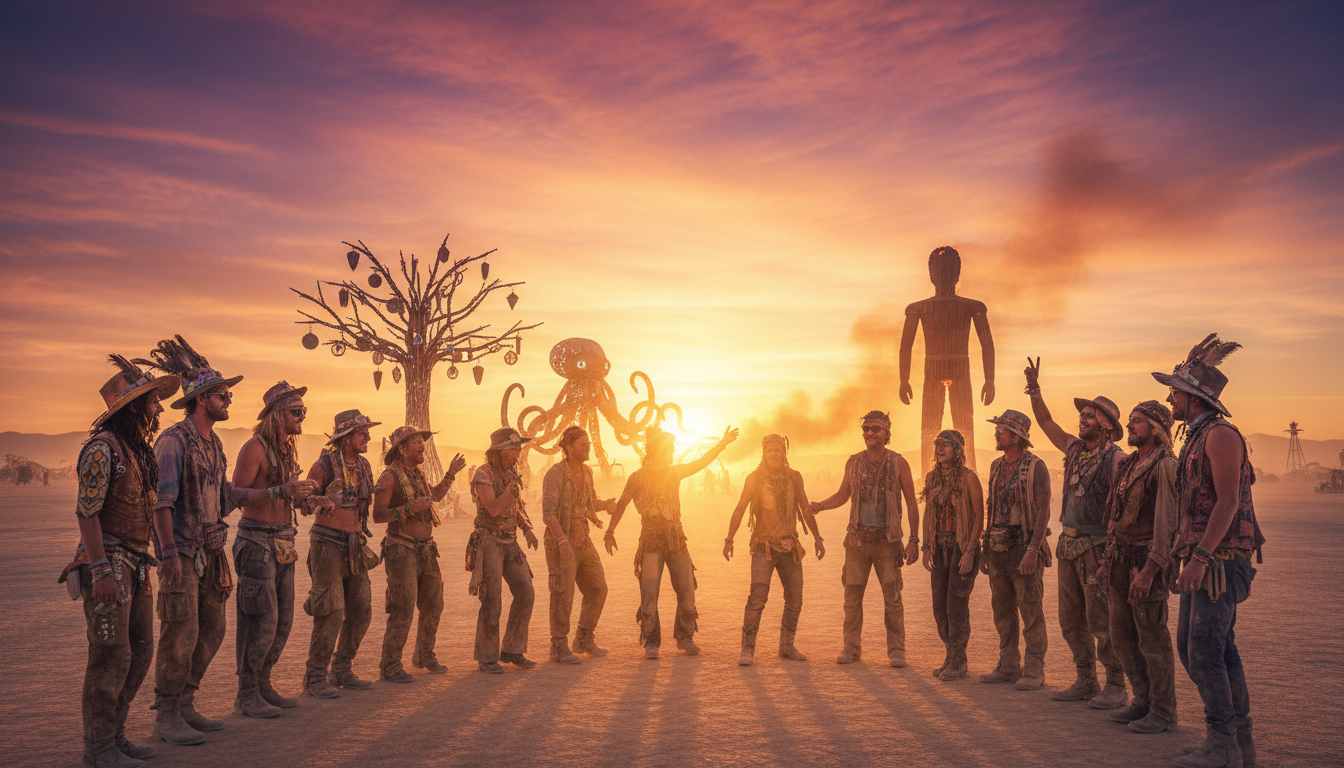
Quick answer: Burning Man 2025 runs Sunday, August 24, 2025 through Monday, September 1, 2025. The big effigy burns on August 30, 2025, and the Temple burns on August 31, 2025.
People often ask “when does Burning Man end” because the festival has several finish lines. There is the official close date, the night the Man goes up in flames, the Temple ritual the next night, and the slow clear-out of Black Rock City.
This matters for real logistics. Packing, camp strike, MOOP sweeps, and exodus traffic all hinge on exact timing. Your sleep plans off-playa and travel hubs in the United States are affected too.
In this friendly guide, you’ll get a clear timeline and practical tips. Later sections cover the official schedule, closing rituals, cleanup culture, and smart timing for leaving the playa.
Key Takeaways
- Burning Man 2025 runs Aug 24–Sept 1, with the Man burn on Aug 30 and Temple on Aug 31.
- There are multiple “ends”: official close, Man burn, Temple burn, and full city clear-out.
- Final days change how camps pack, sweep, and strike.
- Plan travel and sleep logistics around exodus traffic and cleanup timing.
- This guide will give schedule details, ritual notes, and practical departure tips.
What “End” Means at Burning Man in Black Rock City
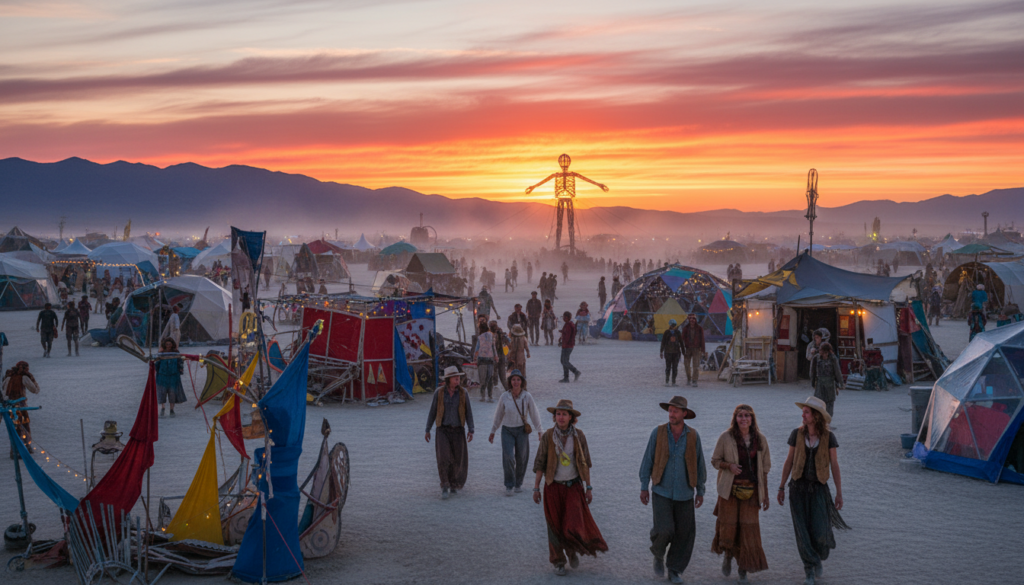
Packing up Black Rock City unfolds over days, not minutes. Black Rock City is a temporary metropolis near Gerlach, Nevada created by participants and guided by the organization. The official event week marks the core activity, but the actual shutdown is a staged, community-driven process.
Event week refers to scheduled art, music, and programming. The lived reality on playa includes teardown, MOOP sweeps, and logistics that stretch through Monday and beyond for many camps and participants.
The phrase rock city captures both streets and social rhythm. For burners, a camp lead, or a build crew, the final days feel different. Sound curfews and quieter art moments make interactions more intimate.
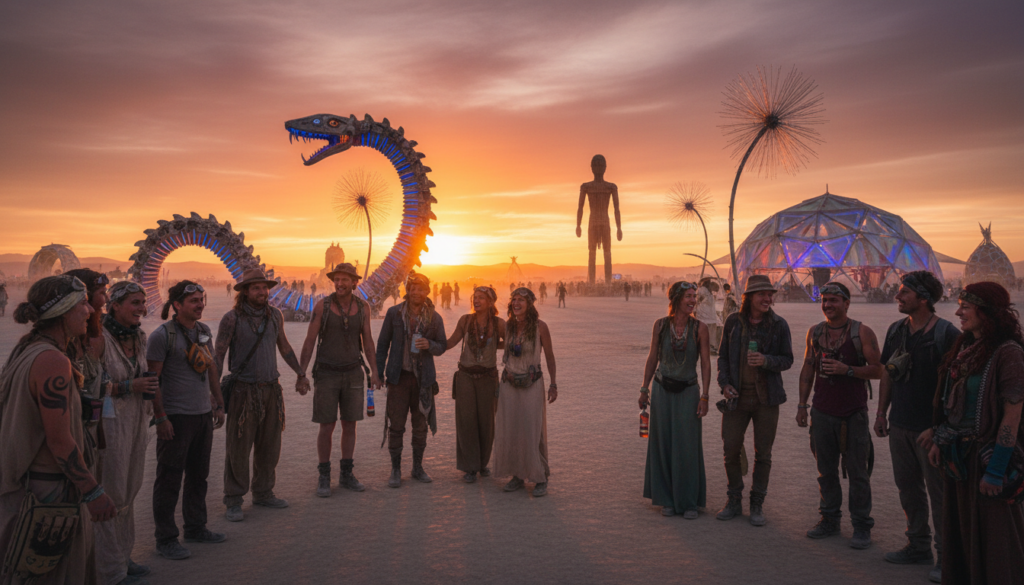
Camps shift from full participation to mutual support. Neighbors help secure loads, consolidate gear, and plan safe departures. The community standard of Leave No Trace turns the last days into stewardship, not just partying.
- Climax vs. closure: The Man burn is peak spectacle; the Temple burn offers ritual closure; Monday is the operational finish line for most people.
- Vibe shift: Bars and stages wind down; people prioritize sleep and teardown.
For a clear primer on the culture and logistics that shape this timeline, see a useful overview at what glamping is.
Burning Man 2025 Official Dates in Black Rock City
The official window for Burning Man 2025 spans Sunday, August 24 to Monday, September 1, 2025. These dates frame the event week and set the legal schedule for large art, performances, and city services.
Event dates: Sunday, August 24, 2025 to Monday, September 1, 2025
Sunday marks arrival and setup; Monday is the formal close of the scheduled week. Many camps use Monday as the official teardown day and for final MOOP sweeps in Black Rock City.
Why Monday matters for packing, breakdown, and leaving the playa
Monday matters because crews shift into logistics mode. People secure loads, consolidate gear, and clear streets to meet Leave No Trace standards.
- Not everyone leaves Monday—some depart earlier, others stay later for strike roles or travel limits.
- Build your personal schedule backward from Monday: stop big adventures, pack, and do final camp and street MOOP walks.
- Last 24–48 hours can strain energy and focus; plan Monday as a logistics day for safety and rest.
| Date | Key Moment | Typical Actions |
|---|---|---|
| Aug 24, 2025 | Official start | Arrive, set up camp, orient to city |
| Aug 30–31, 2025 | Peak rituals | Attend burns, prepare for wind-down |
| Sept 1, 2025 | Official closure | Teardown, MOOP sweep, secure vehicles |
| Sept 2+ , 2025 | Extended strike | Some camps finish later due to roles or travel |
When does burning man end for 2025? The Key Closing Moments
The final weekend holds three clear reference points for planning departure. Treat these anchors as a simple timeline to choose your goodbye: a big spectacle, a quiet ritual, and the formal city close.
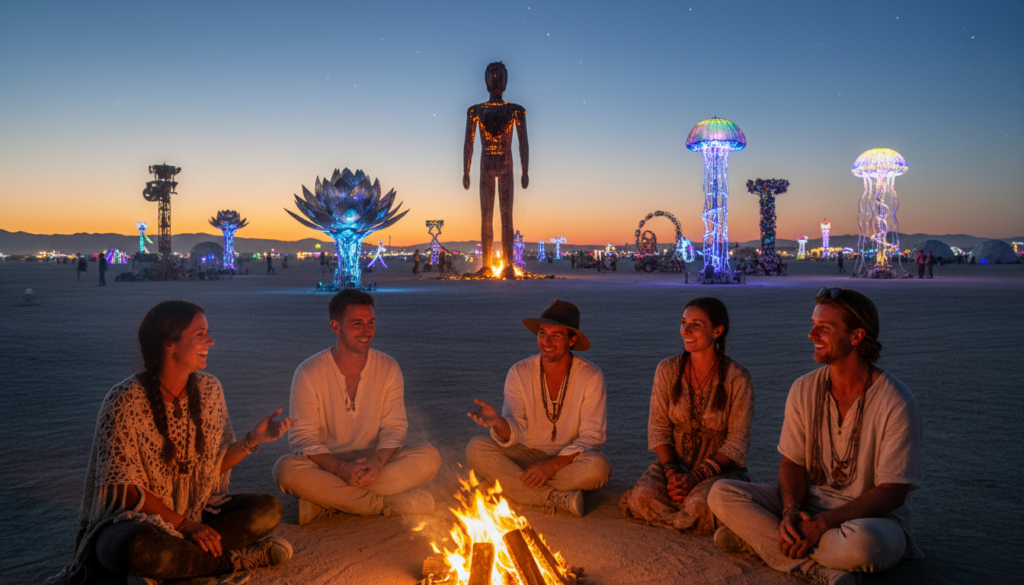
The Man burn date: August 30, 2025
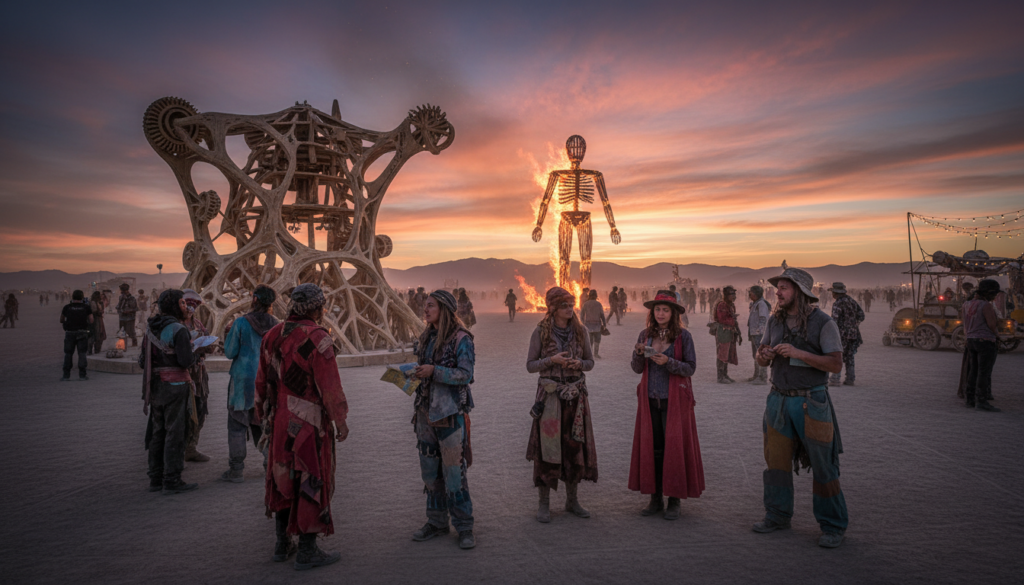
Saturday, Aug 30 is the biggest shared event. Many people gather for the main burn, and a sizable number try to leave afterward. That rush can change the atmosphere late Saturday into early Sunday.
The Temple burn date: August 31, 2025
Sunday, Aug 31 offers quieter closure. The Temple burn draws reflective crowds and slower pacing, so it feels more intimate than the main spectacle.
What typically happens between the burns and Monday departure
Between the two burns, expect late-night decompression and fewer scheduled camp events. People wander, talk one-on-one, and quietly prep gear in the background.
Sunday daytime often becomes a reset window. Camps take down shade, consolidate food and water, and do early MOOP sweeps while still participating in small activities.
Monday, Sept 1, turns social energy into task energy. Packing, securing straps, and final checks replace parties. Remember: the “end” is a sequence, so pick the moment that fits your travel plans and emotional closure.
- Anchors: Man burn — Aug 30; Temple burn — Aug 31; Official close — Sept 1.
- Tip: If you want an easier exit, consider leaving after the Temple rather than right after the main burn.
For softer on- and off-playa transitions, consider planning accommodations or nearby options like a glamping option to reduce travel stress.
The Man Burn vs. the Temple Burn: Which One Feels Like the “Real” Ending?
The last weekend offers both a spectacle for crowds and a quiet space for personal goodbye. Each ritual signals closure, but they do so in very different ways for participants.
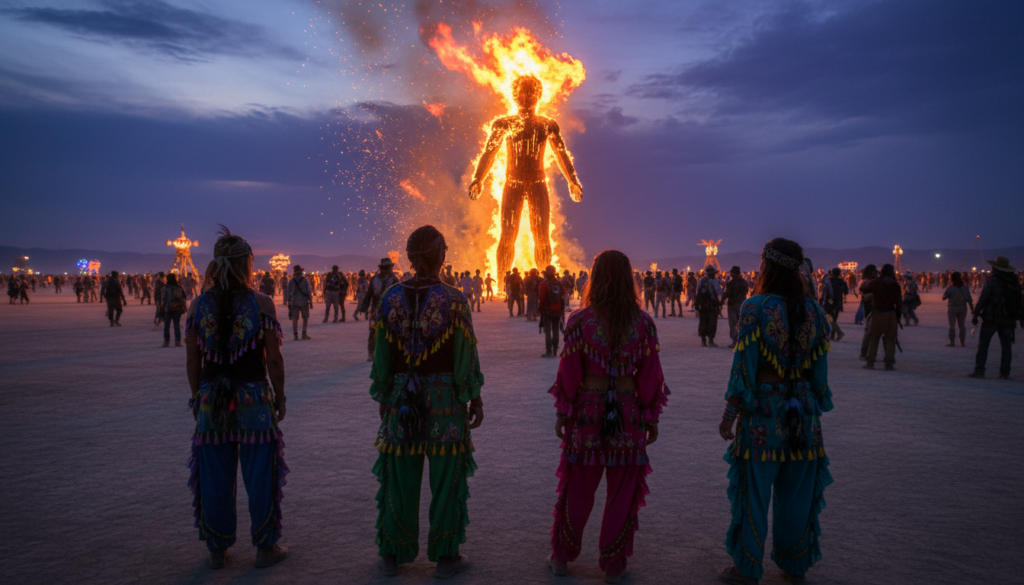
The big communal spectacle
The main effigy is a massive shared moment. It’s art scaled up, loud and theatrical. Crowds gather, music swells, and the atmosphere feels like a communal crescendo.
For many first-timers, that public spectacle becomes the most visible part of the festival and the instant they call the whole experience complete.
A quieter, reflective ritual
The Temple offers a different pace. It’s designed for remembrance and letting go, with hushed conversations and slow processions. Participation leans toward quiet reflection rather than celebration.
Respect matters here: behavior is guided by empathy. Keep phones low, give space, and honor offerings left by others.
- Meaning: Spectacle = collective release; Temple = personal closure.
- Crowd energy: Main burn is dense and loud; Temple is sparse and still.
- How to choose: If you want the loudest shared moment, prioritize the first burn. If you need emotional closure, plan to stay through the Temple.
| Aspect | Main Effigy | Temple |
|---|---|---|
| Tone | Celebratory | Reflective |
| Typical Crowd | Large, energetic | Smaller, contemplative |
| Why it matters | Shared spectacle of art and community | Space for memory and letting go |
Both burns are part of the same culture: ephemeral art and reciprocal participation define them. Choose the ritual that fits your emotional arc, and plan logistics accordingly — if you want calmer travel after the Temple, consider nearby lodging or a relaxed glamping option.
For transit and comfort tips, check practical glamping tips.
What Happens After the Burns: Black Rock City Wind-Down and Cleanup
After the last flames cool, the city shifts into quiet, focused work as people prepare to leave. The mood moves from big shared moments to practical tasks. Theme groups close bars and end scheduled experiences so teams can start teardown.
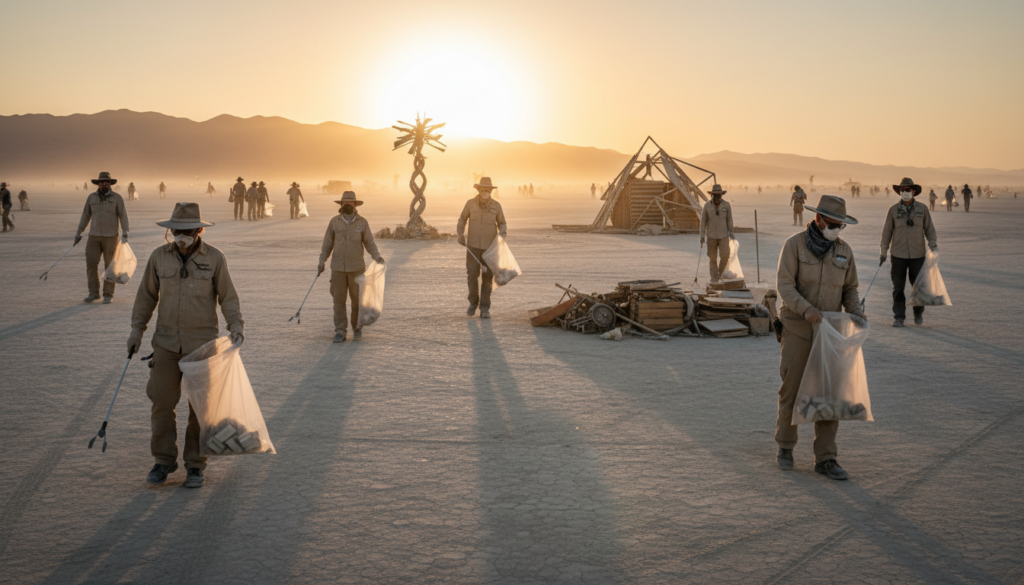
How camps shift their focus
Theme camps often stop music and service first. Bars close, sound systems power down, and hosted experiences wind to a halt. Volunteers and neighbors begin shared packing and supply checks.
What a proper strike looks like
Strike means careful disassembly: take down shade, pull rebar, pack communal kitchens, and secure art pieces. Teams label bins, protect gear from dust, and stage loads for an orderly exit.
MOOP and why Leave No Trace matters
MOOP stands for Matters Out Of Place. Examples include feathers, cigarette ash, broken bike parts, and used wipes. These small things add up and can block future access to the playa.
- Dust-proof gear with sealed bins and tape.
- Label bags so shared vehicles load fast.
- Do a final sweep of your street and camp area.
Leave No Trace is not optional. Restoring black rock city protects access next year and shows that cleanup is part of participation. Help your neighbors — cleanup is communal work, not someone else’s job.
When Should You Leave the Playa? Timing Exodus After Burning Man
Plan your exit like any travel move: pick a window that matches your energy and priorities. The typical choices shape traffic and the vibe you’ll meet on the road.
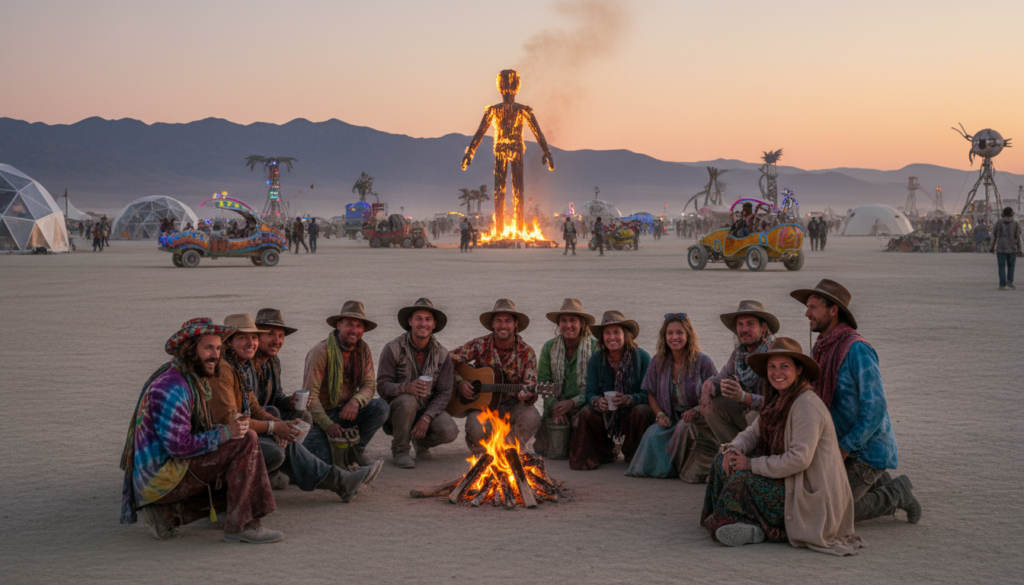
Leaving right after the main burn and why it can be a long wait
Many people try to roll out immediately after the big burn. That creates heavy volume and long lines at city exits.
Expect delays: fatigue, crowded lanes, and camps packing at the same time can stretch your travel time.
The lull before the Temple for a potentially easier exit
Sunday daytime often brings a quiet window. If you already felt closure the night before, this can be the easiest way out.
Tip: use this lull to rest, hydrate, and stage loads for a calm departure.
The post-Temple bottleneck most people hit
A lot of people stay through the Temple ritual, so exits after that create a classic bottleneck. Expect heavier traffic and longer waits then.
Staying calm during exodus after a full week in the dust
Keep a simple kit: water, snacks, dust masks, and a rested driver roster. Small steps reduce risk after a dusty week.
- Map your pavement stop in advance; don’t push too far on low sleep.
- Rotate drivers, take breaks, and accept slow progress as part of the way out.
- Hydrate and snack often to counter fatigue and dust exposure.
Three common strategies: leave right after the main burn, slip out during the Sunday lull, or depart post-Temple. Choose the plan that fits your priorities and travel safety.
Where to Stay Before and After Burning Man (U.S. Travel Planning)
Choosing a staging city gives you a place to buy last-minute supplies, rest before the drive, and recover after exodus.
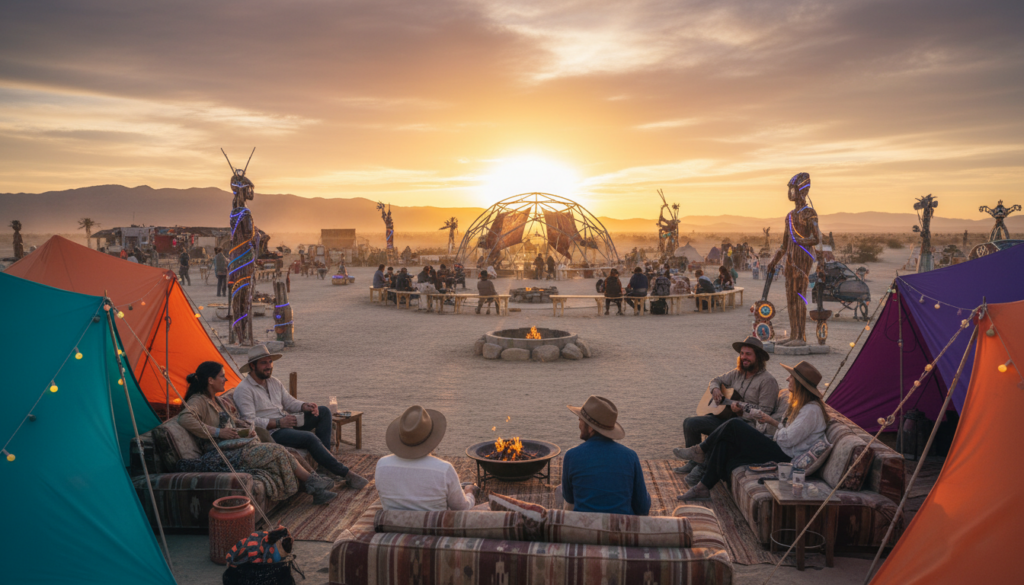
Reno: the closest major hub
Reno is the usual staging choice. It has concentrated hotels, rental options, and big-box stores for gear. Drive time to Black Rock City is about two hours without traffic, but festival week can slow you down.
Sacramento: easy to fly into
Sacramento is a solid fly-in alternative. The final drive runs roughly 4.5 hours without traffic. Rentals and lodging are often cheaper or easier than Bay Area options, which helps if you have late-arriving tickets.
San Francisco: popular but pricier
San Francisco draws many travelers who want city time before or after the trip. It can be fun, but many rentals get pricey and scarce during peak dates. If you pick San Francisco, book early and expect longer drives to the playa.
Gerlach: closest town, limited services
Gerlach sits nearest to Black Rock City. It’s handy for quick stops, but services and lodging are minimal compared with Reno or Sacramento. Treat it as a backup for last-minute things rather than a full staging base.
| City | Drive Time (no traffic) | Best for | Limitations |
|---|---|---|---|
| Reno | ~2 hours | Supplies, hotels, car rentals | Can be crowded on burn week |
| Sacramento | ~4.5 hours | Fly-in logistics, lower costs than SF | Longer drive to playa |
| San Francisco | ~5–6 hours | City amenities, tourism | Pricier rentals, less convenient for cars |
| Gerlach | 10–20 minutes | Closest stop for gas and quick needs | Very limited services |
Note: your travel choices can shift with ticket timing. If you buy tickets late, hotel and rental options shrink. Build flexibility into plans and book lodging as soon as tickets are secure.
What Burning Man Is (and Isn’t): Context for First-Time Participants
Picture a temporary city that you join, not a staged show you watch from the sidelines.
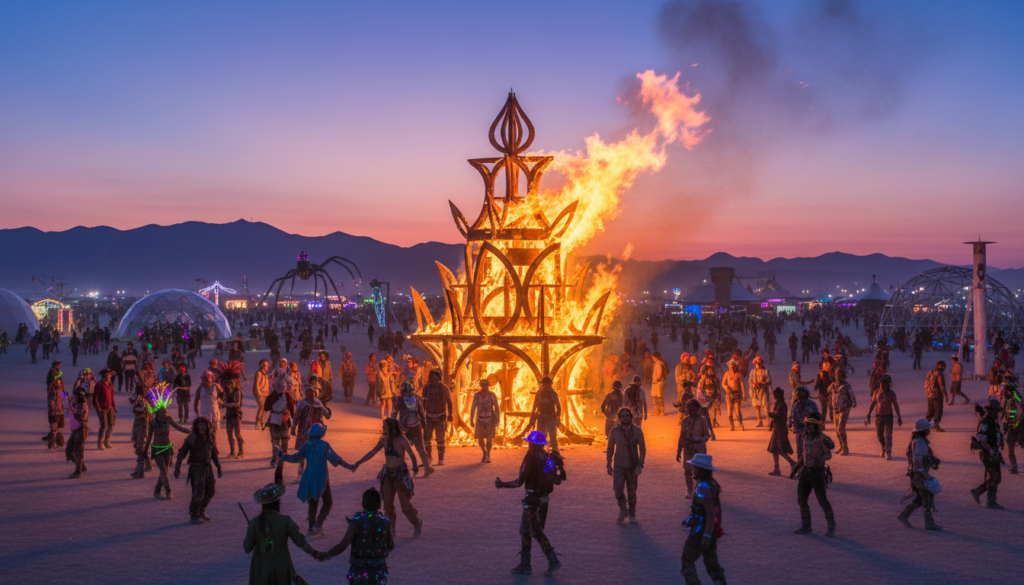
Burning Man is a participatory, short-lived metropolis built once a year near Gerlach, Nevada.
It is not a typical festival with vendor rows and a fixed main stage. Instead, people create camps, art, and services together. That shared effort reshapes what “closing” looks like.
How that context changes the final days
When you help build the city, you help take it down. Packing, MOOP sweeps, and shared loading are part of leaving.
This makes the final period a mix of chores and goodbyes. The city is designed to be ephemeral, so endings often feel intense and meaningful.
Friendly expectations for participants
Participation means joining activities, supporting your camp, and treating the playa with respect.
Come prepared: apart from a few basic services like ice and coffee vendors, you bring what you need. Plan food, water, and supplies so leftovers don’t become someone else’s problem.
| Feature | What it means | Why it matters |
|---|---|---|
| Not a festival | Active contribution | Shapes departure responsibilities |
| Temporary community | Built each year | Creates strong emotional arc |
| Self-reliance | Bring essentials | Reduces MOOP and stress |
Tip: Embrace the community role and pack with teardown in mind. The next section links these ideas to the Ten Principles that guide behavior during the final days.
The Culture That Shapes the Ending: The Ten Principles in Practice
As the week winds down, the Ten Principles move from idea to action in every camp. These guidelines are the core of the community and explain why the final days feel so cooperative and intense.
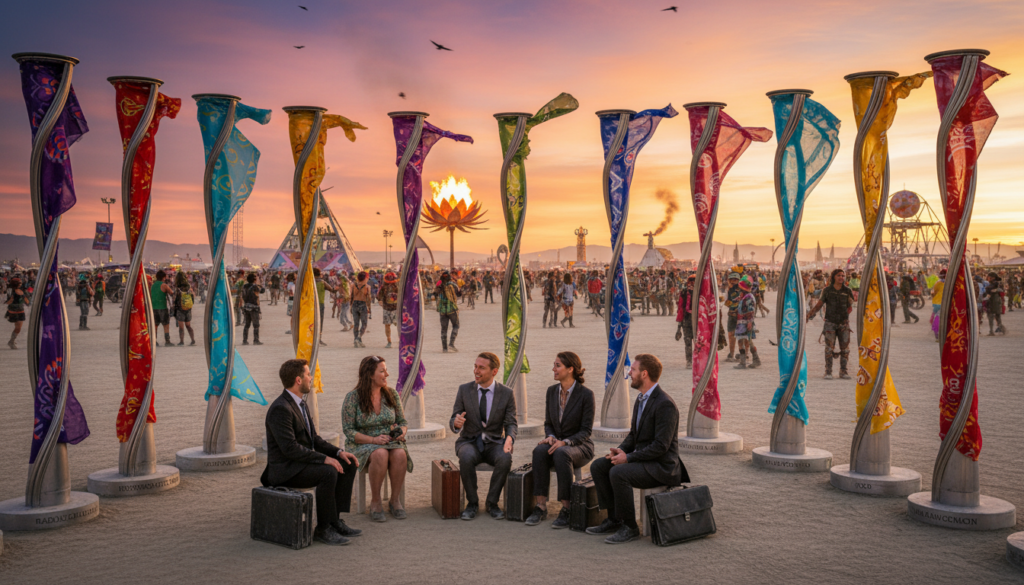
- Radical Inclusion
- Gifting
- Decommodification
- Radical Self‑Reliance
- Radical Self‑Expression
- Communal Effort
- Civic Responsibility
- Leaving No Trace
- Participation
- Immediacy
Radical Self‑Reliance
Bring extras: water, food, batteries, and a simple repair kit matter most in the last stretch. When people are tired and dusted, backup plans keep everyone safe.
Gifting and Communal Effort
When a strap snaps or a trailer light fails, neighbors step in. Gifting is practical: tools, spare parts, and hands speed teardown and ease stress for others.
Immediacy and Participation
Being present sharpens emotion. Participation means you help strike, sweep, or load—those small acts make the temporary city possible again next year.
Leaving No Trace ties pride to access: careful MOOP sweeps protect the playa and the community’s ability to return. If you want softer travel days after the event, consider a nearby beach glamping option to rest and regroup.
Post-Event Reality Check: Re-Entering the Default World After the Burn
A week off the grid can make ordinary life feel like a loud, unfamiliar place. Many participants return to hundreds of messages, bills, and notifications that contrast sharply with shared routines on playa.
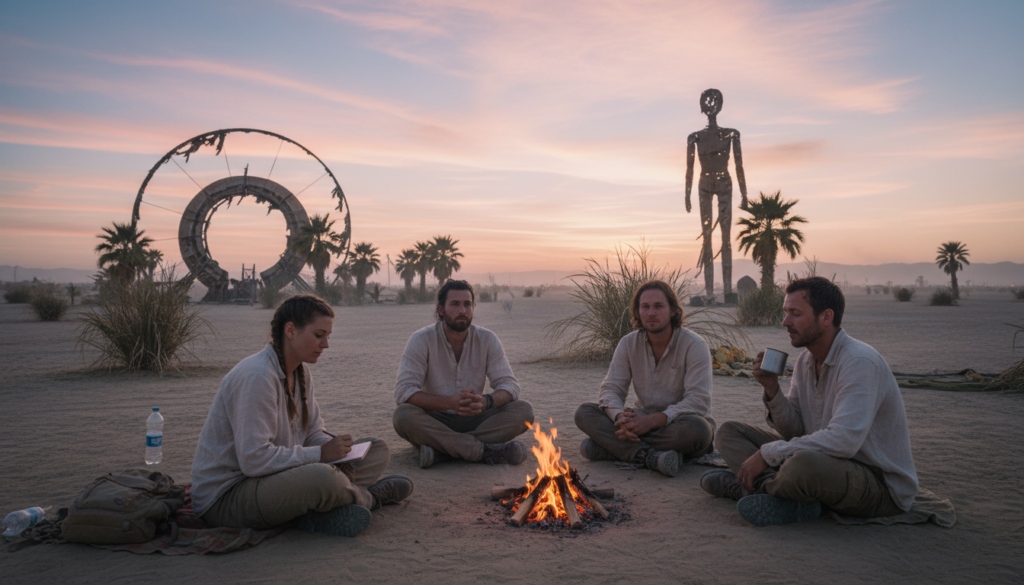
Unplugging for a week and what it feels like afterward
Being unplugged shifts your sense of time and priorities. The close-knit pace of the event gives way to a busier, less intimate rhythm in the default world.
Managing the emotional comedown and sleep debt
Sleep debt is real. Plan a recovery day or a hotel night in Reno or Sacramento before long drives or work calls. Rest first; handle emails later.
“The Temple burn and packing up hit in waves—grief, relief, and fatigue can arrive all at once.”
- Normalize the shock: the first day back often feels overwhelming.
- Hydrate, eat solid food, and shower before tackling big tasks.
- Wash gear slowly and sort trash carefully; dust clings and needs gentle care.
- Delay major decisions; give yourself space to process the experience.
Knowing the end points of the event helps you plan recovery time. Treat departure planning as part of your overall experience so the transition is kinder to your body and mind.
Tickets, Timing, and Why They Affect Your End-Date Planning
Ticket timing shapes more than arrival — it sets your whole travel window and recovery plan. When you lock in entry, you can book flights, reserve hotels, and commit to camp duties with confidence.

TOMORROW Sale: preregistration and on-sale details
Preregistration: Apr 21–29 at 12 PM PDT. On-sale: Apr 30, 2025 at 12 PM PDT.
Action tip: Have payment and backup shipping info ready. Early confirmation gives you breathing room for travel and post-event plans.
Last major window: the OMG Sale
Registration for the OMG Sale runs July 21–29 at 12 PM PDT. The OMG Sale is July 30, 2025 at 12 PM PDT.
There are 3,000 OMG tickets priced at $575 plus fees. This sale also includes 1,500 vehicle passes at $150 plus fees — a limited chance to secure both entry and your ride-out permit.
STEP and late confirmations
STEP tickets remain available until Aug 24, 2025 at 12:00 PM PST. If you wait for STEP, expect compressed packing, shorter build-week planning, and fewer nearby lodging choices after the event.
Vehicle passes and departure logistics
What you drive in changes departure tasks. A car with minimal gear loads faster. A trailer or RV needs more time to secure straps, check lights, and stage loads. Vehicle passes are $150 and shape your ability to leave smoothly.
“Plan tickets and vehicle permits together — your transport defines your teardown rhythm.”
- Secure a ticket early to book flights and post-event lodging without stress.
- Reserve a vehicle pass if you bring bulky gear; it speeds exit planning.
- If you rely on STEP, build extra buffer days for packing and recovery.
| Sale | Registration | On-sale / Deadline | Key details |
|---|---|---|---|
| TOMORROW Sale | Apr 21–29, 12 PM PDT | Apr 30, 2025, 12 PM PDT | General on-sale; plan payment details |
| OMG Sale | Jul 21–29, 12 PM PDT | Jul 30, 2025, 12 PM PDT | 3,000 tickets @ $575; 1,500 vehicle passes @ $150 |
| STEP | N/A | Aug 24, 2025, 12 PM PST | Late tickets; compresses prep and lodging |
| Vehicle pass | N/A | Available with certain sales | $150 — affects packing and exodus time |
Practical wrap: Align your ticket purchases and vehicle pass with a realistic recovery plan. That reduces travel stress and gives your camp time for a proper strike and sweep.
Play it Smart on the Final Stretch: Practical Tips for the Last Days in Black Rock
As the city quiets, simple routines keep your kit clean and your exits calm.
Dust management and protecting gear before you hit the road
Seal bins and bag soft goods. Use heavy-duty bags and clear tubs so nothing soaks in alkaline dust. Keep a “clean-ish” outfit in a separate bag for the drive.
Wipe down bodies and camera gear daily. Avoid changing lenses in open air to protect sensors and optics. Small wipes now save broken gear later.
Light yourself and your bike for safer nights
Light up people and things. Attach bright lights to bikes, helmets, and outfits. Reflective tape helps in low light and when fatigue sets in.
Check lights before dusk. A visible bike reduces collision risk during the winding-down hours.
Sleep, sunrise, and pacing when you’re trying to do everything
Plan one real sleep block before departure day. If you try to do everything, you’ll pay for it on the road.
Sunrise and sunset are high-value moments that don’t require max effort. Save a half-hour for light and pictures instead of a late-night marathon.
- Photographer tip: bring a long telephoto and plan shots to limit lens swaps.
- Carry wet wipes and closed-toe shoes to avoid “playa feet.”
- Seal a small “drive kit” with snacks, water, and a clean mask for the vehicle.
Mobile planning note: save offline maps and checklists so pages render well on small screens (width, width device-width). Service is limited; downloaded info keeps plans on track.
Want a gentler exit option? Consider staging near a nearby site like a bell tent sleepover to rest before long drives.
Conclusion
Treat the last days on playa as three distinct shifts: celebration, teardown, then travel. Burning Man 2025 runs Aug 24–Sept 1, with the big man burn on Aug 30 and the Temple burn on Aug 31 — pick the moment that fits your travel and emotional needs.
Practical takeaway: set a short window for final fun, a focused block for camp teardown and MOOP sweeps, and a clear exodus slot to avoid traffic bottlenecks. Expect heavy lines right after the main burn, a quieter Sunday lull, and a post-Temple rush.
Plan tickets, vehicle prep, and a recovery night in Reno or Sacramento. If you want gentler transition, consider nearby glamping options to rest before the highway.
Final note: Black Rock City’s impermanence is the point — the temporary nature of the city and its art makes the experience powerful, and careful teardown keeps the playa ready for next year.