
A quiet morning pause can change how you meet the day. One simple prompt may help you notice your mood, focus your attention, and choose your next step with care. It does not promise a fixed future. Instead, it creates space for honest reflection before outside demands take over.
Colette Baron-Reid presents oracle practice as a path back to inner guidance and infinite potential. That idea gives this habit a practical purpose. Your response to a symbol can reveal feelings, hopes, or habits that need attention.
Tarot has different roots. The traditional deck holds 78 cards and began in 15th-century Europe as a form of play. Toyah Willcox calls tarot a direct way to speak with the universe. Here, the focus stays on a simple tarot reading that supports awareness, not certainty.
With one card, a calm routine, and a few notes, this practice can feel grounded. Explore this easy oracle card reading to build a gentle ritual that supports intuition and mindful action.
Key Takeaways
- A short morning ritual can sharpen self-awareness.
- Symbols invite reflection rather than fixed predictions.
- Inner guidance can support clear, mindful choices.
- Tarot and related practices have a long cultural history.
- One simple prompt can make spiritual reflection feel practical.
What an oracle cards daily draw can shift in your vibration
Your first choice of attention can shape the tone of the next few hours. This simple practice gives you a brief pause before messages, meetings, and chores begin. It is not a promise about the future. Instead, it helps you notice your inner state and respond with more care.
Notice your energy before the day gets busy
Try this habit when you wake up or while coffee brews. You can also use it at lunch, after work, during a commute, or before bed. First, name your mood: calm, scattered, hopeful, or tired. Then consider how the image relates to your current situation.
That first feeling can reveal a useful pattern. A warm response may point to hope, while discomfort may show a concern you often avoid. This insight does not require supernatural certainty or a complex ritual.
Use the card to sharpen your intuition
Study the picture slowly before opening a guidebook. Notice color, posture, symbols, and the detail that catches your attention. Ask what your intuition sees, then compare it with the established meaning. Colette Baron-Reid connects this oracle practice with inner guidance and infinite potential.
- Pause before reacting to a text.
- Notice your habits at work or home.
- Choose one thoughtful action for your life.
A short reading can help you create space between a feeling and your next response.
Oracle cards and tarot cards serve different purposes
A tarot card belongs to a structured system, while an oracle deck can follow almost any design. A standard tarot deck has 78 cards, with set suits, ranks, and themes. An oracle deck may use any number of cards, artwork, and meanings.
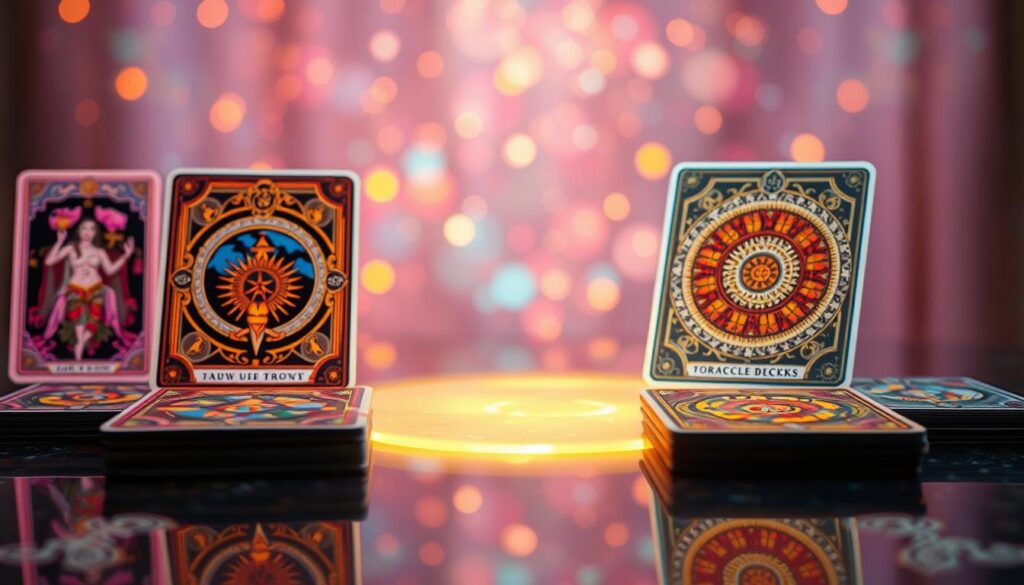
The 22 Major Arcana cards often point to major lessons or turning points in a person’s situation. The 56 Minor Arcana cards include Cups, Pentacles, Swords, and Wands. Each suit can relate to emotions, work, thought, or creativity.
- Ace through Ten show stages in everyday experience.
- Page, Knight, Queen, and King add personality and movement.
- These patterns give beginners useful anchors for card meanings.
Tarot began as a European playing-card game in the 15th century. By the 18th century, people linked it with fortune-telling. Today, a tarot reading may use history, personal insight, or both. An oracle reading offers more freedom, while a card tarot reading follows a clearer framework.
| Feature | Tarot | Oracle |
|---|---|---|
| Structure | 78-card system | Varies by deck |
| Style | Set suits and meanings | Flexible themes |
| Best for | Guided study | Open-ended reflection |
How a daily card pull becomes a spiritual practice
Meaning grows when a small ritual meets real life. Before you begin, choose one intention, such as patience, focus, or courage. This gives the card a clear place in your day’s path and keeps the practice practical.
Set an intention for the day ahead
Pause when you wake, while coffee brews, or before your first task. Ask how your intention can shape one choice. A short tarot reading then becomes a tool for awareness, not a fixed promise.
Turn ordinary moments into mindful check-ins
Use lunch, a commute, after-work time, or bedtime as a gentle reset. Notice whether your mood changed and what helped. These brief pauses can bring guidance without adding pressure to your schedule.
Record patterns in a tarot journal
Write the date, card name, first reaction, and evening observation. Over time, repeated symbols may reveal personal habits and changing needs. Labyrinthos offers a journal in its app, plus flash-card lessons and a reference guide through Labyrinthos Academy.
- Choose one intention.
- Check in during an ordinary pause.
- Review notes at week’s end.
| Moment | Helpful focus | Simple action |
|---|---|---|
| Morning | Patience | Pause before replying |
| Lunch | Balance | Notice your energy |
| Evening | Learning | Review the day |
Choosing an oracle deck that feels right for you
The best choice often feels clear before it feels mystical. Look for artwork that holds your attention and meanings you can understand. Beginners may prefer an oracle deck with simple images. Experienced readers may enjoy layered symbols, unusual themes, and room for personal interpretation.
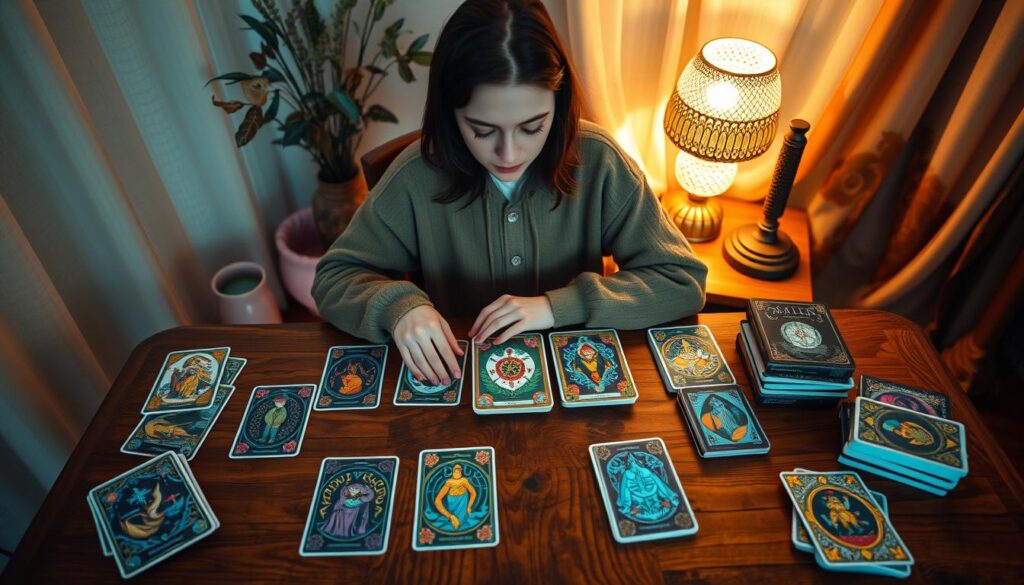
When a Rider-Waite-Smith tarot deck makes sense
The Rider-Waite-Smith deck suits learners who want a strong study base. Pamela Colman Smith illustrated it under Arthur Edward Waite’s guidance, and the Rider Company published it in 1909. Its artwork remains widely referenced, making a tarot reading easier to research.
Other styles may fit your taste better. Portent Tarot uses clean lines, bold symbols, and a monochromatic palette. Todd Alcott’s Sci-Fi Tarot offers 78 cards with Rider-Waite symbolism in a playful retro space setting.
Choose the deck you will enjoy using often, not the one others call perfect.
- Pick clear images if you are new.
- Choose deeper symbols if you enjoy study.
- Notice comfort, readability, and visual appeal.
Creating a calm space for your daily reading
Your surroundings can make reflection feel easier and more natural. Keep your favorite deck where you can see it, such as on a desk, bedside table, or quiet shelf. Easy access gives you a simple reminder to pause and stay grounded.
You do not need special furniture or costly supplies. A clear corner and a few quiet minutes are enough for a meaningful tarot practice. The space should feel comfortable, not perfect.
Add personal touches only if they help you focus. A candle, crystal, picture, ornament, or favorite book can create a warm mood. Still, attention gives the moment its meaning, not the decoration.
- Place one card in an easy-to-see spot.
- Silence notifications for a few minutes.
- Keep a journal nearby for useful thoughts.
- Choose comfort over elaborate ritual.
Labyrinthos presents a one-card meditation as a way to return to the present. You can use the same idea during a tarot reading. Take one slow breath, notice your surroundings, and ask what deserves your attention now.
Your tarot deck can become a gentle anchor. Let the cards support awareness, then choose your next action with your own judgment.
Simple ways to draw your card online or from a deck
You can begin with a physical deck or choose an online tarot option. Both methods create a pause for reflection. Pick the one that feels simple enough to use with care.
Draw a physical card with a clear question
Shuffle your tarot deck while holding one focused question. Stop when you feel ready, then select one tarot card. Avoid pulling again and again until the answer feels convenient. The first response often gives you the best starting point for reflection.
- Write the question before you shuffle.
- Notice your first feeling about the image.
- Record the answer before checking a guidebook.
Use a free online tarot reading tool
If you do not own a deck, Labyrinthos offers a one-card reading free online. Its app includes Yes No Tarot, free love readings, relationship spreads, Celtic Cross, Past Present Future, and more than 30 options. You can get free tarot guidance without buying supplies.
Treat each digital reading as a reflection tool, not a fixed promise. Try one method for a week, then compare how physical and online tarot affect your focus and intuition.
How to read the image, symbols, and card meanings
Let the picture speak before you reach for a guidebook. During a tarot card reading, notice where your eyes go first. Look at the colors, figures, objects, and facial expressions. Ask how each detail connects with your current situation.
Record your first feeling, thought, or emotion. Then compare it with traditional meanings. Your response may differ from the guidebook, and that difference can reveal a useful personal link.
Observe first, interpret second, and choose your next step with care.
The Sun offers a clear example. In the Rider-Waite-Smith tradition, it is card 19. Its bright image may suggest success, vitality, youth, happiness, marriage, or contentment. Pamela Colman Smith’s artwork remains a key visual reference for many readers.
An online tarot tool can offer helpful reference text. Still, connect the symbols with your own life. A short note keeps the process clear: list observed details, personal associations, and one practical meaning for the next few hours.
- Observe the image.
- Name your response.
- Review trusted meanings.
- Choose one grounded action.
| Step | Focus | Helpful question |
|---|---|---|
| Observe | Image details | What stands out? |
| Reflect | Personal response | What does it stir? |
| Apply | Practical insight | What can I do next? |
A situation, obstacle, and advice card spread for daily guidance
A three-part spread turns a broad question into a clear reflection. It separates what is happening, what creates friction, and what may help. This practical tarot reading supports choice without treating symbols as fixed forecasts.
Read the situation card for the energy around you
The situation card describes current circumstances and the energy already present. Notice how it connects with work, relationships, or another part of life. This gives your reading a useful starting point.
Use the obstacle card to spot what may slow you down
The obstacle position names a hurdle that could block progress. It may point to distraction, avoidance, unclear communication, or an unrealistic schedule. Naming the issue can make it easier to address.
Let the advice card point toward your next choice
The advice position offers guidance for moving forward with confidence. Turn its message into one action you can take today. That step creates a balanced answer: notice the situation, understand the challenge, and choose a response.
- Keep notes brief and practical.
- Use reflection instead of prediction.
- Try larger Labyrinthos formats when you want more detail.
| Position | Purpose | Practical question |
|---|---|---|
| Situation | Current energy | What is unfolding now? |
| Obstacle | Blocking factor | What needs attention? |
| Advice | Helpful direction | What can I do next? |
Learning tarot and oracle card meanings through repetition
Study becomes easier when you treat each session as a small lesson. You do not need to memorize an entire deck at once. A few focused minutes can build confidence and make a tarot reading feel more natural.
Start with the Major Arcana themes
The Major Arcana contains 22 cards with broad life themes. Begin with three familiar anchors: The Fool suggests new beginnings, The Magician reflects personal power, and The High Priestess points toward intuition. Write one phrase for each card, then add detail as your understanding grows.
Explore the suits of the Minor Arcana
The Minor Arcana has 56 cards across Cups, Pentacles, Swords, and Wands. Cups relate to emotions, Pentacles to material concerns, Swords to thought, and Wands to creativity. Each suit follows the same pattern: Ace through Ten, then Page, Knight, Queen, and King.
- Review one or two card meanings during a daily tarot practice.
- Use Labyrinthos Academy’s flash-card lessons and reference guide.
- Explore Seventy-Eight Degrees of Wisdom or Tarot for Light Seers for richer symbolism.
Keep your tarot deck nearby and track progress in a journal. These resources support steady learning without cramming.
Turning card guidance into practical choices
Reflection becomes useful when it leads to a visible action. After a reading, name the insight in plain language. Then connect it to one task you can complete or observe today. Send an overdue email, take a walk, set a boundary, or outline a realistic plan.
Treat tarot as a prompt, not a command. Ask whether the card adds helpful perspective to your situation. Compare its advice with your first instinct, facts, and values. This process keeps personal responsibility at the center of your choices.
- Use professional support for health, money, safety, or legal concerns.
- Choose an action that fits your real limits and needs.
- Review the result later and note what helped.
A short journal entry can show whether this tool supports clearer decisions. Record the action, your mood, and the outcome. Over time, this practice can reveal which prompts support a more thoughtful life. Your judgment remains the final guide.
Using a daily draw for love, relationships, and emotional clarity
Relationships often become clearer when you pause before reacting. A personal pull can help you name your feelings, needs, and boundaries without guessing what another person thinks. This gentle practice supports self-awareness in love and everyday life.
Pair your reflection with a relationship reading
Labyrinthos offers a free love tarot reading about your current relationship situation, your actions, and the direction of the connection. Use its guidance as a prompt for honest thought, not as proof of another person’s plans.
For more detail, try the five-card relationship reading. A card tarot approach can explore emotional patterns, communication, and your next healthy step. Other readings from Labyrinthos cover career and personal growth, too.
- Ask how you can communicate with more care.
- Notice whether behavior matches spoken promises.
- Use a daily tarot pause to check your boundaries.
- Let direct conversation guide important choices.
Love grows through consent, consistency, and honest behavior. Let tarot support reflection while real conversations reveal what both people want.
| Focus | Helpful question | Grounded action |
|---|---|---|
| Feelings | What needs attention? | Name it clearly |
| Communication | What should I express? | Start a calm talk |
| Boundaries | What feels healthy? | Choose a clear limit |
When free tarot readings and yes-or-no tools can help
A focused question can make a short digital session feel useful. A reading free tool suits a quick concern, such as whether to start a talk or review an option. Its answer works best as a prompt, not a final decision.
Labyrinthos lets you get free tarot guidance through one-card, money, relationship, love, Celtic Cross, and Past Present Future formats. A yes tarot reading may help you frame the issue, while a deeper tarot reading gives more room to explore context, feelings, and meanings.
- Use online tarot for a quick reflective question.
- Try a love tarot reading when emotions need a calm review.
- Compare the prompt with facts, research, and honest conversation.
- Seek professional advice for health, legal, or money matters.
The Labyrinthos app adds more than 30 spreads, a journal, a reference guide, and flash-card lessons. These resources support study beyond one card tarot answer. They differ from astrology services: the source describes a natal chart report as about 24 pages and a 12-month transit forecast as about 66 pages. Choose the tool that matches the depth of insight you need.
Keeping your practice grounded, personal, and empowering
Personal meaning matters more than a perfect interpretation. A spiritual practice can support reflection, inspiration, self-discovery, and mindfulness without promising control over the future.
Use readings for reflection instead of fixed predictions
Tarot became linked with fortune-telling during the 18th century, but that is only one part of its history. Use a reading to explore feelings, habits, and possible responses. A free tarot or yes tarot tool can offer a prompt, especially when a situation feels calm and manageable.
When emotions run high, pause before seeking another answer. Repeated card readings may increase fear or dependence. Step away and speak with someone you trust if the practice begins to feel upsetting.
Trust your judgment alongside the cards
Let your deck serve as a guide, not a decision-maker. Check each message against evidence, values, boundaries, and lived experience. Your choices remain your own.
- Review paid offers with care, including Colette Baron-Reid’s advertised $22 membership and three-day DreamQuest Immersion Weekend.
- Choose practical support for major concerns.
- Explore this grounded oracle practice at your pace.
Let your daily card practice guide the next step
Start with one deck. Draw one tarot card, then write one honest sentence about your energy before the day begins. This daily tarot pause gives your mind a clear starting point.
New readers may find a 78-card Rider-Waite-Smith tarot deck offers a steady learning path. An oracle deck feels more open and intuitive. Its cards invite personal meaning, while a trusted reference page can help you study traditional meanings without forcing one answer.
Return to it at lunch or bedtime. Compare the morning insight with what actually unfolded. A brief reading can show where your attention matched real events and where your view changed.
When convenient, choose a free tarot tool, yes tarot prompt, or online tarot reading. Let the message offer guidance, while facts and personal judgment lead each choice. Notice patterns, clarify feelings, including love, and take one grounded step along your own path. Keep the practice gentle, curious, and personal.