
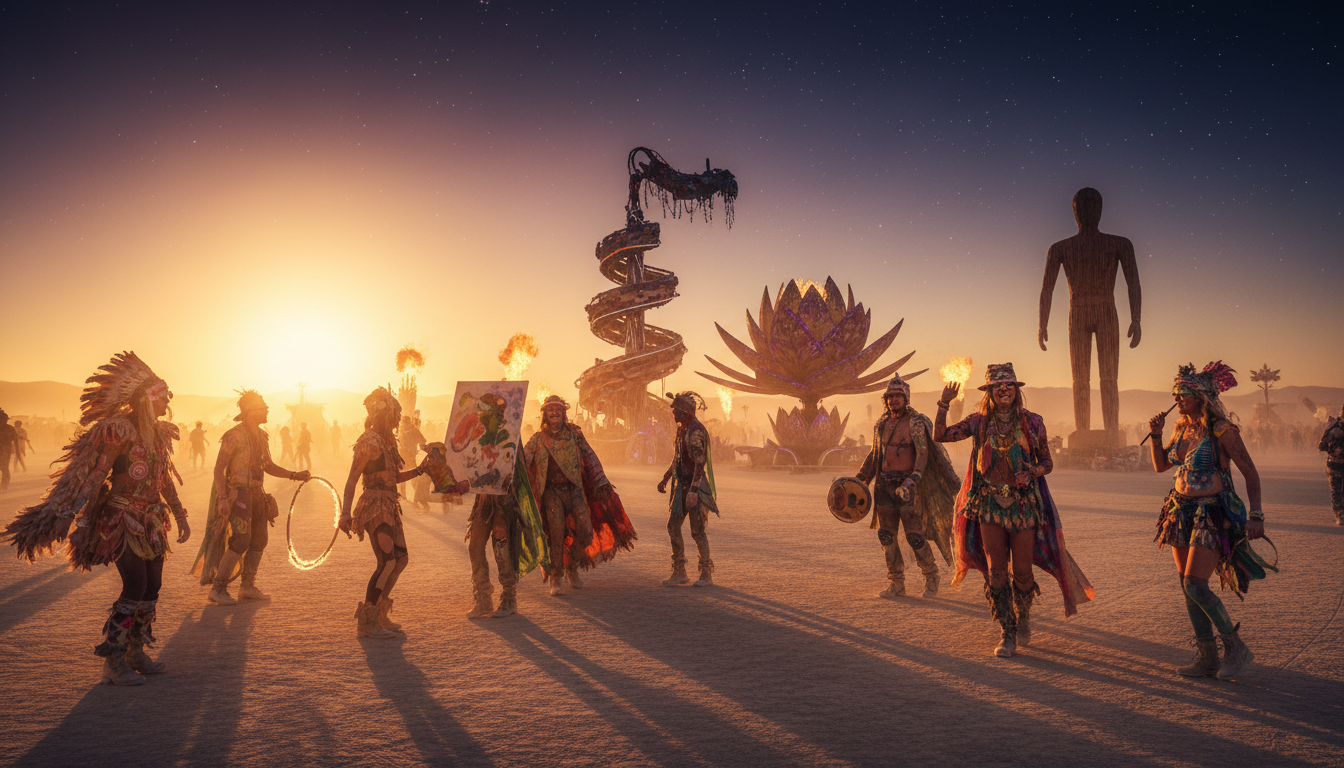
Burning Man is a week-long desert event rooted in community, art, self-expression, and self-reliance. It peaks with the ritual burning of a large wooden effigy the Saturday before Labor Day.
This introduction sets expectations for an ultimate guide. You’ll get a clear description of what it is, what it isn’t, and why the event matters in American culture today.
The article will cover definition, location, history, the ten guiding principles, and practical details that explain how the place works in real life. Note that the event is participant-built and participant-powered, so first-timers need different context than at a typical festival.
Practical facts and values both matter: this guide offers factual information—where it happens, what gets burned, and key rules—while also unpacking the event’s evolving values in the modern world. For related outdoor event context, see a short primer on glamping here.
Key Takeaways
- Burning Man centers on community art and radical self-reliance.
- The event is built and run by participants, not a typical festival crew.
- The guide balances practical details with cultural context.
- Ten guiding principles shape behavior and expectations.
- Weather, permits, and culture keep the event evolving each year.
What’s Burning Man, Really? A Quick Definition of the Event
Imagine a pop-up city in the Nevada desert: for one week, people design the art, services, and social rules they want to live by.
A week-long desert event centered on community, art, self-expression, and self-reliance
Burning Man is a temporary city and cultural gathering. Participants create the art, activities, and much of the infrastructure.
The event spans the days leading up to and through Labor Day. The rhythm builds toward the big Saturday-night ritual.
Why it’s called “Burning Man” and what gets burned
The name comes from the ceremonial burning of a large wooden effigy called “the Man.” That burn is the symbolic climax of the week.
Other fires on playa follow strict rules and require permits and safety measures. Not everything burns freely; safety and Leave No Trace matter.
This is not a passive festival. It’s an invitation to participate, gift, and co-create the experience with others in community.
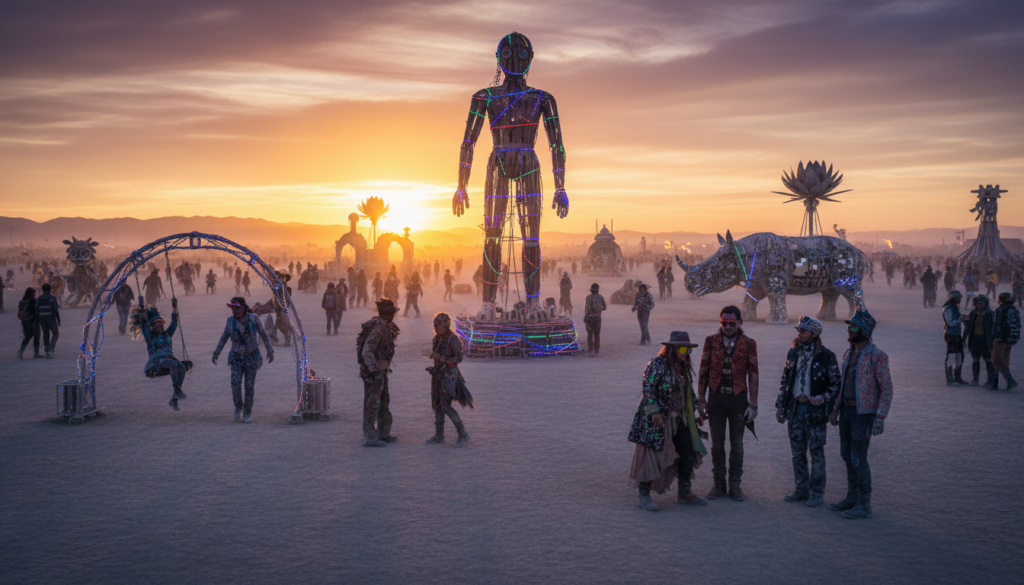
| Feature | How it works | Why it matters |
|---|---|---|
| Temporary city | Participant-built camps and services | Creates shared responsibility and civic effort |
| Art & installations | Interactive, often large-scale pieces | Encourages creativity and surprise |
| Ritual burn | Burning the wooden effigy on Saturday | Symbolic communal release and celebration |
Where Burning Man Happens: Black Rock City in the Black Rock Desert
Set on a vast alkaline playa, Black Rock City rises each year as a purpose-built temporary community. Since 1990 this temporary city has occupied the flat expanse of the Black Rock Desert in Pershing County, Nevada.
The location matters because the wide, open playa allows massive art and large builds that would be impossible elsewhere.
Practical conditions shape every decision on-site: expect fine dust, sudden wind, intense sun, and wide horizons. These factors make preparation and survival planning part of the culture.
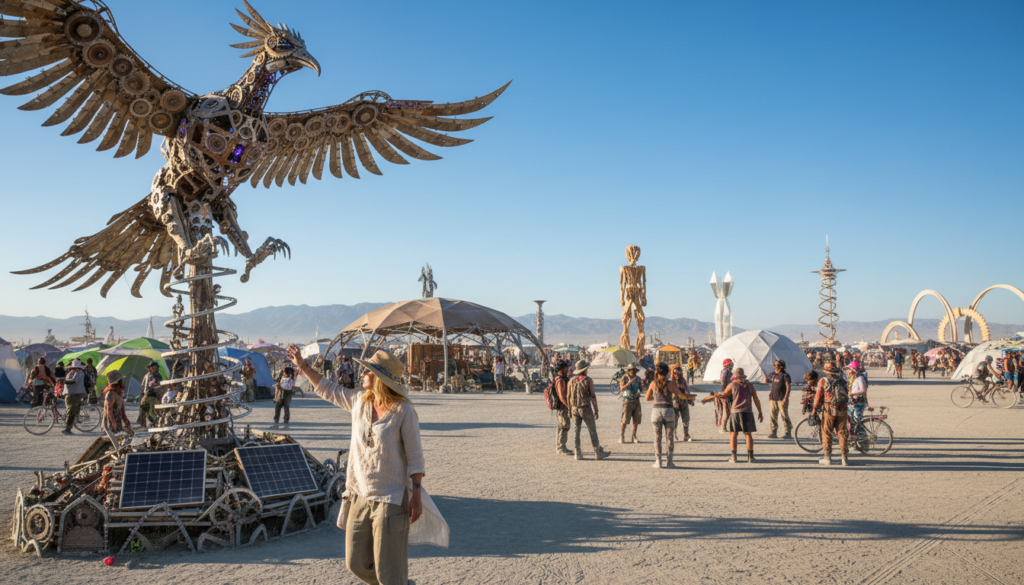
Black Rock Desert, Pershing County: the setting and why it matters
Black Rock Desert is remote and flat, which gives artists creative freedom and requires civic care from participants. The playa’s fragility is why Leave No Trace rules are strict and enforced.
Coordinates and proximity to Reno for real-world orientation
Black Rock City sits at approximately 40.7869°N, -119.2042°W, about 100 miles (160 km) north-northeast of Reno. That drive places the temporary city well inside the Nevada desert and far from urban services.
- The playa environment: dust, wind, sun, and very little shade.
- Engineered as a functioning city: mapped streets, addresses, emergency services, and public works.
- Environmental care is non-negotiable because the site is a fragile rock desert ecosystem.
From Baker Beach to Nevada: The Origin Story
A summer night on San Francisco sand launched an experiment in ritual, art, and community.
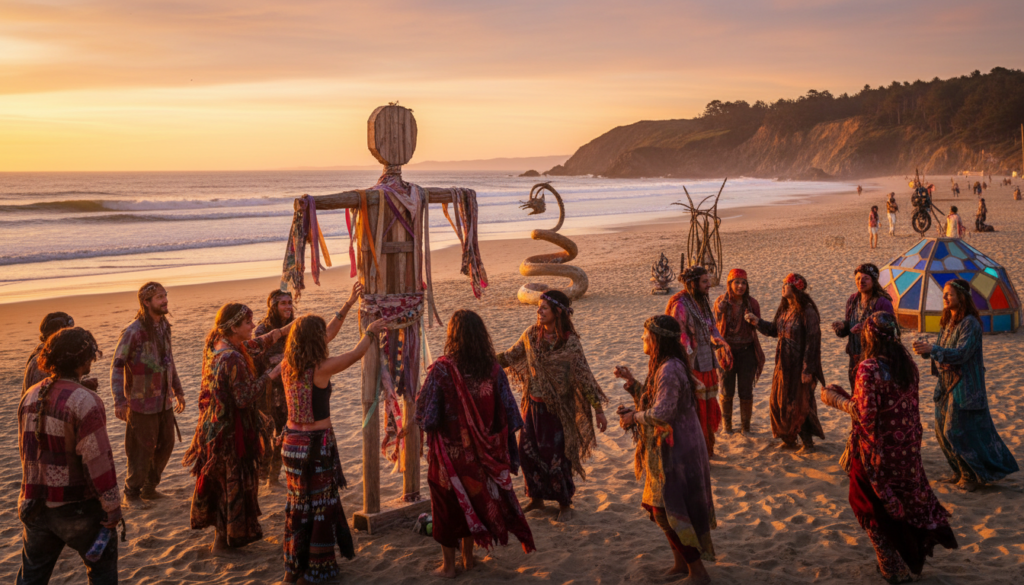
On June 22, 1986, Larry Harvey and Jerry James built and burned an 8-foot wooden effigy on Baker Beach. That first act was small, local, and shared by friends and passersby.
The early growth of the effigy
The effigy grew fast: by 1987 it reached about 15 feet, and by 1988 it stood near 30 feet. Those early increases showed how the symbol gathered momentum and attention.
Why the location changed
Authorities soon raised permit and fire-safety concerns about the beach burn. Organizers faced restrictions and pressure to move the event to a place better suited to large art and open flames.
That shift changed the event’s scale and logistics. Moving away from the beach allowed the ritual, participatory art, and anti-spectator culture to expand into a planned temporary city.
- June 22, 1986: first burn on Baker Beach.
- 1987–1988: rapid growth of the effigy.
- Permit and safety issues led to relocation and new practices.
| Year | Effigy Size | Significance |
|---|---|---|
| 1986 | 8 ft | First symbolic community burn on Baker Beach |
| 1987 | 15 ft | Growing interest and participation |
| 1988 | 30 ft | Escalating scale prompted site and safety rethink |
How Burning Man Became Black Rock City
A 1990 Zone Trip called “A Bad Day at Black Rock” moved the ritual from San Francisco sand to a wide, flat playa. That pivot was driven by the Cacophony Society’s experimental spirit and the need for space to grow.
Playas are dry lakebeds: beautiful, stark, and easy to get lost on without preparation. The surface can be blinding by day and disorienting at night, so planning matters for safety and travel.
Early navigation relied on the effigy as a landmark. In 1991 neon tubes were added so the figure served as a night beacon before mapped roads and street signs existed.
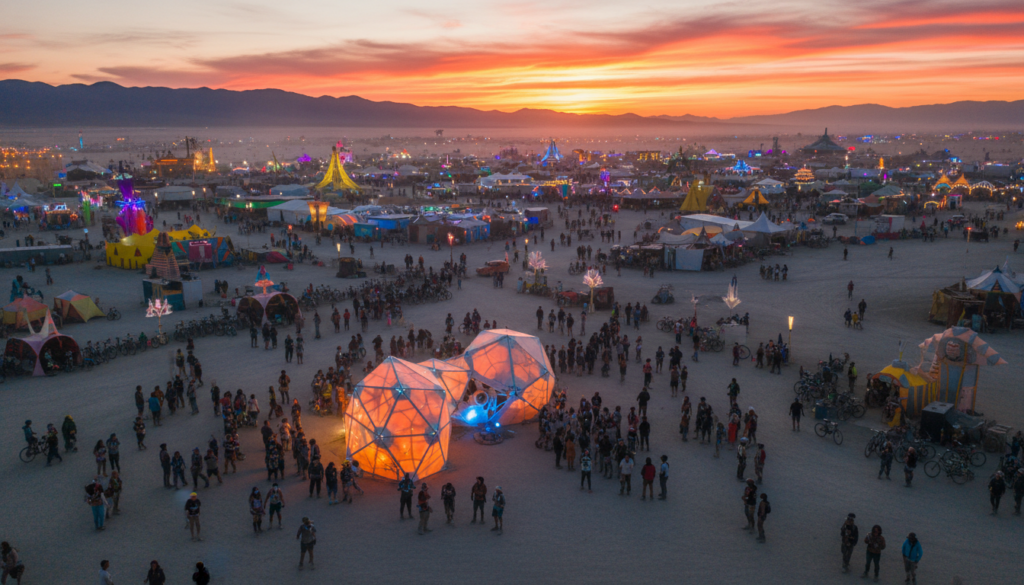
Black Rock City did not appear overnight. Infrastructure—roads, sanitation, emergency services, and a grid—grew as attendance rose. Organizers learned to balance creative freedom with practical needs.
Permits mattered. Because the playa is federal land, the Bureau of Land Management issued the first legal permit in 1991. That step made the gathering an authorized event and set the stage for later rules on safety and Leave No Trace.
For related outdoor event prep and comfort tips, see a short guide on glamping essentials in the linked packing primer: glamping packing guide.
Key Moments That Shaped the Modern Festival
Critical shifts across decades turned an informal gathering into a planned temporary city. These moments explain why the event feels organized today.
1996: a safety inflection
In 1996 several serious safety incidents prompted hard lessons. Organizers began adding rules, permits, and basic emergency planning.
1997: relocation and the perimeter
Permit conflicts forced a move in 1997. When the gathering returned to the playa, a perimeter defined the event footprint for safety and Leave No Trace enforcement.
Professionalizing the build
By 1999 Black Rock City LLC formed and the Department of Public Works (DPW) grew into a core team.
Rod Garrett designed the grid so addresses worked for emergency response and navigation.
2013: organizational evolution
In 2013 the Burning Man Project became the nonprofit steward, with Black Rock City LLC as a subsidiary. This change signaled formal governance as the cultural movement matured.
- Why it matters: structure improved safety and logistics.
- City systems: map-based streets, DPW builds, and emergency data protocols.
- Ongoing work: rules evolve each year as the festival grows.
Understanding the Ten Principles That Guide Burners
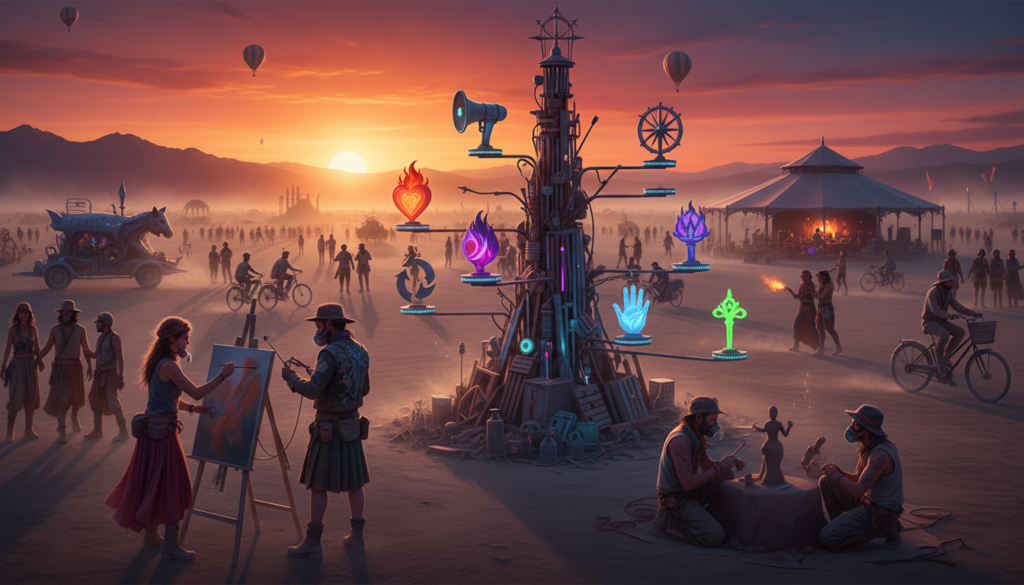
Larry Harvey wrote the Ten Principles in 2004 as cultural guidance for the Regional Network. These principles are not laws. They are a shortcut to understand why people act and cooperate in a temporary city.
Radical Inclusion and Rapid Participation
Radical Inclusion means anyone may join the community. Strangers quickly become collaborators, campmates, and problem-solvers.
Participation pushes visitors to contribute rather than just watch. That energy builds trust fast.
Gifting and Decommodification
Gifting removes buying and selling as the default. No branding and few transactions create a social economy of generosity.
This shifts the vibe: people give services, art, and attention as a way of connecting.
Self-Reliance, Self-Expression, Civic Effort
Radical self-reliance asks you to bring what you need. Radical self-expression invites you to be authentic.
Communal effort and civic responsibility are the unseen scaffolding: volunteers fix problems, teams manage safety, and shared rules keep the city running.
Leaving No Trace and Immediacy
Leaving No Trace protects the playa. Immediacy values presence over documentation. Together, they explain both the environmental and human value of the experience.
| Principle | Everyday Example | Why it matters | Key action |
|---|---|---|---|
| Radical Inclusion | Open camp invites | Welcomes diverse people | Say yes to new collaborations |
| Gifting | Free coffee at dawn | Builds trust and surprise | Offer something without expecting pay |
| Leave No Trace | Pack out your trash | Protects fragile land | Clean your campsite thoroughly |
| Participation & Immediacy | Join a build or performance | Deepens connection | Be present, not just filming |
The Gift Economy: What You Can (and Can’t) Buy at Burning Man
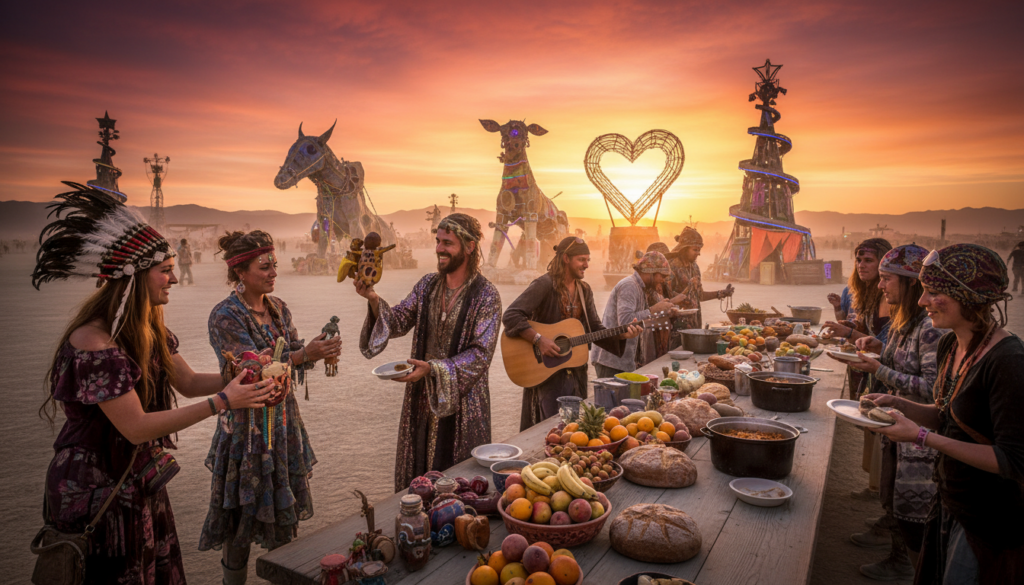
In Black Rock City you won’t shop the way you do at a festival; gifts and shared effort fill the gaps. Expect that most services and goods come from volunteers, theme camps, and generous individuals rather than vendors.
Why coffee and ice are exceptions
Coffee and ice are practical exceptions to decommodification. They appear because they support health and basic logistics.
Some organized camps sell or trade ice and coffee to fund operations or cover costs. That practice is limited and done with care to preserve the wider gift ethos.
How camps and people create surprise “services”
Gifted offerings range from pop-up food stands to bike repairs, impromptu workshops, costumes, and cold drinks handed out at dawn.
These gifts arrive without strings. They are meant to be bonuses, not reliable planning items.
- Practical rule: bring essentials—water, food, shelter, and tools.
- Gifts: treat them as delightful extras you might enjoy.
- Social effect: gifting turns customer roles into neighbor-to-neighbor interactions within the community.
| Must-Supply | Likely Gifted | Exceptions (May Be Sold) |
|---|---|---|
| Water, meals for your group, shelter | Snacks, cold drinks, small repairs | Ice, coffee (by some camps) |
| Medications, sun protection, tools | Shared meals, workshops, costumes | Occasional camp fundraisers for supplies |
| Bikes, lights, fuel | Bike fixes, creative services, performances | Ticket resales off-site (not permitted on playa) |
Make sure to plan as if no one will sell you essentials. A ticket buys entry, not services. The gift economy creates a unique way of living on playa, but it relies on your preparation and your willingness to give back.
Black Rock City Layout, Rules, and On-the-Ground Reality
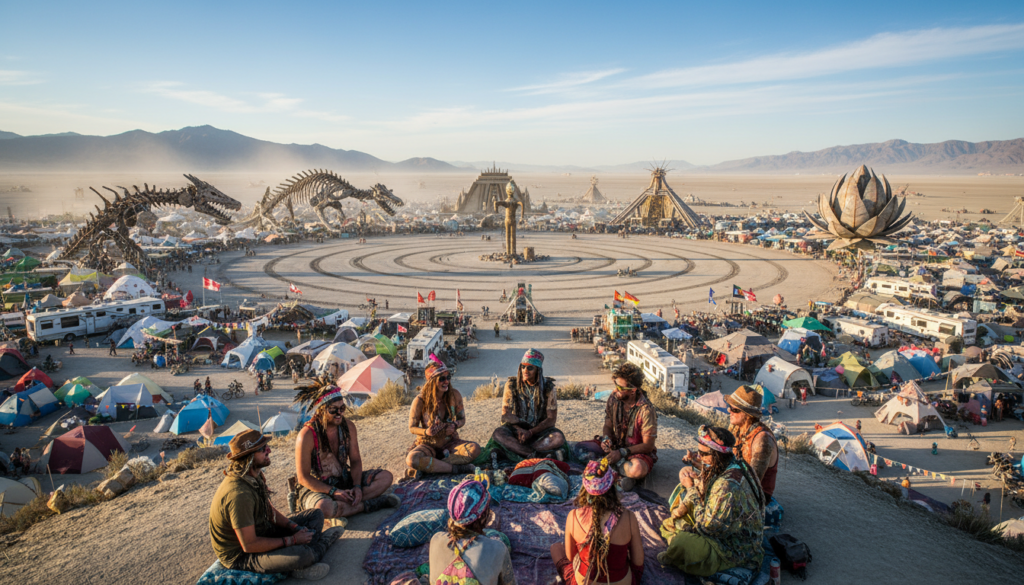
Black Rock City is organized to keep people safe and help emergency teams find any address fast. The layout feels deliberate, not urban for show; it exists so services, volunteers, and visitors can move together without chaos.
The grid system and why it matters
The city uses a clear grid so a camp can be described like an address. That makes it easy for medics, DPW, and neighbors to locate you quickly.
Tip: learn your radial and street before exploring. The grid is the backbone of safety and practical navigation.
Driving, speed limits, and approved art vehicles
Speed on playa is strictly 5 mph. That low limit keeps a bike-heavy, pedestrian environment safer during day and night.
Private driving is limited. Only approved mutant vehicles and service rigs may cruise the roads. Vehicles are vetted to meet safety and noise rules.
The trash fence and Leave No Trace in practice
A 9.2-mile temporary trash fence rings the event area. It catches wind-blown debris and acts as a visible pledge to clean up after the city closes.
Leave No Trace isn’t just a rule; the fence reminds residents that the playa must return to its natural state.
How rules shape the lived reality
The grid, slow speed, vehicle limits, and trash fence work together. Structure reduces injury, confusion, and lost-person incidents, which gives participants more freedom to create and connect safely.
Art on the Playa: Interactive Installations, Fire, and Big Builds
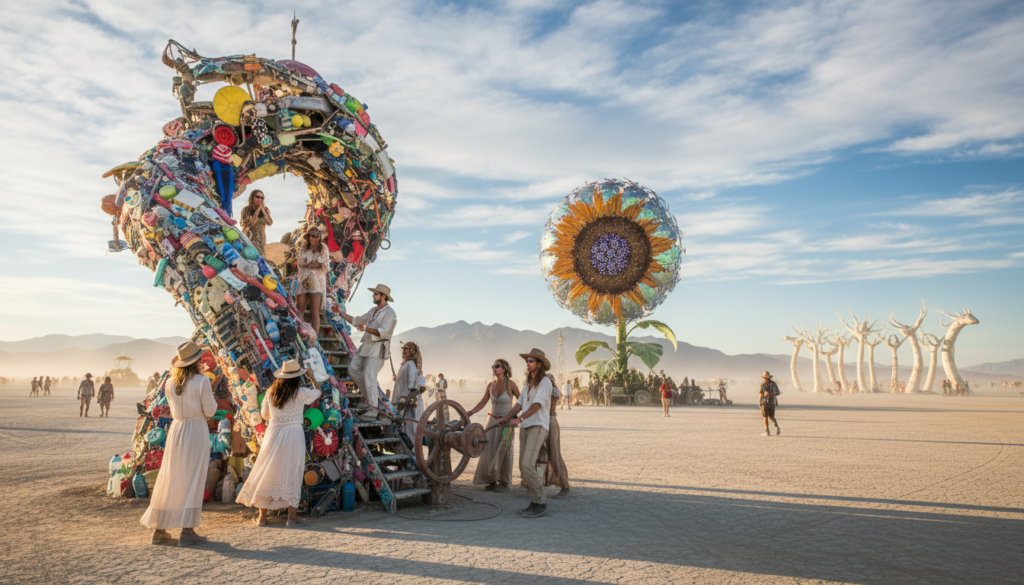
Art on the playa turns the temporary city into a living gallery where anyone can be a creator. In Black Rock City there are no curated headliners; the promise is simple: you step into a participant-made world and help shape the show.
How the city creates the show
No headliners means no fixed concert schedule. Instead you’ll find interactive sculptures, experimental structures, pop-up performances, and spontaneous music around every corner.
Fire rules and safety
Burns and flame pieces run under strict permits. Approved burn platforms and safety teams protect artists and visitors. Fireworks are banned to reduce risk in the nevada desert and to protect fragile installations.
Art beyond the playa
Big builds often live on after the event. Notable pieces have moved to Reno—examples include Space Whale and BELIEVE downtown—showing how playa projects influence the wider art world.
Walk, wander, and say yes. The best way to experience more art is to explore, join a build, or accept an invite. The city itself is the performance.
Theme Camps and Community Life in Black Rock City
In a temporary city, camps serve as the social engine that turns strangers into neighbors.
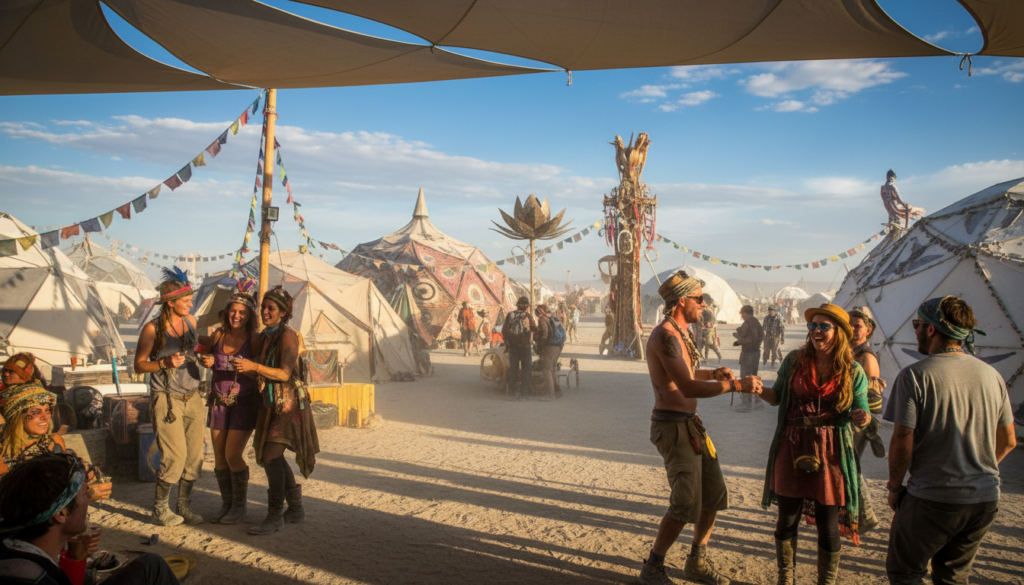
What camps are: organized groups that build shared spaces, run services, and offer gifts. They range from tiny shade awnings to full kitchens, art builds, and nightly gatherings. For first-timers, a camp is often your first contact with the wider community.
How camps shape your week
Camps decide where you sleep, who you eat with, and which projects you join. They give structure to a chaotic landscape. That structure makes a short week feel familiar and reliable.
Contributing without overcommitting
Realistic ways to help include setup or strike shifts, greeting visitors, kitchen turns, or hosting a short workshop. Even short volunteer slots add value.
- Sign up for one clear task each day.
- Share skills like cooking, bike repair, or sound-checks.
- Rotate duties so no single person does all the work.
Pacing matters. A steady, small contribution keeps you present and prevents burnout. If you overcommit, your health and the camp’s vibe can suffer.
The home feeling: routines, shared chores, and friendly neighbors create fast bonds. That sense of belonging is one of the most common memories people take away from Black Rock City.
Respect your camp agreements: show up on time, follow the rules, and remember each bit of effort helps others experience the city. If you want related outdoor ideas, see a short guide to glamping activities.
Mutant Vehicles, Art Cars, and Nightlife Culture
When darkness falls, people trade maps for curiosity and explore a city that moves and sings.
What a mutant vehicle is and why rules matter
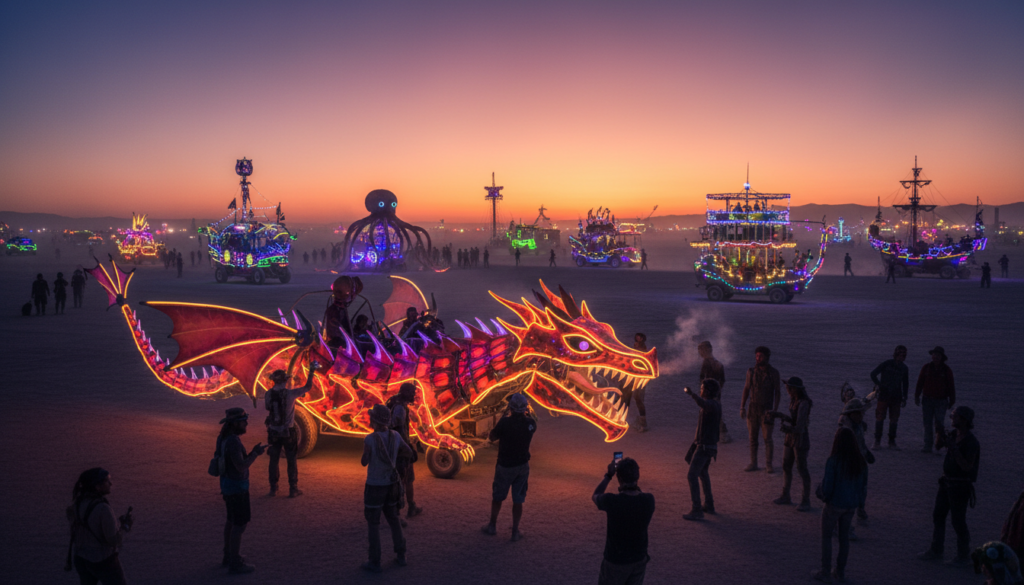
Mutant vehicles are heavily transformed cars, buses, or rigs approved to operate on playa. They act as moving art, transport, and pop-up stages.
Approval exists for a reason: visibility, low speed, safe lighting, and clear operator rules protect pedestrians and bike traffic. Safety standards are practical, not arbitrary.
Nightlife without a lineup
There are no headliners. Instead, music and dance appear at camps, on art cars, and in surprise spots across the flat. Discovery replaces schedules.
Some nights pulse with loud sound and crowds. Other nights feel quiet and surreal. Burners choose their way each evening.
Tips and expectations
- Light your body and bike so drivers and walkers see you.
- Plan meetup points and watch distances in the dark.
- Respect consent and look out for fellow people as civic responsibility.
| Thing | Why it matters | Practical tip |
|---|---|---|
| Mutant vehicle rules | Protects pedestrians and bikes | Follow operator signage and lights |
| Late-night music | Creates shared, spontaneous scenes | Carry earplugs and a small light |
| Personal safety | Keeps community trust strong | Agree on check-ins with campmates |
For calmer outdoor ideas and prep that help your late-night experience, see these glamping ideas.
The Two Big Rituals: Burning the Man and the Temple
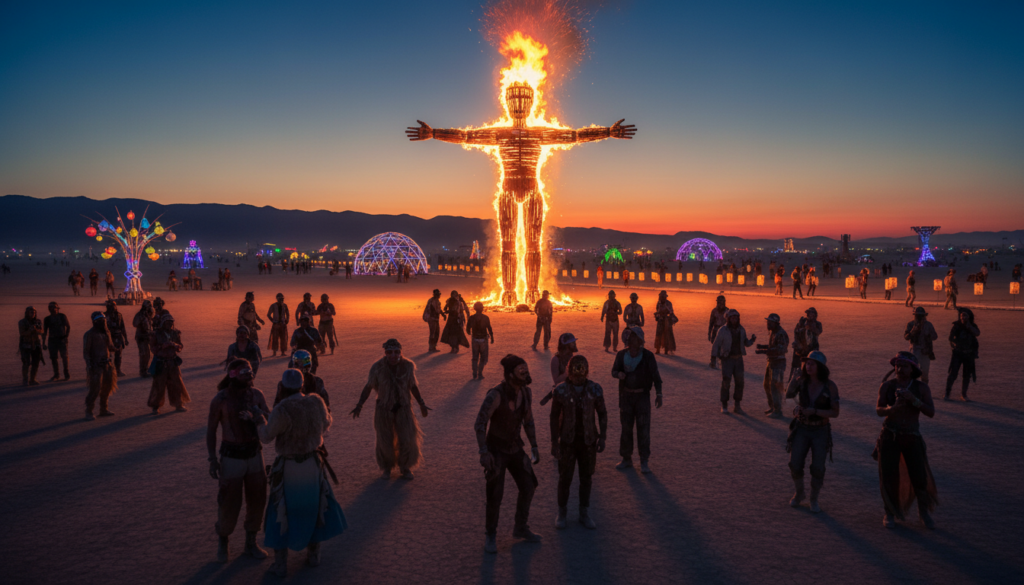
The week builds toward two opposite but linked rituals—an explosive communal burn on Saturday night and a reflective service at the Temple.
Saturday night effigy and its meaning
The event’s name comes from the symbolic burning of the Man on the Saturday evening before Labor Day. That burn gathers thousands to watch and to participate.
What happens: crowds form, music swells, and the structure is lit as a shared release. For many, the scene feels powerful, cathartic, or simply awe-inspiring.
Meaning varies: some see transformation, others celebration or closure. No single explanation fits everyone.
The Temple as a place for memory and reflection
The Temple is quieter and intentionally contemplative. People leave notes, mementos, and messages for loved ones.
Built each year with support from art grants, the Temple invites slow, respectful visits. It is a place for grief, thanks, or private ritual.
Respectful etiquette: slow your pace, lower voices, and treat offerings as sacred. Observe the mood and follow posted guidance at the site.
| Ritual | When | Tone | Key action |
|---|---|---|---|
| Effigy burn | Saturday night before Labor Day | Communal, cathartic | Gather, witness, participate safely |
| Temple | Throughout the week, culminating at closure | Quiet, reflective | Leave messages, observe silence, respect offerings |
The rituals add cultural value: they turn spectacle into shared feeling. Participation and immediacy make these moments personal, even in a large temporary place.
For related outdoor lifestyle ideas, see a brief note on beach glamping.
Tickets, Timing, and What a Typical Week Looks Like
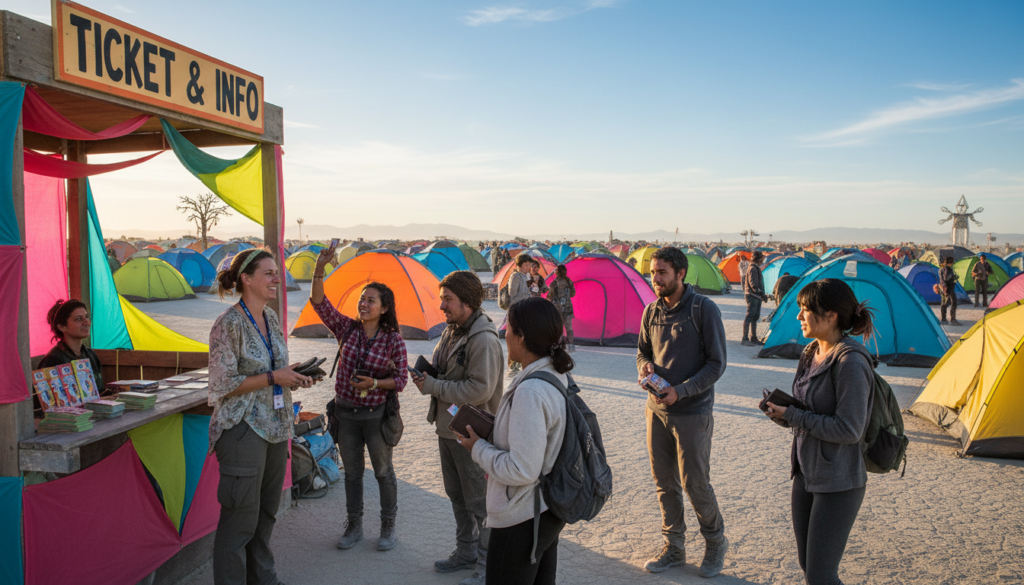
Each late summer the playa converts into a temporary city timed to end with Labor Day. The event spans nine days, with arrival, build, peak nights, and a final cleanup that restores the land.
When it happens and why timing matters
The schedule centers on Labor Day weekend so travel and ritual converge. Weather patterns, highway volume, and the tradition of the final effigy burn all rely on that long-holiday window.
Scale and participation data
By 2019 official participation reached 78,850, showing the event hosts tens of thousands of people like a real temporary city.
Ticket costs and what the money supports
Ticket pricing varies; some reporting cites totals near $725 when a ticket and vehicle pass are combined. Higher-tier options exist for donors and reduced-price programs help access.
What that fee covers: permits, infrastructure, medical teams, sanitation, public works, and event staffing—not daily food or camp supplies.
- Arrival days: set up camp and orient to the grid.
- Midweek: art, workshops, and community shifts.
- Peak nights: major rituals and late-night exploration.
- Final day: strike camp and Leave No Trace.
| Item | Typical detail | Why it matters |
|---|---|---|
| Duration | Nine days around Labor Day | Concentrates travel and events |
| 2019 attendance | 78,850 people | Scale affects logistics and safety |
| Average cost | ~$725 (ticket + vehicle pass) | Funds city systems and permits |
Bottom line: buy your ticket early, plan for a full week of setup, contribution, and strike, and remember admission supports operations—but everyday survival depends on your packing, teamwork, and willingness to gift and participate.
Planning Your First Burn: Prep, Packing, and Expectations
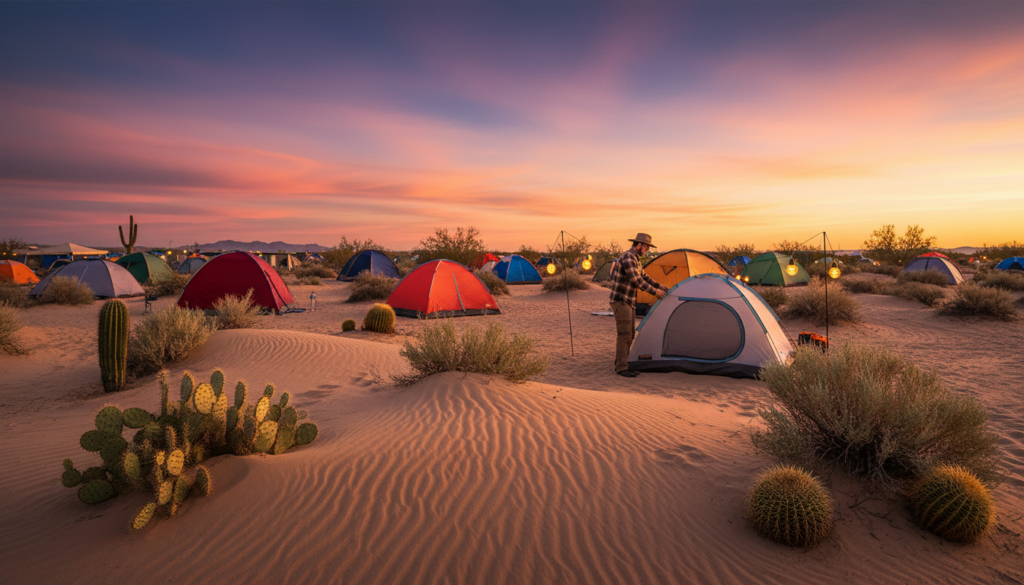
Start your preparation with a simple truth: the high desert demands respect and planning. This guide gives practical steps so your first week is safe, comfortable, and joyful.
Desert basics: water, shelter, dust, and temperature swings
Bring ample water: plan at least 1.5 gallons per person per day for drinking and basic use. Mark water supplies and rotate containers so everyone knows where to refill.
Pack a sturdy shade structure and layered clothing. Days get hot and sun-intense; nights can drop quickly.
Dust protection matters: goggles, N95 masks, and sealed containers keep gear and lungs safer when wind kicks up.
Road travel, arrival, and leaving strategies
The road to the playa can be slow. Allow extra travel time, expect checkpoints, and carry extra fuel and a spare tire.
Arrive early if you can; late arrivals face long lines and tired crews. For exit, stagger departures with campmates to avoid the biggest queues.
Avoid common first-timer mistakes
Underestimating wind and dust is the top error. Also, don’t overpack novelty items while skipping essentials.
Try not to do everything at once. Pace your effort and schedule breaks; steady work lasts longer than bursts of energy.
Make camp feel like “home” while staying self-reliant
Simple comforts make a big difference: soft lighting, a few chairs, a communal water bin, and a small nightly routine create a homey vibe.
Share tasks and rotate duties. Teamwork keeps gear functional and energy steady, so everyone enjoys the experience.
“Preparation is part of participation: take care of basics so you can join the community fully.”
- Checklist mindset: water, shade, dust gear, layers, tools, and a clear exit plan.
- Travel tip: plan for slow road conditions and arrival waits.
- Community tip: sustainable effort and teamwork beat last-minute heroics.
Safety, Law, and Controversies: What to Know Before You Go
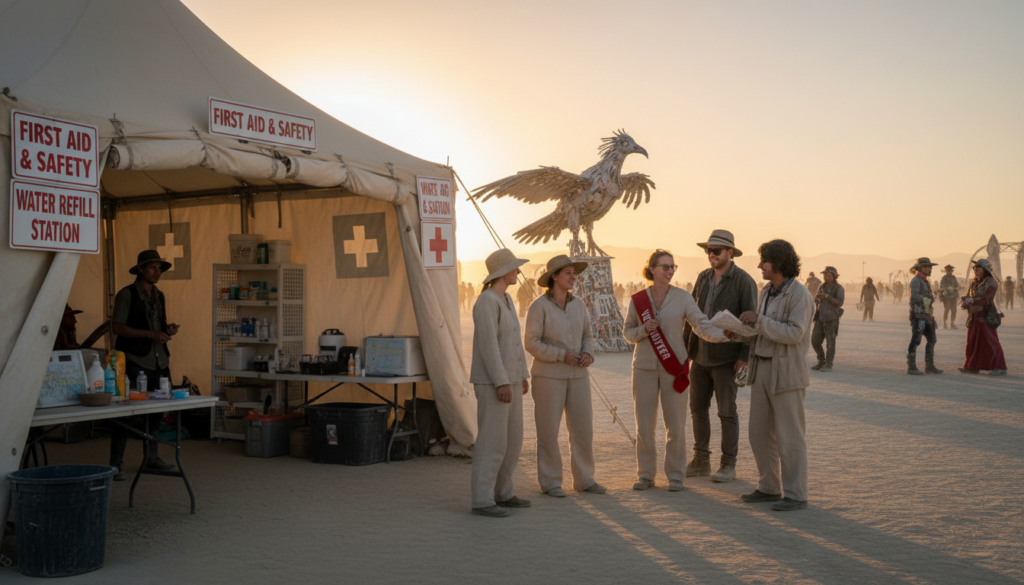
Legal oversight and community standards keep the temporary city functioning and safe. The playa sits on federal land and falls under Nevada law. That means the idea that “anything goes” is misleading and risky for people who assume otherwise.
Law and enforcement on federal land
Federal rules and state statutes apply. Enforcement can happen on site or afterward. Simple infractions or serious violations may carry fines or criminal charges.
Substance-use myths and sober options
The reputation for permissiveness does not change legality. Drug use is illegal and outcomes vary by camp. There is a growing sober community, including “Sober on Playa” groups and multiple daily 12-step meetings for those who choose recovery or clear-headed participation.
Civic responsibility in practice
Safety, consent, and fire rules are practical expressions of the event’s Ten Principles. Look out for campmates, know your limits, and follow posted guidance.
“Assume the law applies—plan ahead, act responsibly, and protect your neighbors.”
| Topic | Why it matters | Action |
|---|---|---|
| Legal status | Federal & Nevada jurisdiction | Follow laws; carry ID |
| Substance use | Illegal and enforced | Choose sober options or know risks |
| Community care | Keeps people safe | Check in with campmates; report hazards |
Burning Man Today: Recent Years, Weather Challenges, and the Present Moment
Recent years have tested the festival with cancellations, weather extremes, and renewed financial scrutiny. The pandemic forced official cancellations in 2020 and 2021. In 2021 some people still gathered off-site; organizers estimate an unofficial crowd of roughly 20,000 that year.
Wet playa conditions are a practical threat. When the surface saturates, vehicle movement stops and plans change fast. Camps must shelter in place and conserve supplies until the ground dries.
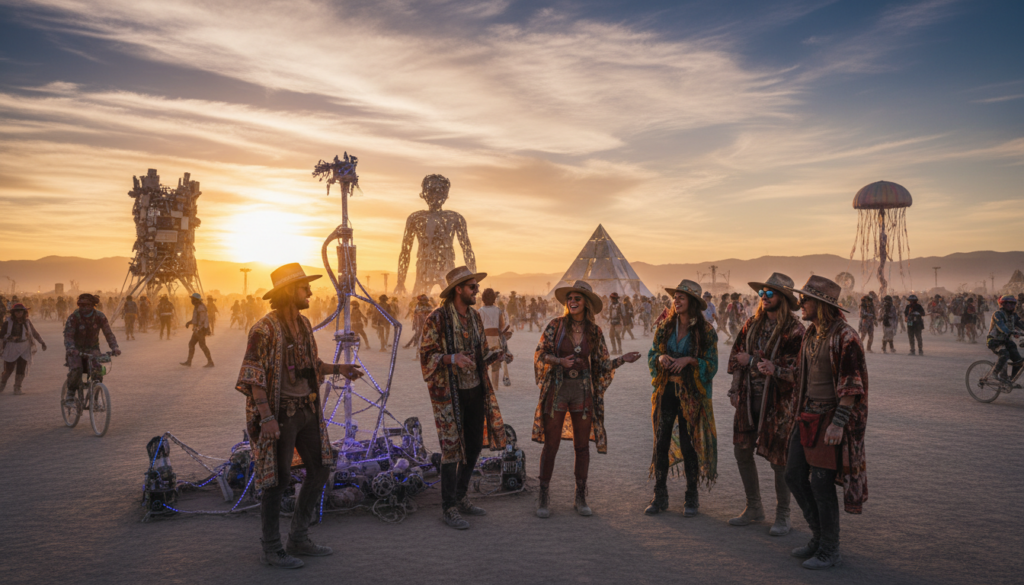
Cancellations and unofficial gatherings (2020–2021)
The pandemic years shuttered the official event for two consecutive years. Unofficial gatherings emerged in 2021, showing both community resilience and operational risk. Those gatherings lacked full city services and reinforced why an organized Black Rock City matters for safety and coordination.
Wet playa realities and the 2023 flood
Heavy rain in 2023 produced flooding that halted vehicle movement until the playa dried. Organizers advised people to conserve food, water, and fuel. Event radio channels such as BMIR 94.5 FM and GARS 95.1 provided core updates during the lockdown.
Operational and financial pressures now
Running a temporary city requires large budgets for permits, public works, and medical teams. Recent years brought fundraising campaigns and public discussion about financial sustainability. That pressure affects program decisions and ticketing strategies.
- Expect uncertainty: weather or public-health issues can alter plans.
- Pack extra supplies and a plan to shelter in place if needed.
- Follow official channels (radio and organizer updates) for real-time guidance.
| Item | Recent example | Practical takeaway |
|---|---|---|
| Cancellations | 2020–2021 official cancellations; ~20,000 unofficial in 2021 | Plan alternatives; do not rely on ad-hoc services |
| Wet playa | 2023 rain caused vehicle lockdown; radio updates used | Conserve water/food/fuel; be ready to wait |
| Financial pressure | Ongoing fundraising and budget scrutiny | Expect evolving ticketing and community funding asks |
Bottom line: modern reality means flexibility matters. Use weather readiness, pack extra essentials, and monitor official channels. That approach keeps you safe and lets you focus on participation when the time is right.
Conclusion
Conclusion
For first-timers, the clearest frame is simple: you are part of a short-lived civic experiment in the Nevada desert. The week in Black Rock City turns art, camps, and shared labor into a living city that lasts only for a brief time each year.
The big symbols mean different things: the effigy burn is a communal celebration while the Temple offers quiet reflection. Both rely on participation, respect, and the Ten Principles to hold meaning.
Practical systems protect the experience—grid navigation, 5 mph limits, mutant vehicle approvals, strict burn safety, and the trash fence that enforces Leave No Trace. These rules make the art and community possible.
Plan well and show up thoughtfully: bring essentials, build time into your schedule, and treat preparation as part of participation. If you go, bring what you need, offer what you can, and let the art, people, and immediacy shape the rest of your week.