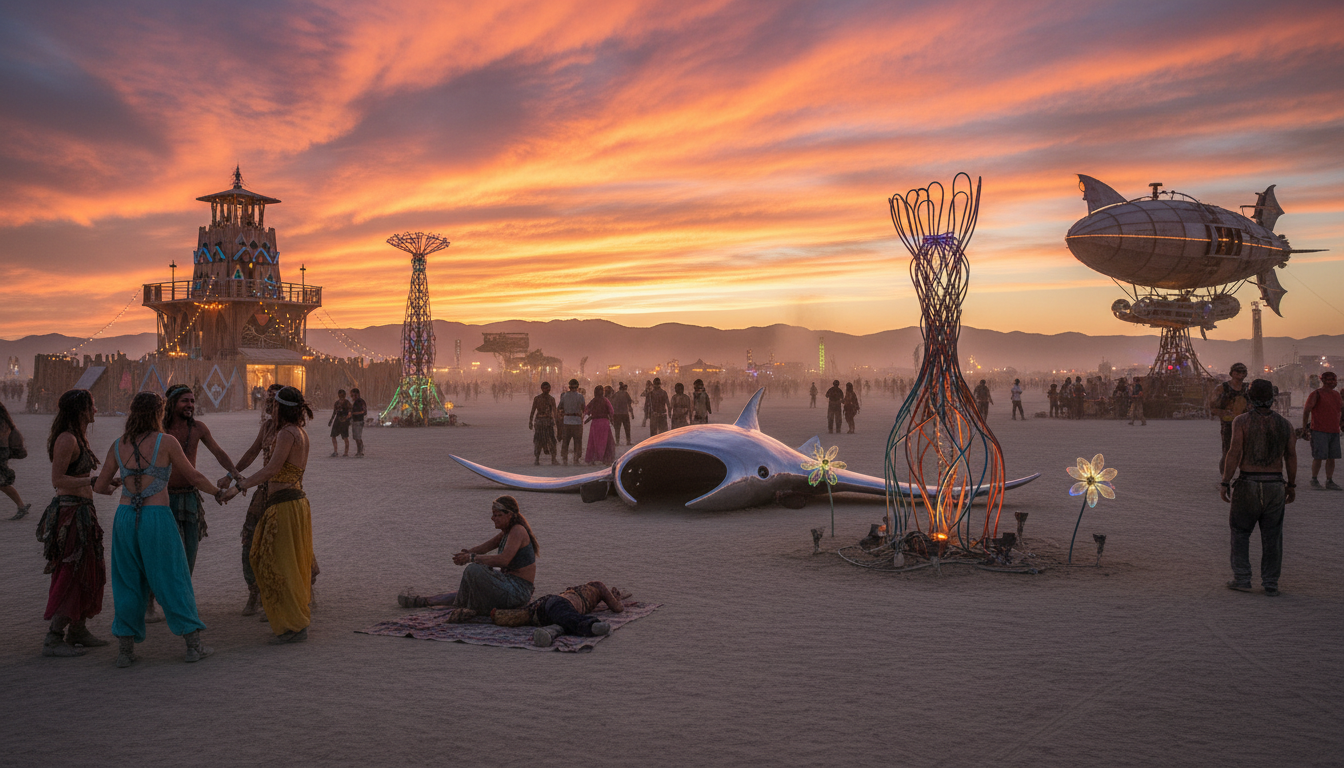
Answer: This event takes place on the vast playa of the Black Rock Desert in northwestern Nevada, at a temporary city called Black Rock City.
The site sits far from typical venues. Expect remote roads, open sky, and minimal services. Participants build the art, camps, and activities that make the event a living, temporary city each year.
In this section you will learn exact map coordinates, how far it is from Reno, when it happens around Labor Day, and what arrival and exit look like. Black Rock City appears each year and vanishes after the event, so directions usually point to the Black Rock Desert region rather than a street address.
The location shapes every plan: dust, heat, wind, and occasional rain that can turn the playa to mud. If you are planning now, these geographic facts remain useful even as dates and rules change.
For context on event styles and options for outdoor stays, see this guide to glamping vs. camping.
Key Takeaways
- Black Rock City is a temporary city built each year on the playa.
- The event sits in the Black Rock Desert, northwestern Nevada.
- It runs around Labor Day and affects travel plans and logistics.
- Expect harsh desert conditions: dust, heat, wind, and possible mud.
- Directions point to the region rather than an address; arrival/exit have strict windows.
Where is Burning Man located
A temporary settlement springs up on a flat playa in the heart of the Black Rock Desert. This spot becomes a working city for the week and hosts art, camps, and communal life.
The primary location is Black Rock City, built on the Black Rock Desert playa in northwestern Nevada. For official matters, the event site sits inside Pershing County, Nevada, United States. That jurisdiction matters for permits, emergency response, and local services.
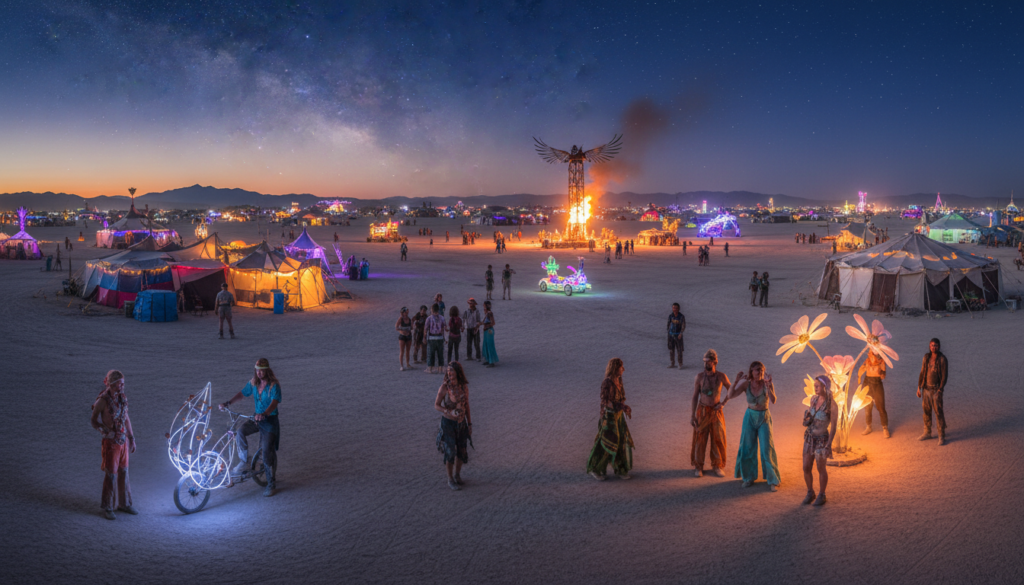
Black Rock City in the Black Rock Desert, northwestern Nevada
The name Black Rock City refers to the temporary city itself, not a year-round town on maps. On most mapping apps the location only appears during the event season.
Pershing County, Nevada, United States
Think: Nevada desert north of Reno, then narrow to the Black Rock Desert basin where the playa sits. The remoteness is deliberate—wide-open space allows large installations, safer navigation, and distance from standard urban infrastructure.
- Primary place: Black Rock City on the playa.
- Jurisdiction: Pershing County for permits and services.
- Mental map: north of Reno, inside the Black Rock basin.
Next, I’ll give exact coordinates and explain what that pin means on a map.
Exact location details: coordinates and what they mean on a map
A decimal coordinate pair serves as the festival’s clearest, constant address on maps.
Official coordinates: 40.7869°N, -119.2042°W (40°47′13″N 119°12′15″W). These numbers are the most reliable “address” for a temporary desert city.
To drop a pin, paste the decimal format into Google Maps, Apple Maps, or most GPS units. That method gives the easiest route planning and avoids ambiguous place names.
Why the playa matters
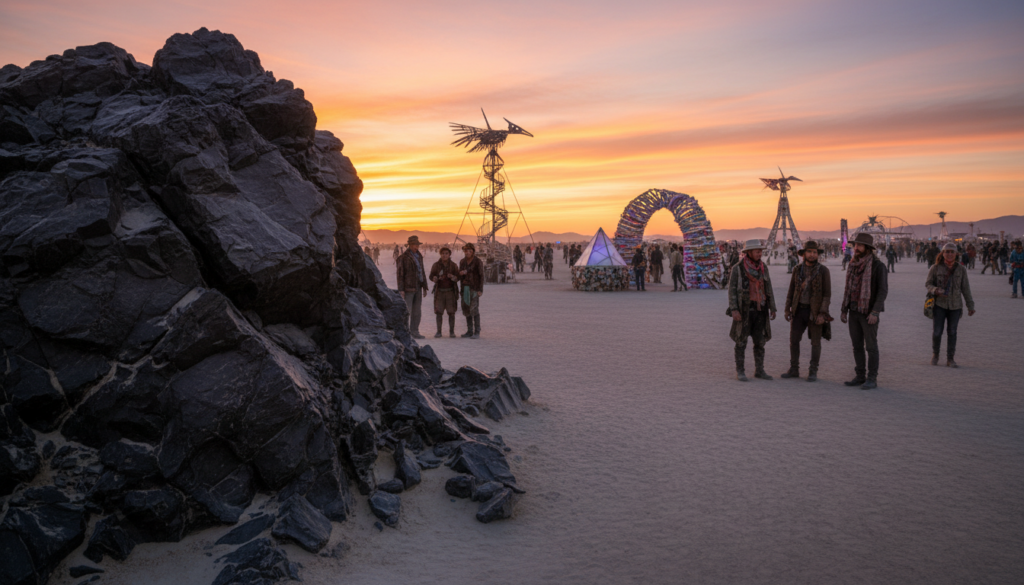
A playa is a dry lakebed. It is flat and vast, which lets organizers lay out a radial grid and place large art safely.
When dry the surface is hard but dusty. When wet the playa becomes thick mud and can trap vehicles or delay exits.
What “Black Rock” refers to
The name black rock describes local geology and the broader black rock desert region. It names the basin, the landscape, and the legal area used for permits.
This openness is iconic but also means minimal services. Good planning and self-reliance are part of attending the event.
| Data Point | Value | Practical tip |
|---|---|---|
| Coordinates (decimal) | 40.7869°N, -119.2042°W | Paste into maps for a direct pin |
| Surface type | Playa (dry lakebed) | Expect dust when dry; mud when wet |
| Regional name | Black Rock Desert | Used for permits and official directions |
| Planning note | Minimal services on-site | Bring water, shelter, and supplies |
Black Rock City explained: the temporary city that appears every year
A radial, addressable settlement appears annually, designed to support massive art and close-knit community.
Black Rock City is a purpose-built temporary city where participants co-create the experience through camps, large-scale art, and civic effort.
The layout is intentional. Streets form a predictable grid with numbered addresses so people can find a camp in dust or at night.
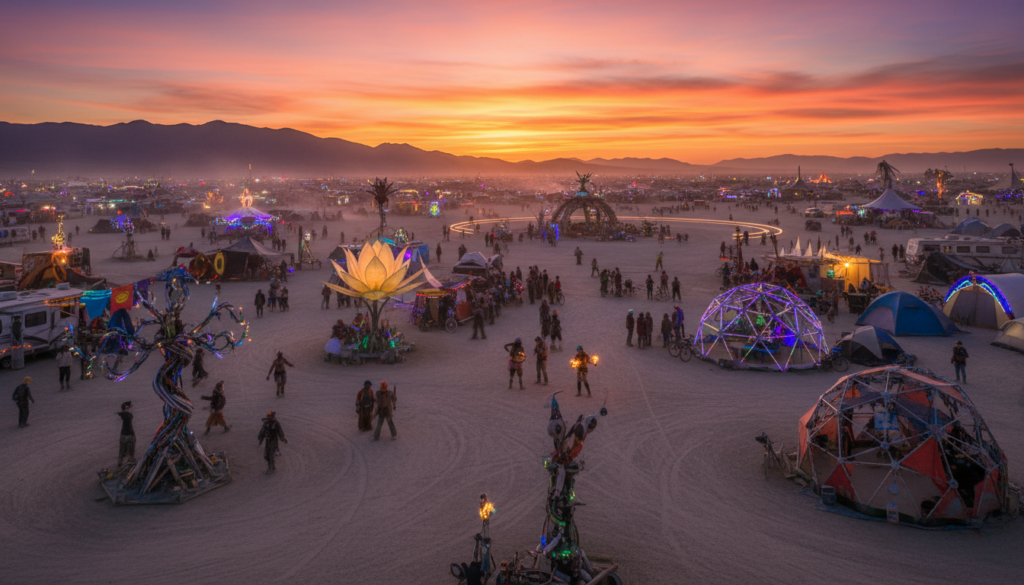
A city built for community, art, self-expression, and self-reliance
The culture of the city asks everyone to contribute. People share resources, run theme camps, and build interactive art that shapes daily life.
How the grid layout helps navigation and emergency response
Organizers design streets so medics and fire teams can be routed to an exact block quickly. That planning matters in low visibility and during peak activity.
The city is constructed each year, runs intensely for the event week, then disappears to leave the playa as it was. This cycle reinforces self-reliance and neighbor support.
Quick note: The grid also sets rules for movement—bikes and foot traffic dominate, while vehicle use stays limited to protect safety and access.
How far is Burning Man from Reno and other major landmarks?
Most travelers use Reno as the last big stop before heading into the desert. It’s the practical place to refuel, buy supplies, and handle last-minute gear checks.
Reno distance and typical drive time expectations
Distance: reports vary. The site sits roughly 100 miles (160 km) north-northeast of Reno, though some routes and references list about 141 miles (227 km).
Drive time often varies more than the mileage. Heavy arrival traffic, entry processing, and slow-moving convoys can add hours to a trip that looks like a two- to three-hour drive on a map.
North Reno vs. the festival site: what “remote” really means
Once you leave north reno the landscape thins quickly. Urban services drop off and you move into wide-open desert.
Remote here means long stretches without gas stations, repair shops, or medical centers. Plan as if help will be far away.
Nearest small towns and services on the way in
- Garberville-style stops are small—expect limited hours and supplies.
- Winnemucca and smaller communities offer basic fuel and groceries along some routes.
- Final stretches include unpaved road segments, so top off fuel and water before you’re committed.
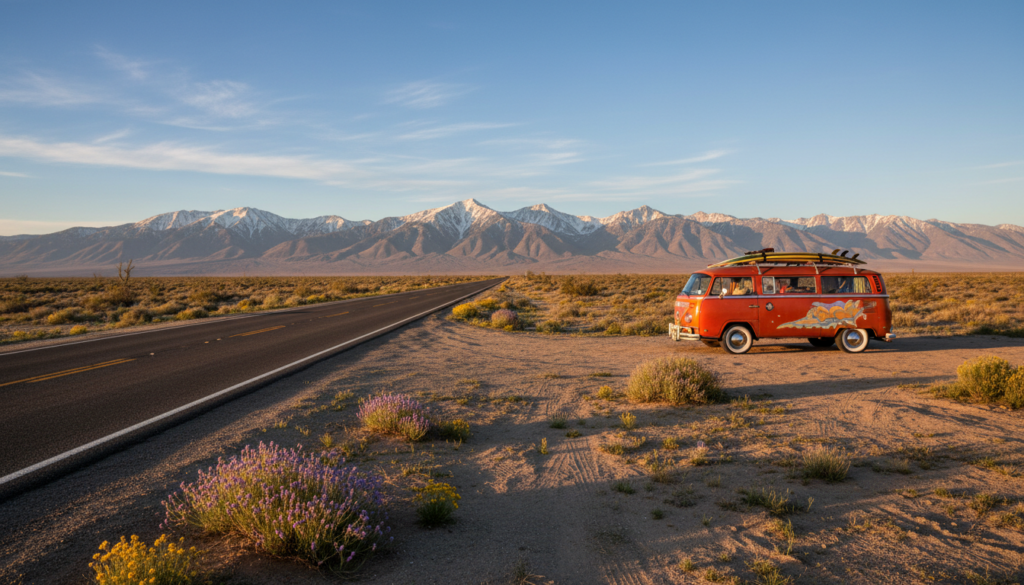
Practical tip: stock up early — stock up in Reno to avoid running low on essentials. Expect delays near arrival days and remember weather can make the last road slow or impassable.
When Burning Man happens: the week leading up to Labor Day
The event takes place across a nine-day window that ends on Labor Day. That steady schedule helps you plan time off and gear well in advance.
The festival typically begins in late August and runs through the Labor Day holiday. Example dates for planning: Aug 30, 2026 – Sep 7, 2026. Use that pattern as a reliable template for future years.
Typical event timing and what “now” means for planning
Now means: assume late‑August arrival and a Labor Day finish. Book travel early, reserve time off, and prepare gear weeks ahead.
Peak arrival happens the days before the main ceremonies. Peak departures follow Labor Day—expect long exits tied to those headline moments.
The Saturday burn and the closing days in Black Rock City
The central effigy ritual occurs on the Saturday evening before Labor Day (the penultimate night). This burn is a major shared moment for many participants.
After the burn, the final day and Labor Day itself host ceremonies, camp breakdowns, and a slow wind‑down of installations. Camps dismantle, art is packed, and volunteers coordinate cleanup.
- Event window: nine days ending on Labor Day.
- Key moment: Saturday effigy burn (penultimate night).
- Closing days: ceremonies plus camp and art teardown.
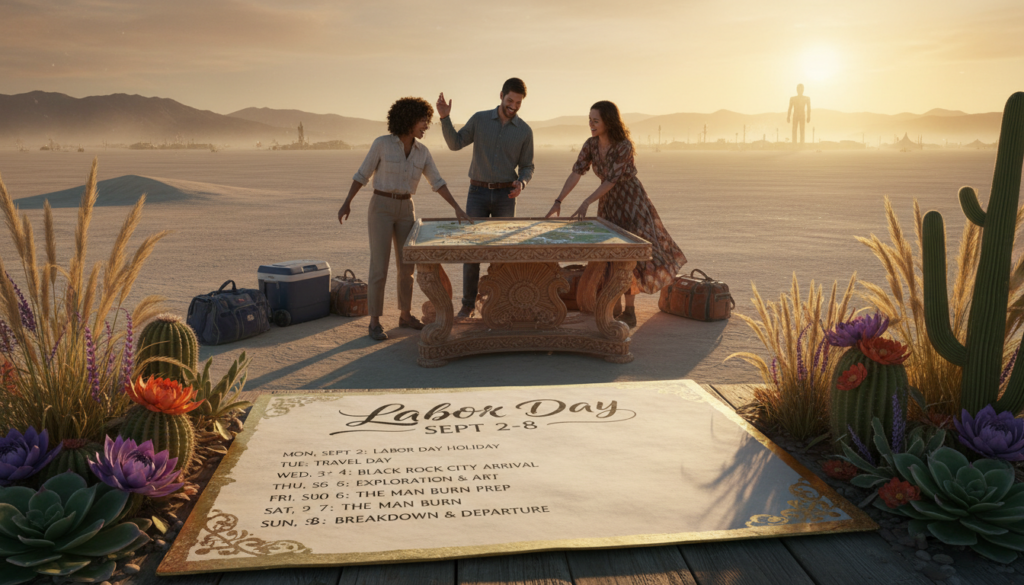
Always verify published dates for the current year before final bookings. When you’re ready to pack for comfort and style at a desert event, check this guide for practical tips: packing for glamping and comfort.
Getting to Burning Man: roads, routes, and entry into the desert
Approaching the playa feels like funneling into a single desert gate that thousands aim for at once. Plan for slow-moving lines as many people arrive within a tight window.
Main access roads and why arrivals build up
Multiple highways feed a limited entry point, so traffic concentrates long before the final turn. When thousands travel together, delays stack quickly.
What to expect on the dirt road to the site
The last stretch includes an unpaved ~8 km dirt road to the nearest highway. Expect washboard surfaces, ruts, and heavy dust that reduce visibility for cars and RVs.
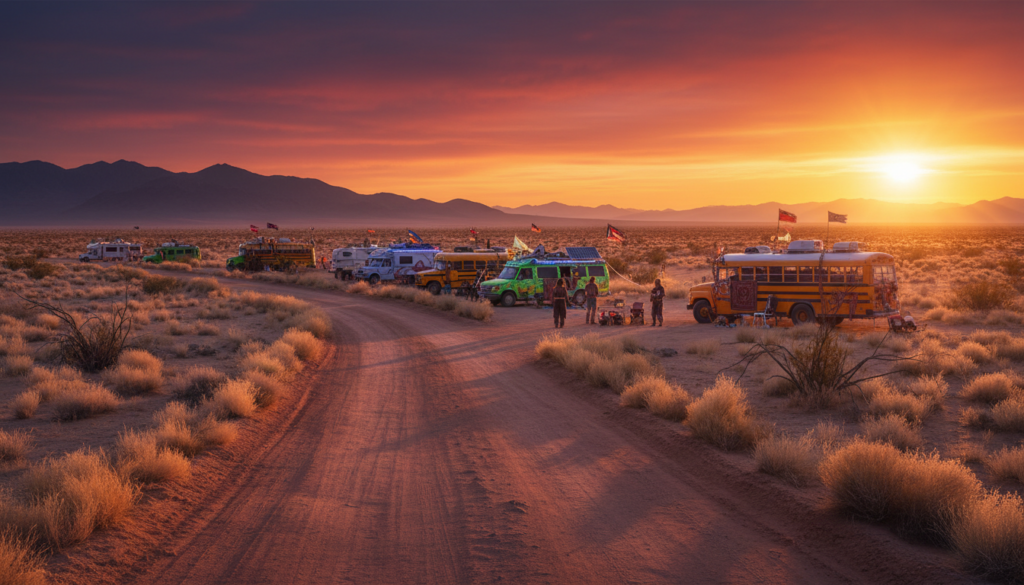
Vehicle readiness matters: check tires, carry spares, top off fuel, and secure gear to handle bumps and jolts. Slow speeds keep everyone safer on the rough approach.
Why weather can change travel plans fast
High wind can produce whiteout dust. Rain can turn the approach and playa into mud, making roads impassable.
- Give yourself extra time and flexible plans.
- Carry extra water and emergency supplies.
- Expect slow progress and be patient—safety trumps speed.
Arriving and leaving: gate procedures, exodus traffic, and closures
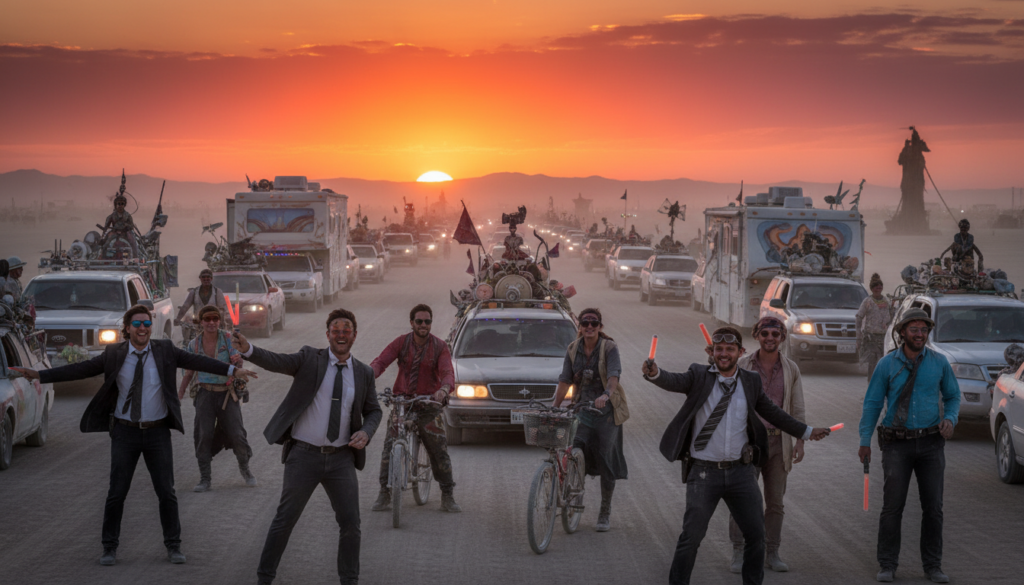
Exiting the desert can become a slow, managed operation that tests patience and preparation. Staff coordinate departures so thousands of attendees leave safely. That coordination is called Exodus.
What “Exodus” means and why it can take hours
Exodus refers to the planned, staged departure when large volumes of people move toward the highway. Limited lanes and safety checks create long waits.
Vehicle volume, checkpoint processing, and careful routing all add to the total time. Expect delays after major ceremonies and on peak exit days.
How gate and road operations change during storms and emergencies
Weather or medical incidents can force gate shifts or temporary closures. Heavy dust or rain that turns the playa to mud triggers driving bans until conditions improve.
Authorities reopen roads only when safe. That can extend an exit by several hours or a full day, depending on conditions.
Plan for the unpredictable: carry extra food, water, and fuel for the day. This small prep improves your safety and overall experience at the event and helps others too.
Why the location matters: extreme desert conditions on the playa
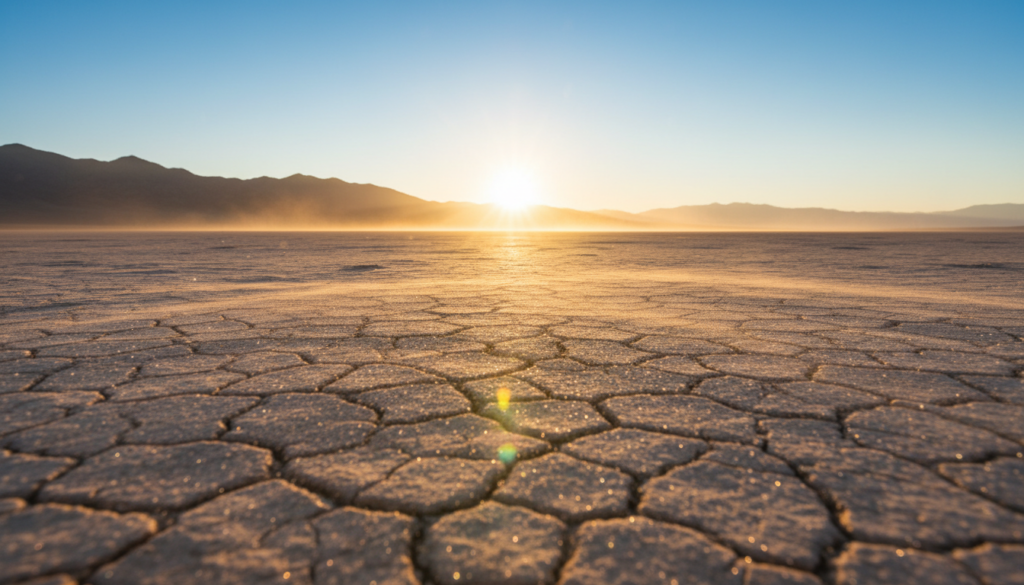
The playa’s weather writes the rules for every plan and every camp. The Black Rock Desert environment shapes comfort, safety, and daily routines more than any single piece of gear.
Heat, wind, and dust storms
High daytime temperatures and strong wind are common. Heat can lead to exhaustion without shade and water.
Dust storms reduce visibility and irritate eyes and lungs. Carry robust dust protection like goggles and N95-style masks.
Rain and “wet playa” realities
When rain hits, the playa turns to sticky mud that grabs shoes and tires. Vehicles can become stuck and roads may close.
Event staff may pause vehicle movement, delay burns, or extend stays until conditions are safe. Expect longer exits when the ground is wet.
Planning for water, shelter, and self-reliance
Bring plenty of water — plan more than you think you need. Conserve food and fuel when warnings appear.
Shelter should be a system: anchored shade, windbreaks, and secure tie-downs. A tent alone is rarely enough.
Pack warm layers for cool nights, spare ties and stakes for wind events, and a sealed bag for electronics and food.
| Challenge | Typical effect | Quick fix | Why it matters |
|---|---|---|---|
| Heat | Dehydration, fatigue | Extra water, shaded rest | Prevents heat illness |
| Dust storms | Low visibility, irritation | Goggles, masks, secure gear | Protects lungs and eyes |
| Wet playa (mud) | Vehicles stuck, road closures | Wait out conditions, carry tow gear | Can extend stay by hours or days |
| Wind | Damaged shelters | Reinforced anchors, windbreaks | Maintains safe camp structures |
Small prep makes a big difference. If you want tips for comfortable outdoor stays, see practical glamping advice at glampings.
What you’ll see at the site: art, burns, and iconic landmarks
Visitors find a shifting landscape of installations that reward walking, biking, and slow exploration.
The effigy and the central burn ceremony
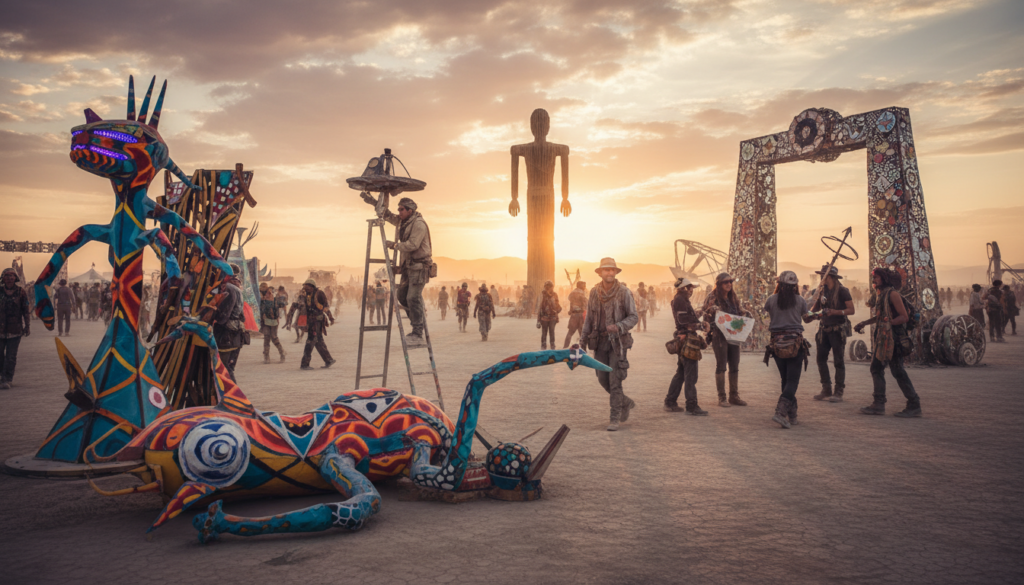
The effigy stands at the city’s center as the most visible symbol of the event. Each year a large wooden figure draws crowds for the final night ritual.
The central burn is a communal moment. People gather to celebrate, release, and witness the dramatic finale that gives the festival its name.
The Temple: remembrance and reflection
The Temple offers contrast — quiet, respectful, and often solemn. Visitors leave notes, mementos, and messages that are read or burned in a separate ceremony.
This place invites pause. It is a space for mourning, gratitude, and private ceremony amid a lively world of activity.
Large-scale interactive art across the desert
Large sculptures, kinetic pieces, and interactive installations scatter the playa. Many works ask you to touch, climb, or pedal to find their effects.
There are no headline acts. Instead, participants create the program. Camps, artists, and makers fill the city with ongoing surprises.
Because the ground is wide and flat, huge pieces are possible and often sit far apart. Plan to bike and wander; the best finds arrive without a schedule.
A quick guide to notable outdoor can help you imagine how large-scale installations fit into big open places.
Theme camps and participants: how thousands create the festival
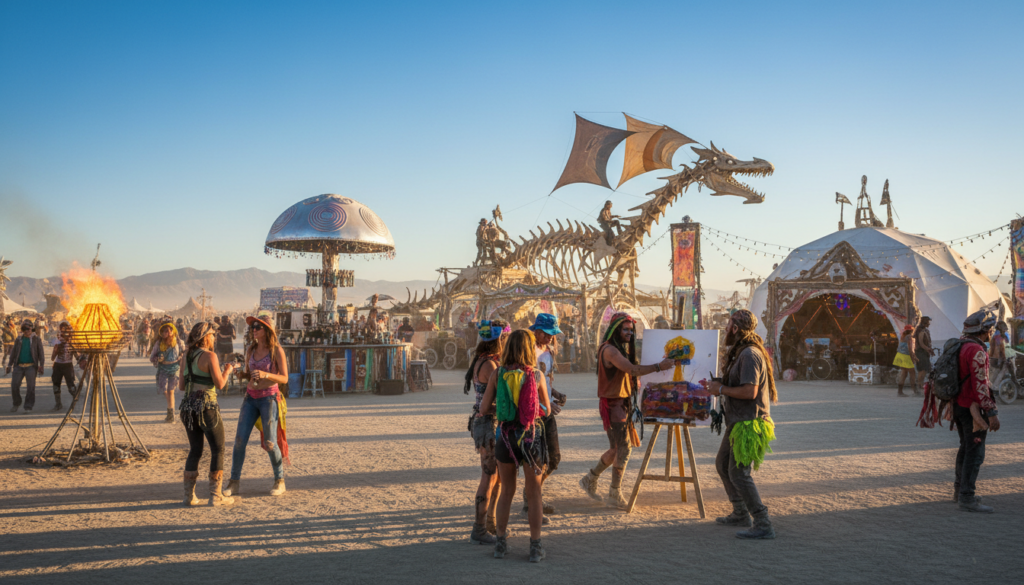
Theme camps form the neighborhood fabric that turns the playa into living rooms, stages, and workshops.
Theme camps are organized groups that set up a shared space with a clear identity. They act as neighborhoods offering activities, meeting spots, and mutual support. Camps often announce schedules, host music sets, and post hours so participants can join in.
Camps shape daily life in obvious and small ways. Morning coffee stations wake neighbors up. Daytime workshops teach skills. At night, sound systems and late-night music draw people to communal dance floors.
Participants—often called burners—do more than watch. They bring labor, ideas, and care. That active contribution keeps camps running and the city alive.
Gift economy basics: giving without expectation
The gift economy means offering goods or services with no expectation of payment. This changes how people interact and builds trust across the community.
Practical gifting looks like this:
- Fixing a neighbor’s bike tire.
- Sharing shade or a cold drink during hot hours.
- Handing out small snacks or offering directions in a dust event.
Thousands of hands working together let the event function without traditional commerce. Camps trade time, skill, and hospitality to make the city feel like a shared home.
| Role | Typical offering | Impact on community |
|---|---|---|
| Theme camp | Music, workshops, shade | Creates gathering points and identity |
| Participant / burner | Labor, art, volunteer time | Maintains infrastructure and spirit |
| Gift exchange | Food, tools, guidance | Builds trust and mutual aid |
Want to see creative outdoor stays beyond the playa? Check practical ideas for comfortable setups at glamping on the water.
Mutant vehicles and transportation rules inside Black Rock City
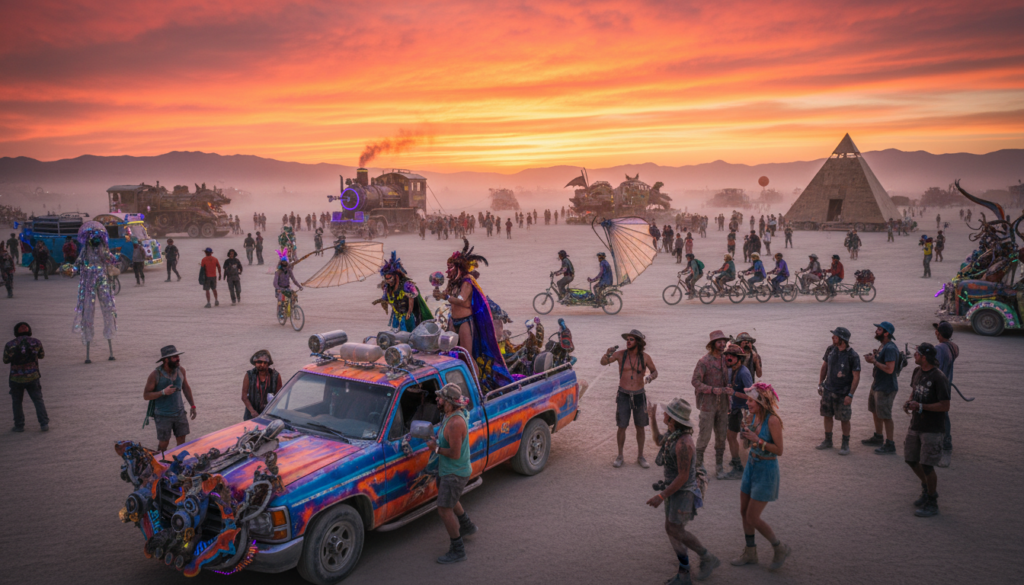
Inside the playa, most people walk or bike, so vehicles play a very limited role.
Core rule: once you arrive and park, regular cars are mostly left at camp. Pedestrian and bicycle traffic dominates the city to reduce serious accidents and keep everyone moving safely.
Why regular cars stay parked
Dense foot traffic and low visibility make driving risky. Limiting cars cuts severe injuries and prevents vehicle-pedestrian collisions.
What counts as a mutant vehicle
Mutant vehicles are approved art cars—creatively transformed rigs that carry people and performance. These rolling sculptures must meet permit rules and lighting requirements to operate after dark.
Speed rules and safe driving practices
The posted speed limits on streets are 5 mph (8 km/h). In dusty or crowded conditions, safe driving means crawl speeds, bright lights, and clear signaling.
| Item | Description | Tip |
|---|---|---|
| Regular cars | Parked at camp, rarely used | Bring a bike for daily travel |
| Mutant vehicles | Art-driven, permitted transport | Check lighting and permit rules |
| City movement | Pedestrian and bike-first | Use lights, bell, and slow speeds |
Tickets, passes, and what your budget should realistically include
Buying entry requires more than a payment—it asks for planning that stretches past the ticket window.
Headline price vs. total spend: A regular ticket has been cited at about $575 in some years. That number covers admission only. When travel, food, water, costumes, and sturdy gear are added, total expenses can climb toward $1,500 for a single participant.
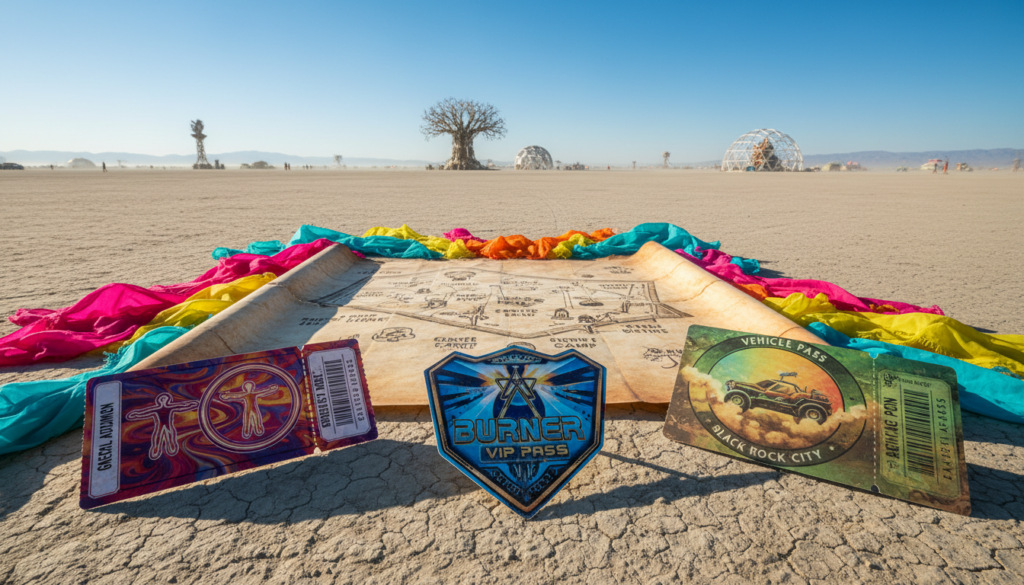
Comparing ticket price to real-world needs
Tickets pay entry. Everything else—fuel, shelter, spare parts, and contingency funds—adds up fast. Plan for transport, pre-event shopping, and time to test gear.
What passes may include and paperwork risks
Some passes grant vehicle access or staging privileges. Missing a permit or vehicle pass can prevent entry or delay arrival. Keep receipts and confirmations handy at gate checks.
Why availability shifts each year and planning tips
Availability changes with demand, operational limits, and broader economic swings. Buy early, budget for extras, and factor cleanup supplies into your spending—trash bags, sealable buckets, and hauling gear keep the playa clean and avoid fines.
| Item | Example | Notes |
|---|---|---|
| Regular ticket | $575 | Admission only |
| Typical total | ~$1,500 | Includes travel, food, gear |
| Passes/permits | Variable | May cover vehicle access or staging |
Leave No Trace in practice: protecting the Black Rock Desert
A shared effort to leave no trace lets this fragile place host art year after year.
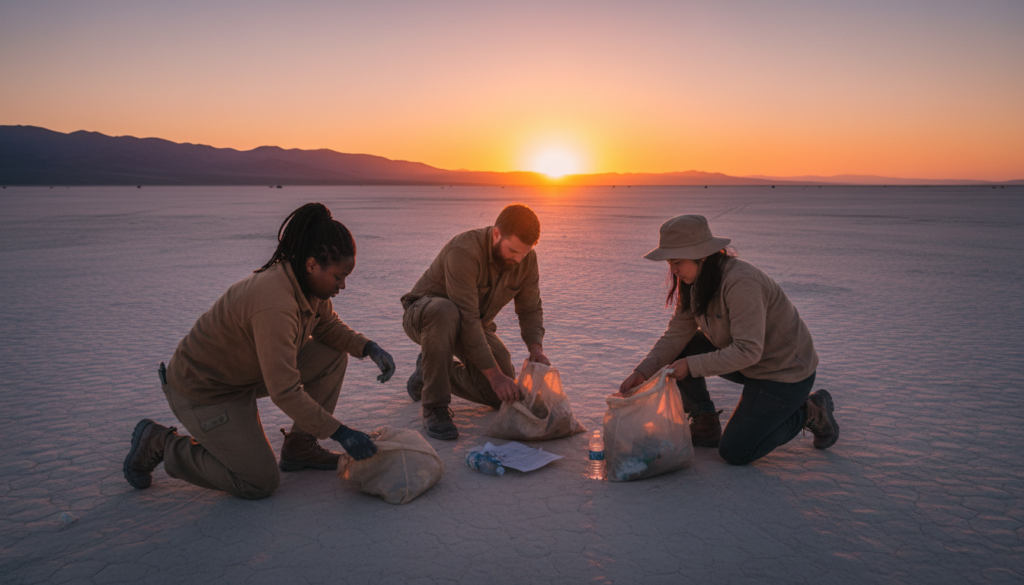
Leaving trace is a practical, on-playa commitment. It asks every person and every camp to pack out what they bring in. Simple routines—secure trash, tie down loose items, and do final sweeps—keep the desert healthy and the event sustainable.
What the “trash fence” does
The trash fence is a physical barrier that runs roughly 9.2 miles around the event footprint. Its primary job: catch wind-blown debris before it drifts into the wider Black Rock Desert.
When strong gusts hit, small items can travel far. The fence reduces that spread and makes post-event cleanup more effective.
How camps handle waste, gray water, and cleanup
Camps follow a pack-it-out policy. Trash is stored in sealed containers and moved off-playa for proper disposal. Teams perform regular sweeps to remove MOOP—micro-trash that hides in tire treads, clothing, and camp crevices.
Gray water must never be dumped on the ground. Camps minimize gray water, collect it in sealed tanks or containers, and remove it for disposal off-site. This practice prevents stains, odors, and long-term damage to the place.
- Secure trash in closed bins; tarp and weight loose loads.
- Do a MOOP sweep before departure: check grounds, gear, and bike tires.
- Capture gray water and dispose of it outside the desert per event rules.
| Action | Why it matters | Practical tip |
|---|---|---|
| Pack-it-out trash | Prevents litter from entering the desert ecosystem | Use labeled, sealed bins and remove them daily |
| MOOP sweeps | Removes micro-trash that attracts wildlife and spreads | Do a final perimeter walk and check tire treads |
| Gray water capture | Avoids staining and contamination of playa surface | Collect in tanks and dispose at approved facilities |
| Trash fence | Stops wind-blown debris from leaving the event area | Report fence damage to staff so it can be repaired quickly |
Burning Man’s Ten Principles and how they show up on the playa
A concise code of conduct helps turn a temporary city into a functioning, caring community.
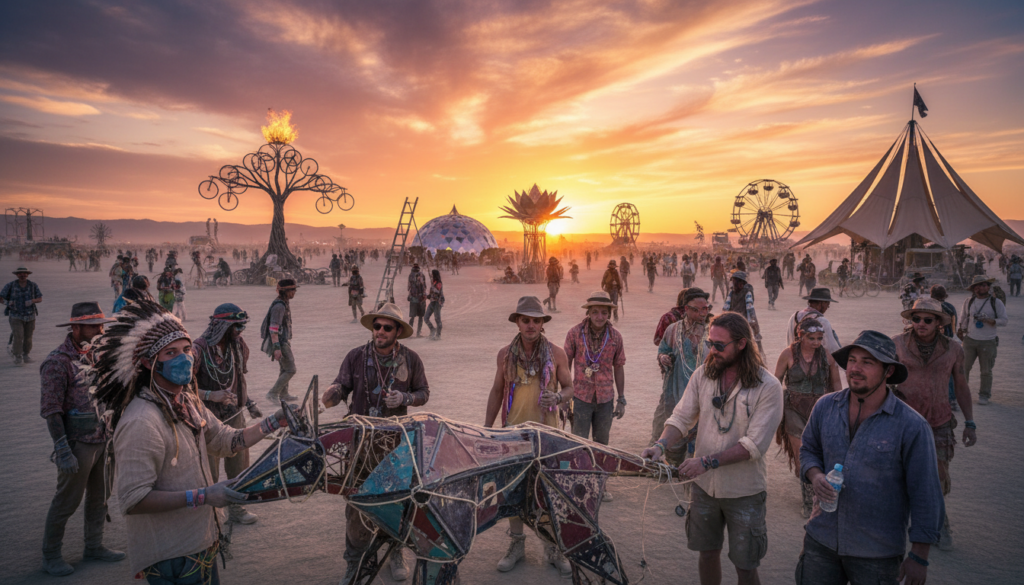
The Ten Principles are practical guidelines devised to shape behavior and choice. They explain why this event feels different from other festivals and why daily life here leans on shared responsibility.
Radical inclusion, self-reliance, and participation in real life
Radical inclusion means newcomers and neighbors are welcomed. Camps offer help, and random interactions often lead to meaningful connections.
Radical self-reliance shows up as planning: participants bring water, shelter, food, and spare gear. You are responsible for your safety and comfort when weather or delays arrive.
Participation is expected, not optional. Most art, workshops, and small acts come from participants who give time, skill, or simple hospitality.
Decommodification and no traditional vendors
Decommodification keeps commercial booths and branding to a minimum. That choice encourages authentic exchange and gifting instead of buying entertainment.
These principles influence everyday choices—from sharing a cold drink to running MOOP sweeps—and often extend beyond the playa into the wider world as people take the lessons home.
Burning Man beyond the desert: where the art goes after the event
The festival’s creative energy does not end when the playa clears. Art and community projects continue to live in cities, studios, and regional gatherings year-round. That cycle keeps ideas active and widens impact beyond the temporary city.
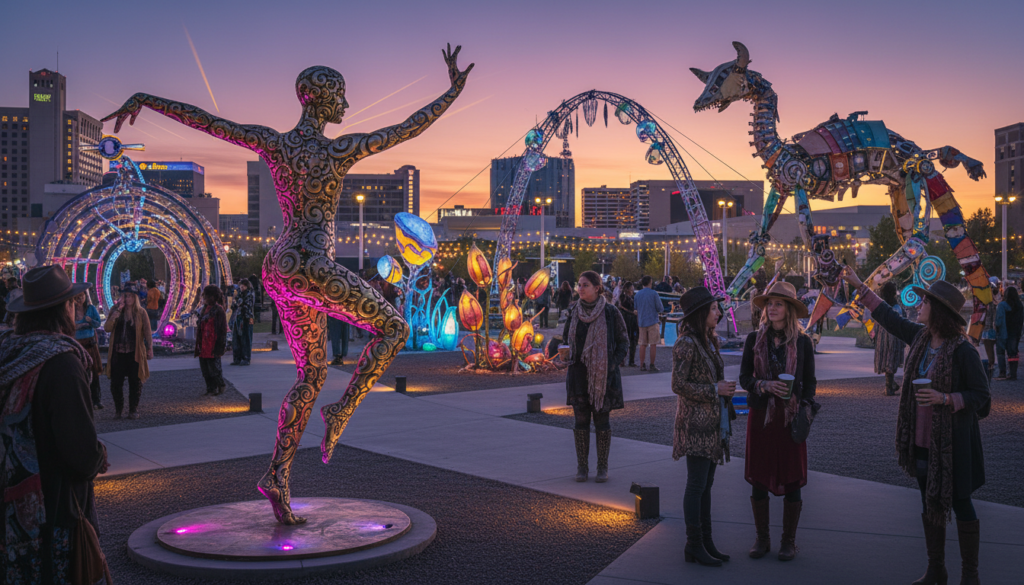
Examples of playa art installed in Reno
Some large works find a second life as public installations. Two notable pieces—Space Whale and BELIEVE—stand downtown at the corner of First and South Virginia St. These sculptures make playa-scale art accessible to local audiences and tourists alike.
“The sculptures remind Reno that creative practice can reshape public space and spark dialogue.”
Regional events and the wider creative community
In addition to permanent displays, the Burning Man Project supports smaller regional events guided by the Ten Principles. These gatherings let people join workshops, volunteer builds, and collaborative art without a long desert trek.
Ways the work continues:
- Preservation and reinstallation of select pieces in civic sites.
- Artist tours that move sculptures between cities and galleries.
- Regional burns and theme camps that foster local participation.
| After-playa path | Example | Benefit |
|---|---|---|
| Permanent install | Space Whale, BELIEVE (Reno) | Public access to large-scale art |
| Touring | Gallery or civic exhibits | Extended audience and funding |
| Regional events | Local gatherings endorsed by the Project | Hands-on entry to the culture |
Community ties grow over years. Volunteers, maker spaces, and collaborative builds keep participants connected across the world. If you can’t join the main event, look for local opportunities in addition to the playa week to experience the art and spirit close to home.
Conclusion
A clear map point and honest prep turn uncertainty into a manageable trip.
Burning Man sits at Black Rock City on the Black Rock Desert playa in Pershing County, Nevada. The precise coordinates (40.7869°N, -119.2042°W) act as the festival’s most reliable address.
The remote playa makes huge art works and open movement possible, but it also demands self-reliance. Pack water, sturdy shelter, and dust protection before you arrive.
Use Reno as your last major stop. Expect arrival bottlenecks, long gate waits, and an often slow exodus after the Saturday effigy night in the week that ends on Labor Day.
Final checklist: confirm current-year dates and passes, budget beyond tickets, and commit to Leave No Trace. For practical camp setup ideas, consider a bell tent sleepover as one comfort option.