
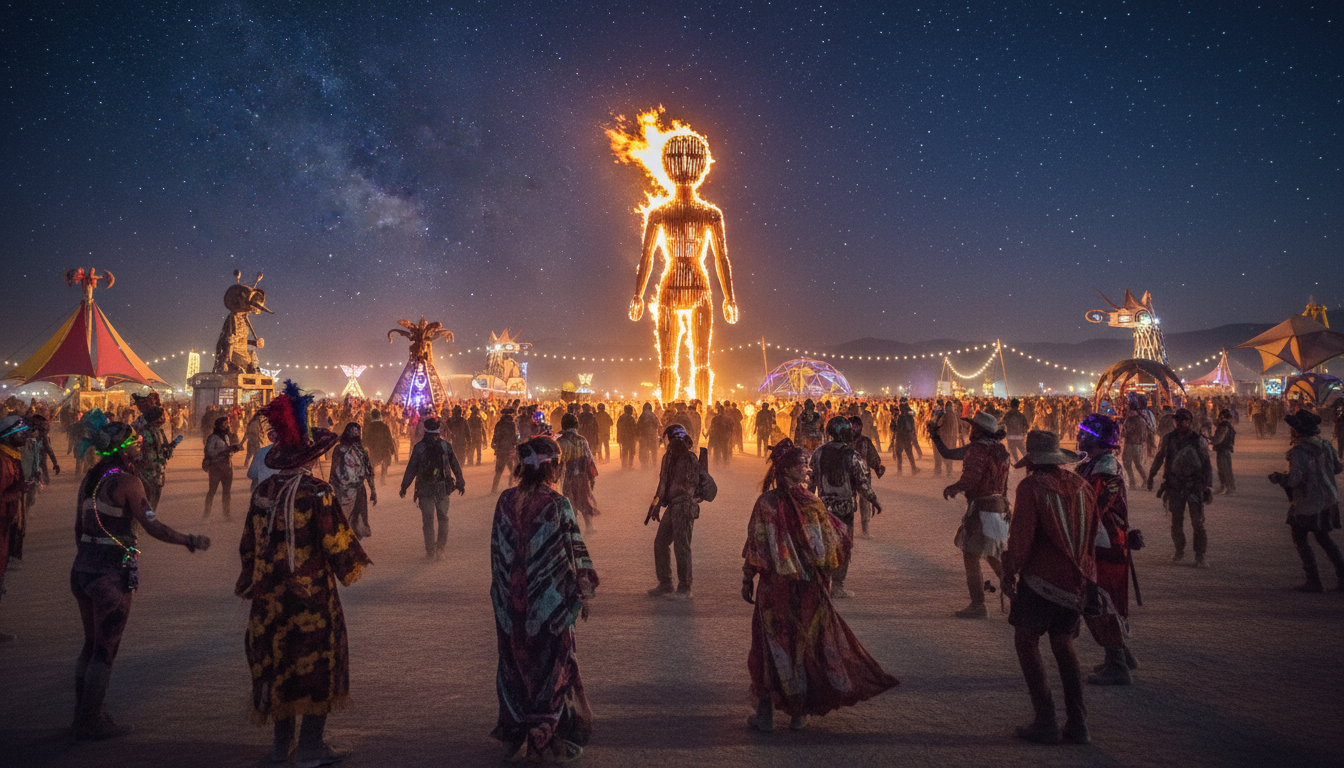
Curious about what is burning man festival? This friendly guide welcomes first-timers and the simply intrigued. It explains the week-long desert event focused on community, art, self-expression, and self-reliance.
The gathering becomes a temporary city where people build, create, and contribute rather than just watch. Expect art installations, themed camps, and shared projects across a vast flat playa.
Why it stands out: participation matters. Art appears everywhere. Community norms shape behavior. At the same time, plan for harsh conditions, logistics, and cost.
This introduction sets the stage for a practical and inspiring guide. You will learn where and when it happens, how the week flows, and what the burn and Temple mean to many attendees. Practical topics — tickets, budgets, packing, transport rules, and weather risks — come next.
Terms to know: attendees often call themselves Burners. The event site is called the playa and the temporary city is Black Rock City. Ready for a deep, honest primer? Start here and follow the linked packing tips for comfort: packing advice.
Key Takeaways
- Basic answer to what is burning man festival and who it welcomes.
- It functions as a temporary city built by participants.
- Art, participation, and community norms shape the experience.
- Practical realities: desert conditions, planning, and cost matter.
- Later sections cover tickets, packing, transport, and safety.
Understanding Burning Man as a Desert Event and Cultural Movement
A week in Nevada turns into a living experiment in shared creativity and survival. This gathering functions as both a large-scale desert event and a cultural movement that asks people to take part, not just watch.
Community shows up as camps that share food, skills, and tools. People trade labor, teach workshops, and fix gear together. Art appears as interactive installations and surprise performances across the playa.
Self-reliance plays out practically: plan water, shelter, and dust protection. In the moment, folks solve real problems together—mechanical, medical, or logistical—so the city runs smoothly.
The name comes from a central effigy: a large wooden figure burned late in the week. For many, that act represents release, renewal, or communal storytelling. Meanings differ widely—spiritual to theatrical—but the ritual unites the crowd.
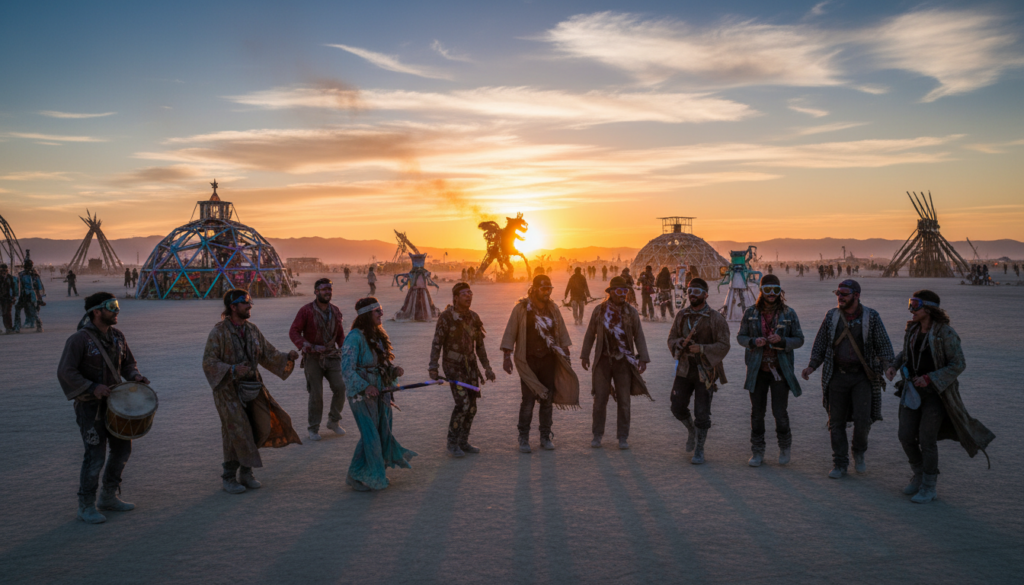
- Desert event and movement: shared creation in a harsh landscape.
- In practice: camps, gifting, and real-time problem solving.
- Symbolism: the effigy burn often signals catharsis and togetherness.
- Beyond the week: regional gatherings and creative projects spread the culture worldwide.
Next, a simple, beginner-friendly definition will explain how participation replaces mere spectatorship and how to prepare to join in. For packing tips that help with comfort, see these glamping packing tips.
What Is Burning Man Festival?
The simplest definition for first-timers
This gathering flips the usual audience role: visitors arrive as contributors. Attendees set up a temporary city on the playa and shape every part of the week.
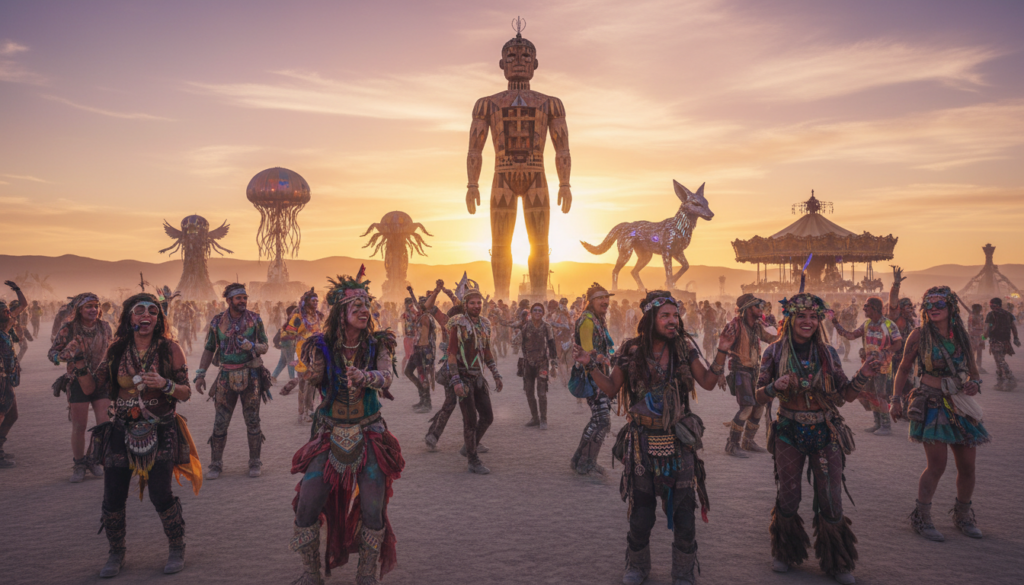
How participation replaces spectatorship
There are no headliners or a fixed lineup. Instead, people create art, host workshops, offer services, and start impromptu shows.
How this differs from a typical music event
Key differences:
- Fewer commercial stalls and ticketed performances.
- More emphasis on co-creation, gifting, and shared responsibility.
- No standard music schedule—sound and stages come from camps and volunteers.
First-time attendees often feel delightfully overwhelmed by the scale of creativity. The best practical tip: swap the question “What will I get?” for “What will I bring and share?”
Next up: place matters. The Black Rock Desert’s geography shapes logistics, weather, and the whole community layout.
Where Burning Man Happens: Black Rock Desert and Black Rock City
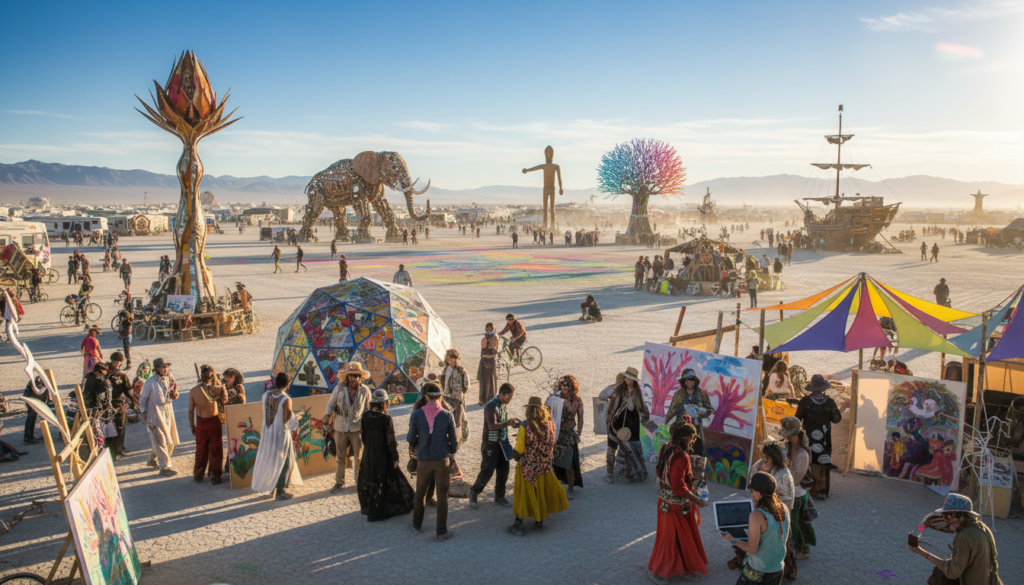
Each year a temporary city rises on a hard, white lakebed in northwest Nevada. Since 1990, the event has taken place at Black Rock City, a participant-built settlement in Pershing County on the Black Rock Desert.
Location details: the official coordinates are 40.7869°N, -119.2042°W (40°47′13″N 119°12′15″W). Access follows controlled routes and gate procedures, so navigation on public maps is useful but entry happens only through event roads and checkpoints.
The site sits roughly 100–140 miles north of Reno depending on route. That distance makes the place intentionally remote. The nevada desert setting gives huge open space for large art and full city blocks that last a week.
Why the playa matters: the flat alkaline surface — called the playa — supports massive installations but also creates dust, glare, and hard travel conditions. Expect long entry lines, limited services, and a need for self-reliance while you are on site.
- Black Rock City: temporary city in Pershing County, Nevada.
- Coordinates: 40.7869°N, -119.2042°W.
- Reno distance: ~100–140 miles by road.
- Playas offer space for large art; they also demand careful planning.
When Burning Man Takes Place and How the Week Is Structured
Each year the event follows a steady nine-day rhythm that builds from setup to catharsis.
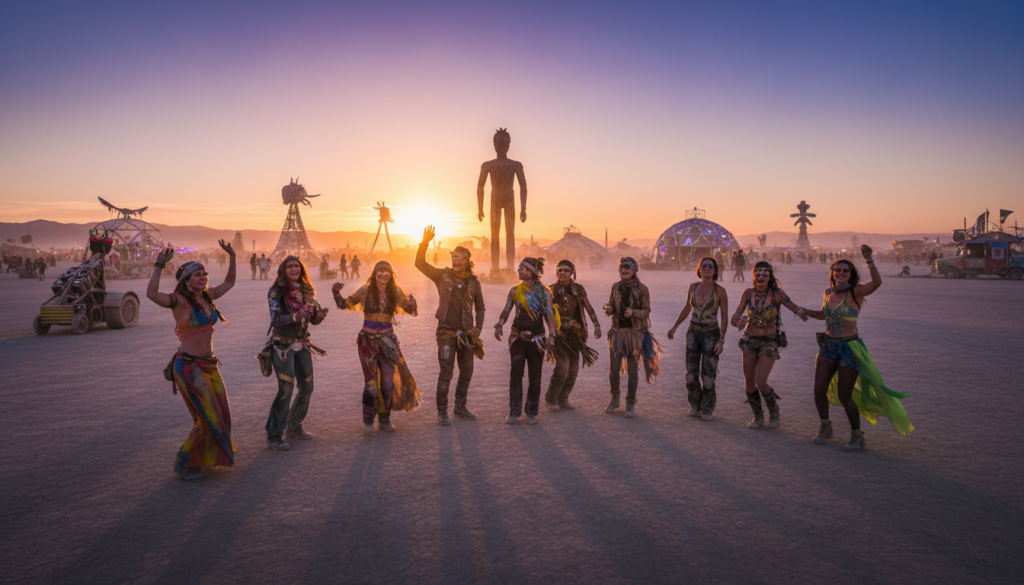
Timing around the long weekend
Burning Man spans nine days that end with Labor Day. The main effigy typically goes up on the penultimate night — the Saturday before Labor Day — though weather or safety data can push that date by a day, as happened in 2023.
How the week usually feels
The start focuses on arrival and construction. People set up camps, art pieces, and shade.
The middle days invite exploration, workshops, and camp programming. Creativity and community deepen.
The final stretch brings high-emotion rituals and large gatherings. Expect crowds, late nights, and shared moments.
Practical timing notes
- Plan for nine days: bring supplies and energy for the full span, not just the weekend.
- Be flexible: wind, dust, or rain can change schedules fast.
- Momentum matters: the late-week burn allows time for projects and friendships to form.
| Phase | Typical Days | Focus |
|---|---|---|
| Arrival / Build | Day 1–3 | Set up camps, install art, orient |
| Explore / Program | Day 4–6 | Workshops, performances, discovery |
| Rituals / Leave | Day 7–9 | Key burns, farewells, teardown |
Tip: treat the week as a full commitment. For comfort ideas and longer stays, see beach glamping.
The History of Burning Man: From Baker Beach to Nevada’s Playa
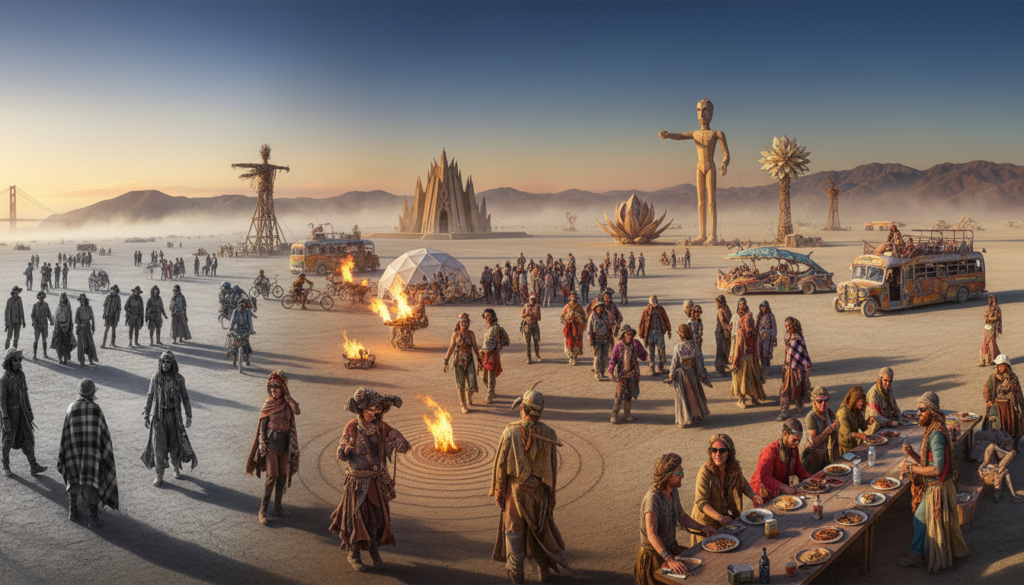
A June 22, 1986 Baker Beach ritual led by Larry Harvey and Jerry James began as a hand-built effigy burned at the summer solstice.
By 1990 the gathering needed open space. The move to the Black Rock Desert came during a Cacophony Society “Zone Trip No. 4.” That shift let participants expand art, scale projects, and experiment freely.
Growth forced new systems. As attendance rose over the years, organizers secured BLM permits, planned safety, and formalized logistics.
The answer was Black Rock City: a planned grid with addresses, roads, and services designed for navigation, medical access, and fire safety. The temporary city layout solved practical problems rather than adding red tape.
What began as a quirky seaside ritual became an enduring event that still tries to protect creative, participatory spirit while meeting real-world needs.
| Year | Milestone | Impact |
|---|---|---|
| 1986 | Baker Beach first effigy | Small, ritual origin |
| 1990 | Move to Black Rock Desert | Space for large art, Zone Trip roots |
| Later years | BLM permitting & city planning | Grid layout, safety, navigation |
The Ten Principles That Shape the Burning Man Community
A shared set of ideals guides daily life on the playa and shapes how people act together.
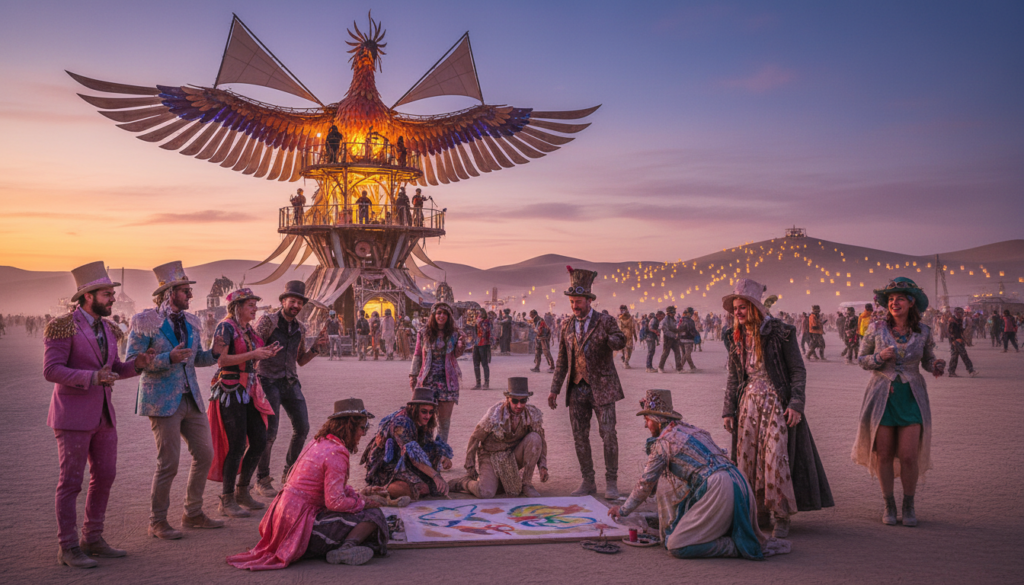
Co-founder Larry Harvey wrote these guidelines in 2004 to help a growing community keep its spirit while scaling. They inform choices, camp behavior, and how art and services appear.
- Radical inclusion — welcome others with openness while recognizing inclusion needs effort and accountability.
- Gifting — share without expecting pay; gifts can be practical, playful, or profound.
- Decommodification — reduce transactional interactions to protect creative exchange.
- Radical self-reliance — bring what you need and plan for desert realities.
- Radical self-expression — offer your authentic voice while respecting others.
- Communal effort — teamwork keeps camps, art, and services running.
- Civic responsibility — follow rules that protect safety, fire, and shared spaces.
- Leaving no trace — pack out everything; the land matters to future life and projects.
- Participation — engage; the event relies on active contribution rather than spectatorship.
- Immediacy — be present; real-time encounters shape memories and connections.
Radical inclusion sets a social baseline: show up open, and help create safe spaces. That said, inclusion also calls for listening and accountability when harm appears.
The pairing of self-reliance and self-expression matters. You are expected to care for your survival needs while also sharing ideas, art, or services with others.
These principles are cultural guides, not laws. They evolved to help thousands coordinate care, creativity, and safety. For practical prep that complements these values, see our basic homesteading guide.
Gift Economy and Community Life on the Playa
On the playa, generosity fuels daily life and shapes tiny communities. A gift economy replaces buying and selling. People offer help, art, and treats without expecting payment or favors in return.
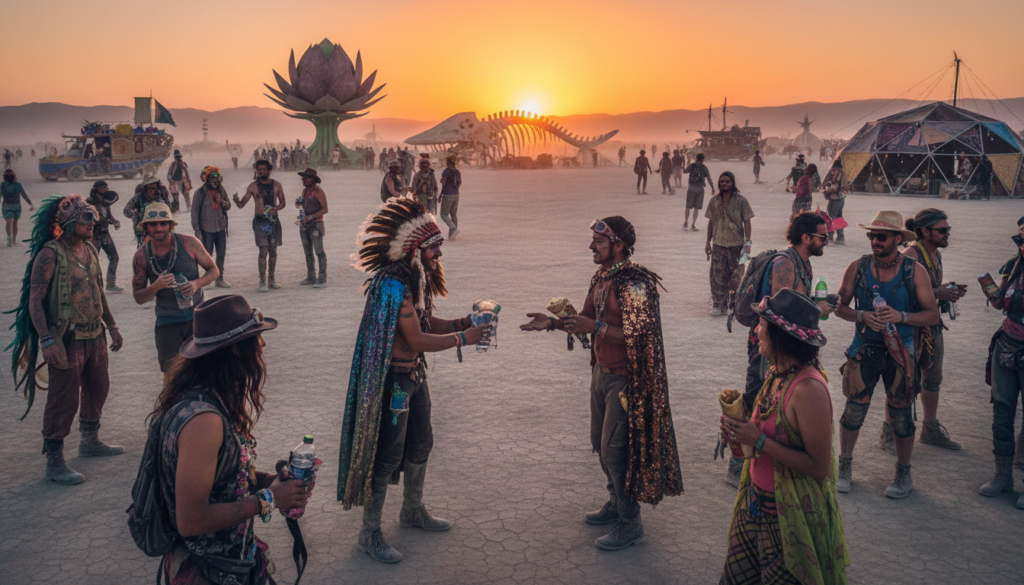
How gifting works: you won’t find a bar selling cocktails or a shop with merch. Instead, you meet freely offered acts of kindness: cold drinks, simple repairs, pop-up classes, or a guided walk to an installation.
“Gifting creates connection, not obligation.”
Common offerings include a quick bike fix, a sunrise yoga session, a cooling mist tent, or a heartfelt conversation during a dust storm.
Practical tip: bring small things you can share and skills you enjoy using. Focus on presence and helpfulness rather than flashy gifts. Gifting isn’t barter; it’s a way to build trust and keep the community resilient.
- Bring modest supplies or time.
- Offer services you can maintain.
- Let art and kindness be the shared currency.
Theme camps often scale gifting into neighborhoods. They knit people together and turn isolated camps into lasting bonds that define the larger experience.
Theme Camps and How People Build Neighborhoods in the Desert
Neighborhoods on the playa form when groups land, stake a claim, and turn yards of sand into shared living rooms.
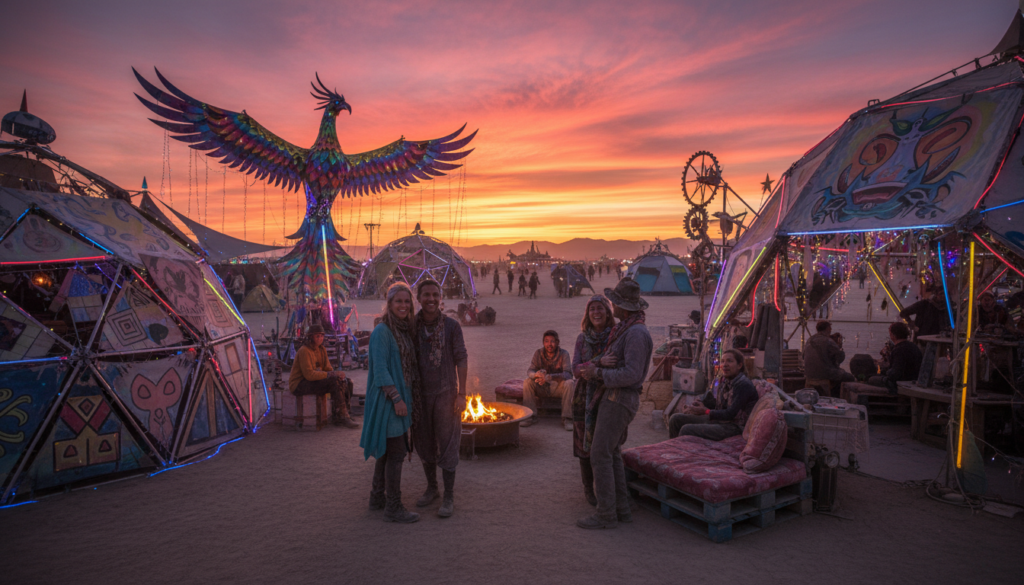
Theme camps are the neighborhood-scale heart of the gathering. They bring a shared setup and an offer to the larger city. Some run daily classes, others hand out snacks or host quiet lounges.
How camps contribute
A camp might host a sunrise workshop, serve evening food, put on live music, or build an interactive piece. Many contribute time and practical goods to the gift economy.
Placed camps and infrastructure
Placed camps sometimes coordinate with organizers and build bigger infrastructure. These camps support large flows of visitors and add durable shade, lighting, and signage.
Typical camp gear includes shade structures, communal kitchens, dust-hardened seating, and clear addresses. That planning helps keep things safe in Black Rock City and lets emergency teams reach people fast.
Neighborhood life and services
Camps create meeting spots, small stages, and community services like bike repair or first-aid stations. They also sponsor art or install walk-through pieces that turn the whole rock city into an interactive gallery.
| Camp Type | Common Offer | Infrastructure |
|---|---|---|
| Small theme camp | Workshops, snacks | Pop-up shade, chairs, signage |
| Placed camp | Large events, ongoing services | Modular kitchens, lighting, ADA paths |
| Art-support camp | Build or host installations | Tools, storage, staging areas |
Art at Burning Man: Interactive Installations, Grants, and Big Ideas
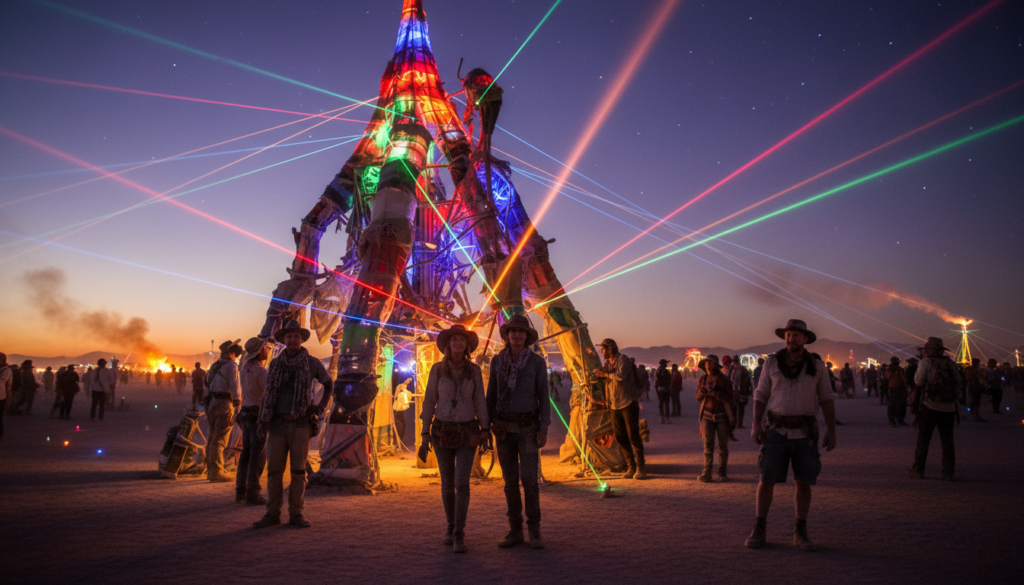
Art on the playa asks for touch, curiosity, and active presence. Pieces are made to be climbed, explored, or joined rather than simply viewed from a rope line.
Participation by design
Unlike gallery work, much of the art invites direct engagement. Sculptures, light pieces, and performance builds expect audiences to move through or alter the work.
Range of forms
The offerings include massive engineered sculptures, temporary buildings, performance pieces, and art cars engineered for desert conditions.
Support and grants
Burning Man Arts funds ambitious projects via Global Art Grants, Black Rock City Honoraria, and a Template Grant for the Temple. These programs help artists produce work for the city and seed projects around the world.
Some installations live on after the event. Notable examples in Reno include the Space Whale and BELIEVE at First and South Virginia Street. Those pieces show how playa projects can shape public life beyond the desert place.
- Interactive focus: touch, climb, or join the piece.
- Form variety: sculptures, light, performance, art cars.
- Funding: honoraria and grants support creative risk.
Art turns the city into an improvised gallery. Much of the data about impact comes from grant reports and public displays that follow the event, tracing influence back to Black Rock City and the black rock desert.
Mutant Vehicles and Art Cars: Movement as a Form of Expression
A fleet of rolling sculptures threads the dusty lanes, turning transport into performance. These mobile creations do more than move people — they reshape how the temporary city breathes and plays.
Defining modified rolling art and why rules matter
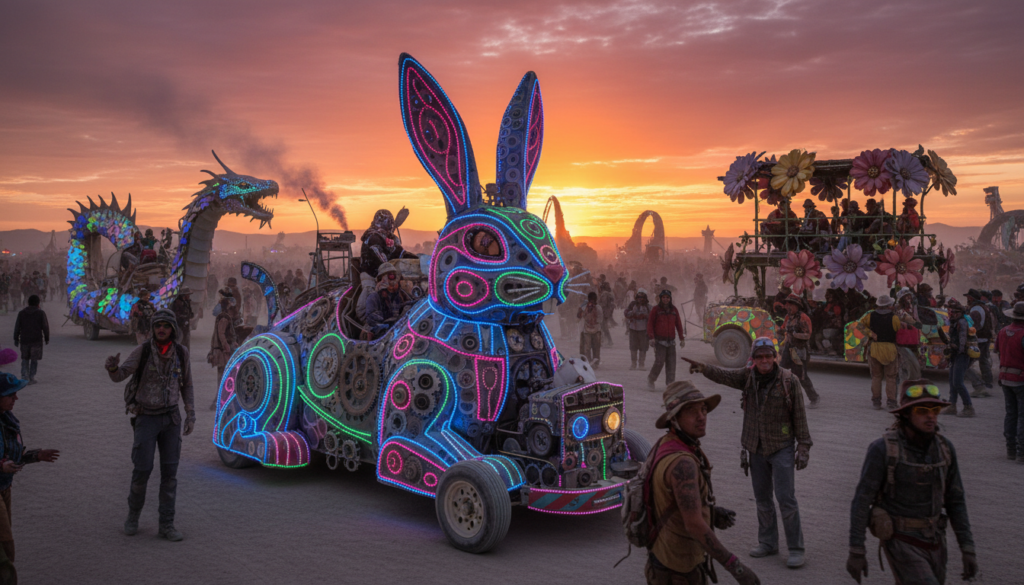
Mutant vehicles are heavily altered rigs designed as mobile artworks, not simple decorations on a stock car. They often carry sound, lights, or interactive elements and must meet approval to operate.
Driving inside Black Rock City stays limited. Only approved mutant vehicles and essential service vehicles may drive. A strict 5 mph speed limit and safety standards reduce risks in crowded spaces.
How mobile art ties the city together
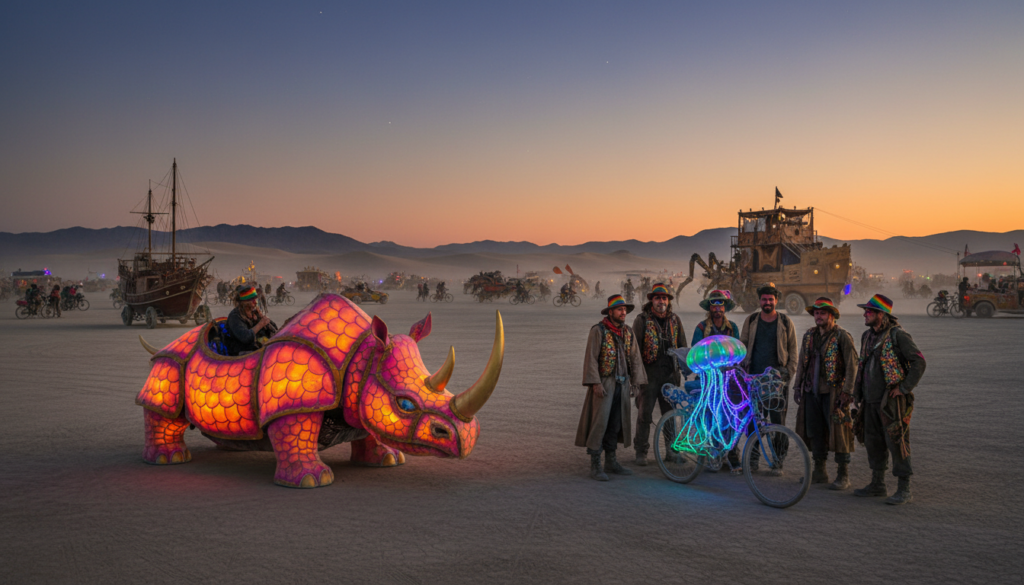
Art cars link neighborhoods, ferry music between camps, and create pop-up dance floors. They let people explore after dark and offer surprise moments across the playa.
- Examples: tiny whimsical carts to massive, engineered stages.
- Etiquette: stay alert, respect roped-off areas, and follow crew directions.
- Practical notes: vehicles move slowly to protect riders and pedestrians.
- Night rides often become impromptu gatherings.
- Safety checks and approvals keep the scene playful and secure.
Many musical “stages” at this event come from camps or these moving platforms rather than corporate lineups. Expect the soundtrack to arrive on wheels and fade with the night.
Music and Performance Without Traditional Headliners
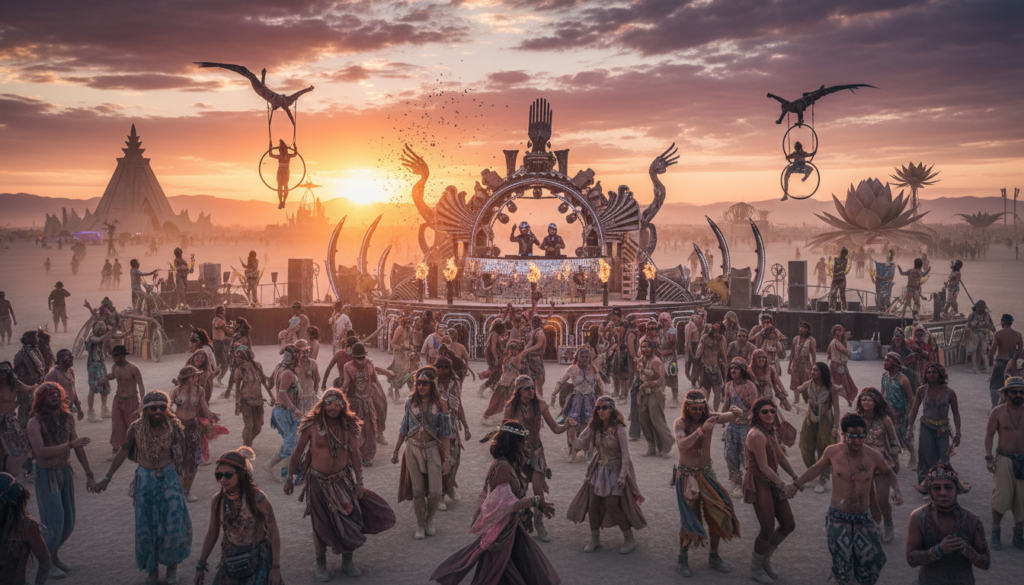
Sound threads through Black Rock City, arriving from dozens of camps and surprise stages. Here, music grows out of participation rather than ticketed billing.
How participants create the lineup
Groups build sound rigs, set up pop-up stages, and host schedules for small crowds. Some camps host full nights of DJs or bands. Other spots offer intimate performances, choirs, or experimental sound art.
What “no scheduled performers” means in practice
You may see famous DJs or skilled acts, yet the event does not promote a single marquee lineup. Instead, the city rewards curiosity: follow a beat, ask a neighbor, and you will find surprises.
- Music variety: live bands, EDM, acoustic sets, improv, and comedy.
- Exploration tip: don’t chase a printed schedule — follow your ears and local signs.
- Media myth: this place isn’t a commercial festival clone; community matters more than celebrity.
| Type | Common Venue | Expect |
|---|---|---|
| DJ / dance | Placed sound camps | High energy, late nights |
| Live bands | Small stages, lounges | Acoustic, intimate crowds |
| Experimental | Installations, tents | Interactive sound art |
Note: while no headliners control the day, attending still needs careful planning, tickets, and budgeting. For comfort strategies and gear ideas, check useful glamping hacks.
Tickets, Attendance, and Real-World Costs to Expect
Numbers and costs shape who can join and how people prepare. A quick look at attendance and pricing helps set realistic expectations before you commit.
Attendance reality check
Official participation reached 78,850 in 2019. In contrast, a much smaller unofficial gathering in 2021 drew roughly 20,000 attendees.
What a ticket covers — and what it doesn’t
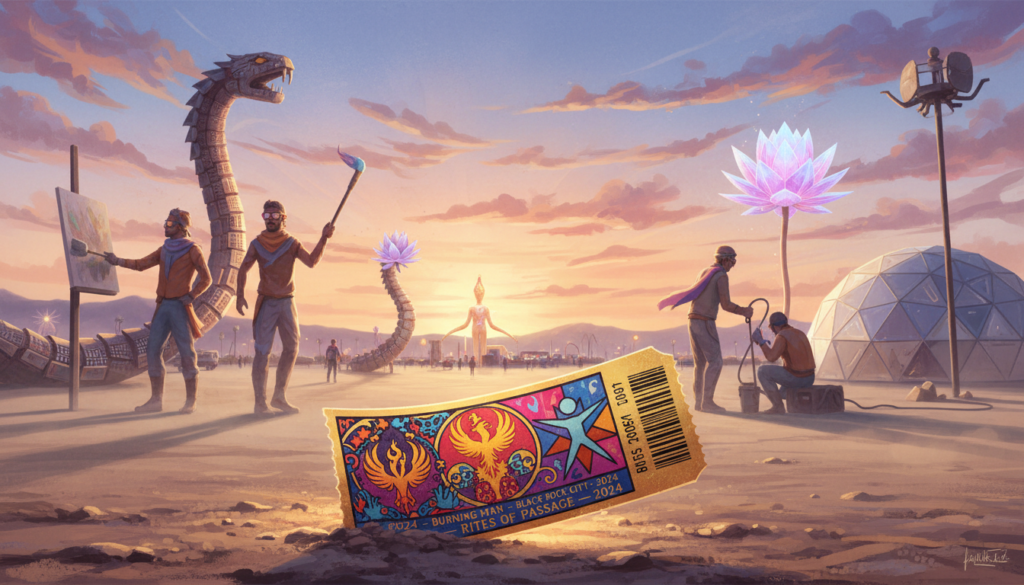
A single ticket grants entry to the site, but it does not buy your travel, shelter, food, water, gear, or camp fees.
Price example and total cost breakdown
Reported regular ticket prices included a $575 rate in 2023. That figure can change each year.
CNBC estimated that total outlay can reach about $1,500 once you add travel, vehicle prep, supplies, costumes, and any camp dues. Contingency planning and shared gear add up fast.
| Item | Typical Cost | Notes |
|---|---|---|
| Ticket | $575 (example) | Entry only; year-to-year changes |
| Travel & supplies | $500–$800 | Fuel, food, shelter, costumes |
| Total estimate | ~$1,500 | Depends on choices and camp support |
Are sell-outs guaranteed? Not always. Some years sell out quickly, yet recent reporting noted unsold inventory in 2024. Don’t assume constant scarcity.
Plan wisely: the real cost often lies in preparation — time, logistics, and reliable packing matter as much as money for a smooth experience.
Planning Your Burning Man Experience: What to Bring and How to Prepare
Good planning turns desert challenges into manageable parts of a memorable experience.
Core survival needs
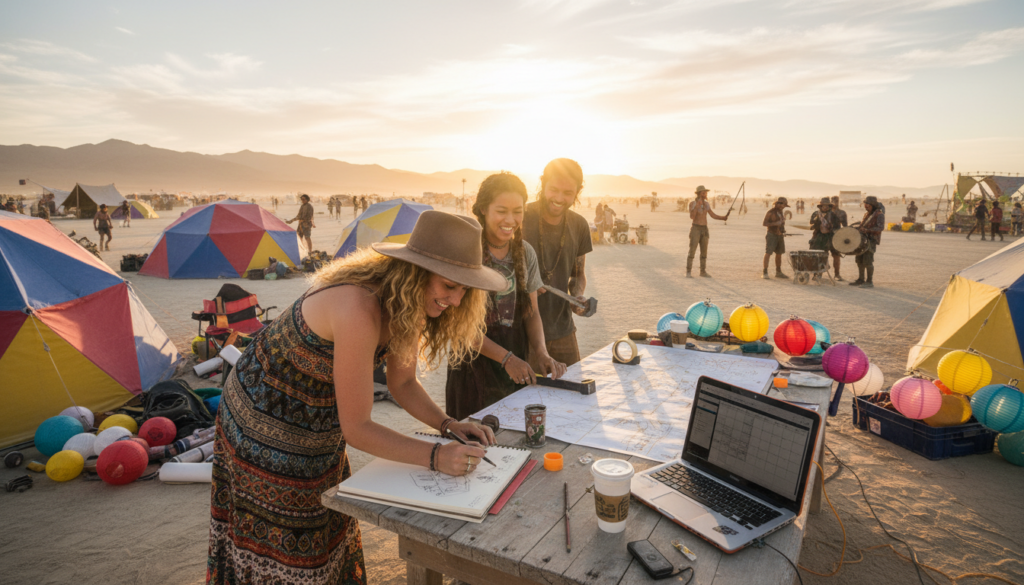
Bring plenty of water—minimize risk by packing at least one gallon per person per day plus reserves.
Stock nonperishable food, sturdy shelter, and a reliable shade system. Include dust goggles, masks, and sunscreen for alkaline playa conditions.
Self-reliance basics
Assume you must meet your own needs. Plan redundancy for heat, cold nights, and strong wind.
Pack spare parts for shelter, bike repair tools, and extra fuel. Small fixes keep comfort high and stress low.
Connectivity and services
Expect limited phone service. Many people treat offline time as part of the experience and prepare accordingly.
Emergency and basic community services exist, but do not rely on shops, steady signal, or quick resupply during a wet playa or road closure.
Photos and etiquette
“Ask before you photograph—consent keeps community trust.”
Respect people and their privacy. Ask permission, avoid intrusive filming, and favor shared moments over content grabs.
| Item | Why it matters | Action |
|---|---|---|
| Water | Survival in dry desert | 1 gal/day + reserve |
| Shelter | Shade and wind protection | Sturdy, anchored setup |
| Dust gear | Eye and lung safety | Goggles, N95 or bandana |
Next step: getting to Black Rock City and finding your camp can be the most stressful part if distance, gates, and navigation are underestimated.
Getting There, Finding Your Camp, and Navigating Black Rock City
That final approach down the dusty road can test patience and reward attention with the sudden scale of Black Rock City.
Entry, Gate, and the long road in
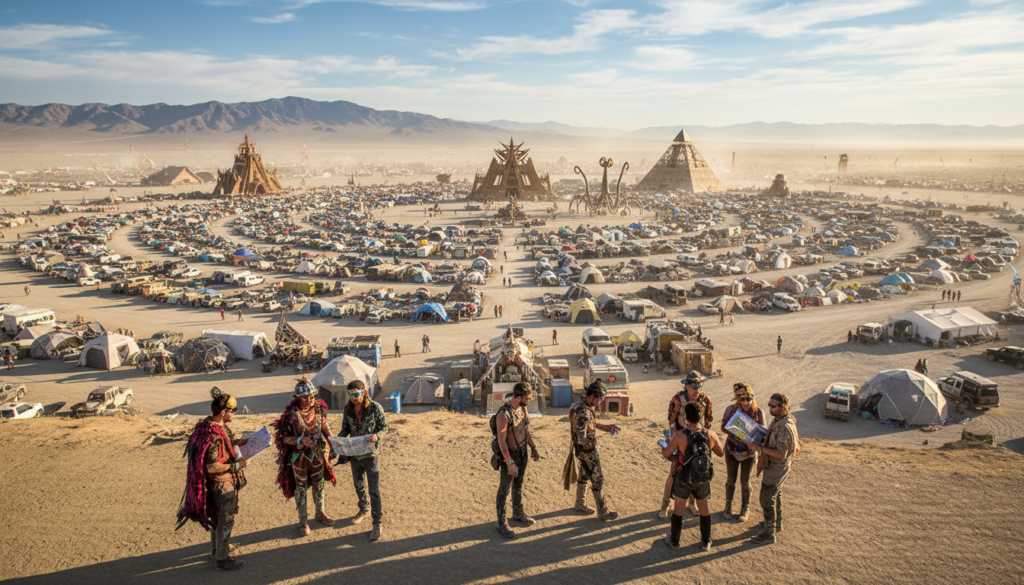
The Gate can mean slow lines and careful timing. Treat arrival like a planned task: fuel up, check supplies, and expect delays on the road into the site.
Why the road matters: long drives shape your packing, fuel strategy, and arrival time. Delays affect setup windows and camp coordination.
Grid system and addresses that help you find places
Black Rock City uses a clear grid and numbered addresses. Streets run like spokes and concentric circles, so an address points you directly to a camp or artwork.
“Clear addresses let emergency teams and friends find your camp fast.”
- Mark your camp with visible flags and lights.
- Use landmarks and street coordinates to meet people.
- Ask staff or neighbors for directions if you get turned around.
| Feature | Why it helps | Action |
|---|---|---|
| Gate lines | Control entry flow | Plan fuel and patience |
| Road into site | Logistics and timing | Arrive early or coordinate |
| Grid addresses | Navigation and safety | Share exact address, mark camp |
Safety note: drive slowly near camps, watch for pedestrians, and follow staff directions. Once set up, most personal driving stops and the city becomes pedestrian and bike-first.
For arrival ideas and camp orientation tips, consider checking helpful activity guides at glamping activities.
Transportation Rules on the Playa: Cars, Bikes, and Safety
The city’s circulation favors people on foot and two wheels, so motor traffic is tightly controlled. That rule keeps Black Rock City safer and more pleasant for everyone during the event.
Why most driving is prohibited
Dense crowds, bikes, and unpredictable dust reduce visibility. Random car traffic raises the risk of severe incidents, so organizers limit driving to protect people and art.
Daily transport mix
Most movement happens by walking and bicycle. Staff and emergency teams use service vehicles. Approved art rigs—called mutant vehicles—operate under strict permits and crew rules.
Speed culture and safety standards
Speed limits matter: a 5 mph rule applies inside the city to prevent collisions. Dust, night light, and sudden crowds make slow operation essential.
- Bike basics: bring a sturdy bicycle, strong lights, a lock, and repair kit. Dust grinds chains—carry lubricant and spare tubes.
- Arriving with a vehicle: you may drive in to unload and later depart, but cars mostly stay parked and act as base infrastructure.
- Weather cautions: rules can tighten during rain or wet playa; roads may close and vehicle movement gets restricted further.
“Slow, visible, and predictable movement keeps the city livable and safe.”
Follow posted rules, respect crew directions, and favor bikes or walking for easy, reliable travel across Black Rock City.
Weather, Risk, and Resilience: What Past Years Have Taught Burners
The Black Rock Desert can shift from calm to extreme in a short time, and thousands learn to adapt.
The desert brings fierce sun by day, cold nights, sudden winds, and powdery dust that reduces visibility. Strong gusts can turn quiet lanes into choking storms in minutes, so plan layered clothing, goggles, and reliable shelter.
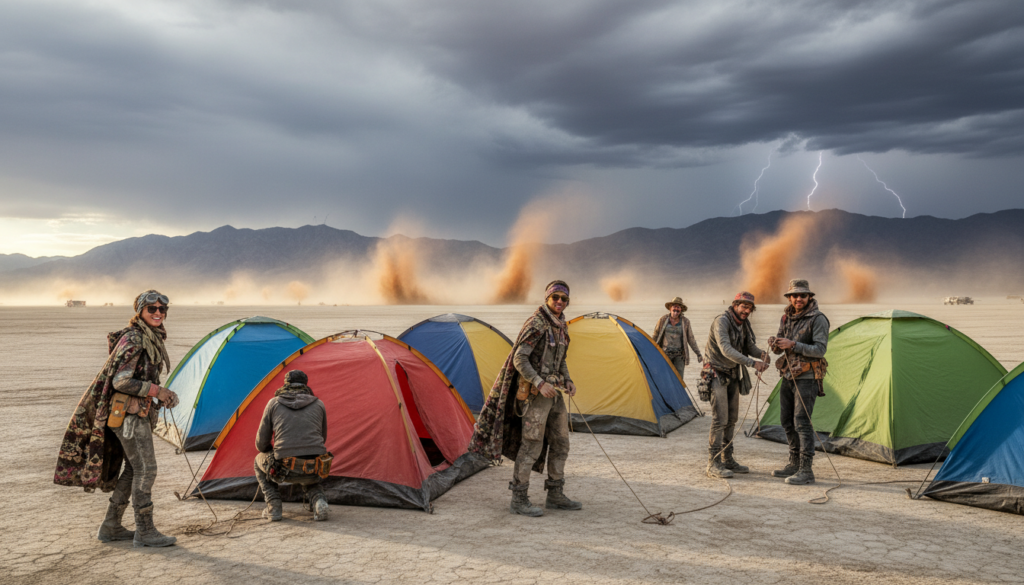
Dust storms, wind, and temperature swings
Typical conditions: blistering daytime heat, freezing nights, and winds that kick up playa dust.
These swings demand flexible gear and redundancy. Bring sun protection, warm layers, and taped seams to keep dust out of sleeping areas.
Rain and the “wet playa” problem
When rain falls, the alkaline surface becomes deep mud. Vehicles sink, roads close, and the city’s logistics change fast.
In 2023 heavy rain created a true wet playa: driving bans and road closures left tens of thousands stranded. The burn was delayed by one day and organizers urged attendees to conserve food, water, and fuel.
Plans that must change fast
Travel timelines can collapse. Allow buffer days for arrival and departure, and keep extra supplies on hand—flights and rental returns don’t pause for weather.
Safety culture and civic responsibility
Practical safety steps:
- Follow crew directions: stay put when told and keep access lanes clear.
- Prepare reserves: extra water, fuel, and nonperishable food for unexpected delays.
- Help neighbors: mutual aid keeps thousands safer during crises.
Lessons from extreme years ripple beyond the playa. Regional events and local projects apply the same emergency thinking and communal care to keep people safe long after the desert time ends.
Burning Man Beyond the Desert: Regional Events and Cultural Impact
The formal nonprofit behind the desert project now helps a wide network carry its values into local settings. Since 2013 the Burning Man Project has backed regional organizers and arts programs that mirror core principles.
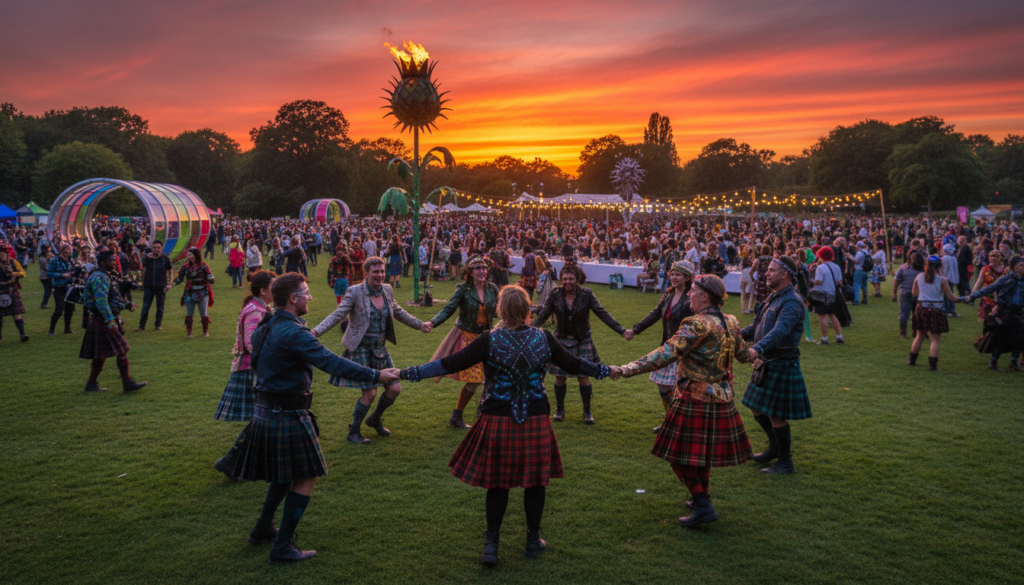
The Burning Man Project and organization
The Project runs the main event and supports grants, safety training, and outreach. It acts as a steward for art, logistics, and policy while funding smaller projects across the U.S.
Regional burns and global spread
Local groups stage shorter regional burns so people can practice participation without the long trip. These grassroots gatherings help the culture travel across the world and seed new creative communities.
Culture, public art, and media over the years
Art and maker culture have moved from the playa into parks, galleries, and city streets. Coverage in mainstream media has shifted as the event drew attention from celebrities and tech communities.
Takeaway: the deepest legacy lives in the projects people return home to — the public art, civic experiments, and the ongoing community life that extends this guide beyond Nevada.
Conclusion
, The true measure of the week is how people join, contribute, and leave no trace behind. This guide shows that burning man forms a participant-made city focused on art, gifting, and shared responsibility.
Practical takeaways matter: plan supplies, expect remote access, and treat the week around Labor Day as a full commitment. In black rock city you will move by bike or foot, rely on camps, and share skills with neighbors.
The Ten Principles, the gift economy, and clear safety rules help the community function. If this idea appeals, start by reading official prep lists, reach out to a camp, and budget realistically before you go.
Many burners call the experience challenging, inspiring, and unforgettable—precisely because people help build it together.