
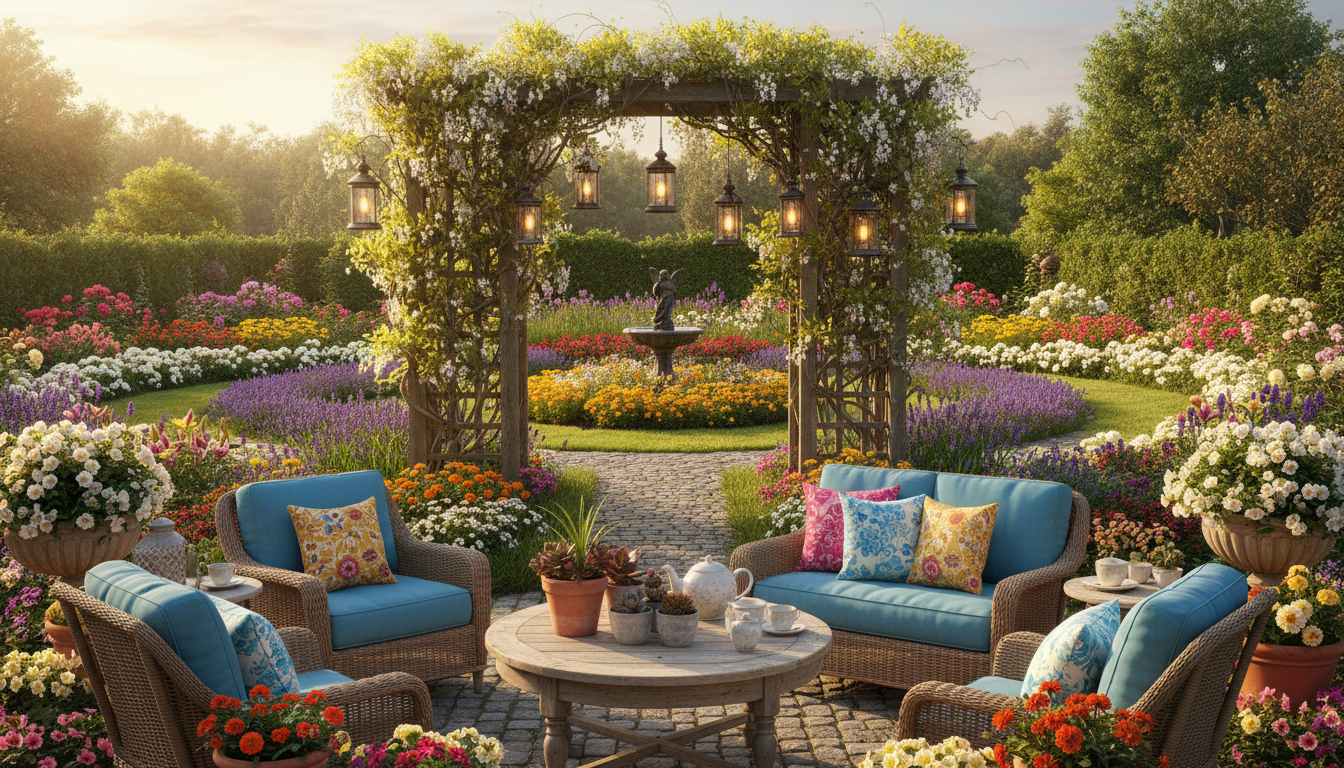
Sarah Ramberg of Sadie Seasongoods shows how recycled yard decor turns ordinary items into playful statements. These simple upcycling ideas add color and character to your backyard without a big budget.
Whether you like bright, whimsical accents or quaint, sweet touches, there’s a way to make your outdoor space reflect your personality.
These DIY ideas suit every skill level and help you create a personal sanctuary. Focus on the yard as an extension of your home and watch small changes transform the whole space.
Expect quick wins: easy builds, bold paint, and smart upcycling that bring charm and function. Use these decor ideas as inspiration for a weekend refresh that feels uniquely yours.
Key Takeaways
- Recycled yard items make quirky, budget-friendly accents.
- Upcycling is a simple way to add color and character to your backyard.
- Ideas suit all skill levels, from quick DIY to more detailed builds.
- Focus on the outdoor space as an extension of your home’s style.
- Small changes can create a relaxing, personalized sanctuary.
Planning Your Outdoor Oasis
Start by surveying your outdoor area to spot which spots will benefit most from a fresh design. Walk the layout at different times of day to note sun, shade, and how people move through the space.
A well-planned patio can act as the hub for seating and entertaining. Center larger pieces there and leave clear pathways so the flow feels natural and welcoming.
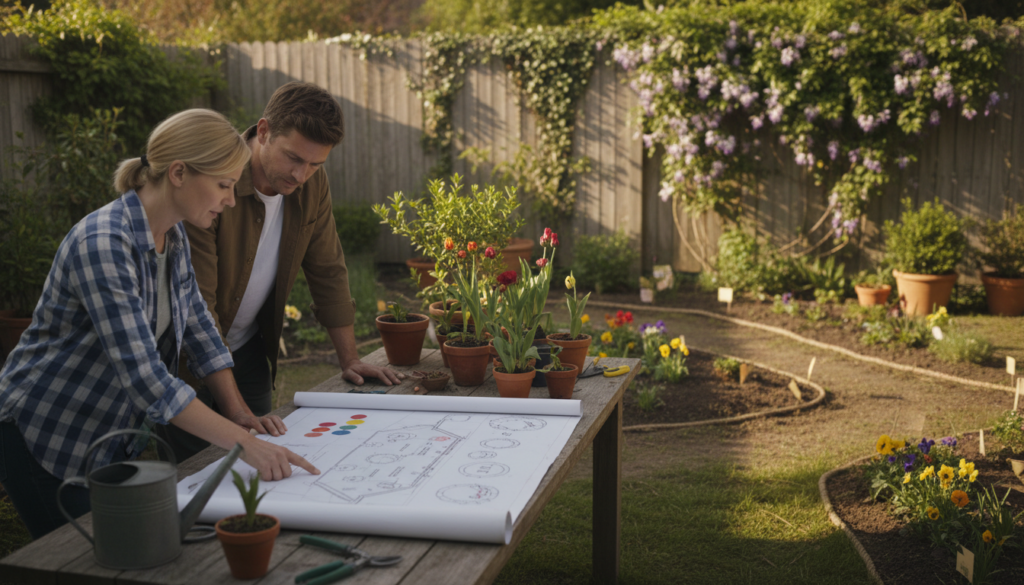
Pick a cohesive color palette to tie the whole area together. Then choose focal points—like a sculptural planter or a bold seating piece—to draw the eye and add personality.
Sketch a simple layout before you buy. Mark spots for furniture, lighting, and focal items. This helps you balance beauty and function, especially in a small backyard.
- Assess use and traffic patterns.
- Anchor the design with a patio or central seating zone.
- Plan focal points and a consistent palette.
Essential Garden Decor Projects for Beginners
Start small with one simple makeover that boosts curb appeal and builds confidence. For beginners, a tiny, finishable task makes learning fun and fast.
Upcycling Household Items
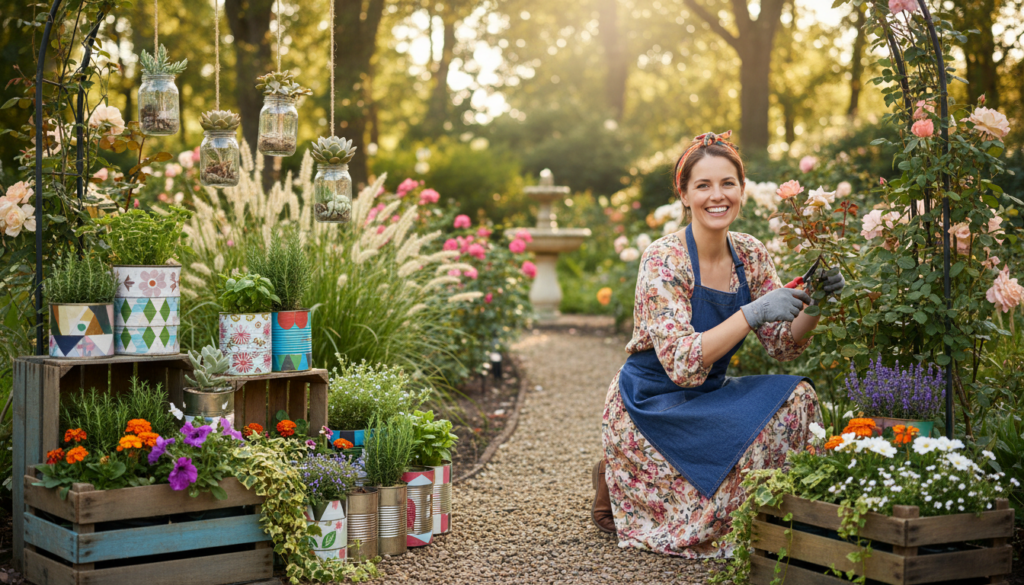
Sadie Seasongoods recommends turning thrift finds into fresh planters. A painted plastic pot or a repurposed tin can becomes a focal piece with outdoor waterproof paint.
Look for unique shapes and mix textures for a custom look. Thrift stores and garage sales offer cheap pieces that fit any home style.
Choosing Your Color Palette
Pick one cohesive color for flowers and planters to make the space feel intentional. A consistent palette helps small efforts read as a full design.
- Start with one small painted terracotta pot to match your flowers.
- Use bold accents to practice color without overcommitting.
- Build confidence with simple planters before larger works.
For more beginner-friendly DIY home decor ideas, try a single planter project and enjoy the instant payoff.
Creative Ways to Use Recycled Planters
Turn everyday items into eye-catching planters that brighten a front porch in minutes.
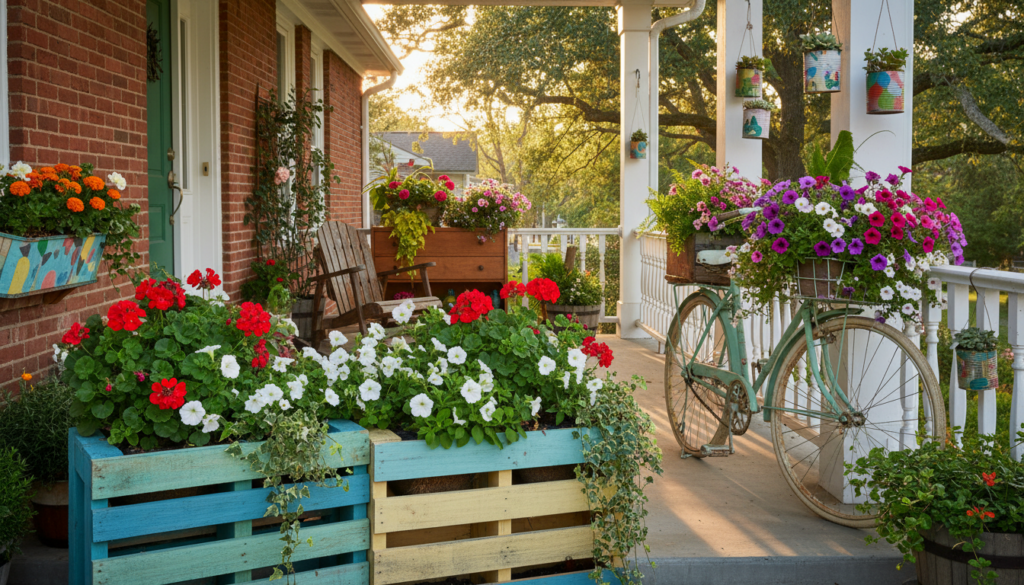
Sadie Seasongoods shows how a metal magazine rack becomes a fabulous planter for a front porch. A quick coat of paint and liner turns it into a tidy, tall pot for trailing plants.
Plastic party trays can be cut and painted into fence flowers. This adds a whimsical way to decorate your yard and brings a pop of color along a boundary.
Using a colander as a hanging planter is smart. It gives built-in drainage for summer blooms and hangs neatly from a porch beam.
“Almost any household item can become a beautiful planter with a little paint.”
| Item | Best Use | Care Tip |
|---|---|---|
| Metal magazine rack | Front porch vertical planter | Line with coco coir; water moderately |
| Plastic party tray | Fence flowers / wall accent | Seal edges; use weatherproof paint |
| Colander | Hanging planter | Use for plants needing good drainage |
Tip: when choosing items, check planting space and drainage so your plants stay healthy. A mix of recycled planters gives the front porch a curated look without a big spend.
Adding Whimsy with Garden Art
Bright, reclaimed pieces bring instant personality to any outdoor space.
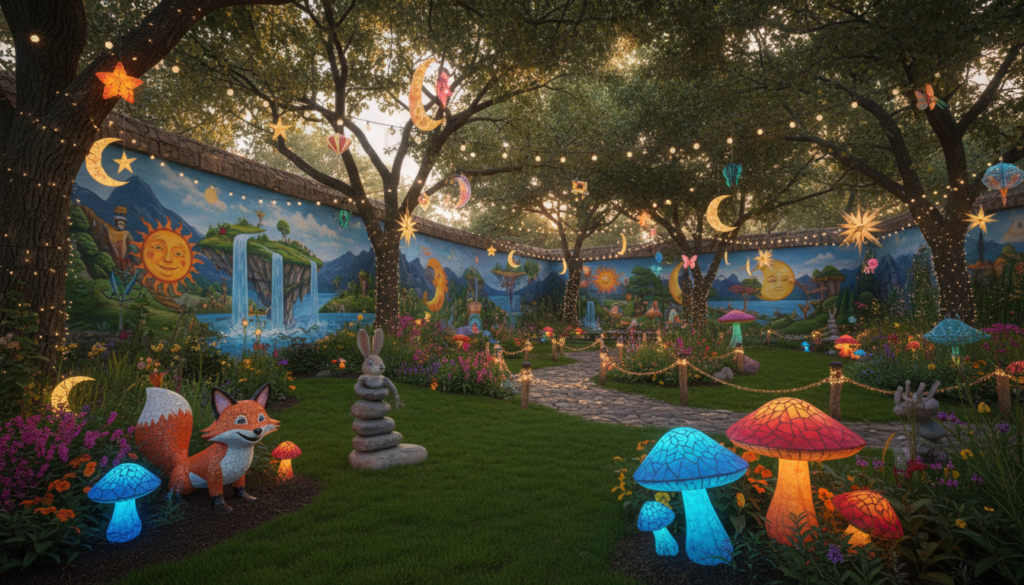
Whimsy is an easy way to show off your style. Small art accents transform plain garden beds into playful scenes that invite a second look.
Metal Flower Sculptures
Color Me Thrifty makes metal flowers that add long-lasting color to beds. An old fan blade can be painted to look like a large flower and hung on a wall or tree for vertical impact.
Decorative Toadstools
Decorative toadstools are a simple DIY add. They tuck neatly among plants and lift the mood of beds without crowding fragile stems.
Mosaic Gazing Balls
House of Hawthornes recommends a thrift bowling ball as a base for a glass mosaic gazing ball. Use stones and glass pieces for shimmering reflections around a plant grouping.
| Art Type | Materials | Best Place |
|---|---|---|
| Metal Flowers | Recycled metal, paint | Garden beds, wall or tree |
| Toadstools | Concrete, paint | Near paths or plant clusters |
| Mosaic Gazing Balls | Bowling ball, glass, stones | Center of beds or near a plant |
Tip: Visit a local thrift shop for unique bases. A few whimsical pieces are a simple way to add charm and color to your yard.
Illuminating Your Backyard Space
A string of warm bulbs can change your backyard into a cozy, late-night retreat.
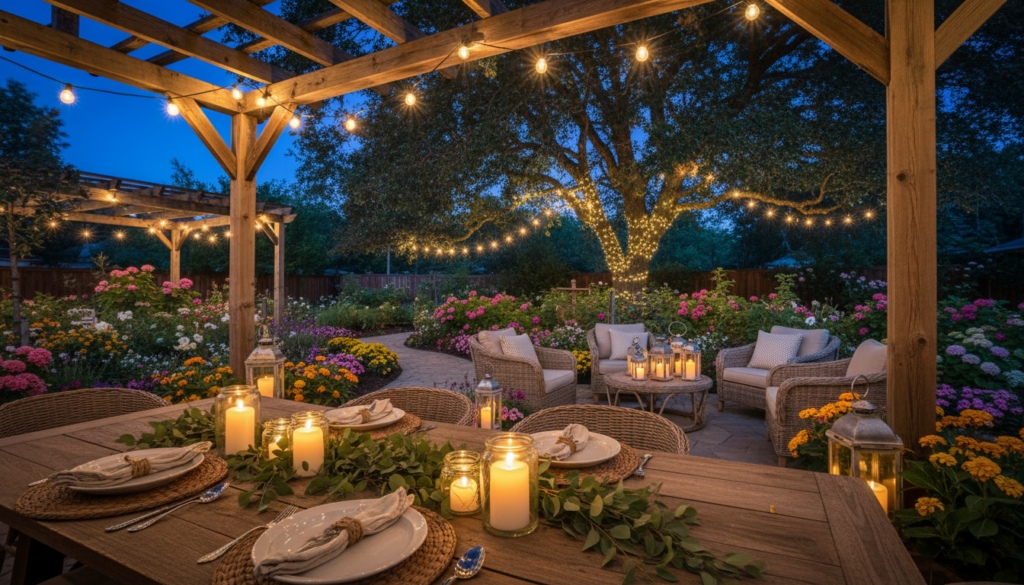
Simple lighting choices extend the time you enjoy your outdoor space and add real charm. Sadie Seasongoods suggests upcycling an old floor lamp into a solar lamp for a unique focal glow. The Charlotte Region ReStores shows a DIY solar chandelier made from a brass fixture that twinkles overhead.
Install solar path lights to guide guests and highlight favorite garden accents. Add twinkle lights in a tree or along a patio area to create a soft, inviting atmosphere for evening gatherings.
Good lighting is both functional and decorative. It makes the yard safer, stretches usable hours, and turns a plain area into a welcoming backdrop for friends and family.
“Investing time in backyard lighting will pay off with a magical environment you enjoy every night.”
For more ideas on lighting your outdoor areas, see this backyard lighting guide.
Crafting Functional Garden Furniture
Give worn wood new life by turning it into seating and work surfaces that suit your patio needs. Functional pieces make the outdoor space more usable and inviting. They also keep costs down and cut waste.
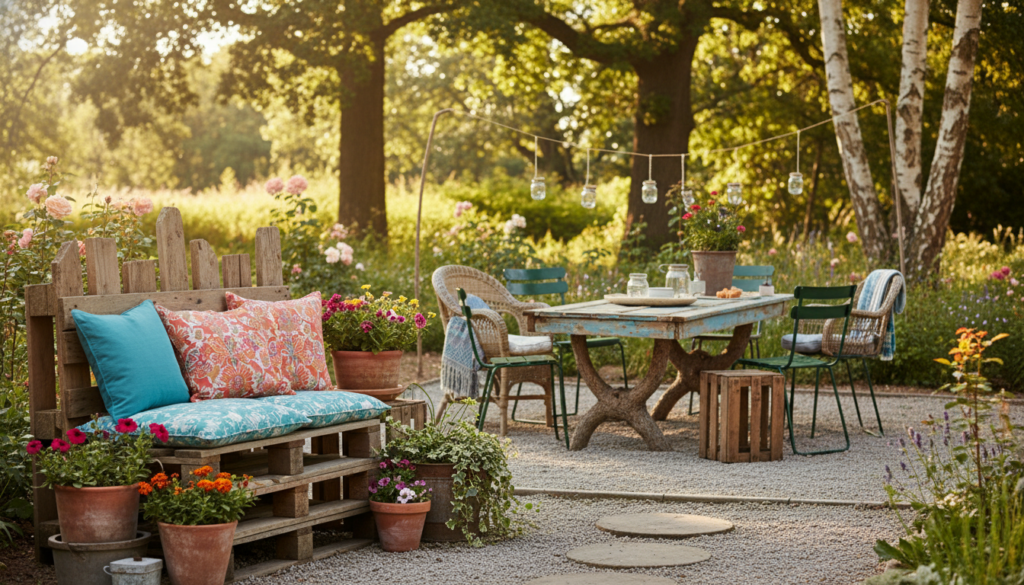
Start small: a single upcycled chair can become a quirky planter or a cozy seat for morning coffee. My Repurposed Life shows how broken chairs become whimsical chair planters that add character and a place for a trailing plant.
Repurposing Old Chairs
Remove a chair seat and add a shallow liner to create a built-in planter. Add cushions to the remaining chairs for comfy seating near your favorite plants.
- Multi-use table: build a table that stores tools, doubles as a potting station, and serves as a buffet when guests arrive.
- Use reclaimed wood to craft display shelves for planters and small pots.
- Prioritize sturdy joints and weatherproof finishes so pieces last outdoors.
| Piece | Use | Tip |
|---|---|---|
| Repurposed chair | Planter or extra seating | Line with coco coir; seal edges |
| Multi-purpose table | Potting station / display | Add hooks and a lower shelf for tools |
| Reclaimed wood bench | Seating and plant display | Use outdoor-grade finish; add cushions |
“Sustainable furniture adds both beauty and real function to outdoor living.”
Tip: choose finishes that match your style and protect wood so your creations stay useful season after season.
Enhancing Privacy with Decorative Screens
Add a stylish partition to carve out a cozy reading corner away from prying eyes.
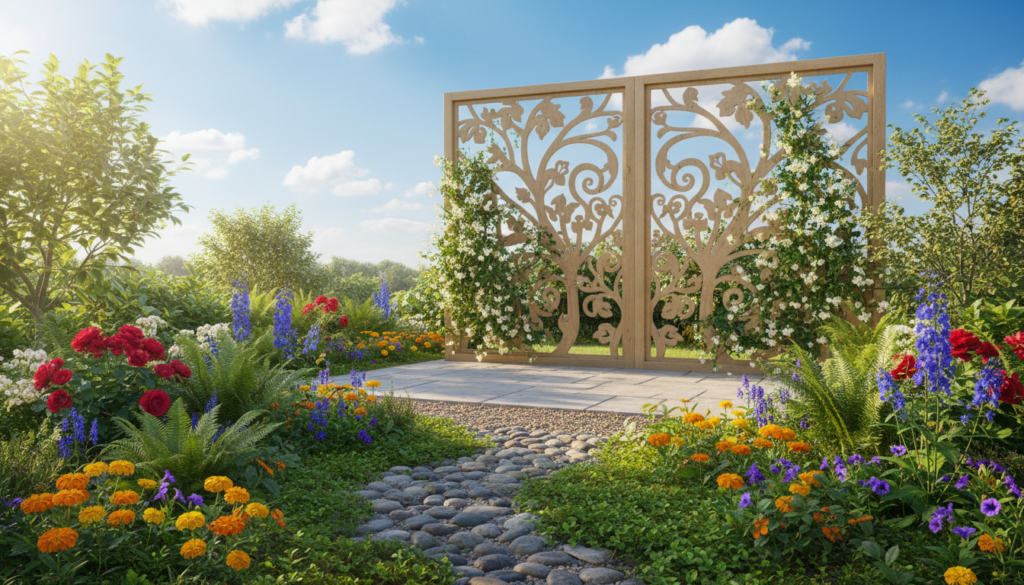
Decorative screens can act as an accent wall and a perfect backdrop for climbing plants. Garden Therapy suggests an espalier screen to block nosy neighbors while adding living texture.
A simple, custom-built screen — wood slats or metal panels — gives you a practical way to add seclusion. Screens work well in small urban areas where outdoor space is limited.
Use screens to divide an area into zones: a seating nook here, a planting bed there. This creates privacy and defines function without major construction.
“An espalier privacy screen blocks sightlines and adds greenery to your outdoor space.”
- Materials: wood for warmth, metal for modern lines.
- Style tip: plant climbers on the screen to soften the look.
- DIY benefit: a stylish screen is an achievable weekend build that adds a personal touch.
Designing Unique Garden Pathways
A winding path of mixed materials can turn a simple yard into a story you walk through. Use mismatched bricks, flat stones, and painted stepping stones to create a playful way that guides guests and protects plants from being trampled.
Sadie Seasongoods suggests using copper Jell-O molds to cast concrete stepping stones for detailed shapes. Organized Clutter recommends mixing color and texture—old bricks next to flat stones—to achieve a handmade look.
Try wood planks or recycled boards for an organic feel. Paint stones with bright hues to add a whimsical touch that lights the way and highlights focal spots or a wall feature.
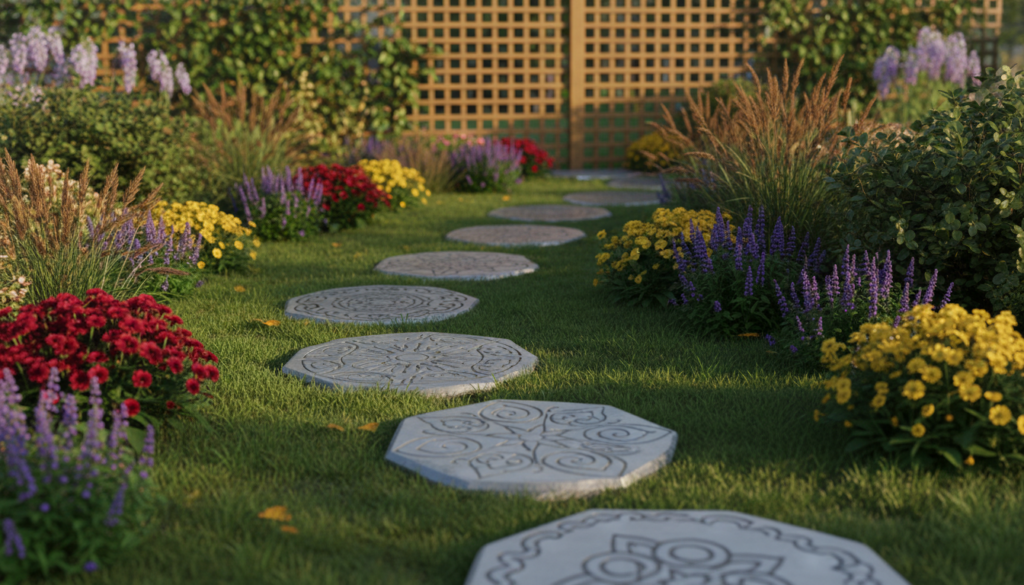
“A beautiful path both improves accessibility and leads the eye through your favorite plants.”
| Material | Best Use | Care Tip |
|---|---|---|
| Mixed bricks & stones | Long meandering paths | Level base; fill joints with sand |
| Concrete stepping stones | Accent route or focal steps | Seal if painted; lift to replace |
| Reclaimed wood planks | Natural, shaded walkways | Use rot-resistant wood; raise slightly |
For more pathway design ideas, see pathway design ideas to spark your own DIY approach.
Incorporating Water Features
A touch of water gives an instant focal point that invites birds and calm. A small basin or recycled bowl can be an easy way to add sound and life to your outdoor space.
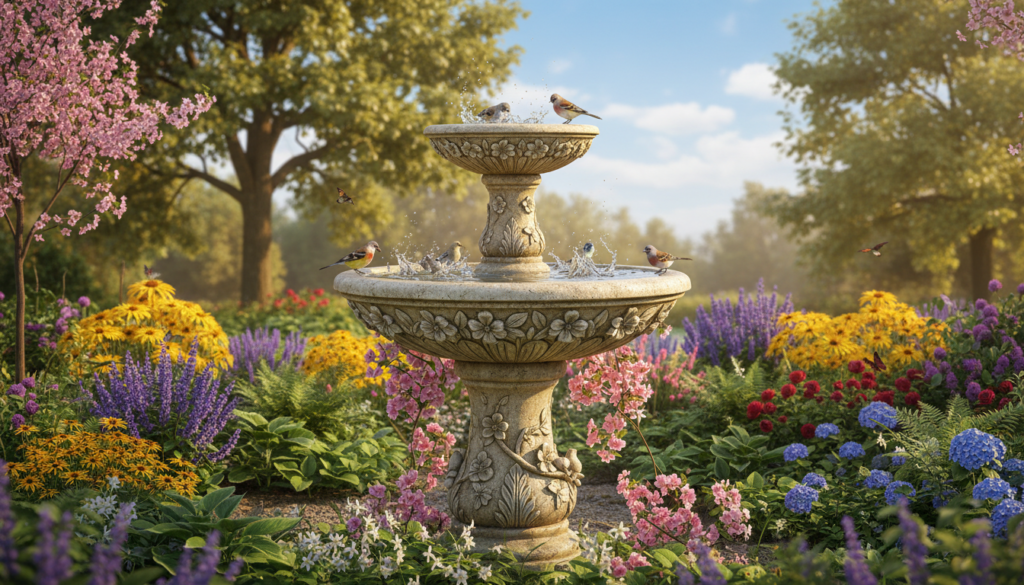
DIY birdbath ideas work well for beginners. My Uncommon Slice of Suburbia shows how a pedestal birdbath becomes a lush succulent planter when drainage is added. That same pedestal can hold a shallow water dish to attract local birds.
House of Hawthornes offers an upcycled approach, using discarded household items to form a charming birdbath. These are budget-friendly and gentle on the planet.
“A birdbath draws wildlife, soothes the senses, and serves as a simple focal point.”
| Type | Best Use | Tip |
|---|---|---|
| Pedestal birdbath | Center of garden beds | Keep water fresh; shallow depth |
| Upcycled basin | On a table or stump | Secure base; use stones for perches |
| Succulent planter-birdbath | Dry spots or border | Use liner; swap water seasonally |
Placement matters: set the birdbath near low shrubs so birds feel safe, but keep it visible to enjoy from your patio. One small water feature can make a backyard feel like a true oasis.
Vertical Gardening Solutions
Climbing vines and stacked planters turn walls into living artwork. Vertical solutions are ideal when ground space is tight. They let you fit more plants into a small area and add real depth to your outdoor decor.
Try a large metal birdcage as a decorative trellis like Hearth and Vine. It gives vines a bold, sculptural frame. Sadie Seasongoods suggests repurposing old rakes and hoes to build a simple, functional trellis for climbing plants.
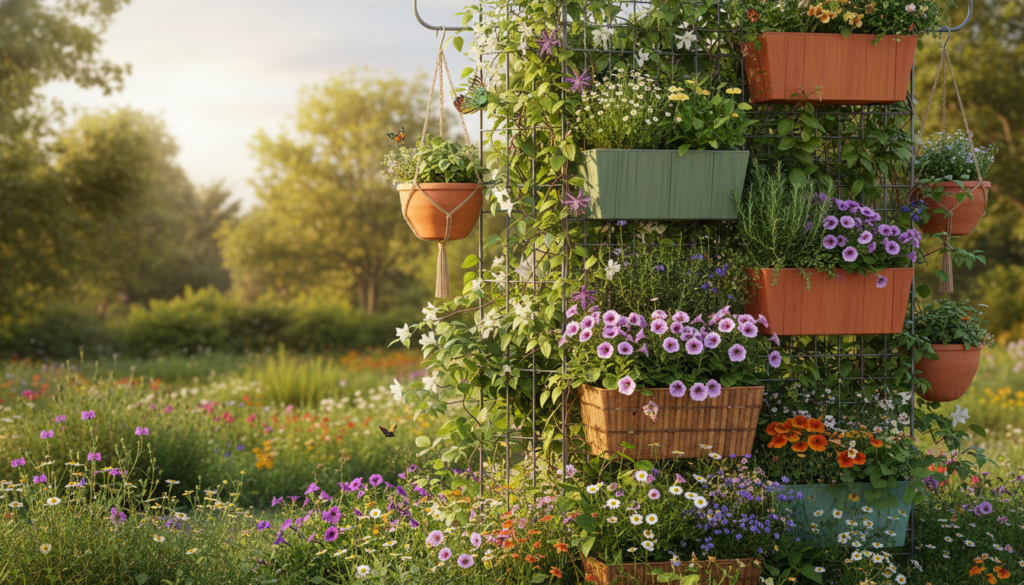
Use a vintage ladder as a tiered plant stand to bring height to displays, a trick shown by My Repurposed Life. For a natural look, lash tree branches with jute rope to make a rustic support system that blends with greenery.
- Space saver: vertical planters free up floor area and increase planting capacity.
- DIY friendly: build a hanging pocket planter or stack wooden crates for instant layers.
- Visual impact: a trellis creates a lush green wall that softens fences and adds privacy.
“Adding a trellis lets you grow upward, creating a lush wall of foliage that maximizes every inch.”
For more inspiration and step-by-step vertical planter ideas, see a handy guide at vertical planter ideas. Small changes bring big returns when you think upward.
Seasonal Decorating Ideas
Small seasonal swaps make a big visual impact and keep your space timely all year.
Rotate a vintage ladder as a simple, year-round display. Change ornaments, planters, or wreaths with each season to refresh the look without a full overhaul.
For summer, build a breezy table centerpiece using potted herbs or small flowering pots on a low table. This creates a lively focal point for gatherings and adds real color.
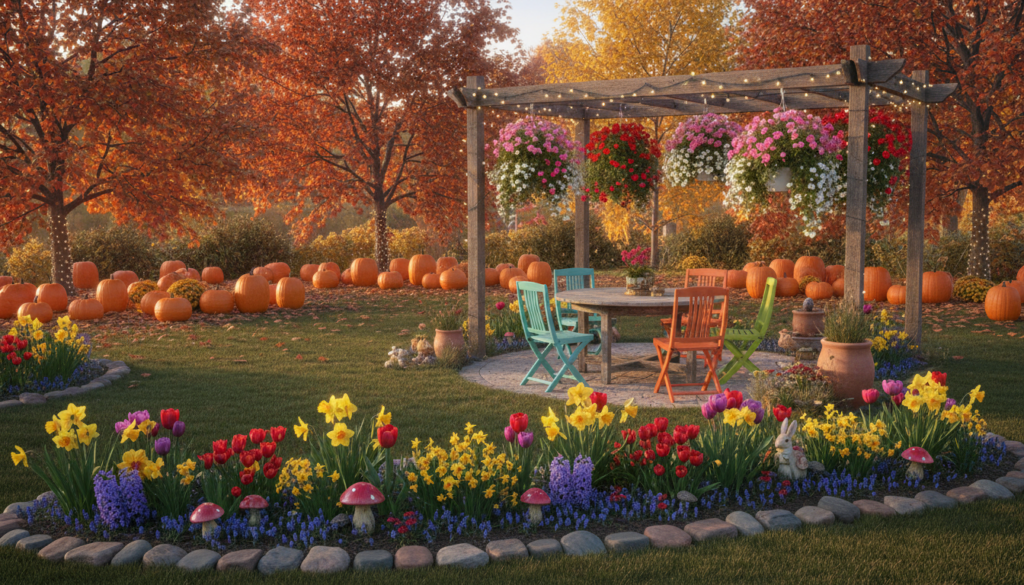
Try easy DIY seasonal touches like a bright summer wreath or a rustic fall sign. These small efforts celebrate natural textures and local hues.
“A well-styled outdoor area reflects the season and feels welcoming all year.”
| Season | Quick Idea | Key Accent |
|---|---|---|
| Spring | Pastel ladder display | Fresh bulbs, light fabrics |
| Summer | Potted centerpiece on table | Herbs, bold color |
| Fall | Wooden sign & wreath | Warm tones, dried foliage |
| Winter | Lanterns & evergreen swags | Evergreen, soft lights |
Tip: let local colors and textures guide updates so each season feels natural and personal.
Personalizing Your Front Porch
A layered mix of planters and a cozy table creates depth and invites guests to linger on the front porch.
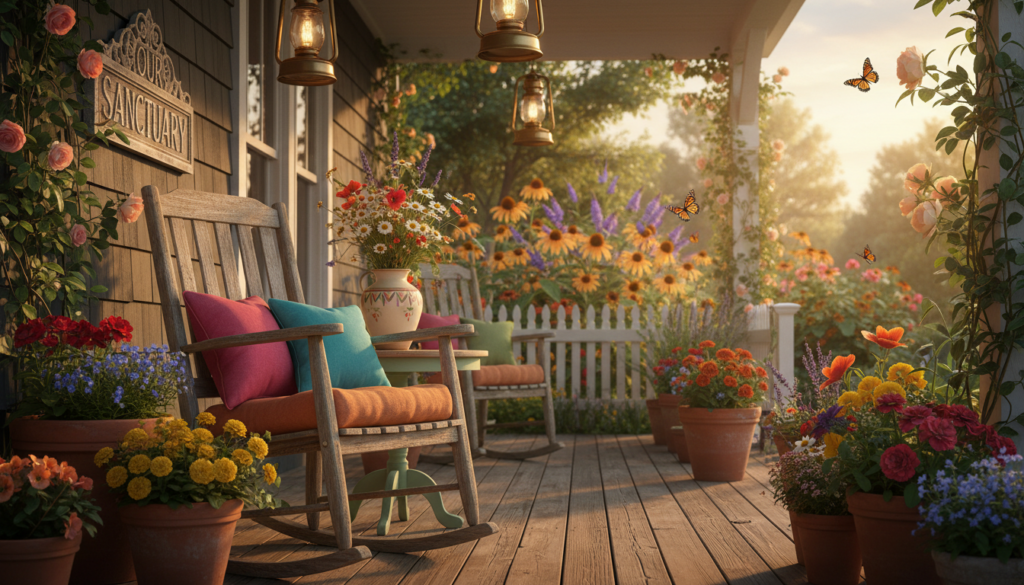
Start with color. Blue Sky at Home uses vibrant hues and varied plants to make the porch sing in summer.
Add a mix of planters at different heights to build interest. Sadie Seasongoods hangs an old colander as a cheerful planter that boosts curb appeal and feels handcrafted.
Include seating to make the area functional. A small bench or two chairs with a table turns the entry into a relaxing spot for morning coffee or evening chats.
Tip: showcase one simple DIY accent—painted pots or a quirky hanging piece—to reflect your style without heavy work.
“A customized front porch is the first warm hello your house gives guests.”
| Element | Why it Works | Quick Tip |
|---|---|---|
| Hanging planter | Saves floor space and adds vertical interest | Use a liner and good drainage |
| Seating + table | Makes the porch usable for guests | Choose weatherproof cushions |
| Mixed planters | Creates depth and a curated look | Vary sizes and textures |
Using Vintage Finds for Garden Decor
Hunting for vintage finds turns a weekend thrift run into a creative gold mine.
Little Vintage Cottage shows how old lamps, glass bowls, and vases become striking totems. A stacked glass totem adds color and whimsy among plants.
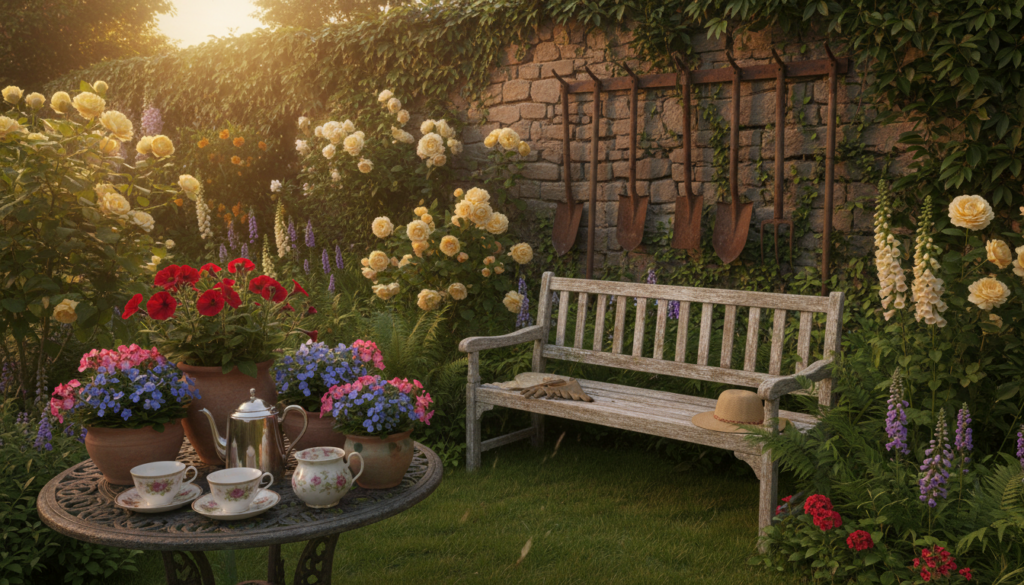
Look for antique tools, ladders, and a vintage chicken crate to repurpose. Mount a crate on a wall as a rustic plant shelf or lean an old ladder to display pots by a tree.
Thrift-hunting is half the fun—each find gives your yard a unique look and a sense of history.
Quick decor ideas:
- Turn a lamp base into a totem with a glass bowl topper.
- Use an antique tool as a sculptural accent near a path.
- Mount crates for easy, charming shelving on a fence or wall.
“Vintage pieces bring personality and whimsy in a way mass-made items can’t.”
Maintaining Your Outdoor Creations
A little routine care keeps your outdoor creations looking fresh and safe all season.
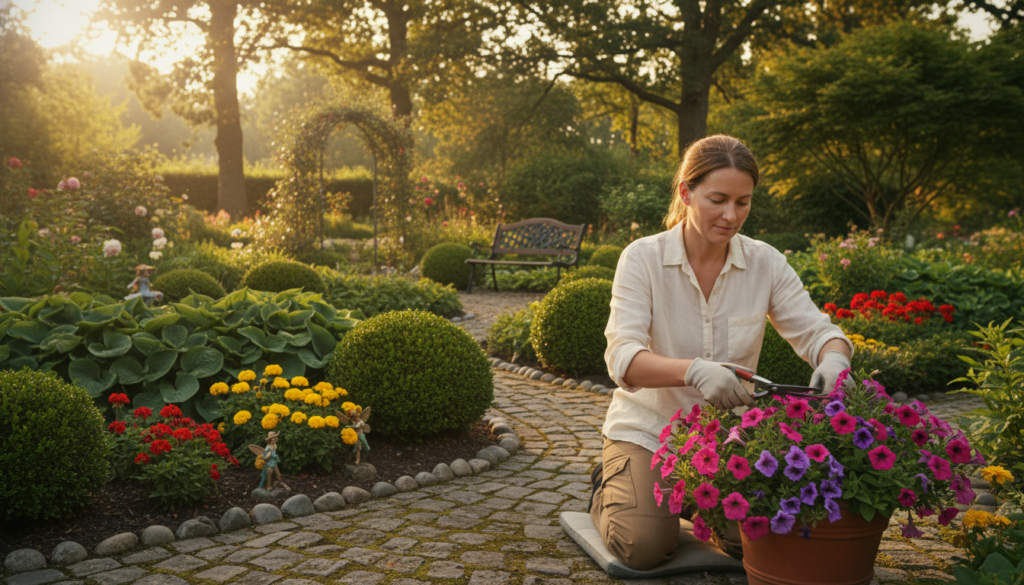
Keep the patio and seating area swept and rinsed to remove dirt and pollen. A quick wash protects finishes and extends the life of cushions and wood.
Inspect stepping stones and pathways monthly. Repair loose edges or reset uneven stones to prevent trips and preserve the look of your garden.
Touch up paint on metal and wooden pieces each spring. A small paint job seals surfaces from moisture and sun, making your home accents last longer.
- Clean porch and house siding to help accents stand out.
- Replace worn hardware and secure fasteners to keep seating safe.
- Store small items in winter or cover them during storms to save maintenance time.
Investing a little time now avoids bigger repairs later. Regular care keeps your area inviting and ensures those handmade touches remain a source of pride.
Tips for Successful Garden Decor Projects
Choose a quick win—a small build that adds safety, charm, and confidence.
Have fun first. Sadie Seasongoods says enjoyment fuels better results. Treat one weekend like an experiment and learn as you go.
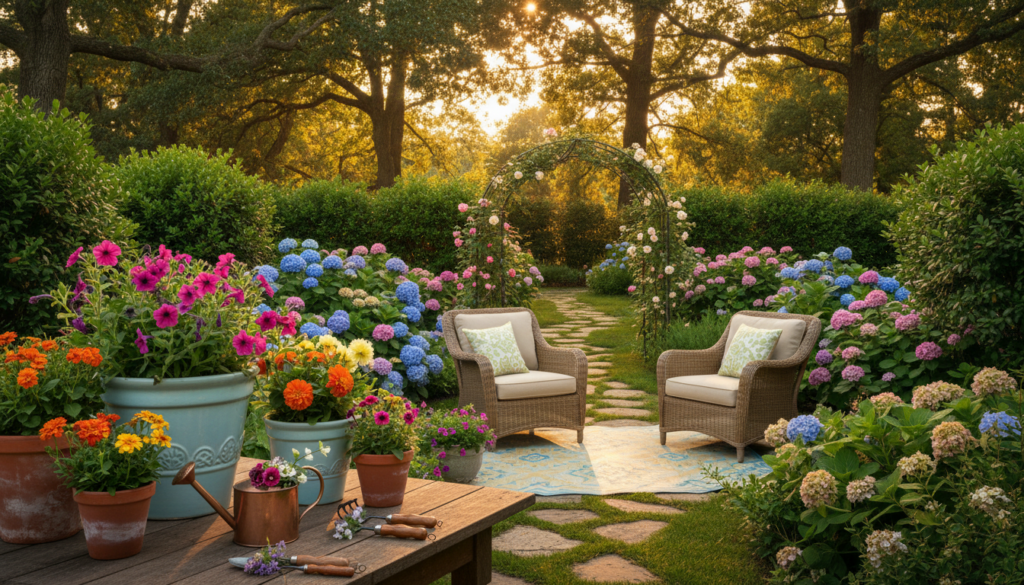
Plan before you cut: sketch where stepping stones will go so beds and plants stay safe. Consider the size of your yard and the shade from any tree when sizing pieces.
Repurpose thrift finds—try a grilling fork as a stake for a sign. Use solar lights to highlight paths and guide visitors at night.
“Successful projects mix creativity with simple planning.”
| Tip | Why it Helps | Quick Action |
|---|---|---|
| Start with one project | Builds skills without overwhelm | Pick a stepping stone or small planter |
| Scale to your yard | Keeps pieces in proportion to trees and beds | Measure spaces first; mock up with cardboard |
| Use solar lights | Extends use into evening; low cost | Line a path or highlight a focal stone |
Experiment freely, but set a simple plan for placement and drainage. That balance helps you finish on time and fall in love with the result.
Need help mapping a layout? See ideas for planning a garden to get started.
Conclusion
Breathe life into your outdoor space with simple, joyful steps that suit your time and skill. Start small; one thrifted piece or a quick build often leads to bigger ideas.
With a strong, clear plan you can balance beauty and function. Repurpose household finds to make unique accents that reflect your personality.
Do routine maintenance so each element stays fresh and useful season after season. Whether you are new to DIY or a seasoned maker, keep experimenting and enjoy the process.
Take pride in what you create. Little changes add up, and your space will become a personal retreat you love to share.