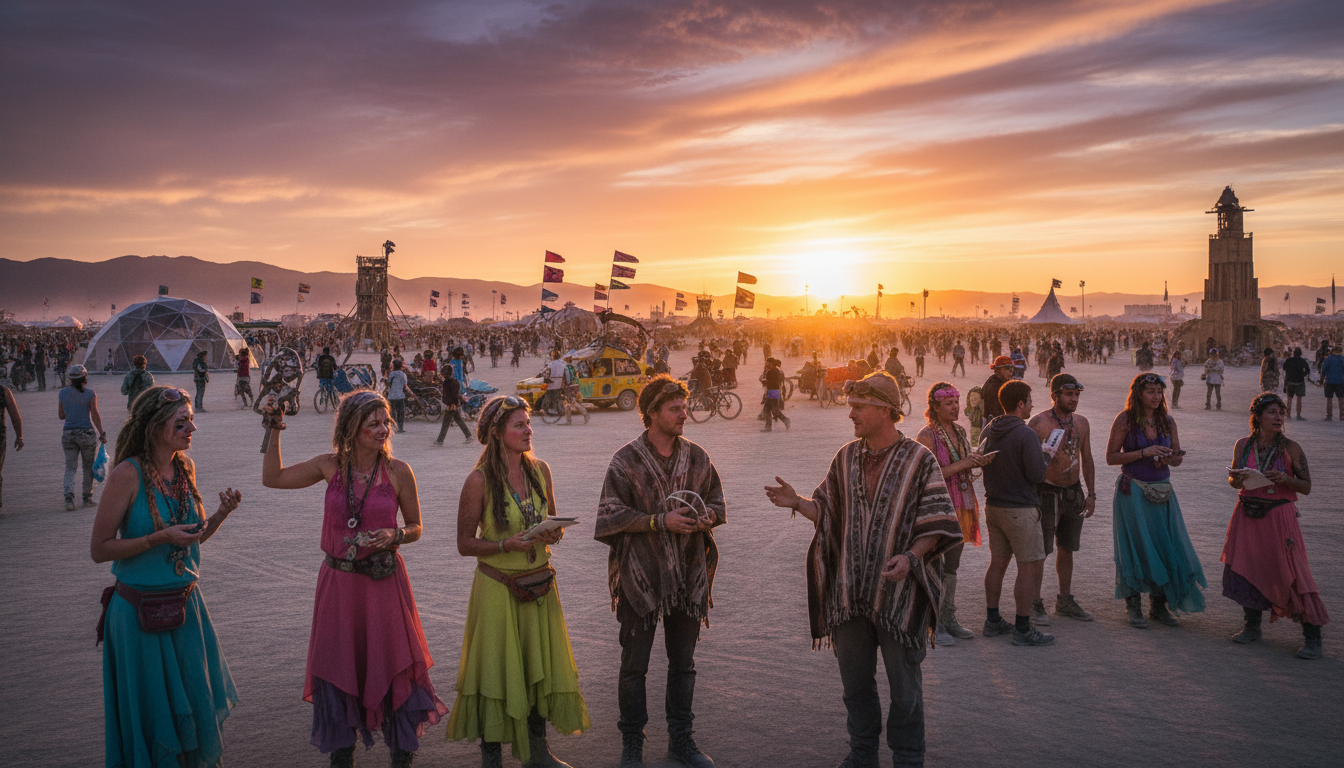
Quick snapshot: The latest estimate for Black Rock City in 2025 is about 70,000–80,000 visitors, while the most-cited official benchmark remains 78,850 attendees from 2019.
This article lays out the newest crowd estimates, explains how reporting works, and shows what recent disruptions mean for turnout. You will get clear data, trend context, and practical notes for planning a first trip or comparing past years.
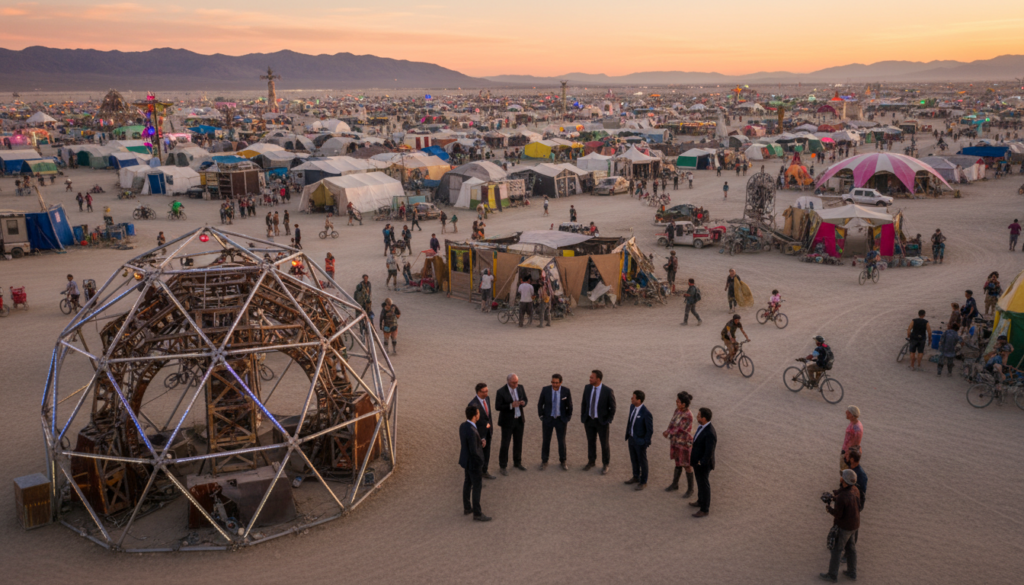
Think of the gathering as a week-long, participant-built temporary city. Attendance counts differ from a typical concert because participants build camps, art, and infrastructure. That variance shapes traffic, safety planning, permits, and life on the playa.
Terms like “attendance,” “participants,” and “sellout” can mean different things by source and year. For background on related outdoor stays and event experiences, see this primer on glamping and camping styles at glamping vs. camping.
Key Takeaways
- 2025 crowd range is projected at 70,000–80,000 attendees.
- 2019 remains the most-cited official benchmark: 78,850.
- Counts vary by definition: participant tickets, day visitors, and press estimates differ.
- Weather, economy, and demand drive recent volatility after years of growth.
- Playa crowd size affects traffic, safety, permits, and camp logistics.
Latest attendance outlook for Burning Man in Black Rock City
Quick update: Official media cite a 2025 expected crowd range of 70,000–80,000, a practical figure for planning travel and camp logistics.
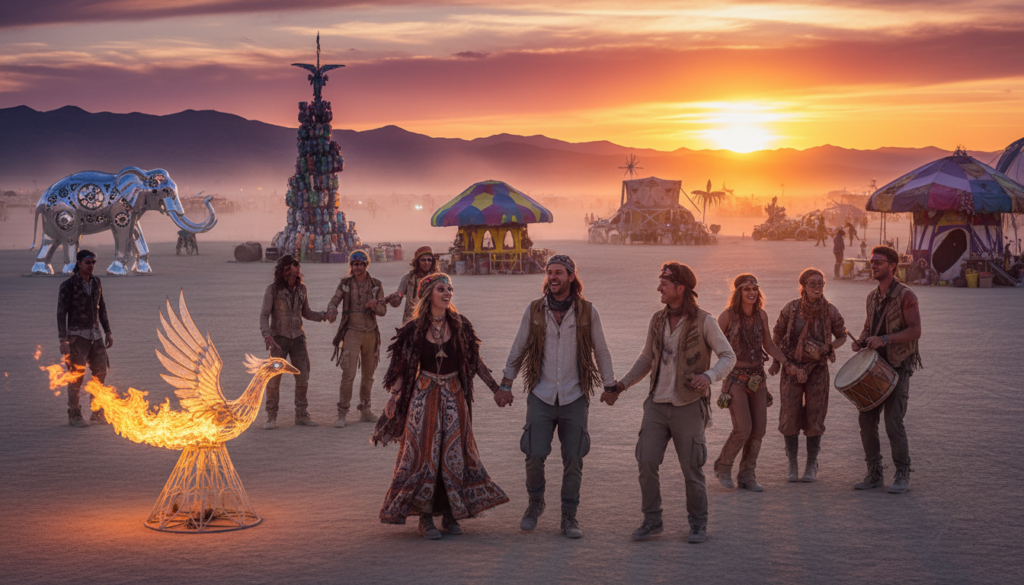
Black Rock City is a temporary settlement built each year in the Nevada Black Rock Desert about 100 miles north-northeast of Reno (40.7869°N, 119.2042°W). This event turns open playa into a functioning city for roughly one week, then dismantles it.
Why the range matters
The week-long ramp up and break down mean counts focus on peak population and operational windows. Gates, weather holds, and staggered travel blur simple headcounts, so reporters use ranges like 70k–80k.
Last year’s flooding and mud taught organizers to be cautious about single-number claims. That context helped shape more conservative projections for 2025.
Practical takeaway
- Interpret numbers: Ask whether a figure is peak population, total participants over time, or ticketed capacity.
- Location note: “The playa” refers to the Black Rock area where the temporary Rock City is built.
- Prep tip: For related outdoor event planning advice, see glamping tips.
| Item | Detail | Why it matters |
|---|---|---|
| 2025 estimate | 70,000–80,000 | Sets expectations for crowd density and services |
| Location | Black Rock Desert, Nevada (near Reno) | Travel planning and regional logistics |
| Event timing | One week on the playa | Counts focus on peak operational days |
How many people attend burning man year to year?
Year-to-year turnout at the festival can swing from near-capacity crowds to much smaller, unofficial gatherings.
Recent benchmark: 2019 and what it signals
2019: The official participation figure stood at 78,850. That number represents a near-capacity crowd and a stable period when the event functioned as a large-scale annual gathering.
Unusual year: 2021’s unofficial turnout
By contrast, 2021 is widely reported as an unofficial year with roughly 20,000 on the playa. This figure reflects restricted operations and cannot be compared directly to permitted counts or full ticketed years.
What “sellout” usually means and the 2024 shift
“Sellout” normally means tickets reach capacity and require planning. That created a culture of early planning among campers and burners.
In 2024 demand softened for the first time since 2011. Last-minute tickets appeared without preregistration and resale prices dipped below half on mainstream sites. That change signaled weaker demand and looser access for last-minute buyers.
Participants vs. attendees: language that matters
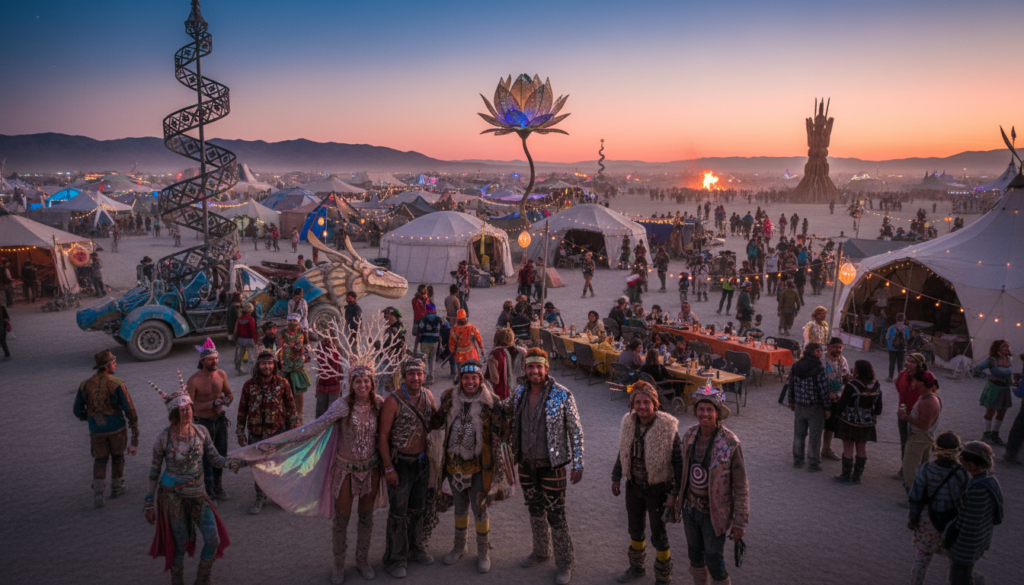
Organizers often use participants to emphasize contribution and camp-building, while reporters may use attendees to note headcounts. Check whether a source cites ticket sales, peak on-playa counts, or estimates.
“Compare numbers by source: official, unofficial, ticketed, or on-playa.”
| Year | Reported figure | Context |
|---|---|---|
| 2019 | 78,850 | Official benchmark; near-capacity, full operations |
| 2021 | ~20,000 | Unofficial year; limited operations, not comparable to usual counts |
| 2024 | Variable | Demand drop; last-minute tickets and weak resale market |
For readers planning trips or comparing years, check whether a number is official or estimated and whether it ties to tickets or on-playa counts. For related outdoor-living context and practical prep, see new homesteading.
Past attendance trends and key moments that changed turnout
From San Francisco origins to a planned Nevada buildout, the event’s growth shaped how crowds form and move.
San Francisco to Black Rock City
What began on Baker Beach in san francisco in 1986 evolved into a purpose-built Black Rock City by 1990. As the rock city layout grew, an engineered grid allowed larger numbers and clearer logistics.
Weather as a turnout driver
Weather is more than comfort: it affects gates, roads, and safety plans. Heavy rain can halt vehicles and force lockdowns, changing whether people will travel at all.
2023 flooding and mud
In 2023 storms produced widespread flooding and sticky mud that stranded thousands. That episode changed gear checklists and trust in predictability.
Why 2024 marked a shift
After the 2023 mud issues and prior heat in 2022, last year saw unusual ticket softness. Organizers even offered last-minute access without preregistration, and coverage noted lower turnout and caution among former regulars.
Takeaway: turnout is not a straight line up. Big disruptions reshape planning, ticket demand, and whether attendees return. For outdoor-living context and setup tips, see glamping types and glamping on the water.
What’s driving attendance changes: tickets, cost, and culture
The picture is economic and cultural. A standard 2024 ticket ran about $575, but that covers only entry.
Expect extra costs:
- Transportation to and from the playa
- Shelter, gear, and camp infrastructure
- Food, water, and on-site supplies
- Art, bike lights, and group logistics
Totals can climb fast. Reports show all-in trip budgets reaching up to $8,000, which makes attendance a selective choice for many.
Macro trends matter. When budgets tighten, ticket sales slow and resale listings fall to less than half price. That pattern explains more last-minute buying and a softer market last year.
Demographics and the tech link
Recent data show more attendees with incomes in the $100k–$300k range and fewer under $50k. Tech-sector earnings concentrate wealth and influence camp styles and expectations.
Layoffs or uncertainty in tech can ripple into demand, reducing big-budget camps or shifting who brings paid services.
Culture debate and new access
The rise of “plug-and-play” concierge camps sits uneasily with the gift economy and participation ethic in Black Rock City. Organizers are pushing back on concierge-style offerings to preserve a participatory culture.
“Last-minute tickets can lower the barrier for a first time visitor, but real readiness still matters.”
Practical note: easier ticket access helps newcomers, but time, preparation, and camp costs remain the main barriers. For planning gear and group setups, see this bell tent guide: bell tent sleepover.

Conclusion
strong, Remember the headline figures: 2019’s official count of 78,850, the unofficial ~20,000 in 2021, and the 2025 expectation of 70,000–80,000 as the practical range to use for planning.
Turnout has shifted due to major weather shocks (notably 2023 flooding), rising trip costs, and looser ticket markets in 2024 with more last-minute availability. These forces explain why totals can change fast.
When you read future reports, check whether numbers are official counts, peak estimates, or market signals like resale pricing and sellouts. Watch weather forecasts, early ticket trends, and first-timer access next season.
If you plan to attend, focus on readiness and budget over exact crowd size. For packing and comfort tips, see this glamping packing guide.