
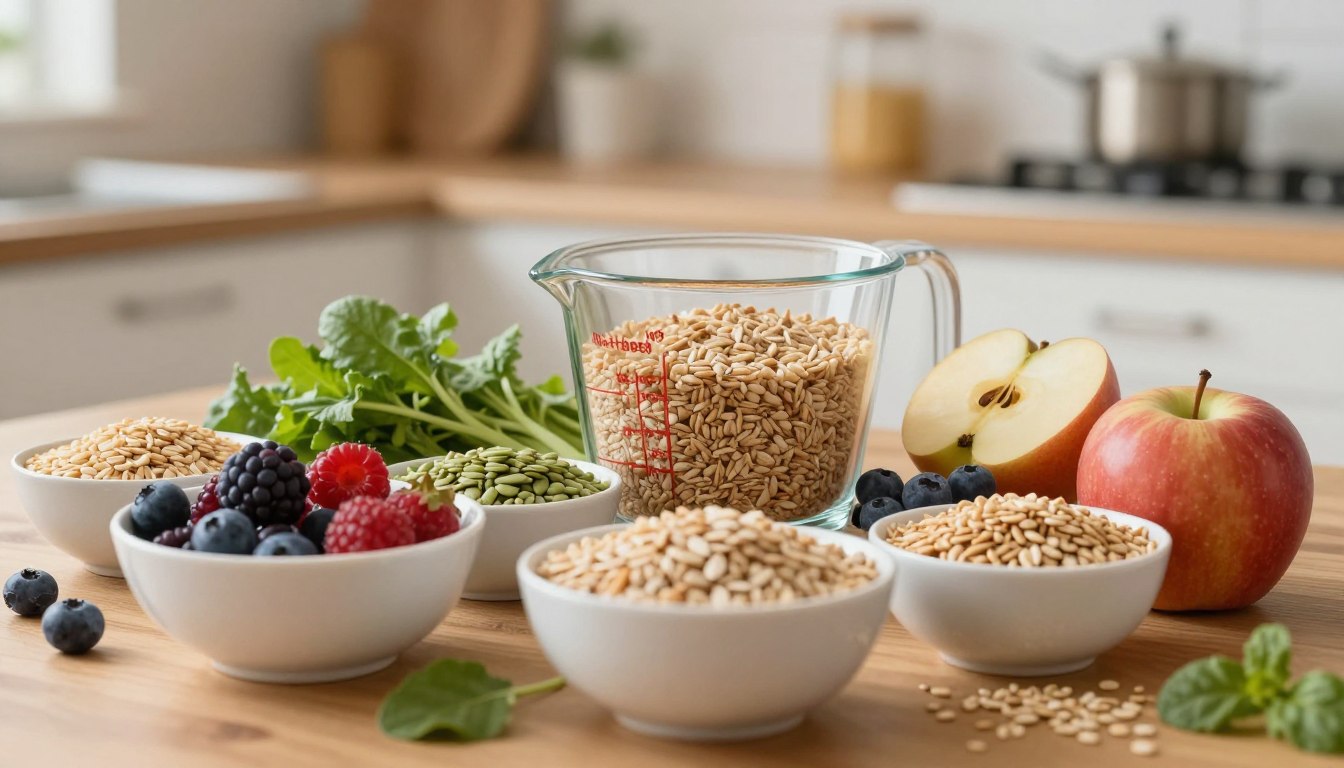
This simple nutrition question can lead to real results. Plant-based fiber helps you feel full, steadies blood sugar, and keeps digestion regular. That trio makes it a powerful tool for weight management when paired with a sensible calorie plan.
Practical goals matter. Many experts suggest a modest target slightly below general adult guidelines. Registered dietitian Teresa Pangan recommends aiming for about 20–25 grams per day for weight loss, while general advice is 25–30 grams and ADA guidance is 14 grams per 1,000 calories.
Most people in the United States fall short on intake, so uncertainty is normal. This short guide will give a clear gram target, show how to personalize goals to calories, list top high-fiber foods with real numbers, and explain gentle ways to increase intake without stomach drama.
Key Takeaways
- Fiber supports fullness and steady blood sugar for easier eating control.
- Aiming for 20–25 grams is a practical starting point for weight loss.
- Personalize goals using 14 grams per 1,000 calories as a guide.
- Most Americans need more plant-based foods like beans, fruits, and whole grains.
- Increase intake slowly to avoid digestive upset.
Why fiber matters for weight loss and overall health right now
Current trends favor whole foods that support appetite control and long-term metabolic health. The science behind this is not new, but it matters more as people seek sustainable loss strategies rather than short fixes.
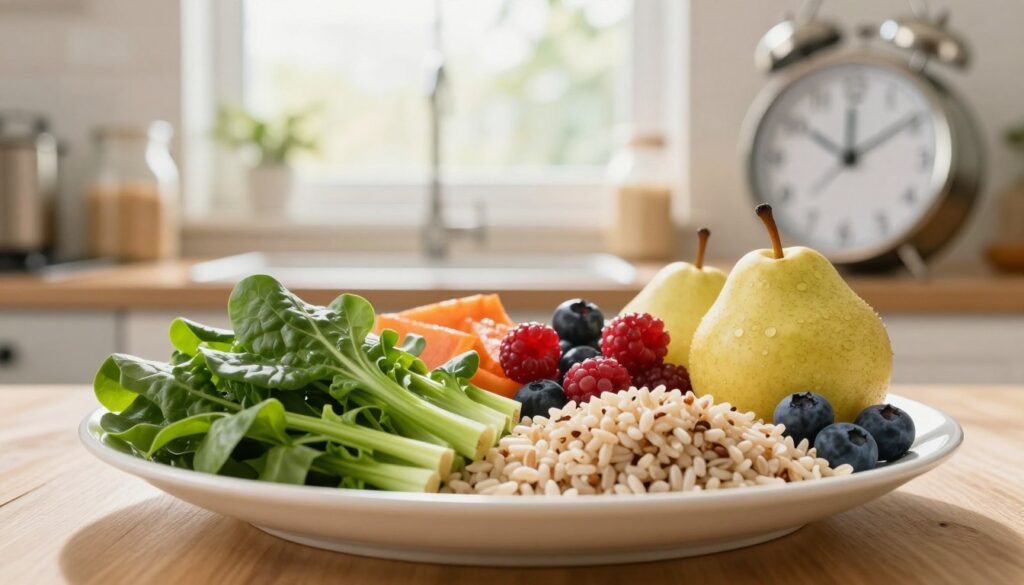
Fullness and appetite control
Fiber helps slow chewing and digestion. That gives your stomach time to stretch gently and sends fullness signals. You can feel satisfied on fewer calories without feeling deprived.
Blood sugar and metabolic benefits
Higher intake leads to steadier blood sugar and fewer energy crashes. That steadiness lowers diabetes risk and makes lasting weight changes easier for the body.
Gut health and colon cancer prevention
Fiber keeps waste moving and supports healthy stool consistency. It also feeds good gut microbes, which make short-chain fatty acids that aid immune function and may lower colon cancer risk.
Quick fiber-forward swaps: fruit plus nuts, beans added to salads or tacos, and swapping refined grains for whole grains. Consistency, not perfection, is the best way to protect overall health and support steady loss.
For a snack idea that fits this approach, try a compact comfort snack that pairs fruit with nuts for sustained fullness.
How much fiber per day to lose weight
A clear daily target makes adding more plant foods feel practical, not daunting.
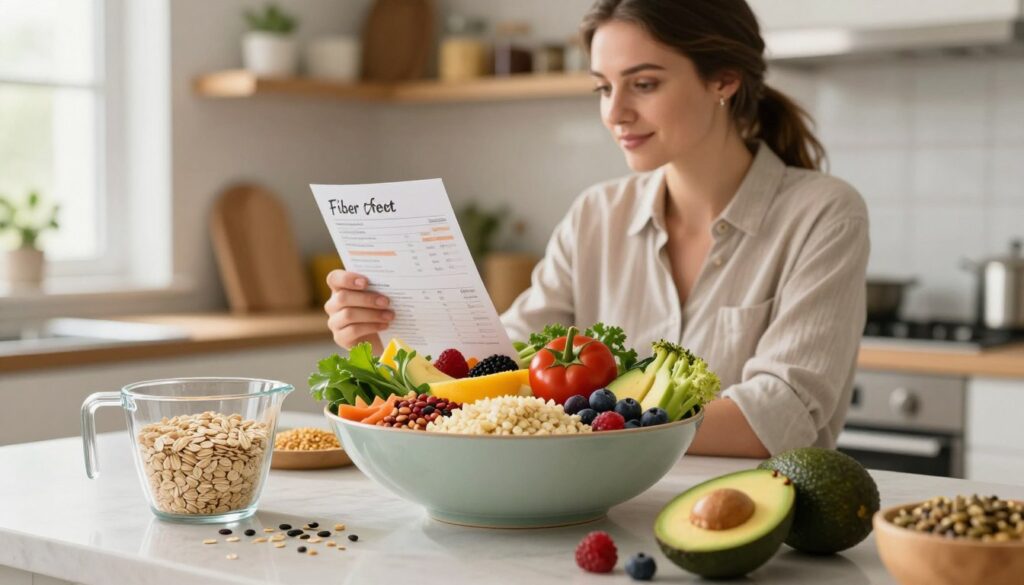
A practical target: at least 20–25 grams
Core answer: aim for at least 20–25 grams if you are cutting calories. That range supports fullness and steady energy while you reduce portions.
How that compares with general guidance
Health groups commonly recommend 25–30 grams of dietary fiber for adults. Choosing 20–25 grams is a realistic starting point during a calorie deficit and still offers big benefits.
Personalize using calories
Use the 14-grams-per-1,000-calorie rule from the ADA to tailor goals:
- 1,600 kcal ≈ 22 g
- 1,800 kcal ≈ 25 g
- 2,000 kcal ≈ 28 g
Reality check and a mindset tip
Most Americans get roughly half the recommended amount, so change can feel steep. Meals often center on refined foods that hide grams unless you check labels.
Mindset: treat plant grams like a daily budget. Pick a high-fiber breakfast, one bean-based meal, and a produce snack as anchors.
How fiber works in the body to support fat loss
Simple changes in what you eat can reshape hunger and make calories feel less limiting.
Slower eating and digestion
Fiber adds volume and texture, so meals take longer to chew. Slower eating gives your brain time to register fullness.
Higher-fiber meals tend to move more slowly through the stomach. That pacing delays hunger and reduces midafternoon cravings.
Stomach stretch and fullness hormones
When the stomach stretches gently, it sends satiety signals that curb appetite. Pangan notes that fiber-rich foods both stretch the stomach and trigger fullness hormones.
This signaling makes sticking with a calorie deficit easier without constant hunger.
- Practical effect: less grazing and smaller portions later.
- Behavior link: filling breakfasts or bean-based lunches lower evening snacking.
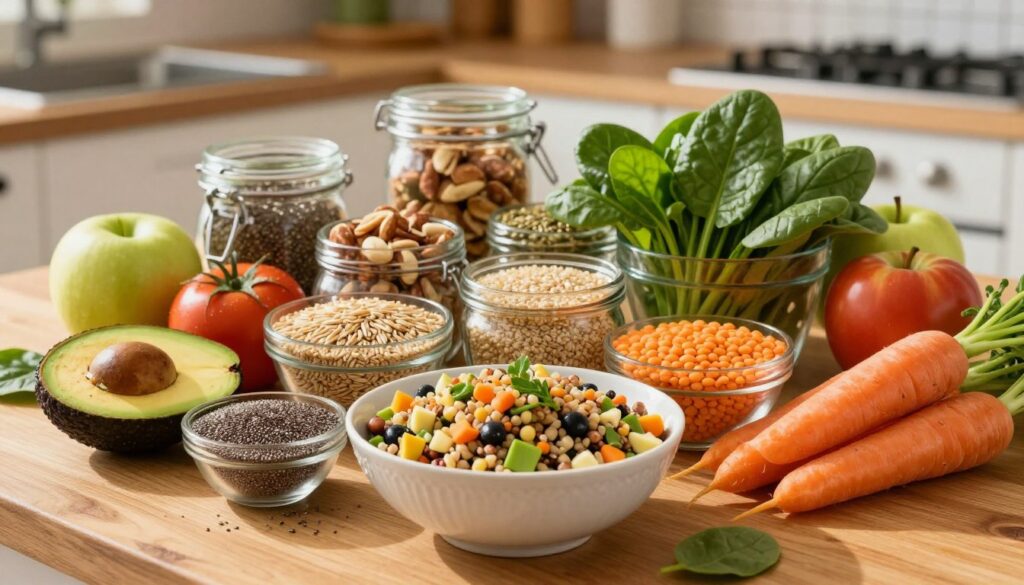
Example meals: oats with berries and chia or a salad bowl with beans and quinoa. These choices slow hunger and help control intake.
Friendly reminder: aim for steady habits. Sudden spikes can cause bloating and backfire.
| Mechanism | What it does | Real-life tip |
|---|---|---|
| Volume & chewing | Slows eating and speeds fullness | Add whole fruit or seeds at breakfast |
| Digestion pacing | Delays return of hunger | Choose beans or whole grains at lunch |
| Satiety signaling | Supports hormone-based fullness | Combine protein with plant carbs for lasting satiety |
Soluble vs. insoluble fiber: choosing the right mix
Not all plant carbs act the same in the body; a simple mix works best for most people.
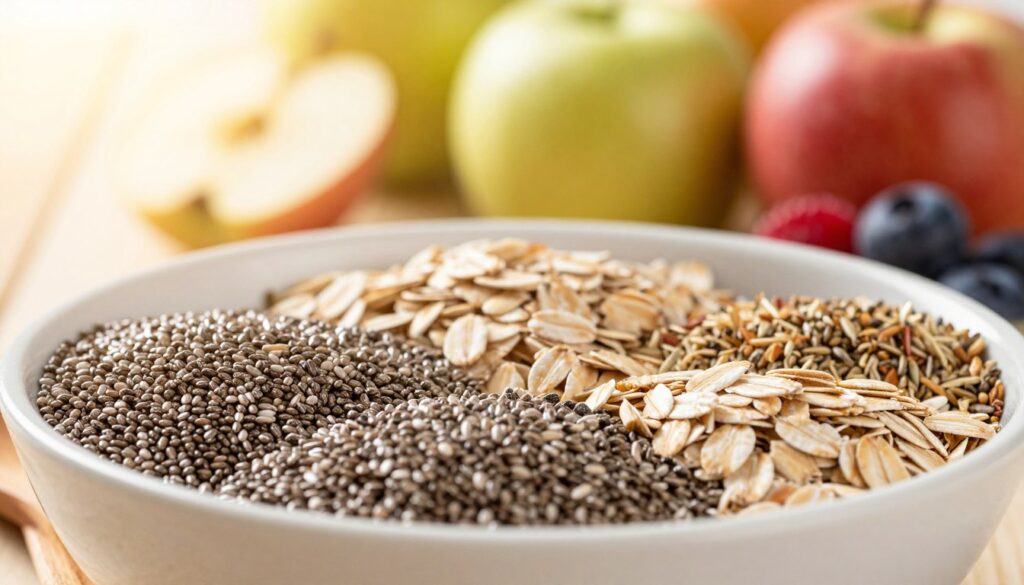
Soluble explained: the sponge effect for cholesterol and sugar
Soluble fiber soaks up water and forms a gel in the gut. That gel slows digestion and traps cholesterol and sugar.
This slows transit and can help if you have loose stools. Practical sources include oats, apples, lentils, and chia.
Insoluble explained: the broom effect for regularity
Insoluble fiber adds bulk like a broom, speeding transit and helping prevent constipation.
Common sources are wheat bran and the skins or seeds of fruits and vegetables.
Match type to your symptoms
If you tend toward loose stools, emphasize more soluble sources and gentle meals.
If constipation is the issue, add insoluble sources and increase fluids. Many foods contain both types, so simple swaps usually work.
“Aim for a mix from whole foods rather than overthinking parts.”
| Type | Main effect | Examples |
|---|---|---|
| Soluble | Slows digestion, traps cholesterol | Oats, apples, lentils, chia |
| Insoluble | Adds bulk, speeds transit | Wheat bran, veggie skins, seeds |
| Both (mixed foods) | Balanced effects for general health | Beans, whole fruit with skin, seeds |
Safety note: if symptoms stay severe or you have IBS or other GI concerns, speak with a clinician for tailored advice. For comforting, practical recipes that fit this approach, try these comfort foods that are healthy.
High-fiber foods to prioritize for weight loss (with real numbers)
Pick foods that stack bulk and nutrients so meals feel filling and simple. Below is a short shopping list with quick numbers and serving ideas that add real grams to your plate.
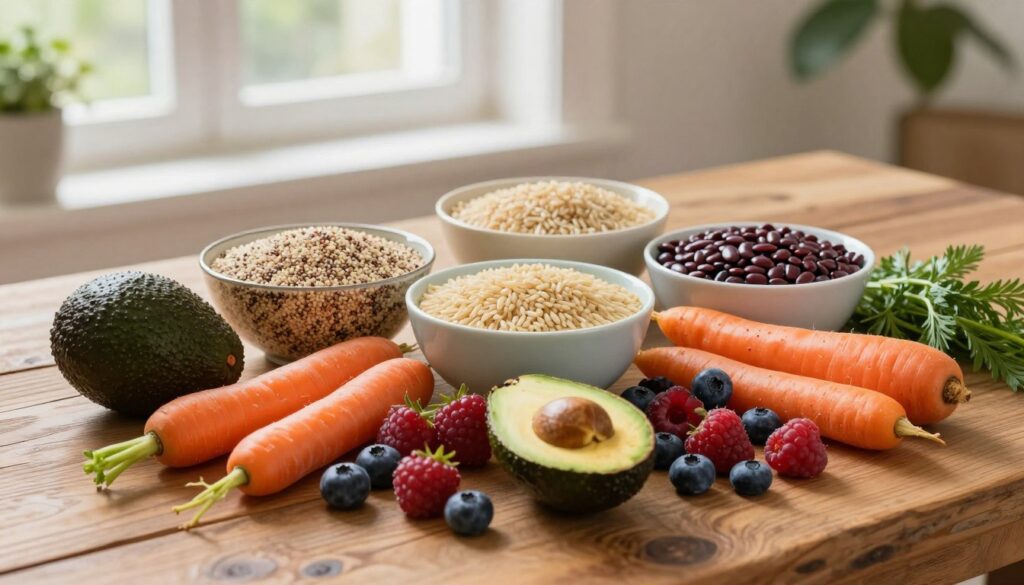
Fruits that add up fast
Apple with skin: ~4–5 g per medium apple. Large pear: ~7 g. Raspberries are a sweet swap (~5 g per 1/2 cup). Try an apple with nut butter or berries tossed into yogurt.
Vegetables with big wins
Artichoke (cooked): ~10 g per cup. Brussels sprouts: ~4–6 g per cooked cup. Broccoli: ~2.5 g per 1/2 cup cooked. Roast or steam and add a squeeze of lemon.
Legumes: fiber plus protein
Lentils: ~15 g fiber and ~18 g protein (serving noted). Black beans: ~8 g per 1/2 cup. Chickpeas: ~6 g per 1/2 cup. Add to salads, soups, or tacos for lasting fullness.
| Category | Example | Approx. grams |
|---|---|---|
| Grains | Oats (dry cup) | ~8 g |
| Grains | Quinoa (cooked cup) | ~5 g |
| Bread | Whole-grain, 2 slices | ~7 g |
Nuts & seeds: small spoon, big impact
Chia: ~7 g per 2 tbsp (or ~10 g/oz). Flax: ~4 g per 2 tbsp. Soy nuts: ~17 g per cup. Watch portions—these are calorie-dense but nutrient-rich.
Tip: as you add these foods, drink enough water for comfort and regularity.
How to add more fiber per day without derailing your stomach
A gradual plan protects comfort. Start with gentle increases and let your digestion adjust before adding more. Most people can safely add a couple grams every few days rather than jumping to a high total all at once.

Go slowly and steady
Simple ramp plan: add ~2 grams every 2–3 days, then pause until stools feel normal. Repeat this over weeks until you reach your target intake.
This pacing lowers gas, bloating, and cramps. Pangan and Michalczyk both recommend ramping up rather than starting at a very high level.
Easy micro-swaps that add grams
- Add 1/2 cup fruits or vegetables with meals.
- Stir 1/4 cup beans into tacos or salads.
- Mix 1/2 tbsp chia or ground seeds into oatmeal or smoothies.
- Toss berries into yogurt or add a side of raw veggies at lunch.
These small swaps add measurable grams. For example, adding 1/4 cup beans (≈2–3 g) plus a 1/2 cup fruit (≈2–4 g) can raise intake by 4–7 g in one meal.
Meal-building: a “fiber-first” plate
Start meals with vegetables or fruit, then add legumes or whole grains, followed by protein and healthy fats. This approach fills most of your plate with plant foods that give volume and lasting fullness.
Hydration reminder: increase water as you add more plant grams. Drinking enough fluid helps prevent constipation and eases the transition.
If you want practical recipes that fit this gradual approach, try this simple savings guide for homemade staples: smart pantry swaps.
Water, constipation, and other side effects when increasing fiber intake
Small changes feel best. When you raise plant-based grams too fast, your gut needs time to adapt. That can lead to common, temporary symptoms that are easy to manage with simple steps.
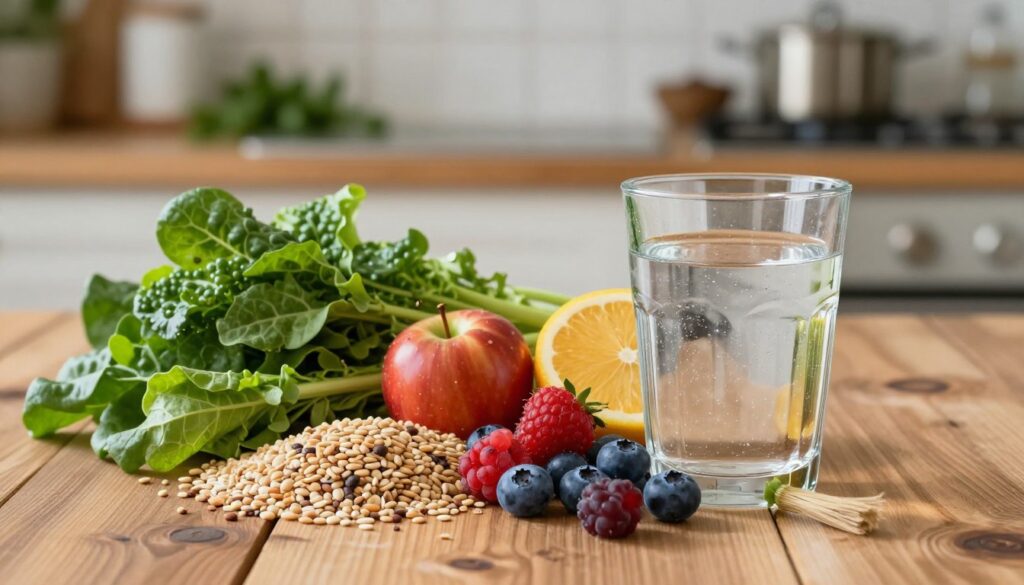
Why “too much too soon” can cause gas, bloating, constipation, or diarrhea
Biology in plain terms: a sudden jump in dietary bulk sends more food for gut microbes to ferment all at once. That extra fermentation can produce gas and bloating.
The same shift can also cause stool changes. Insoluble-rich increases may speed transit and cause loose stools. Without enough fluid, bulky intake can slow transit and cause constipation. Individual digestion and the mix of foods determine which effect appears.
Hydration matters: drinking plenty of water as you increase intake
Role of water: soluble and insoluble plant matter both hold water. When you add plant grams, drink more fluids so stool stays soft and moves easily.
A simple rule: sip water steadily through the day and especially with high-fiber meals. This lowers the risk of hard stools and makes the transition smoother.
When to pause and get advice: IBS and other digestive conditions
Most people can ramp up safely, but some should check in first.
“People with IBS, Crohn’s, or persistent symptoms should consult a clinician or dietitian before large changes.”
If symptoms stay severe, or if you have chronic GI diseases or take certain medications, pause increases and seek professional guidance. Comfort matters for long-term success; the best plan is the one you can follow consistently.
| Common symptom | Likely cause | Quick fix |
|---|---|---|
| Gas & bloating | Rapid microbial fermentation | Slow the increase; split servings across meals |
| Constipation | Too little water with more bulk | Drink more fluids; favor soluble sources |
| Diarrhea | Fast transit from certain insoluble foods | Choose softer, soluble foods; pause new items |
Practical checklist: ramp slowly, spread plant grams across meals, try more soluble options if uncomfortable, and avoid stacking several new high-bulk foods at once. For related practical tips that blend plant changes and easy routines, see this simple guide on plant growth hacks.
Reading labels and shopping smart for dietary fiber
Smart shopping beats guesswork: a few label rules make it simple to choose filling foods. Use a quick plan at the cart and you will add useful grams without stress.
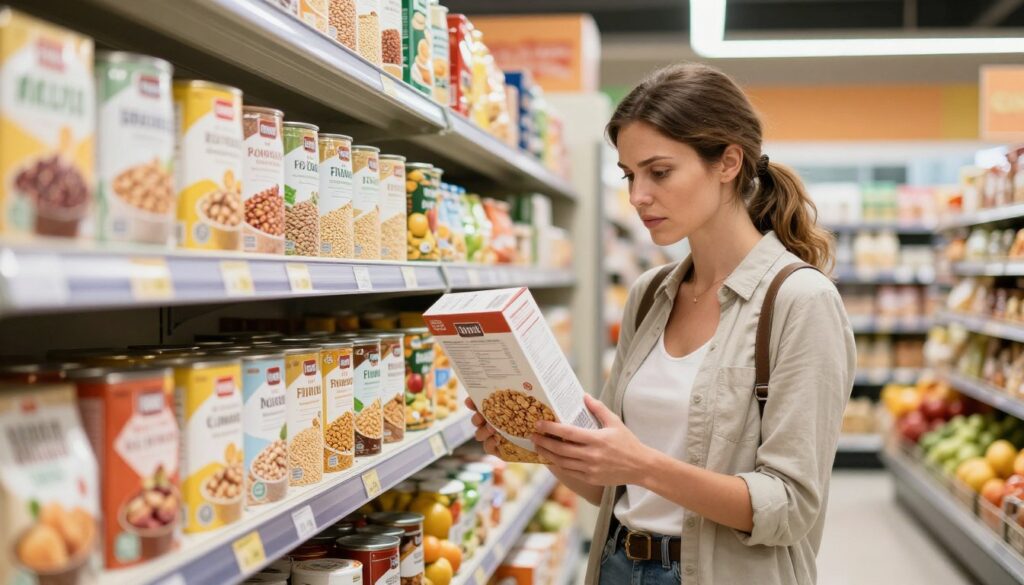
What “high in fiber” means on a Nutrition Facts label
Rule: Michalczyk notes that “high in fiber” equals 5 g or more per serving. Always check the serving size so that the number is meaningful for your plate.
Label tip: compare brands side-by-side by grams per serving, not package weight. Watch added isolated fibers—useful sometimes, but whole food sources bring better vitamins and satiety.
Best places to shop first
Start in the produce aisle. Fruits and vegetables are naturally rich and require little processing.
Next stop: beans and legumes, then whole grains, then nuts and seeds. Minimally processed items tend to contain both soluble and insoluble types and take longer to chew.
Daily strategy: pick one packaged item that truly boosts your fiber intake (for example, whole-grain bread) and pair it with whole fruit or a bean salad. Packaged food can fit, but produce is the easiest place to build a high-fiber day.
“Focus on whole foods first and use labels to fill gaps.”
Should you use a fiber supplement for weight loss?
Supplements can fill gaps, but they aren’t a quick fix for long-term success. Use them as a targeted tool, not a replacement for whole foods that supply vitamins, minerals, and a natural mix of soluble and insoluble types.

When supplements may help vs. when food should come first
When they may help: very low baseline intake, picky eating, travel, or short periods when whole foods are unavailable.
Food-first wins when: you want volume, varied nutrients, and the appetite-suppressing benefits of chewing real meals.
Choosing quality: third-party testing and certification
Look for products with third-party testing. NSF certification is a strong quality signal and reduces the risk of contaminants or inaccurate labels.
Use supplements cautiously: start small, increase slowly, and drink adequate water to reduce constipation risk.
| Use case | Best option | Notes |
|---|---|---|
| Short-term gap | Supplement | Convenient; start low and monitor |
| Long-term nutrition | Whole foods | Provides vitamins, volume, and lasting benefits |
| Medical concerns | Clinician-guided | Check medications and GI conditions first |
Practical recommendation: aim to meet most needs with foods and use a tested supplement only as a gap-filler. If you want budget tips for stocking more whole options, see this guide on save money on food.
Conclusion
Wrap up your plan with a clear, practical target that fits your calories and comfort. For many people aiming for weight loss, a starting goal of at least 20–25 grams per day is sensible, while general guidance sits near 25–30 grams.
Personalize your number using the 14-gram per 1,000-calorie rule and track intake slowly. Teresa Pangan’s advice on steady increases and the FPL finding that higher fruit and vegetable intake linked with greater loss (WL group mean -3.28 kg) support a food-first plan.
Practical tips: choose whole fruits, beans, whole grains, nuts, and seeds; look for “high in fiber” labels (5 g+ per serving); ramp up slowly, and drink plenty of water to avoid constipation or bloating. Women and men will set different calorie targets, but the same approach can work when personalized.
Next step: pick two swaps now (one at breakfast, one at lunch or dinner) and build over the next two weeks for steady, sustainable change.