
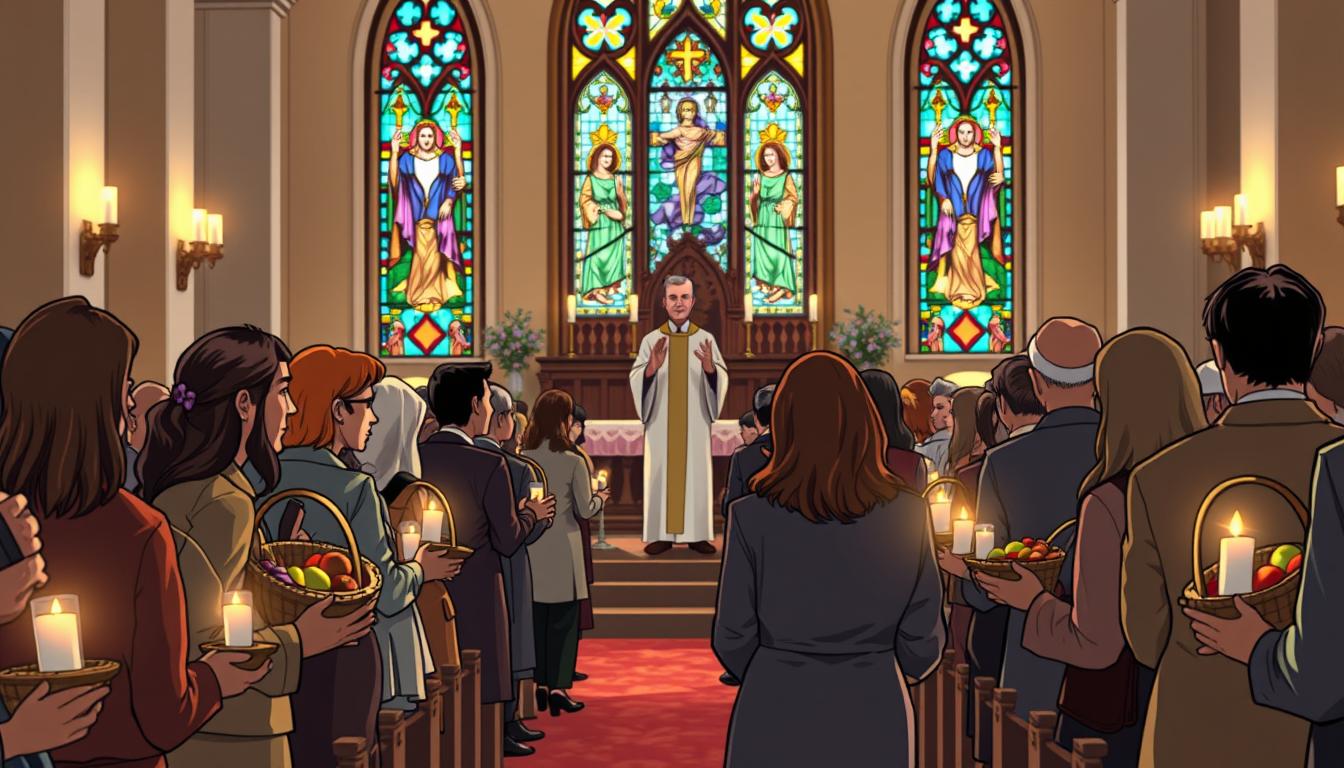
Feeling a bit nervous about bringing up the gifts during Mass? You’re not alone! Many people wonder about the right timing and how to handle this special moment. But don’t worry, it’s simpler than it seems. This act is a beautiful gesture that connects you with centuries of tradition.
The Presentation of the Gifts happens after the Liturgy of the Word. This is when the faithful bring forward the bread and wine, which will become the Body and Blood of Christ, along with the collection. St. Justin Martyr noted this practice in the 2nd century, highlighting its importance.
In this guide, we’ll walk you through every step, from sitting in the pew to returning to your seat. You’ll learn the timing, the meaning behind the offering, and the practical moves needed. Remember, the bread and wine you hold are more than just items; they represent the work of human hands transformed into something sacred.
So, take a deep breath. Let’s dive into the details so you can feel confident and calm during this meaningful part of the celebration.
Key Takeaways
- Bringing up the gifts is a simple yet meaningful gesture.
- This act connects you with the entire community of the faithful.
- The Presentation of the Gifts follows the Liturgy of the Word.
- The priest receives these offerings on behalf of Christ.
- Your role is part of a long-standing tradition.
Why Knowing When to Take Up Gifts at Catholic Mass Matters
Understanding the right moment for the presentation of gifts can enhance your experience during Mass. The timing is essential as it marks a significant transition in the service. This moment is not just an interval; it’s a vital part of the rite that connects you with the community of the faithful.
The change from the Liturgy of the Word to the Liturgy of the Eucharist is highlighted by the priest moving to the altar. You’ll want to leave your pew right after the Prayers of the Faithful, when the priest says, “Let us profess our Faith.” This is your cue to quietly head to the back of the church.
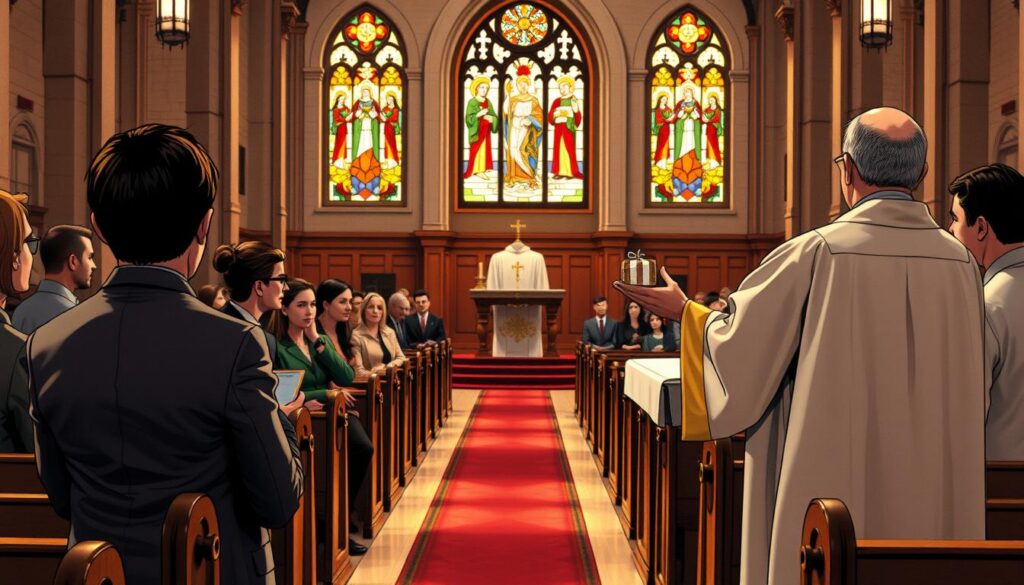
While standing in line, reciting the Creed with everyone else reinforces your sense of belonging. The real signal to start walking forward is when the priest and altar servers move to the front of the altar, waiting for you. This is your green light!
Participating in this way pulls you deeper into the celebration. You’re not just a spectator; you’re actively bringing gifts that represent the work of human hands and the offering of the whole parish. It’s a humble gesture, yet Pope Benedict XVI noted that in the bread and wine we bring, all creation is taken up by Christ to be transformed and presented to the Father.
When you hand over that bread or wine, you join in a sacrifice that has been occurring since the early Church. This connection can truly resonate within your heart. Knowing the right time for the presentation of gifts isn’t just about logistics; it’s about stepping into a moment that makes the celebration feel personal and alive.
| Action | Timing | Significance |
|---|---|---|
| Leave your pew | After the Prayers of the Faithful | Marks your transition from listening to responding |
| Recite the Creed | While standing in line | Reinforces your role within the community |
| Walk forward | When the priest moves to the altar | Your cue to participate actively |
The Meaning Behind the Presentation of Gifts
The act of bringing gifts during Mass is steeped in rich history and profound symbolism. This tradition dates back to the 2nd century, where early Christians would carry bread and wine from their own tables to share in the Eucharist. St. Justin Martyr described it as a beautiful exchange, where the faithful return their gifts to God, who then transforms them into the Body and Blood of Christ.
A Tradition Rooted in Early Church History
Originally, the presentation was a simple and silent placement of bread and wine on the altar. This gesture reflects the hard work and care that went into producing these elements. Each loaf of bread and bottle of wine symbolizes the labor of many: the wheat grown, the grapes harvested, and the hands that baked and fermented.
It’s essential to recognize that the bread isn’t merely a cracker; it serves as a staple of life. The wine, too, is the fruit of the vine, both offered in a sacrifice that echoes the gesture of Melchizedek in the Old Testament. These elements carry with them the essence of our daily lives and our shared humanity.
What the Bread and Wine Really Represent
When you carry these offerings forward, you embody the spirit of your family and the entire parish. Each item you bring represents the joys, struggles, and hopes of your community. The collection basket you might also carry is a physical reminder of our duty to help those in need, a practice emphasized by St. Paul in his letters.
The priest’s quiet prayers over the bread and wine transform these simple gifts into our spiritual drink and the bread of life. This transformation is nothing short of miraculous, reminding us of the sacred nature of this moment.
Why Offerings Include More Than Just Food
Moreover, the presentation of gifts includes more than just the bread and wine. It encompasses our material support for the poor, which has been a part of this tradition since its inception. This reflects the continuous link between our liturgical practices and charitable works.
As you walk down the aisle, remember that this act is not just a logistical handoff. It’s a profound moment where you, your family, and the faithful are all woven into a tradition that has thrived for centuries. The inclusion of incense, if used, symbolizes how our prayers rise with the sacrifice, enriching the experience.
Understanding this backstory turns your walk to the altar into a meaningful act. It’s a moment that connects you deeply with your community and the broader mission of the Church. For more insights on the presentation of gifts, you can explore this resource.
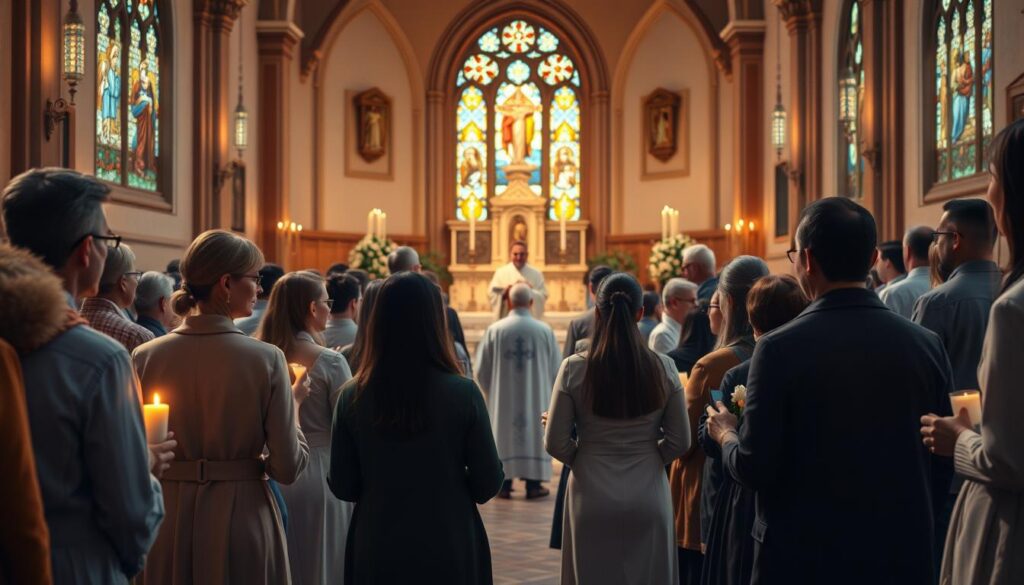
How to Take Up Gifts at Mass: A Step-by-Step Guide
Walking forward with the offerings is a significant moment, and knowing how to do it makes it special. Let’s break down the process so you can feel comfortable and confident as you participate in this beautiful tradition.
Getting Ready: What to Know Before You Walk Forward
First things first, let the hospitality ministers know you’re present. This way, they won’t give your spot away. Try to sit at the end of the pew for a quick, quiet exit. You want to be ready when the moment comes!
Your cue to move is when the priest says, “Let us profess our Faith.” Slip out calmly and head to the back of the church where the gifts are usually waiting on the left side. You’ll need to wait until the monetary collection wraps up and the priest walks to the front of the altar.
The Order of the Procession and Who Carries What
Now, let’s talk about the order of the procession. It’s pretty straightforward:
| Order | Role | Item |
|---|---|---|
| 1 | Usher | Book of Intentions |
| 2 | First Gift Bearer | Collection Bowl |
| 3 | Second Gift Bearer | Wine |
| 4 | Third Gift Bearer | Bread |
If you’re carrying the wine, hold the cruet in your left hand with your right hand supporting it. Make sure the handle faces the priest so he can grab it easily.
How to Hand Off the Gifts with Reverence
When you approach the altar, step close enough that the priest doesn’t have to stretch. Offer the gift upward and forward with a reverent gesture. After handing off your item, move slightly to the side so the next person can step up.
Once all the gifts are presented, the priest might say a quick thanks. Then, together with the priest and servers, you all bow toward the altar, turn, and walk back down the center aisle slowly. No rushing—just a peaceful return to your seat.
Finishing Up: Returning to Your Seat Respectfully
If you’re part of a family doing this together, extra members can walk alongside reverently. This makes the moment feel even more like a shared sacrifice and celebration.
Remember, the bread and wine you’re carrying will become the body and blood of Christ. Treat them with care and let that thought guide your pace and posture.
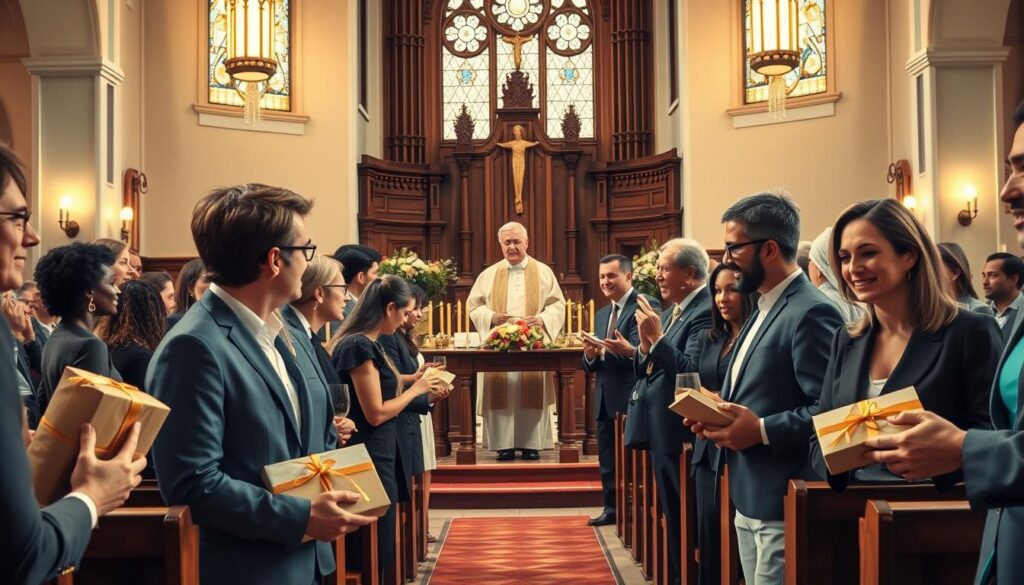
Your Role in This Special Moment of the Mass
Each time you step forward, you honor a legacy that has been cherished for generations. This act is more than just a ritual; it symbolizes your connection to the community and the shared faith that binds you together.
When you bring those offerings to the altar, you carry a piece of your life, your family’s love, and the prayers of your parish. It’s a quiet kind of sacrifice, blending your personal story with the divine transformation of the bread and wine.
Remember, you are part of a beautiful tradition that spans centuries. Whether you walk forward alone or with your family, your willingness to serve enriches the community. As you return to your seat, feel that deeper connection, knowing that your hands helped place those sacred elements on the altar.
So, the next time you are invited to participate, embrace the moment. You’ll understand the significance of your role and the honor it brings to the entire Church.