

Exact problem: You want a clear answer to how much do I need to walk to lose weight and a plan that fits a busy US schedule.
Walking is low-cost and easy to add into daily life. Experts often recommend a practical range of 7,000–10,000 steps per day for many adults, but there is no single magic number.
Weight loss comes from a steady calorie deficit. Walking helps by burning extra calories and by shaping routines that make healthier choices easier.
This guide covers step targets, turning steps into minutes per week, how pace and hills change calorie burn, and a simple 12-week plan that builds safely. The familiar “10,000 steps a day” rule is a useful goal, yet research shows benefits appear at lower levels (for example, ~4,400 steps linked with lower mortality in older women) and may level off around ~7,500.
Health-first note: Improved mood, energy, and heart health often show up before the scale budges. If you are sedentary, managing joint pain, or returning after a break, ramp up slowly and get medical clearance when appropriate.
Key Takeaways
- Practical benchmark: aim for 7,000–10,000 steps per day, adjusted by baseline activity.
- Meaningful health gains can begin with fewer steps; consistency matters more than a single number.
- Walking supports a calorie deficit and steady weight loss while boosting mood and heart health.
- Guide includes step-to-minutes conversions, intensity tips, and a 12-week progressive plan.
- Start slowly if sedentary or injured and consult a clinician when needed.
- For related lifestyle tips, see a short beginner resource at beginner homesteading ideas.
How much do i need to walk to lose weight
Step targets are personal; no single total works for every body. Several factors—body size, age, fitness, and how much someone sits—change calorie needs and the rate of weight loss.
Why there’s no single “magic” step number for weight loss
Calories burned per step vary by person. That means a fixed number of steps won’t guarantee the same results for different people. Use steps as a guide, not a promise.
Realistic daily targets for most adults: 7,000–10,000 steps per day
For most adults, a friendly target range is 7,000–10,000 steps per day. This range balances daily life and meaningful calorie burn and is a practical sweet spot for steady weight management.
Health-first benchmarks and faster progress
Research shows health benefits can level off near ~7,500 steps a day, which is good news for people starting around 4,000–5,000. If faster loss is the goal, build gradually toward 10,000–12,500 steps per day while protecting recovery.
Walking supports overall body fat loss over time; spot reduction doesn’t occur. The best step goal is the one you can repeat most days. If steps rise but loss stalls, check food, drinks, sleep, and sitting time for hidden causes.

- Start: move baseline toward ~7,500.
- Progress: aim for 10,000–12,500 if sustainable.
- Reality check: consistency beats short bursts.
Turn steps into time: minutes per day and days per week that work
Make steps schedulable: count minutes per session and build a weekly rhythm that sticks. The CDC recommends at least 150 minutes of moderate physical activity each week—about 30 minutes on five days.
Minimum effective baseline: 150 minutes per week feels like breathing faster but still chatting. This is the cheapest, most reliable way to protect health and start steady progress.
Weight-loss-friendly option: many people find 4–5 walks per week at 50–60 minutes fits life and boosts results. Rest days help recovery and curb aches.
Short sessions count. Splitting time into two 25–30 minute walks works well and lowers scheduling friction. A 2019 study found two daily sessions often created more steady loss than one long walk.

What “most days” looks like: pick a repeatable pattern (for example: Mon, Tue, Thu, Fri, Sat) rather than expecting perfection every single day.
“Consistent weekly minutes plus better daily activity usually beat occasional hero workouts.”
- Track time and effort, not just steps; pace and form change calorie burn.
- Try morning 25 minutes plus evening 25 minutes on busy days.
- Focus on repeatable minutes per week for lasting success.
For a few smart snack ideas that fit an active routine, check the comfort snack guide.
Walk smarter to burn more calories (pace, hills, and your body weight)
A few tweaks in speed and grade often yield bigger calorie gains than simply adding time. Small changes in pace, incline, or stride can change energy use without adding extra sessions. That makes walking more efficient and easier to fit into busy days.
Calories burned walking: why weight, pace, age, and fitness matter
Two people can log the same steps but burn different calories because body weight, pace, age, and current fitness all affect the process. Heavier bodies use more energy per step; faster speed raises calorie cost; fitness can blunt heart-rate response.
Moderate vs vigorous: the talk test
Use the talk test to gauge intensity without gadgets:
- Light: can sing or chat easily.
- Moderate: can speak full sentences but breathing is quicker.
- Vigorous: only short phrases between breaths.
Example calorie burns by pace and body weight
Estimates (approximate): a 154 lb person burns ~280 calories/hour at ~3.5 mph and ~460 calories/hour at ~4.5 mph. Around 10,000 steps might burn ~500 calories for a 165 lb man and ~290 calories for a 110 lb woman. These numbers are rough guides, not exact values.
| Weight | 3.5 mph (cal/hr) | 4.5 mph (cal/hr) |
|---|---|---|
| 110 lb | ~200 | ~330 |
| 154 lb | ~280 | ~460 |
| 165 lb | ~300 | ~490 |
Incline, stride, and practical tools
Uphill walking raises energy demand and burns more calories in the same time. Downhill often uses less energy but can strain joints. Longer strides increase distance per step; faster speed raises energy use—but comfort and form matter more than forcing change.
Use resources like the Omni Calculator or the ACE calorie counter for tailored estimates. For simple shopping and lifestyle tips that pair well with an active routine, see smart grocery savings.
“Higher-calorie burns help, but regular movement and steady habits drive results most reliably.”

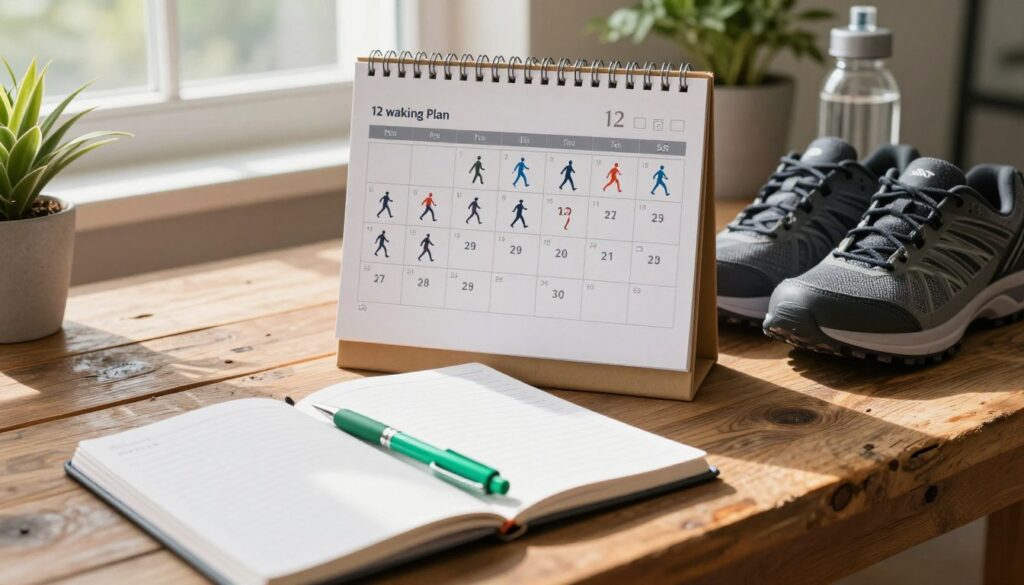
A simple walking plan you can follow for the next 12 weeks
Start with a plan that grows in small, clear steps over three months. This keeps progress steady and reduces soreness.
Aim: four to five sessions each week, with rest days for recovery. Split sessions (two shorter walks) count when schedules are tight.
Weeks 1–2: build the habit
Begin with a comfortable 25-minute walk on most weekdays. Include a 3–5 minute warm-up and a slightly brisk middle segment if it feels good.
Weeks 3–6: add time slowly
Add about five minutes every two weeks. Keep the schedule at 4–5 walks per week so the body adapts without nagging soreness.
Weeks 7–12: reach 50–60 minutes
Progress toward 50–60 minutes per session. Once that base feels easy, add short brisk intervals or mild hills for higher calorie burn and variety.
Adjustments for a sedentary return
If starting from very low activity, begin with 10–15 minutes and slower pace. Take extra rest days and increase time only when movement feels comfortable.
- If you miss a week: repeat the prior week rather than trying to catch up with long sessions.
- Pair time with steps: aim for baseline +2,000 steps per day as your first step goal, then build from there.
- Keep it joint-friendly: focus on consistent minutes per week, not hero workouts.
| Weeks | Session minutes | Sessions per week | Progress tip |
|---|---|---|---|
| 1–2 | 25 | 4–5 | Warm-up, steady middle, habit focus |
| 3–6 | 30–40 | 4–5 | +5 min every two weeks, keep rest days |
| 7–12 | 50–60 | 4–5 | Add brisk intervals or hills once base is easy |
Tip: For paired lifestyle tips that fit an active routine, check yard and garden tips at yard and garden tips. Small habit wins at home support long-term success.
Make your step goal easier to hit (and avoid common roadblocks)
Turn vague aims into simple actions by measuring current steps and adding a modest stretch goal. Start with a one-week tracking window, calculate the daily average, then set an initial target that is +2,000–2,500 steps per day.
Track day-to-day using a phone step counter or a smartwatch like Apple Watch or Garmin. Set daily reminders and check weekly averages rather than obsessing over single days.

Schedule and plan backups
Block a regular time for a walk on your calendar so it becomes an appointment. Bad-weather backups keep momentum: mall laps, a treadmill session, big-box store perimeter walks, or short permitted hospital-corridor loops work well.
Small movement snacks that add up
Five-minute strolls after meals, walking while on calls, parking farther away, and stair breaks can raise daily totals fast. These micro-sessions are easy and repeatable.
Accountability and common stalls
Buddy walks, local groups, or shared step challenges boost adherence without pressure. If steps rise but loss stalls, check sleep, sugary drinks, mindless snacking, and long sedentary stretches—these often blunt progress.
Bonus option: backward walking
Retro walking can change muscle demands and be gentler on kneecaps for some people. Try short, cautious sessions on flat ground or hold treadmill rails; avoid if balance is poor.
- Quick method: track 7 days → average → add 2,000–2,500 steps/day.
- Tools: phone apps, Apple Watch, Garmin, or fitness trackers with reminders.
- Stay consistent: schedule, backup plans, movement snacks, and a walking buddy.
For outdoor projects and easy yard ideas that pair with daily steps, see a short guide on backyard crops.
Conclusion
Pick a repeatable target and build habits that fit your life. For many people a sustainable goal is 7,000–10,000 steps per day or about 150 minutes of moderate activity each week. That range offers clear health benefits without forcing extremes.
Remember: 10,000 steps can help, but it is not required for progress. Starting near 7,500—or lower when needed—still counts as meaningful success.
Use minutes and a weekly plan to make activity automatic, then add pace or hills to raise calorie burn without huge time increases. Choose one next step today: track a baseline, schedule 4–5 weekly walks, or begin the 12-week plan at a comfortable level.
Support lasting weight loss with good sleep, fewer sugary drinks, less snacking, and less sitting. If you have been sedentary, have joint pain, or face medical concerns, a quick clinician check can keep efforts safe and steady. For related routine and yard ideas, see garden plans and ideas.