

Ready for clear, safe steps toward faster progress? This short guide sets realistic expectations for what “fast” can safely look like and focuses on changes you can repeat day after day.
We’ll preview the core levers: a sensible calorie deficit, higher-protein balanced meals, smarter portions, fewer liquid calories, and a realistic exercise plan that fits a busy U.S. lifestyle.
Rather than crash tactics, the best quick plan builds repeatable habits that support lasting weight loss and long-term health. Some medical conditions and life stages need a clinician’s input before making sharp changes; check with your provider when needed.
This article is a practical how to lose weight fast guide for American readers. You will learn how we define “fast,” what safety red flags to watch, meal patterns and exercise targets, simple tracking methods, and a look at time-restricted eating.
Key Takeaways
- Fast progress should be realistic and sustainable, not extreme.
- Focus on protein, portion control, and cutting liquid calories.
- Combine diet shifts with a doable exercise plan for steady loss.
- Check medical considerations before aggressive changes.
- Learn section-by-section: definitions, safety, meals, exercise, tracking, and timing.
- For smart snack swaps and habit help, see comfort snack ideas.
What “Fast” Weight Loss Really Means Today
Real-world quick progress usually means modest weekly drops you can repeat without burning out.
Defining “fast”: Many experts call loss above 2 pounds in a week “rapid” when it continues for multiple weeks. For most adults, a steadier pace near 0.5–1 pound per week is safer and easier to keep. Some people with higher starting body mass may see 1–2 pounds weekly early on.

A realistic weekly pace
Slow, steady drops protect muscle and mood. If a plan leaves you ravenous or exhausted, it likely won’t hold up after travel or holidays.
Why the scale falls fast at first
Early declines often reflect water and glycogen shifts plus less food bulk—not pure fat loss. That initial number can be motivating, but expect the rate to slow.
When quick promises backfire
- Very low calories can trigger hunger, fatigue, and later rebound eating.
- People living with obesity may see larger early drops, yet still need plans that protect energy and muscle.
Judge programs on sustainability: Can you repeat the plan next week, next month, and through stress? Small tests at home work best. For practical budget tips, see save money on groceries.
Safety First: When Rapid Weight Loss Is Risky
Quick declines on the scale may hide serious strain on the body’s systems.
Who should avoid aggressive plans without a clinician
Seek medical input if you are a child, many teens, pregnant or postpartum, an older adult, or managing chronic conditions. These groups face higher risk on strict diets and need tailored care.
Common risks for the body
Losing more than 1–2 lb per week often means muscle, water, and even bone loss. That stress can sap energy and make it harder to stick with any plan.
Side effects and why regain happens
Very low calorie approaches can cause gallstones, gout, fatigue, constipation, diarrhea, and nausea. Big early loss also sparks hormonal shifts that slow metabolism and raise hunger once the diet relaxes. That combination makes rapid regain more likely.
- Watch for red flags: dizziness, fainting, persistent nausea, or severe fatigue.
- Get medical help early if these occur.
| Group | Main risk | Recommended action |
|---|---|---|
| Children & many teens | Growth and development harm | See pediatric clinician |
| Pregnant / postpartum | Nutrient shortfalls, fetal risk | Avoid aggressive diet; consult provider |
| Older adults | Muscle and bone loss | Supervised plan with strength focus |
| Chronic conditions | Medication and metabolic issues | Clinician-reviewed diet plan |
Remember: safety is a strategy, not a slowdown. Protecting your health keeps progress real and lasting.

Set a Goal You Can Actually Keep
Pick a target that fits your daily routine, not a number from a chart. A realistic goal blends a reachable weight and small habit changes you can repeat. That makes success feel steady, not punishing.

Choosing a target that fits your life
Base your goal on what you have maintained before, not an idealized chart.
Think behaviors first: protein at breakfast, a daily step target, and two weekly strength sessions often deliver better results than chasing a single scale number.
Building a timeline that supports health and success
Set a pace near 1–2 lb per week and use small checkpoints every 2–4 weeks.
This protects sleep, mood, and social life and lets you tweak plans without panic. For practical budget-friendly tips that help routines stick, see save money.
| Goal type | Example | Why it helps |
|---|---|---|
| Behavior goal | 30 g protein at breakfast | Boosts fullness and protects muscle |
| Short-term checkpoint | 2–4 week weight or habit review | Allows safe adjustments and keeps morale |
| Lifestyle fit goal | Walk 30 minutes, 5 days/week | Easy, sustainable calorie burn |
Rule of thumb: if the plan makes you miserable, it will break. Choose goals that match your life and, if you have medical concerns, discuss aggressive targets with your provider.
Create a Calorie Deficit Without Feeling Miserable
Cutting calories is the main lever for steady progress, even when exercise isn’t perfect. A consistent calorie gap produces most of the change on the scale, while movement helps keep muscle and mood strong.

Common low-calorie ranges and what they mean
Typical low-calorie diet ranges often used are about 1,200–1,500 calories per day for many women and roughly 1,500–1,800 for many men. Needs vary by body size, age, and activity, so adjust for your starting point.
Very low-calorie diets (VLCDs) near 800 calories daily exist, but they usually require medical supervision and meal replacements.
Simple ways to cut calories without feeling punished
- Add volume with vegetables and broth-based soups so meals feel larger without extra calories.
- Prioritize lean protein at each meal to boost fullness and protect muscle during diet.
- Trim calorie-dense extras: sauces, oils, and sweetened drinks are easy swaps.
Protect muscle while dieting
Keep protein steady, include two weekly strength sessions, and avoid overly aggressive calorie cuts. These steps reduce muscle loss and support longer-term weight loss.
Choose a plan type you can repeat on busy days, not one that only works when you feel motivated. Small, reliable changes add up more than dramatic short bursts.
Choose a Meal Pattern You’ll Follow Past the First Week
A reliable eating pattern removes guesswork and makes progress repeatable. Structure reduces daily decision fatigue and supports consistent eating habits that last.
Mediterranean-style eating
Mediterranean-style focuses on whole grains, olive oil, beans, fish, yogurt, and lots of vegetables. These foods deliver fiber and satisfaction so you eat less without feeling deprived.

Practical examples: grilled salmon, a chickpea salad with olive oil, Greek yogurt with berries, and whole-grain toast. This pattern supports steady weight loss and better health over time.
DASH and MyPlate: simple planning frameworks
DASH and USDA MyPlate give easy rules: half your plate fruits and vegetables, a quarter lean protein, and a quarter whole grains. They work without tracking every gram.
Build balanced meals
Pair a lean protein with a high-fiber carb and plenty of vegetables. Add a piece of fruit or a small dairy serving for fullness. These changes help control hunger and keep energy steady.
- Quick grocery ideas: canned beans, frozen fish fillets, Greek yogurt, whole-grain pasta, mixed greens, apples, and frozen vegetables.
- Make meals in batches for busy workweeks.
Think long-term: treat this as changes you can live with, not a short detox. For simple recipes that fit these patterns, try easy comfort recipes at easy comfort recipes.
Portion Strategies That Help You Lose Weight Fast
Small portion shifts can make a big difference on the scale without adding stress to daily life. Use these simple moves with your usual meals and watch steady progress in pounds without extreme rules.
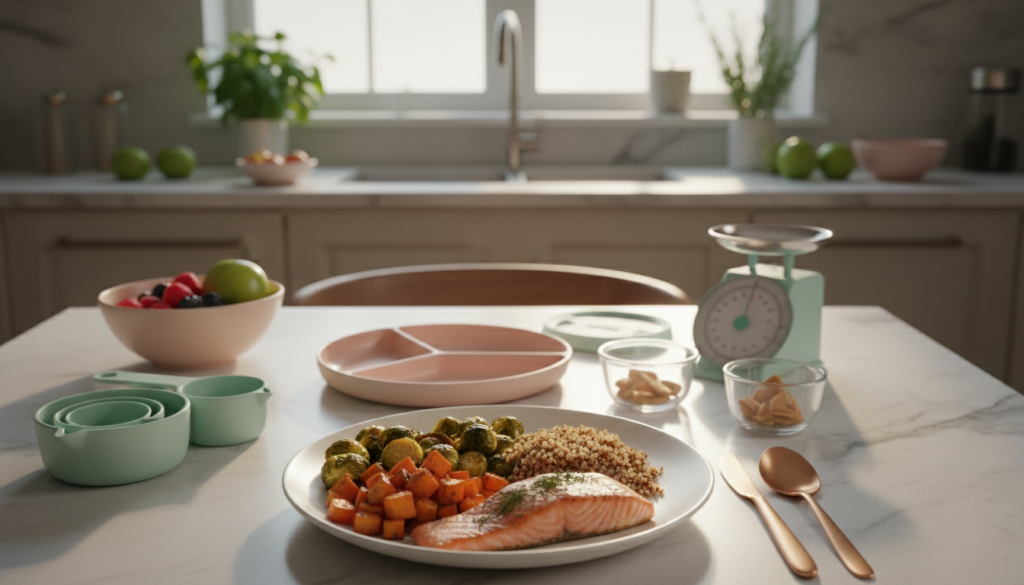
Plate and pace tactics that reduce overeating
Pick a ~9-inch plate and fill half with non-starchy vegetables, one-quarter with lean protein, and one-quarter with whole grains or starchy sides.
Eat slowly: savor bites, put the fork down between chews, and wait 60–90 seconds before deciding on seconds.
Make lower-calorie foods do the heavy lifting
Choose high-volume, high-fiber food like leafy greens, broth soups, and roasted vegetables. They add bulk and satisfaction with few calories.
Restaurant and takeout moves that protect goals
- Split an entrée or ask for a half-portion boxed before you eat.
- Order sauces and dressings on the side and pick grilled or roasted options.
- For takeout, pick one upgrade (extra veggies) and one downshift (smaller starch).
| Strategy | Why it helps | Quick tip |
|---|---|---|
| Smaller plate | Visual cue reduces portions | Use a 9-inch dinner plate |
| Protein first | Boosts fullness, protects muscle | Start meals with protein-rich bite |
| Pre-portion snacks | Prevents mindless eating | Pack single-serve containers |
Cut Added Sugar and Liquid Calories Without Overhauling Your Diet
Most of the extra calories in a day come from nibbles and beverages, not main meals. That’s why spotting hidden sugar pays off more than stricter meal plans.

Where hidden sugar hides in everyday items
Easy to miss: flavored coffee drinks, sweetened yogurts, many cereals, granola bars, bottled sauces, and salad dressings carry surprising sugar and calories.
Swaps that keep meals satisfying
Small shifts can feel natural. Try sparkling water or unsweet tea for drinks and Greek yogurt with berries instead of flavored yogurt. Choose lower-sugar condiments or use herbs and lemon for flavor.
- Shrink portion or frequency of favorite treats rather than ditching them.
- Do a one-day audit: log drinks and extras only — that often reveals the easiest calorie cuts.
- Repeat tiny changes each day and watch savings add up over weeks.
“Cutting back on sugary extras frees calories while keeping your meals joyful.”
Want recipe ideas that fit these swaps? See comfort food that is healthy for inspiration that keeps satisfaction high.
Use Exercise to Burn More Calories and Keep Weight Off
Adding regular movement to your routine boosts calorie burn and protects hard-earned progress. This section shows clear activity targets and simple ways to fit them into a busy week.

Aerobic activity targets that support fat loss
Aim for at least 150 minutes of moderate aerobic activity per week. Spread this across most days — for example, five 30-minute sessions.
Brisk walking as a reliable fat-loss option
Brisk walking is underrated. It raises heart rate, burns calories, and fits errands or short breaks. Many people can build consistency with walking more easily than with gym workouts.
Strength training twice a week to protect metabolism
Add resistance work at least two sessions per week. Bodyweight moves, bands, or dumbbells preserve muscle and keep resting calorie use higher during dieting.
How many minutes you need, and when “more” may help
If progress stalls or daily calories are higher, adding extra minutes most days can help. Increase gradually and avoid jumping from little activity to long intense sessions overnight.
“Regular activity improves mood, lowers blood pressure, and supports better sleep — benefits that help people stay consistent.”
- Main point: combine aerobic minutes with strength sessions for best results.
- Practical tip: start with brisk walks and add two short strength routines each week.
Move More All Day to Boost Total Daily Calorie Burn
Small, steady movement across the day can add meaningful calorie burn without formal workouts. Think of these moves as tiny habits that stack up. They work well when gym time feels scarce.

Small activity upgrades add up. Take stairs instead of the elevator, park at the far end of a lot, or stand during long calls. Short walking breaks between tasks reset focus and raise daily energy use.
Easy at-home ideas during screen time
March in place during commercials or walk a lap around the room while a show streams. Do light resistance-band sets between episodes, or stand and stretch during emails.
- Little wins: stand on phone calls, carry groceries in two trips, or pace while thinking.
- Pick 2–3 triggers — after meals, mid-meeting breaks, before shower — and make them automatic.
“More small movement can reduce stiffness and boost energy, which makes staying consistent easier.”
These simple ways increase daily calorie burn with low friction. Over time, the body responds with steadier progress and more energy for other healthy habits.
Track Food and Activity to Spot What’s Slowing Your Progress
Logging meals and steps gives plain feedback that highlights small leaks in a plan.
Tracking converts guesswork into data so you can see patterns that stall progress: snacks, drinks, or bigger weekend portions. A short daily log raises awareness and makes adjustments obvious.

What to track for the best data with the least effort
Minimum effective tracking: note protein at meals, servings of calorie-dense foods, and beverages first. These three items expose the biggest sources of hidden calories without long logs.
Apps versus notebook tracking
Apps simplify calorie math and save favorite meals. They work well if you use your phone often.
Notebooks suit people who prefer low-tech, private records. They cut screen time and still produce useful data.
- Pick based on routine: choose the method you will actually use every day.
- Pros/cons: apps = speed and totals; notebook = simplicity and habit-building.
Use weekly check-ins to adjust the plan
Check the same day each week and review the data. Look for one or two small tweaks: tighten restaurant choices, add steps, or trim portions.
Keep changes small: tweak the plan rather than overhaul it. Tracking is information, not judgment, and it is one of the fastest ways to break a plateau in weight loss.
“Short, consistent tracking reveals tiny habits that make the biggest difference.”
How to Lose Weight Fast With Time-Restricted Eating
Narrowing daily eating hours can simplify choices and help many eat less without counting every calorie. This approach limits when food is allowed instead of listing forbidden items.

What a 16:8 day looks like
Pick an 8-hour window, for example 10 a.m.–6 p.m. You eat regular meals and skip food outside that window. For many U.S. workers this fits a late breakfast, lunch, and an early dinner.
Where the benefit comes from
It’s not magic hours. The system helps create a calorie deficit by removing late-night snacks and trimming opportunities to graze. That is the main mechanism, not special metabolic timing.
Common mistakes that erase gains
- Overeating during the window and assuming fasting cancels it.
- High-calorie drinks that add hidden calories.
- Using fasting as permission to “reward eat” with large treats.
Alternatives and what evidence says
Other systems, like 5:2 (two low-calorie days, five normal days), exist for people who prefer fewer daily limits. Short-term studies show promising weight loss, but long-term sustainability and full information remain limited.
Screening note: If fasting sparks binge/restrict cycles or harms sleep, choose a different diet pattern that fits daily life and mental health.
When Low-Calorie Diets and Meal Replacements Make Sense
In select cases, very brief, doctor-managed meal plans can be a safe route toward rapid clinical improvements. These programs are tools, not quick fixes. They work best when the goal is a clear health need and a clinician oversees the plan.

Very low-calorie programs and medical supervision
Very low-calorie diets (VLCDs) can run near 800 calories per day and often use meal replacements like shakes, soups, or bars. They may cause losses of about 3–5 lb per week early on.
Because of rapid changes and nutrient gaps, these diets require clinician oversight. VLCDs are generally for adults with obesity and specific medical reasons, such as pre-surgery preparation.
Most experts limit VLCDs to short courses, commonly not beyond 12 weeks.
Lower-calorie plans that are more practical
Lower-calorie diets (LCDs) are easier for many people. Typical ranges are roughly 1,200–1,500 daily for many women and 1,500–1,800 for many men.
LCDs may blend regular food with occasional meal replacements. That mix adds structure while keeping variety and social ease.
Avoiding fad-diet traps and rebound cycles
Fad diets often have extreme rules, single-food bans, or no plan for maintenance. Those features raise the chance of rapid regain and a yo-yo cycle.
Build an exit strategy: plan a gradual step-up of regular meals, keep protein and strength work, and schedule follow-up with a clinician or coach.
“The safest rapid approach pairs medical oversight with steps you can keep after the program ends.”
| Approach | Typical intake | Main use | Key caution |
|---|---|---|---|
| VLCD | ~800 kcal/day | Adults with obesity, rapid pre-op loss | Requires medical supervision; short duration |
| LCD | 1,200–1,800 kcal/day | Practical for many wanting steady loss | Maintain protein and activity to protect muscle |
| Meal replacements | Variable per product | Provide nutrition, simplify portions | Use as part of a planned program, not permanent |
Bottom line: diets can be useful clinical tools when chosen for the right reason and supervised. Pick the option that matches health needs and includes a clear plan for keeping gains from slipping back.
Conclusion
Finish with practical steps that turn short-term effort into steady, measurable progress.
Summary: Create a modest calorie deficit, pick a meal pattern you can repeat, and use portion control to keep progress steady. These moves make early loss sustainable and protect muscle and mood.
Safety note: Aggressive plans are not right for everyone. If you are pregnant, a teen, an older adult, or have chronic conditions, get clinician guidance before very low-calorie programs.
Maintenance tools matter: regular aerobic activity, two weekly strength sessions, and more daily movement help keep pounds off.
Pick three actions this week—brisk walks, protein at each meal, and cutting sugary drinks—and use this guide as a checklist. Track outcomes weekly and adjust based on real results.