

Quick primer: This friendly guide explains exactly where the event takes place and what that means for planning a first visit from the United States.
The gathering forms a temporary city called Black Rock City, set on the flat dry lakebed of the Black Rock Desert in northwestern Nevada. This remote place shapes travel choices, gear lists, and timing.
The post previews practical details: how isolated the playa can be, ways to arrive from Reno, typical on-site duration, and car and entry realities. Expect clear logistics about roads, distances, and camping setup.
More than a typical music end-of-summer event, this participant-built community centers on art, theme camps, a gift economy, and ten guiding principles. I’ll use verified data points to make planning concrete — distances, example dates, vehicle rules, and weather lessons.
This short title and description aim to calm first-timers: what to book first, what to pack, and common pitfalls to avoid so the trip feels doable, not overwhelming.
Key Takeaways
- The event happens at Black Rock City on the Black Rock Desert playa near Reno.
- Plan travel and gear around remoteness, heat, dust, and long entry lines.
- Book vehicle passes and nearby lodging early; traffic is predictable.
- Bring shade, water, and dust protection; follow car and camping rules.
- Learn about the gift economy and participant roles before you go.
- For alternative stays, consider glamping options in nearby areas via a helpful guide to glamping.
Where is burning man festival held in the United States?
Short answer: Black Rock City sits on the hard, flat playa of the Black Rock Desert in northwestern Nevada.
Black Rock City in the Black Rock Desert, northwestern Nevada
Black Rock City is a temporary community built each year on that dry lakebed. It appears for the week and is removed afterward. That setup is a major reason the site feels remote.
How far it is from Reno and why the location feels remote
The city lies about 227 km (141 miles) north of Reno. Expect a mix of highway driving and smaller, unpaved road segments during the final approach. That distance makes last-minute errands risky.
What “the playa” means at this place
The playa is the flat desert surface that becomes the city’s ground. It shapes biking, dust control, and camp layout. The playa shifts between dry dust and sticky mud after rain, so plan water, food, and shelter in advance.
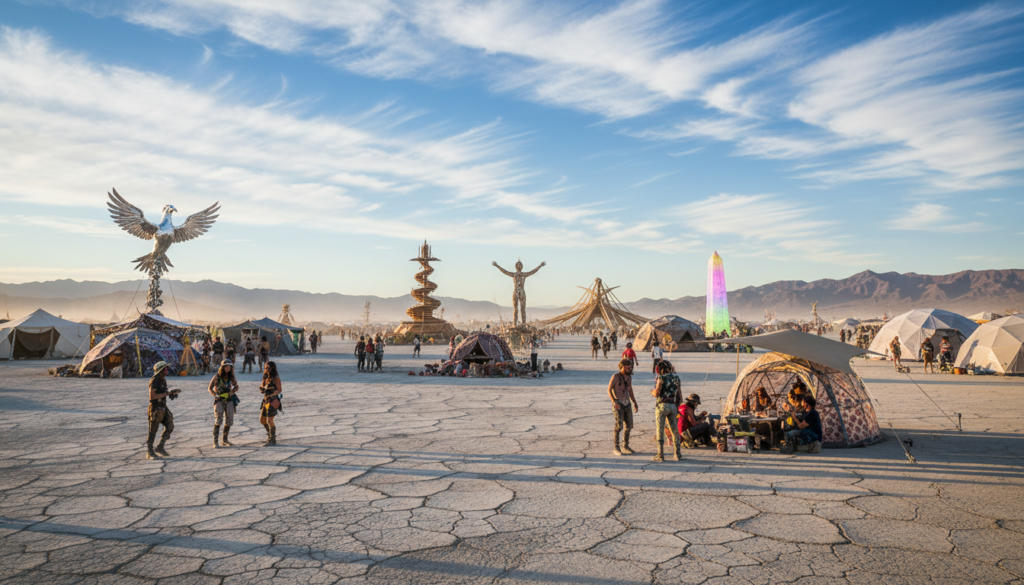
- Exact site: Black Rock City on the Black Rock Desert playa in northwestern Nevada.
- Not a permanent town: the temporary city is set up and removed each year.
- Plan for self-sufficiency: bring your own water, food, and shelter.
Understanding Black Rock City as a temporary “rock city”
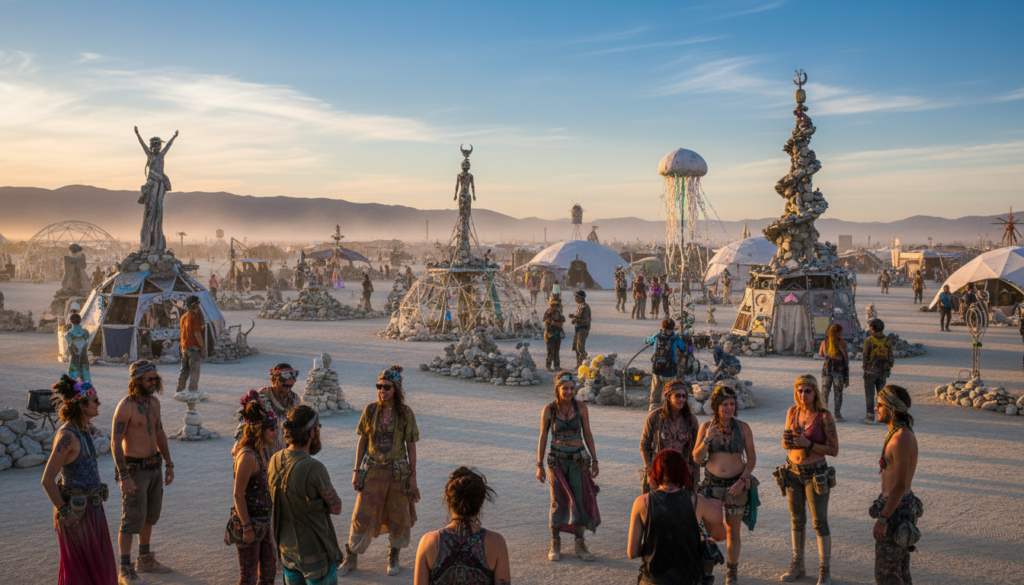
For a short span every late summer, tens of thousands build a pop-up city on that wide, flat desert.
What a temporary rock city means in practice: volunteers and participants design streets, theme camps, bike lanes, and services. The settlement exists only for the event and is taken apart afterward.
The scale matters. With tens of thousands of people, navigation, meetups, and supplies all change. Expect densely used pathways and lively public spaces.
Why people call this place home
Many burners call it home because the community builds it together. Shared rituals, repeated roles, and mutual aid make camps feel familiar year to year.
The vibe you’ll find on the playa
The community is welcoming but self-reliant. Instead of shops, a strong gift economy means goods and services are offered freely to support others.
- Art and interactive installations power the city’s energy day and night.
- Participants run theme camps, performances, and practical services.
- Biking between camps, meeting strangers, and joining pop-up activities shapes the experience.
“A community-built city where art and participation make public life feel like home.”
How to get to Black Rock City by plane, road, and bus
Plan your arrival carefully. Travel choices shape the first hours on the playa and affect setup time, energy, and what you can bring.
Closest airport:
Closest airport to the event: flying into Reno
Reno is the main gateway. Most people fly there, buy last-minute supplies, and stage before the desert drive. Reno handles most commercial flights and rental vehicles for the trip north.
Road routes and pit stops:
Road trip routes from Reno and nearby stops
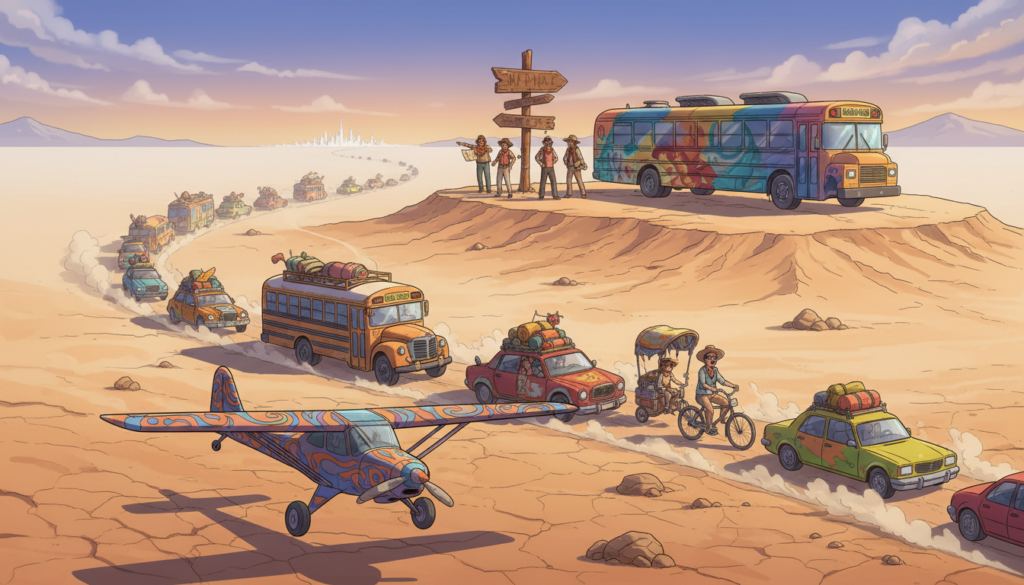
Driving allows bulky gear and bikes. Many drivers detour to Lake Tahoe to rest and break a long stretch. Expect highway miles, then slow down as pavement gives way.
Shuttle option:
Using Burner Express from Reno or San Francisco
The Burner Express bus runs from Reno and San Francisco to Black Rock City. Buses handle bikes and some water logistics if pre-arranged. This option removes long driving shifts.
Final approach and entry timing
The last leg includes an unpaved ~8 km dirt road to the nearest highway and the gate. Build buffer time for lines—arrival can take hours during peak periods.
“Give yourself extra time and pack smart: arrival choices determine how fast you can settle and start exploring.”
- Choose arrival mode early — it affects water, shade, and vehicles you can bring.
- Expect delays; plan for setup time after arrival.
When Burning Man happens and how long you’ll be on the playa
The schedule follows a predictable late-summer window, which helps with planning work and travel time.
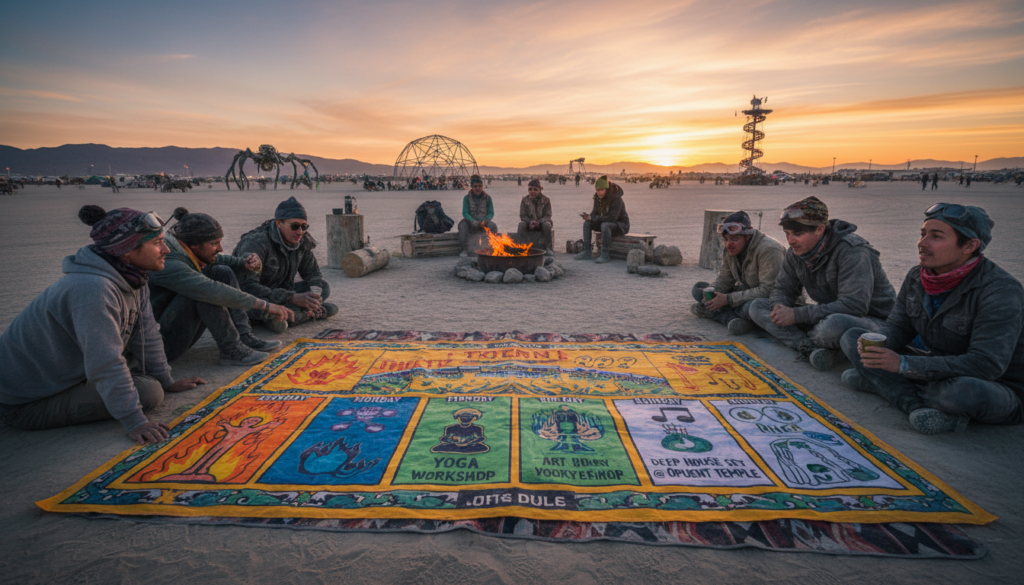
The typical run falls in late August into early September. For example, one recent year ran Aug 27–Sep 4. That block shows what a full week on the playa looks like on a calendar.
Typical rhythm and key moments
Arrival and setup usually occupy the first day or two. Then come full programming days filled with art, workshops, and performances.
The penultimate night centers on the Man burn — a major communal moment that anchors pacing for many attendees. The Temple experience is quieter and more reflective, meant for remembrance and personal pause.
If you cannot attend the full span, expect to miss peaks: leaving early can skip big nights and later teardown often brings long lines and dusty exits. Weather or operations sometimes shift exact days, so build flexibility into travel plans.
| Phase | Typical days | What to expect |
|---|---|---|
| Arrival & setup | Day 1–2 | Set camp, settle supplies, meet neighbors |
| Full programming | Day 3–6 | Art, workshops, performances, shows |
| Key nights | Penultimate & final | Man burn; Temple rituals and reflection |
| Teardown & exodus | Last day | Pack out, long exits, road delays |
For alternatives to full camping, consider nearby comfort options and glamping choices. A useful guide to nearby glamping can help if you need easier logistics.
“Plan for the week, but leave room for surprises.”
Tickets, vehicle passes, and what to do if tickets sell out
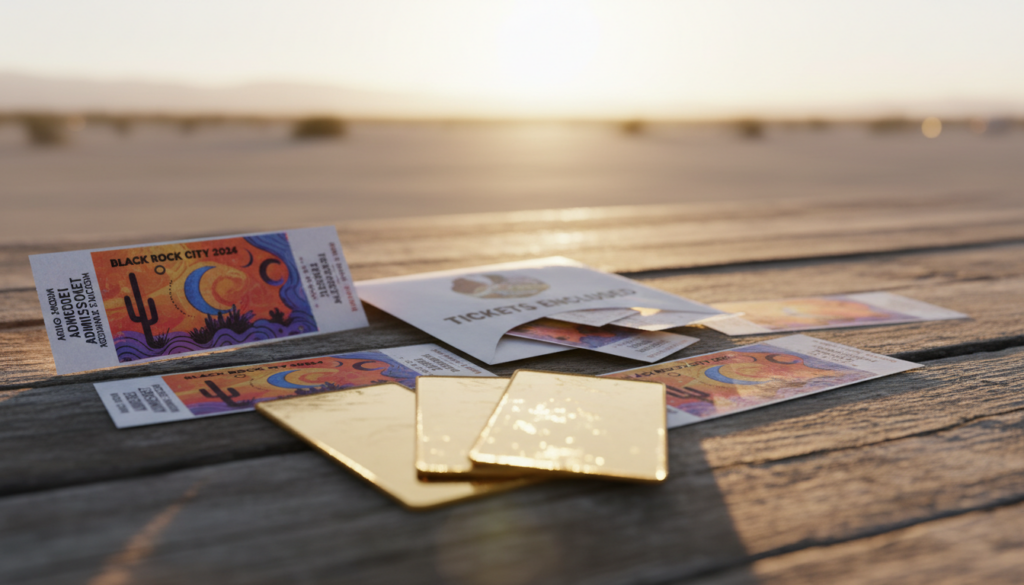
Access requires advance planning: tickets are released in timed stages and often sell quickly. Demand comes from limited capacity and global interest, so mark sale dates months ahead.
How the staged sales work
Staged releases mean you can’t just buy anytime. Past years had main sales in spring (one noted in 2017) and smaller later rounds like an OMG sale in July. Prepare for fast windows.
Set up and purchase limits
- Create a Burner Profile early and confirm login details.
- Be ready at the sale time with payment info saved.
- Expect purchase limits (examples: 2 tickets + 1 vehicle pass per checkout).
| Item | Example past price | Purchase limit | Notes |
|---|---|---|---|
| General admission ticket | $425 (2017 benchmark) | 2 | Main sale often sells out fast |
| Regular ticket (another year) | $575 | 2 | Price varies by year and sale type |
| Vehicle pass | ~$80 | 1 | Required for most cars/vehicles entering |
| Total trip budget | ~$1,500 | N/A | Includes travel, gear, food, shade, and extras |
If tickets sell out, try later official rounds like OMG sales or official transfers. Avoid risky scalpers; verify name changes and use only sanctioned transfer channels.
Plan tickets first, then lock transportation and lodging.
For budget help during your road trip, check tips on saving fuel before you go.
Transportation and driving rules once you arrive at the event
Plan to switch how you move. Once you park on the playa, the default transport changes from engines to pedals and feet.
Car policy on the playa: when you can drive and when you can’t
Core rule: cars may be used for arrival and departure, but driving around during the event is mostly prohibited.
Since 1997, the policy has limited participant cars and trucks to reduce accidents. Staff and emergency vehicles still operate under permits.
Why the city prioritizes pedestrians and bicycles
Black Rock City favors a pedestrian-first layout to keep people safe in a dense, active space.
This approach lowers the chance of serious injury and creates a calmer place for art, music, and community interaction.
Mutant vehicles and art cars: how they move through the event
Approved creative vehicles — often called mutant vehicles or art cars — run under strict rules.
They need licensing, lighting, and careful drivers. These vehicles are treated as special participants, not private transport.
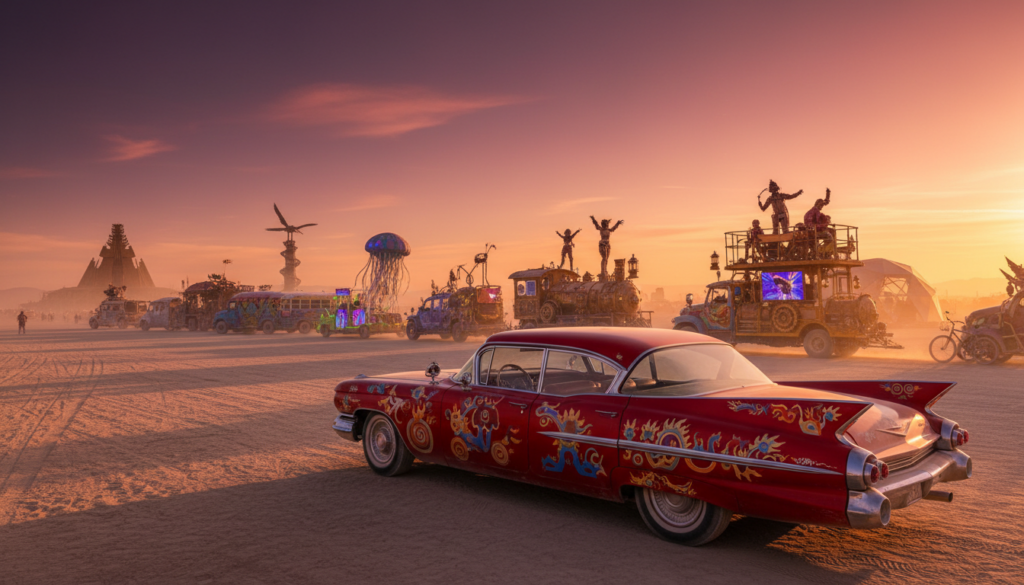
“Park your vehicle, plan your daily routes, and expect to rely on bikes and walking for nearly everything.”
Practical tips:
- Pick camp spots assuming you will not use your car daily.
- Map routes for night travel; bring lights and reflective gear.
- Be ready for weather-based driving bans — rules tighten if dust or storms strike.
The transport rules support spontaneous encounters and the gift economy. By leaving cars parked, people meet more, share art, and build community.
| Topic | What to expect | Action |
|---|---|---|
| Arrival/Departure | Drive in, park at camp, drive out after event | Bring a vehicle pass; unload close to your plot |
| Daily movement | Mostly bikes and walking | Bring a sturdy bike, lights, and a lock |
| Art cars | Licensed, permitted, and visible | Respect right-of-way and follow marshals |
| Weather rules | Temporary driving bans during dust or mud | Follow official updates; secure camp gear |
Preparation essentials for the desert: water, dust, and weather reality
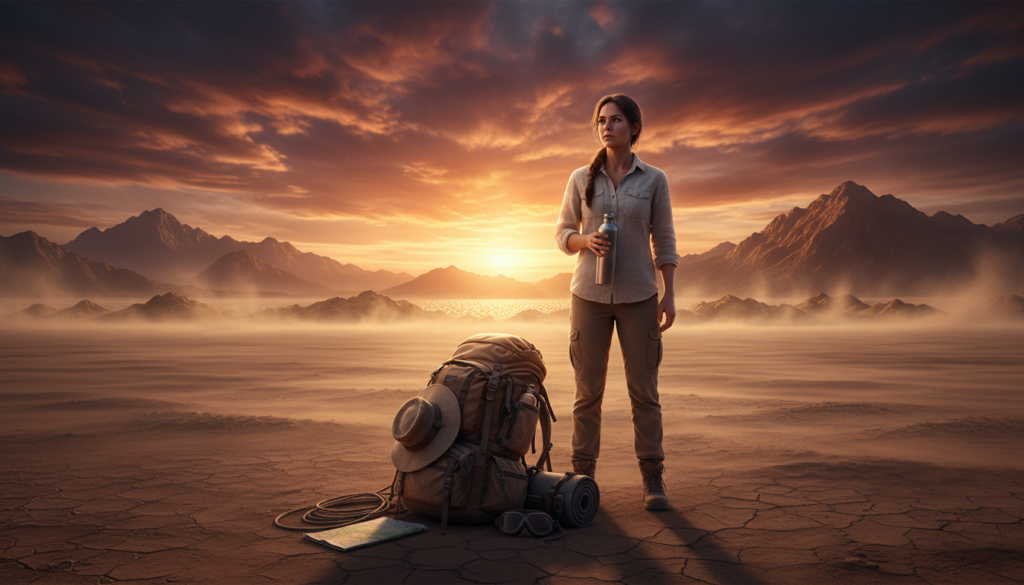
A clear plan cuts stress. Start by treating water and dust as daily essentials. The playa can flip from fine powder to sticky mud after heavy rain, so your setup must handle both.
Water planning and supply strategy before you hit the black rock desert
Calculate needs: expect at least one gallon per person per day for drinking and minimal hygiene. Add cooking and extras and pack a margin for delays.
Most people stock up in Reno — it’s the last big stop before the Black Rock Desert approach. Decide where you’ll fill and label your containers.
Dust-proofing your gear and protecting essentials during the burn
Use sealed bins and zip bags for meds, electronics, and lenses. Create a small clean zone inside your sleep area to keep important items dust-free.
Heat, sleep setups, and shade: tents vs. RVs vs. other options
Tents with heavy shade are affordable but need ventilation. Hexayurts offer insulation and privacy. RVs give comfort and power but add cost and entry limits.
Weather can change fast: lessons from rain, mud, and road closures
Severe rain has trapped vehicles on the playa and closed the unpaved road to the highway. Organizers may impose temporary driving bans and ask some people to delay departure.
Exodus planning: congestion, closures, and when to consider leaving
Expect long waits at exit; timing can save hours. Follow official updates, secure loose gear, and respect Leave No Trace rules: pack out trash and tie down anything that might blow away.
“Plan water first, protect gear second, and keep an eye on weather alerts.”
For easier lodging choices nearby, consider a comfort option like beach glamping as a staging base before the final drive.
How to participate in the Burning Man experience: camps, art, and the gift economy
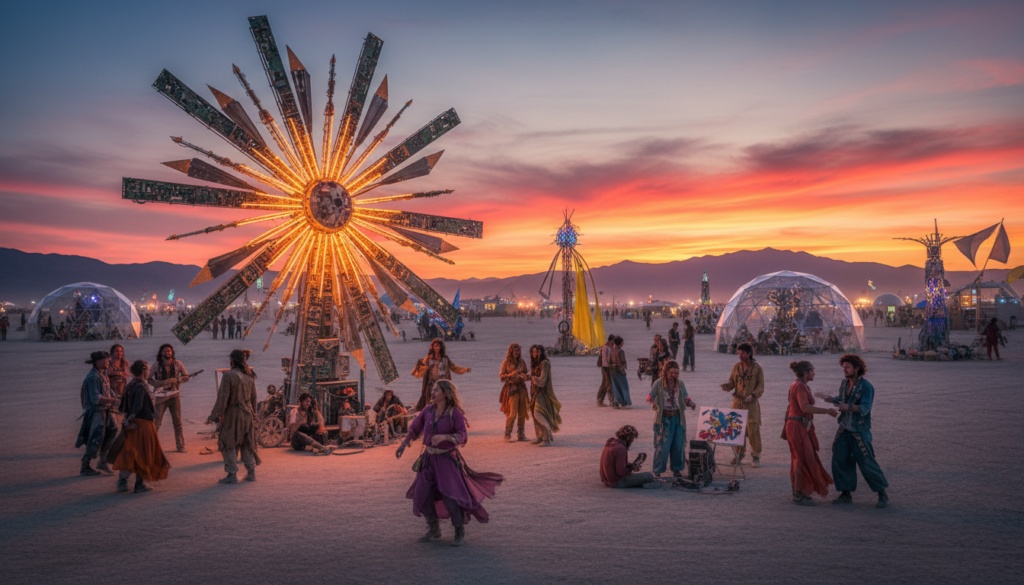
Participation is the practical how-to: you don’t just attend a festival — you help create its daily life. That means joining a camp, pitching in for shifts, gifting time or skills, and engaging with art installations on the playa.
Theme camps and real contributions
Theme camps are organized groups that offer services, bars, workshops, or shows. Newcomers find camps via online forums or meetup lists and ask how to join.
Contributions usually include shifts, build or strike help, and occasional camp dues (an example attendee paid about $90). Shifts keep a camp running and spark community ties.
The 10 principles in practice
The Ten Principles guide choices like Radical Inclusion, Gifting, and Decommodification. Translate Radical Self-Reliance into packing water, tools, and spare parts.
Make Leaving No Trace a daily habit: collect trash each night, store waste securely, and check your area before you leave.
Art on the playa and funding
Large interactive pieces define the experience. Many artworks arrive via Burning Man Arts programs: Global Art Grants, Black Rock City Honoraria, and Temple grants support creators.
Engage safely—climb or contribute when an artist allows. If you stage in Reno, you can preview public pieces like Space Whale and BELIEVE before you head out.
“Participation turns spectators into builders and art into shared experience.”
| Area | Typical contribution | Example |
|---|---|---|
| Camps | Shifts, dues, build help | Shift roster + $90 camp fee (example) |
| Art | Volunteers, fabrication, funding | Grants: Global Art Grants |
| Community | Gifts, services, clean-up | Daily Leave No Trace routine |
Practical tip: if you prefer easier logistics, consider staging near town or a glamp option before arrival; try a short stay on the water via glamping on the water to rest and resupply.
Conclusion
Core takeaway: the Burning Man gathering happens at Black Rock City on the playa of the Black Rock Desert in northwestern Nevada. This short‑lived rock city shapes every choice you make for the trip.
Lock dates, secure tickets and a vehicle pass, pick an arrival plan, and then build a packing list around water, dust protection, and reliable shelter. Keep a realistic budget: the ticket is one line item among travel, gear, and lodging costs.
Participation matters most. Join a camp, gift skills, help neighbors, and engage with art. Follow on‑site vehicle rules, respect bikes and pedestrians, and commit to Leave No Trace.
Next step: choose Reno or another staging city, draft a timeline, and start a checklist. For packing tips for comfort, see this glamping packing guide.