

Looking for a short-term jumpstart? This guide sets realistic goals for a seven-day plan that focuses on safer, fast results rather than miracle fixes.
Rapid weight loss often means more than 2 lb (about 1 kg) lost in seven days and usually requires very low calories. Expect quick scale changes, but know much of that can be water, not pure fat.
This article is an evidence-based, friendly roadmap for US readers who want to move the scale and then shift into long-term habits. You’ll get a clear calorie strategy, a simple seven-day eating plan, activity tips, time-restricted eating data, and why fad diets tend to backfire.
Safety first: anyone with medical conditions or a history of disordered eating should consult a healthcare provider before making rapid changes.
Small, doable changes this week can carry forward. For gentle snack options that fit a short-term plan, check this comfort snack resource.
Key Takeaways
- Seven days can jumpstart progress, but much is water weight.
- Rapid loss over 2 lb may be unsafe for many people.
- Focus on a short, structured plan that leads to healthier habits.
- Distinguish scale changes from true fat loss based on your goals.
- Talk with a clinician if you have health concerns before trying rapid changes.
What to expect from weight loss in seven days
Expect modest, visible shifts on the scale after seven focused days, but know what those numbers usually mean. This short period often shows quick weight movement without equal drops in body fat.

Healthy weekly pace versus rapid results
For most people, a safe aim is about 0.5–1 lb per week. Faster loss — more than 1–2 pounds week — raises the chance of rebound and may not be sustainable.
Why the scale can fall fast from water
Cutting calories and carbs can deplete glycogen. Glycogen binds water: roughly 3 g water per 1 g glycogen. That explains quick drops in scale weight during the first few days.
“Quick scale wins can be mostly water and glycogen, not fat.”
Why fast results often bounce back
When normal eating resumes, glycogen and its water return and some pounds come back. Still, this short push can reduce bloating, tighten clothes, and kick-start better habits toward long-term goals.
- Individual results vary by starting weight, sodium, stress, sleep, and activity.
- Use the seven-day window as a reset, not a crash plan.
Is it safe to lose weight fast? Key health considerations
Quick declines in pounds may seem like progress, yet they can create real health trade-offs. Most experts advise against losing more than 1–2 pounds week for most people. Faster loss often stresses metabolism and body systems.
What rapid loss can do: very low-calorie plans can strip muscle, water, and even bone density. That undermines long-term fat loss and may lower overall energy.

Common side effects to watch for
- Fatigue or low energy, which limits daily activity.
- Digestive issues: constipation, diarrhea, or nausea.
- Serious risks: gallstones, gout, and muscle loss.
Who should not try rapid plans alone
Children, many teens, pregnant people, and many older adults should avoid fast loss without healthcare oversight. Adults with obesity sometimes follow short-term diets under close provider monitoring for medical reasons (for example, before surgery).
When to contact a provider
Talk with a healthcare provider first if you have diabetes, high blood pressure, high cholesterol, a history of eating disorders, or take meds that affect appetite or weight. Stop any plan and seek help for dizziness, fainting, chest pain, severe weakness, or persistent GI symptoms.
How to lose weight in a week with a realistic calorie strategy
Creating a clear calorie deficit is the primary lever for meaningful scale change in seven days. Keep safety and nutrition front and center as you trim energy intake.

Why cutting calories matters first
The fastest short-term change comes from eating fewer calories than you burn. That creates an energy gap and produces measurable loss over several days.
Typical low-calorie ranges
For many US adults, common low-calorie plans fall near 1,200–1,500 calories per day for women and roughly 1,500–1,800 calories per day for men. Individual needs vary by size, activity, and goals.
Very low-calorie diets and safety
Very low-calorie diets (VLCDs) can be around ~800 calories per day. These are generally reserved for adults with obesity and require provider supervision. VLCDs are short-term and rarely advised beyond about 12 weeks.
Simple, livable calorie cuts
- Swap sugary drinks for water and limit alcohol.
- Use smaller plates and prioritize protein plus produce at most meals.
- Focus on high-fiber foods and fill half your plate with vegetables.
Severe restriction often increases fatigue and makes rebound eating more likely. Choose a realistic goal this week: a steady deficit and better habits beat dramatic numbers on the scale.
For related practical tips on budgeting meals and portions, see this smart meal plan guide.
Build a simple 7-day eating plan that supports weight management
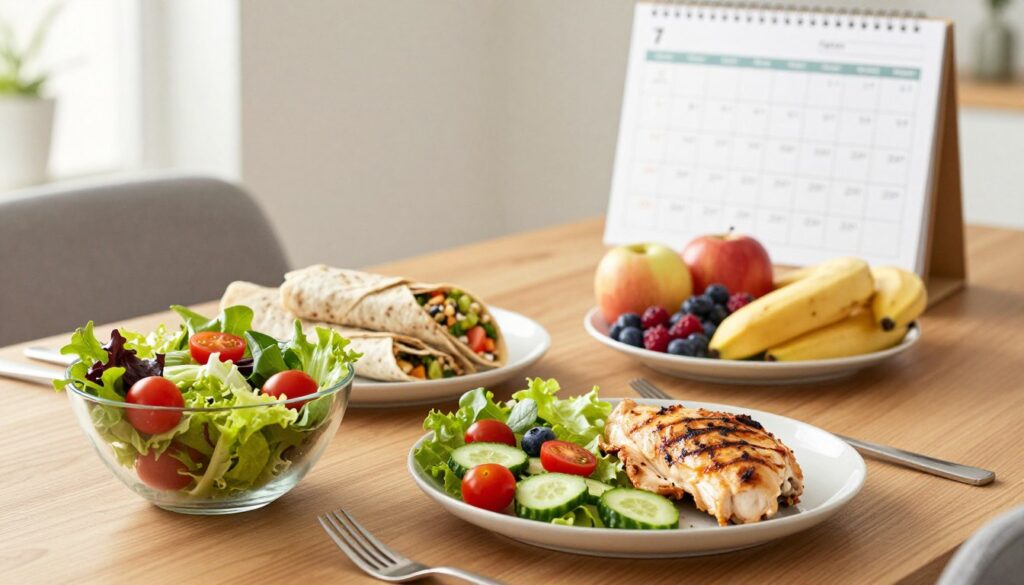
A clear plan reduces decision stress and makes healthy eating habits easier to follow across seven days. Keep the framework flexible: pick default meals and repeat them when busy. This lowers effort and helps portions stay consistent.
Protein, fiber, and minimally processed foods
Prioritize protein and fiber at each meal to stay full longer. Choose minimally processed foods like plain Greek yogurt, canned tuna, beans, whole fruit, and frozen vegetables. Meal replacements can be useful if you need convenience while keeping nutrients balanced.
Meals and snacks that keep portions predictable
Build plates with simple rules: a palm-sized protein, a generous pile of non-starchy vegetables, a fist-sized whole grain if desired, and a small healthy fat. Pick 3–4 default meals (example: Greek yogurt + berries; salad + grilled chicken; salmon + steamed veggies) and rotate them.
- Snack ideas: string cheese + fruit, cottage cheese, edamame, or veggies with hummus.
- Grocery basics: proteins, frozen veggies, fruit, whole grains, and simple seasonings.
Hydration habits that help curb overeating
Drink a glass of water before meals and keep a visible bottle during the day. That habit helps reduce false hunger signals. Limit sugary or high-calorie drinks and opt for plain water, sparkling water, or unsweetened tea.
| Meal | Quick example | Portion rule |
|---|---|---|
| Breakfast | Greek yogurt + berries + sprinkle of oats | Palm protein, handful fruit, 1/4 cup oats |
| Lunch | Salad with grilled chicken and mixed veggies | Palm protein, 2 cups greens, light dressing on side |
| Dinner | Roasted salmon, roasted broccoli, small sweet potato | Palm protein, generous veg, fist-sized carb |
| Snack | Edamame or cottage cheese + fruit | Small single-serving portion |
Eating out? Choose grilled or roasted proteins, ask sauces on the side, and start with a salad or veggies to keep portions predictable. Plan grocery basics once for the week and you’ll cut prep time and stick with the plan more easily.
For practical shopping and money-saving meal tips, see this weekly food savings guide.
Physical activity that accelerates fat loss and protects muscle
Practical exercise choices this week support fat loss and reduce muscle loss when calories are lowered. Physical activity raises daily calorie burn and helps preserve lean tissue while you eat less.
Steady aerobic exercise targets body fat. Choose brisk walking, cycling, or swimming as safe, effective options most beginners can use.
Aim for at least 30 minutes most days, then adjust
Work up to about 30 minutes of moderate exercise on most days. Keep intensity steady so recovery stays good and energy holds firm.
Strength training at least twice a week
Do resistance work two times weekly. Use weights, bands, or bodyweight moves like squats and pushups to protect muscle and support metabolism.
Easy ways to move more throughout the day
- Take stairs and park farther away.
- Stand during calls and walk short breaks every hour.
- March in place during TV or chores.

| Type | Example | Benefit |
|---|---|---|
| Aerobic | Brisk walk, bike | Targets fat |
| Strength | Weights, bands | Preserves muscle |
| Everyday | Stairs, standing | Raises burn |
Note: You can see weight loss without exercise, but results come easier and lasting with movement. Pace yourself—if calories are low, keep exercise moderate and listen for fatigue.
Time-restricted eating and intermittent fasting: what the data says
Many find that trimming the daily eating window quietly reduces total intake and simplifies meal planning. These patterns limit hours each day when food is allowed and often lower calorie intake without strict logging.

Common 16:8 schedule
The 16:8 plan asks people to eat within an 8-hour window and fast for 16 hours. A typical example is eating from 10 a.m. until 6 p.m.
Outside that window, stick to water, black coffee, or unsweetened tea. This simple rule often cuts late-night snacking and reduces total daily intake.
The 5:2 approach
The 5:2 diet uses two low-calorie days and five normal days. Results depend on total weekly calories and how closely people follow the plan.
Some see rapid loss early, while others regain when normal eating resumes. Adherence matters most for meaningful outcomes.
What the data suggests and practical guardrails
Short-term: studies show these methods can produce faster loss over weeks. Long-term data is mixed; maintenance often needs ongoing lifestyle changes and meal quality.
“A gentle eating window plus steady meal quality beats aggressive fasting for many people.”
- Prioritize protein and fiber first during the eating window.
- Limit ultra-processed snacks and stop at comfortable fullness.
- People with past eating disorders, pregnancy, or certain medical conditions should consult a provider.
| Method | Example | Typical short-term result |
|---|---|---|
| 16:8 | Eat 10 a.m.–6 p.m. | Moderate intake reduction; less late snacking |
| 5:2 | Two ~500–800 kcal days, five normal days | Faster weekly deficit; variable adherence |
| Hybrid | Gentle window + quality meals | Sustainable start; supports lifestyle changes |
For balanced supper ideas that fit fasting-friendly plans, try these comfort food options.
Why fad diets can backfire, including the military diet example
Fad plans often promise dramatic results, but their rules usually clash with real biology. These diets use rigid lists, steep calorie cuts, and bold claims that ignore how the body adapts.
Military diet as an example: This pattern features three very restricted days (roughly 1,100–1,400 kcal) followed by four normal days. It is not connected to the US military and lacks strong evidence for lasting results.

Extreme restriction and nutrient gaps
Severe calorie limits can leave holes in vitamins, minerals, and protein. That raises risk for fatigue, dizziness, and muscle loss.
Nutrient gaps also spark cravings and make rebound eating more likely once strict rules end.
Why “10 pounds” claims are misleading
Large early losses are often glycogen reduction plus the water bound to it. Glycogen holds about 3 g of water per 1 g glycogen, so many lost pounds are not fat.
“Big early drops usually reflect water and glycogen, not true fat loss.”
Processed-heavy plans and sustainability
Diets that lean on hot dogs, crackers, or ice cream are easy to follow short term but poor for health. They teach rigid eating, not flexible habits for real life.
- Fad diets: strict rules, short gains, high rebound risk.
- Evidence-aligned options: moderate deficits, more protein and fiber, and regular movement.
Quick reminder: If a plan feels like punishment, it rarely supports lasting loss or better health.
Daily habits that make this week work and set you up for lasting loss
Tiny, repeatable rituals across seven days can change appetite, energy, and momentum. Focus on a few clear wins that help your body and mood. These habits make the short push safer and more useful for long-term lifestyle changes.

Sleep, stress, and appetite signals
Poor sleep raises cravings and makes calorie control feel harder. Aim for consistent bedtimes, limit late caffeine, and use a 20-minute wind-down like reading or gentle stretches.
Simple stress tools: a 10-minute walk, paced breathing, or brief planning before meals. These small moves calm appetite signals and cut stress-driven eating.
Planning meals and managing the food environment
Keep high-protein staples visible and pre-portion snacks. Put trigger foods out of easy reach this day and week. Planning meals before hunger hits reduces impulsive choices.
Tracking progress beyond the scale
Watch waist measurements, how clothes fit, daily energy, step counts, and workout consistency. Weekly photos can help you see real change even if the scale bounces.
Transitioning from the short push to sustainable lifestyle changes
After seven days, raise calories slowly toward a maintainable deficit and keep protein high. Keep activity steady to protect muscle and support long-term loss. Expect a small rebound from water — that’s normal and not a failure.
“Small daily habits stack into lasting change.”
| Focus | Quick action | Why it helps |
|---|---|---|
| Sleep | Consistent bedtime, limit caffeine | Regulates appetite hormones |
| Stress | 10-min walk or breathing | Reduces stress-driven cravings |
| Food setup | Visible protein, pre-portioned snacks | Makes healthy choices easier |
| Transition | Slow calorie increase, keep activity | Supports lasting lifestyle changes |
Conclusion
One week of clear choices often gives quick feedback and a roadmap for safer changes ahead. The safest takeaway: modest, realistic deficits paired with higher-quality food and steady movement work best.
What you can do today: prioritize protein and fiber, keep portions predictable, and cut liquid calories. These small moves help you lose pounds without extreme measures.
Exercise matters: steady cardio most days plus strength training twice weekly protects muscle and boosts long-term weight loss. Expect early drops to include water; a small rebound is normal when fluids return.
If you consider very low-calorie plans or have obesity-related health issues, talk with a provider first. For meal and grocery savings that support good nutrition, see this grocery savings guide.
Keep this week as a start, not a finish. Build habits that match your energy and life, and use the momentum to plan weeks 2–4 sensibly.