

Teaching financial basics early shapes adult habits. BYU assistant professor Ashley LeBaron-Black reviewed nearly 50 peer-reviewed studies and found lasting effects from early financial socialization.
Parents are the main source of financial information for young people, often more influential than schools or media. Experts Jim Brau and Bryan Sudweeks stress that you do not need to be an expert to guide your household.
Introduce simple concepts like saving, spending choices, and the value of a dollar. These lessons help children handle rising rent, college costs, and other modern expenses.
Be open about your own journey. Intentional conversations at home are the most effective way to raise financially savvy kids, per research and expert advice.
Key Takeaways
- Early financial lessons have long-term impact, according to BYU research.
- Parents provide primary financial information for children.
- Simple concepts—value, budgeting, priorities—prepare kids for college costs.
- Transparency at home matters more than perfection in habits.
- Start small and be intentional; this is the best way to build lasting skills.
For practical steps and age-based ideas, visit ways to help kids build savings.
The Importance of Financial Literacy at Home
Everyday moments at home provide the clearest lessons in managing resources. Parents set habits by example, and simple routines can make abstract concepts real for young people.
Open conversation reduces anxiety and gives children practical information about life choices. While 30 states now require personal finance in high school, family-led guidance remains the most lasting influence.

Make money a normal topic rather than a secret. Small talks about budgets, priorities, and basic finance build confidence. That foundation helps kids avoid overspending and the debt many new adults face.
“Talking about cash daily normalizes decision-making and prepares young people for independent living.”
- Start with short, clear concepts at home.
- Model responsible choices during shopping and bill-paying.
- Answer questions honestly and in age-appropriate terms.
| Setting | Strength | Typical Focus |
|---|---|---|
| Family | Behavioral modeling, trust | Budgeting examples, open discussion |
| School | Curriculum, standards | Formal lessons, personal finance courses |
| Community | Real-world exposure | Workshops, local programs |
For practical steps and age-based ideas, see ways families can build savings habits.
How to Teach Kids About Money and Saving Effectively
Start small with clear routines that show practical steps for handling earnings. Consistent habits make financial literacy easier to grasp. Use brief lessons and repeat them over time.
Modeling Financial Behavior
Children learn most from watching adults. Take a child to open a savings account and explain each step. Share simple budgeting choices when paying bills or shopping.
Offer an allowance and link it to chores or small jobs. This shows the link between work and earnings.
The Power of Hands-on Experience
Try the 10-30-60 rule: split earnings into giving, savings, and spending. This method helps children manage money with clear categories.
Encourage a lemonade stand or yard jobs. Research finds that managing real cash builds long-term confidence.
- Practice budgeting: involve the family in simple plans.
- Open an account: visiting a bank makes savings tangible.
- Small jobs: teach value and pride in earnings.
“Hands-on practice and steady modeling create habits that last.”
For steps that expand these ideas, see build family wealth for practical guidance.
Establishing Healthy Money Habits for Young Children
Small, hands-on moments help children learn what money means. Research shows youngsters can grasp basic concepts of value as early as three years old. By seven, many core money habits are already forming.

Introducing Basic Concepts of Value
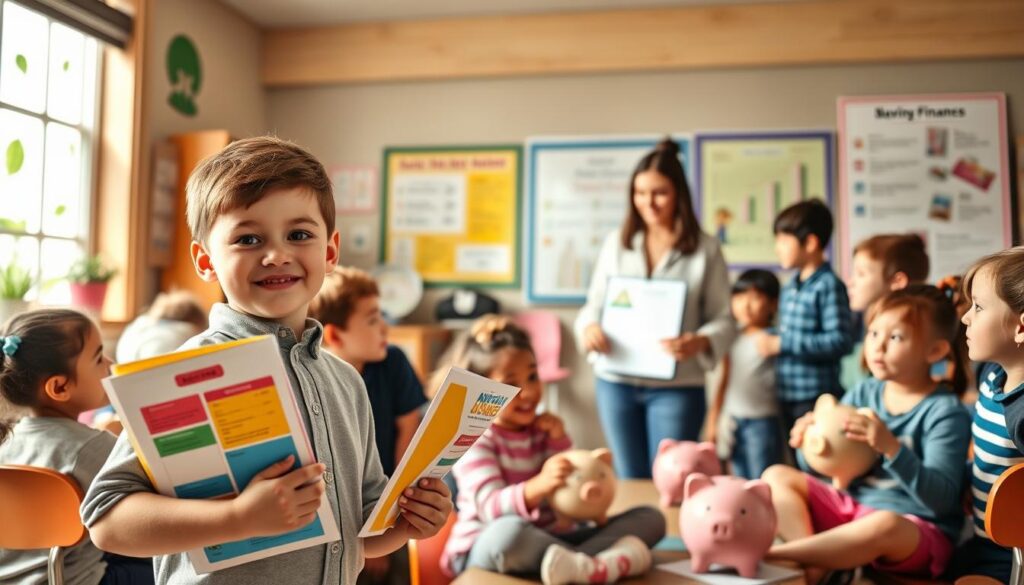
Make value visual. Use labeled jars or a piggy bank so each child sees how coins add up. Physical containers turn an abstract idea into something they can touch.
Link a modest allowance to clear choices. Ask the child to set aside a portion for savings, a portion for spending, and one for giving. This shows delayed gratification and planning.
- Start early: simple exchanges teach worth by age three.
- Reinforce by seven: habits formed then often last.
- Use tools: jars, charts, and small goals build understanding.
“Viewing money as a tool, not an endless resource, guides better decisions.”
When a family makes these lessons routine, children gain confidence and a clearer path toward financial independence.
Financial Lessons for the Teenage Years
Teenage years are a prime time for practical lessons that build long-term financial skills. Short, real tasks help teens connect choices with consequences. Parents can guide while letting responsibility grow.

Managing a Summer Job
Encourage a summer job so teens earn real funds and practice budgeting. Small earnings let them handle an allowance-style plan and pay for gas or weekend plans.
Review monthly statements together. Managing an account and tracking spending teaches adjustment before college.
Understanding Credit and Debt
Credit can be a useful tool or a costly trap. Add a teen as an authorized user on a parent’s card to show responsible use.
- Explain differences: credit versus debit and the cost of high-interest debt.
- Require payment: have teens cover personal expenses so they feel the cost of lifestyle choices.
Roth IRA Basics
With earned income, a Roth IRA gives teens decades of tax-free growth. Starting early uses the power of time to build significant retirement funds.
“Practical experience now prevents costly mistakes later.”
Preparing Young Adults for Financial Independence
Practical experience with budgets and jobs builds the habits young adults need for independent life.

Create a clear plan that covers fixed monthly bills and small, discretionary spending. A simple budget helps young adults spot leaks and set priorities.
Encourage kids to take part-time work while at college, keeping hours under 20 per week. Research shows this balance often supports better grades and steady income.
Teach distinctions between necessary purchases and fun buys. Responsible use of credit prevents high-interest debt and long-term stress.
- Build a budget: list rent, utilities, food, transport, then add a small fun fund.
- Work balance: part-time jobs under 20 hours help with expenses without hurting studies.
- Benefits check: parents should review employer 401(k) matching and insurance options with their children.
“By the early twenties, aim for a clear plan that reduces reliance on the family and boosts confidence.”
| Area | Goal | Tip |
|---|---|---|
| Budgeting | Cover fixed + discretionary expenses | Use a three-column spreadsheet |
| Work | Earn while protecting grades | Keep under 20 hours weekly |
| Benefits | Start retirement early | Maximize employer match |
The Role of Investing and Compound Interest
Compound interest is a simple principle with big impact. Small, regular deposits over long periods let growth accelerate. Time is the advantage: the earlier a family starts, the greater the payoff.

Utilizing Custodial Accounts
Custodial accounts let parents introduce investing in a clear, hands-on way. Opening an account gives children exposure to markets and basic research. Bryan Sudweeks recommends a custodial Roth option around age 14 for teens with earned income.
Parents can pick low-cost index funds and explain diversification. Review statements each month with children. This shows real growth and reinforces patience as a core concept.
“Having a college savings account in a child’s name makes them six times more likely to attend college.” — William Elliott III
- Use custodial accounts to manage small funds and practice decision-making.
- Show that investing is disciplined, not mysterious: fees matter, time matters.
- Link progress to long-term goals like college and future value.
For practical context on building an early nest egg, see why it matters.
Teaching the Value of Generosity and Giving
Showing youngsters how giving can shape lives builds empathy and long-term habits. When a family invites children into giving decisions, charity becomes concrete rather than abstract.

Start small. Let an allowance fund a shared choice each month. Discuss why that cause matters and what impact a modest gift can have.
- Include children in selecting charities so they learn critical thinking about impact.
- Encourage volunteering of time as a complement to financial gifts; both matter.
- Model regular donations or tithing so generosity feels like a normal part of life.
Analyze choices together. Look at a charity’s clear goals and costs before deciding. That practice teaches kids stewardship and respect for resources.
“Giving widens perspective and reduces the impulse to hoard; it helps young people see money as a means, not an end.”
For practical steps on managing household funds while practicing generosity, see this guide on saving from salary.
Conclusion
Simple routines at home make complex finance feel manageable over time. Start with clear, brief lessons and model habits you want children to mirror. Patience and consistency matter more than perfection.
Encourage hands-on steps: open an account for savings, link chores with earnings, or support a summer job. Those experiences teach budgeting, credit limits, and long-term planning.
With steady guidance, kids grow into young adults who manage funds, build credit responsibly, and pursue college or career goals with a solid plan. Your example will be their most lasting education.