
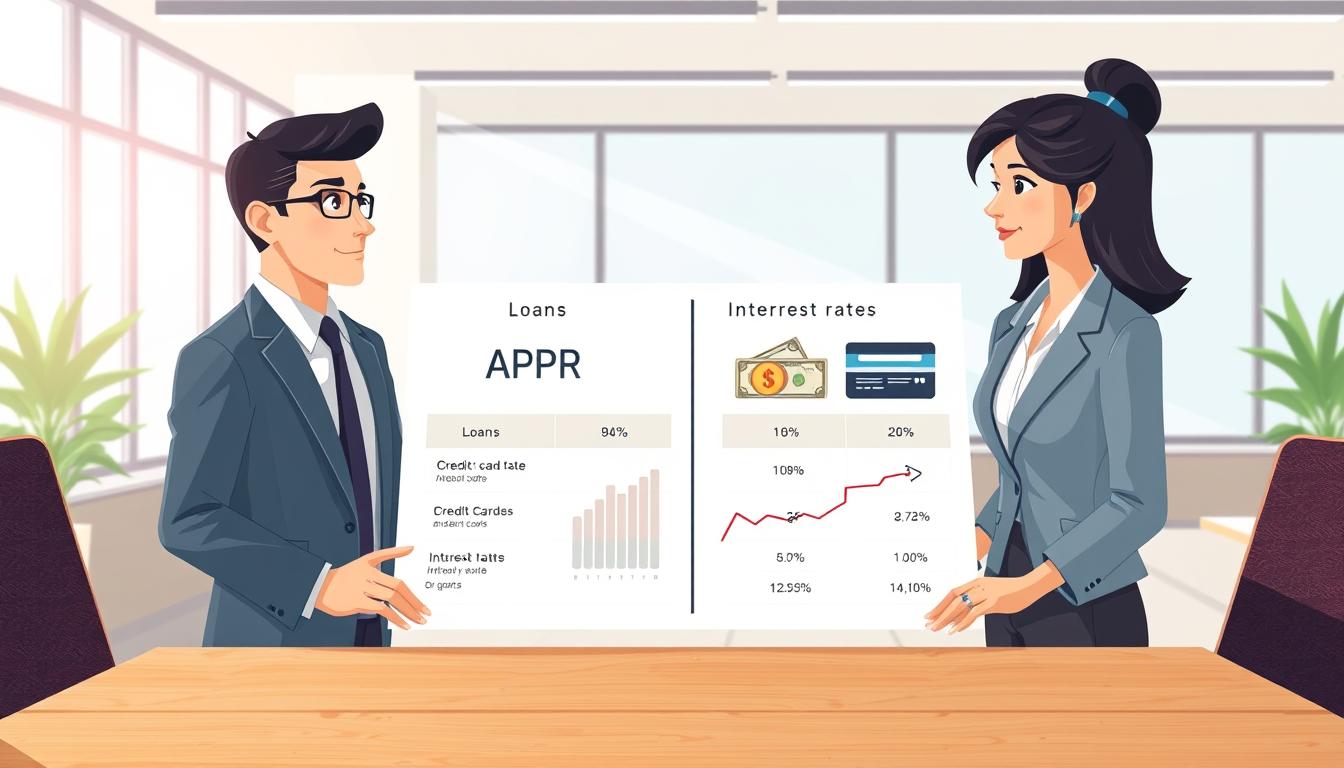
Borrowing smart starts with clear numbers. If you plan a loan in the United States, you should spot which charge shows the true cost and which shows the yearly fee on the principal.
Interest is the percentage you pay on what you borrow. APR gives a broader view by adding fees and other lending costs to that yearly percent. Confusing these terms can cost you much over time.
We will show how lenders calculate each figure and what to watch for when you pick offers. This short guide aims to help you compare options with confidence and save money across a loan’s life.
For tips on building a strong money habit that supports smart borrowing, see why saving matters.
Key Takeaways
- Interest shows the annual percent charged on the borrowed sum.
- APR includes fees to reflect total yearly borrowing costs.
- Compare APRs to spot the true long-term cost of loans.
- Small rate differences add up over many months or years.
- Choose offers that match your budget and long-term goals.
Defining the Basics of Interest Rates
Begin with a clear view of how an interest rate shapes what you pay each month on a loan. An interest rate is the yearly percentage charged on the principal amount. It tells you the base cost of borrowing and helps you plan monthly payments.
Fixed vs. Variable Rates
Fixed rates stay the same for the full life of a loan, so monthly payments stay steady. This makes budgeting easier and reduces surprise changes.
Variable rates track benchmarks like the prime rate. Payments can rise or fall over time as those benchmarks change. That can lower costs or add risk, depending on how long you keep the loan.
How Interest Accrues
Interest accrues from the day you borrow until you pay off the amount. Early payments mostly cover interest, while later payments reduce principal.
“Small differences in rate over time can add up to big changes in total cost.”
- An interest rate is the percentage applied to the loan amount each year.
- It matters across the full life of your debt, affecting total paid.
- Knowing how interest accrues helps you decide if fixed stability or variable flexibility fits your plan.

For practical tips on saving so loan payments fit your budget, check this guide to save from salary.
Understanding the Difference Between APR and Interest Rate
When you shop for a loan, two numbers tell very different stories about what you’ll pay each year.
The Truth in Lending Act (TILA) requires lenders to show both an interest percent and the annual percentage rate on mortgage or loan offers. This helps buyers compare offers fairly.
Interest rate shows the charge on the principal only. It affects monthly payment math but omits many upfront or ongoing fees.
Annual percentage rate folds in fees like origination charges and some closing costs. That makes APR a clearer picture of total cost over a year.
“A lower interest figure does not always mean a cheaper loan overall.”
For example, let say two loans list similar interest numbers. One adds lender fees while the other does not. The APR will reveal which loan costs more once fees are included.
- TILA disclosure ensures both numbers appear on loan paperwork.
- Use APR to compare total cost across products.
- Always check fees that push APR higher.

| Metric | What it shows | Best use |
|---|---|---|
| Interest rate | Yearly percent on principal only | Estimate monthly payment |
| Annual percentage rate | Yearly percent including fees | Compare total loan cost |
| Fees | Origination, closing, and some service charges | Assess impact on APR |
To see long-term saving examples and practical tips, read a short guide on cost savings at does solar panels save money.
How Lenders Calculate Your Interest Rate
A lender uses several signals from your financial history and application to set the interest you are offered.
Credit score plays a leading role. Higher scores usually unlock lower interest rates. That means a smaller monthly payment and less cost over the life of a loan.
Underwriting also looks at other factors. Your credit history, debt-to-income mix, total loan amount, and repayment term shape the final rate.
The Impact of Credit Scores
Good on-time payments and low balances help raise a credit score. That improvement can lead to a lower interest offer on a personal loan or credit card.
“A stronger credit profile often converts into better rates and fewer added fees.”
- Lenders analyze score and history to price loans and cards.
- Debt-to-income and loan amount affect the offered rate.
- Some issuers, like Discover, may give cardmembers lower interest on personal loans as a perk.

| Factor | What it affects | Why it matters |
|---|---|---|
| Credit score | Offered rate | Higher scores lead to lower cost |
| Debt-to-income | Rate and approval | Shows repayment ability |
| Loan term & amount | Rate and payment | Longer terms can mean higher total interest |
The Role of Fees in Determining APR
Small upfront charges change how much you truly pay each year on a loan.
APR includes more than a simple interest figure. Lender charges such as an origination fee or closing costs are added to the listed rate to produce the annual percentage you see on paperwork.
Some finance charges, like prepaid interest or mortgage points, also push that number higher. That is why a low advertised interest can still lead to a higher overall cost.

- The APR includes interest rate fees and other charges, so it often sits above the stated interest.
- When a lender adds an origination charge, that cost is folded into the annual percentage for a clearer total.
- Discover personal loans charge no fees, so the interest and APR are identical—this simplifies comparisons.
“Always ask for a full fee breakdown so you can see how each charge affects the annual cost.”
| Fee type | Effect on APR | Example |
|---|---|---|
| Origination | Raises APR | One-time lender charge |
| Prepaid interest | Included in APR | Paid at closing or upfront |
| Closing costs | Increase annual percentage | Various third-party fees |
Why APR Provides a More Accurate Picture of Borrowing Costs
A simple interest percent can hide upfront charges and add-ons that raise what you pay over a loan’s life.
Annual percentage rate bundles the stated interest with fees like origination and other charges. That single figure shows a clearer price for borrowing. It helps you compare offers on an apples-to-apples basis.
For example, a 12.99% interest with a 5% origination fee can push the annual percentage to about 15.18% for the borrower. On an $18,000 loan, that fee adds several hundred dollars to total cost and raises monthly payment obligations.
“Look at the annual percentage to see the true cost over time.”
- The APR provides a more accurate picture because it includes interest plus extra charges.
- Checking the annual percentage helps you spot loans that advertise low interest but add heavy fees.
- Use APR to compare total loan cost and expected payments.

| Item | Shown | Why it matters |
|---|---|---|
| Interest percent | Base yearly charge | Estimates monthly payment |
| Origination fee | One-time cost | Raises APR and total cost |
| Annual percentage | Combined yearly figure | Best for comparing loan offers |
Comparing Loan Offers Using APR
Use tools that show how fees change what you pay over time, not just monthly bills.
Using loan calculators makes it easy to compare offers side by side.
Enter the interest and any fee, such as a 5% origination charge, to see total payments. For example, a calculator can show how a 5% fee raises the total cost of an $18,000 loan over 60 months.
Using Loan Calculators
Try multiple scenarios. Swap rates, terms, and fees to see which loan truly costs less. A 12.99% interest with no fee often beats a similar interest with a 5% origination charge.
Armed Forces Bank offers a comparison calculator that helps military families weigh terms and lenders quickly.
Evaluating Total Lifetime Cost
Look at APRs across lenders to find the option that saves the most money over the life of the agreement.
Compare total payments, not just monthly numbers. Check your credit score and credit card offers to make sure you get the most competitive interest rate available to you.
“Compare APRs, plug numbers into a calculator, and choose the loan that fits your plan.”
- Use an APR calculator to include fees and interest in one view.
- Compare several lenders to spot lower overall costs.
- Check your credit before applying to improve offers.

For saving tips that help keep payments manageable, see how to save money in 2025.
Factors That Influence Your Loan Terms
Several key factors shape the offer a lender gives you. Market forces like inflation and overall economic health push mortgage interest rates up or down.
Your personal profile also matters. Lenders look at your credit history, current debt-to-income ratio, and the size of your down payment to set a specific interest rate.
Small changes in these items can make a big difference. A higher credit score or a larger down payment often lowers the rate and cuts monthly cost.

Compare several lenders to see how each weighs these factors. Different institutions may offer better terms based on your profile.
“Improve credit and reduce debt to make your next loan more affordable.”
- Credit, DTI, and down payment size directly affect your loan terms.
- Economic conditions set broader interest trends that impact all lenders.
- Shopping around shows how offers vary and helps you choose smarter terms.
Want a budgeting boost to improve credit before you apply? See a short guide on how much to save each month.
Strategies for Securing Lower Borrowing Costs
Smart habits and simple prep often unlock lower offers from lenders when you borrow money.
Improve credit health
Improving Credit Health
Pay credit card bills and loan payments on time. This builds a better credit score and helps you qualify for a lower interest rate.
Cutting balances reduces your debt-to-income ratio. That change can lead to more competitive offers and fewer added fees.
Making Larger Down Payments
Putting more cash down reduces the loan amount and may avoid private mortgage insurance. A bigger down payment often lowers your APRs and monthly payment.
Shopping Multiple Lenders
Compare terms, fees, and published rates across lenders. A small fee or a different card offer can change total cost borrowing over time.
“Small changes to credit and savings today can trim hundreds from long-term payments.”
- Monitor your credit report regularly to catch errors and boost score.
- Pay down existing balances to improve approval odds.
- Get quotes from several lenders to compare true costs and fees.

Want related savings tips? See how to save on car insurance.
Common Pitfalls When Evaluating Loan Terms
Watch for hidden charges that can turn a low headline number into a costly loan.
Introductory figures for an adjustable product often last only a short time. Many borrowers confuse that early offer with a fixed number and later face higher payments when the variable period begins.
Some lenders omit extra costs from their annual math. Appraisal or third-party charges may not appear in written percentages. Always ask which fees counted toward the published percentage.
Focusing only on a low interest or an advertised rate can hide origination and other charges. A small origination fee raises total cost and monthly payment.
“Compare full fees, not just the headline percent, to get a clear picture of loan terms.”
- Don’t assume a credit card offer and a personal loan are interchangeable—terms, payment schedules, and fees differ.
- Verify whether rate fees include appraisal, title, or service charges.
- Check how an origination charge affects your credit score and final amount borrowed.

| Common Pitfall | Why it matters | What to do |
|---|---|---|
| Viewing only introductory rate | Leads to surprise higher payments | Ask for max possible rate and term details |
| Ignoring origination and fees | Raises total cost despite low headline number | Request a full fee breakdown before signing |
| Comparing card to loan | Different structures affect payments | Compare APRs, terms, and payment schedules |
Conclusion
Wrap up your loan search by focusing on total cost, not just a low advertised percent.
Check both the headline number and added fees so you can spot offers that look cheap but cost more once charges are included. Compare APRs across lenders to reveal true yearly cost before you sign any documents.
Boosting credit and making larger down payments often lowers what lenders ask. Use online calculators to test scenarios and plan payments that fit your budget.
For help building savings that support better loan choices, see this quick guide on how much to save each month.