

Burning Man draws tens of thousands to Nevada’s Black Rock Desert for a week of hands-on community, art, and self-expression. This is not a sit-and-watch festival; attendees join in, build, share, and learn.
On playa life centers on big installations, camp gatherings, biking the grid, and roaming nights filled with music. You will see mutant vehicles, pop-up workshops, and gifting in action. The desert shapes everything: packing, movement, and care for the environment.
This intro focuses on practical, first-timer-friendly guidance plus cultural context. Expect a rhythm of slow mornings, adventurous afternoons, and late-night wandering. We also cover dust, sleep tips, consent culture, sober options, and safety so you can plan wisely.
Every burn varies, but shared principles and the city layout make it easier to picture a typical day and join the community with confidence.
Key Takeaways
- Burning Man is a participation-driven week in the desert, not a standard concert event.
- Major activities: large art, camp events, bikes, mutant vehicles, and nightly exploration.
- Desert conditions affect packing, travel, and daily life on playa.
- This guide gives practical tips for first-timers plus cultural background.
- Plan for dust, sleep needs, consent culture, and sober options.
What Is Burning Man, Really?
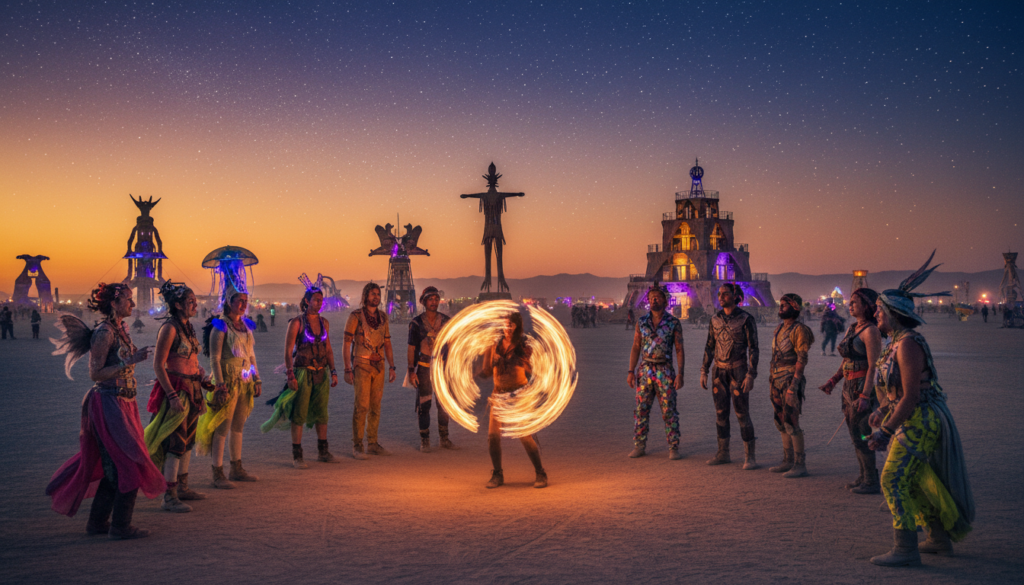
A crowd gathered around a small wooden effigy in 1986; today that spark became a global experiment in living.
Origin story: In the summer of 1986, Larry Harvey and a friend burned an 8-foot figure on a San Francisco beach. The ritual drew more visitors each year and eventually moved to Nevada’s Black Rock Desert, where the event now culminates in burning the Man.
Plain definition: Burning Man is a temporary city built by participants. Art and community are the main attractions, and attendees shape the program through contribution rather than consumption.
“It isn’t a festival so much as a shared, participant-run experiment in social art and civic responsibility.”
- Participation matters more than passive attendance.
- Counterculture roots promote fewer status markers and more experimentation.
- Radical self-expression shows up in outfits, workshops, and large-scale art.
| Aspect | Short Description | Why it matters |
|---|---|---|
| Origin | 1986 beach burn led by Larry Harvey | Shows humble start and evolving scope |
| Definition | Participant-built temporary city | Sets expectation of contribution |
| Culture | Countercultural, art-forward | Encourages experimentation and reset from the default world |
All of this shapes the actions people take: build, gift, help, create, and explore. Next, we move to Black Rock City — the place on the playa where these practices play out.
Black Rock City and the Playa: Where Everything Happens
For a short span, an entire city blooms on a dry lake bed, organized like any small town but fueled by creativity. This temporary metropolis — Black Rock City — rises in Nevada’s Black Rock Desert and disappears after a few days, leaving little trace.
The playa is the hard, alkaline surface that defines the place. Dust, wind, daytime heat, and cold nights shape daily life and the overall experience. Simple choices—clothing, shelter, and pacing—change because of the environment.
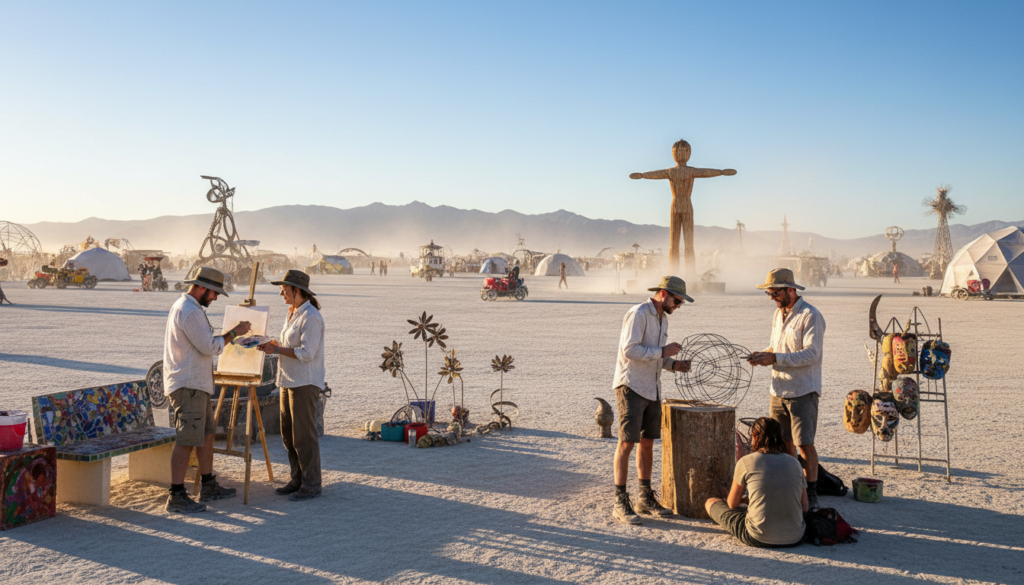
Think practical: goggles, dust masks, and shade structures are essentials, not extras. Camps and streets form a compact grid for services and social life. Beyond that, the open deep playa hosts large art, art cars, and long wandering missions.
- Bikes matter for quick travel across the grid.
- Lighting keeps you visible during long nights.
- Time blurs easily; bring clocks and simple routines.
Finally, the desert levels social cues. In this rock city, reliance on neighbors becomes normal, and that communal ethic is part of the experience.
What Do People Do at Burning Man All Week?
A week on the playa is a living itinerary—an open menu of art, service, and late-night music that rewards curiosity.
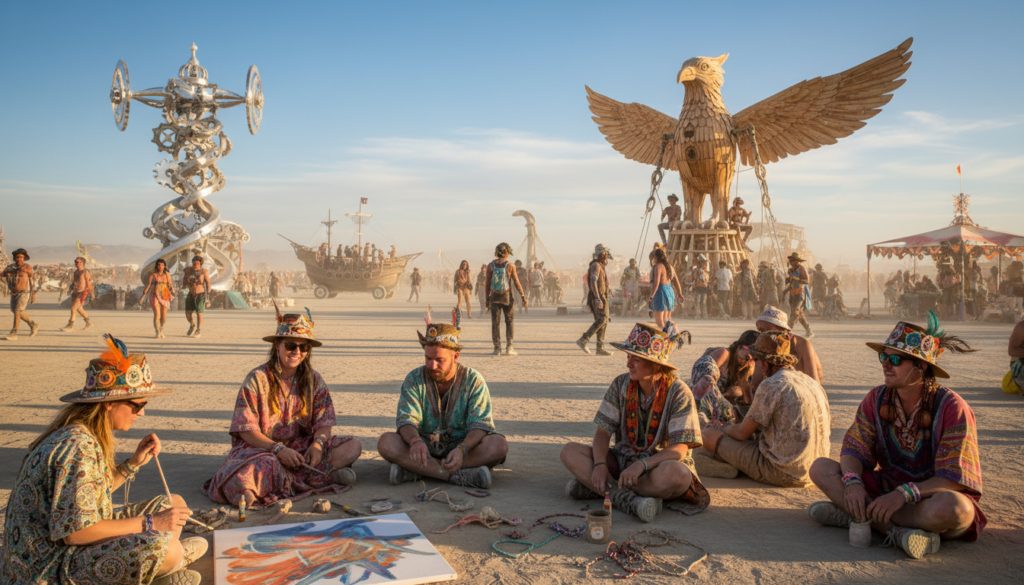
Explore massive, interactive art across the open desert
Roaming the playa is the default plan. Large installations invite touch, participation, and lingering moments of wonder.
Join camp-hosted events, workshops, and surprise pop-ups
Camps run the schedule. Expect classes, shared meals, playful games, and unexpected performances around the clock.
Ride mutant vehicles and chase the unexpected
Art cars act as mobile stages and social magnets. Following one can lead to an instant party or a quiet, surreal encounter.
Dance, watch live sets, and wander sound camps at night
Sound camps and DJs shape nocturnal flow. Bounce between vibes and pace yourself—the week is long and intense.
Volunteer, help neighbors, and participate
Participation matters: building, repair, and gifting are core practices. A little effort changes the whole experience.
If you’re planning a first visit, pick a few priorities, stay flexible, and embrace the communal spirit.
The 10 Principles That Shape What People Do
Ten guiding principles form the social code that directs behavior and builds trust. These are not slogans; they change the way the temporary city runs and how each person joins in.
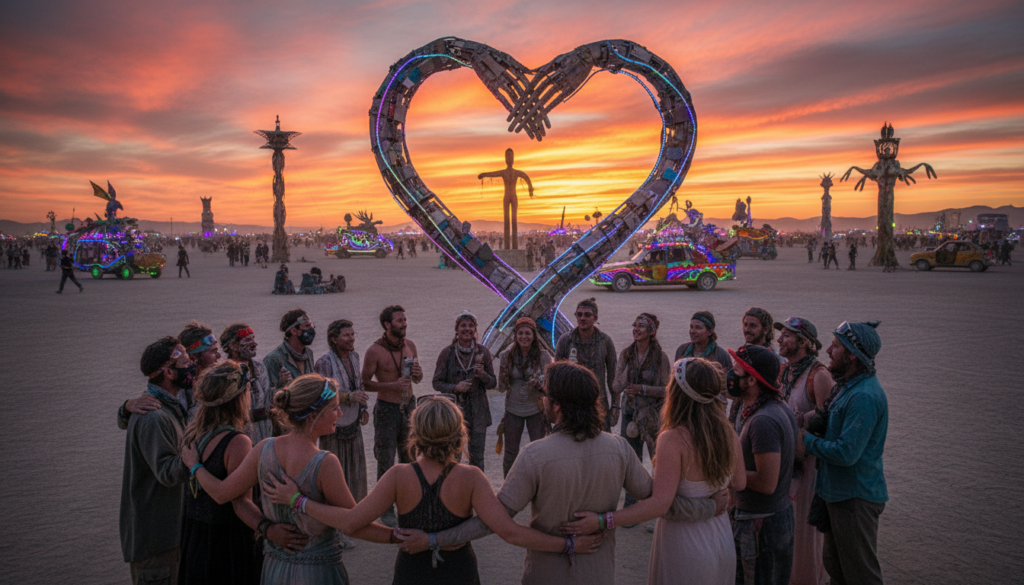
- Radical inclusion — everyone is welcome; camps invite newcomers and judgment is discouraged.
- Gifting — give without expecting money or trade; receiving is free of obligation.
- Decommodification — avoid ads, branded giveaways, and cash-focused exchanges.
- Radical self-reliance — bring water, shelter, and supplies; be ready to help others when needed.
- Radical self-expression — creativity is encouraged, within consent and safety norms.
- Communal effort — group building, clean-up, and shared tasks keep the city alive.
- Civic responsibility — safety-minded behavior and respect for neighbors matter.
- Leaving no trace — manage trash and MOOP; the goal is to erase the week from the playa.
- Participation — show up, contribute, and help shape the experience.
- Immediacy — choose presence over constant documentation; be in the moment.
Marian Goodell highlights radical self-reliance and looking out for others as core to the spirit. In practice, these principles guide sharing of resources, safety choices, and the overall creative energy.
Practical notes for first-timers
Radical inclusion means camps often say “come in” — introduce yourself and accept invitations.
Gifting works like social glue: bring small offerings or skills, and enjoy receiving without feeling indebted.
Decommodification keeps the environment free of ads; flashing money or pitching goods feels out of place.
For packing and etiquette tips, see this short guide on glamping and comfort at the edges of the desert: glamping packing tips.
Camp Life: The Social Engine of Black Rock City
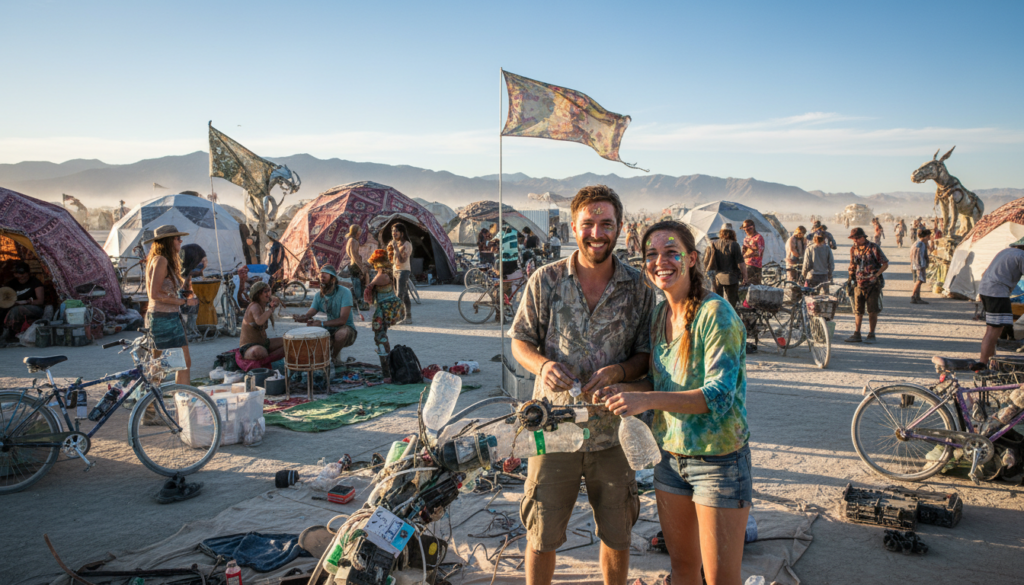
Camps are the basic unit of city life, ranging from a handful of friends sharing shade to large theme camps that host public offerings.
How camps operate
Arrival means unloading, staking shade, and marking utilities. Teams plan water, food, and power so daily needs are met.
Shade builds use poles, tarps, connectors, and ratchet straps. That build shows how teamwork solves heat and wind challenges.
Gifting and daily chores
Many camps gift coffee pop-ups, mocktails, pancake breakfasts, workshops, massages, and a welcoming hangout. These offerings knit the community together.
No Sparkle Pony rule
“Don’t be a Sparkle Pony” is gentle advice: arrive prepared. Bring basics so you contribute instead of draining others.
| Role | Task | Common Gift |
|---|---|---|
| Camp lead | Coordination, supplies | Daily schedule |
| Build crew | Shade, structures | Quick repairs |
| Hospitality | Cooking, water | Meals, drinks |
Practical tip: communicate expectations, sign up for shifts, and show up on time. Camp life makes radical self-reliance and communal effort visible every day.
For comfort planning and camp-style packing ideas, see these beach glamping tips.
Art Everywhere: Installations, Fire, and Build Culture
The playa functions like a hands-on studio where bold ideas become temporary, shareable works.
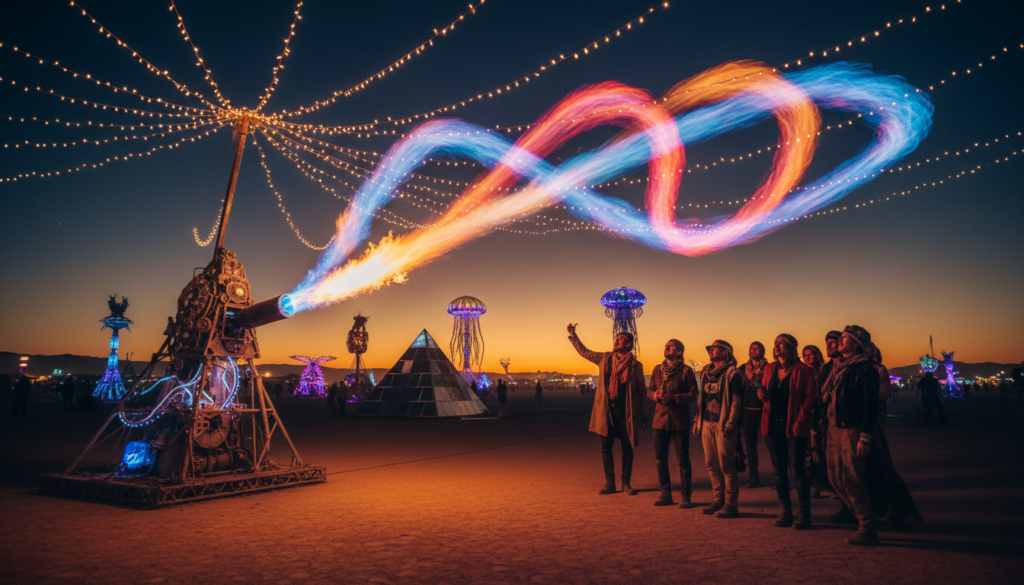
Art here is immersive. You will climb, trigger, ride, listen, or join a build. Pieces ask for action, not just viewing.
Why the city feels like an open-air lab
Temporary materials, playful engineering, and collaborative teams let builders test big concepts. Creative risk is encouraged. Failure is part of learning.
Fire art, lighting, and “light up” culture
Fire sculptures anchor the night. When temperatures drop, these works become focal points and communal hearths.
- Light up for safety and style: EL wire, LEDs, headlamps, and spoke lights.
- Make sure batteries and backups are ready so lights stay bright through long nights.
- Visibility prevents collisions with bikes and art cars in a moving city.
“Building, sharing, and then letting go is the core circle—creation and release form the ritual.”
| Feature | Role | Why it matters |
|---|---|---|
| Interactive sculptures | Invite touch and play | Deepens participant engagement |
| Fire installations | Night focal points | Create warmth, light, drama |
| Wearable lighting | Personal visibility | Safety and expression |
Next: as night falls, art and music merge into a choose-your-own adventure. For creative project tips and small-scale builds, see this Zen House aesthetic DIY.
Music, Nightlife, and Late-Night Wandering
The night unfolds in chapters—quiet rides, sudden raves, and sunrise rituals that change how you remember time.
Sound camps and all-night floors
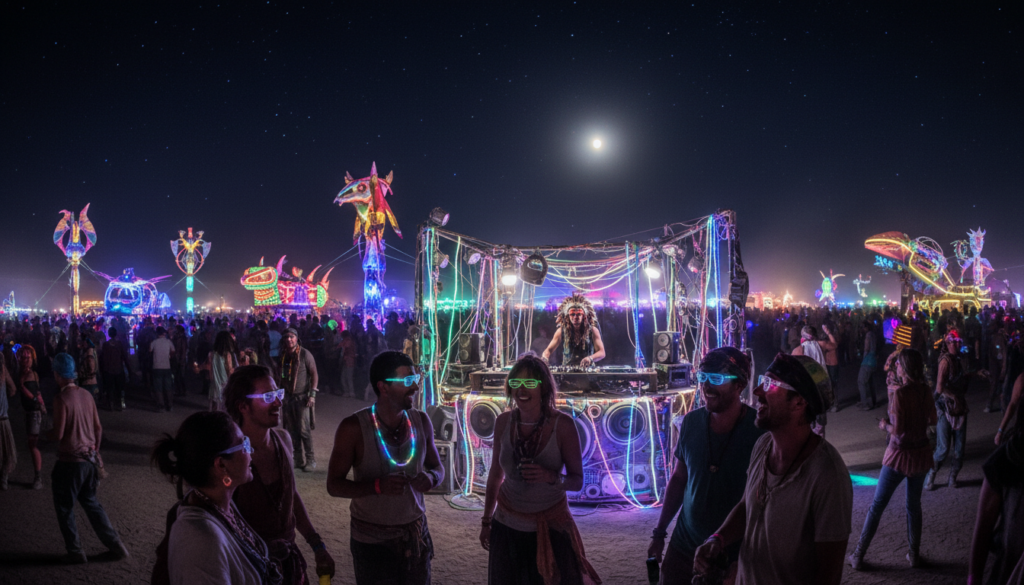
Sound camps host distinct styles and themed dance floors. DJs range from tight sets to marathon DJs who play until dawn.
Freedom to roam means you can wander until you find your group or vibe.
Sunset, sunrise, and pacing
Sunset and sunrise sets feel cinematic: dust, light, and scale turn a DJ into a ritual leader.
Plan recovery breaks, hydrate, and schedule naps so you last the week without burning out.
Synchrony and bonding
Moving together to a beat builds quick trust. Dancing in sync creates shared joy and fast friendships.
Late-night wandering—hopping from art to art car to stage—is a simple way to meet people and collect stories.
Nightlife is huge but optional. Your best night might be a quiet ride with friends under stars.
| Feature | What to expect | Tip |
|---|---|---|
| Sound camps | Varied genres, themed floors | Scout early to find your vibe |
| Sunrise sets | Soft light, communal energy | Bring layers and water |
| Late-night wandering | Unplanned adventures, social mixing | Keep a meeting point with friends |
Next: nightlife blends into self-expression and consent, so respect boundaries as the world opens late into the night.
Self-Expression in a Place Where “Anything Goes” (With Consent)
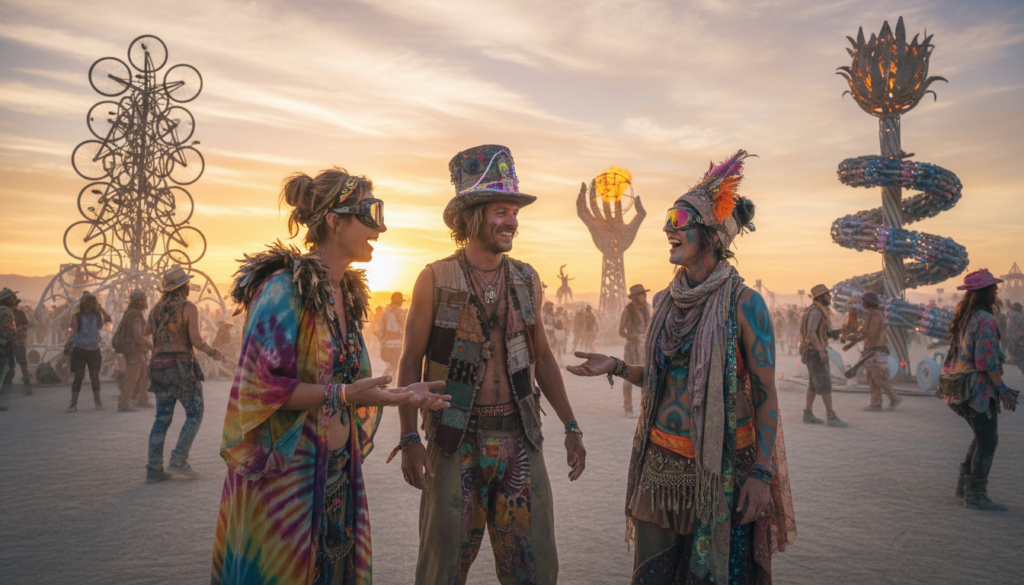
This city encourages creativity and personal risk in how you present yourself. Costumes, body paint, handmade outfits, practical goggles-and-boots combos, and nudity all appear. The point is authenticity, not competition.
Costumes, nudity, and creating a look that feels like you
Radical self-expression is everyday behavior here. Some folks go theatrical; others keep it minimal. Both choices belong.
Sex-positive spaces and the non-negotiable role of consent
There are zones that are sex-forward by design. They exist to offer safe, curated space for exploration.
“Consent is simple: ask, respect the answer, and stop if consent changes.”
- Always ask before touching or photographing someone, especially if they are nude.
- Accept “no” without debate and move on.
- If a scene feels off, step back, observe, or leave with your friends.
Culture here thrives when others protect autonomy and boundaries. Your freedom depends on safeguarding everyone’s comfort and safety.
For related practical tips on staying comfortable and stylish in rugged settings, see this guide to glamping activities.
Gifting and Decommodification: How People Get What They Need
Most needs on the playa are met by hands and hearts, not cash.
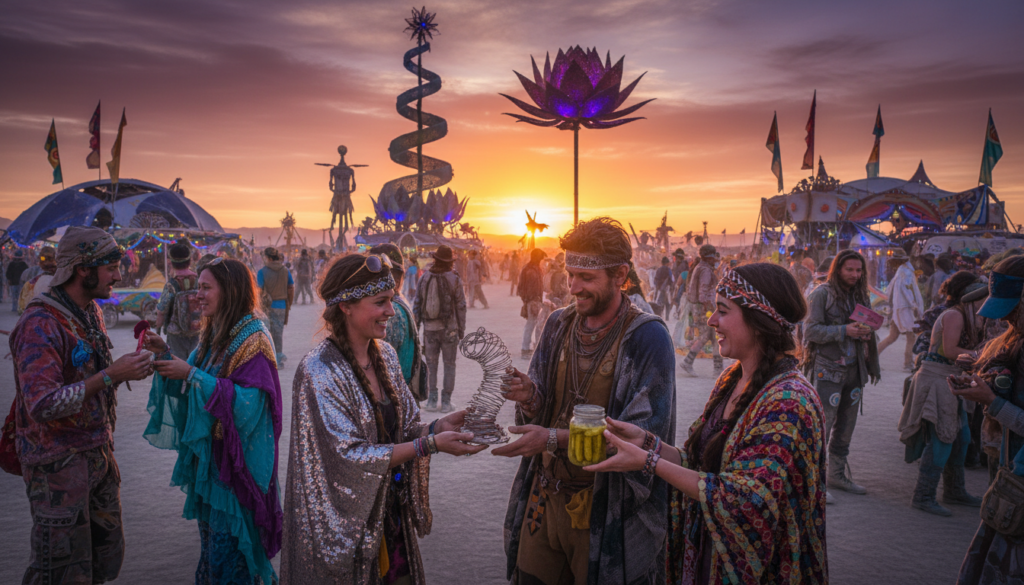
Big practical truth: aside from ice and coffee, you cannot buy supplies on-site. Money rarely functions the usual way in this temporary city.
What is actually for sale
Vendors sell ice and coffee at limited spots. Beyond that, goods and services are gifted, swapped, or offered freely.
Gifts beyond stuff
Gifting often looks like a simple repair, a handed water bottle, or a calm ear when someone is tired. These acts matter more than physical things.
- Camp-run drinks, meals, and practical fixes.
- Skill shares: bike repair, first aid, directions, or map help.
- Presence: listening, a friendly compliment, or time spent guiding newcomers.
“Gifting creates a human-first exchange without an ask attached.”
Decommodification feels different: fewer logos, fewer transactions, and more direct contact. The city encourages trust and generosity over sales pitches.
| What | Typical form | Why it helps |
|---|---|---|
| Ice & coffee | Purchased | Practical short-term convenience |
| Tools & repairs | Gifted or offered | Keeps people moving and safe |
| Time & listening | Free | Builds trust and community |
First-timer-friendly gifting ideas: share sunscreen, zip ties, cold water, or volunteer a few hours. Remember: gifting is not a tip or bribe. It’s okay to accept graciously without balancing every exchange.
Final note: generosity helps, but radical self-reliance still matters. Bring essentials so your own survival is not left to the kindness of others.
Surviving the Desert: Radical Self-Reliance in Real Life
Simple systems for water, shelter, sleep, and light keep you safe and present.
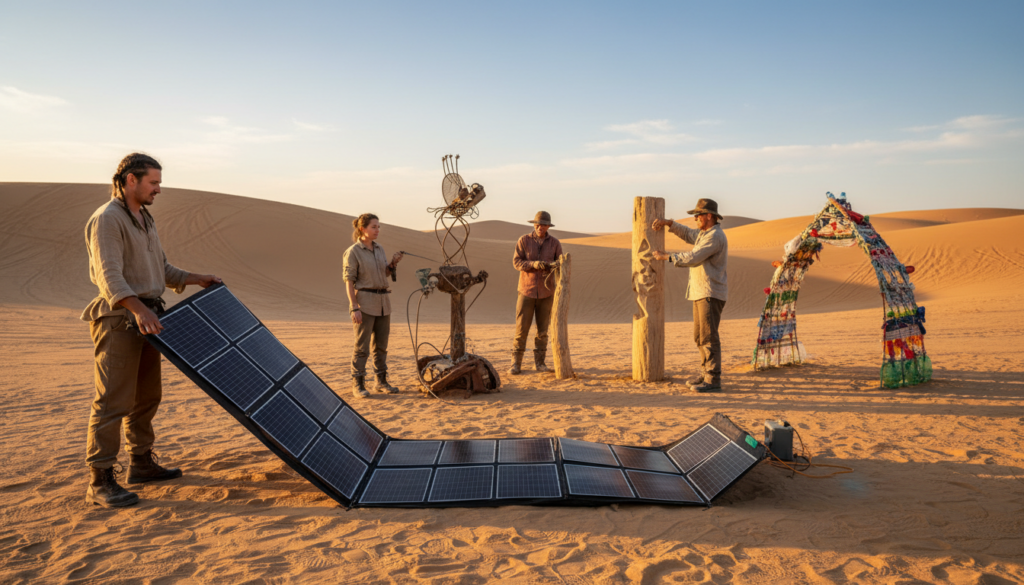
Water, food, shelter, shade, and dust-proofing
Bring water and electrolytes. Plan liters per day, plus backups.
Pack nonperishable food and easy meals. Sturdy shade and a reliable shelter matter more than luxury gear.
Protect items from alkaline dust with sealed bins and zip bags. Keep goggles and dust masks handy during storms.
Sleep strategy, wipes, and avoiding burnout
Treat sleep like strategy, not luxury. Schedule naps and use earplugs and an eye mask to save energy for late hours.
Wet wipes are essential for quick hygiene when showers are scarce. They help skin health and keep camp comfort high over the week.
Bikes, visibility, and claiming your ride
Bikes are the main transit—decorate yours to avoid mix-ups. Add spoke lights and bright tape.
Make sure body lights and bike batteries have backups so you stay visible at night.
“Radical self-reliance keeps you healthy and reduces strain on others.”
| Need | Quick fix | Why it matters |
|---|---|---|
| Water & electrolytes | Daily liters + backup jugs | Prevents dehydration in the desert |
| Dust protection | Sealed bins, zip bags, goggles | Protects gear and electronics |
| Sleep & recovery | Naps, earplugs, eye mask | Avoids mid-week burnout |
Radical self-reliance makes the whole camp safer and improves the shared experience. Pack the right stuff and respect your limits—your presence matters more when you are prepared.
Daytime vs Nighttime: How a Typical Burn Day Flows
A typical day on the playa shifts from slow recovery to bold nighttime rituals. This simple rhythm helps newcomers plan a flexible routine without over-scheduling.
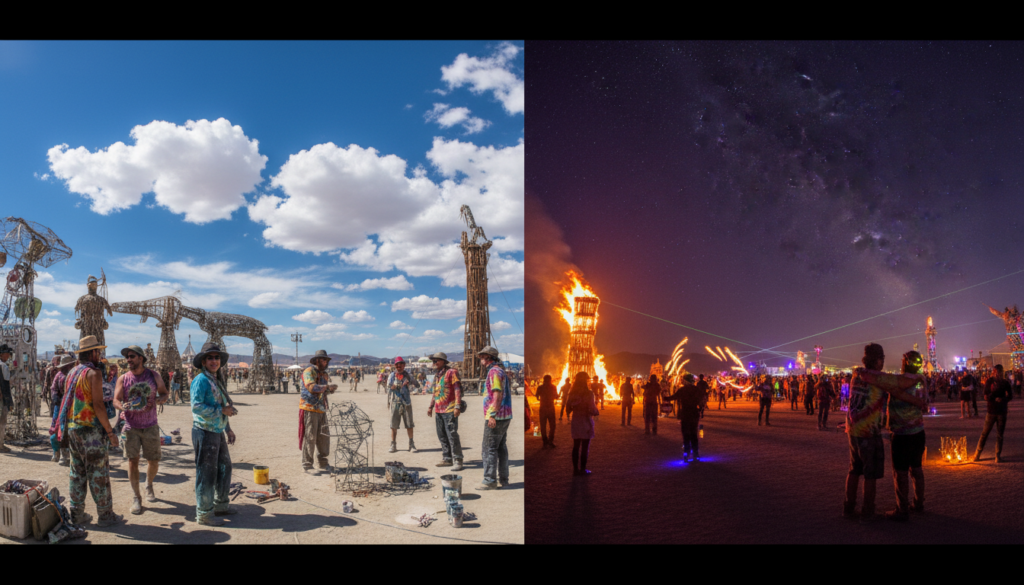
Mornings for recovery, workshops, and exploring the open playa
Mornings are for sleep, hydration, and gentle moves—coffee, light workshops, or a calm cruise past nearby art. Use this time to recharge and scout quieter installations.
Afternoons for deep-playa art missions and camp events
Afternoons are prime for long rides to giant pieces and planned camp events. Heat peaks, so wear layers, top up water, and pace longer art missions to avoid midday exhaustion.
Nights for performances, art cars, and roaming until sunrise
Nights open into high-energy offerings: sound camps, art car parades, and long dances that bleed into dawn. Bring light, backups, and a meeting plan with friends.
“You will miss things every day; focus on present experiences instead of trying to catch everything.”
- Paint a flexible template: recover in the AM, explore in the PM, then choose your evening vibe.
- Watch temperature shifts: hot day, cool night—layers and hydration matter.
- FOMO antidote: accept misses and savor what you find.
Note: nightlife myths focus on excess, but the week includes calm mornings, family-friendly camps, and sober options alongside late-night scenes.
Are Drugs and Alcohol Part of Burning Man?
Sensational coverage often flattens a nuanced gathering into a simple party tale.
Yes — hedonism exists and some people use drugs and alcohol, but that is only one facet of the overall experience. Many attendees focus on art, service, and community instead of constant partying.
The media myth vs. reality
Press stories and viral clips highlight extremes. This media myth can make it seem like every hour is an all-night party, which does not match many attendees’ calmer routines.
“Sensational snapshots shape expectation more than everyday behavior.”
Availability, legality, and practical risks
Key reality: drugs are technically illegal and federal and Nevada law apply in the desert. Law enforcement has made arrests in past years, so legal risk is real even when use seems common.
| Topic | Typical situation | Why it matters |
|---|---|---|
| Controlled substances | Some use occurs | Legal consequences and health risks |
| Alcohol | Often gifted at camps and bars | Optional; you can fully participate sober |
| Enforcement | Patrols and reports exist | Arrests reported in past years |
Keep choices intentional. Avoid accepting unknown pills or offers from strangers. Prioritize hydration, rest, and trusted companions to reduce harm.
- Accept that some will use substances; many will not.
- Harm reduction matters more than secrecy — know your limits and check in with friends.
- You can decline alcohol and still have a full festival experience.
Transition: the city supports multiple ways of joining in — including sober and recovery tracks. For more on comfort and planning, see a short guide to glamping ideas.
Sober and in Recovery at Burning Man
Choosing a substance-free path is an increasingly visible option that shapes how some burners spend the week. You can have a full, meaningful experience without substances. A sober approach often brings calmer mornings and steady rhythms that support recovery.
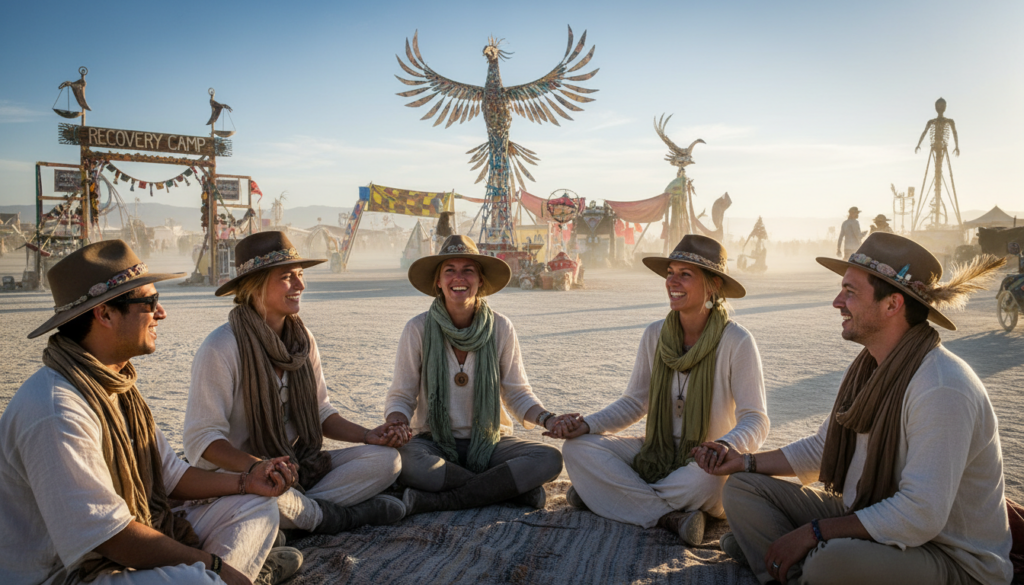
Sober on Playa and the growing sober network
“Sober on Playa” resources note a growing sober community. There are over ten daily 12-step meetings on playa, plus informal meetups. Many camps welcome guests who need low-key spaces and clear boundaries.
On-playa practical support and routine
Plan ahead: review recovery materials, call a sponsor, and tell your campmates your needs. Build a simple routine each day—hydrate, eat, and take scheduled breaks.
That routine creates predictability and reduces anxiety during busy nights.
Healthier offerings and steady structure
Choose substance-free things like yoga sessions, massage spots, craft workshops, talks, and daytime skill shares. These activities offer calm connection and creative focus.
Volunteering is especially helpful: shifts give structure, purpose, and reliable social ties when the week feels hard.
“Being clear-headed helps with consent, safety, and making intentional choices.”
- Accept gifts politely and set limits when offered alcohol or unfamiliar pills.
- Learn graceful exits: have a friend or a firm phrase to leave crowded scenes.
- Seek out sober meetups and like-minded people for support and shared plans.
Bottom line: a sober visit is real, supported, and social. Staying clear-headed helps you follow law, respect consent, and protect your health on playa.
Rules, Safety, and Law Enforcement in Black Rock City
Even in wide-open spaces, laws and procedures still guide behavior and offer protections.
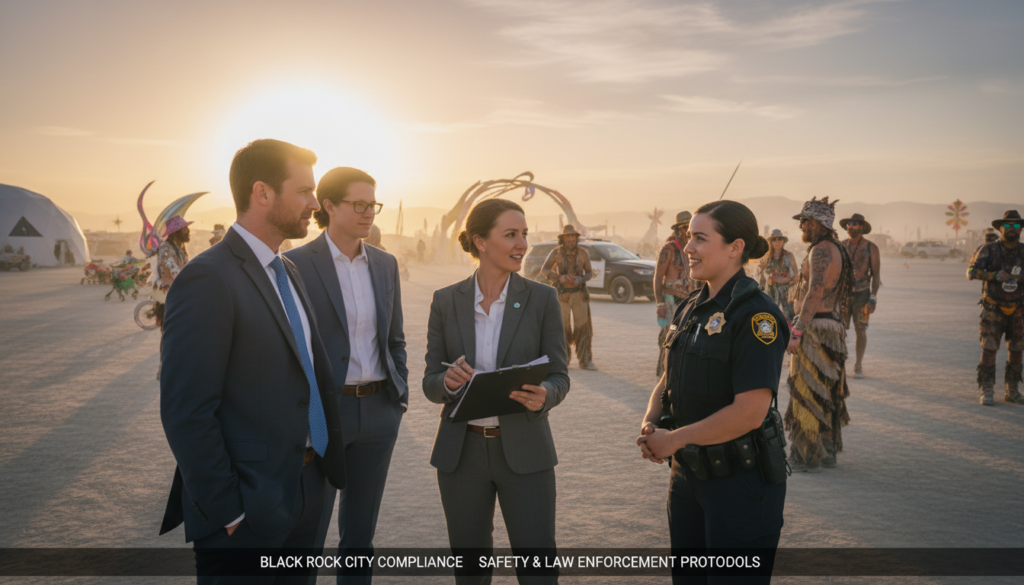
Federal and Nevada law still apply in the desert
Black Rock City exists inside Nevada and federal jurisdictions. That means state and federal law apply during the event.
Legal status covers public safety, controlled substances, and serious offenses. Treat the event like any other public venue for legal purposes.
Arrests and controlled substances: reports from past years
Reports have noted increases in arrests in some years. Many charges involved controlled substances and related offenses.
This is not a headline show—it’s a reminder that cultural permissiveness does not erase legal risk.
Practical safety: go with trusted companions, protect your mind and body
Safety habits matter: use a buddy system for nights, set clear meet-up points, and carry identification and emergency contacts.
Protect your mind and body—pace sleep, hydrate, and step away from crowded or intense spaces when needed.
“Consent and boundaries are non-negotiable—freedom never overrides another person’s autonomy.”
| Safety Area | Practical Steps | Why It Matters |
|---|---|---|
| Legal awareness | Know laws, avoid illegal substances | Reduces arrest risk and legal consequences |
| Companion plan | Buddy system, meeting spot, phone backups | Prevents separation and speeds help |
| Health checks | Hydrate, schedule naps, sun protection | Keeps mind clear and body stable |
Final tip: preparation is your best safety tool—learn the rules, pack responsibly, and plan your time so the event remains a safe, positive experience.
Planning Your First Burn: Tickets, Timing, Travel, and Exodus
Smart timing and clear logistics are the backbone of a successful first visit. Below are the essential dates, ticket paths, staging tips, and exit realities you should plan for in 2025.
Key timeline: the 2025 week runs Sunday, Aug 24, 2025 to Monday, Sep 1, 2025. The Man burns on Aug 30 and the Temple burns on Aug 31.
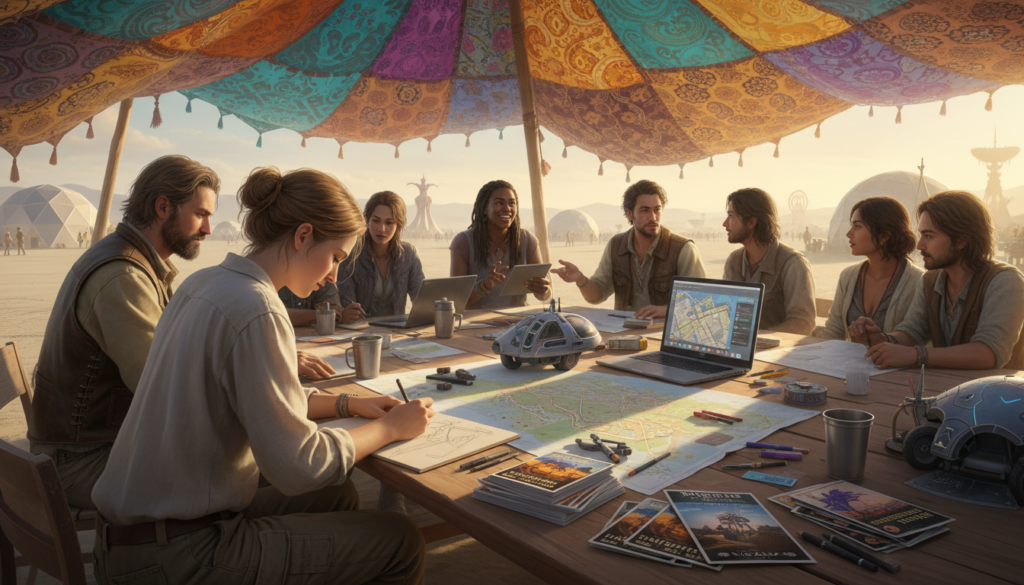
Tickets, vehicle passes, and last-chance options
| Tier | Price | Note |
|---|---|---|
| Low tiers | $550–$750 | Early allocations |
| Mid/High | $950–$1500 | Supporter and higher tiers |
| Premium | $3000 | Large donor tier |
| Vehicle pass | $150 | Required if you drive |
Last-chance routes: the OMG Sale (July 30, 2025; registration July 21–29) releases 3,000 tickets and 1,500 vehicle passes. STEP remains open until Aug 24, 2025 at 12:00 pm PST.
Travel staging and exodus strategy
Common staging: Reno (~2 hours), Sacramento (~4.5 hours), San Francisco, and Gerlach (closest). Reno is best for last-minute shopping; Gerlach is nearest but has limited services.
Many leave after the Man burn and face heavy traffic. Staying through the Temple offers closure but creates another bottleneck the next day.
Leave No Trace: MOOP (Matter Out Of Place) must leave with you. Everything you bring, down to tiny debris, must be removed so the city disappears without a trace.
Plan your money for tickets, travel, supplies, and backups. Gas is a major cost—learn ways to save on fuel before you go.
“Preparation supports freedom — get the logistics right and the week becomes yours to enjoy.”
Conclusion
The final take: this is less a passive show and more a shared, hands-on experiment. In a single week, visitors build community, explore large-scale art, join camp offerings, and roam day and night through a city shaped by participation and self-expression.
The principles guide real choices: gifting replaces buying, decommodification changes vibe, and leave no trace is enforced by simple habits. Bring basics, set a pace, and protect sleep so you stay present and helpful.
There are many valid ways to join: nightlife-focused, art-led, service-oriented, or sober and steady. Give your time, effort, and attention.
Start planning early, pack sensibly (no Sparkle Pony), and come ready to contribute. When the burn comes, show up with curiosity and the practical skills to make the week yours.