
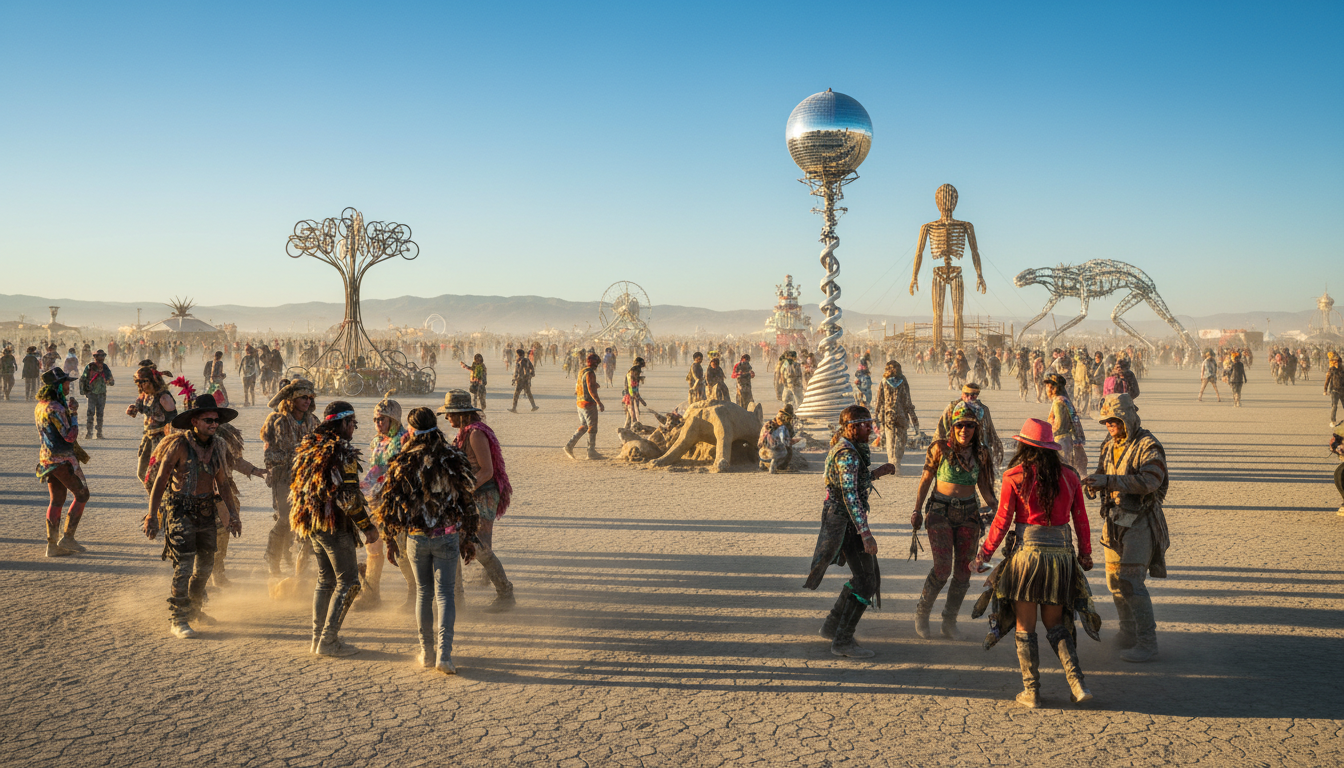
Burning Man is a weeklong desert event built by its participants. It centers on community, large-scale art, self-expression, and living lightly in a temporary city called Black Rock City.
This friendly guide previews key ideas for first-time readers searching what is burning man. Expect clear details on where and when the next cycle runs, how the city works, and the Ten Principles that shape behavior.
We will cover art installations, nightlife without headliners, and why the final ritual resonates with so many people as a transformative cultural moment.
Plan ahead: later sections explain tickets, budgeting, packing, transport rules, and wet-playa weather options. If you want a plain-English view on whether this event fits your travel style, start here.
Key Takeaways
- Burning Man is a participant-built arts and music festival in Nevada’s desert.
- Black Rock City operates like a temporary town guided by the Ten Principles.
- The final effigy ritual often feels transformative to attendees.
- Future planning sections will cover tickets, gear, budget, and transport.
- Read on for a friendly, no-jargon walkthrough to decide if this experience fits you.
For a related look at alternative outdoor stays, see glamping guides.
What is burning man?
Step into a temporary city in the desert where neighbors, art, and creativity set the schedule.
A weeklong gathering built around expression and self-reliance
Burning Man is a weeklong, participant-led gathering where the city itself becomes the main stage. Camps, art builds, and volunteer projects create a living program rather than a single bill of acts.
Participation over spectatorship
Everyone is encouraged to contribute—teach, host, build, or simply help a neighbor. That culture of participation and radical self-reliance shapes daily life and keeps practical systems running.
The ritual and the gift economy
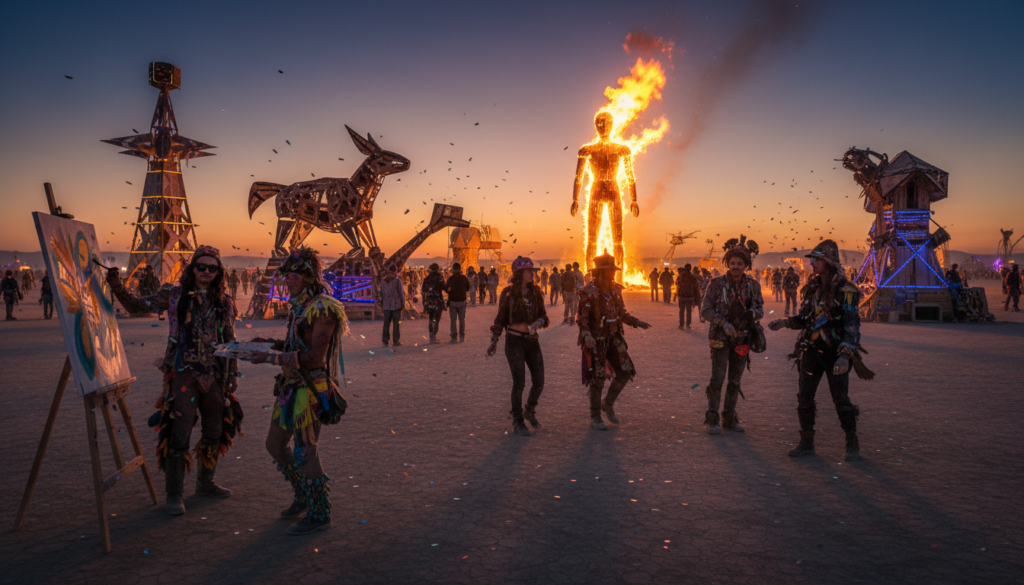
The final ritual—the burning of the Man—serves as a shared, carefully managed moment with safety perimeters and crowd control. A simple gift economy supports connection: offerings range from coffee to bike repairs, not barter.
People, often called burners, arrive for different reasons—art, quiet reflection, music, or community life. Later sections cover safety, leave-no-trace rules, and practical planning to help you decide if the beach glamping style of outdoor stay appeals alongside this experience.
When is Burning Man happening next?
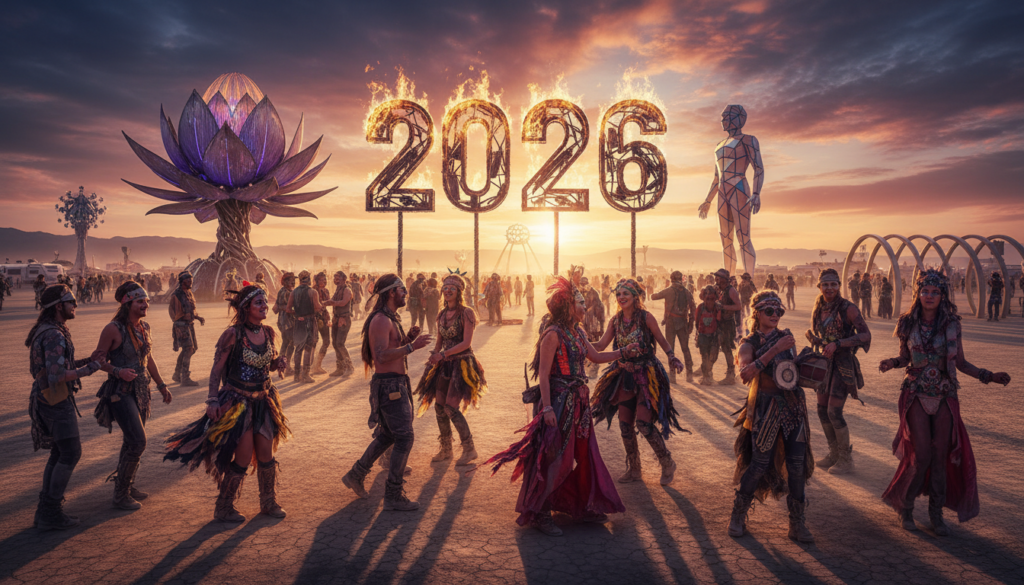
Confirmed dates for 2026: August 30, 2026 — September 7, 2026. Plan early so you can request time off, arrange carpools, and book travel into Nevada.
How Labor Day week shapes the schedule
The event spans Labor Day week, which creates a clear rhythm: build-up days, a high-energy weekend, then an exodus after the major burns. The Man burn traditionally happens on the second-last night — the Saturday evening before Labor Day — and that night draws the largest crowds.
Practical planning tips
If you arrive early you gain time to set up camp, meet neighbors, and learn city routines. Arriving late risks missing key community-building days and big art reveals.
Travel buffers matter: expect heavy traffic and possible weather delays at both arrival and departure. Budget extra time on both ends.
- Buy your ticket and vehicle pass early; they often determine your calendar.
- Treat the week as a full-immersion trip — plan food, water, rest, and camp duties.
- Coordinate with fellow attendees to share gear, rides, and setup tasks.
“Treat this as a week away, not a single-night visit — logistics and timing make the experience.”
For packing guidance and comfort ideas to make the week work for you, see glamping packing tips.
Where is Burning Man located in the United States?
Locate the event on a map and you’ll find it on a vast dry lakebed in northwestern Nevada. The official site is Black Rock City, built each year on the Black Rock Desert playa in Pershing County.
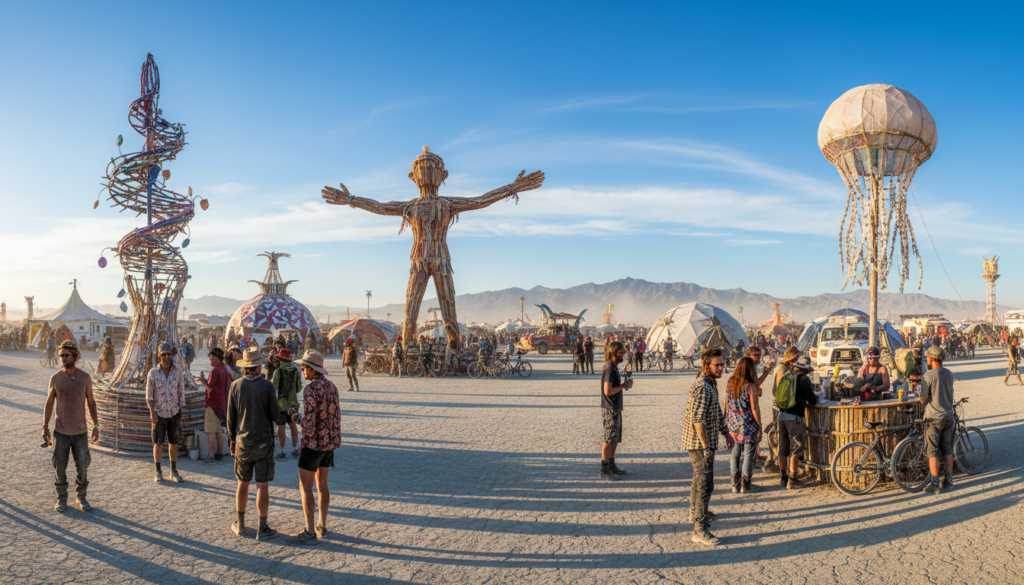
Black Rock City and the playa
Black Rock City is the event’s temporary name for the assembled camps, art, and services. The playa refers to the hard, dusty lakebed you’ll walk and bike across.
How far from Reno and practical notes
The site sits roughly 100–141 miles north-northeast of Reno. Many travelers stage in Reno for last-minute supplies, rentals, and flights before heading onto remote roads.
Exact navigation details
Use these reference coordinates: 40.7869°N, 119.2042°W (also 40°47′13″N 119°12′15″W). Add the place/data/city into your GPS for precise routing.
- Not near Las Vegas or in California — it’s a remote Nevada Desert location.
- Expect few services, long drives, and a big open landscape with few landmarks.
- That remoteness makes self-reliance and local community support essential.
Black Rock City explained: the temporary desert city
Each year a full-scale temporary city springs up on the Nevada playa, built and taken down by the people who live there. The result feels both magical and municipal.
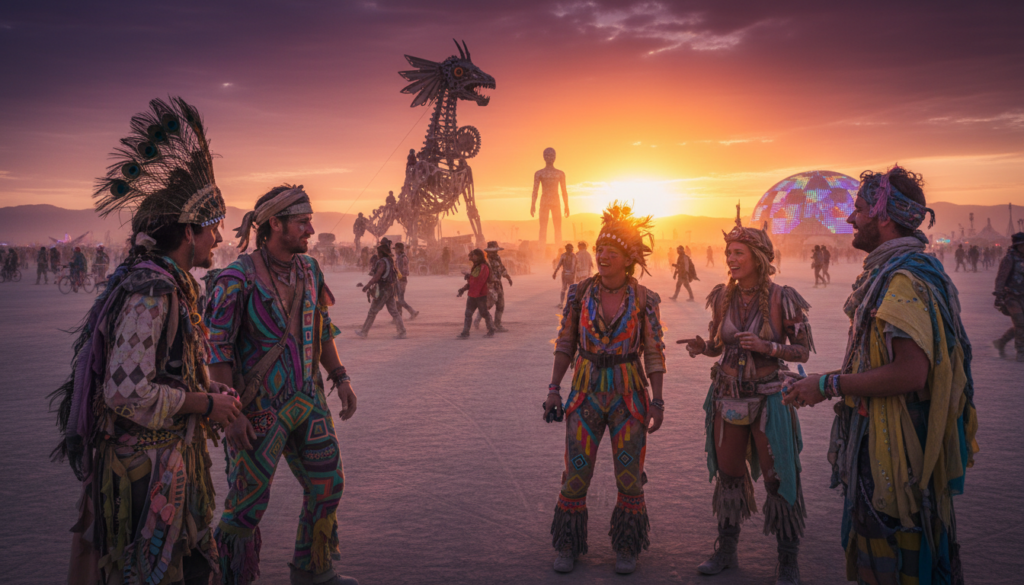
How a city appears (and disappears) each year in the Nevada desert
Black Rock City functions like any small town: neighborhoods, named streets, addressable blocks, and shared services support tens thousands of visitors. Camps host aid stations, clinics, and kitchens, while volunteers keep systems running.
Why the layout matters: navigation, safety, and emergency response
The grid layout helps people find each other in dust and darkness. It also gives safety teams precise locations so responders reach a spot fast during emergencies.
The trash fence and the “Leave No Trace” reality check
The trash fence runs roughly 9.2 miles and marks where loose debris collects. It’s a visible reminder that tiny items—sequins, wrappers, packaging—become hazards in wind. Practicing Leave No Trace means securing gear, checking pockets, and packing micro-trash every day.
- Black Rock City feels like a real city for thousands people for a week.
- A pedestrian-first plan changes how vehicles move and how you light yourself at night.
- Respecting the trash fence protects the playa and the wider community.
A brief history of Burning Man: from Baker Beach to Black Rock City
A small, improvised beach ritual in 1986 quietly set the stage for a global cultural experiment.
Origins on Baker Beach (June 22, 1986)
On June 22, 1986, a wooden effigy burned on San Francisco’s Baker Beach. The gathering was arranged by larry harvey and Jerry James. That casual night drew a few curious people and a playful, participatory spirit.
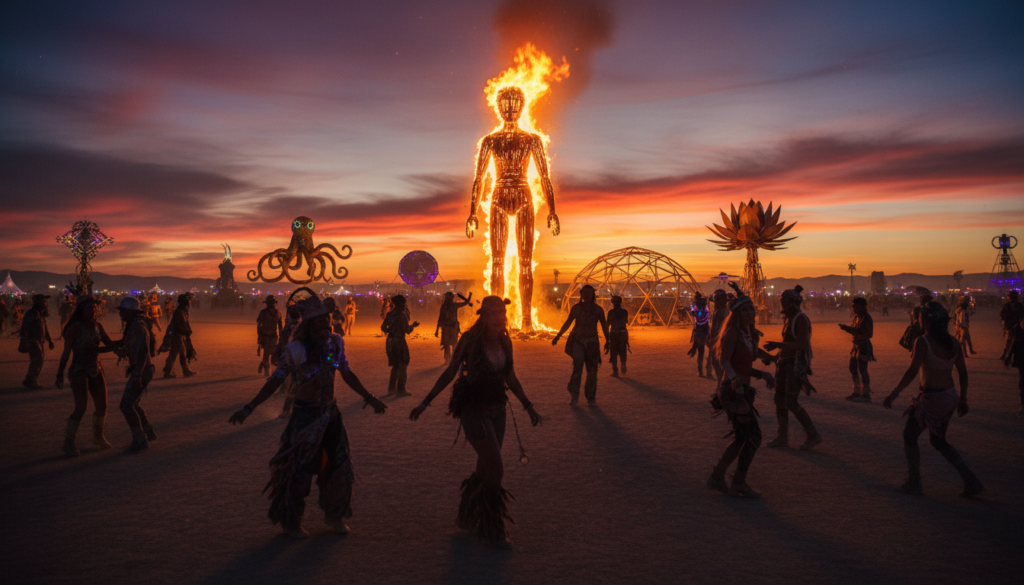
The move to the Black Rock Desert (1990)
By 1990 a pivotal year arrived. A Zone Trip to the Black Rock Desert moved the ritual to a wide, empty playa. That shift made the event bigger and more immersive. It also demanded planning, permits, and basic public-safety systems.
Founders, the Cacophony roots, and growth
Key organizers included larry harvey, Jerry James, and John Law. Early ties to the Cacophony Society explain the event’s playful, experimental DNA. Over the years, a small beach ritual evolved into a temporary city model.
- A single beach burn in 1986 grew into a repeatable civic art experience.
- The 1990 move made the event larger and logistical by necessity.
- Founders and the Cacophony legacy encouraged participation rather than spectatorship.
Today the festival’s roots help explain why attendees accept rules, permits, and shared responsibility—and why many others around the world find the approach compelling.
The Ten Principles that shape Burning Man culture
Guiding principles help turn a temporary gathering into a cooperative community. They act as practical ideas rather than strict rules. Newcomers can use them to join in respectfully and safely.
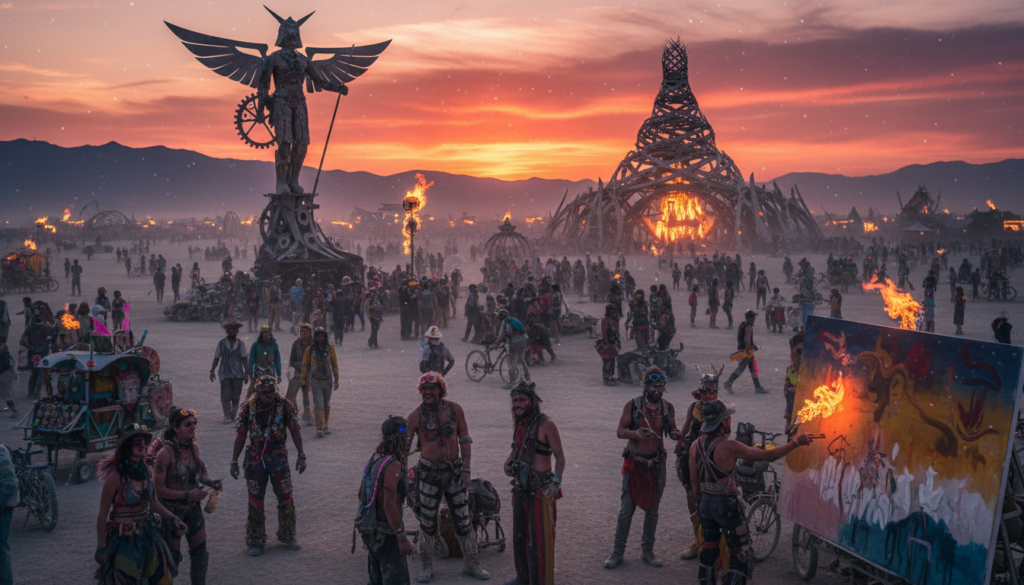
Core ideas and practical notes
Ten Principles:
- Radical Inclusion — welcome others and invite participation without judgment.
- Gifting — share without expecting payment; treats and services are offered freely.
- Decommodification — no ads, no vendors; experience over transactions.
- Radical Self-Reliance — bring water, food, shelter; plan so you do not rely on others.
- Radical Self-Expression — bring creativity and respect others’ expression.
- Communal Effort — collaborate to build camps, art, and logistics.
- Civic Responsibility — follow safety plans and help keep the city running.
- Leaving No Trace — pack out everything; leave the playa cleaner than you found it.
- Participation — join activities: host a camp event, help in a dust storm, or volunteer.
- Immediacy — be present and engage directly with people and projects.
Radical Inclusion looks simple in practice: show up, listen, and offer help. You don’t need to be an artist to contribute—small acts count.
Gifting and decommodification mean you should not expect vendors or ads. Instead, plan for shared offerings and community-run stations.
Above all, these principles shape daily life in Black Rock City. They let thousands of people cooperate in harsh desert conditions and make the week meaningful for everyone.
Art at Burning Man: installations, sculpture, performance, and interactive builds
Art dominates many corners of Black Rock City, turning desert space into interactive stages.
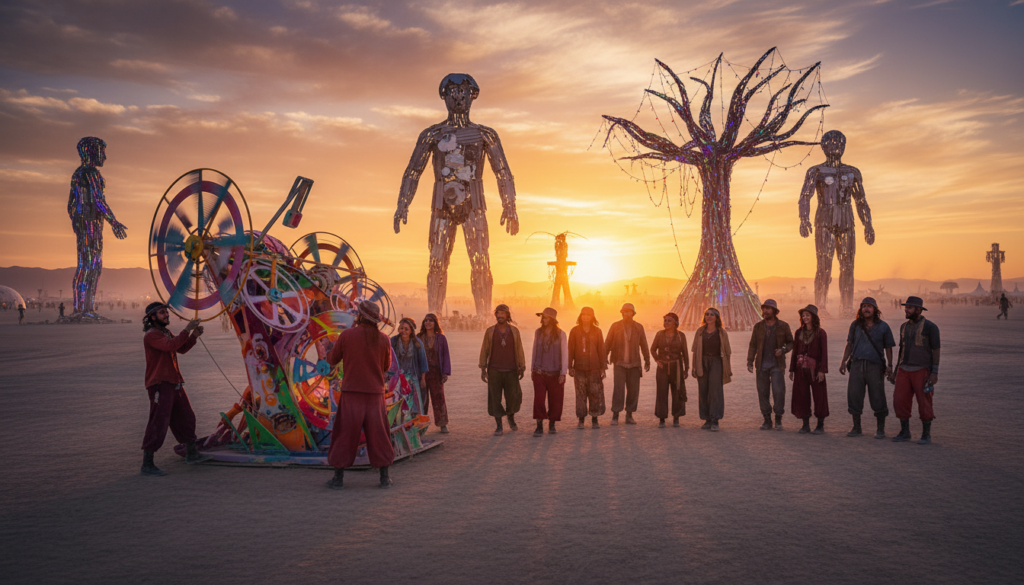
Participatory art you can join
Participatory art means work you can touch, climb, activate, or help complete. Expect to push buttons, ring bells, add a piece, or become part of a performance.
From tiny offerings to massive illuminated builds
Scale varies. Small gifts or altars sit beside huge sculptures you can walk through. Some pieces glow across the playa and serve as landmarks.
Nighttime, safety, and experimental media
Lighting plays a dual role: it makes art dramatic and keeps people safe in the dark. Experimental media—projection, sound, and light—turn the night into a navigable, immersive map.
How grants help bring ideas to life
Burning Man Arts funds projects via Global Art Grants, Black Rock City Honoraria, and Temple support. These grants let teams build riskier, larger, or more technical works for the event.
Life after the playa
Some pieces move off-playa and enter the nearby city. Notable examples include Space Whale and BELIEVE, which reached Reno and helped the local arts scene.
“Art at this event blurs the line between creator and audience; that trust shapes how people behave around fragile works.”
| Feature | Range | Role |
|---|---|---|
| Participatory pieces | Small to medium | Invite touch and collaboration |
| Large-scale sculptures | Massive, illuminated | Landmarks and nightly focal points |
| Experimental media | Projection, sound, light | Immersion and safety at night |
| Grant support | Local and global | Enables ambitious builds |
Approach installations with curiosity and respect. Many works welcome interaction but remain delicate. Follow crew guidance, keep a gentle touch, and enjoy the shared creativity that ripples from this place to the wider world.
Music and nightlife: what to expect without headliners
When darkness falls, music spreads like a map you explore by bike and curiosity. There’s no marquee lineup; the soundscape grows from small efforts and chance encounters.
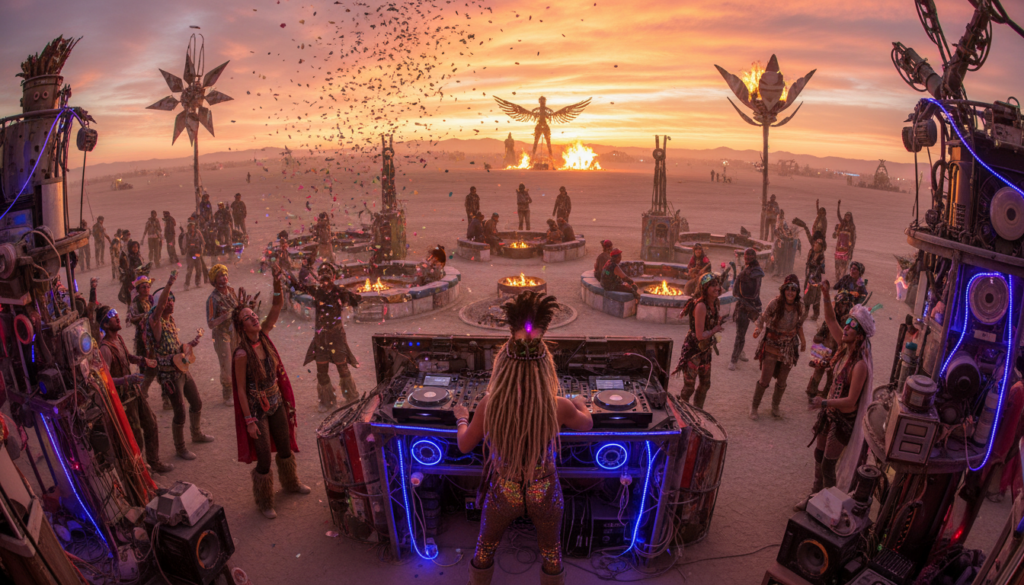
- Camps and sound teams host sets, workshops, and DJ drops. Together they shape the city soundtrack.
- Art cars roam with speakers, creating roaming stages that appear and vanish into the night.
From sunset sets to sunrise discoveries
A typical night flows by bike: follow lights, stumble on an art car, and find pockets of sound in different neighborhoods.
Some spots are mellow and friendly during the day. Others go deep after midnight. The best moment might be a surprise sunrise set you did not plan to find.
- Reset expectations: discovery replaces a headliner culture.
- Bring ear protection and strong lights for safe night rides.
- Respect consent and camp rules—community norms matter even at peak energy.
“Many attendees say the greatest set was the unplanned one found by exploring after dark.”
For low-key daytime alternatives and gentle sound spots, try checking guides like glamping activities to compare quieter outdoor vibes with this lively desert scene.
Theme camps and community life: how people organize their Burning Man experience
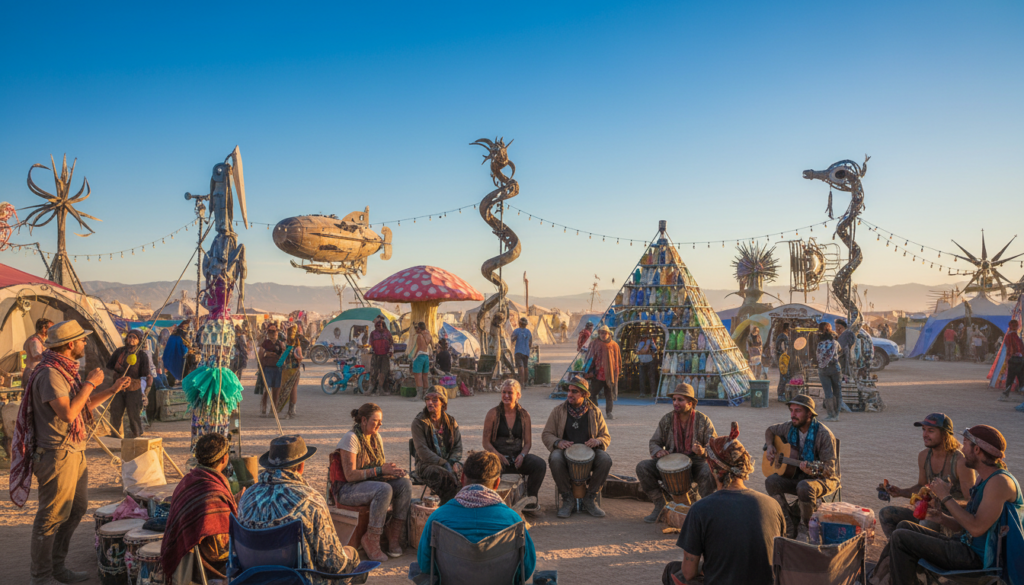
Theme camps act like neighborhood hubs where people create routines, host workshops, and share meals.
Theme camps serve many roles in the temporary city. They host events, teach skills, offer food or drinks as a gift, and build shared shade or chill spaces.
What camps do
Camps range from tiny friend groups to large organized communities. Small crews may offer coffee and conversation. Large camps can run bars, clinics, or multi-hour workshops.
Both types create meaningful moments. They make the week manageable by sharing chores and supplies.
How to find your people in a city of tens thousands
Say yes to short conversations and revisit spots that feel welcoming. Daytime workshops and volunteer shifts make meeting new people easier.
Lean on neighbors for advice, gear loans, or a place to sit during a dust storm. That mutual support keeps the city functioning.
- Expect contributions: many camps ask for dues or shift work (kitchen, bar, build, cleanup).
- First-timer tip: join a camp or link with a small group for structure and safety.
- Culture note: the broader community depends on volunteers, not paid staff.
| Camp Type | Typical Offerings | Size | Why it matters |
|---|---|---|---|
| Small social camp | Tea, shade, games | 5–15 people | Easy entry, friendly faces |
| Workshop camp | Classes, skill shares | 10–50 people | Learn and meet others |
| Service camp | Bars, kitchens, clinics | 20–200 people | Supports many attendees |
| Large theme camp | Night events, art builds | 50–500+ people | Creates major city hubs |
Mutant vehicles and art cars: transportation as moving art
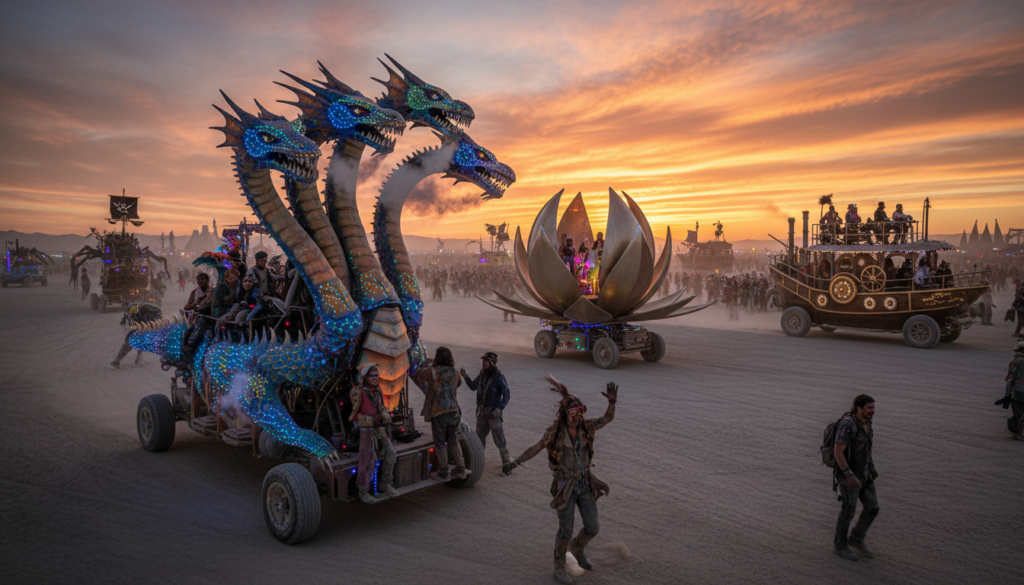
Art-driven vehicles ferry people, light, and music across Black Rock City’s flat nightscape.
Mutant vehicles are more than decorated cars; they are machines rebuilt into moving sculptures and stage platforms. Approval matters because only inspected, permitted builds may operate in the city.
These vehicles run where dust, low visibility, and heavy foot and bike traffic converge. That sensory mix makes clear rules essential: slow speeds, visible crew, and strict lighting standards reduce risk to people.
Safety standards and practical etiquette
Why rules matter: vehicle accidents can cause serious injury in a pedestrian-first environment.
- Mutant vehicles must pass inspections and follow approved routes.
- Keep lights on your body and bike; never assume a driver sees you.
- Give moving art plenty of room and follow crew directions at night.
Vehicles as music and community connectors
Art cars double as roaming dance floors, quiet lounges, or moving sculptures that guide nighttime discovery. They link camps, sound crews, and spontaneous gatherings—part art, part service, part civic infrastructure.
“Mutant vehicles blend practical transport with performance, helping the city pulse after dark.”
Cars, bikes, and getting around: the Burning Man vehicle rules
Getting around Black Rock City means trading keys for pedals and planning ahead.
Arrive, park, don’t drive: after you enter, personal car and truck use is largely restricted. Service and inspected art vehicles operate with permits, but most attendees leave their cars in camp.
Why the rule exists
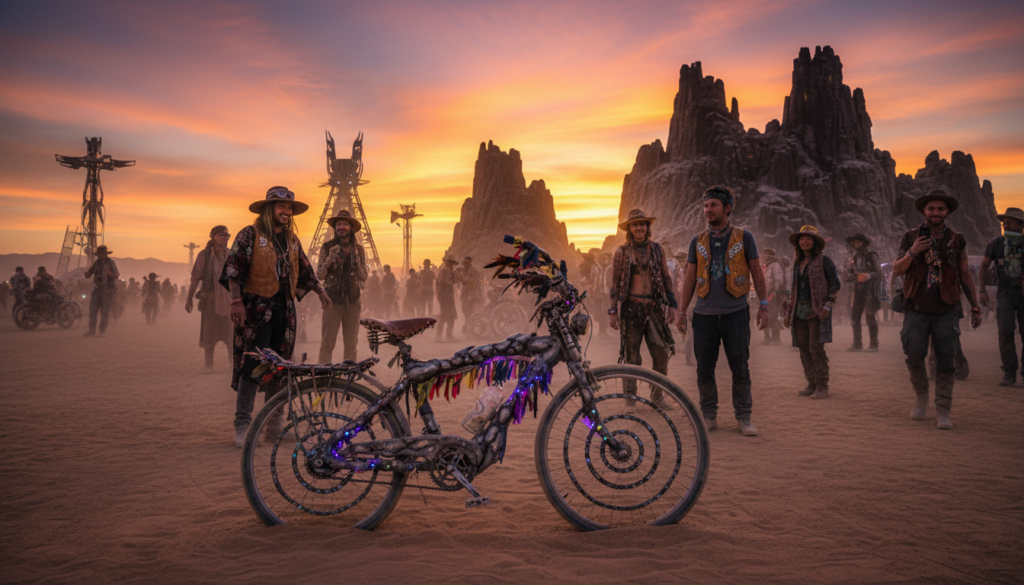
The city fills with bicycles and foot traffic. Fast or casual driving in a packed, dusty space creates real risks. Past vehicle-related injuries shaped the strict limits.
How most people move
Bring a sturdy bike, a good lock, and basic repair tools. Expect to walk a lot for nearby art and workshops, and ride for deep-playa or night discovery.
Safety basics: bright lights, reflective gear, and slow speeds cut collisions. Respect moving art and yield to pedestrians.
“Arrive, park, and move like a neighbor — it keeps the city safe and joyous.”
| Mode | Role | Notes |
|---|---|---|
| Bicycle | Main daily transport | Bring lock, lights, repair kit |
| Walking | Short trips, art access | Comfortable shoes; expect dust |
| Service & art vehicles | Exceptions with permits | Inspected; follow crew directions |
Accessibility note: if mobility support is needed, plan in advance and coordinate with your camp or event organizers.
For comfort-focused outdoor travel tips, check these glamping hacks.
Tickets, costs, and budgeting for the Burning Man festival
Budgeting ahead keeps surprises low and comfort high during your week in the desert.
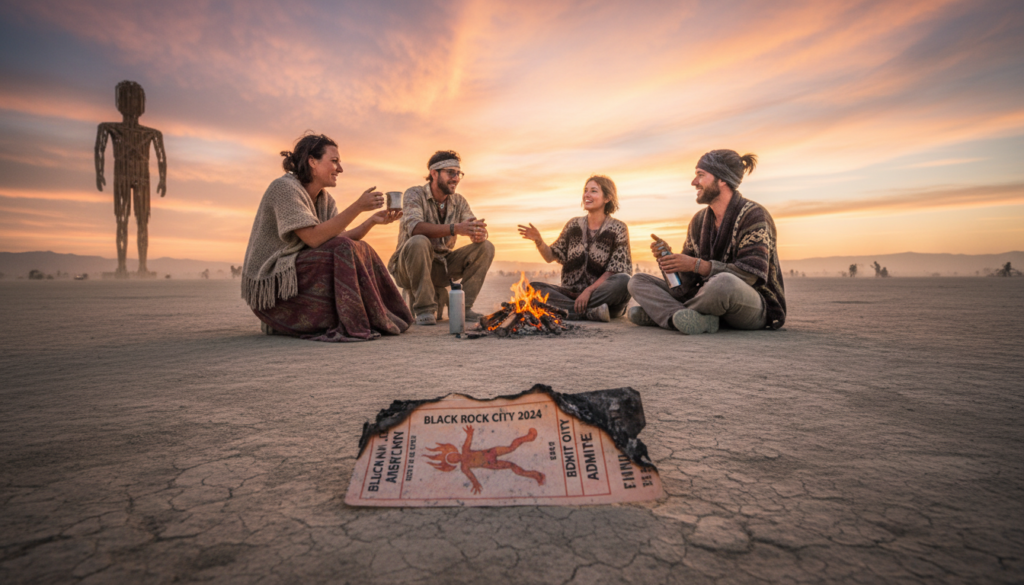
What a ticket buys: a valid ticket grants entry to Black Rock City and the ability to participate for the full week. It does not cover travel, camp dues, food, water, shelter, or shared infrastructure.
Typical ticket pricing and total cost expectations
Regular ticket examples have varied; a reported 2023 regular ticket listed at $575. Many attendees find total spending—including travel, food, costumes, and supplies—can reach around $1,500 or more depending on choices and the year.
Practical budgeting categories
Use this checklist:
- Travel to Nevada (flights, fuel, vehicle pass)
- Water hauling and drinking supply for a week
- Food and camp cooking essentials
- Shelter, shade structures, stakes, and windproofing
- Dust gear, lighting, batteries, and bike repair
- Costumes, art supplies, and personal comforts
- Camp dues for shared kitchens, generators, or services
Camp dues and group costs
Many theme camps collect dues to fund shared services. Expect transparent fees for communal kitchens, shade rigs, or equipment. Confirm costs with your camp early and factor them into your final budget.
“Plan for comfort first—under-preparedness costs more in safety and stress than extra gear costs in dollars.”
| Item | Example cost range | Notes |
|---|---|---|
| Ticket | $300–$800 | Varies by sale and year; reported regular $575 in 2023 |
| Travel & vehicle pass | $100–$600+ | Depends on flights, driving distance, and carpooling |
| Camp dues & shared infrastructure | $50–$500 per person | Large camps typically higher; covers kitchens, power, shade |
| Food, water, costumes, supplies | $200–$800 | Personal choices drive this range; $1,500 total is a common estimate |
Scale matters: in 2019 official participation was 78,850. You’re joining a city of thousands people, so plan logistics early and err on the side of safety and comfort.
How to prepare for the Black Rock Desert: packing and planning basics
Good preparation makes a week on the playa safer and more fun. The Black Rock Desert can change fast, so plan for extremes and for self-reliance.
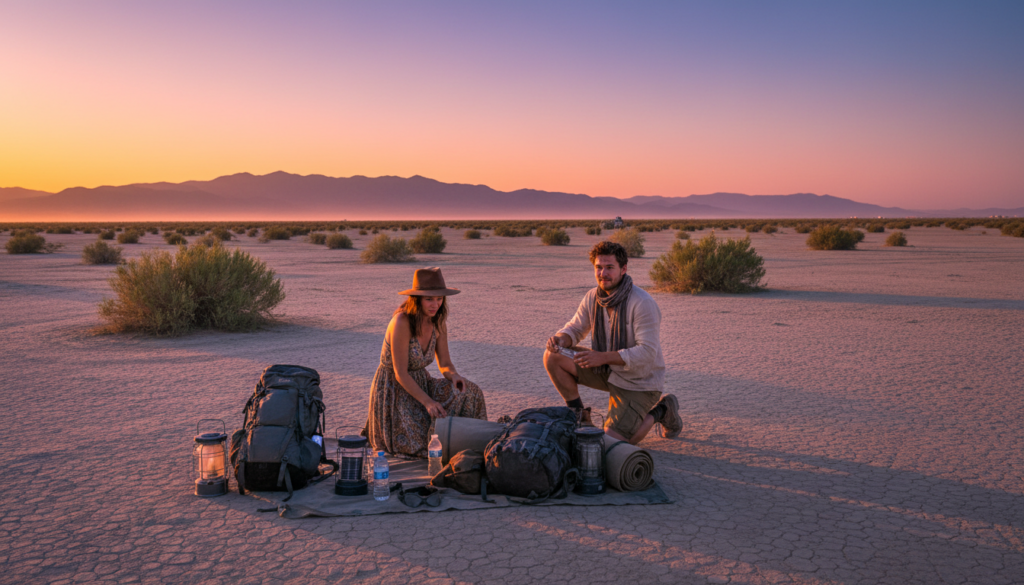
Desert realities
The Black Rock brings hot days, cold nights, sudden wind, and dust storms that can cut visibility to near zero.
Pack sun protection for day heat and warm layers for night life. Include goggles and a sturdy dust mask for storms.
Water, food, and fuel for a week
Calculate water at a minimum of one gallon per person per day for drinking and cooking, then add reserves for heat and extra chores.
Choose meals you will actually eat: easy-to-cook, high-energy choices that store well. If your camp uses propane or generators, bring extra fuel and store it safely.
Shelter strategies
Shade first: a strong shade rig matters more than looks when wind picks up.
Use heavy-duty stakes, cross-brace poles, and windproof attachments. Test setup at home if possible.
Power and lighting
Reliable lighting keeps you visible at night and prevents accidents. Use durable lights rigs and secure batteries so nothing blows off and lit gear doesn’t become trash.
Leave No Trace packing
Bring sealable trash bins and separate bags for recyclables and gray water. Contain micro-debris (glitter, feathers, sequins) in closed containers.
Pack it in, pack it out — every item you bring should have a plan for removal.
- Coordinate with camps: share heavy gear, fuel, and shade, but still be ready to stand alone if conditions change.
- Plan redundancies: extra water, tools, lights, and a small first-aid kit can save a night or a trip.
“Self-reliance plus community backup keeps thousands safe and lets city life run smoothly.”
For additional comfort-focused packing ideas, check these essentials for glamping.
Safety, weather, and “wet playa” scenarios: learning from recent years
Sudden storms can upend plans fast at desert events; planning for weather should be part of every checklist.
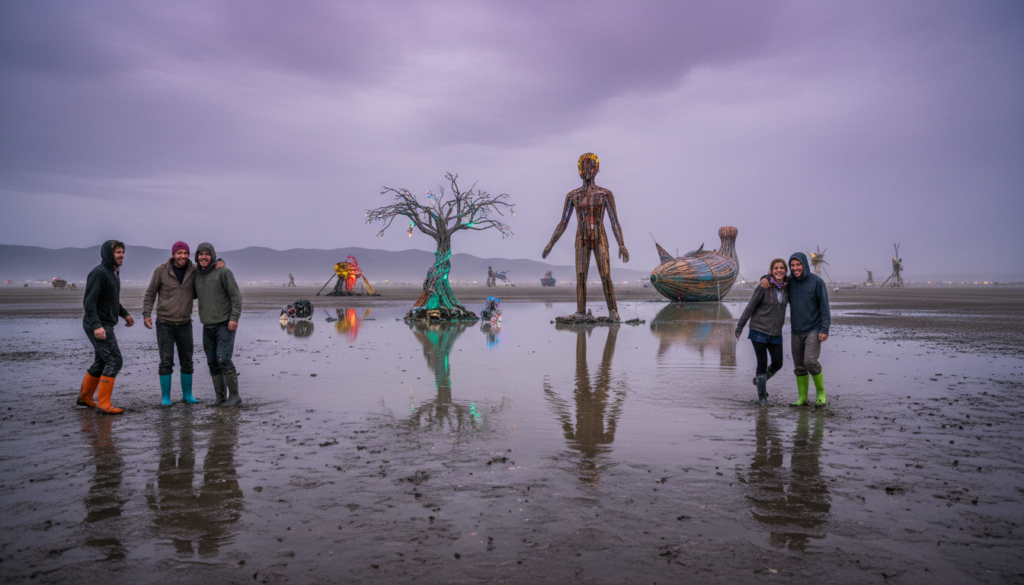
2023 rain and flooding: a recent, clear example
In 2023 heavy rain turned the playa to deep mud and forced a site-wide driving ban. Roads closed and the schedule changed over a short time.
Organizers asked attendees to conserve food, water, and fuel while they monitored ground conditions. The burn schedule and departure plans were both affected.
How driving bans and closures affect exodus
When vehicles cannot move, departures stretch for extra days and backup at gate points grows fast.
Build buffer days into travel plans and expect official updates to alter your timeline. Treat those updates as essential news.
Shelter in place: conserve and stay safe
If movement stops, shelter in place and reduce nonessential travel. Conserve supplies and stay warm and dry.
Practical tips: ration water, protect electronics, secure tents, and share resources with nearby camps.
Reducing vehicle risk in a pedestrian-first city
Fewer vehicles in motion lowers collision risk, but only when people follow rules. Keep lights on, yield to foot traffic, and avoid driving in low visibility.
Vehicles can sink and block key routes; don’t attempt to free a stuck car alone. Wait for coordinated support.
“Plan for weather before arrival and treat official updates as the primary source of guidance during an event.”
| Issue | On-the-ground effect | What to do |
|---|---|---|
| Wet playa (mud) | Biking impossible; vehicles may sink | Shelter in place; conserve supplies |
| Driving ban / road closure | Exodus delayed; gate backups | Build travel buffers; follow official updates |
| Stranded vehicles | Blocked routes; rescue needed | Avoid solo recovery; request crew help |
| Site-wide delays | Schedule shifts; extended stays | Check news channels; plan extra days |
- Keep communications ready: phone, battery banks, and a camp contact plan.
- Prepare for slow days: extra food, water, and warm layers matter more than timing gadgets.
- Respect closures—following guidance keeps thousands safer and speeds recovery.
Burn night, the Temple, and the emotional arc of the week
Near the end of the week the crowd gathers for a high-energy ritual and a separate quiet observance. Together they shape many people’s lasting memory of the experience.
The Man burn: timing and crowd dynamics
The man effigy goes up in flames on the penultimate night, drawing massive crowds and tight safety perimeters. Plan meeting points, charge batteries, and agree on a rendezvous spot before nightfall.
Respect volunteers and follow crew directions near barriers. Crowd movement can be fast and dense; keep small children and vulnerable companions close.
The Temple: remembrance and reflection
The Temple offers a quieter counterpoint. People visit to grieve, give thanks, or leave messages.
Speak softly, be mindful with photos, and allow space for private moments. Many find the Temple more intimate than the loud celebration nearby.
“The two rituals show how a single week can hold both wild release and deep, private reflection.”
- Man burn: communal release, spectacle, shared catharsis.
- Temple: solitude, remembrance, contemplative closure.
- Plan logistics: meetups, lights, and listening to official guidance.
| Rite | Atmosphere | Visitor tips |
|---|---|---|
| Man burn | High-energy, crowded | Pick meeting points; stay behind perimeters |
| Temple | Quiet, reflective | Lower voice; limit flash photography |
| Aftermath | Mixed emotions | Check on friends; allow private processing |
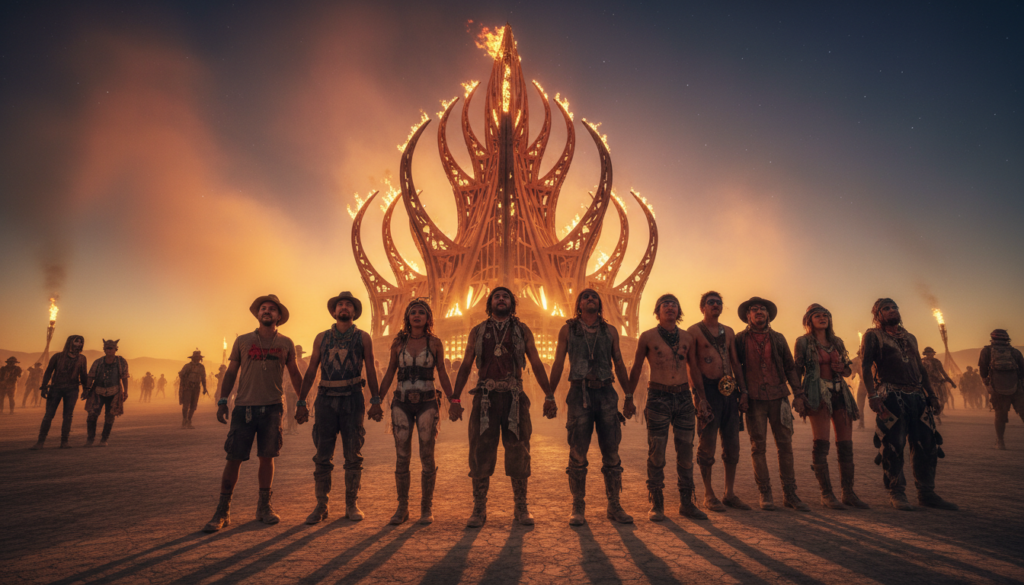
Burning Man beyond Nevada: the wider Burning Man Project and regional events
A single desert gathering has inspired a global network of creator-led events and local hubs.
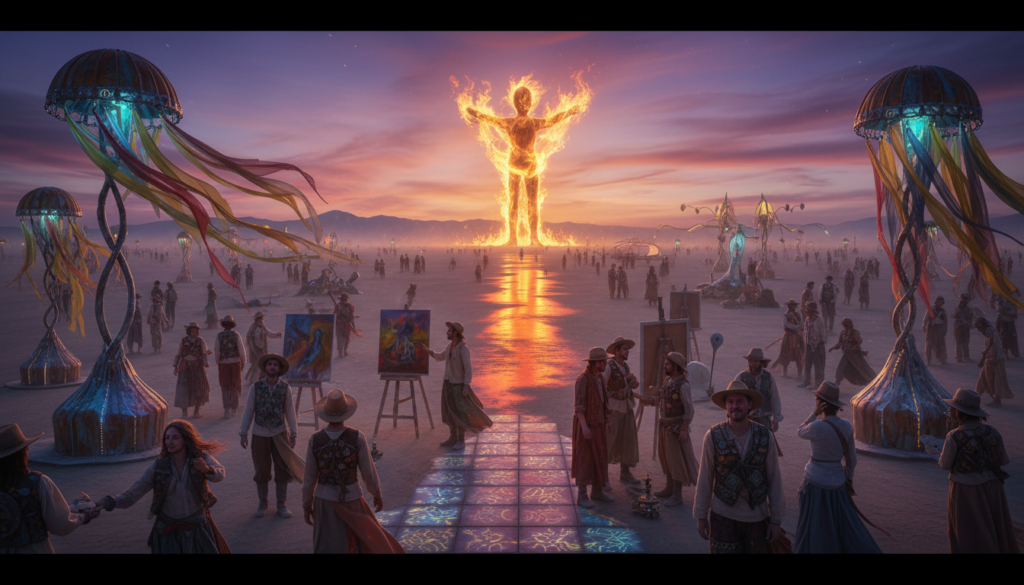
The Burning Man Project now supports regional gatherings that adapt the Ten Principles to local needs. These events keep the spirit alive across the world and offer gentler entry points for curious neighbors.
Regional burns and community impact
Regional burns are smaller, principle-guided events. They vary by scale, rules, and local culture. Many focus on art, volunteering, or civic projects.
Burners take lessons home in practical ways: starting public art projects, volunteering for local causes, or building maker spaces that serve others year-round.
- Grants and mentorship from Burning Man Arts fund participatory projects.
- Regional teams seed new events and local leadership over years.
- These gatherings form long-term community ties and practical civic action.
“The project shows that a week in the desert can spark ongoing creativity and service in many ways.”
If you’re not ready for the Nevada event, look for a nearby regional group to learn, try volunteering, and join a creative community first.
Conclusion
This closing note pulls key facts together so you can plan a safe, meaningful trip to Black Rock City.
Burning Man runs Aug 30–Sep 7, 2026 on the Black Rock Desert (40.7869°N, 119.2042°W). The Man burn happens the second‑last night; expect heavy traffic and a Labor Day–shaped exodus.
Remember the Ten Principles: participation, gifting, decommodification, and leaving no trace shape daily life. Tickets do not cover water, shelter, or camp dues—plan for a full week and bring backups.
Learn from recent wet‑playa events and follow vehicle rules to lower risk. Decide if your focus is art, music, community, or quiet reflection, then pick a camp, pack gear, and contribute.
Check official channels and local groups for news and prep tips so your first visit feels safe, useful, and memorable.