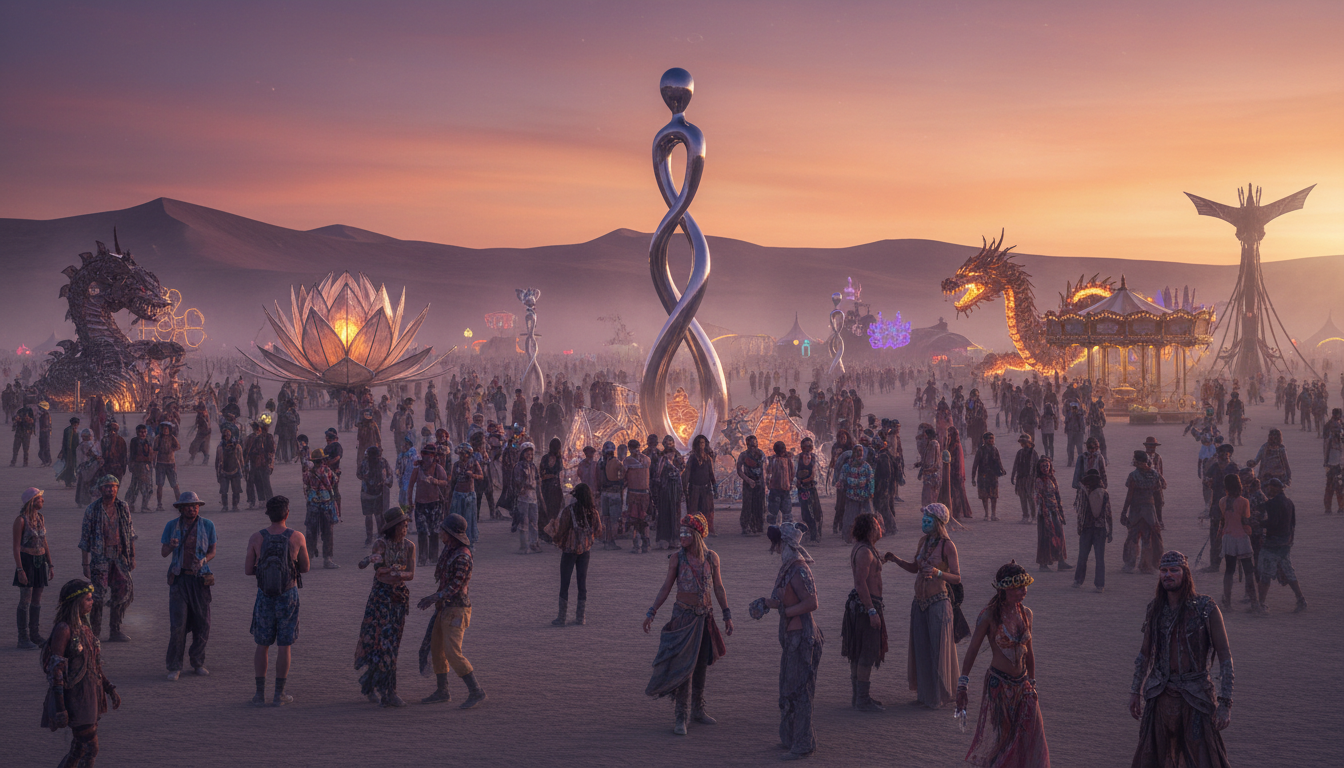
Burning Man is a week-long desert event in Nevada that centers on community, large-scale art, self-expression, and self-reliance.
It culminates in a ceremonial burn on the Saturday before Labor Day. Participants build a temporary city and shape most of the experience.
This guide will clarify whether this gathering feels like a festival, an art showcase, or a pop-up city. You will get simple facts about when and where it happens, the Ten Principles, theme camps, mutant vehicles, and the gift economy.
Practical takeaways will include daily life on site, key rules, ticket basics, safety tips, and what radical self-reliance means in practice.
If you are a curious newcomer or planning a first visit, this Ultimate Guide aims to set clear expectations without jargon. For a related outdoor comfort read, see a short guide on glamping here: glamping basics.
Key Takeaways
- It’s a participant-built week in the Nevada desert with an effigy burn.
- Community, art, and self-reliance drive daily life there.
- Expect theme camps, large art pieces, and creative vehicles.
- Rules focus on safety, tickets, and Leave No Trace.
- Newcomers should learn the Ten Principles and pack for self-reliance.
Burning Man in a nutshell: what it is and why it’s not a typical festival
Imagine a week where attendees are also producers, builders, and hosts of every activity. This event asks visitors to bring supplies, skills, and generosity. It’s a temporary city shaped by participation, not a lineup of performers.
A week-long desert gathering
A week-long desert gathering centered on community, art, self-expression, and self-reliance
For seven days, life on the playa is about daily living and shared work. Planning and pacing matter because you are living there, not just watching a show.
No headliners: participants create the art and experiences
No headliners: participants create the art, events, and experiences
There are no main acts. Workshops, performances, and installations come from camps and individuals. That model turns visitors into contributors and changes how programming feels.
The signature moment
The signature moment: burning the Man before Labor Day
Burn night—on the Saturday evening before Labor Day—carries emotional weight. It acts as a communal ritual that many people describe as both cathartic and reflective.
- Community-built rather than spectator-based.
- Mix of quiet reflection and high-energy nightlife.
- Participation and self-reliance shape identity and preparation.
Later sections will unpack the Ten Principles, the cultural operating system that keeps this experiment running.
What is the burning man festival and where does it happen?
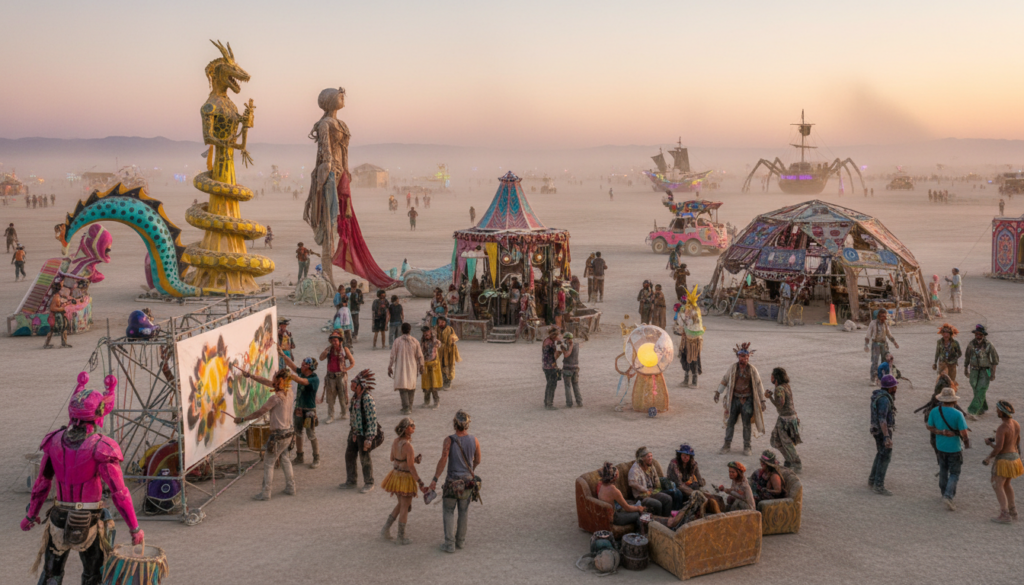
On a dry alkaline lakebed north of Reno, thousands build a functioning city for one week. Since 1990 this event has taken place at Black Rock City in northwestern Nevada’s Black Rock Desert. That open playa shapes logistics, culture, and safety rules.
Black Rock Desert, Nevada: the playa setting and why it matters
The playa is a flat, dusty expanse with alkaline soil. Winds can produce whiteouts and, in rare wet years, heavy mud. Those extremes make packing and travel non-negotiable.
Black Rock City: a temporary city built each year
Black Rock City is planned and assembled annually. It is not permanent: streets, camps, and art pop up then disappear. Distances on the playa affect how people meet and move, so navigation and timing matter.
Coordinates and geography basics for the event site
Location context: about 100 miles (160 km) north-northeast of Reno. Exact coordinates: 40°47′13″N 119°12′15″W (40.7869°N, -119.2042°W). Those numbers mark the center point of the temporary city on the flat lakebed.
| Feature | Detail | Why it matters |
|---|---|---|
| Playa type | Flat, alkaline dried lakebed | Drives dust safety, vehicle rules, and Leave No Trace practices |
| Distance from Reno | ~100 miles (160 km) | Plan for long drives, staged supplies, and limited services |
| City status | Temporary, constructed annually | All infrastructure is brought by participants; planning required |
| Coordinates | 40.7869°N, -119.2042°W | Useful for GPS, mapping, and emergency planning |
Note: The harsh environment shapes rules on vehicles, speed, and fire. Later sections cover those limits and the Leave No Trace standard that keeps this site viable for future years.
When is Burning Man held?
Each late-summer year centers around Labor Day, which anchors planning and travel for this nine-day event.
The event timeline: days leading up to and including Labor Day
Typical window: The gathering spans nine days, with build and arrival starting several days before the main week. In 2026, for example, the event runs August 30 through September 7.
Arrival phase includes early arrivals and build crews. Main week covers public arrivals, daytime art, and nighttime programming. Teardown follows the final day and can take several more days.
Why late-summer conditions shape planning and packing
Late-summer desert weather matters. Hot afternoons, cold nights, and sudden dust storms change how people schedule activities and what they pack.
Plan for sun protection and layered clothing. Expect wind-driven dust that affects gear, shelter, and daily rhythm. These conditions shape each person’s onsite experience and routines.
Simple what-happens-when overview
- Arrival and camp setup: claim space and build infrastructure.
- Daytime: explore art, workshops, and quiet gatherings.
- Nighttime: sound camps, lighted art, and citywide events.
- Burn night: the major ritual night falls on the Saturday before Labor Day.
- Teardown: camps pack out and teams clean the playa.
Dates change each year, but the Labor Day anchor remains steady. That consistency helps returners plan time off and travel. For tips on comfort and shelter while out there, see a short guide on glamping life.
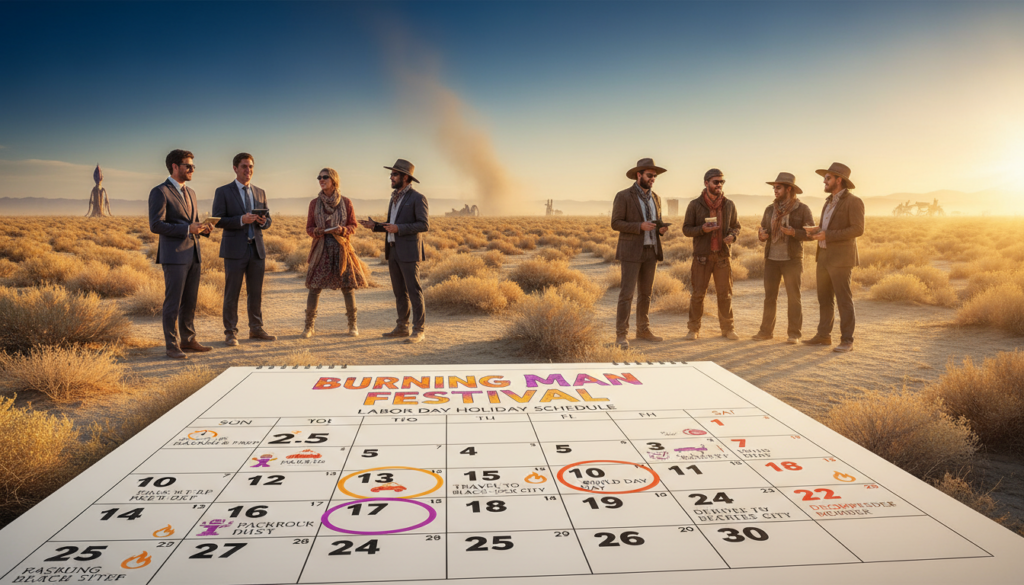
| Phase | Typical timing | Planning note |
|---|---|---|
| Early arrival / build | 2–3 days before main week | Bring tools, team coordination, extra supplies |
| Main week | Labor Day weekend anchor (9-day span) | Peak crowds, full programming, ticket demand |
| Burn night | Saturday before Labor Day | High emotional and logistical activity; plan camp duties |
| Teardown | Day after final day and beyond | Leave No Trace rules; allow time for cleanup |
A quick history: from Baker Beach to Black Rock City
A wooden effigy lit on Baker Beach in 1986 set in motion a local ritual that expanded over years. Larry Harvey and Jerry James led that first, modest burn on June 22, 1986 in san francisco. It began as a friendly, improvised moment rather than a commercial project.
Early founders and the move west
By 1990 organizers sought space for larger art and safer structure. They relocated to Nevada’s Black Rock Desert, and a 1991 BLM permit formalized the site.
Growth from hundreds to tens of thousands
Across the 1990s and following years attendance climbed from a few hundred to tens thousands. That scale required more planning, roads, safety teams, and rules.
2013: organizational change and impact
In 2013 the event transitioned into a nonprofit, the Burning Man Project, shifting governance, funding, and mission focus. This move helped sustain growth and support regional initiatives while prompting new debates about success, culture, and community.
- Founders: Larry Harvey, Jerry James.
- Key moment: 1991 BLM permit.
- 2019 attendance: 78,850 participants.
The Ten Principles that define Burning Man culture
Think of these ten guiding ideas as a decoder ring for community life. They explain why gifting replaces commerce, why people prepare for harsh conditions, and why shared safety matters.
Radical inclusion, gifting, and decommodification shape social norms. Inclusion invites many voices while still respecting consent and boundaries.
Radical self-reliance and radical self-expression ask each person to bring supplies and creativity. Practical self-reliance keeps people safe in a remote desert.
Communal effort and civic responsibility ask participants to pitch in for setup, safety, and cleanup. Civic responsibility shows up as volunteer shifts, traffic safety, and care for neighbors.
Leaving no trace, participation, and immediacy complete the list. Together they encourage hands-on involvement and prompt presence over passive observation.
“These principles are a reflection of community culture rather than a legal code.” — Larry Harvey
Quick note: These ideas guide burners to act, share, and protect. For design and home-style inspiration that echoes communal aesthetics, see a short piece on zen house aesthetic. Next, we’ll explore how gift economy and decommodification play out on site.
How the gift economy works on the playa
Gifting at Black Rock City turns small acts into the backbone of daily life. That social practice asks people to offer help, goods, or services without expectation of payment or return. It shapes a participatory culture and changes how people meet.
What gifting looks like in practice
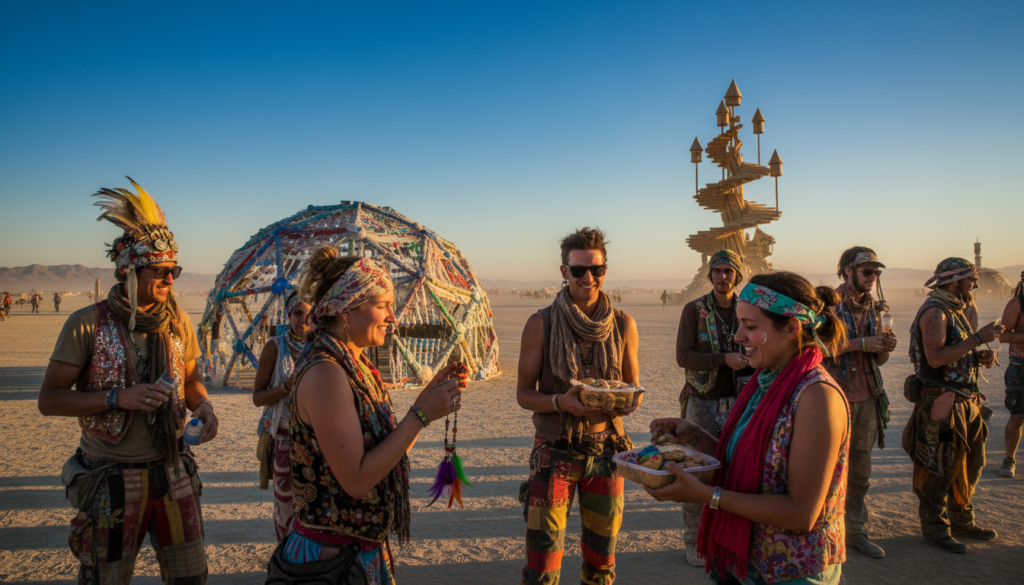
Gifting means sharing freely: a cup of coffee, a tool loan, or a guided art walk. It is not bartering, not advertising, and not a quiet sales channel. Camps often host simple giveaways that welcome newcomers.
Decommodification on the ground
Decommodification (burning man) removes logos, ads, and branded stalls. Most money exchanges stop at ticketing and donations. This keeps interactions personal and creative rather than transactional.
- Common gifts: coffee, small repairs, costume bits, short tours.
- Pack smart: durable, low-waste items that attendees can carry.
- Cash? Bring little; expect limited commercial activity.
In short, gifting builds trust and makes the overall experience feel communal. For tips on comfort and practical gear, see a quick glamping guide: glamping hacks.
Art at Burning Man: interactive installations, performances, and big ideas
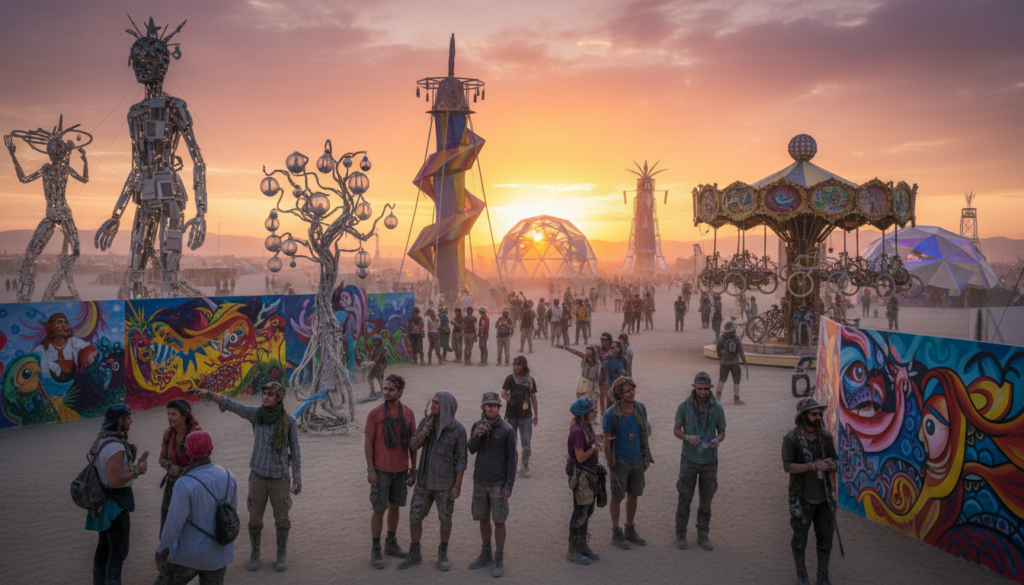
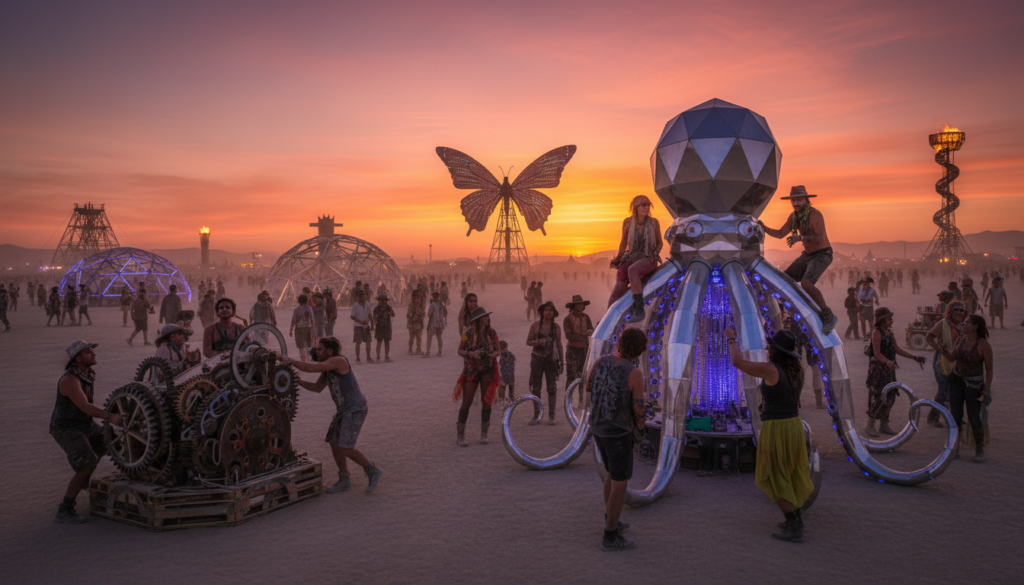
Playa art often asks you to touch, climb, or change an object rather than stand at a velvet rope. That hands-on approach makes many pieces feel alive and unpredictable.
How participatory pieces work
Participatory art means you climb structures, spin kinetic sculptures, dance inside light rooms, or help alter a piece over days. These works invite action: play an instrument, add a token, or steer a moving installation.
Playa as a living gallery
Black Rock City becomes a citywide gallery. Scale and mobility set it apart from museums or a typical festival. Art pops up across wide open space, so discovery is part of the joy.
Themes, the Man, and fire as medium
Annual themes nudge creative direction and often influence the Man’s design. Fire serves as an artistic element and a ritual tool. All burns happen on approved burn platforms to protect the surface and safety.
How large projects get built
Big works form through teams, fundraising, and fabrication. Burning Man Arts funds builds via honoraria, Global Art Grants, and dedicated support for temples. Many pieces arrive as gifts for participants and the wider community.
Note: Safety rules on burns and platforms appear in the rules section later.
Mutant vehicles and art cars: moving art across the desert
A handful of licensed, highly modified vehicles animate night life and link distant camps across Black Rock City.
What counts as a mutant vehicle and why rules exist
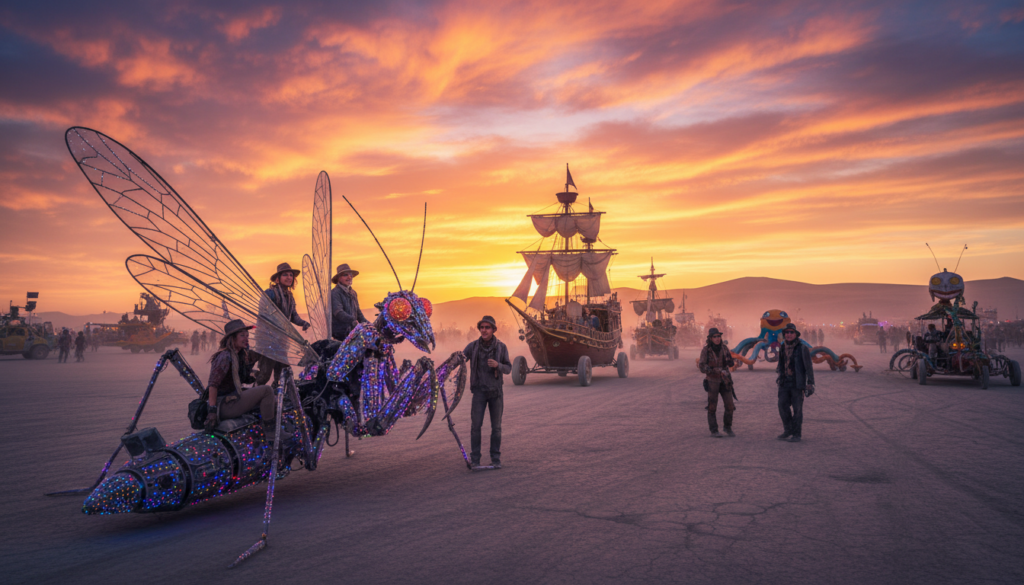
Mutant vehicles are heavily altered rides turned into mobile art, not ordinary cars. They often add sound, lights, and sculptural elements to become rolling installations.
Because they operate among crowds, they face strict approval and safety checks. Drivers must follow inspection rules, lighting requirements, and operator accountability before a vehicle may move through the city.
How art cars shape nights and movement
Only a few authorized vehicles roam; most participants walk or bike. Approved art cars connect remote camps, carry DJs and sound systems, and ferry explorers to deep-playa gatherings.
“Art on wheels turns distance into discovery while keeping safety central.”
How to experience them respectfully
- Approach slowly. Wait for clear signals before boarding.
- Ask first. Consent matters for rides, photos, and interaction.
- Follow crew guidance. Board only where crew permits and use handholds.
- Keep sober operators. Drivers must stay clear-headed; that protects everyone.
| Feature | Detail | Why it matters |
|---|---|---|
| Approval | Inspection and permit required | Ensures safe operation among crowds |
| Speed | 5 mph limit inside city | Reduces accident risk and protects pedestrians |
| Access | Limited—mostly walking and biking | Maintains participatory city feel and reduces traffic |
| Role | Sound, transport, art activation | Links camps and fuels nightlife |
Civic responsibility matters: slow speeds, sober drivers, and visible lighting keep this moving art safe for everyone. Respect makes the experience richer for hosts, crews, and guests alike.
Theme camps and community life in Black Rock City
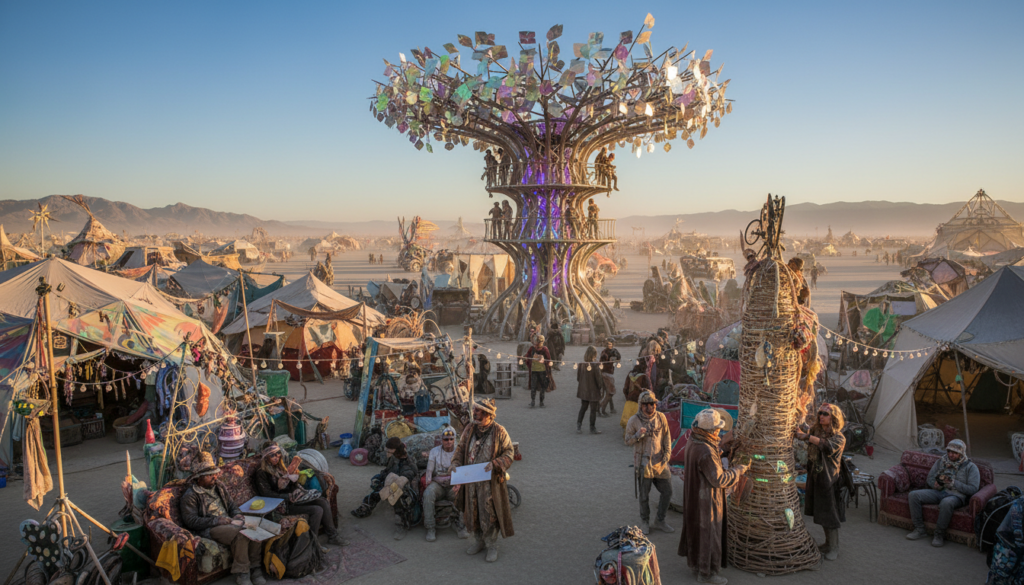
Neighborhood-style camps turn wide open playa into small, familiar zones where people meet and exchange care. Camps act as hosted experiences: pop-up kitchens, hands-on workshops, late-night dance floors, and simple hangouts that draw neighbors together.
What camps offer attendees
Camps provide gifts, gentle services, and programmed events. Expect shared coffee, free snacks, songs, and workshops rather than restaurant-style service or commercial offerings. Many camps invite participation instead of passive consumption.
Participation expectations
Attendees commonly pitch in: setup, teardown, hosting shifts, teaching a class, or helping build an installation. Contribution keeps operations running and spreads workload across people.
Volunteerism and consensus culture
Volunteerism fuels city life. Many people say working a shift or lending tools creates connection and meaning.
“Helping hands make this city livable and neighborly.”
Practical advice for first-timers
Choose joining a camp if you want structure and shared duties. Go solo if you prefer flexibility, but plan to offer participation. Match commitments to your energy; avoid overcommitting in hot, dusty conditions.
- Tip: Ask about shift expectations before committing.
- Tip: Offer a practical skill—cooking, mechanics, or logistics—when possible.
- Tip: Expect camps to create micro-communities that make a huge city feel neighborly.
For ideas on comfort and hosted experiences that echo camp life, see a short guide to glamping activities.
How tickets work and what to know before you buy
Buying entry starts a chain of planning: travel, gear, and shared duties for a week in the desert.
Sales, caps, and changing demand
Ticket programs run in phases: a main sale, special allocations, and low-income or volunteer pools. Rules change by year, so verify current info on official sites.
Participation caps exist due to permits, infrastructure limits, safety, and environmental protection. Some years were capped to protect the playa and support emergency services.
Demand shifts happen. Reports noted unsold tickets in 2024 for the first time since 2011. That data shows market softness some years and intense sell-outs in others.
Pathways, pitfalls, and budgeting
Pathways: main sale, directed allocations, and discounted options for eligible participants.
Pitfalls: scams, risky resale, and unofficial sellers. Always use official channels to reduce fraud risk.
| Feature | Typical path | Why it matters |
|---|---|---|
| Primary sale | Main online release | Best chance for priced tickets and group planning |
| Allocations | Theme camps, artists, volunteers | Keeps community projects funded and staffed |
| Low-income options | Discounted or grant-based | Improves access for more participants |
Remember: a ticket buys access, not comfort. Budget for gear, water, food, transport, and camp costs. Plan early and verify official channels before purchase.
What to expect day to day: the Burning Man experience
Days here follow a steady arc: calm mornings for exploration, slow afternoons spent managing heat and dust, and nights that often run very late.
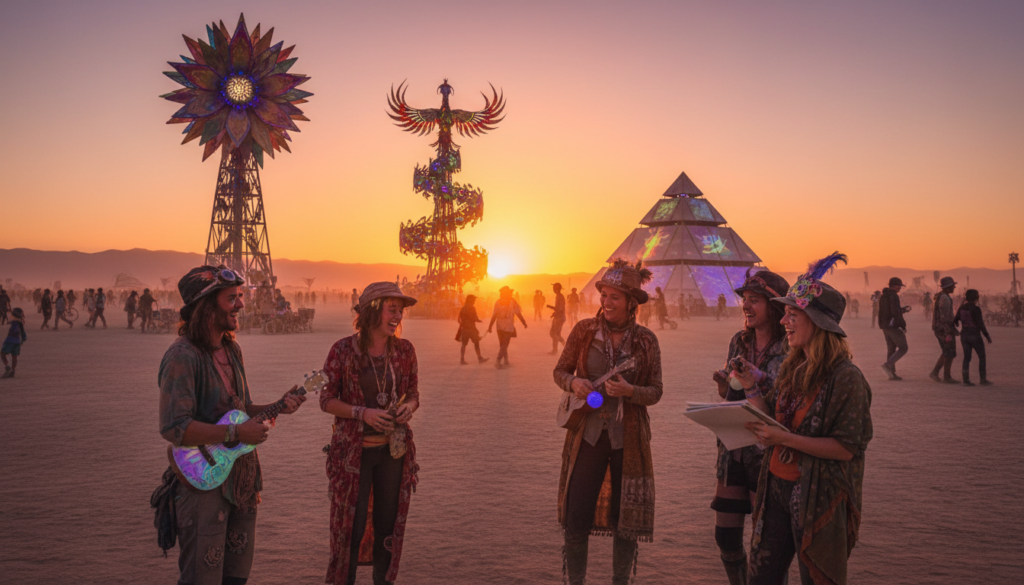
From sunrise art tours to late-night sound camps
Mornings reward early risers with quiet art tours and gentle installations. Light and dust make a soft stage for discovery.
Afternoons demand practical care: shade, hydration, and dust protection. Many people rest or do small tasks to preserve energy.
Nights shift the tempo. Sound camps, light sculpture, and pop-up stages keep the city alive until dawn. Schedules are self-directed, so surprises are part of the experience.
Center Camp and common gathering spaces
Center Camp acts as a hub for meetups, info, and low-key downtime. It’s an easy place to find friends, pick up printed updates, or join a short workshop.
Other shared spaces—libraries, shade structures, and art hubs—work the same way. They offer structure without formal programming.
Why first-timers often describe the playa as “home”
Many attendees call this place home because shared effort, gifting, and immediacy build quick bonds. Small acts—handing out water, fixing a bike, or teaching a skill—create belonging fast.
“The city felt like a neighborhood overnight—simple kindness made it feel real.”
Navigation is discovery-driven. Use announced meeting points, camp coordinates, and bike lights. Be flexible: plans shift with weather and chance encounters.
- Pace yourself. Rest and hydrate to avoid overwhelm.
- Pack basics. Shelter, layers, water, and dust masks support daily comfort.
- Stay curious. Much of the week unfolds by wandering and accepting invitations.
| Time of day | Typical activity | Practical tip |
|---|---|---|
| Morning | Art tours, quiet walks | Bring a light layer and sunscreen |
| Afternoon | Rest, camp tasks, heat management | Hydrate, seek shade, use dust protection |
| Night | Sound camps, light art, social events | Use bike lights, agree on meeting points |
Survival basics in the Nevada desert: radical self-reliance in real life
Being ready for sudden weather and long days turns stress into calm, usable time. Radical self-reliance becomes a checklist: you are responsible for water, food, shelter, and personal care.
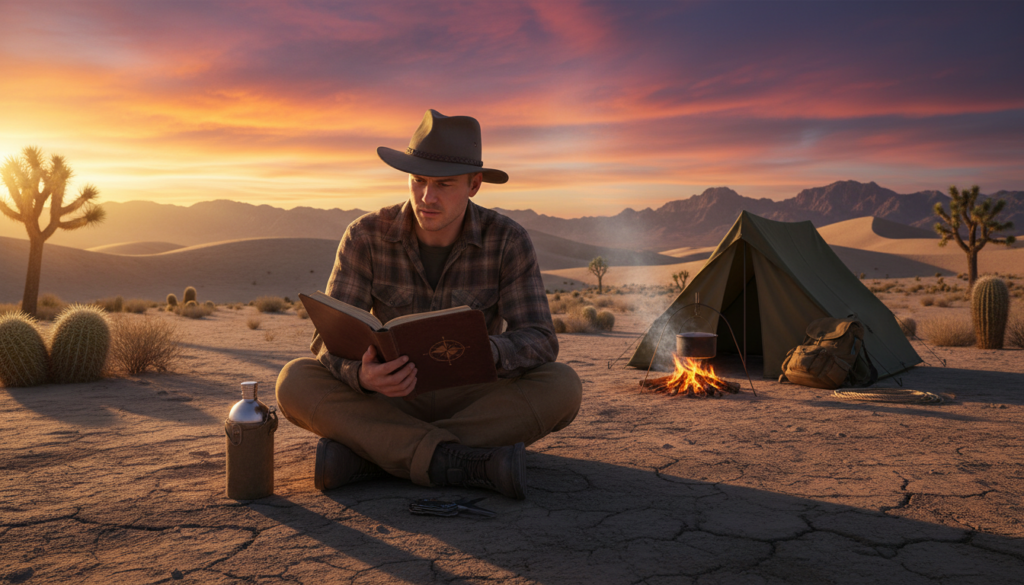
Essential packing: water, shelter, food, and dust protection
Water: Store enough for drinking and emergencies. Plan daily consumption and reserve extra for heat or delays.
Shelter: Bring shade that anchors against wind and a sleeping setup rated for cold nights. Secure ties and sand anchors matter in a windy playa.
Food & protection: Pack calorie-dense, nonperishable food and reliable dust gear: goggles, N95-style masks, and sealed containers.
Heat, cold nights, and whiteouts: planning for extreme conditions
Hot afternoons and cold nights demand layers. Use breathable fabrics by day and insulated sleep systems at night.
Whiteouts and heavy dust can arrive fast. Protect eyes and lungs, stop movement, and secure loose items until visibility improves.
Communication realities: radio info sources and limited service during disruptions
Cell service can fail during weather emergencies. Plan meetup points and printed notes before you leave camp.
Write down these radio channels as backup: BMIR 94.5 FM and GARS 95.1. They broadcast official updates and emergency data when other systems falter.
“Over-prepare for basics so you can say yes to spontaneous art and community moments.”
| Need | Practical item | Why it matters |
|---|---|---|
| Water | Daily liters + 25% reserve | Prevents dehydration during long daytime heat |
| Shelter | Wind-rated shade, sleeping insulation | Handles heat, cold nights, and whiteouts |
| Dust protection | Goggles, N95 mask, sealed storage | Protects eyes and lungs in heavy dust |
| Communication | Written meetup plan, FM radios | Works when cellular service is limited |
Final note: The black rock desert and nevada desert can challenge plans, but good prep turns hazards into manageable parts of your experience. Keep extra supplies, review data sources, and expect to adapt with calm and curiosity.
Rules, safety, and civic responsibility on the playa
Clear site rules protect people, art, and fragile habitat while keeping emergency teams effective. These limits make creativity possible by keeping everyone safe and preserving access for future years.
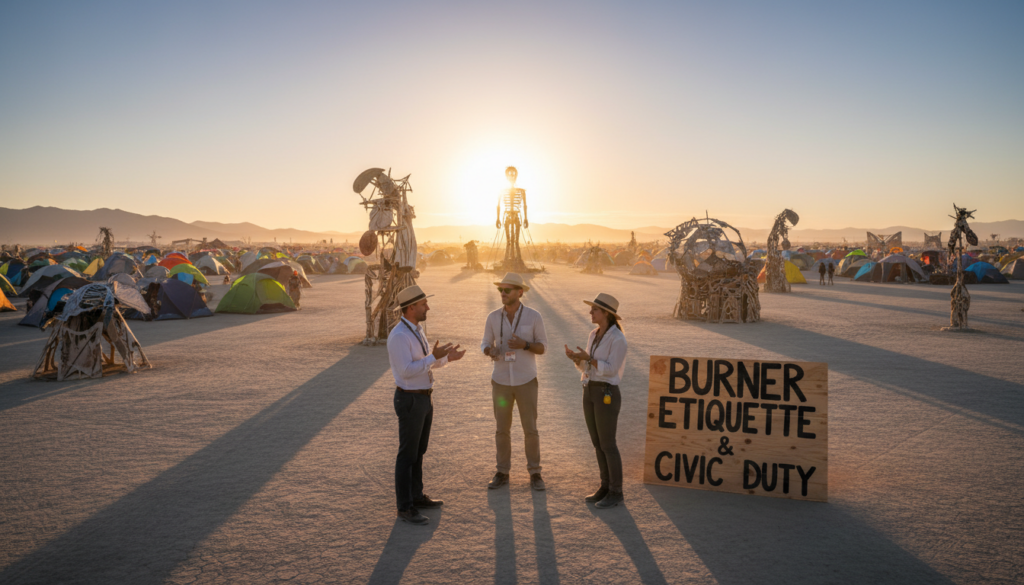
Driving and mobility limits
Speed is limited to 5 mph across camp areas to protect walkers and cyclists. Driving is allowed only for approved service rigs and inspected art vehicles.
This rule reduces accidents, helps emergency response, and keeps dust down. Stick to marked roads and yield to foot traffic.
Fire safety and approved burns
All burns must happen on approved burn platforms with safety plans. Approved crews coordinate permits, clear zones, and supervise every controlled burn.
No fireworks and no open, unapproved flames. These bans prevent accidental injury and uncontrolled burning of art pieces.
Trash fence and Leave No Trace culture
The temporary perimeter trash fence runs roughly 9.2 miles and stands about four feet high. It catches wind-blown debris and shows how seriously cleanup is taken.
Leave No Trace is civic responsibility in action: remove MOOP, pack out what you pack in, and respect sensitive areas.
“Rules are not limits on imagination; they are the conditions that let creativity thrive safely.”
| Rule area | Key rule | Why it matters |
|---|---|---|
| Mobility | 5 mph; approved vehicles only | Protects pedestrians and enables emergency access |
| Fire | Burns on approved platforms; no fireworks | Prevents uncontrolled burning and injuries |
| Animals & items | No pets; banned hazardous items | Protects wildlife, visitors, and permits |
| Cleanup | Trash fence; MOOP removal | Keeps playa clean and preserves future access |
Enforcement blends Rangers, volunteers, and peer accountability. Consequences range from education to ejection for serious violations. Civic responsibility is part of participation—not optional.
Environmental impact and the “Leave No Trace” standard
A daily ritual of cleanup and care keeps this massive gathering from leaving a lasting mark on fragile ground.
MOOP, cleanup, and preventing debris in high winds
MOOP stands for Matter Out Of Place. It includes tiny bits: tape, glitter, twist ties, and food scraps. On a flat playa, wind spreads these small items far and wide.
Practical habits help: do daily sweeps, secure lightweight items, store trash in sealed containers, and tie down fabrics. Pack extra bags and gloves so cleanup becomes routine.
Burn scars, habitat concerns, and evolved practices
Past burns left visible scars on the surface. Now, approved burn platforms and tighter protocols aim to limit long-term damage. Safer burn planning reduces impact while keeping ritual intact.
The Black Rock Desert is public land with delicate soils and life. Practices have changed because stewardship supports permit approval and the event’s long-term success.
“Tiny debris matters more than you expect — prevention is community work.”
First-timers can help: pack low-waste gifts, secure gear against wind, and take cleanup seriously. For related tips on low-impact comfort, see a short guide on comfortable outdoor stays.
How Burning Man has changed: growth, media attention, and modern debates
Over decades, this gathering grew from a small, countercultural meetup into a high-profile event with global visibility. That growth reshaped infrastructure, expectations, and conversations among participants.
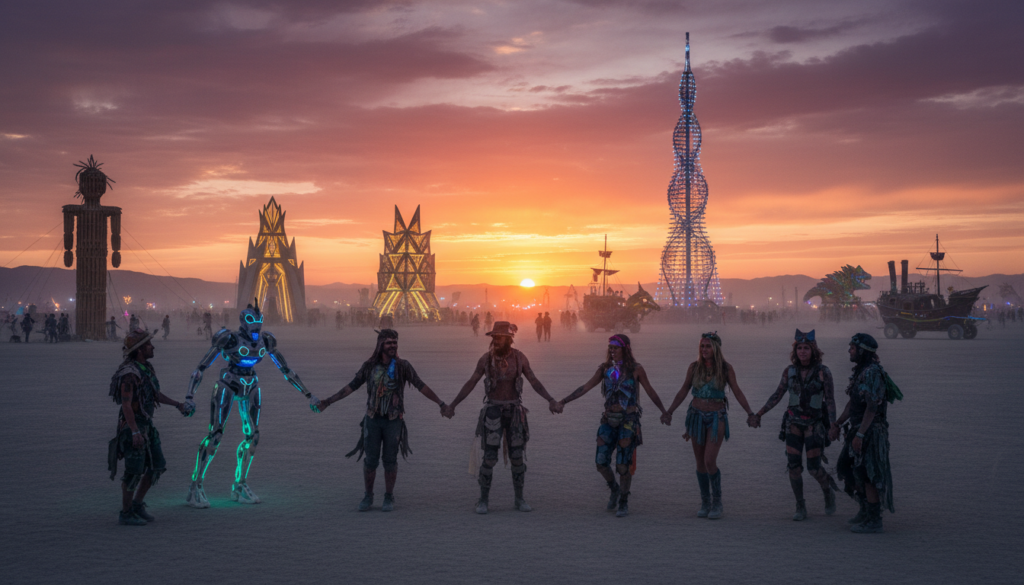
From underground roots to influencer culture and celeb visibility
Early years favored DIY projects, tight-knit crews, and low press. By 2019 NPR and other outlets noted a rising presence of influencers, celebrities, and tech wealth drawing attention to Black Rock City.
Result: More media coverage, more public scrutiny, and mixed feelings inside community circles. Some praise the new funding for large-scale art. Others worry about spotlight effects and commercialization.
Organization versus spontaneity
As participation climbed, organizers added safety protocols, permits, and city planning. Those rules keep large projects safe and protect the playa, yet they can feel at odds with spontaneous culture.
“Rules don’t kill creativity; they shape its safe practice.”
Most attendees accept that structure enables a bigger, safer Black Rock while individual acts of participation still power the experience.
Recent challenges facing the event
Weather emergencies, like the 2023 wet playa and subsequent lockdowns, showed how fragile logistics can be. Financial strains and fundraising needs reported in 2024–2025 add pressure on organizers.
Attendance shifts, including unsold tickets in some years, hint at changing demand and a community in transition.
- Then vs now: bigger scale, better services, and new debates.
- Media: more visibility, mixed community response.
- Reality checks: weather, finances, and evolving attendance matter.
In short: despite changes, core elements remain: Ten Principles, the rock desert setting, community-built art, and the participatory spirit that transforms time on playa into a memorable, often profound experience for many participants.
Conclusion
A weeklong, participant-powered gathering in Nevada turns visitors into contributors and makers. In one tight summary: this burning man festival is a participant-created desert event shaped by the Ten Principles and run by a nonprofit organization.
Key takeaways: it takes place in Black Rock City, centers on contribution and radical self-reliance, and typically runs around Labor Day. It differs from typical festivals because there are no headliners, a gift economy replaces commerce, and decommodification guides interactions.
Use this guide as a planning framework—especially sections on survival basics, safety, tickets, and Leave No Trace. Next step: consult official resources, join regional groups, and start preparing early if you plan to attend this event.
Many people keep the art, community, and meaning they find here long after they leave.