
Short answer: The official dates are August 30, 2026 to September 7, 2026. For context, the most recent completed season ran August 24, 2025 to September 1, 2025.
What these dates mean: The listed week marks the core event at Black Rock City in Nevada. Many people arrive early for build and stay late for teardown, so plan extra travel and time off around the core week.
Burning Man is a temporary city and a participatory gathering focused on community, art, self-expression, and self-reliance. It differs from a typical music festival, which affects ticket needs, camp planning, and supplies.
In this guide, you’ll find official date verification, location and coordinates, how long the event feels, key moments like the burns, and practical essentials: tickets, camps, weather, packing, and Leave No Trace. For final updates, check burningman.org.
Key Takeaways
- Event dates: August 30, 2026–September 7, 2026; past season: August 24, 2025–September 1, 2025.
- Plan extra days for arrival, build, and exodus beyond the core week.
- It’s a temporary city, not a typical festival—bring supplies and join the community.
- Core topics ahead: tickets, camps, weather, packing, and Leave No Trace.
- For final confirmations and alerts, use burningman.org as the source of record.
Burning Man dates at a glance for the most recent event seasons
Plan your calendar around the core Black Rock City dates to avoid last-minute travel headaches.
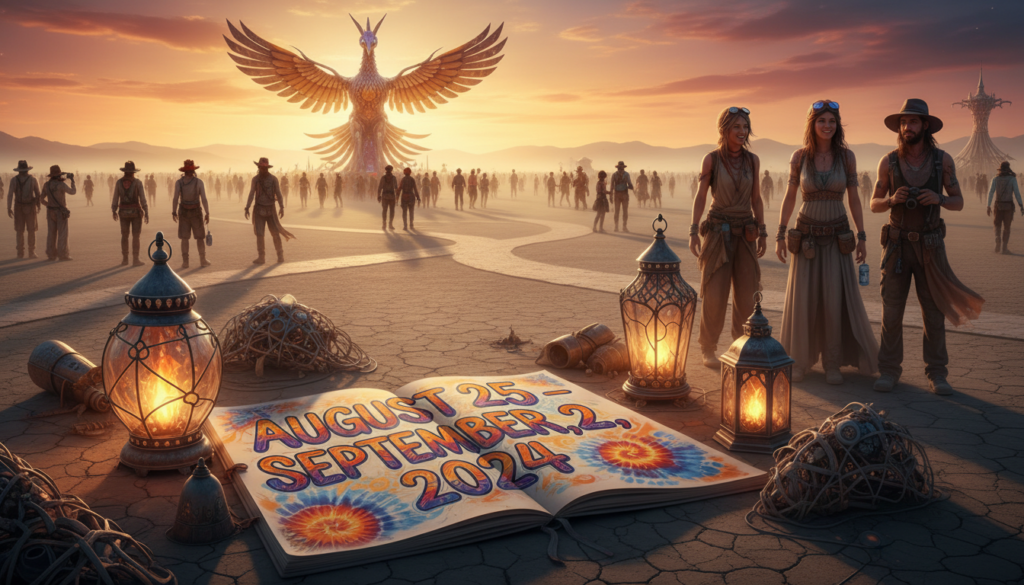
Official 2026 event dates
Begins: August 30, 2026
Ends: September 7, 2026
Most recent completed event dates
2025: Opened August 24, 2025 — closed September 1, 2025.
Why dates cluster around late August and Labor Day
Timing is tradition and logistics: The event spans the nine days leading into and including Labor Day, so travel volumes spike and many attendees take PTO.
- Confirm exact dates before booking flights; the holiday’s calendar shift can move the window slightly.
- Treat the posted dates as the core event; budget extra days for arrival, setup, and exodus.
- Use published data from official calendars to align plans and compare year-to-year timing.
For practical trip ideas and nearby stays, see our glamping guide for alternatives before and after the event.
When is burning man this year
The shortest route to official dates and updates: visit burningman.org and open the event calendar under the Burning Man Project listings. The page shows posted Begins and Ends dates and any alerts or schedule changes.
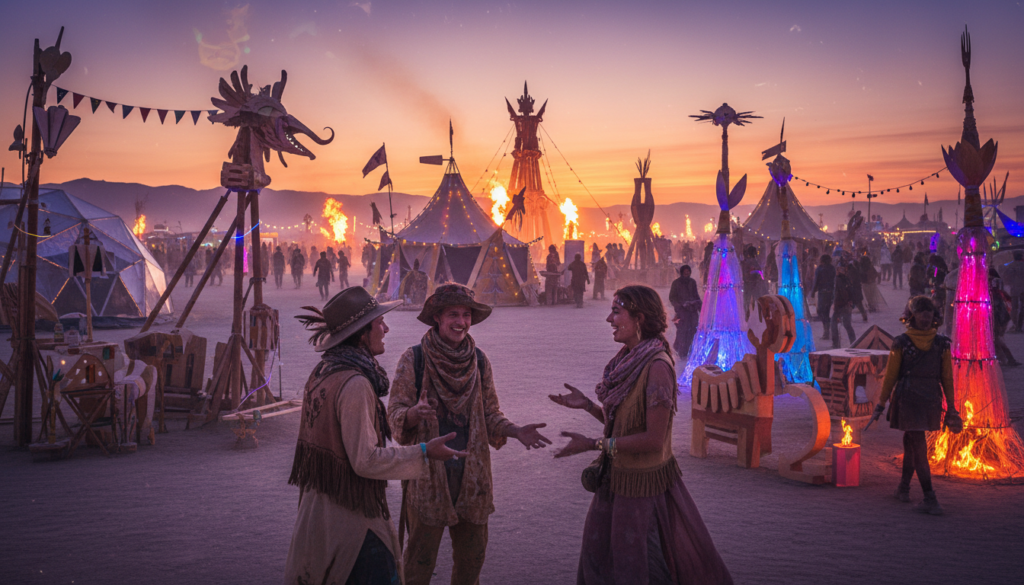
How to confirm dates on burningman.org
Look for the event page heading and the calendar block. Official notices, travel advisories, and gate times appear there first. Rely on that source for any last-minute changes instead of third-party posts.
What “begins” and “ends” mean on paper versus on the ground
“Begins” marks the official event window for attendees and staff. Many camps arrive earlier for build week and setup, so your practical arrival may be before the posted date.
“Ends” shows the close of core operations. In reality, teardown and exodus can extend traffic and camp duties for multiple days. Gates and road conditions may add hours to travel, so add buffer time when you plan.
- Use the official site for the latest information.
- Expect build week to affect early arrival plans.
- Plan extra hours for exit day to avoid delays.
Tip: Treat logistics as part of the journey — careful timing protects your trip and helps preserve the event for everyone.
Where Burning Man happens: Black Rock City in the Black Rock Desert
Each late-summer season, a temporary city appears on the flat salt of the Black Rock Desert. That city, called Black Rock City, is built on the playa and disappears after cleanup.
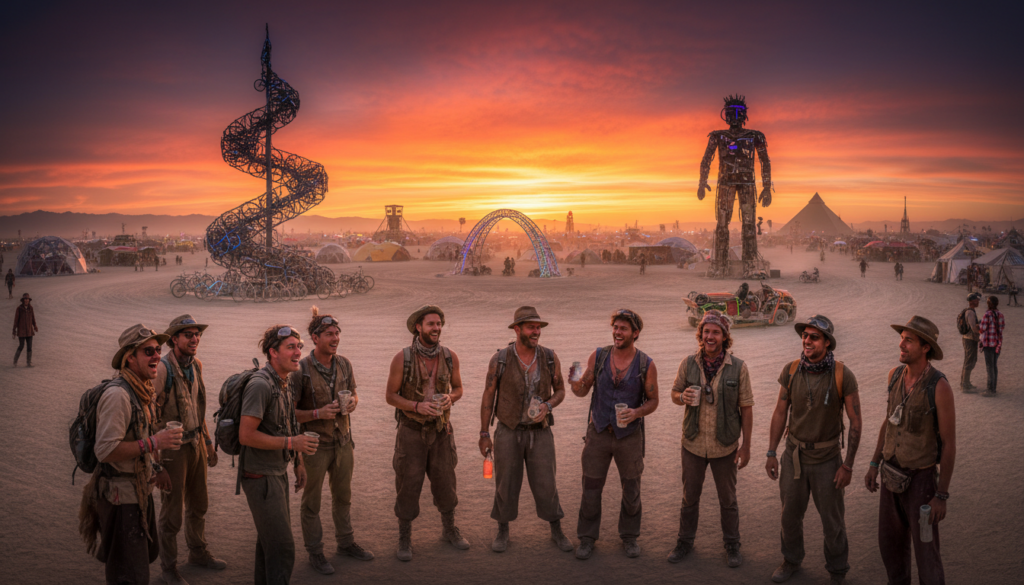
Location and jurisdiction
Venue: Black Rock City, on public playa in Pershing County, Nevada. The remote setting means limited services and sparse infrastructure. Plan as if you are off-grid.
Exact coordinates and mapping
Coordinates: 40.7869°N, 119.2042°W. Use these for GPS waypoints and route planning.
Getting there
Most attendees fly into Reno, then drive roughly 100 miles (160 km) north-northeast toward the playa. Common gateway towns and access roads lead from Reno to the event perimeter.
“Treat travel and supplies like part of the event—services can be limited and cell coverage may vary.”
| Feature | Detail | Notes |
|---|---|---|
| Location | Black Rock Desert, Pershing County | Remote federal land; permits and rules apply |
| Coordinates | 40.7869°N, 119.2042°W | Use for GPS and mapping |
| Nearest city | Reno, NV (~100 miles) | Primary gateway for flights and supplies |
History note: The event began on Baker Beach in San Francisco before the move to Nevada in 1990, where the desert setting shaped the culture.
How long is Burning Man and what “week-long” really looks like
Nine packed days shape the core festival rhythm, but many attendees plan extra time around the playa.
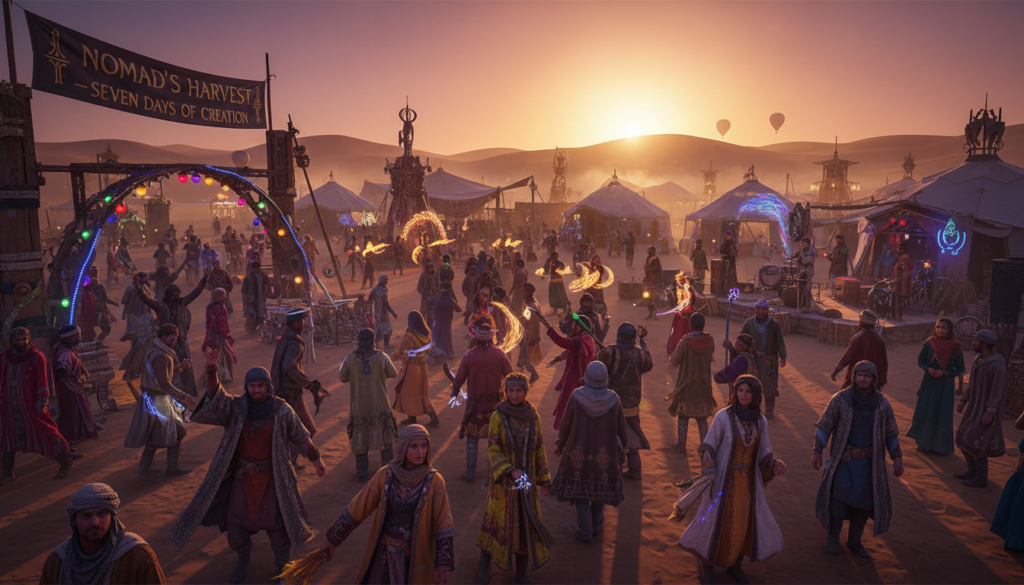
Nine days leading up to and including Labor Day
The official span covers nine days that culminate on the holiday. Camps often arrive before build week and stay after teardown, so treat that nine-day block as the core, not the complete trip.
What to expect by day vs. night in the desert
Days are bright and hot. Most activity focuses on shade, hydration, and art walks. Early days feel like setup and settling in. Mid-period offers nonstop exploration and projects.
Nights cool quickly and can be chilly. Lighting, layers, and closed footwear make nights comfortable and safe. Late week intensifies as major rituals and burns draw crowds.
- Early days: arrival, camp setup, and gradual discovery.
- Midweek: peak exploration, performances, and art.
- Late week: big gatherings and ritual moments near the main burns.
The ritual of burning appears in the schedule, but the full experience includes quiet moments, small gifts, and community projects beyond headline acts. Your arrival timing shapes the role you play, especially if your group handles build duties or art setup.
| Phase | Typical focus | Day conditions | Night conditions |
|---|---|---|---|
| Arrival / Build | Camp setup, tools, logistics | Hot, dusty; shade needed | Cool; bring layers |
| Core Days | Art, workshops, exploration | Warm to hot; stay hydrated | Active social scene; lights on |
| Final Days / Exodus | Rituals, teardown, exit planning | Variable; traffic impacts travel | Chilly; safe packing and rest |
For practical pre- or post-playa stay ideas, consider nearby options in our glamping guide.
The event’s key moments: the burns and the ritual timeline
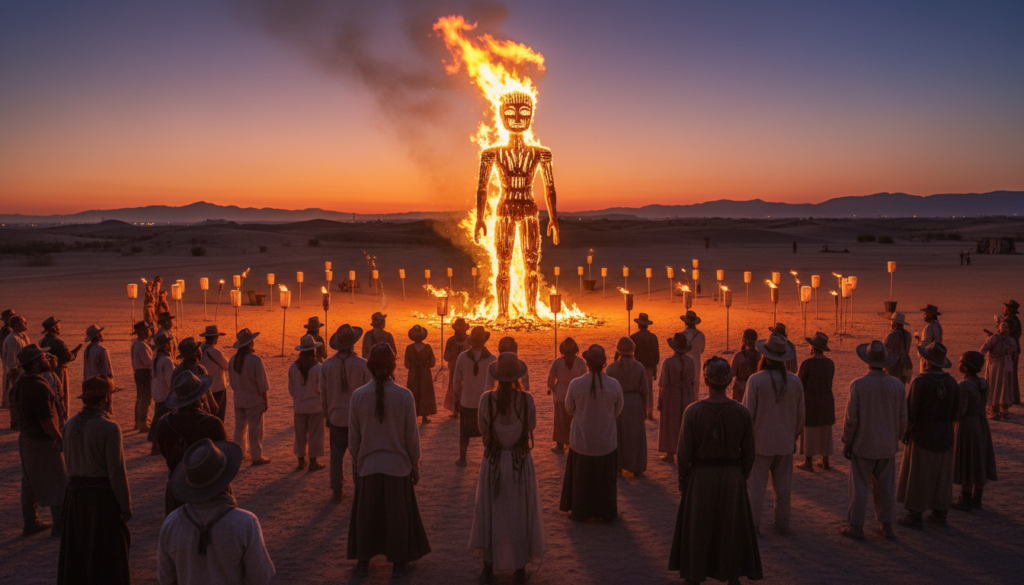
Signature nights center on large, communal rituals that shape the schedule. The major effigy burn takes place on the Saturday evening before Labor Day, so plan core nights around that highlight.
What the effigy represents: Culturally, the figure acts as a shared focal point and a ritual of transformation. It offers a moment for release and collective attention without heavy mystique, making it accessible for newcomers and long-time participants alike.
The Temple and quiet reflection
The Temple serves as a separate emotional space. Many people use it for remembrance, notes, and private reflection. It feels quieter than other art and often draws intimate gatherings rather than large crowds.
Burn platforms, rules, and safety perimeters
Any art that will be set alight must use an approved burn platform. Rules exist to protect the playa, staff, and structures. For participants, that means you’ll see designated burn areas and clear safety lines.
“Follow volunteer and fire-safety directions—those guidelines keep people safe and the event sustainable.”
Practical tips:
- Anchor your plans to the effigy burn night so you can choose where to stand and how to regroup with friends.
- Respect perimeter ropes and crew instructions; crowd control helps emergency access and fire crews do their work.
- Remember Leave No Trace: even spectacular fire art requires cleanup duties after the flame is out.
For related project ideas and pre-playa prep, check our DIY camp and decor guide.
What Burning Man is: community, art, self-expression, and self-reliance
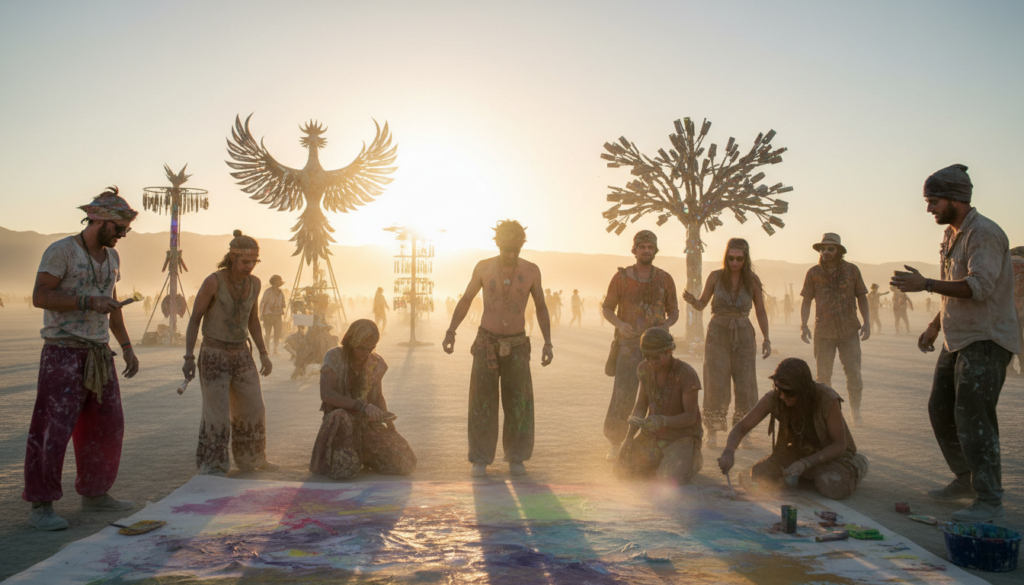
The desert gathering is a hands-on community built around art, self-expression, and self-reliance. It is not a concert with headliners; the city grows from what participants bring and do.
Why there are no headliners or traditional scheduled performers
The event purposely avoids booked top-line acts. That choice shifts attention to participant-created programming.
Instead of waiting for a scheduled set, people discover workshops, pop-up performances, and art by chance. Many of the most remembered moments are small and improvised.
Participation culture: you help create the city and the experience
Participation means more than attending. It can be hosting a tea circle, fixing a neighbor’s shade structure, or volunteering at a gate.
- Help a camp build a shade structure.
- Offer a workshop or lead a bike tour.
- Volunteer for operational roles that keep the city running.
People from many backgrounds converge and trade skills. The shared work builds a durable social fabric that extends beyond the desert into the wider world.
“Your experience depends on what you add and what you accept from others.”
Practical takeaway: pack tools, a can-do attitude, and time to help. The culture rewards creativity and practical care as much as spectacle.
The Ten Principles that shape Black Rock City culture
The ten principles act as a practical code that explains why the city feels different from most events. They help form daily behavior and set expectations for how people treat art, camps, and neighbors.
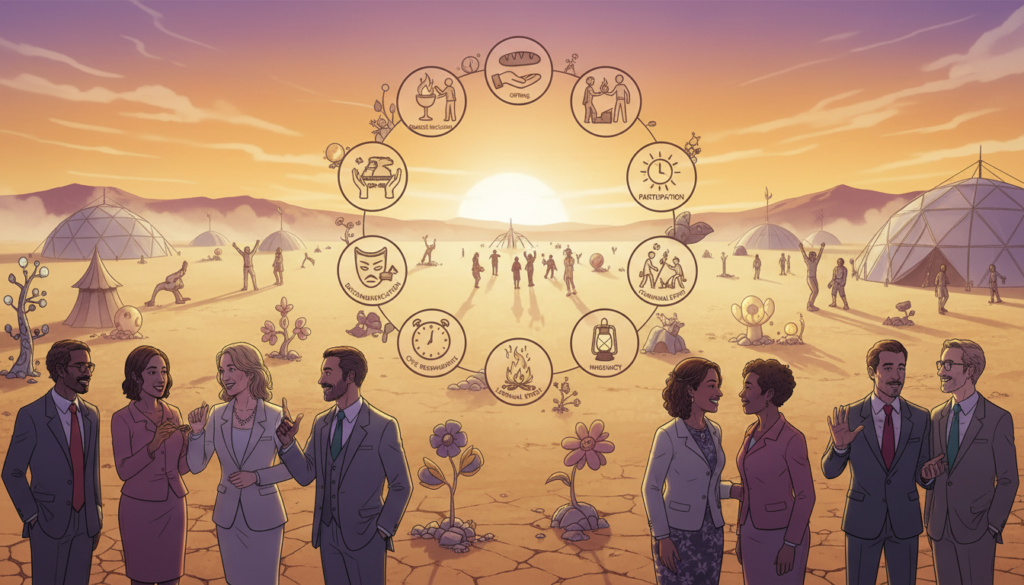
Radical inclusion, gifting, and decommodification
Radical inclusion welcomes newcomers and long-time participants alike. Gifting asks you to give without expecting anything back. Decommodification reduces branding and sales so shared experiences stay central.
Self-reliance and self-expression in practice
Radical self-reliance means bring water, shade, and tools. Radical self-expression encourages authentic costumes, art, and ideas. Together they help you thrive and contribute.
Communal effort, civic responsibility, and participation
These principles explain how the city works. Help build shade, follow safety rules, and pitch in. Participation keeps services running and keeps the community safe.
Leaving No Trace and immediacy
Leaving No Trace asks every camp to remove MOOP and care for the desert. Immediacy asks you to be present—listen, connect, and act with attention.
| Group | Core idea | On-site action |
|---|---|---|
| Inclusion & Gift | Welcome and share | Offer water or shade |
| Self-reliance | Bring essentials | Pack tools and layers |
| Leave No Trace | Protect the playa | Daily MOOP checks |
“The ten principles, first named by Larry Harvey in 2004, form a living guide for how the city operates.”
Tickets and entry: how Burning Man ticketing typically works
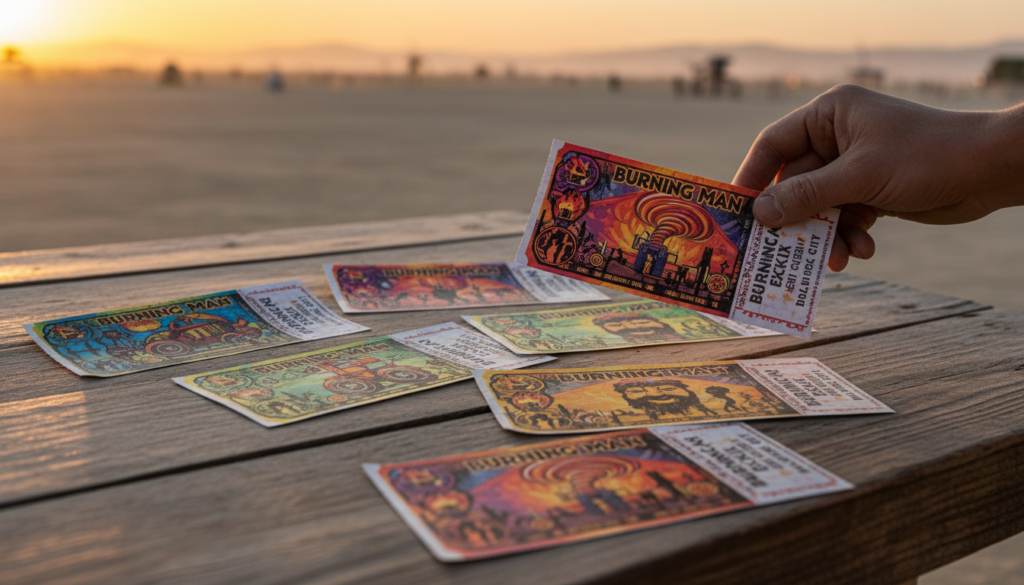
Securing entry requires preparation: multiple sales rounds, verified accounts, and quick checkout steps help. Sales often happen in phases run by the Burning Man Project on the official site. Demand can make some drops feel competitive.
Understanding sales phases and why demand moves fast
There are usually several sale phases: pre-sales, main sale, and smaller releases. Some tickets sell out in mere hours, so have payment and account details ready.
Official channels to monitor
Only use official sales, verified transfers, and the sanctioned waitlist. Resale sites carry risk. The Burning Man Project posts updates and transfer windows on burningman.org.
Budgeting beyond the ticket
Plan lodging, travel, vehicle prep, and camp fees. Bring extra water and food for full self-reliance.
“Many first-timers find success through persistence, community help, and following official processes.”
| Item | Typical cost | Why it matters | Notes |
|---|---|---|---|
| Ticket | Varies by phase | Entry right; requires registration | Buy only through official sale |
| Travel & vehicle | $100–$700+ | Fuel, repairs, parking | Plan extra for long lines and delays |
| Camp supplies | $50–$500+ | Shared infrastructure and amenities | Coordinate costs with camps |
| Water & food | $50–$200 | Essential for safety | Pack for full self-reliance |
Black Rock City essentials: camps, neighborhoods, and how the city runs
Black Rock City uses a clear grid so emergency crews can find any address quickly. Knowing the layout makes meetups and logistics easier and keeps everyone safer.
How neighborhoods and camps shape life on playa
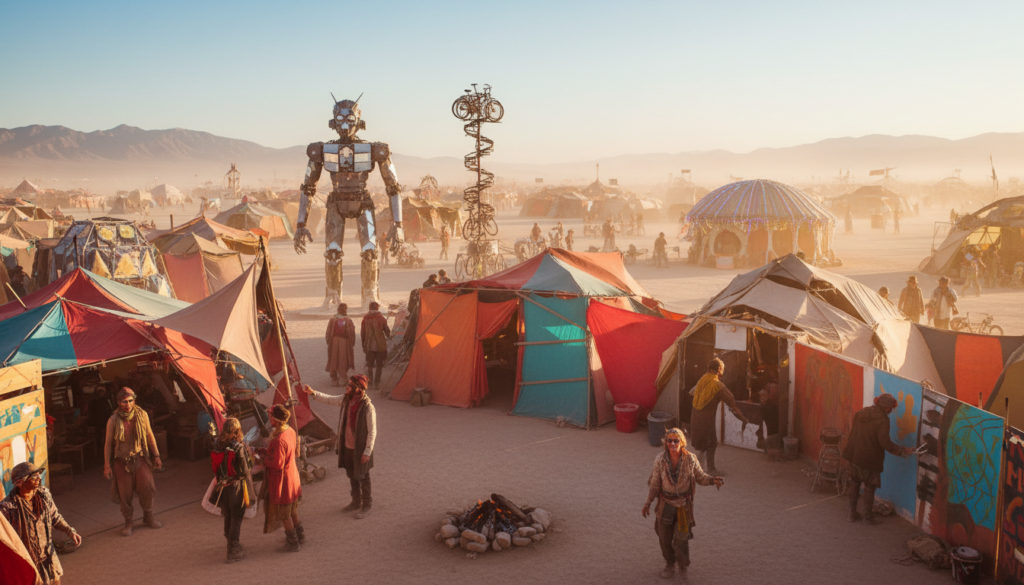
The city breaks into neighborhoods and blocks. Each cluster hosts a mix of small camps and larger theme offerings.
Theme camps act as anchors. They offer coffee, workshops, art, and shade. Joining a camp brings support and duties. Expect shared chores and scheduled shifts.
Why addresses matter
The grid gives every camp an address used for meetups, lost-and-found reports, and emergency routing. Share your camp location with friends and pin it in your phone.
On-the-ground rules that keep people safe
Speed limit inside the city is 5 mph. Driving is banned for most vehicles; only approved mutant vehicles and service rigs move through the lanes. These rules protect pedestrians and the steady flow of the city.
“Respect traffic rules and watch for bikes—many trips are short, and slow speeds save lives.”
- Carry a physical note of your camp address in case your phone dies.
- If you get separated, head to a named theme camp or the nearest major intersection.
- Be a good neighbor: control noise, keep your area tidy, and pitch in on shared tasks.
Perimeter and Leave No Trace: a temporary trash fence rings the site to catch windblown debris. Camps must do daily MOOP checks and pack out everything to protect the playa.
For tent tips and sleepover ideas before or after the event, see our bell tent sleepover.
Art on the playa: installations, performances, and interactive experiences
Art on the playa unfolds as surprise encounters: giant sculptures, moving stages, and playful installations that invite touch and curiosity.
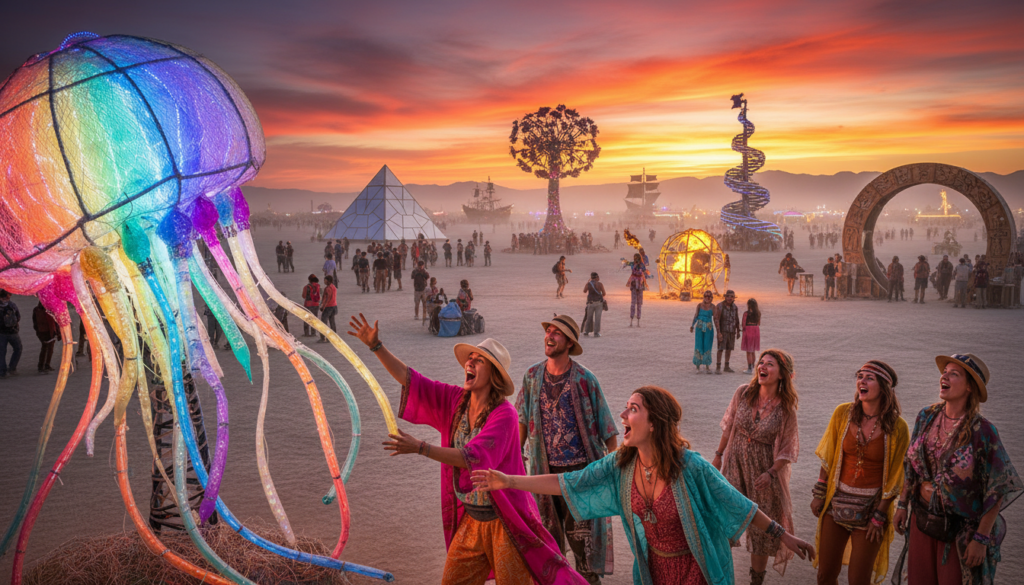
Large-scale pieces range from walk-through buildings to kinetic machines and art cars. Many works ask you to become part of the form rather than stand apart. That makes the whole experience feel active and immediate for participants.
Large sculptures and experimental, hands-on work
Unlike a museum, many pieces encourage interaction. Touch, climb, and co-create are common when the artist invites it. Expect to discover quiet, reflective spaces next to loud, mechanical sculptures.
Support for creators: honoraria and grants
Burning Man Arts funds ambitious projects through honoraria and grants. A Template Grant specifically helps build the Temple. These programs let large, risky ideas reach Black Rock City.
Art beyond the playa
Some works live on after the event. Notable examples in Reno include the Space Whale and BELIEVE downtown at First and South Virginia. Such pieces extend the festival’s cultural footprint into the nearby world.
“Seek installations at dawn or after dark—lighting and quiet change how a piece speaks.”
- Visit at sunrise or sunset for softer light.
- Revisit favorites at night for dramatic illumination.
- Pace yourself; the scale and density reward slow exploration.
Mutant vehicles and art cars: moving art in Black Rock City
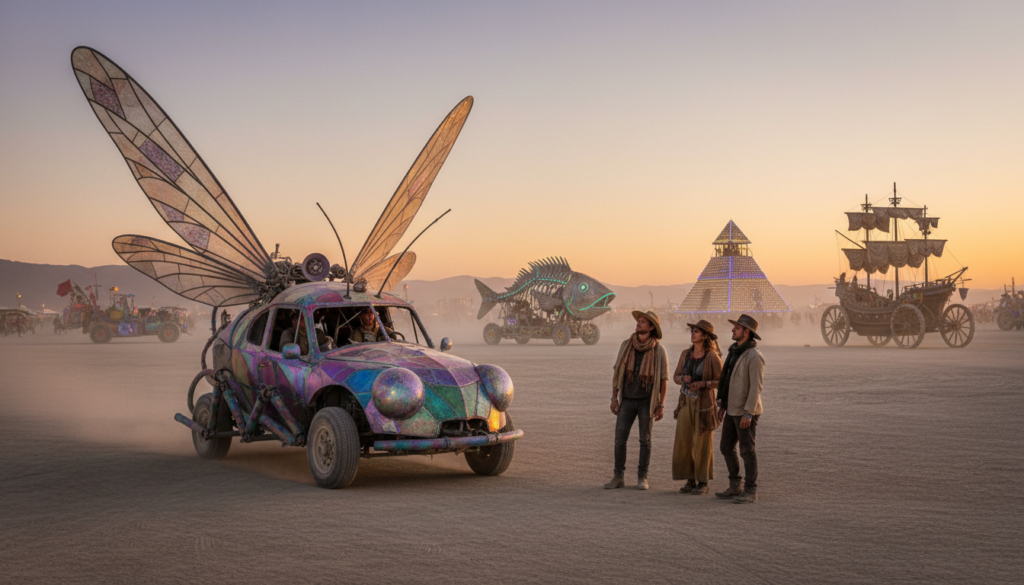
Nighttime parade routes and slow-moving mobiles give the playa a rolling gallery of light and sound.
What qualifies as an approved mobile art vehicle
Mutant vehicles and art cars are ordinary vehicles transformed into mobile artworks. They serve as moving installations and help people explore the city, especially after dark.
An approved vehicle meets event rules: visible lighting, secure platforms, and documented safety features. Approval means it can operate inside the city; normal cars cannot.
Safety standards and responsible operation on the playa
Rules exist to protect pedestrians and cyclists. Driving inside the city is generally banned, except for approved mutant vehicles and service rigs. The speed limit is 5 mph.
Operators must ensure clear visibility, sober driving, and safe boarding procedures. Respect for foot traffic and dust conditions is essential for safe movement.
“Slow, visible, and courteous operation keeps the mobile art scene alive and safe.”
- Expect art cars to travel slowly and use bright lighting at night.
- Keep clear of ramps and moving parts unless the crew invites you aboard.
- Do not treat a mutant vehicle like a taxi; many are participatory art pieces, not rides.
Why these rules matter: Black Rock City has dense foot traffic, low visibility in dust, and many cyclists. Rules reduce accidents and protect both people and art.
| Topic | Requirement | Why it matters |
|---|---|---|
| Approval | Event-signed clearance and safety checklist | Ensures vehicles meet playa safety standards |
| Speed | 5 mph max inside city | Protects pedestrians and bicycles |
| Visibility | Lights, flags, and reflectors | Reduces accidents in dust and night conditions |
| Behavior | Sober operation and crew training | Maintains safety and respect for participants |
When you encounter art cars, wait for an invitation and follow the crew’s instructions. Treat mutant vehicles as part of the participatory art ecosystem—appreciate them, respect boundaries, and help the city stay safe.
For related travel and restful options off-playa, consider a nearby beach glamping retreat before or after your trip.
Weather and conditions: dust, heat, cold nights, and wet-playa realities
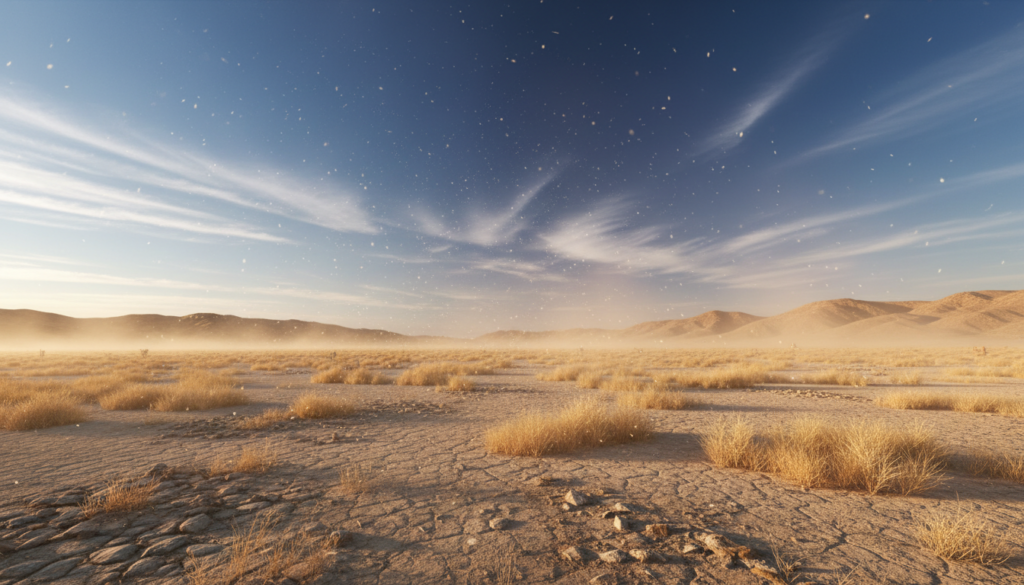
Playa weather can change fast, turning bright sun into a dust-white blur in minutes.
Prepare for hot daytime heat and sharp drops at night. Short shifts like these shape gear and timing choices.
Dust storms and whiteouts: visibility, goggles, and masks
Dust can reduce visibility to a few feet. Goggles and a well-fitting mask are essential.
Treat them as primary safety gear, not extras.
Rain and flooding impacts: what a “no driving” can mean on-site
Heavy rain can turn the playa slick and force a “no driving” lockdown until surfaces dry. That happened in 2023 and caused long delays.
Expect limited vehicle movement and plan arrival or exit buffers of several hours.
Staying informed during changing conditions: BMIR and on-playa updates
Get reliable information from BMIR 94.5 FM and Gate Information Radio Station (GARS) 95.1. Organizers broadcast updates about road status, resource guidance, and safety alerts.
“Conserve water, food, and fuel if gates pause movement—staff will advise on next steps.”
Practical action plan:
- Secure shade and anchor tents before high winds.
- Protect electronics in sealed bags and keep spares dry.
- Conserve water and fuel—delays can last hours.
- Avoid driving on wet playa to prevent damage and getting stuck.
| Condition | Immediate risk | Quick response |
|---|---|---|
| Dust storm / whiteout | Poor visibility; eye and lung irritation | Wear goggles and mask; shelter until it eases |
| Day heat | Dehydration, sunburn | Shade, hydrate hourly, electrolyte plan |
| Cold night | Hypothermia risk; discomfort | Layer clothing; insulated sleeping gear |
| Rain / wet playa | No driving; extended delays | Stay put; conserve supplies; follow radio updates |
Weather will be a part of your trip. Stay flexible, watch BMIR and GARS for real-time information, and build extra hours into travel plans so changes do not become crises.
What to bring for a self-reliant Burning Man experience
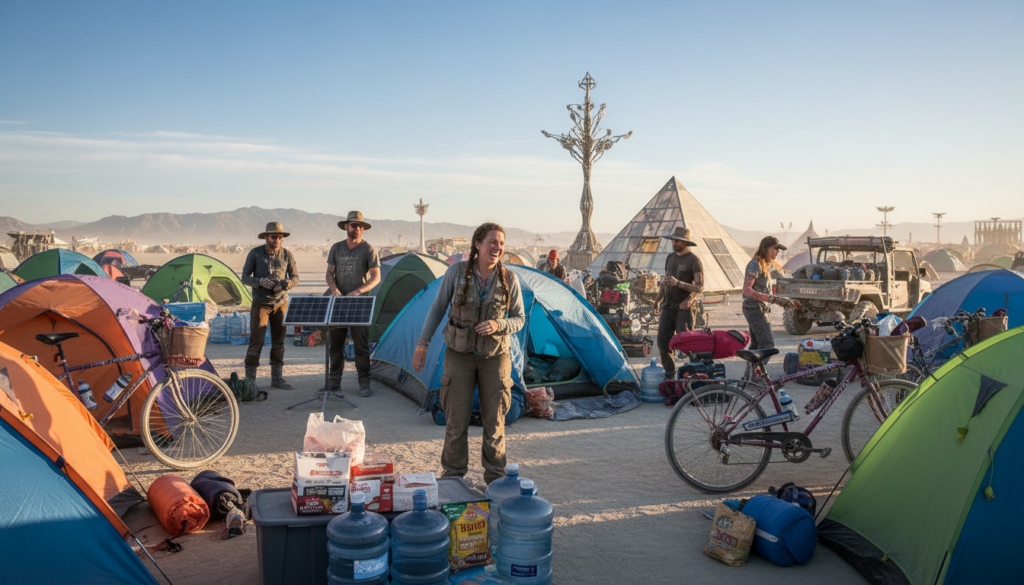
Pack your essentials around survival basics first, then add anything that makes your desert camp feel like home.
Water, food, shade, and shelter basics
Water: plan at least 1.5 gallons per person per day and carry a multi-day buffer for delays. Store water in sealed, marked containers and rotate supplies during extended waits.
Food: choose dense, no-cook options plus small stoves for camps. Pack extra meals for unexpected holds during exit.
Shade and shelter: bring wind-ready structures, strong anchors, and repair tape. A secured awning keeps dust and sun off gear and neighbors.
Clothing: utility meets fantasy
Layer for extremes: light, breathable pieces for hot afternoons and warm shells for cold night hours. Include broken-in boots, a wide-brim hat, and UV protection.
Add a costume or two for playful expression, but keep functional items within easy reach.
Power, lighting, and navigation for long desert nights
Lighting: headlamps, bright bike lights, and warm camp lanterns make the night safe and social. Carry spare batteries and a solar or battery bank for phone charging.
Navigation: map your camp, pick clear landmarks, and set a simple meeting point so people can reconnect after dark. A glow-flag or bike light at your address helps others find you.
“Being prepared is an easy way to make your journey smoother and to be a helpful part of the community.”
| Item | Why | Tip |
|---|---|---|
| Water | Survival | Store sealed, label dates |
| Shade | Heat and dust protection | Anchor with sandbags |
| Lights | Visibility at night | Headlamp + bike lights |
Leave No Trace in practice: protecting the Black Rock Desert
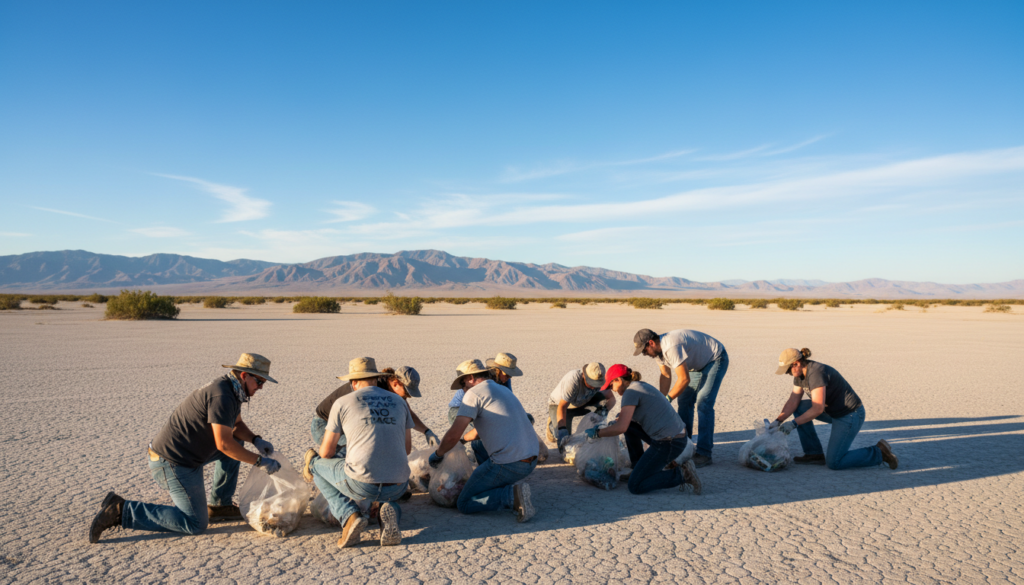
Keeping the Black Rock Desert clean takes steady effort, not a last-minute push. Leave No Trace is a practical daily practice that protects the playa for future seasons.
MOOP basics and daily cleanup habits for camps and art crews
MOOP stands for Matter Out Of Place. It covers everything from glitter to small rope scraps.
Run short MOOP sweeps twice a day. Use hand brooms, sticky rollers, and clip-it sticks to catch small debris before it travels with wind.
Assign rotating MOOP roles so cleanup feels easy and shared. Simple habits keep camps tidy and lower final-day workload.
Trash, gray water, and ash handling after burns
Plan trash containers that survive dust storms: rigid bins with tight lids work best. Label bags and pack trash out—do not rely on on-playa disposal.
Gray water must be contained and hauled off. Use sealed tanks or heavy-duty buckets; do not dump into the desert.
For art that involves fire, use approved burn platforms and follow project-specific cleanup rules. Collect ash and charred remnants into sealed containers and remove them with other waste.
“Daily care keeps the playa healthy and the culture strong.”
- Daily MOOP sweeps and sticky-mat entrance zones for camps.
- Sorting stations: recyclables, landfill, and sealed ash/char bins.
- Secure loose items each evening; tie down banners and shade.
- Designate teardown roles so one person is not left with all tasks.
| Issue | Best practice | Why it matters |
|---|---|---|
| MOOP | Twice-daily sweeps; sticky tools | Prevents small debris from spreading across the desert |
| Trash | Rigid bins, sealed bags, pack out | Wind-proof storage prevents loss and contamination |
| Gray water | Contain and haul off in sealed tanks | Protects playa ecology and follows event rules |
| Ash & burn residue | Use approved platforms; collect and containerize residue | Keeps art compliant and reduces MOOP after burns |
Burning Man history and why it matters to today’s participants
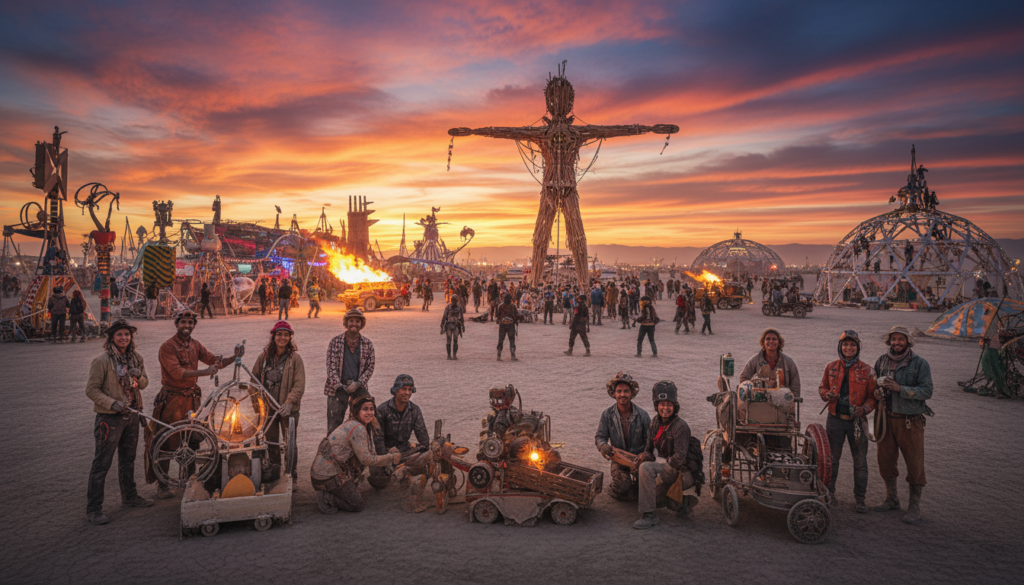
A small beach ritual grew into a planned, temporary city that shapes how people arrive, create, and care for the playa.
From Baker Beach to the Black Rock Desert
On June 22, 1986 a modest gathering at Baker Beach in San Francisco—led by Larry Harvey, Jerry James, and John Law—sparked a cultural experiment rooted in the Cacophony Society. By 1990 the first desert burn, tied to Zone Trip No. 4, moved the event to the Black Rock playa and changed scale and logistics.
Growth, organization, and the present day
Over the following years the project evolved into Black Rock City, requiring formal permits, safety systems, and a civic grid. Black Rock City LLC formed in 1999. In 2013 the nonprofit Burning Man Project took stewardship.
- Ten Principles (2004) codified behavior and culture.
- Attendance reached about 78,850 participants in 2019, showing why planning matters.
- Today’s practices link tradition to practical safety and stewardship.
| Milestone | Year | Impact |
|---|---|---|
| First Baker Beach event | 1986 | Origin of ritual and creative spark |
| Move to Black Rock | 1990 | Scaled logistics; temporary city form |
| Black Rock City LLC | 1999 | Formal organization for operations |
| Burning Man Project | 2013 | Nonprofit stewardship and permits |
Why history helps participants: knowing how traditions and rules began gives newcomers context for participation and care. For pre- or post-playa stays, consider relaxing options like glamping on the water.
Conclusion
Secure the official dates, then add buffer days for arrival, build, and exodus so the week does not feel rushed.
Quick prep checklist: watch ticket channels and sale windows, confirm camp plans, pack for playa weather, and practice Leave No Trace habits.
What makes the festival unique: no headliners, a participatory culture, and a temporary Black Rock City that becomes a creative home for participants and people from many places.
Pick a theme for your prep — self-reliance, gifting, art, or community service — to guide choices and reduce overwhelm. Next steps: bookmark burningman.org, monitor official ticket updates, coordinate with camps early, and draft a desert-ready packing plan.
Mindset: stay flexible, help those around you, and treat the city and art with respect. For publishing, keep short paragraphs, clear labels, and breathing space for skimmability.