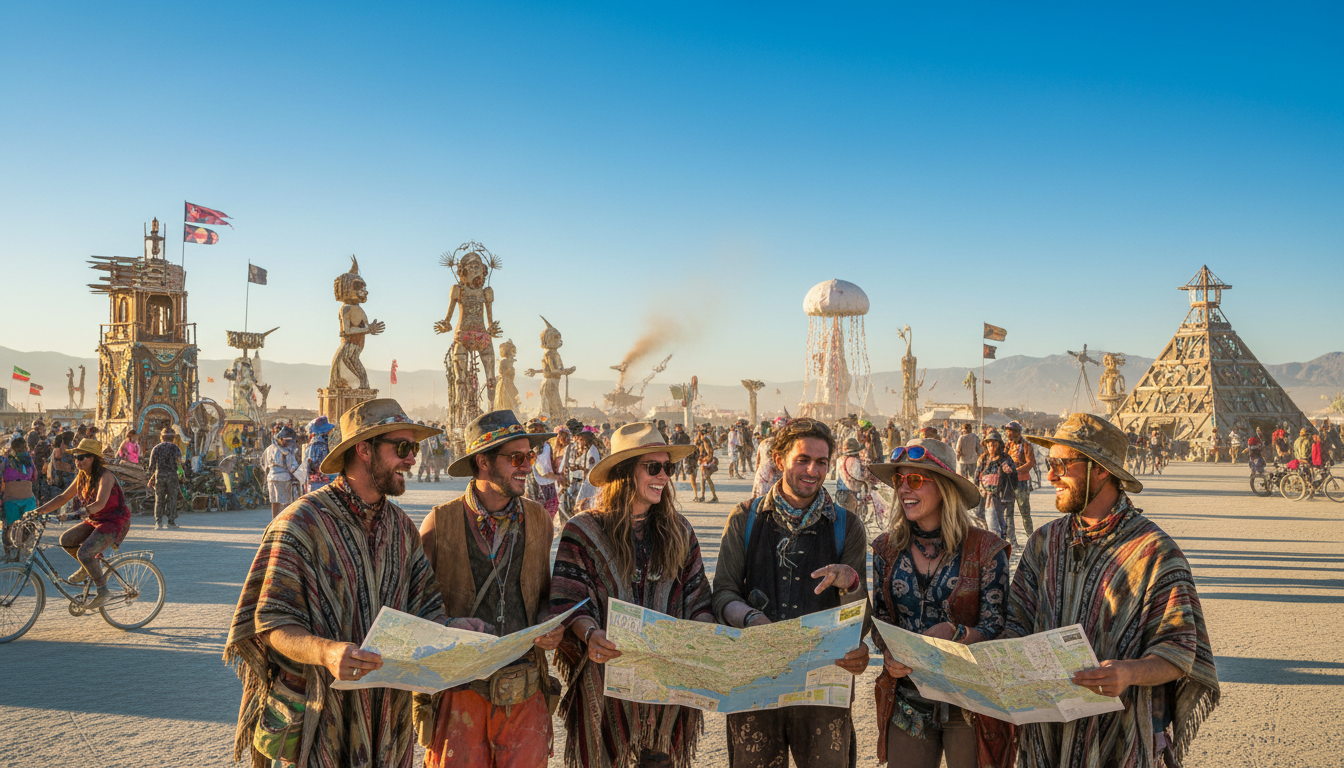
Answer up front: The event takes place each late summer in Nevada with gates opening during build week, two main burn nights, and a staged exodus at week’s end.
Planning here differs from a typical festival. You must time arrival and departure, secure tickets and vehicle passes, and prepare to be self-reliant in a temporary city called Black Rock City.
This guide previews the key trip decisions: travel routes, arrival windows, ticket types, and what the overall experience feels like for a first time attendee.
Expect a participant-built community, not a concert weekend. Anchor moments like the Man burn and the Temple shape how you choose your schedule and logistics.
Read on to plan confidently, avoid jargon, and make the most of this unique week-long event. For more on alternative outdoor stays, see glamping vs camping.
Key Takeaways
- Gates open during build week; key burn nights occur midweek.
- Plan logistics early: tickets, vehicle passes, and travel routes.
- Bring supplies and expect self-reliance in Black Rock City.
- Major rituals (the Man and Temple) guide your schedule choices.
- This is a participant-led temporary city, not a standard festival.
When is burning man? Current dates and the annual schedule
Late summer timing shapes travel, work requests, and packing choices. The event follows a steady annual rhythm tied to the U.S. holiday calendar, so planning your time off makes a big difference.
Official 2026 dates:
- Start: August 30, 2026
- End: September 7, 2026
Most people call this Labor Day week because the final days include the holiday. Many attendees plan PTO around that holiday to avoid missing the key weekend moments.
How long it lasts in practice differs from the printed dates. The published span covers nine days, but participants arrive earlier for build and stay through the staged exodus on the final day.
The festival’s cadence matters: setup, open days of activity, the main rituals, then exit. The signature burn of the Man takes place on the Saturday evening before Labor Day, so aim to be fully set up by that time.
Avoid common timing mistakes: arriving late can mean long gate waits and missed rituals. Leaving too early risks missing the final communal moments and facing the same exodus traffic tied to the holiday week.
Where Burning Man happens: Black Rock City in the Black Rock Desert
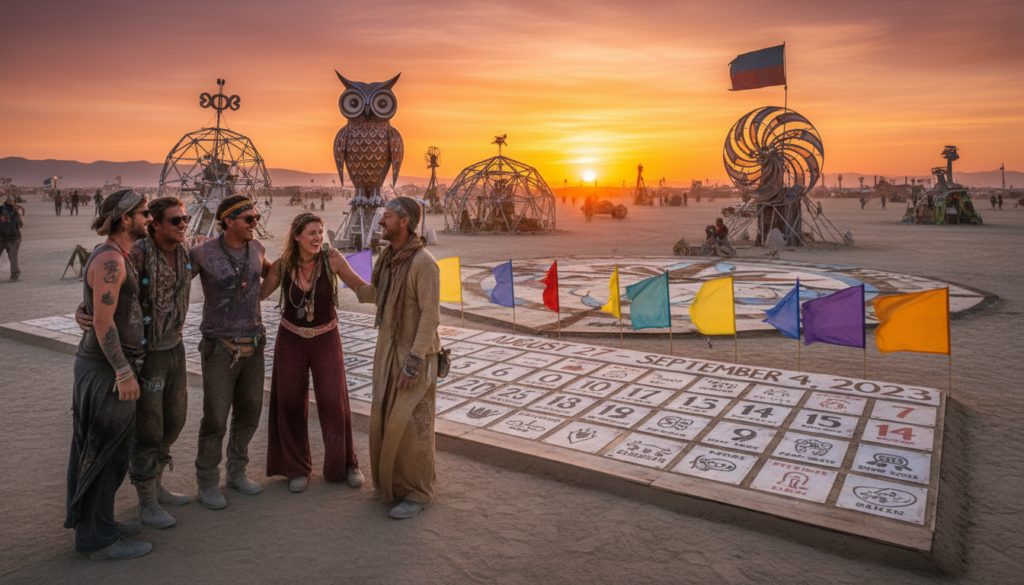
Picture a circular city laid out on a dry lakebed — that is Black Rock City in Pershing County. This temporary settlement appears on the wide, pale surface of the Black Rock Desert and stays for about nine days each late summer.
Exact location matters for planning. The coordinates are 40°47′13″N 119°12′15″W (40.7869°N, -119.2042°W). Plugging these into GPS gives precise navigation for staging areas and official access gates.
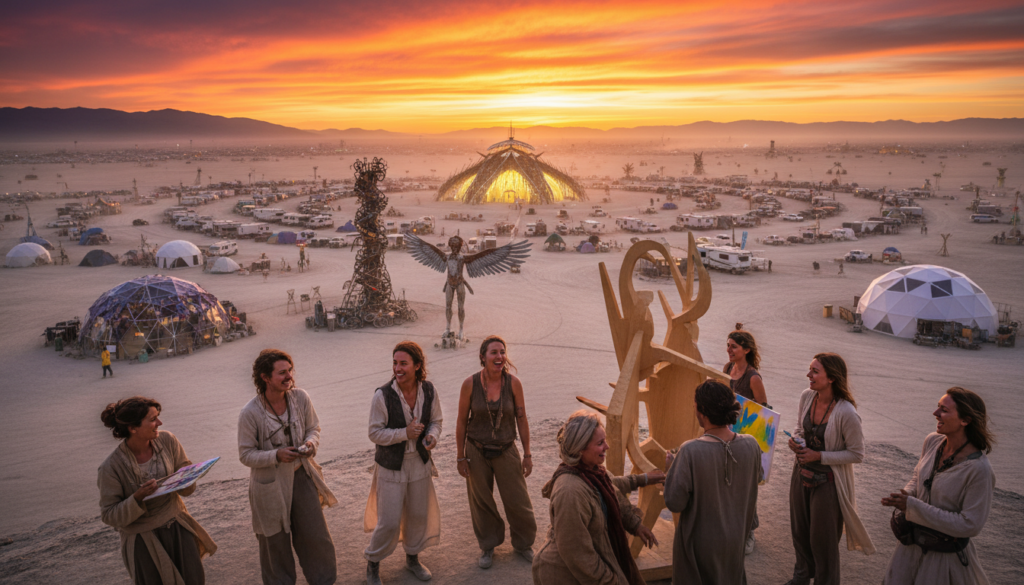
Black Rock City sits roughly 100 miles (160 km) north-northeast of Reno. Drives can take two to three hours without traffic, but gate delays add time during peak arrival and exodus days.
The event sits on a dry playa with minimal services. Bring water, shade, and supplies because the desert environment demands self-reliance. County rules and permits for Pershing County shape limited access routes, so expect checkpoints and controlled entry.
How the location shapes the city you’ll enter
The flat black rock playa lets organizers lay out a radial street grid. Once inside, the temporary rock city feels organized: numbered avenues, theme camps, art installations, and central plazas all follow that plan.
- Remote place: limited cell service and few nearby towns.
- Navigation: coordinates help for convoy planning and emergency services.
- Environment: dusty playa and strong sun—pack accordingly.
How the week unfolds on the playa
A week at Black Rock City unfolds as a blend of setup, surprise, and shared rituals. Days have a predictable rhythm that helps you plan energy, sleep, and must-see moments.
Plan smart: use mornings for rest or chores, afternoons to explore art and camps, and evenings for big communal events.
The main effigy ceremony: Saturday evening before Labor Day
The tradition that gives the event its name centers on the effigy burn held Saturday night before Labor Day. This ritual acts as a scheduling anchor for most visitors.
Lock down camp a few hours before sunset. Expect crowds and travel time across the city. Treat the moment as participation, not a passive show.
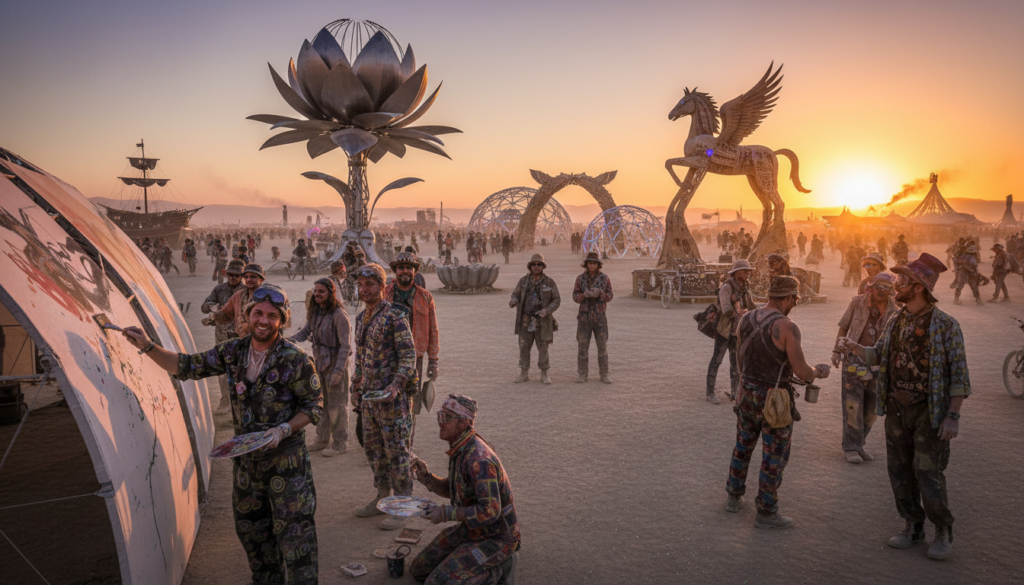
The Temple: a quieter space for reflection
The Temple offers contrast — quiet, reflective, and often emotional. People leave notes, art, and memories there.
Approach the Temple with respect: quiet voices, gentle behavior, and time to sit or write. This space shapes the event’s deeper culture and community bonds.
Best time to arrive and leave to avoid the biggest lines
Choosing the right arrival and exit windows can save hours in line and make your first day on the playa calm. Plan with the event rhythm in mind so gate traffic does not define your first impression of Black Rock City. A smooth entry helps your camp setup and keeps energy high for the week.
Arrival strategies for Gate traffic and setup day
Expect long waits and queues at peak arrival hours. Pack water and snacks in an easy-to-reach bag and keep your tickets and vehicle passes accessible. Put essentials like sunscreen, tools, and a tarp separate from deep-packed bins.
Arrive earlier in the day to use daylight for safe setup. Wind and heat pick up later, so early arrival shortens work under harsh conditions. If you face a long line, stay patient and conserve supplies.
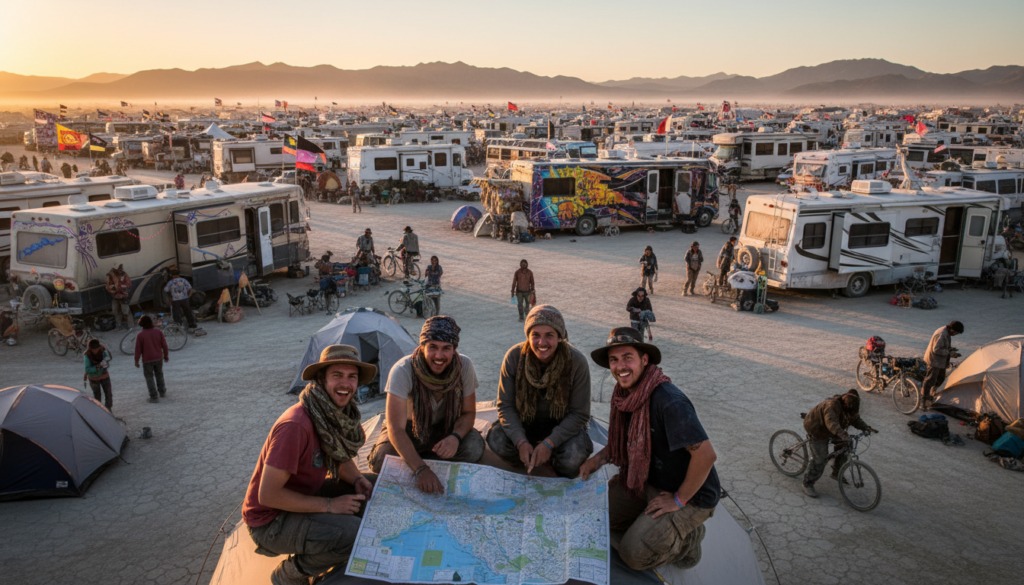
Departure planning for exodus and road conditions
Exodus can create multi-hour lines and slow-moving convoys. Fill fuel tanks before leaving and set realistic expectations for your travel time home. Road and weather can change fast on the playa, so plan buffer hours and avoid tight schedules.
Keep your ticket and vehicle passes ready at exit points to help line flow. The smoothest plan stays flexible: the event’s conditions may override your preferred schedule, so accept delays and prioritize safety.
For broader pre-trip planning and resources, see this helpful planning resource.
Planning timeline: what to do months before you go
A paced timeline turns a frantic prep into steady tasks you can tick off each month.
Start early with account setup and ticket planning. Create your official account, save payment info, and note sale dates. Having an account ready reduces stress during ticket drops and helps you secure the right ticket and vehicle passes.
Month-by-month checklist
- 6–4 months out: Open accounts, track ticket sales, reserve travel and camp spot. Decide if you’ll join theme camps or go independent.
- 3 months out: Buy tickets and vehicle passes, book transport, and start basic gear shopping.
- 1–2 months out: Finalize packing list, test shade and shelter, and confirm camp roles.
- 2 weeks out: Stock food, water, repair kits, and label storage. Prep tools and spares.
Packing for radical self-reliance
Plan around water, shelter, dust protection, lighting, and food storage. Bring more water than you think. Include sealed containers for food and strong dust masks for whiteouts.

Theme camp or independent camping?
- Theme camps: Shared resources, scheduled offerings, and built-in community. Expect commitments and shared work.
- Independent: More freedom and lower obligations, but you must supply all gear and support yourself.
Budgeting and common first-timer pitfalls
Build a realistic budget for travel, vehicle prep, gear, and groceries. Plan for no on-playa purchases; bring spares and extras.
| Category | Typical cost range | Notes |
|---|---|---|
| Tickets & vehicle passes | $250–$600 | Account ready helps during sales; prices vary by year. |
| Travel & fuel | $100–$400 | Fill tanks before exit; factor in long lines and idling. |
| Gear & shelter | $200–$800 | Invest in dust-proof tents, shade, and lighting. |
| Food & water | $50–$200 | Bring extra consumables; underestimating is common. |
Tip: Align your plan with participation. Decide early how you’ll contribute—skills, time, or helpful energy make the experience richer for all participants.
Tickets and entry basics: Burning Man tickets and vehicle passes
Securing the right ticket and a matching vehicle pass clears the way for a smooth arrival. For most participants, two items control access: an official ticket and a vehicle pass for any car, RV, or trailer entering the playa.
How ticket demand works and why sell-outs can vary. The Burning Man Project sells burning man tickets through the official site and controlled draws. Some years sell out fast; other years report leftover inventory. Fluctuations reflect resale rules, population shifts, and allocation changes.
Vehicle passes and trip planning
What a vehicle pass covers: it allows a vehicle to enter and park with your camp. RVs need passes and separate planning for fuel and waste. Carpooling can cut costs because rigs pay per vehicle, not per person.
- Keep tickets and vehicle passes accessible at the Gate.
- Expect vehicle searches; secure loose gear and clear labels.
- Bring an arrival kit: water, snacks, sunscreen, and photocopies of credentials.
One final tip: use only official channels or trusted community sources for burning man tickets and vehicle passes. Arriving without correct documentation can delay entry and disrupt travel plans for the rest of your party.
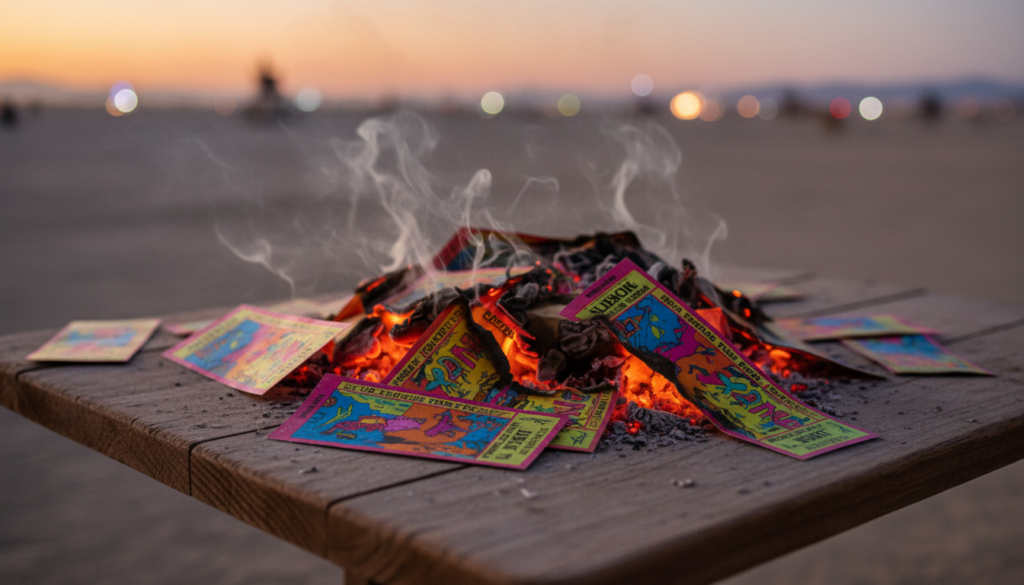
Getting to Burning Man from major hubs in the United States
How you get to Black Rock City matters—your plan changes based on flight limits, vehicle size, and gate timing.
Flying into Reno-Tahoe and driving to Black Rock
Fly into Reno-Tahoe, rent a sturdy vehicle, and plan for about 100 miles (160 km) north-northeast to black rock. Normal driving takes two to three hours.
Consider: airline gear limits, roof-rack needs, and renting an SUV or truck for gear. Time your arrival to avoid peak gate lines; midday drives often move faster than late-afternoon convoys.
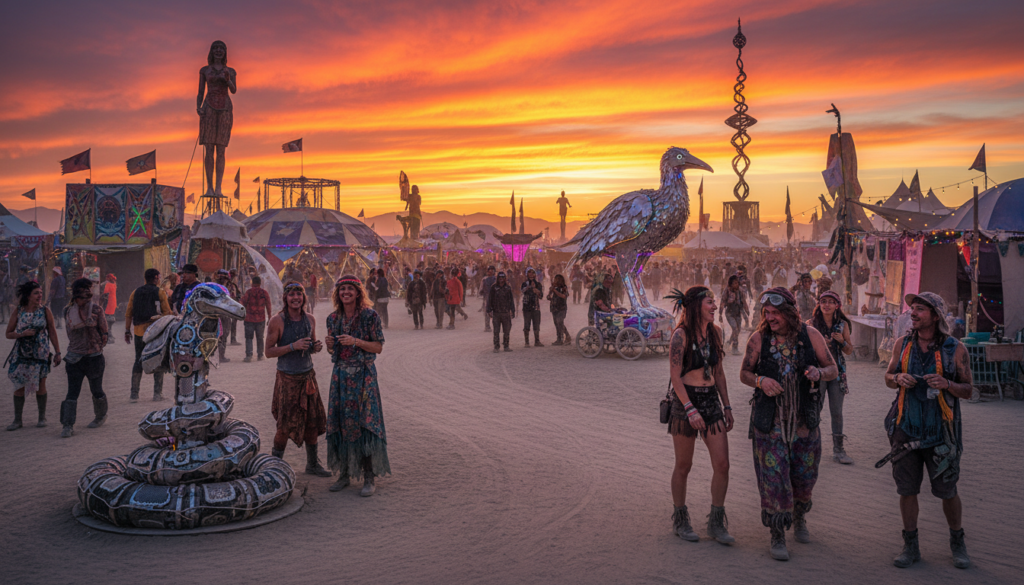
Driving from San Francisco and the Bay Area
From san francisco, the road trip is scenic but demands prep. Stock up in the bay area or Reno—groceries, extra water, and dust covers. Expect extra drive time during peak arrivals thanks to gate queues.
Tickets and vehicle passes shape choices: carpool to cut cost per person, or split gear across vehicles. Protect gear with sealed bins and tarps, and keep essentials like sunscreen, masks, and documents within reach during any line.
| Route | Typical drive time | Key prep |
|---|---|---|
| Reno → Black Rock | 2–4 hours (peak delays) | Rent SUV/truck, pack for dust, fuel up |
| San Francisco → Black Rock | 4–6 hours (plus stops) | Stock supplies in bay area, secure gear, plan rest |
| Mixed (fly + drive) | Varies by flight schedule | Check airline limits, confirm vehicle size |
For alternative outdoor stay ideas or to compare trip styles, see beach glamping.
What Burning Man is and isn’t: festival expectations first-timers miss
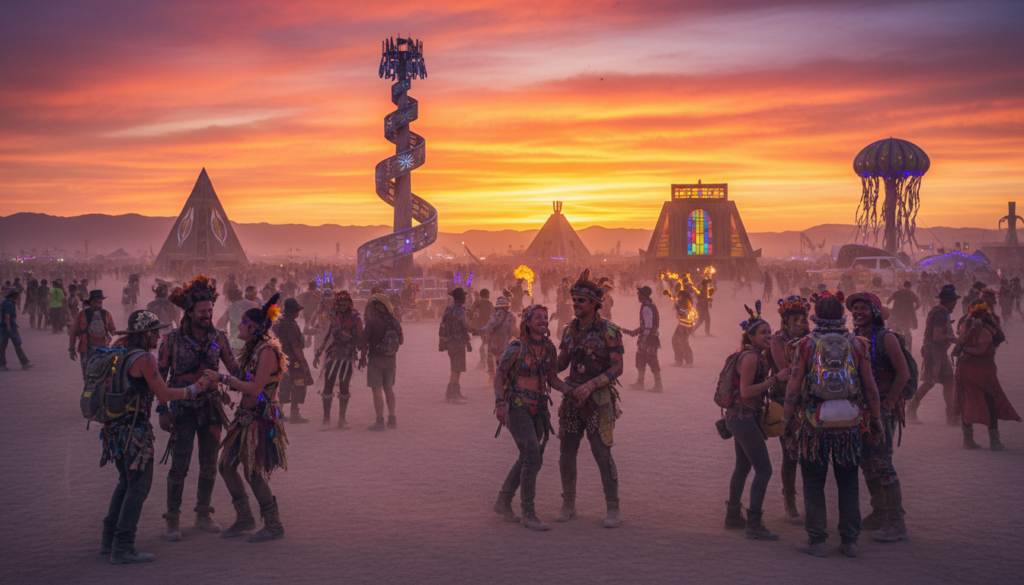
Expect to rethink the usual festival script. If this is your first time, you may arrive picturing a staged lineup and headline acts. That model does not drive the on-playa rhythm.
No headliners, no fixed schedule. There are no scheduled performers booked by organizers. Instead, participants create most events, parties, and music offerings. Camps, art projects, and pop-up gatherings form the public program.
No headliners and no fixed lineup
Replace a traditional lineup with participant-led happenings. Theme camps post events on camp maps and social feeds. If you want scheduled music, seek camp postings or large sound camps that share times.
No showers: how hygiene works with community restrooms
There are no showers in standard playa camping. Sanitation comes from porta-style facilities and community restrooms managed by crews.
Most people bring wipes, solar showers, rinse systems, and small towels. Conserve water and use sealed containers for greywater. Carry hand sanitizer and a simple wash kit for quick refreshes.
Packing and comfort tips:
- Bring dust masks, goggles, and a shade tarp.
- Pack extra water, baby wipes, and a small rinse bucket.
- Expect to help run or clean shared facilities; bring gloves and basic tools.
The social rhythm rewards participation. You’ll hear plenty of music, but the best moments come from joining camps, offering help, or starting a small activity. That shift—from spectator to contributor—shapes the whole experience.
| Expectation | Typical playa reality | Packing action |
|---|---|---|
| Headlined shows | Participant-run performances | Check camp schedules; be ready to explore |
| On-site showers | Portable rinse systems and crew restrooms | Bring wipes, solar shower, rinse bucket |
| Festival amenities | Self-reliance; shared community resources | Extra water, shade, and repair kit |
Burning Man culture: the 10 principles and what they look like in practice
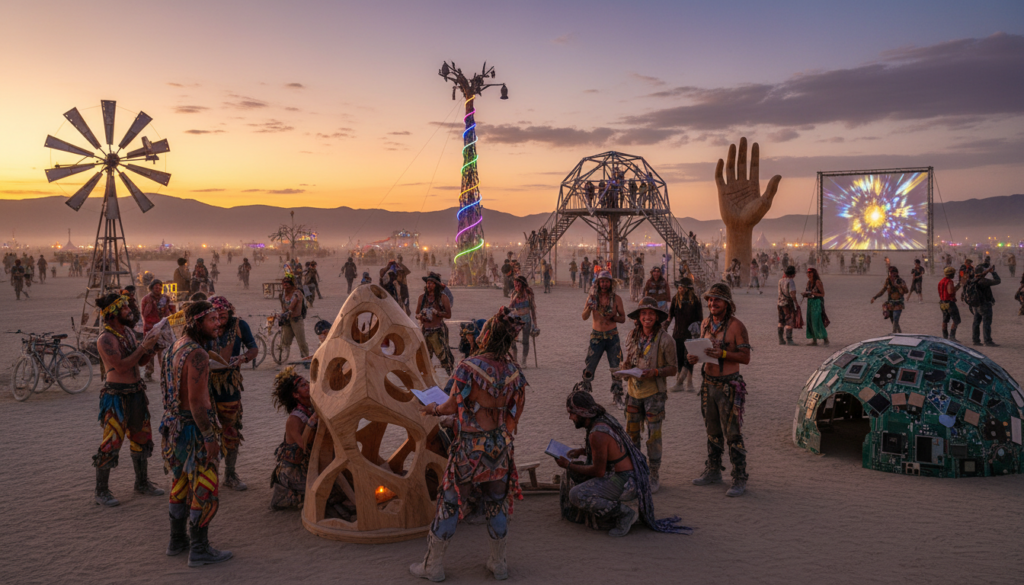
Ten core ideas steer life on the playa and show up in small actions, not just grand projects. These principles act as a cultural roadmap so new arrivals can read the scene and join in with respect.
Radical Inclusion, Participation, and Immediacy
Radical Inclusion means anyone may join. Say yes to a camp activity, help a neighbor set a shade, or accept an invite to a small dinner. Those moments build community fast.
Participation is not optional. Bring a skill, a smile, or a simple contribution. Immediacy asks you to be present: talk, listen, and respond to the moment.
Gifting and the gift economy
Gifts can be simple: a chilled water bottle, a song, or a hand with a tent. Gifts are meant to be thoughtful and freely offered. Avoid expecting anything in return.
Decommodification and Leaving No Trace
Decommodification keeps branding and selling out of community interactions. Keep camp gear and outfits free of logos and promotions.
Leaving no trace shapes camp layout and routines. Contain trash, pack out MOOP, and manage gray water in sealed containers. Design your camp so nothing blows away.
These principles guide what you pack, how you budget, and how you show up for other burners. Follow them and the culture will feel welcoming and alive.
Art, music, and mutant vehicles: how Black Rock City is created by participants
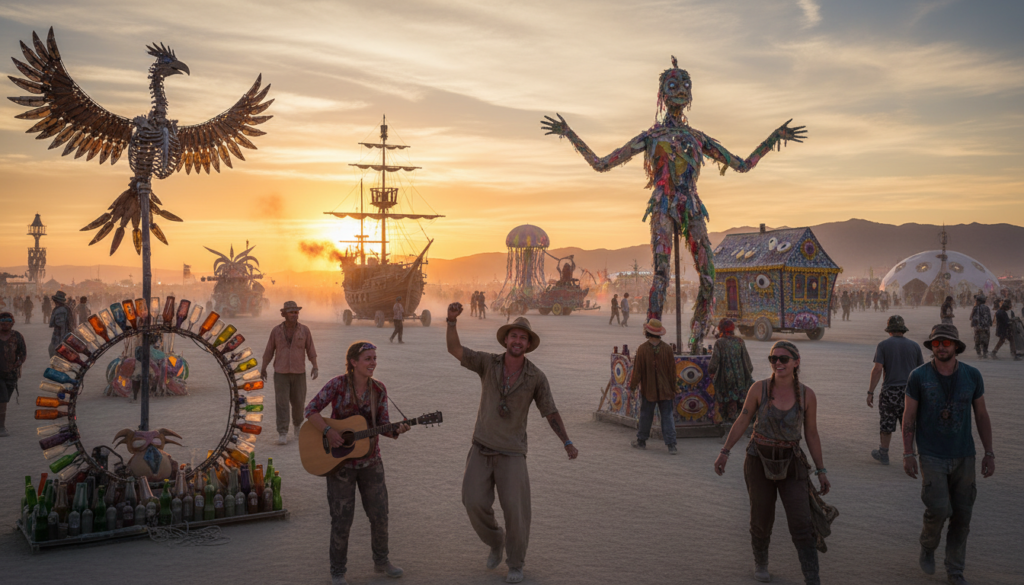
Black Rock City’s brightest moments come from projects built by attendees rather than a central production. Art, music, and moving sculptures create a living, changing cityscape. Participants design everything from quiet altars to massive interactive pieces.
Interactive installations and surprise performances
Interactive art often means large sculptures you can enter, walk-through builds, and staged performances.
Expect pop-up theater, hands-on exhibits, and art that reacts to touch or light. These moments appear across the city and invite you to join.
Art cars and approved mutant vehicles
Art cars and mutant vehicles are mobile artworks that ferry people and music. They are iconic and highly regulated.
Only vehicles that meet safety standards and gain approval may drive. Service vehicles handle logistics; mutant vehicles provide surprise parades and moving stages.
Theme camps, decentralized music, and exploring the city
Theme camps power the social program: workshops, pop-up dance floors, and low-key shows. There’s no central lineup; music shifts by night and by camp.
To explore, use large art pieces as landmarks, ask locals what’s happening, and leave room for spontaneous finds. Plan loosely and enjoy the unexpected.
“Some of the best memories come from stumbling into a tiny camp offering hot tea at dawn or a late-night sound truck passing by.”
| Feature | What to expect | Participant tip |
|---|---|---|
| Interactive art | Walk-through builds, responsive sculptures | Engage gently; follow instructions |
| Art cars / mutant vehicles | Mobile stages, parades; approved for safety | Watch clear paths and board safely |
| Theme camps | Workshops, food offerings, music spots | Check camp postings; volunteer to help |
The Temple and remembrance: understanding Burning Man’s “soul” space
A walk to the Temple often feels like stepping into a different tempo of the week. This quiet structure serves as a counterpoint to the louder camps and moving sculptures.
The Temple acts as the event’s emotional center. Many people come to leave notes, photos, names, and small memorials. Those offerings shape a hushed, reflective atmosphere that many burners describe as profound.
Common practices at the Temple:
- Leaving written memories, tokens, or photos for lost loved ones.
- Sitting silently, reading others’ messages, and taking private time.
- Participating in small rituals or community vigils without fanfare.
Please use gentle etiquette: speak softly, respect grief, and always ask before photographing someone or personal items. Silence is often part of participation; listening can be an offering.
Plan a dedicated block of time to visit during your playa schedule. The Temple offers a different kind of art and community experience that rewards stillness and attention.
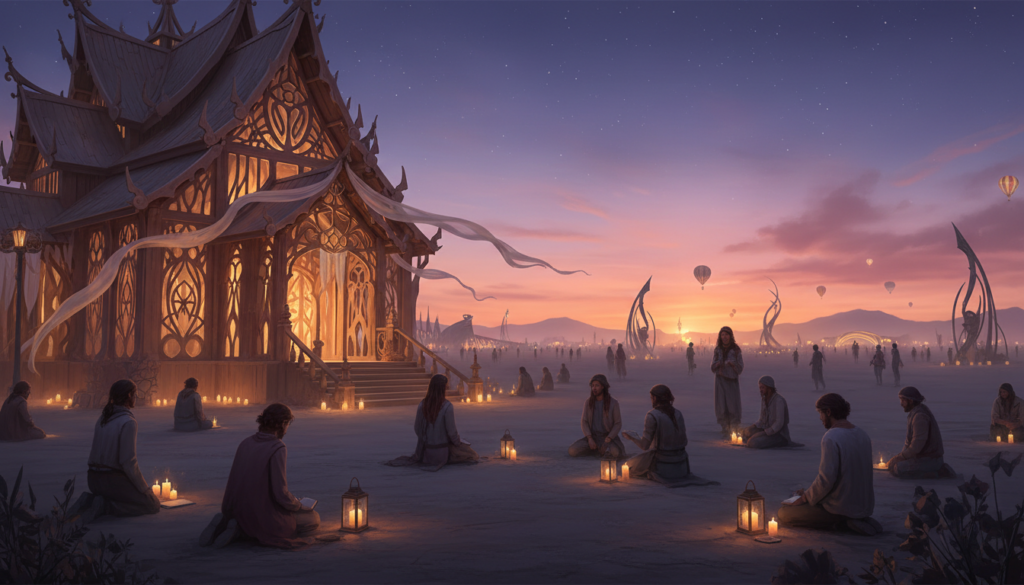
The Temple also reflects the gift culture: emotional honesty, shared humanity, and support without selling or fixing. It is participant-built art—part memory, part structure—made meaningful by the people who use it.
For calmer outdoor inspiration beyond the playa, consider checking glamping activities at glamping activities.
Safety, weather, and rules that affect timing
Weather often sets the real schedule at Black Rock more than any calendar does. Plan so your arrival, setup, and travel windows can shift if the desert throws wind, dust, or rain at short notice.
Dust storms and whiteouts: carry goggles, quality dust masks or respirators, and secure shade frames with extra tie-downs. During a whiteout, follow a simple rule: pause, hunker down, and wait for clearer air. Keep water and a small supply kit in an easy-to-reach spot.
Rain and wet playa risks: recent years showed rain can lock down vehicle movement. Conserve fuel and supplies, park on firmer ground if possible, and expect delays. A wet playa can strand vehicles—bring plans for staying put a day or more.
Driving limits and navigation basics
Drive slowly: the posted speed limit is 5 mph (8 km/h). Only approved mutant vehicles and service rigs may drive widely; most participants get around on foot or by bike.
- Use the city plan and the Man as a central landmark for orientation.
- Light your camp and bike at night to stay visible in low visibility.
- Respect the perimeter trash fence and vehicle checks at entry/exit.
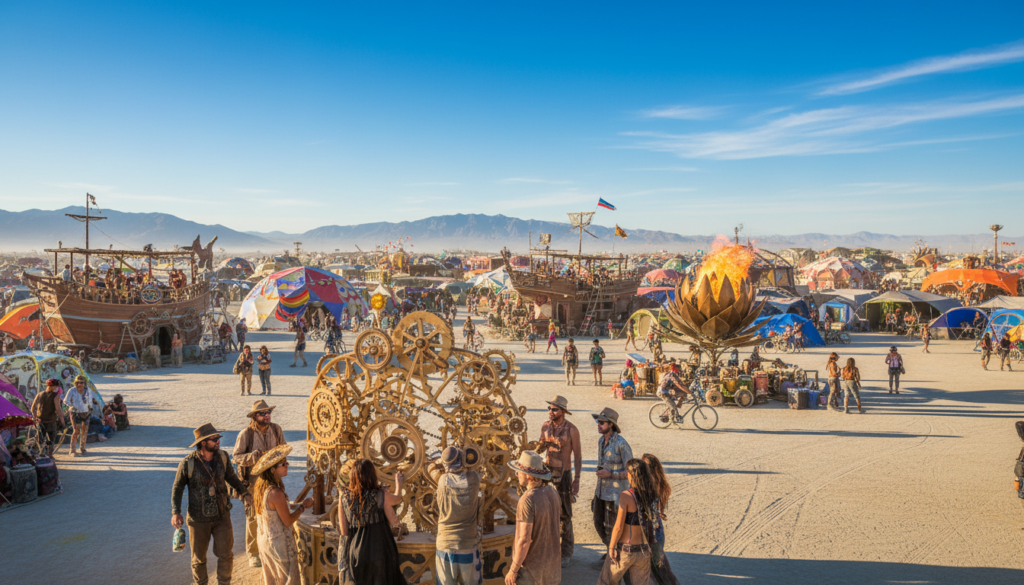
Smart safety planning reduces stress and keeps your trip on track. Expect the unexpected, pack extra supplies, and let weather guide your timing so you can enjoy the art and community with fewer emergencies.
Who runs Burning Man: the Burning Man Project and event governance
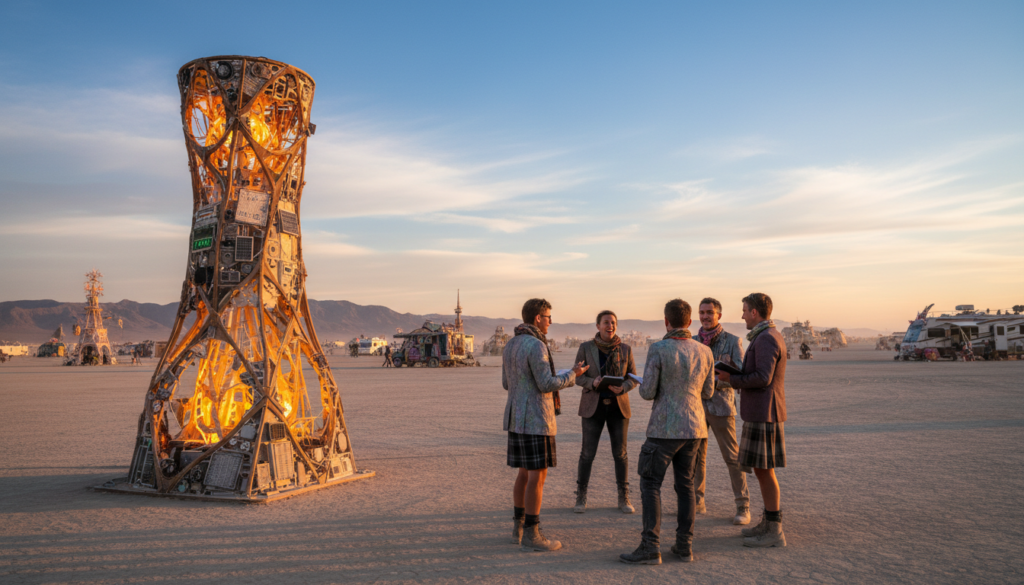
A mix of nonprofit staff and on-playa crews manage permits, safety, and community support. That structure matters because official permits, county rules, and logistics shape how Black Rock City operates at scale.
From a company to a nonprofit
Black Rock City LLC formed in 1999 to handle event operations. In 2013 the Burning Man Project became the nonprofit steward.
The change shifted governance toward a mission-driven organization while keeping the LLC as a subsidiary for certain functions.
On-playa leadership and support
The city depends on volunteer teams and paid staff. Key groups include Rangers, safety crews, medics, and logistics teams.
Rangers started with Michael Mikel, called “Danger Ranger.” They focus on de-escalation, safety, and helping participants find resources.
- Permits & rules: handled by leadership to meet county and state requirements.
- Civic responsibility: participants share duties to keep the city livable.
- Reliable info: follow official channels and on-playa postings for updates.
| Role | Primary duty | How they help participants |
|---|---|---|
| Burning Man Project | Event governance, permits, policy | Publishes rules, coordinates approvals |
| Black Rock City LLC | Operational support | Manages logistics and vendor contracts |
| Rangers | On-playa safety & de-escalation | Provide guidance, mediate conflicts |
For first-timers, trust official channels for updates and ask Rangers or camp leads for local guidance. A functioning temporary city depends on shared leadership and community cooperation, not just staff services.
A quick history of Burning Man: from Baker Beach to Nevada’s temporary city
A June gathering on Baker Beach sparked a tradition that later moved inland to a desert city.
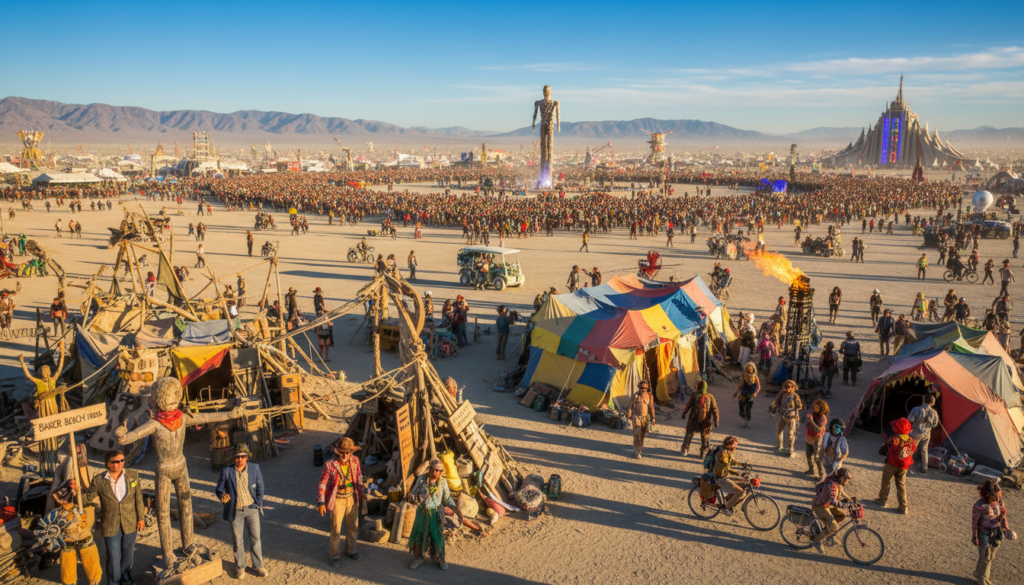
On June 22, 1986, a small group met on Baker Beach in San Francisco to burn a wooden effigy. Early builders included Larry Harvey and Jerry James, whose playful ritual became a shared practice among friends. That modest beach san moment set a pattern of creativity and ritual.
As crowds grew, the beach setting no longer fit the scale or safety needs. By 1990 the event relocated to the Black Rock Desert, where wide open playa offered room for large installations, art vehicles, and a radial city layout. The move allowed builders to experiment safely and to design infrastructure for navigation and emergency response.
What this history teaches first-timers
- Participant roots: the culture grew from volunteers and makers, not promoters.
- Scale matters: the desert enabled Black Rock City’s layout and safety systems.
- Tradition and evolution: rituals changed as the event matured, but participation stayed central.
“The event’s story shows that community effort and care shaped what it became.”
How to participate (not just attend): volunteering, art, and community contribution
Showing up with a helpful attitude turns a visit into real participation at Black Rock City. Shift your goal from observing to offering small, steady help. That change makes the whole experience friendlier and faster to join.
Simple ways for first-timers to contribute:
- Help build or strike camp shifts — heavy hands are always welcome.
- Volunteer for short shifts with safety, greeters, or cleanup teams.
- Gift coffee, basic repairs, or a small workshop on a skill you know.
How large art gets made: big pieces use grants, crew support, and planning. Burning Man Arts funds many projects through Global Art Grants and Black Rock City Honoraria, plus dedicated Temple support. Artists often recruit volunteers and share costs to finish builds.
| Way to contribute | Typical effort | Impact on community |
|---|---|---|
| Camp work shifts | Low–medium | Immediate bonding and trust |
| Volunteer crews | Medium | Keeps the event safe and running |
| Support art projects | Variable | Enables large-scale installations |
| Small gifts or workshops | Low | Fast connection; lasting goodwill |
Match your offering to your skills and budget. Reliability matters more than spectacle. You’ll meet people faster, learn city rhythms, and leave a better overall experience for everyone. For handy pre-trip projects, check DIY projects at DIY home decor projects.
Conclusion
Smart timing and steady prep make this week truly rewarding. The core answer: the event runs in late summer, centered on Labor Day week, so plan travel and leave room for gate delays.
Key timing wins: arrive early to set up, align departures with the staged exodus, and expect weather to shift plans.
Pack for radical self-reliance, sort tickets and a vehicle pass ahead, and respect the desert at Black Rock and Black Rock City.
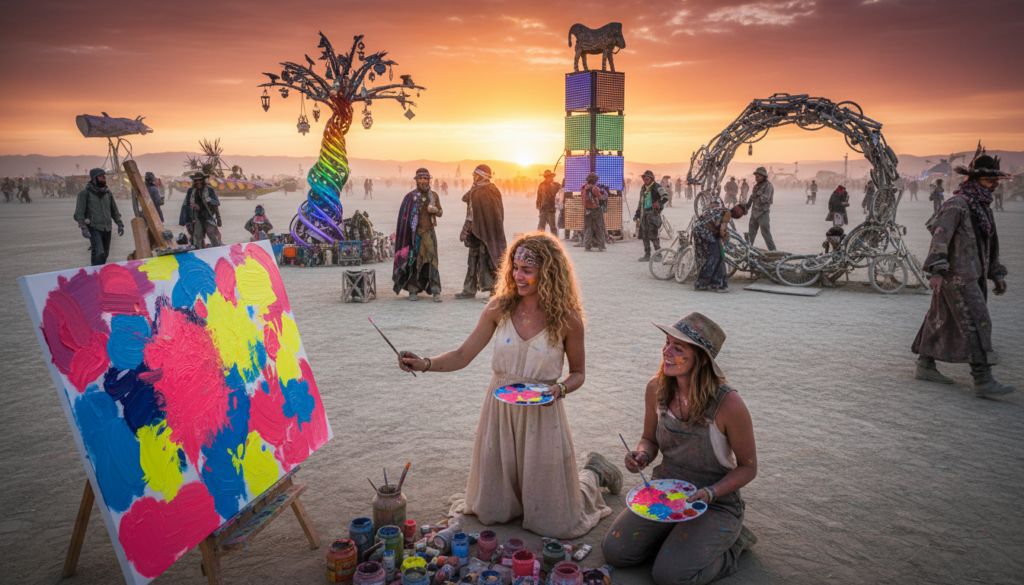
Why it’s worth the effort: participant-made art, shared projects, and a temporary city feel create moments you can’t reproduce elsewhere.
Next step: build a checklist, join a camp or plan independent camping, and chart your contribution. Stay flexible, stay safe, and enjoy the week. For calmer outdoor stays, explore glamping options.