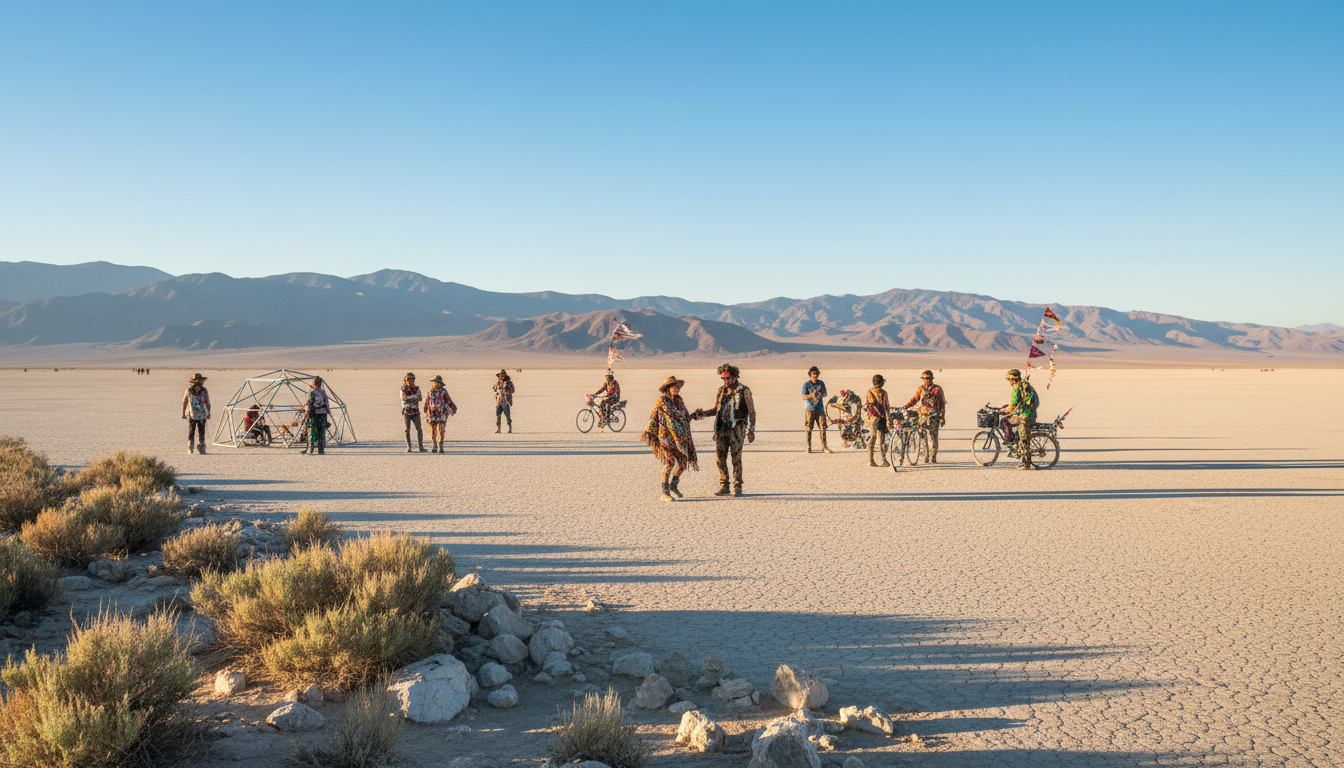
Title and description fit this page: pinning the exact region in northwestern Nevada and naming Black Rock City on the playa of the Black Rock Desert.
This short intro answers where the burning man festival took place and why that place mattered for planning, expectations, and safety. Dust, heat, driving, and self-reliance all came from that open desert setting.
Expect a clear how-to layout: first we pin the location, then define terms, map travel, walk through Gate entry, and explain how the city worked once inside. Practical tips cover Gate waits, speed limits, and last gas.
Quick mental map: Reno as the main flight hub, I‑80 to Fernley, then Highway 447 toward Gerlach, then Gate Road onto the playa. This route shaped timing and gear choices for anyone heading in.
Key Takeaways
- Black Rock City sat on the playa in northwestern Nevada.
- Location shaped dust, weather, driving, and packing needs.
- Reno → I‑80 → Fernley → Highway 447 → Gate Road is the common route.
- Article will guide travel, entry, and life inside the city.
- Practical, ground-level tips and cultural context make planning easier.
- Learn related camping and glamping basics via this guide.
Where is the burning man festival held?
This short intro pins the Nevada playa as the real-world site that hosted the weeklong gathering and explains why that setting shaped planning.
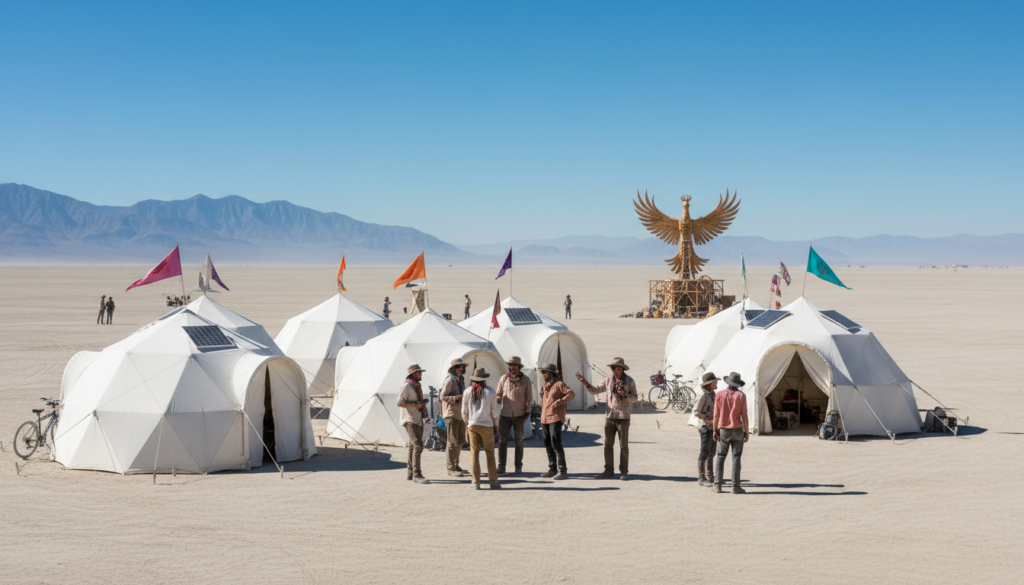
The Black Rock Desert in northwestern Nevada
Exact setting: the gathering took place on the Black Rock Desert playa, a wide, flat basin in northwest Nevada. That open surface became a temporary home for an organized, high-energy community.
Why the site was called Black Rock City
Organizers built a temporary settlement called Black Rock City, often shortened to BRC. This name signaled a planned grid with streets, addresses, services, and civic rules—more than simple camping.
Proximity to Reno and the California border
Practically, the site sat outside Reno and near the California border. Reno served as the main staging hub for supplies, rentals, and flights. Roots tied back to San Francisco culture, yet each year’s travel, traffic, and weather varied while the place stayed fixed.
Understanding playa distance, dust, and layout is the first step in smart planning. For related camping and glamping basics, see beach glamping basics.
Understanding the place: Black Rock City, the playa, and what to expect
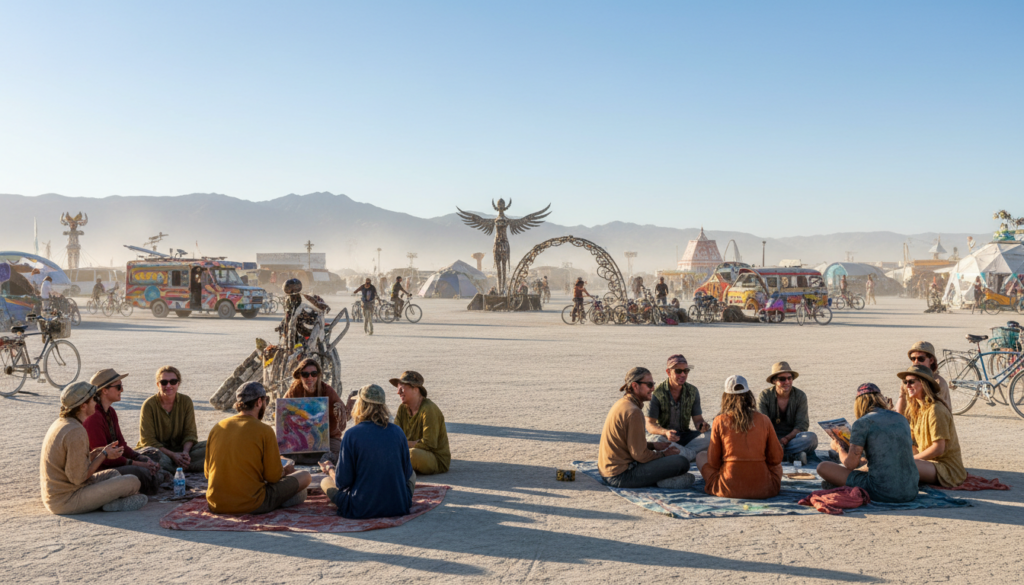
Imagine a full city built on a flat lakebed for days at a time—this was Black Rock City. It followed a clear grid of streets, numbered blocks, and assigned addresses. Tens of thousands of people lived, worked, and socialized there, then left with almost no trace.
Black Rock City as a temporary city
Black Rock City operated like any small town: camps offered services, art projects created landmarks, and volunteers kept essentials running. Camps planned logistics around this short lifespan, so navigation and daylight routines mattered.
What the playa actually is
The playa is a prehistoric hardpan alkali lakebed. It looks solid but produces ultra‑fine dust that clings to skin, food, and gear.
Weather realities: dust, whiteouts, and mud seasons
Dust can form storms that cut visibility to near zero and create whiteouts. Rain turns soaked alkali into thick mud that stops vehicles and ruins tents. Pack sealed bins, goggles, and masks, and plan flexible outings by day and time.
- Packing tip: sealed containers and vinegar wipes for cleanup.
- Clothing tip: goggles, bandanas, and layers for dust and cold nights.
- Planning tip: expect sudden changes and keep your schedule flexible.
| Feature | What to expect | Action |
|---|---|---|
| Temporary city | Grid layout, camps, services for short time | Memorize address, note landmarks |
| Playa surface | Hardpan alkali, ultra‑fine dust | Use sealed bins, protect electronics |
| Dust storms | Whiteouts, low visibility | Carry goggles, pause travel |
| Rain risk | Sticky mud, limited mobility | Delay trips, use durable footwear |
Many people called the playa home during their stay. Learning local language and norms eased the experience and helped newcomers join in. Once you grasp these basics, the next step is choosing how to reach the site from major U.S. starting points. For related glamping ideas and comfort tips, see nature meets luxury.
How to get to Burning Man from major U.S. starting points
Getting there shaped much of the trip: choices included flying into Reno or driving long stretches from nearby cities.
Flying into Reno vs. driving from regional hubs
Fly into Reno if you prefer shorter on‑road time. Rent a vehicle or join a ride for the final stretch. Watch cargo limits and plan how to carry water and bulky gear once you land.
Drive from nearby cities when you bring heavy supplies or want full control of gear. Driving lets you pack freely, but long days on highway and playa roads demand stamina and backup plans.
Driving from San Francisco and the Bay Area
Many people from san francisco made this a shared pilgrimage. Caravan vibes grow as more burner‑looking vehicles join, and social stops along I‑80 make the journey part of the trip.
Road-trip timing and planning for long travel days
Build buffer time for traffic, supply stops, and weather. Arrival day affects Gate wait lengths, so plan arrival by time of day. Remember: you need tickets and a vehicle pass sorted before a tight timeline works.
Quick tip: if flying, pack essentials in carry‑on and review cargo options; if driving, stagger rest breaks across days to avoid a brutal single day.
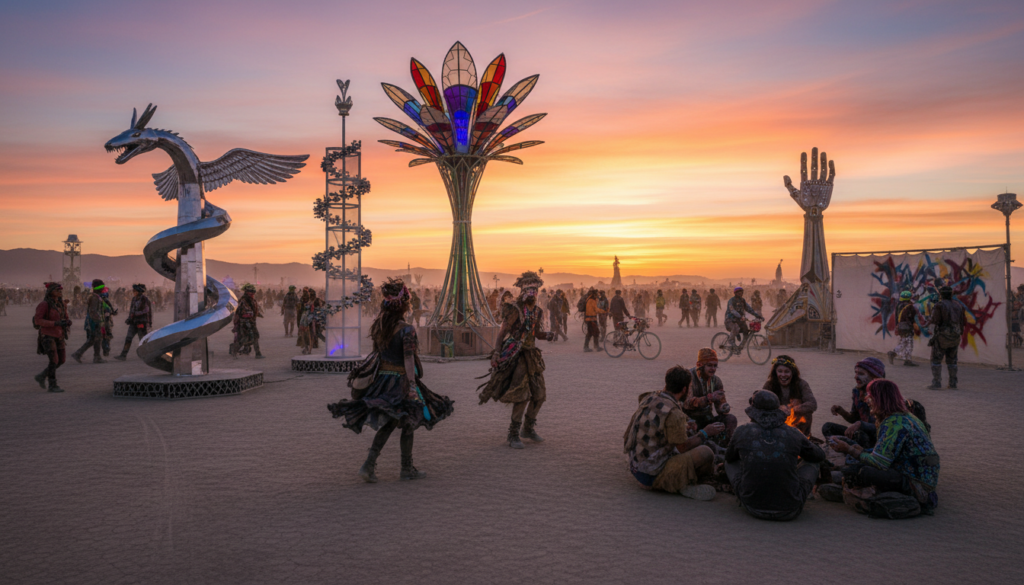
Regardless of start, most routes met on I‑80 to Fernley, then north toward Gerlach and Gate Road. For packing ideas that make long trips easier, see our glamping packing guide.
The on-the-road route to the festival site (Fernley to Gerlach to Gate Road)
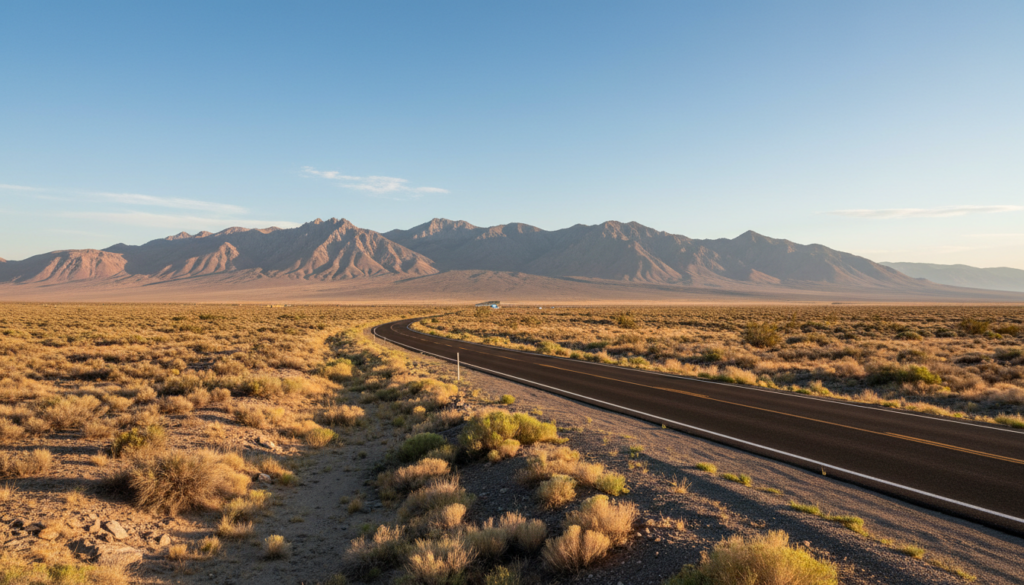
Plan your final stretch like a two-part trip: highway comfort until Fernley, then a focused, careful approach across a sparse corridor toward Black Rock City on the playa.
Fernley: the last reliable gas and planning checkpoint
Exit I‑80 at Fernley and top off fuel, water, and supplies. Fernley served as the last dependable gas stop for roughly a 180‑mile round trip into and out of Black Rock City.
Do not assume services are available later. Fill up, check fluids, and secure a charged phone and spare power.
Highway 447 through small towns and the final town approach
Follow Highway 447 north through a sparse, small‑town corridor. Towns offer limited services, and availability can shrink on busy travel days.
Travel tip: schedule breaks and treat each stop as a one-time chance for essentials.
Gate Road basics: where pavement ends and the playa begins
At Gerlach you turn onto Gate Road. Pavement soon ends and dusty, slow‑moving traffic often begins. Expect cones, reduced speeds, and a surface that tests tires and traction.
Why obeying speed limits matters on the approach
Drive the speed limit. Tribal lands and highway patrol enforce rules strictly; fines can happen immediately. Safe speed reduces dust clouds and lowers collision risk before arrival.
“Treat this stretch as both part of your journey and real‑world driving. Plan, obey limits, and arrive ready.”
| Segment | What to expect | Action |
|---|---|---|
| I‑80 to Fernley | Main highway; last major services | Refuel, buy water and snacks |
| Highway 447 | Rural corridor; limited services | Stagger stops; check supplies |
| Gerlach to Gate Road | Pavement ends; dusty approach | Slow down, watch cones, prepare for gate |
Final note: this road approach set expectations for time and entry. Once on Gate Road, your next variable will be ticket checks, queues, and Gate staff procedures.
Arriving at the Gate: entry process, waits, and what can slow you down
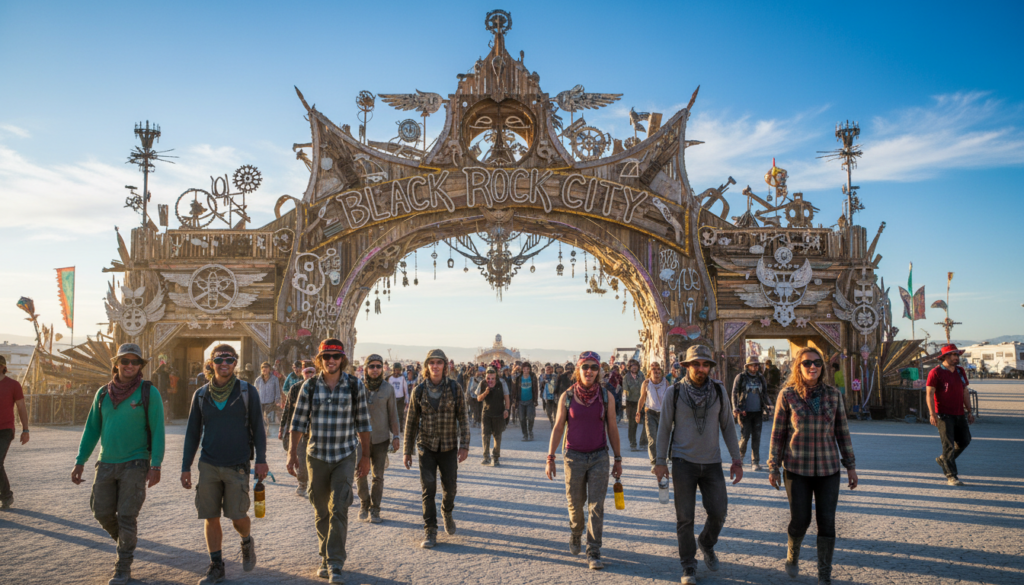
The final miles end in a controlled bottleneck where ticket checks and vehicle passes decide how fast you move. In one example year, Gate opened to the public at 10:00am Sunday, while early entry allowed build crews and theme camps to arrive earlier under separate rules.
Timing and common slowdowns
Lines can stretch for hours. Surges of arrivals, limited processing lanes, and sudden dust whiteouts that close car processing create long waits. Travelers described a “pulsing” flow: long stops with engines off, then short bursts forward.
What Gate staff check
Staff verify tickets, a vehicle pass, and that every person in a car matches records. Stowaways risk being turned around and voided ticket privileges, so be honest and prepared.
How to wait smart
Keep water handy, conserve battery power, and keep windows closed when dust hits. Tune Gate Advisory Radio at 95.1 for live updates on closures and processing time.
First moments inside
When you clear Gate, the mood shifts. Greeters often say “Welcome home,” hand out the What Where When guide, and invite you into a new experience of art and community. Take a breath, find camp, and start settling in.
For gentle camp setup tips, consider a quick read on a bell tent sleepover.
Pinpointing your camp and navigating Black Rock City once inside
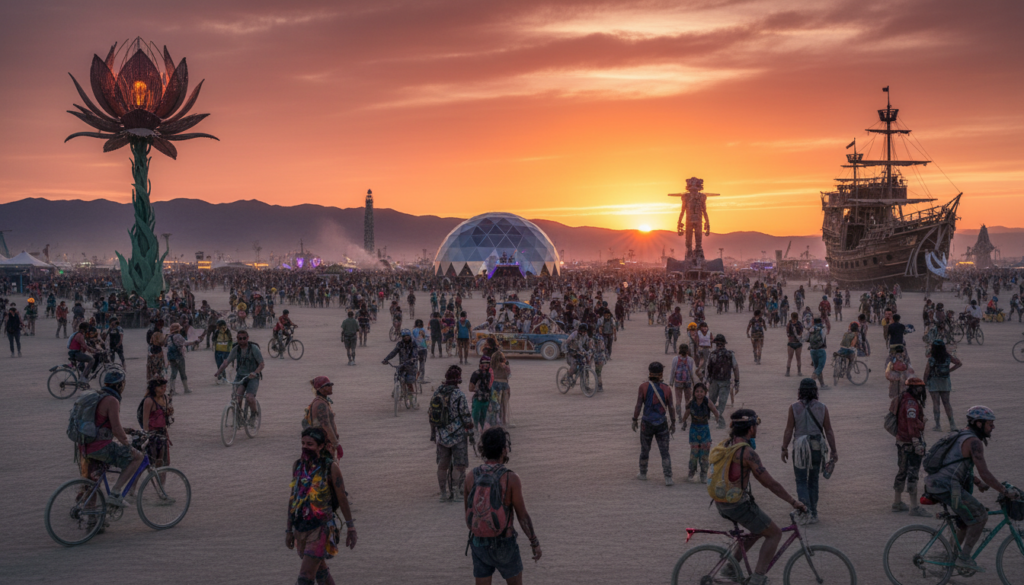
Once inside, navigation used a simple clock‑face system that helped campmates meet fast.
Reading the clock-face streets and finding your address
The layout used clock positions (for example, 6:00 or 11:00) plus lettered streets. That combo made addresses easy to call out by time and sector.
At night or in dust, slow down and watch signs. Confirm nearby art or a lit camp flag and text a clear landmark to others.
Why it’s hard to see it all and how to plan your days
With so many people and a dense community of camps, you could feel lost at first. That was normal.
Plan flexible days. Pick two priorities and leave room for surprise invitations and wandering.
| Navigation aid | What to do | Why it helps |
|---|---|---|
| Clock position + street | Memorize sector and nearest art | Fast radio/text directions |
| Night/dust checklist | Slow, use lights, confirm signs | Reduces wrong turns and stress |
| Daily rhythm | Plan around heat, rest in afternoon | Maximizes good daytime experience |
| Participation | Say yes to a few invites | Builds community and local knowledge |
“We arrived from 6:00 road and used a tall lantern and a painted flag to find each other.”
What makes Burning Man unique beyond the location
What made this event stand out had less to do with maps and more to do with how people behaved. A short set of shared ideas guided choices, helped camps function, and shaped daily life on playa.
The 10 Principles began as a 2004 description by Larry Harvey. They describe culture rather than act as rules.
- Radical Inclusion: anyone could join; welcome others.
- Gifting: give without expecting return.
- Decommodification: no commercial ads or sales.
- Radical Self‑Reliance: bring supplies and skills.
- Radical Self‑Expression: share personal creativity.
- Communal Effort: build and care together.
- Civic Responsibility: follow camp rules and safety.
- Leaving No Trace: pack out what you brought.
- Participation: join in rather than watch.
- Immediacy: value direct experience.
The gift economy meant time, help, and small offerings became real currency. Newcomers noticed quickly: no booths, just sharing. You did not have to be a creator of large art to belong. Helping set up, running a shade structure, or sharing food counted as participation and comfort.
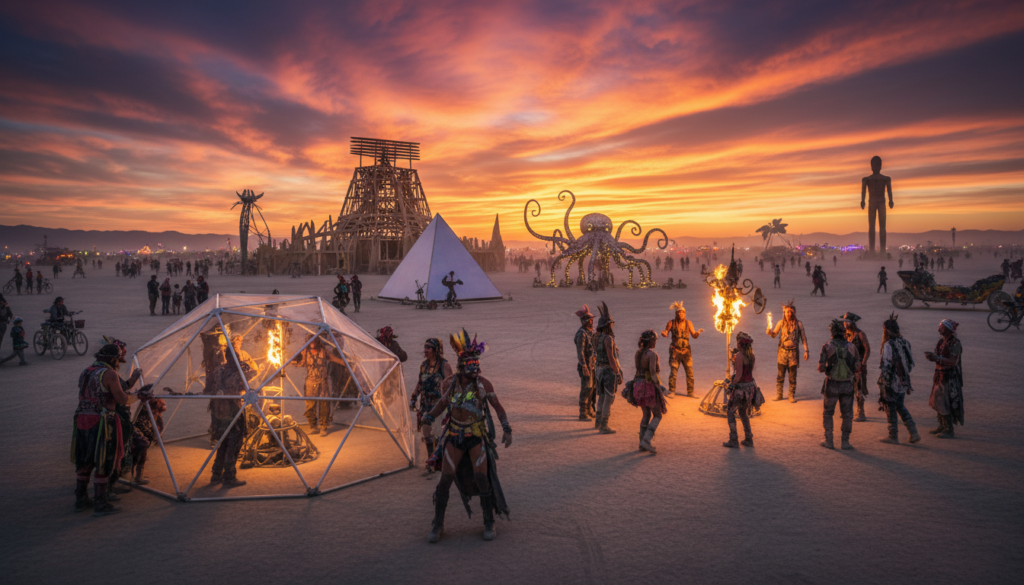
“Principles were written to reflect a living culture, not to punish.”
That culture fueled large collaborations, art cars, and shared projects. It set up a social experiment that many carried back into the default world.
Planning your week on the playa: art, people, and time in Black Rock City
Plan your week so art, people, and surprise moments fit a clear rhythm instead of a frantic checklist.
Pick three anchors: a major installation, a theme camp night, and a sunrise or sunset. Hold those times firm. Then leave long stretches open for wandering and chance meetings.
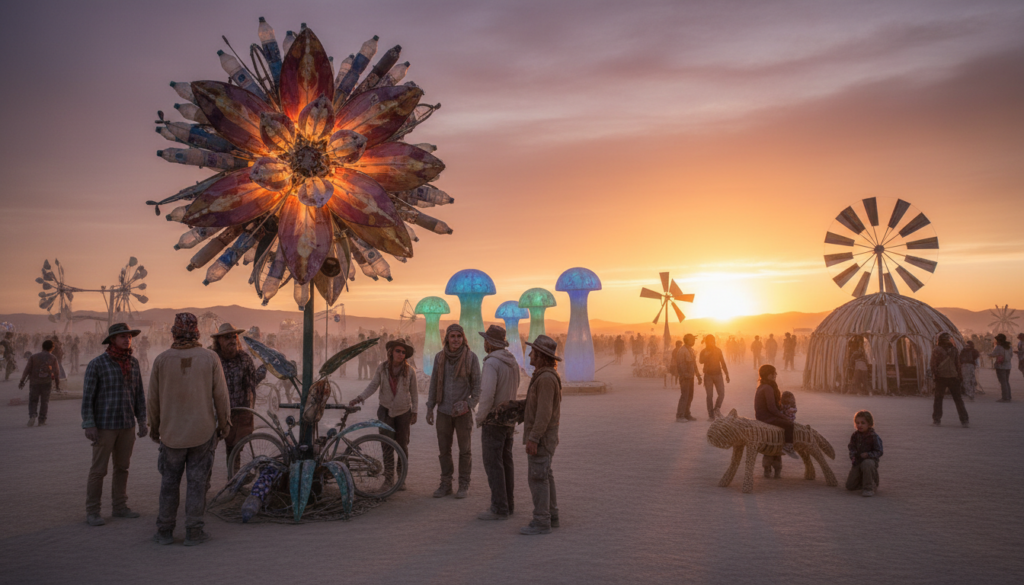
Interactive installations and funded projects
Art on playa went beyond objects. Many works invited participation, collaboration, and play.
Burning Man Arts funded pieces with grants, honoraria, and mentorships. That support helped build large projects and the Temple, a space for reflection.
Art cars as moving landmarks
Mutant vehicles served as social hubs and transport. They acted as mobile beacons you could use to meet friends.
Managing scale and time
This community grew to roughly 70,000–80,000 people, so expect crowds and missed chances. Accept that you will trade seeing everything for deeper moments at a few places.
Leaving no trace and MOOP sweeps
MOOP means Matter Out Of Place. Camps ran MOOP sweeps before departure. Pack extra trash bags, check groundcover, and plan a final sweep for gear and small debris.
| Action | Why it matters | Quick tip |
|---|---|---|
| Choose anchors | Focus energy on meaningful moments | Book time, then roam |
| Join MOOP sweeps | Protect black rock desert for future years | Bring gloves and a light |
| Bring lessons home | Carry community habits into default world | Share stories and skills in Reno or online |
“We left a cleaner patch than we found and kept a few new friendships for years.”
Some installations even moved into Reno after their run—Space Whale and BELIEVE sit near First and South Virginia. That shows how the journey continues beyond one week. For ideas on a softer return, consider a stay or recovery read like glamping on the water.
Conclusion
You can sum this trip up in one line: a temporary city rose on a hardpan playa, and that place shaped travel, packing, and expectations. Black Rock City sat on the Black Rock Desert in northwestern Nevada, near Reno and the California border.
Plan your trip: fuel and stage in Fernley, follow Highway 447 to Gerlach, then take Gate Road. Have tickets and vehicle paperwork ready; expect Gate waits and checkpoints.
Be flexible: dust can cause whiteouts and rain can turn the playa to mud. Those risks make preparedness a core part of the experience.
Inside, use the city grid, accept you cannot see everything, and lean into community rules — gifting, participation, and leaving no trace. Use these location and entry basics as a foundation, then build your own burning man journey. For comfort ideas, check glampings at our glampings guide.