Burning Man began as a tiny gathering and grew into a week-long desert event that draws tens of thousands of visitors each year. It runs on principles of community, art, self-expression, and self-reliance. The scale today—nearly 80,000 participants in 2019—shows how a small ritual turned global.
The guide ahead looks at two lenses: the history that moved the gathering from San Francisco to Nevada, and the living culture that shapes Black Rock City now. Expect clear details on when and where it happens each year, how the temporary city functions, and practical costs for first-timers.
The heart of the event is the participant-built scene. People create art, run camps, and host activities rather than consume a packaged show. The most famous ritual, the burning of the Man, sits inside a wider set of customs that define the event’s values.
Key Takeaways
- Burning Man blends large-scale art and a participant-led community.
- We cover history, culture, logistics, and realistic costs for attendees.
- The event runs annually in Nevada and grew from small beginnings to tens of thousands.
- Participants build the experience; the event emphasizes self-reliance and leave no trace.
- Later sections give practical information on tickets, survival, and transportation rules.
What Is Burning Man All About?
This week-long desert gathering centers on hands-on participation and large-scale creative work. It is a participant-built event where community, art, self-expression, and personal responsibility matter more than passive spectatorship.
A practical view of participation
Self-reliance here means bringing your own water, shelter, food, and a plan for extremes. That preparation shifts how people interact: neighbors help neighbors because everyone depends on one another.
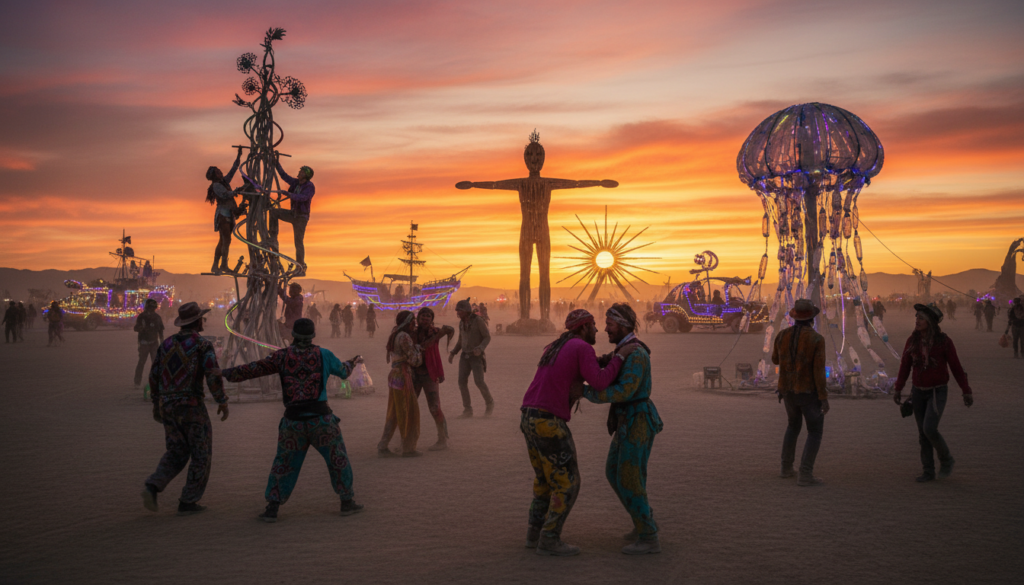
Self-expression shows up as costumes, workshops, theme camps, and interactive pieces. There are no headliners or a single main stage; creativity happens across the city and every contribution counts.
The role of the wooden effigy
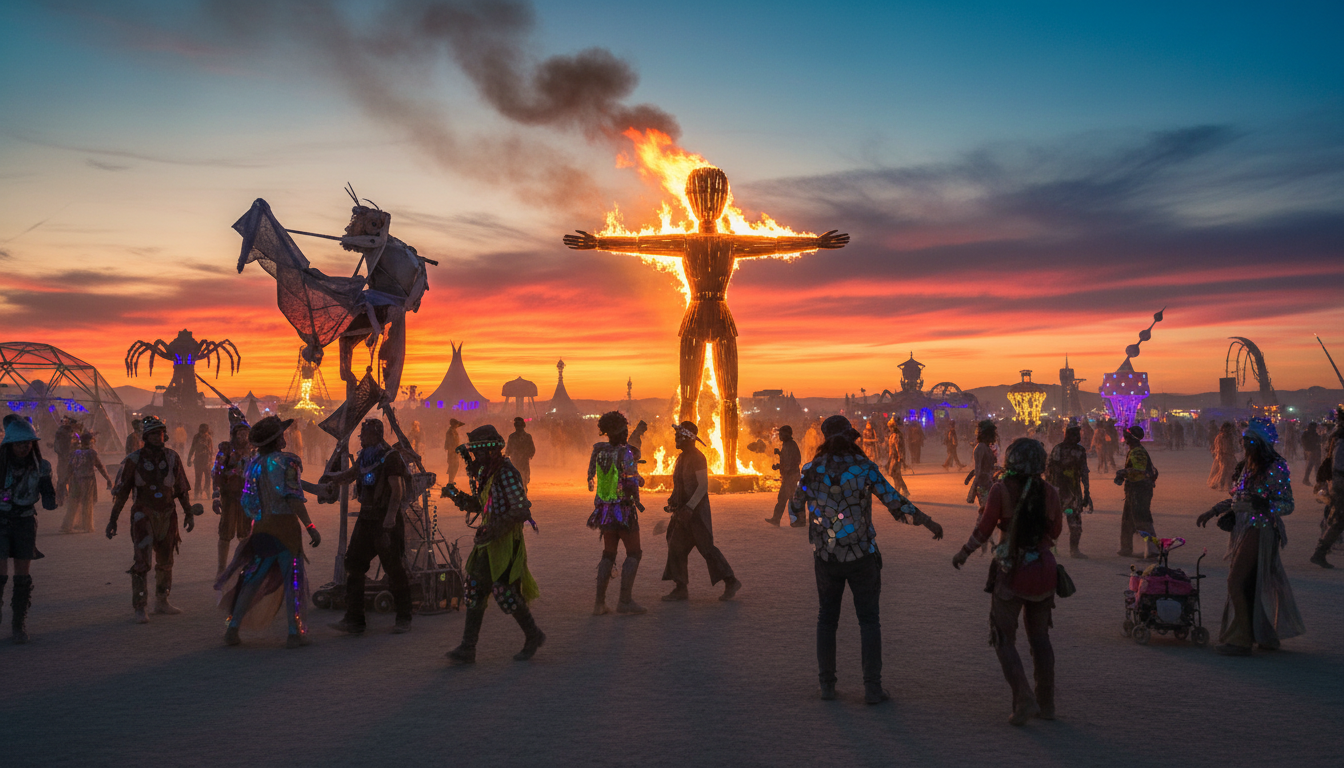
The week builds toward the ritual burn of a large wooden effigy called the Man on the penultimate night. That burn acts as a shared climax, offering release and marking the close of the main arc while reminding Burners the experience is communal, not chaotic.
- Definition: a participant-driven desert event centered on contribution.
- Self-reliance: bring essentials, plan, and respect others.
- Expression: interactive art, camps, and workshops replace commercial headliners.
| Feature | How it shows up | Why it matters |
|---|---|---|
| Community | Shared camps, mutual aid | Creates safety and belonging |
| Art | Interactive installations everywhere | Drives participation and wonder |
| Ritual burn | Wooden effigy on penultimate night | Climax that unites Burners |
Where Burning Man Takes Place: Black Rock City in the Black Rock Desert
A wide, white playa in Nevada becomes the stage for an experiment in art, community, and civic improvisation. Since 1990 the event has taken place on the Black Rock Desert, about 100 miles (160 km) north-northeast of Reno.
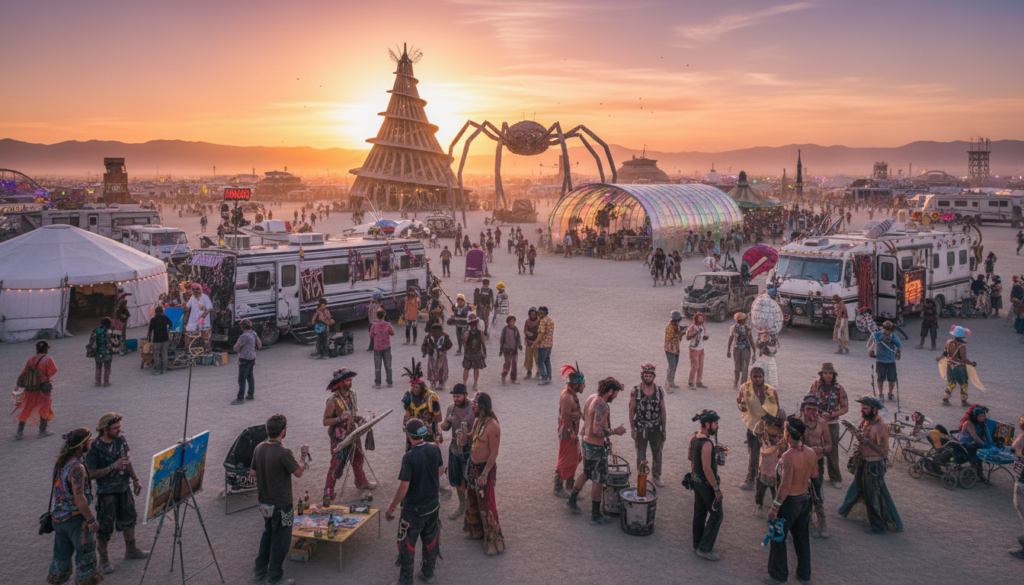
Black Rock City is a temporary city built on the flat lakebed each season. It rises, supports tens of thousands, then disappears, leaving the site cleaner than it arrived.
Why the location matters
The playa (a hard, dry lakebed) shapes navigation, dust conditions, and the strict leave no trace ethic. Once you leave paved roads, the location feels remote and sparse.
The harsh Nevada desert encourages self-reliance and neighborly collaboration rather than convenience. The distance from normal commerce supports decommodification and a gift economy.
Key coordinates and travel context
For context, coordinates are 40.7869°N, -119.2042°W (40°47′13″N 119°12′15″W). Use Reno as the nearest major city when planning travel and supplies.
“Black Rock City functions part art project, part civic experiment—temporary but built to real civic standards.”
- Setting: Black Rock Desert, northwestern Nevada.
- Site traits: playa surface, dust, remote roads.
- Expect: temporary infrastructure for large crowds; plan for self-sufficiency.
When Burning Man Happens Each Year
Each late summer, a temporary city rises on the playa and follows a predictable nine-day rhythm. The gathering runs up to and includes Labor Day, so planning around U.S. holiday schedules helps with travel and time off.
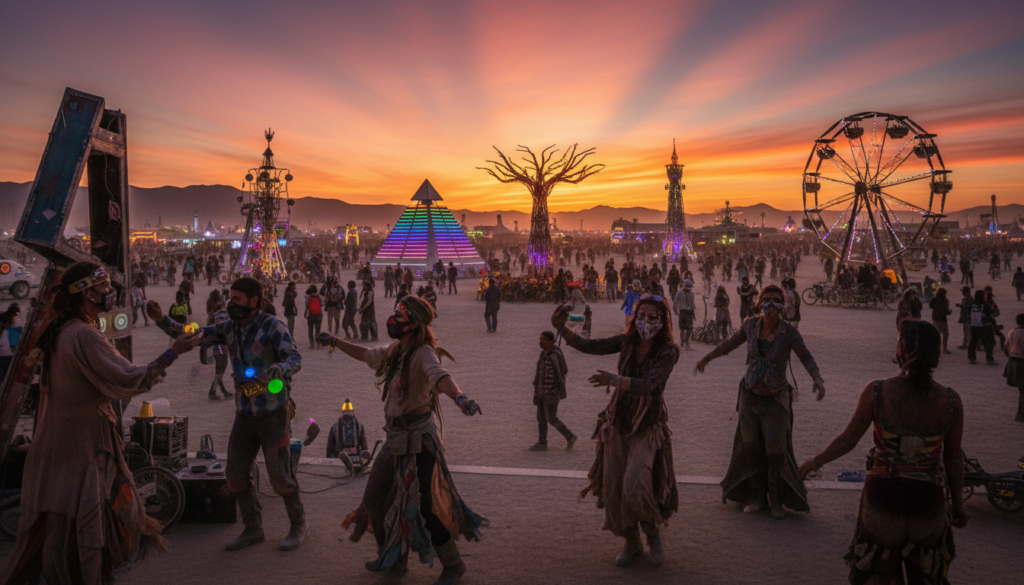
The typical schedule and rhythm
Arrival and build days open the week. Camps set up, art goes up, and neighbors meet.
Midweek and later days bring dense programming: workshops, sound, and large installations. Peak activity centers on the final weekend.
Why the burn happens the penultimate night
The wooden effigy burns on the Saturday evening before Labor Day. Holding the burn one night earlier gives people space to reflect, start teardown, and plan safe departures the next day.
- Practical note: timing can shift for safety or weather; stay flexible.
- Culture: early days favor building and quiet exchange; late days favor big gatherings and rituals.
- Scale: tens of thousands move through the same time window, so patience and planning matter.
“The nine-day cadence shapes both logistics and culture, from arrival lines to farewell slowdowns.”
Burning Man’s Origin Story in San Francisco
A small beach ritual in San Francisco sowed the seed for a larger cultural experiment. On June 22, 1986, Larry Harvey and Jerry James lit an 8-foot wooden figure at Baker Beach. The action felt spontaneous and playful rather than commercial.
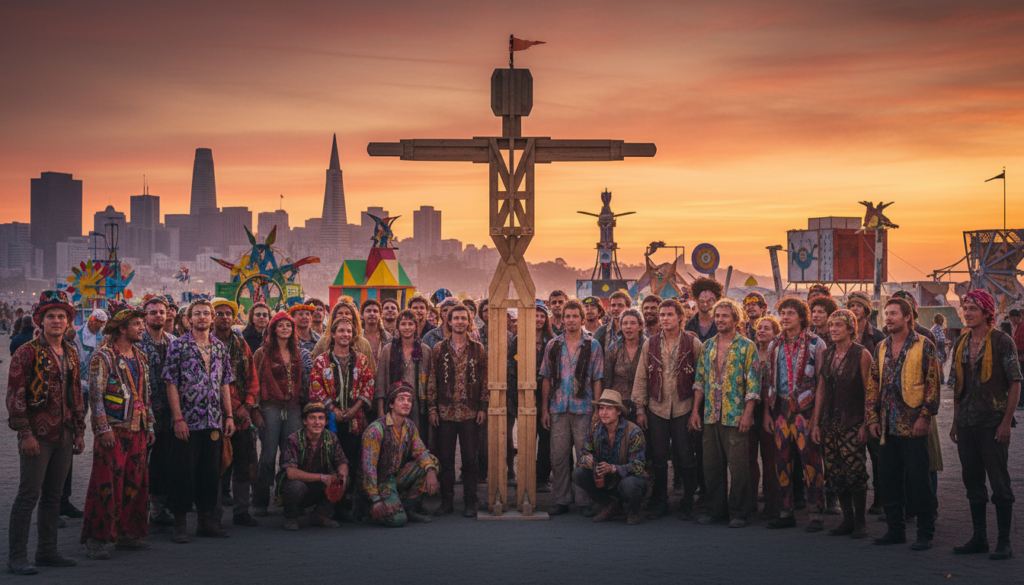
Baker Beach, 1986 and the early summers
The event grew year by year. In 1987 the figure reached 15 feet. By 1988 it was 30 feet, and by 1989 it topped 40 feet.
The summer solstice timing helped create an annual rhythm. Returning each year drew more people and stronger community ties. The early vibe stayed informal and experimental, focused on art and personal expression.
“A modest beach gathering turned into a ritual that valued participation over spectacle.”
| Year | Figure Height | Audience Trend |
|---|---|---|
| 1986 | 8 ft | Small beach crowd |
| 1987 | 15 ft | Growing local interest |
| 1988 | 30 ft | Regional attention |
| 1989 | 40 ft | Large gatherings; scaling limits |
The beach burns created the template for the present ritual. Yet a shoreline setting could not hold the event as sizes and crowds rose, setting the stage for a move away from the coast.
How Burning Man Moved From the Beach to Nevada
A single summer of conflict over permits set a path from San Francisco shores to the remote playa. Park police objected to a large burn on Baker Beach because organizers lacked a permit and public-safety plans. That friction made the beach era unsustainable.
In 1990 the Man was raised but not burned on the sand. The Cacophony Society staged Zone Trip No. 4, called “A Bad Day at Black Rock,” and brought the figure to a new site in the black rock desert.
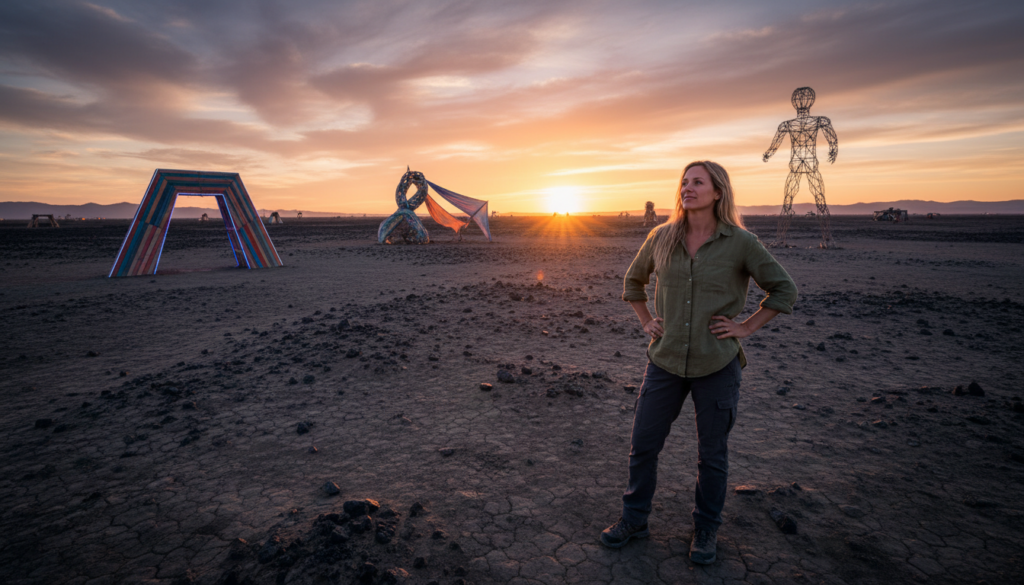
The vast, flat playa at Black Rock allowed much larger art and safer burns. The move turned a local ritual into an organized event that needed permits, safety crews, and repeatable operations.
The first Nevada burn became a bridge between small beach gatherings and a temporary city experiment. Culture changed fast: people planned more, relied on neighbors, and built infrastructure to support thousands.
“That season shifted the ritual into a civic-scale event.”
- Permit and safety issues ended the beach phase.
- Zone Trip roots gave the event room to grow.
- The new black rock site demanded planning and services.
Burning Man also became more legible as an event. Once Nevada became home, rules and services had to evolve to keep people safe and the playa clean. For practical ideas on coastal camp setups that contrast with desert life, see beach glamping.
A Brief History of Key Turning Points
Key moments shaped the event’s move from a spontaneous ritual to a governed temporary city.
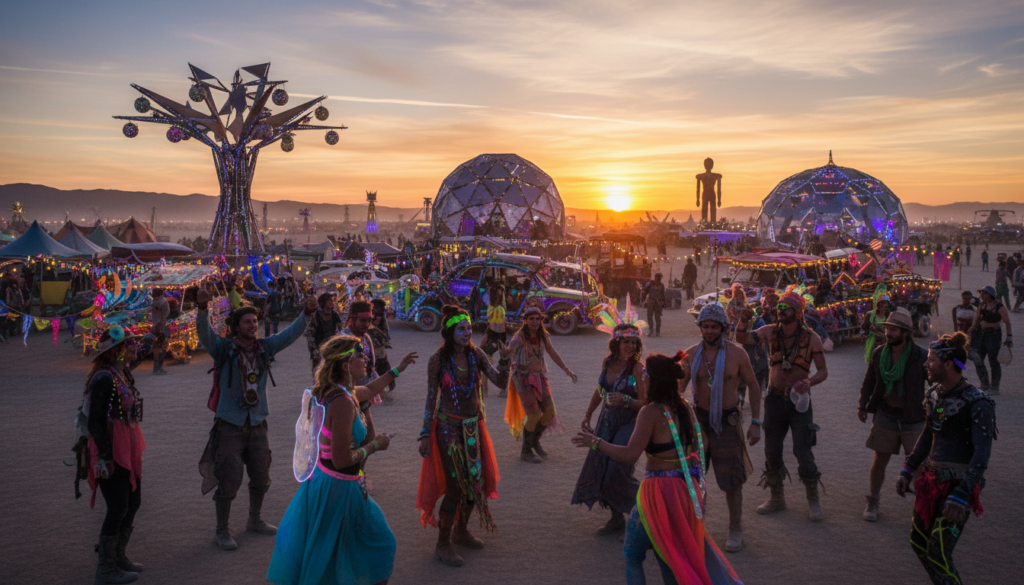
Permits, safety, and rising services
In 1991 the first BLM permit made the gathering legal on public land. That change forced structure. Organizers created formal teams and basic services to protect attendees.
The Black Rock Rangers began as a practical response to desert risks. Michael Mikel, sometimes called Danger Ranger, helped people who were lost, dehydrated, or disoriented at night.
Relocations, growth, and governance
Permit disputes in 1997 pushed a temporary move, then a return to the black rock playa. That return reinforced Black Rock City as the event’s long-term identity.
Scale rose steadily. By 2019 official participation reached 78,850 — tens of thousands that required clear systems and more services.
Organizational changes and modern communication
In 2013 the Burning Man Project nonprofit replaced the old LLC, shifting governance and widening mission work beyond Nevada.
Today, official radio, advisories, and staff provide vital information. The history shows a steady trade-off between freedom and civic responsibility as the event matured.
The Ten Principles That Shape Burning Man Culture
These principles act like a civic code that helps strangers become a functioning community. They are practical rules, not slogans. Read them as behaviors you can follow while living in a temporary city.
- Radical inclusion: Everyone can join. Camps often invite newcomers to help or trade tasks.
- Gifting & decommodification: Bring a spirit of giving. Fewer transactions mean more human exchange and surprise gifts.
- Radical self-reliance: Come prepared with water, shelter, and plans. Your readiness keeps others safe.
- Radical self-expression: Share unique skills, outfits, or small art pieces. Contribution matters more than consumption.
- Communal effort & civic responsibility: Volunteer, respect safety radios, and help neighbors during storms or late-night shifts.
- Leaving no trace: Cleanup is mandatory. The playa leaves no permanent mark because everyone pitches in.
- Participation & immediacy: Join actively. Live the moment; content and media rarely capture the full experience.
“The principles turn personal freedom into shared responsibility.”
For practical preparation tips that echo self-reliance and communal care, see basic homesteading.
Life Inside Black Rock City: How the Temporary City Works
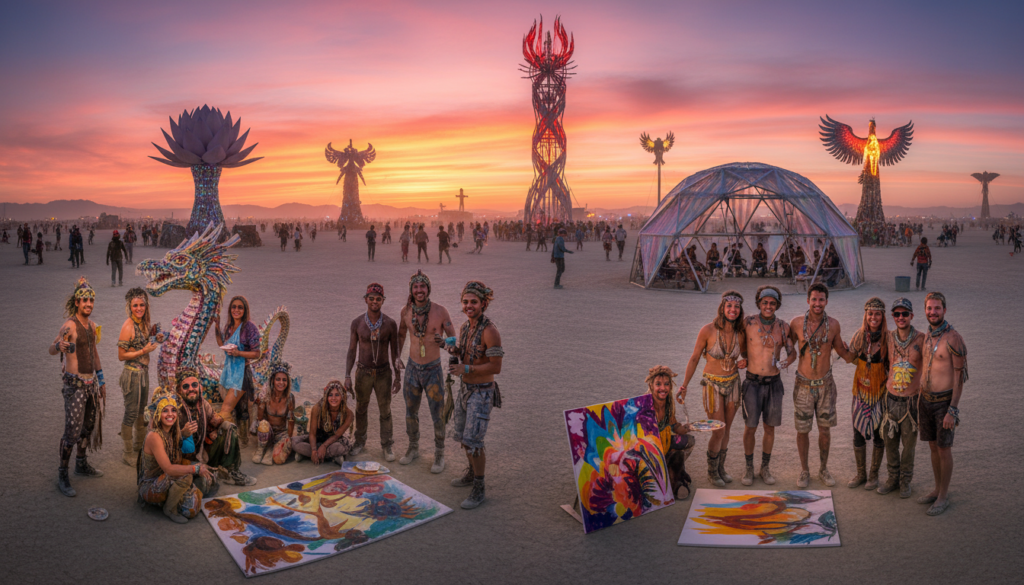
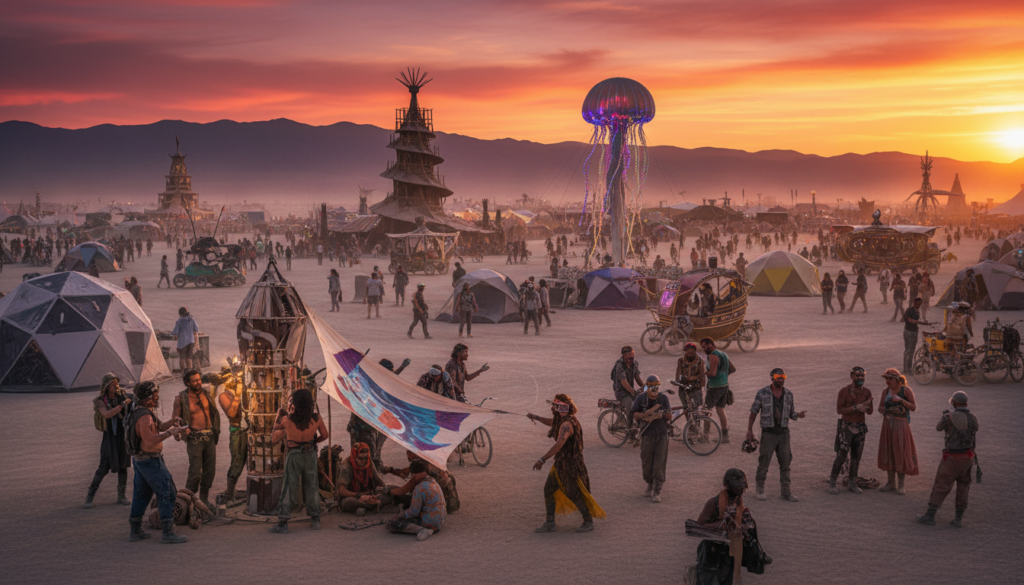
Black Rock City functions like a living map, built to guide people and emergency crews across wide stretches of playa. The grid is practical: streets and numbered avenues create simple addresses that responders use when time matters.
The grid and address system
The address format pairs a radial street with a numbered avenue so you can give an exact location at night or in dust. This setup saves minutes during medical calls and helps lost people find a meeting point.
On-site systems participants use
Key services include Ranger patrols, staffed medical posts, and daily info channels. Radios, signage, and walk-up info booths help spread critical information fast.
Center Camp, coffee, ice, and no vending
Center Camp acts as a social hub and orientation point rather than a market. Official ice and coffee sales are limited conveniences; otherwise the no vending rule keeps commerce out so gifting and shared effort shape daily life.
- Camps form neighborhoods that trade help and resources.
- Rock city design favors people over cars; expect walking, biking, and shared rides.
- Always plan personal supplies; site systems supplement, not replace, self-reliance.
For packing tips that match desert life and shared camps, see a short glamping packing guide.
The Gift Economy: How People Exchange Goods and Services
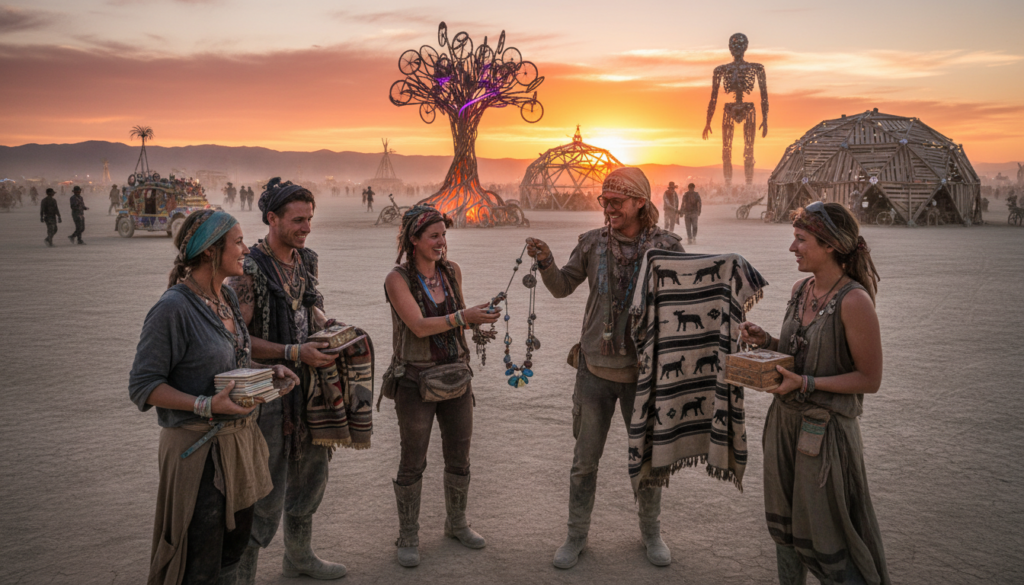
In Black Rock City, sharing replaces selling in ways that shape daily life. The gift economy means offering food, repairs, performances, or simple help with no expectation of repayment.
How gifting shows up
Gifts show as pop-up workshops, massage tents, bike fixes, and icy water handed out on hot afternoons.
Neighbors trade skills or time rather than price tags. Camps often run free classes or surprise art activations.
Decommodification and behavior
Decommodification removes logos, VIP fences, and ads. That change reduces brand signaling and puts value on contribution.
- Define: giving without quid pro quo—food, services, repair, performance.
- What it’s not: not bartering for favors, not covert vending, not networking for profit.
- Practical note: bring your own essentials; gifting complements, it doesn’t replace preparedness.
“Make it, bring it, share it—this mindset powers the art and community that follow.”
For related context on participant-led hospitality and comfort, see glamping and thoughtful hosting. The same “make it, bring it, share it” ethic fuels the art ecosystem that follows.
Art at Burning Man: From Interactive Installations to the Temple
The playa’s sculptures and installations act as the event’s mainstage, inviting direct interaction instead of passive viewing.
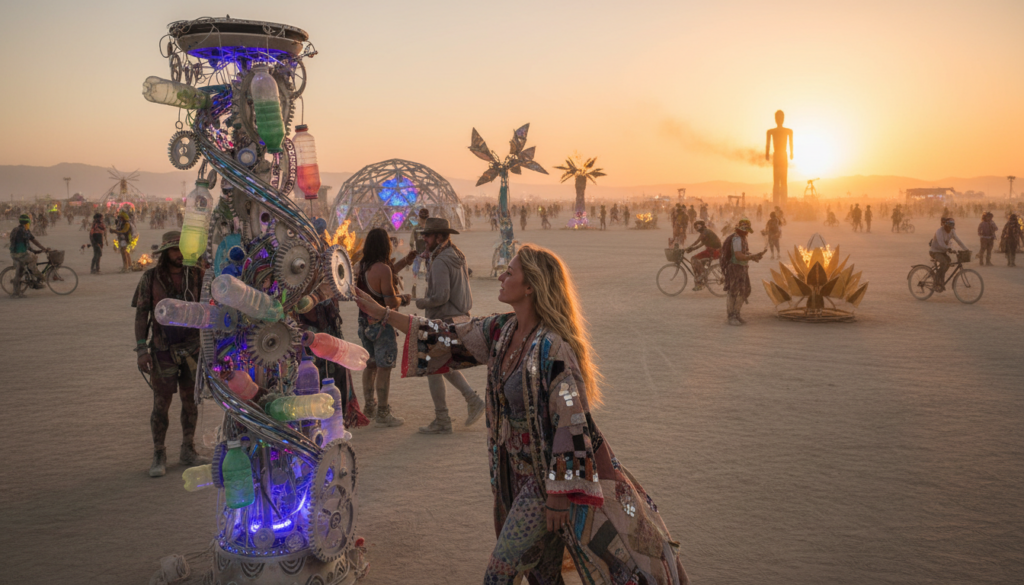
Participants create the program: massive sculptures, mobile art cars, performances, and immersive structures replace booked headliners. That model makes art the headline and people the co-creators of each piece.
Interactive work and scale
Interactive on the playa means climbable frames, touchable surfaces, playable instruments, and pieces that change when people join. This dissolves artist-audience distance and produces memorable, shared experiences.
The desert setting invites large, experimental builds. The temporary nature reduces long-term risk, so teams attempt bolder engineering and surprising effects that few galleries or festivals permit.
The Temple and communal meaning
The Temple serves as a quiet anchor for grief, remembrance, and gratitude. Unlike the celebratory wooden effigy burn, Temple ceremonies trend solemn and reflective.
Respectful behavior matters: keep noise low, ask before touching offerings, and honor consent and privacy.
“Art-first culture makes this event feel unlike any other in the world.”
| Feature | Role | Visitor behavior |
|---|---|---|
| Interactive sculptures | Main attraction | Join, climb, play |
| Mutant vehicles | Mobile art | Observe safely, consent for rides |
| The Temple | Reflection space | Quiet, respectful, no photos of offerings |
Theme Camps, Community, and Belonging
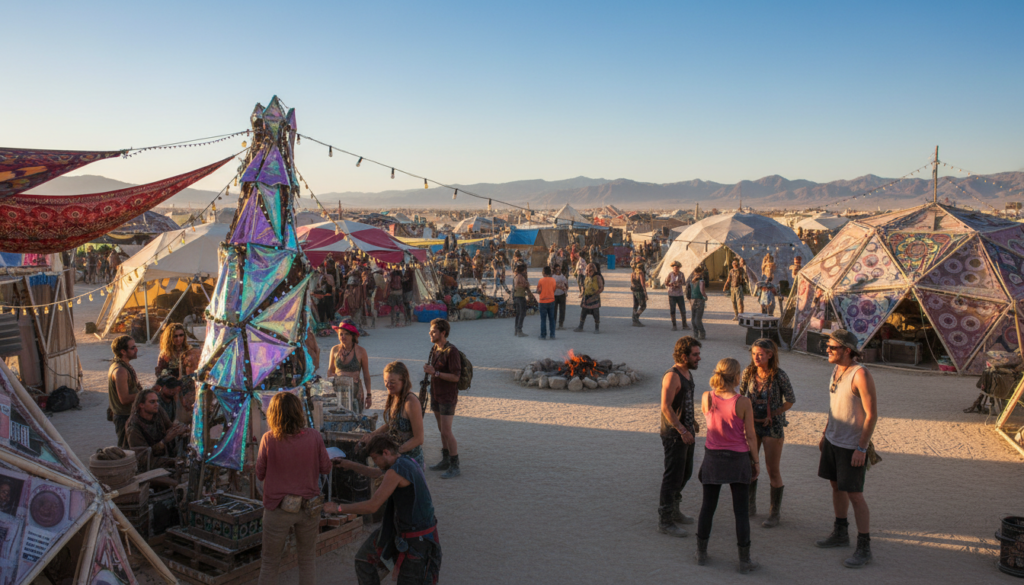
Theme camps turn scattered visitors into working neighborhoods, each with a clear role in the city. Camps organize contribution at scale, turning casual spectators into neighbors who help one another. They form the social backbone that supports thousands of attendees and the gift economy.
How camps help thousands collaborate and contribute
Each camp brings an offering: classes, meals, art, repairs, or quiet spaces. That public work creates steady reasons for people to cross paths.
Shared purpose turns logistics into social glue. When tents, generators, and schedules align, small acts become a citywide habit.
Finding your people: volunteering and shared projects
Join a build crew, take volunteer shifts, or attend workshops to meet groups that match your energy. Showing up consistently helps camps trust you and invite you into deeper roles.
Returned confidence and lasting change
Many burners report new skills, bold creativity, and stronger civic habits after camp life. Relying on one another under hard conditions builds fast camaraderie and lasting friendships.
| Camp Type | Typical Offering | How to Join |
|---|---|---|
| Quiet/Reflection | Tea, temple-like spaces, workshops | Volunteer shifts, quiet hours, camp forums |
| Service/Support | Bike repair, medical aid, kid zones | Sign up for skill-based roles, show up early |
| High-energy | Music, dance, late-night parties | Help with setup, sound crews, security teams |
“Camps are where contribution becomes community.”
Music, Nightlife, and the Myth of Debauchery
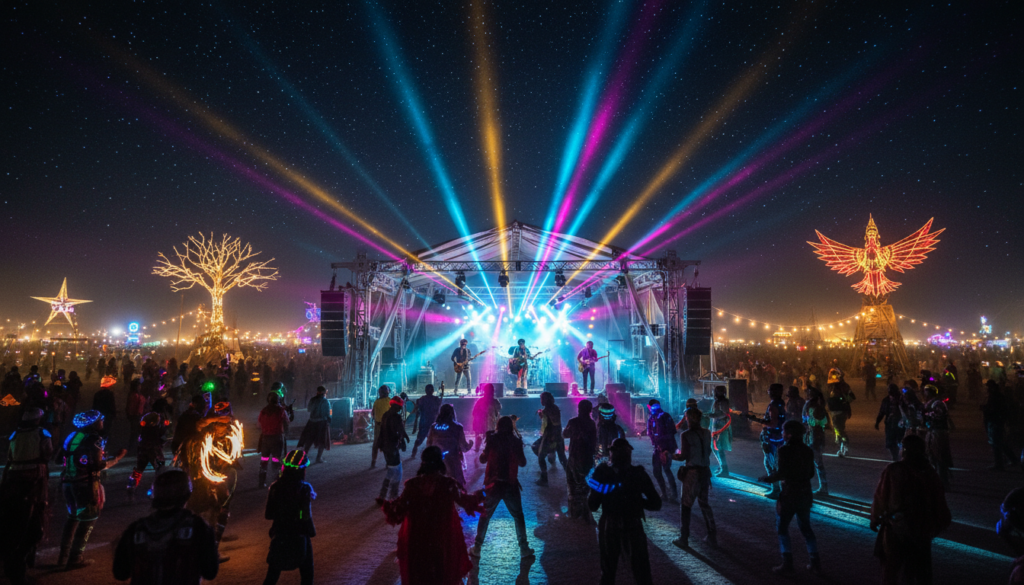
Loud music and dramatic photos made a headline-friendly image that doesn’t tell the whole story. Sound camps and late-night stages create a visible party scene. Sensational media often zooms on extremes, which shaped public ideas.
How the reputation formed and a balanced view
Yes, music and night gatherings exist. Many people, though, spend evenings at art pieces, talks, or under the stars.
Nightlife coexists with quiet camps, family zones, and reflective spaces. The event offers a range of experiences for different people.
Law on the playa
Federal and Nevada law apply on public land. Misreading “anything goes” can bring fines, arrests, or safety risks.
Sober resources and support
Programs like “Sober on Playa,” sober camps, and 12-step meetings provide structure and community. Plan a recovery-friendly routine: sleep, food, hydration.
“Plan your environment, communicate boundaries, and look out for one another on night shifts.”
- Choose supportive camps and set boundaries.
- Share plans with campmates and check in after late nights.
- Remember nights raise visibility and vehicle risks—plan transport carefully.
Mutant Vehicles and Transportation Rules on the Playa
After arrival, vehicle movement gives way to walking, biking, and staged art mobility.
Why most driving is restricted once you’re parked
Practical rule: you drive in, find a campsite, and then park. The temporary city prioritizes pedestrians and bicycles to keep people safe.
This limit reduces dust hazards, ruts on the playa, and unpredictable vehicle-pedestrian encounters. Fewer cars help the site stay intact and easier to clean.
Mutant vehicles as rolling art and safety expectations
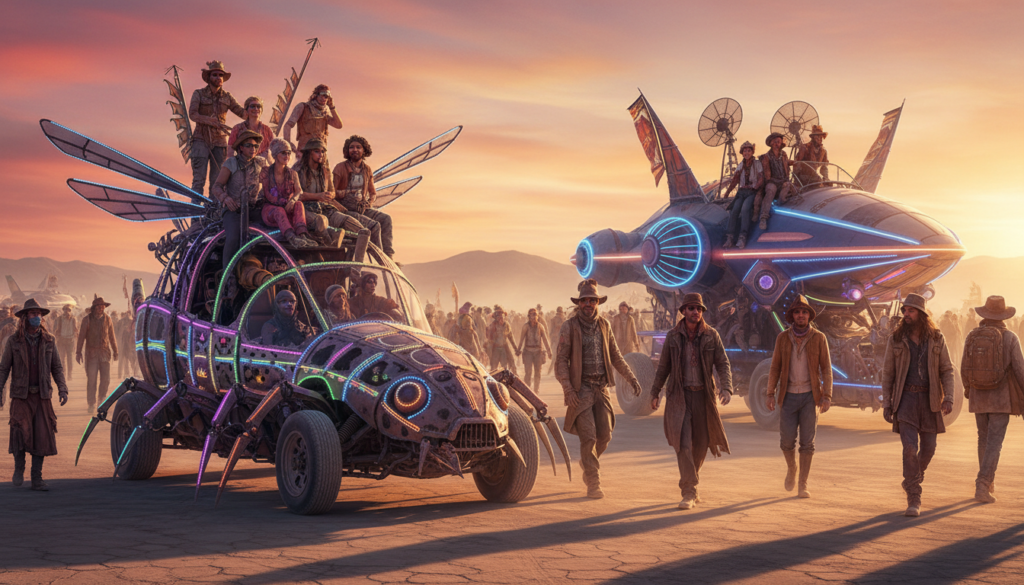
Mutant vehicles are mobile art cars that transform transit into performance. They are not private shuttles; they act as moving sculptures and interactive platforms.
Approval standards are strict. Approved vehicles need lighting, visibility, trained operators, clear passenger capacity, and documented safety checks.
How policies tightened after serious injuries
Rules evolved after accidents and tragic incidents. Organizers responded with tighter permits, operator training, and enforcement to limit risk.
“Safety rules grew from lessons learned on the playa.”
If you plan to bring or ride on an art car, prioritize consent, clear rider limits, and situational awareness. That includes radios, spotters, and well-marked paths at night.
- Drive in, set camp, then walk or bike.
- Mutant vehicles require formal approval and safety gear.
- Policies tightened after injuries to protect people and preserve the playa.
- Vehicle plans add costs: car passes, lights, repairs, and bike gear.
| Rule | Reason | Practical tip |
|---|---|---|
| Park after entry | Protects pedestrians | Plan gear for walking from camp |
| Approval for art cars | Ensures safe operation | Apply early; train operators |
| Night lighting and visibility | Prevents collisions | Use bright markers and spotters |
| Limits on routine driving | Reduce ruts and surface damage | Bring sturdy bikes and repair kits |
Note: vehicle choices affect your budget and packing list. Include car passes, bike needs, lights, and possible repairs when planning costs for the event in Black Rock City.
Tickets, Costs, and What to Budget for a Burning Man Experience
Expect the sticker price to be the smallest line on your final budget spreadsheet.
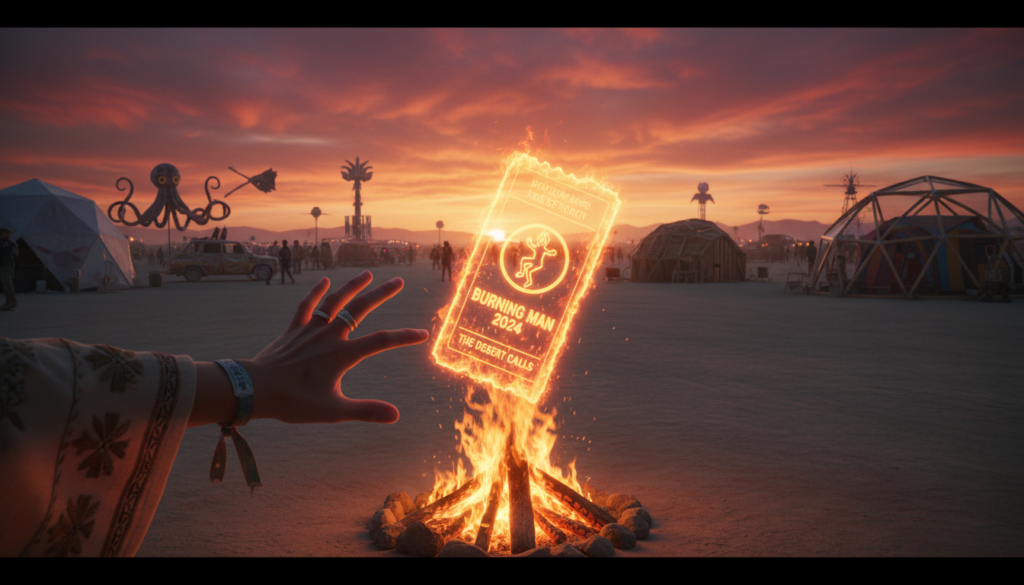
Why a ticket rarely tells the whole story. A ticket grants entry, but travel, shelter, water, food, shade, goggles, lighting, bikes, and camp dues quickly add up. Reported regular ticket figures have sat in the mid-hundreds (for example, roughly $575 in recent years). Still, a full setup can approach around $1,500 once logistics are included.
How budgets differ
Distance you travel, whether you build your own camp, and what gear you already own change totals a lot. Group camping splits costs; solo setups raise per-person expense.
- Travel and fuel: can double if you fly and rent a vehicle.
- Camp gear and shade: tarps, shelters, and generators add real dollars.
- Essentials: water, food, goggles, masks, lights, and bike repairs.
Ticket availability and variations by year
Demand shifts with broader economic trends, weather memories, and policy. Some years sell out quickly; in 2024 tickets reportedly remained unsold for the first time since 2011. That affects resale and planning windows for people who wait.
“Treat the budget as an investment in a safe, well-prepared experience.”
| Item | Typical cost range | Why it matters | Tip |
|---|---|---|---|
| Ticket | $400–$800 | Entry to the event | Buy early; watch official channels |
| Travel & fuel | $100–$600 | Airfare or long drives raise total | Carpool and book early |
| Camp gear & shelter | $100–$800 | Shade and sleep quality affect safety | Prioritize shelter and shade |
| Consumables & misc | $50–$300 | Water, food, goggles, lighting | Pack spares and cleanup supplies |
Practical final note: prioritize safety, shelter, and extra fuel. Smart planning saves money and stress. For ideas on comfortable, low-stress camping choices that can trim costs, see beach glamping and related guides.
Survival, Safety, and Weather: Dust, Heat, and Wet Playa Reality
Desert weather at Black Rock can flip from blazing sun to whipping dust in hours, and preparation saves the day.
Know the hazards: intense heat by day, cold nights, sudden dust storms, and occasional mud when rains arrive. In 2023 heavy rain created a wet playa, triggered a driving ban, closed roads, and left thousands waiting for safe exit.
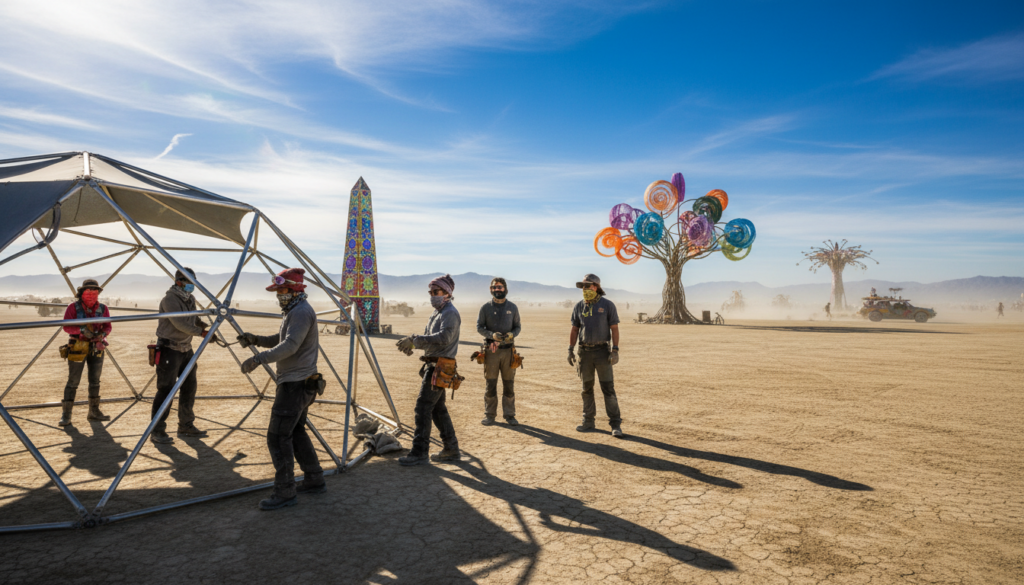
Practical gear checklist
- Eye protection and respirators or masks for dust.
- Secure shelter and reliable shade; anchor everything.
- Hydration plan: extra water, electrolytes, and backup supplies.
- Redundant lighting for night navigation and radios for updates.
Leaving no trace in daily practice
Pack it in, pack it out. Store trash securely, carry containerized gray water, and join MOOP sweeps at week’s end. Cleanup is required—not optional—and keeps the site allowable for future events.
Lessons from 2023 and staying informed
When roads closed in 2023, organizers urged conserving food, water, and fuel. Tune radios BMIR 94.5 FM and GARS 95.1 for timely information when cell service falters. Build a weather pivot plan: extra food, warm layers, fuel, and patience for delays during exodus.
“Preparation and cleanup are part of the culture; they protect people and preserve the playa.”
| Risk | Quick response | Why it matters |
|---|---|---|
| Dust storms | Put on goggles and mask; shelter securely | Protects eyes, lungs, equipment |
| Wet playa / mud | Conserve fuel; delay driving; follow official advisories | Prevents vehicle damage and long delays |
| Heat / cold swings | Layer clothing; schedule slow activity mid-day | Prevents heat illness and hypothermia |
| Limited cell service | Use BMIR 94.5 and GARS 95.1 radios; share plans with camp | Ensures timely, reliable information |
Future Events and the Road Ahead for Burning Man
The next published dates run August 30, 2026 to September 7, 2026, giving readers a clear window to plan time off and travel in the United States.
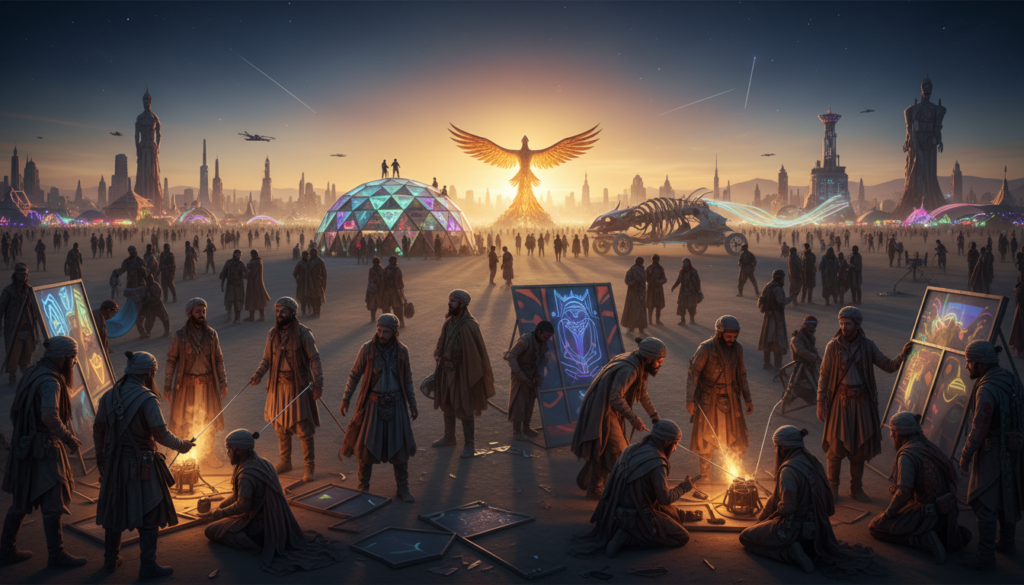
Financial and cultural pressures shaping the next era
Recent reports (2024–2025) noted rising permit and operating costs and fundraising needs that affect scale and programming. These pressures raise debates about luxury, access, and how to protect core values.
Operational change now factors weather volatility and stricter safety standards into long-term planning. That means insurance, emergency systems, and contingency funds play a bigger role in each event budget.
Regional events and broader reach
The Burning Man Project supports regional gatherings that offer simpler entry points to the principles without full Nevada logistics.
These regional hubs help spread art and civic projects across the world and build local leadership that feeds back into Black Rock City.
“What the gathering becomes next depends on what participants build and protect.”
| Topic | Challenge | How organizers respond |
|---|---|---|
| Permits & costs | Rising fees and fundraising needs | Increased fundraising, budget transparency |
| Weather & safety | Storms, wet playa, evacuation risks | Stronger contingency plans, radio updates |
| Access & culture | Concerns about luxury and exclusivity | Regional events, policies to protect principles |
| Information flow | Misinformation and rapid changes | Official channels, timely advisories |
- Use official sources for ticket and policy information as each year approaches.
- Consider regional events for an easier first step into the culture.
- Remember that community choices will shape Black Rock City in coming years.
Conclusion
,More than a single ritual, Burning Man unfolds as a week of making, giving, and civic care in a harsh landscape.
The concise takeaway: a participant-built event centered on community, art, responsibility, and lived experience.
Its roots moved from San Francisco beaches to the Black Rock Desert, and Black Rock City now frames how the place shapes behavior, risk plans, and shared creativity.
The Ten Principles — gifting, decommodification, radical self-reliance, and leaving no trace — act as a daily code that keeps the city possible.
The burning of the Man remains a powerful symbol, yet true value appears in what people make together before and after the flame.
Plan carefully, read official guides, and choose contribution over consumption. For practical prep and campsite skills, see new homesteading.